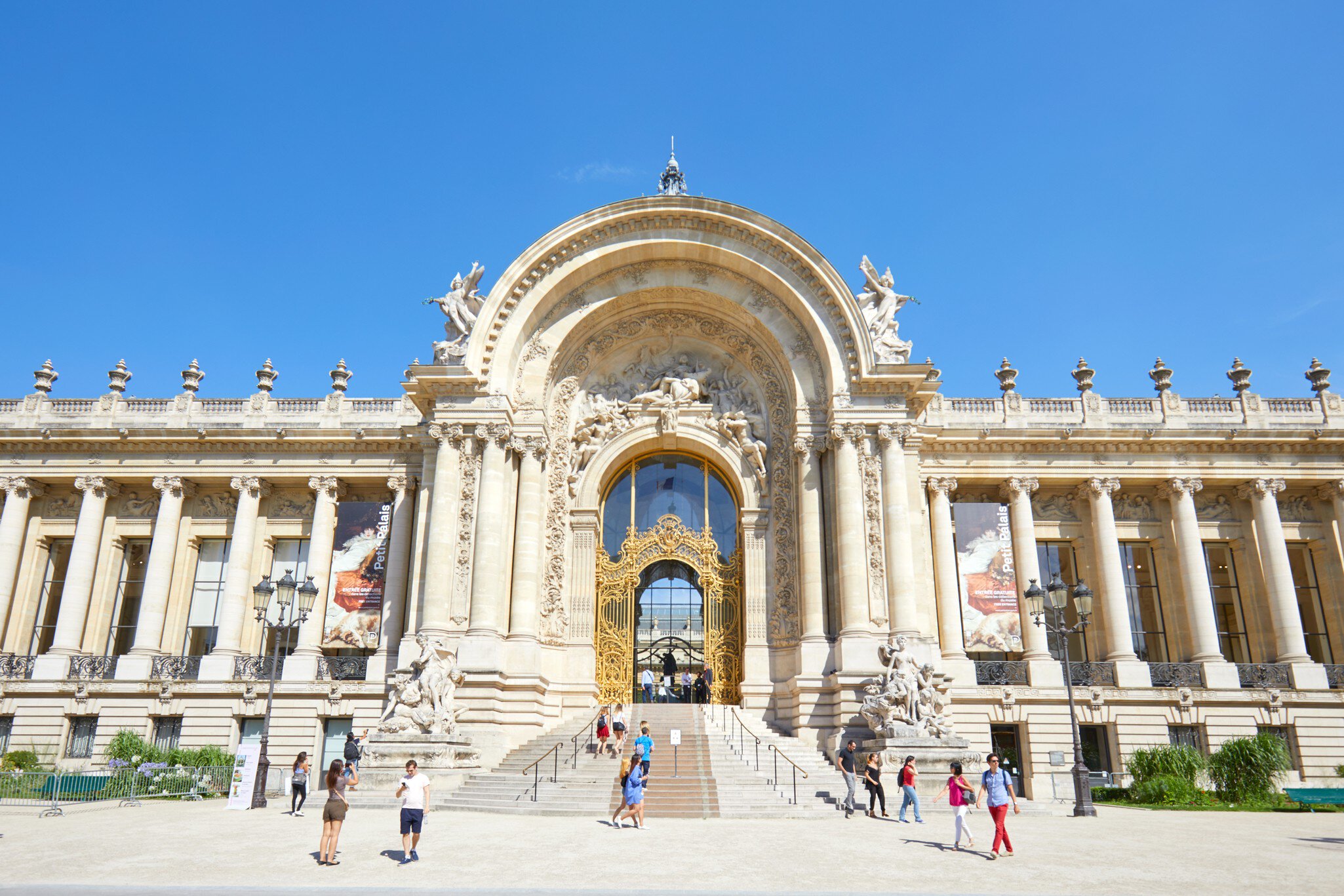
Commissioned by the city of Paris to showcase fine arts at the 1900 Paris Exposition, the Petit Palais (petitpalais.paris.fr; permanent collection free/temporary exhibitions from €12) was one of the monuments built for the event which, for the first time, was designed to remain a permanent fixture after the world fair had ended.
Today it is home to the Musée des Beaux-Arts de la Ville de Paris (City of Paris Museum of Fine Arts). It specializes in medieval and Renaissance objets d’art, such as porcelain and clocks, tapestries, drawings, and 19th-century French paintings and sculpture. You can also see paintings by such artists as Rembrandt, Colbert, Cézanne, Monet, Gauguin and Delacroix. Notable works include Les Halles by Léon Lhermitte; The Sleepers by Gustave Courbet, a commission from a Turkish diplomat who then kept it hidden behind a curtain due to its racy subject matter (and who also commissioned Courbet’s most famous work, Origin of the World, now in the Musée d’Orsay); and the recently restored Portrait de l’Artiste en Costume Oriental (Self-Portrait in Oriental Attire) by Rembrandt, who added the dog later to his only full-length self-portrait to hide his legs as he wasn’t happy with the final result.
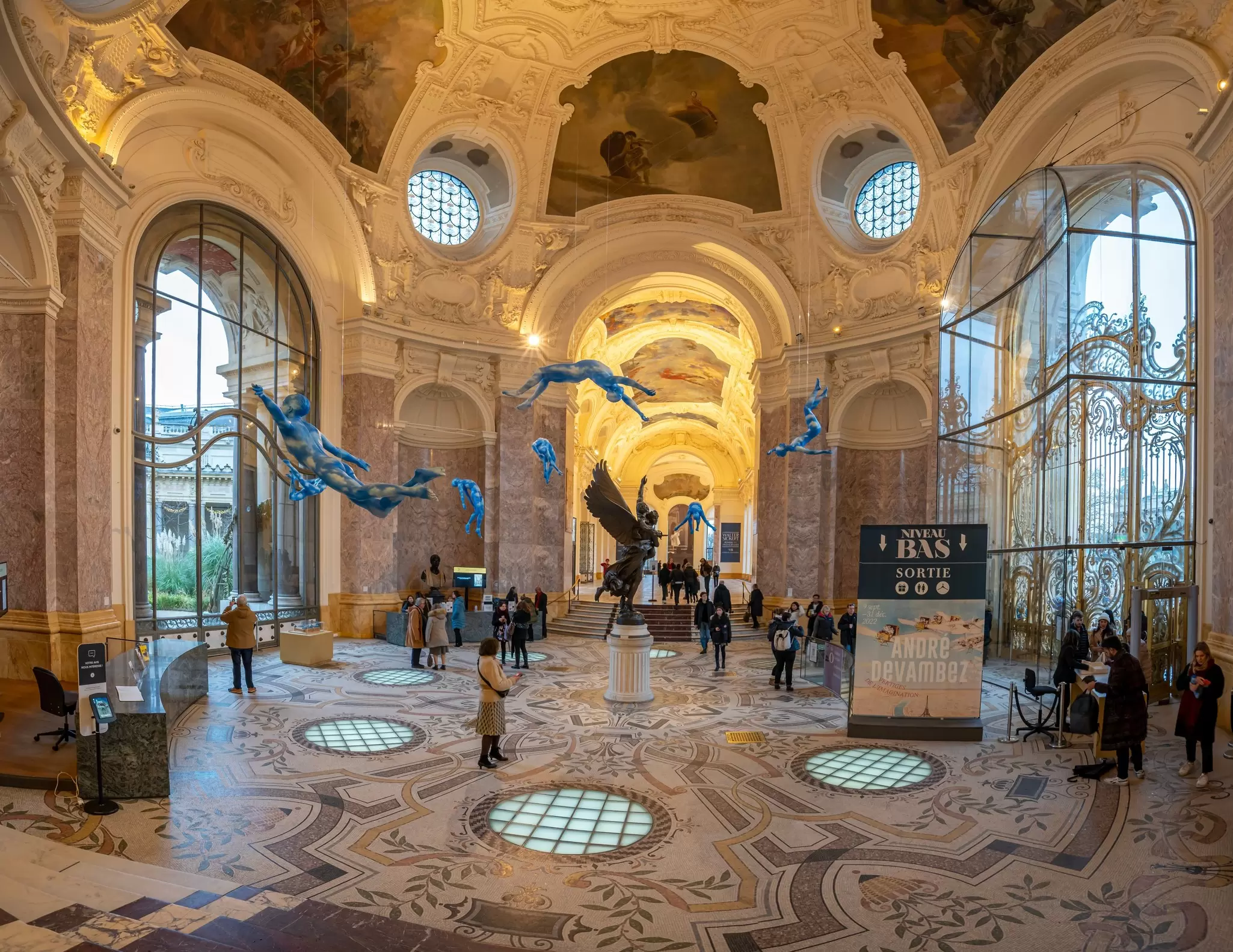
Downstairs you’ll find an Arts and Crafts collection intended to shine a light on the works as an art form in their own right, a collection of art nouveau treasures, including Hector Guimard’s (the man behind the now iconic Paris metro entrances) entire dining room, and a collection of Monets. Unfortunately, the information is all in French but excellent guided tours are available with an English-speaking guide, or you can find more about the works on the website.
Designed by architect Charles Girault, the idea was to create a crowd-pleasing, classical monument that everyone would like (think classic marble and molding) but which also drew inspiration from Greek classical influences (note the grand columns) and the fashionable art nouveau style. Girault’s previous life as an ironmonger also influenced the design, as seen in the gold ironwork entrance and the main curved staircase in the permanent collection, where floral motifs reference art nouveau.
Outside, Girault added a central garden to offer a moment of tranquility away from the city’s crowds, especially during the hugely popular Exposition Universelle. It’s now a particularly lovely spot to stop for a coffee from the museum’s cafe.