In 1837, 43 Portuguese immigrants got together and decided to dedicate themselves to the creation of a library – to improve access to reading materials both for members of the group as well as for other Portuguese immigrants in the country. Over time, their project grew, and they decided to build a formal house for their books.
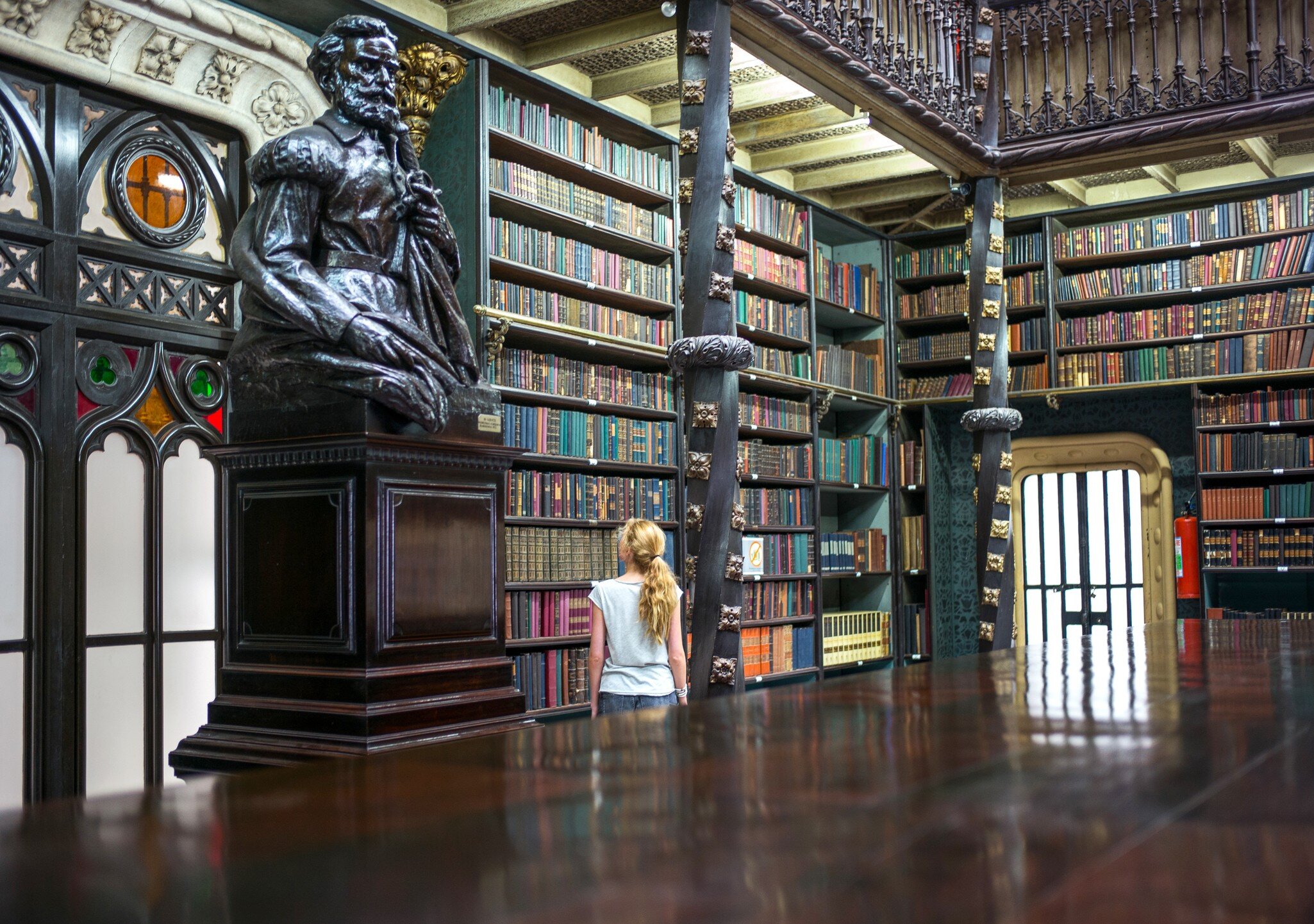
Architect Rafael da Silva Castro designed the Neo-Manueline style building (a Portuguese architecture style reminiscent of the Renaissance Gothic style) that would become the Real Gabinete Português de Leitura (realgabinete.com.br; free), built between 1880 and 1887. The facade was inspired by the Mosteiro dos Jerónimos in Lisbon, while the rooftop stained-glass window laid in iron was the first of its style to be built in Brazil. The gorgeous Portuguese Reading Room houses more than 350,000 works, many dating from the 16th, 17th and 18th centuries. It also has a small collection of paintings, sculptures and ancient coins.