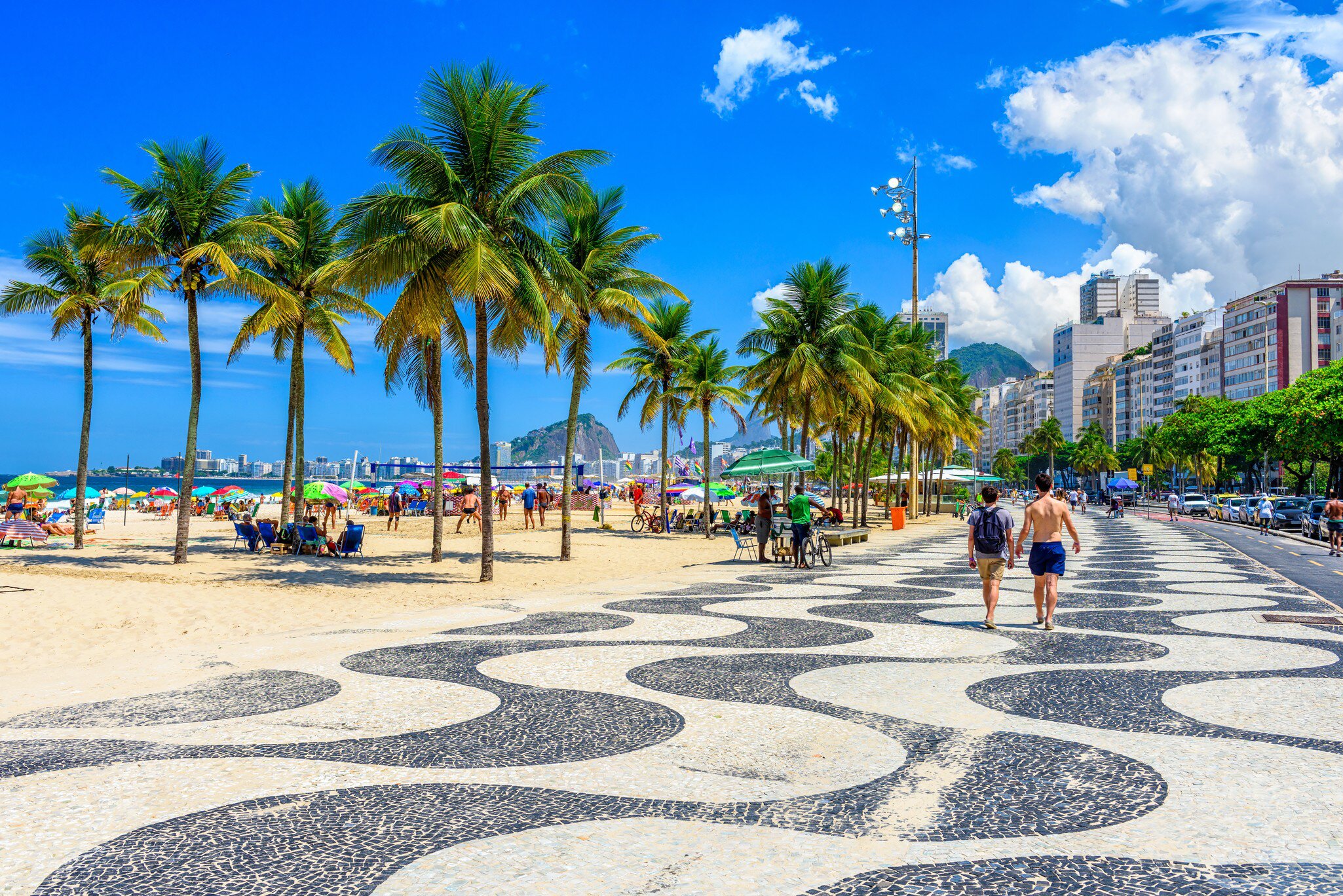
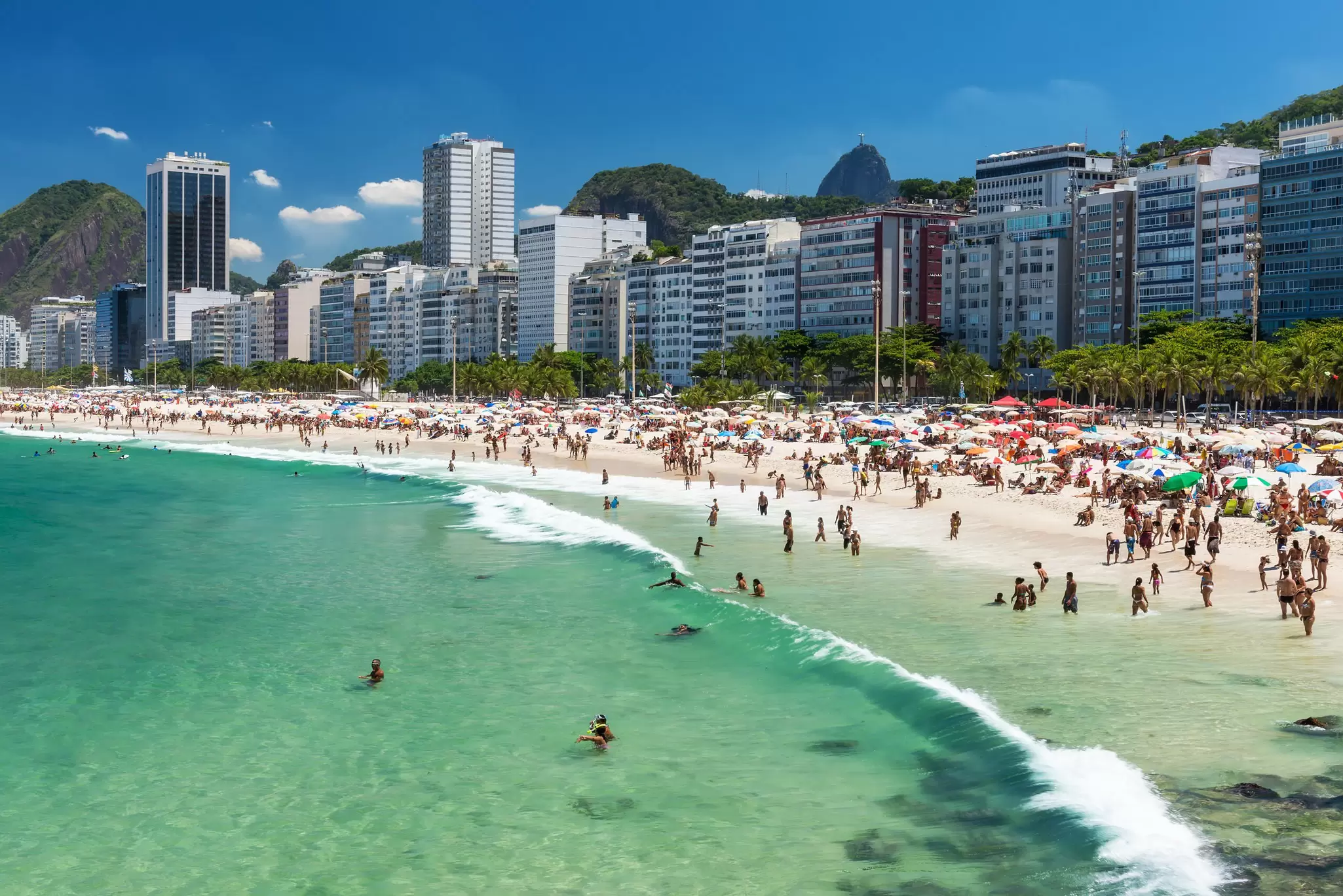
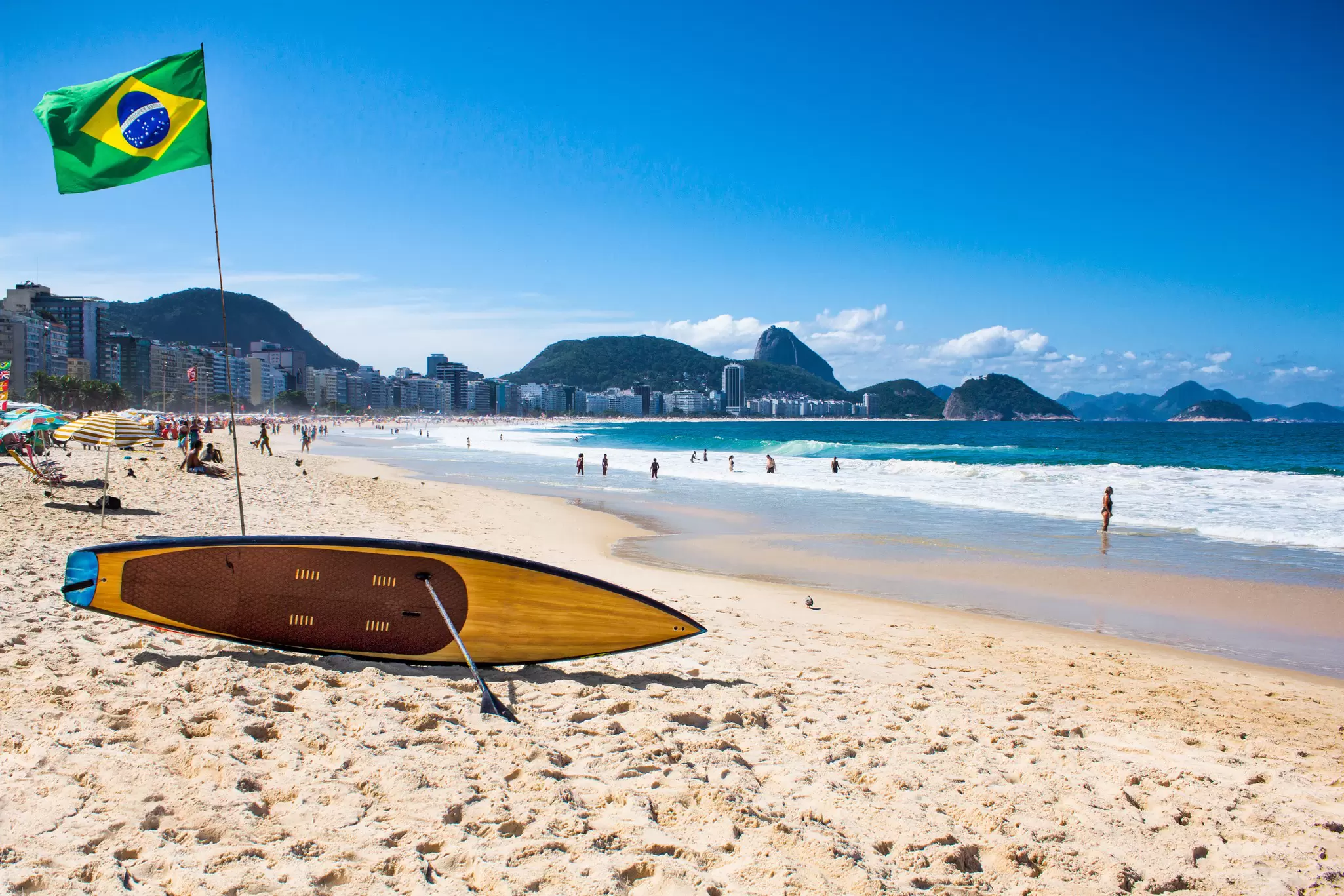
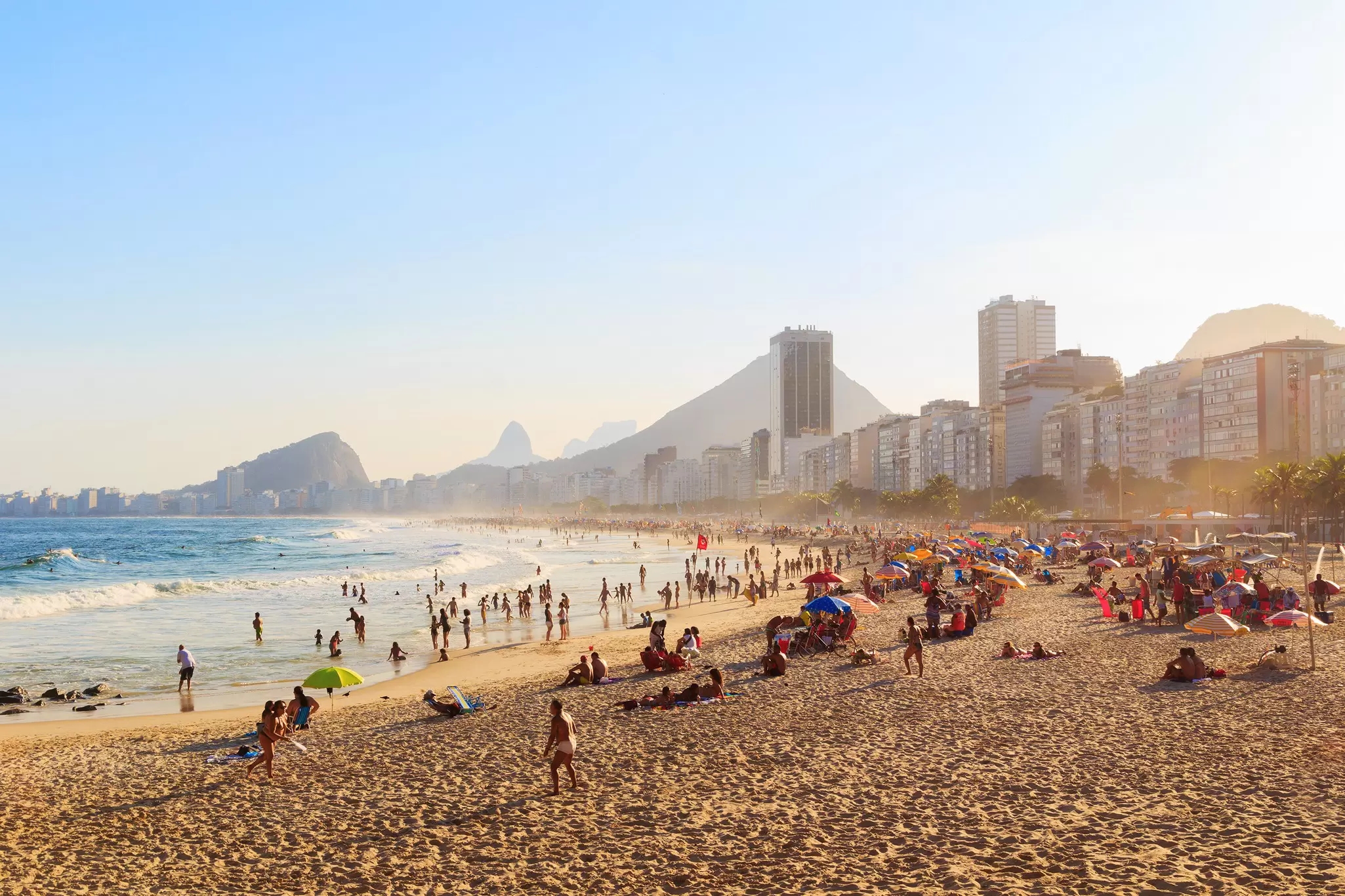
Praia de Copacabana (Copacabana Beach) contends with Ipanema as the most iconic slice of sand and waves in the world. While not as pretty as Ipanema, Copacabana is a place for everyone, from visitors to Brazilians of all social classes, all sipping água de coco (coconut water) under hundreds of umbrellas along the wide 4km strip of perfectly curved beach.
History & Setting
There are no signs of indigenous people living on what was originally named Sacopenapã ("the way of the socós bird") by the indigenous Tupi people. The beach was renamed Copacabana after the patron saint of Bolivia – a statue of the saint used to be in a now-destroyed church on the rocks where Forte de Copacabana is currently.
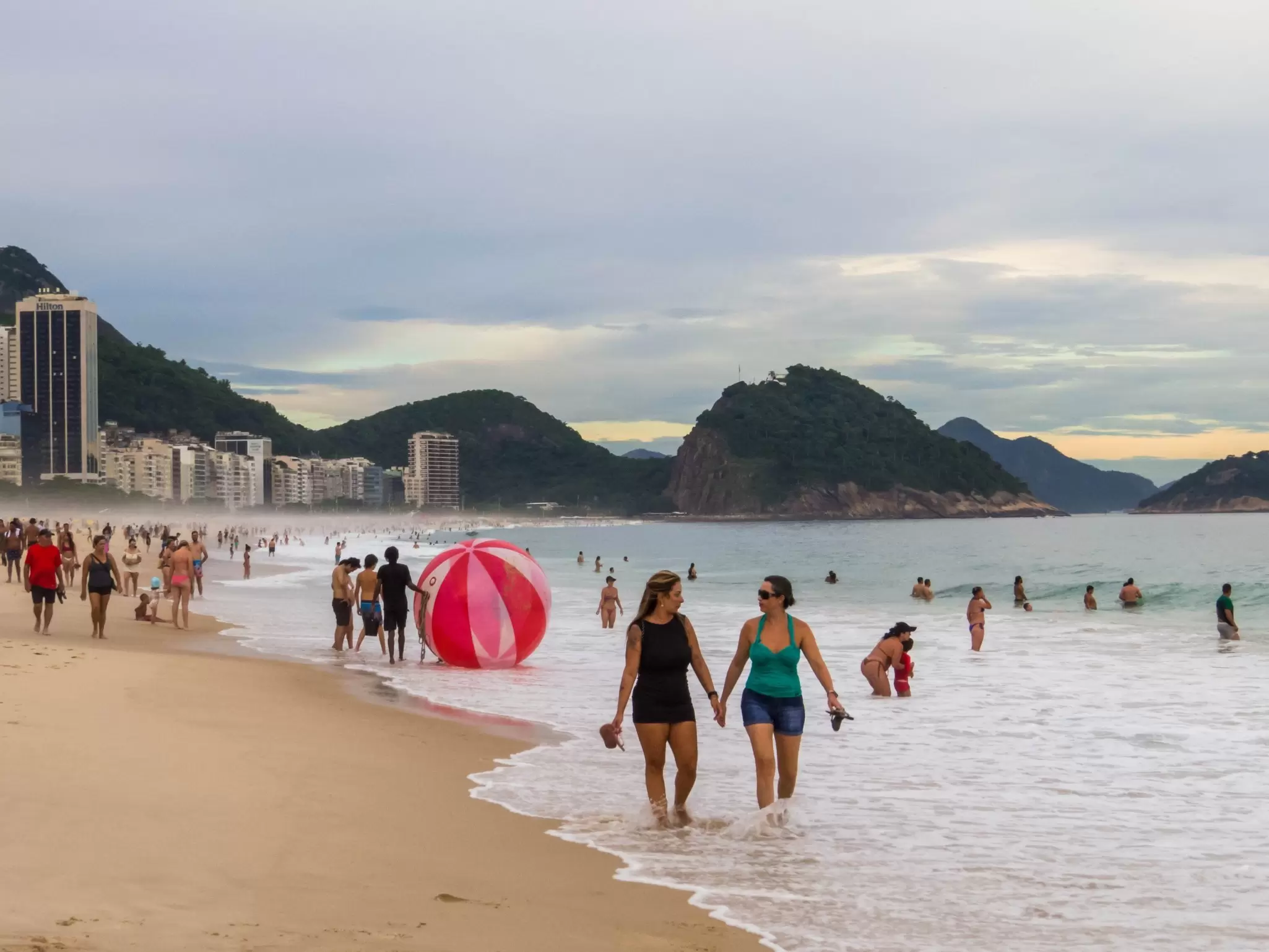
Copacabana was a humble fishing village for most of the 19th century, but that changed in 1892 when an underground tunnel made the beach accessible from Centro. The 1923 arrival of Copacabana Palace lit the fire to make the neighborhood a hot destination for foreigners as well as Brazilian elites. Lower-income Brazilians wanting a taste of beach life came too, and every single-family home was destroyed in favor of apartments. To protect the population from wave surges, Rio extended the beach by 50m using landfill from tunnel projects, and hired world-famous landscape designer Roberto Burle Marx to make the gorgeous waterfront boardwalk we see today.
The Beach
Copacabana Beach is laid out from Av Princesa Isabel, near Posto 2, the military fort (Forte de Copacabana) after Posto 6. The water is calmer the further south you go.
Park yourself and your canga (beach towel) anywhere on the beach – all beaches are public in Brazil. Umbrellas and chairs are governed by numbered barracas (tents). Small umbrellas are between R$15 to $R20, while larger cost between R$20 and $R30. Chairs are R$5 to $R10 each, and tables are often free.
Cruise the Boardwalk
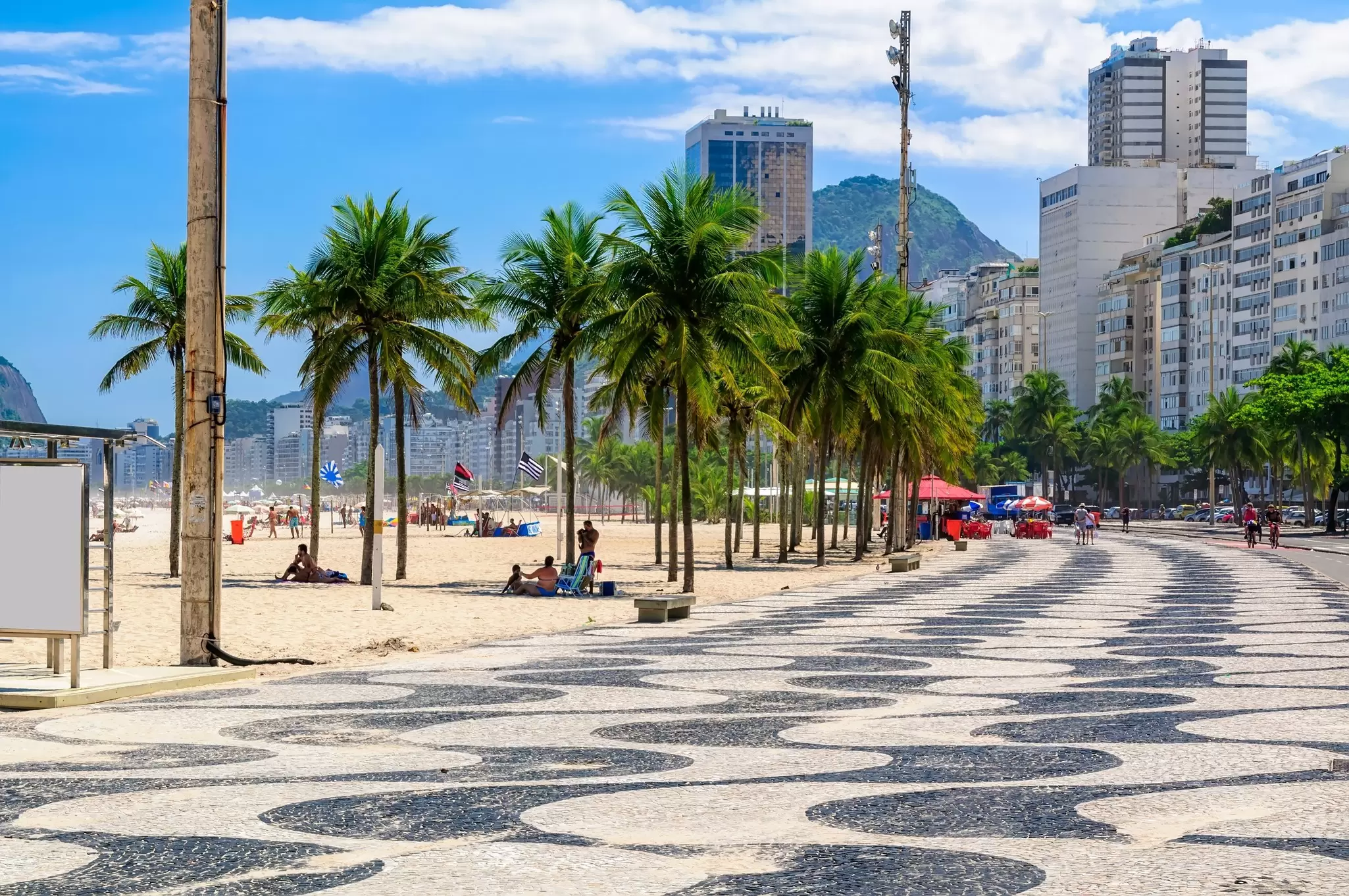
Copacabana’s boardwalk and Av Atlântica are almost as famous – and certainly as fun – as the beach itself. Wavy white-and-black tiles, just like the ones used in Lisbon’s Rossio Square, provide a dance floor for one of the liveliest places to walk in Zona Sul. Here, you’ll face vendors coaxing you into a tour or to eat at their restaurant quiosques (kiosk restaurants), street carts slinging churros and vendors selling yellow-and-green Brazilian soccer jerseys. When nightfall hits, the Copacabana boardwalk becomes a big party, with boardwalk quiosques hosting live samba and blasting pop hits.
Cycling & Scooters
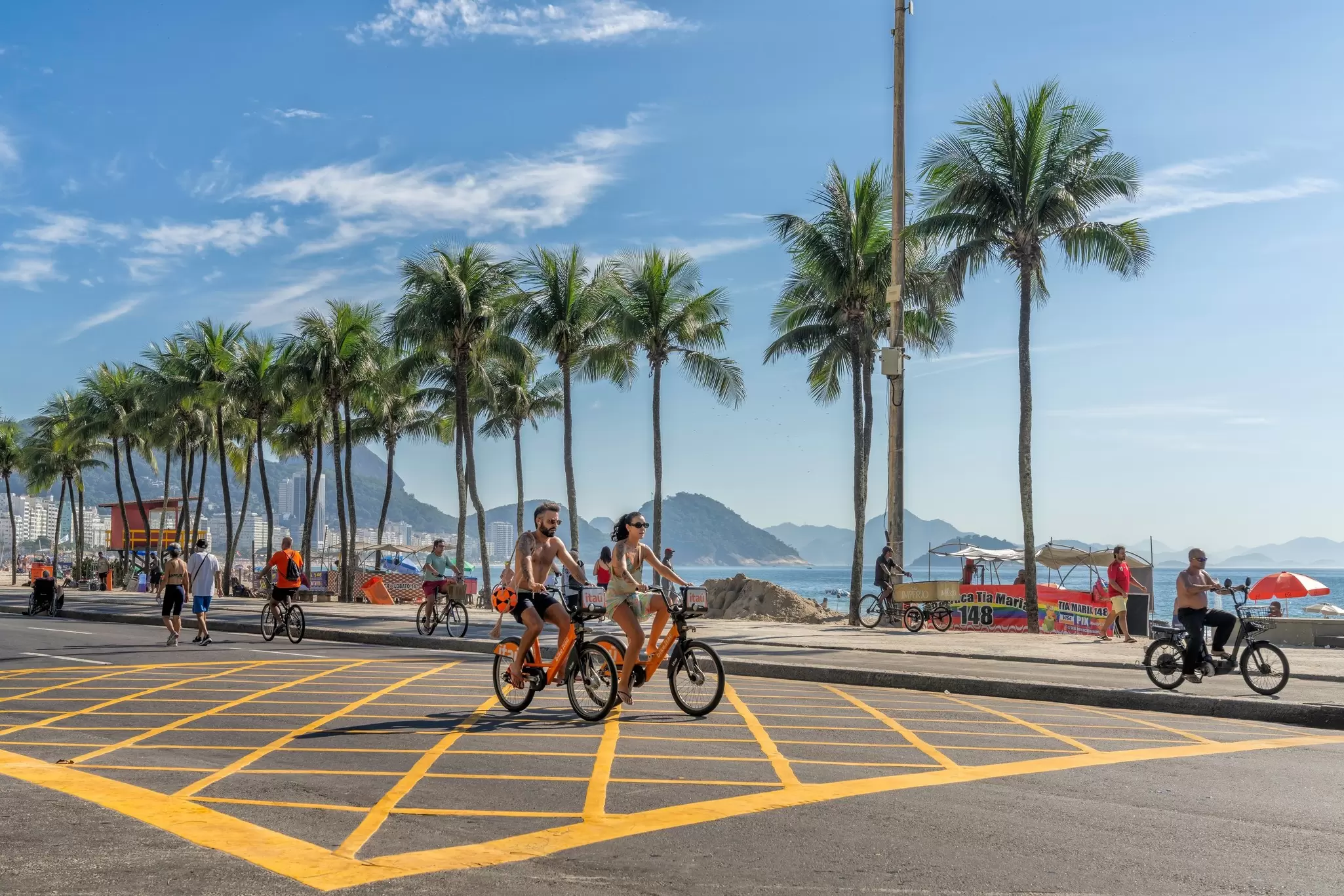
If strolling isn’t your speed, hop on an Itaú bike and cruise along the dedicated path, which was added in the 1990s. Anyone can rent one via Uber or Itaú’s dedicated app. Or whizz on a new Whoosh scooter.
If you want your own wheels, order a bike or seated electric scooter at least a day in advance from BikeZRio (021873263040, bikes R$20/hr or R$70/day, 9am to 9pm. Card payments are extra).
You’ll have even more room to spread out on Sundays and holidays, as Av Atlântica shuts to car traffic from 7am to 6pm.

SUP Sunrise
One of the best ways to experience Copacabana Beach is from out on the water atop a stand-up paddleboard (SUP). The view is even more spectacular for sunrise, when the sky lights up in incandescent colors over this Cidade Maravilhoso (Marvellous City).
Rent a board from Eco Clube SUP (instagram.com/ecoclubesup, 30min/1hr/2hr sunrise R$50/70/150) at Posto 6 on the southern end of Copacabana Beach. The water is less wavy at this end. The experienced operator has been around since 2011 and can teach you the basics: how to row on the board, how to stand up etc. If all goes well, you'll row out past Forte de Copacabana, to paddle on calmer water. It's a lot more exhausting to get out if it's windy.
Sunrise paddles are worth the price if you can manage to wake up before 4am (sunrise times vary by season). Once you're settled in calmer water, instructors can come out and take photos of you on a GoPro (included). You can also take photos on your phone with the free waterproof pouch provided. Reserve and pay ahead on WhatsApp (021980116062).
Beach Food
You'll be bombarded with offers of drinks and snacks by vendors when on the beach. The most quintessential Rio beach snack is Biscoito Globo (round donut-shaped tapioca-based cracker) swished down with a sip of cold maté (iced tea). Vendors will ask if you want your maté sweetened or not and flavored with or without maracujá (passion fruit). Another common beach snack is the Levantine esfiha (savory pastry filled with meat, cheese or spinach).
Açaí (frozen Amazon berry mixed with sugar and usually banana) comes in a small cup and is topped with fresh fruit, granola and the option of cobertura, including leite condensada (condensed milk) or a chocolate or fruit syrup. Queijo coalho is a thick, salty cheese similar to Halloumi, grilled to order on tiny coal barbecues. Milho is corn freshly cut off the cob and put in a bowl with butter. Sacolé are frozen-fruit treats, sometimes mixed with booze. Lastly, you'll see vendors selling camarão (shrimp) on a stick, which we don't recommend unless you want to risk getting sick.
Beach Drinks
Agua de coco (coconut water) directly from the coconut is a must and has much-needed electrolytes. For something boozy, try a caipirinha (sugarcane cachaça cocktails), made with fresh fruit like lime, passionfruit, mango and watermelon, and plenty of sugar. Beer is always served ice cold and usually in large bottles: seiscentos (600ml).