Jul 12, 20268 min read
The Ultimate Weekend in Ravenna, ItalyJul 12, 2026
8 MIN READ
Writer
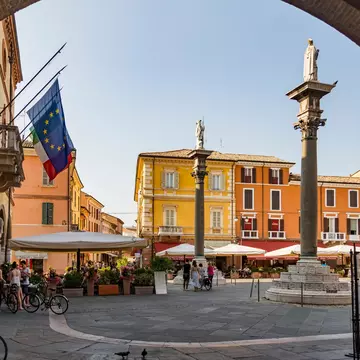
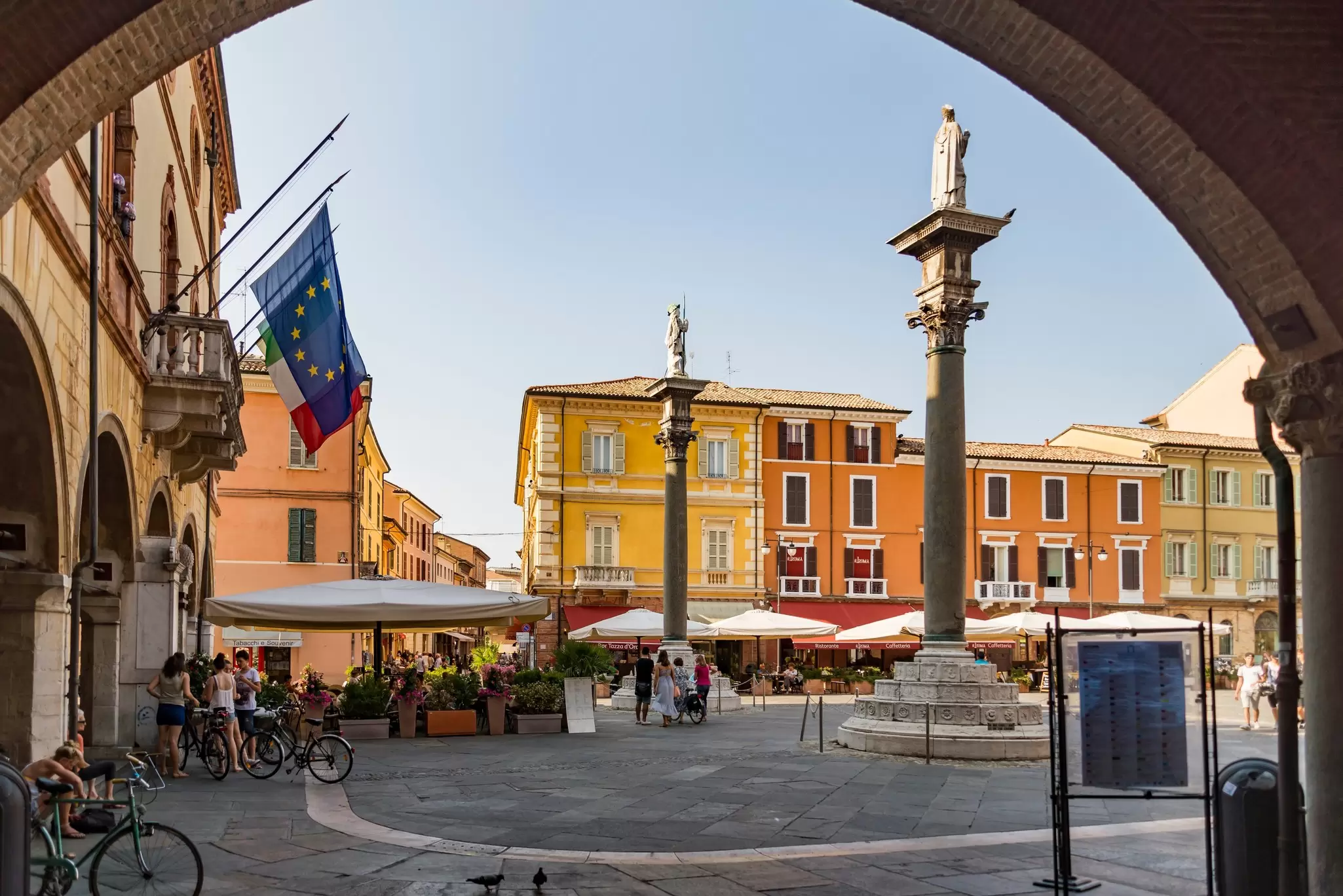
Piazza del Popolo in Ravenna, Italy. Enrico Della Pietra/Shutterstock
Writer
Highlights
Writer Matt Dennis maps a three-day weekend in Ravenna, Italy's UNESCO mosaic city.
Visit Byron's Palazzo Guiccioli and toast the San Vitale sunset with a Campari spritz.
Book a guide for Ravenna's mosaic trail, then create your own at Dimensione Mosaico.
Meet recovering turtles at Cestha, laze on MaPa Beach and dine at Mercato Coperto.
Lonely Planet may earn a commission from affiliate links on our site. All recommendations and reviews reflect our own independent opinions.
Italy tops the UNESCO World Heritage rankings with 61 sites. Eight of them are within walking distance of each other in Ravenna. That fact alone should be enough to send you reaching for a train ticket, and yet Ravenna remains one of Italy’s most quietly kept secrets, having never quite made it to the standard tourist trail.
Here, visitors walk shoulder to shoulder with locals going about their daily business. Narrow cobbled streets are lined with cafes, restaurants, boutique fashion shops and delicatessens. Small and large piazze (squares) punctuate the knot of streets. In the evening, the passeggiata (early evening stroll) is primarily residents and Italian tourists slowly discussing the events of the day, whilst their children gleefully play around them. Lovers share an evening gelatoor an aperitif as the light and heat of the day fade.
Ravenna rewards those who seek it out. It is rarely spoken of when Italian cities are mentioned, falling in the shadow of its more well-publicized and larger cousins of Rome, Florence and Venice. It is no ugly duckling, more like the Cinderella who was left in the shadows. Visit here once, and you will find yourself returning again and again…just like me.
When to arrive: A long weekend arriving on Friday morning and departing on Monday morning works well, but the city has enough to keep you entertained for much longer.
How to get from the airport: Both Bologna and Rimini have great connections to Ravenna. Bologna Centrale train station is linked to the airport by a monorail. From Bologna Centrale, there are regular rail links to Ravenna from €9 and bus links from €7. Stazione di Rimini is well connected to the airport, and regular trains run to Ravenna from €7. Private transfers can be booked from both airports.
Getting around town: Ravenna is a small city and very walkable. There can be some challenges with cobbled streets for wheelchair users and those with limited mobility. The best way to get to Ravenna’s coastline is to catch the line 70 bus and get off at one of the many beach stops. To get back, simply board from the other side of the road from your drop off.
Where to stay: Ravenna is a town of small hotels and guesthouses with a diverse range of properties. Prices are lower than in the big cities, with budget accommodations from around €50 per night and more luxurious offerings above €200 per night. Two very different properties I can recommend are Hotel Affitacamere Il Cerchio and Villa Foris.
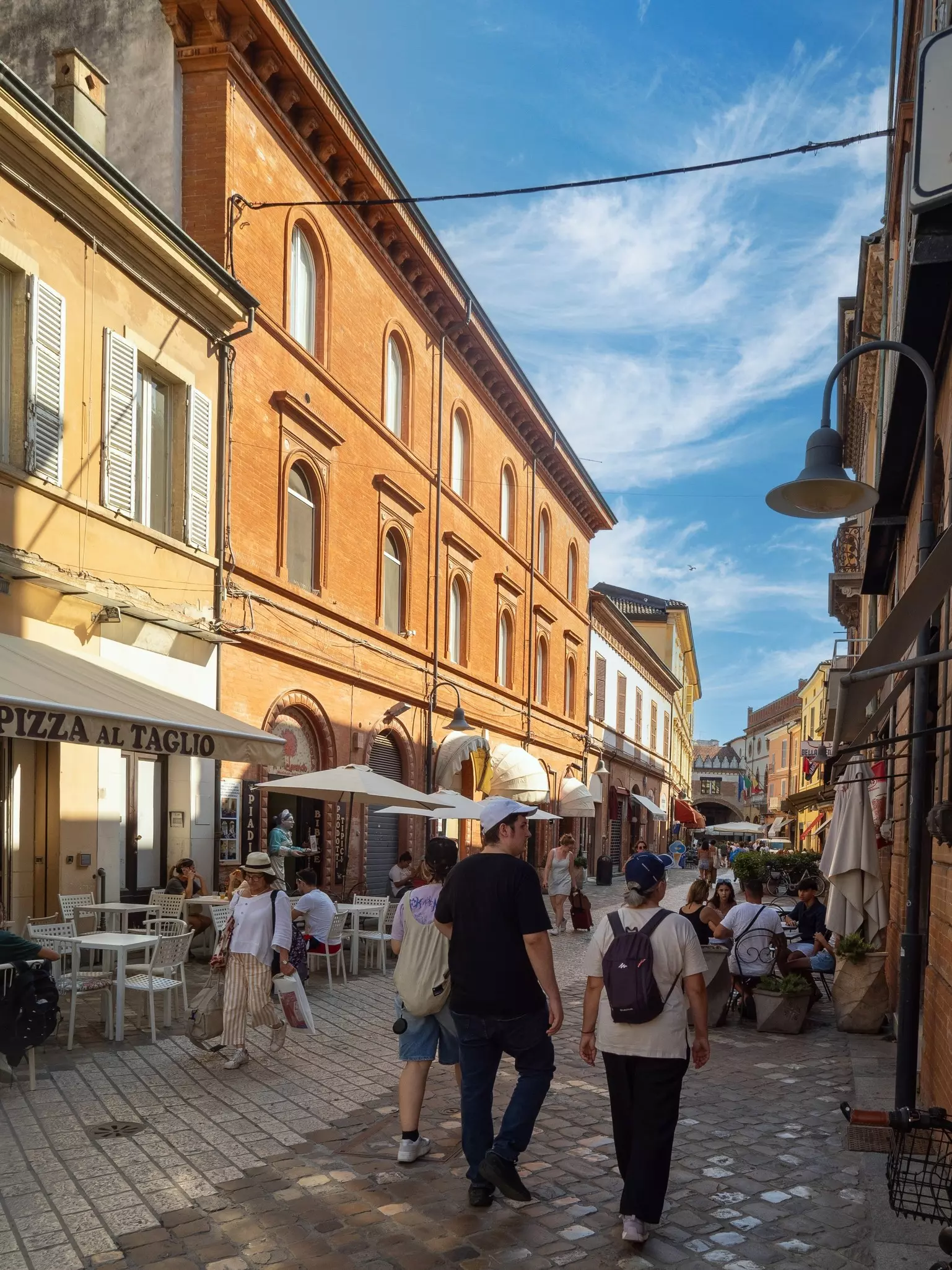
Arrive and drop your bags at Villa Foris, taking a moment to admire the beautiful reception area. A 5-minute walk around the corner onto via Cavour brings you to one of Lord Byron’s most notorious haunts, Palazzo Guiccioli. This was the home of Teresa Gamba Guiccioli, and Byron became her lover here, despite her husband (40 years her senior) living under the same roof. Take an early lunch at the nearby Osteria del Tempo Perso, trying Ravenna’s traditional capelletti pasta, and then explore Teresa’s home and the story of Byron’s time here.
Refresh yourself for an early evening aperitif (for those who like an Aperol spritz, maybe try a Campari spritz), watching the sun set over the ancient Basilica San Vitale before indulging in some local specialties such as piadina and squacquerone (flatbread and local cheese) at Casa Spadoni 44°12°.
For the evening, Ravenna is a city of music and performance. If you are lucky enough to be visiting between late May and July, the Ravenna Festival will be in full swing and finding live music will be straightforward. Teatro Alighieri’s autumn-spring opera season will offers an alternative in a very beautiful setting. Book in advance.
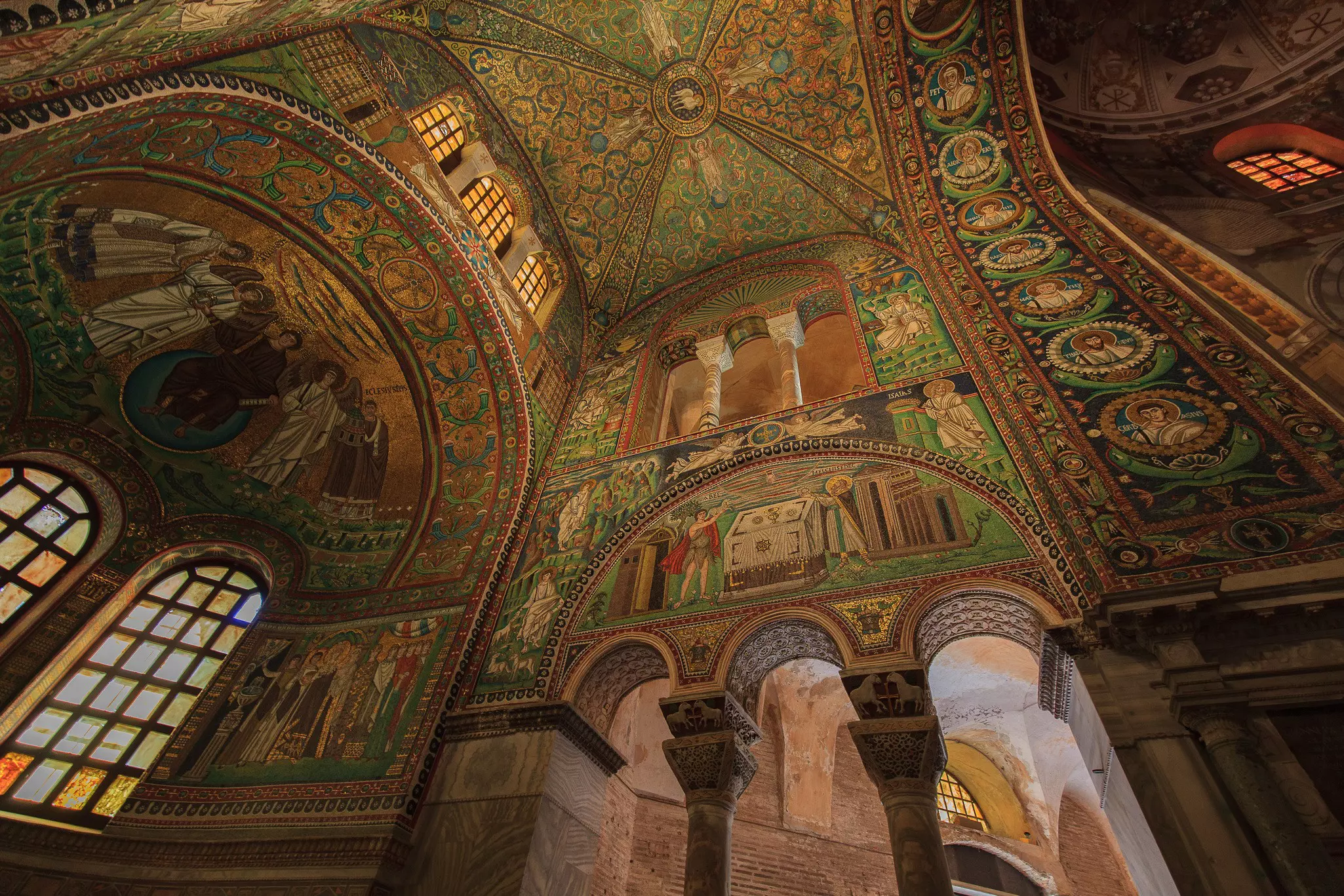
Start the day on the UNESCO mosaic trail. Book a local guide for a few hours; the best ones bring the stories to life in a much more vibrant way than a guidebook or audio recording. The vibrant Rita from Cooperativa Papavero was a veritable font of colorful knowledge. Perhaps your guide will start your tour early at the Mausoleum of Galla Placidia, not because it will be hugely crowded later, but because there is a chance that you get this incredible mausoleum to yourself. Built around 425 CE, Galla Placidia was the daughter of Emperor Theodosius I. Every surface of this small mausoleum, from the central dome to the four transepts, is decorated in the most beautifully rich mosaics. Patterns dance and weave together, stars shine from the domed ceiling and scenes of angels, saints and animals entertain the eye on every wall. Visiting San Vitale afterward heightens the wonder of the creation, which is then exceeded by the mosaic story of Justinian and Theodora at Sant’Apollinare Nuovo.
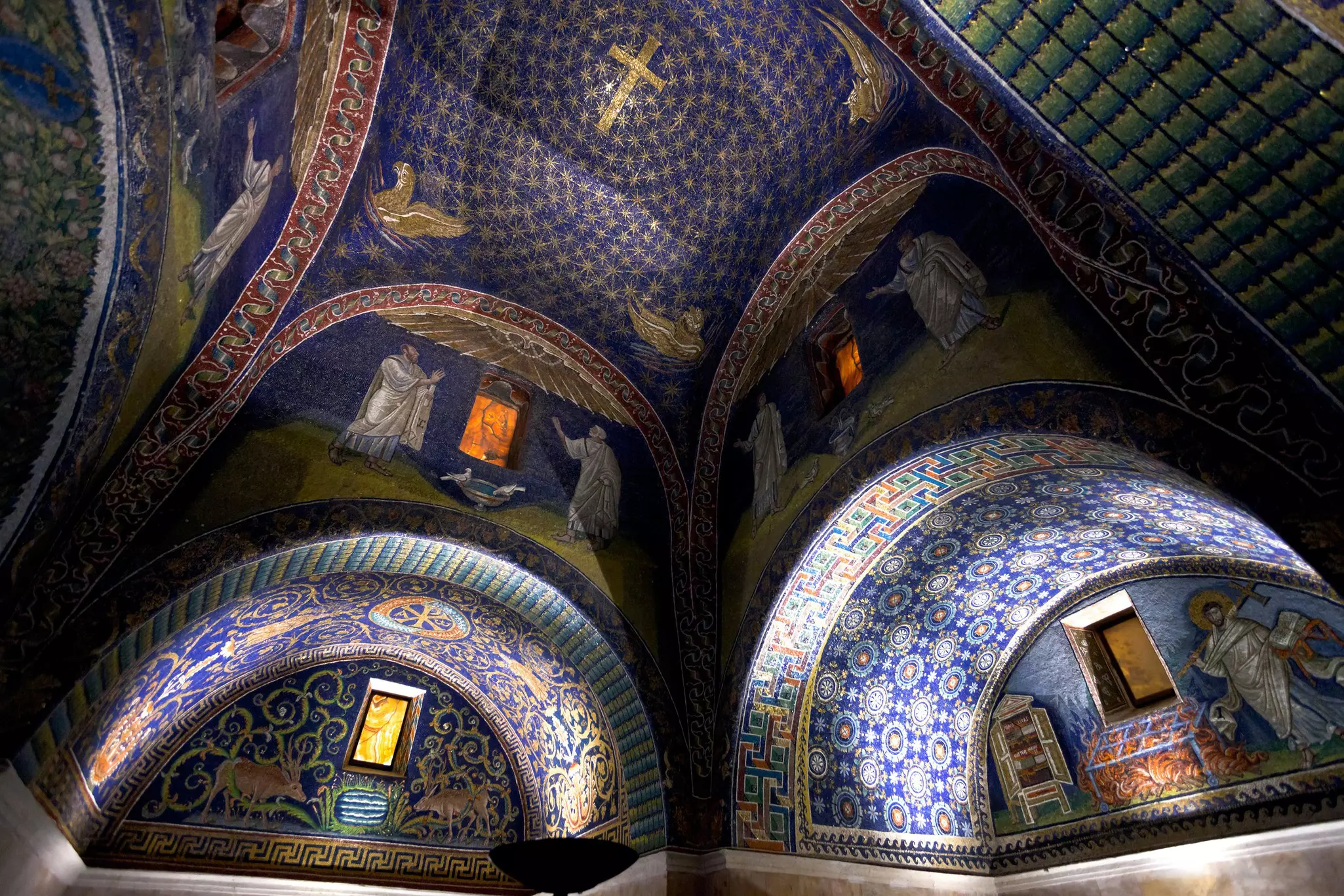
Step back out into the street and give yourself a moment. That slightly dazed feeling, blinking in the ordinary Italian sunlight, is part of the Ravenna experience. You have just stood inside some of the most extraordinary artistic achievements in human history. They were made 15 centuries ago by craftspeople pressing tiny fragments of glass and stone into wet plaster, one tessera at a time. Somehow, they still glow. Ravenna does this to you; it swings open a door onto a world so remote it barely seems real, then closes it quietly and returns you to a perfectly normal weekend afternoon.
Walk slowly. Let it settle. As you try to absorb the history and stories of Ravenna, take lunch at a local favorite, La Marchesini, a streetside restaurant where you can indulge in local specialties, such as the stuffed piadini. Try the flan di melanzane (eggplant flan), carpaccio di pomodoro al basilico (tomato with basil), mentuccia e caprino fresco (goat cheese with mint), perhaps with a local glass of robust Sangiovese.
Ravenna is world-famous for its mosaics, and unsurprisingly, there are several renowned workshops dotted across the city. Now is the perfect time to try your hand at this historic skill and book onto a course. Workshops like Dimensione Mosaico offer 2- or 4-hour courses for you to follow pre-planned or create your own designs using traditional methods and equipment, under the watchful eyes of professionals, giving you your own masterpiece to take home. Bear in mind that marble and cement weigh quite a bit!
Take the passeggiata through the streets and head for another popular local spot, Ca’ de Ven. Have an aperitif outside on the streets listening to the burble of locals discussing their days, before heading inside to explore the culinary delights. Originally the residence of the noble Rasponi Family, the charming building dates back to the 1300s.
After absorbing all of the culture that the one-time capital of the Roman Empire has to offer, what better way to spend your last day than relaxing in the sun beside the Adriatic Sea? Start by heading to the Cestha Marine Fauna Recovery Centre and visiting some of the resident turtles in recovery. The old fish market now doubles as a recovery center for injured turtles brought in by local fishers. These turtles, with such wonderful names as Tagliatella, Beatrix and Yoda, are nursed back to health and released back into the wild.
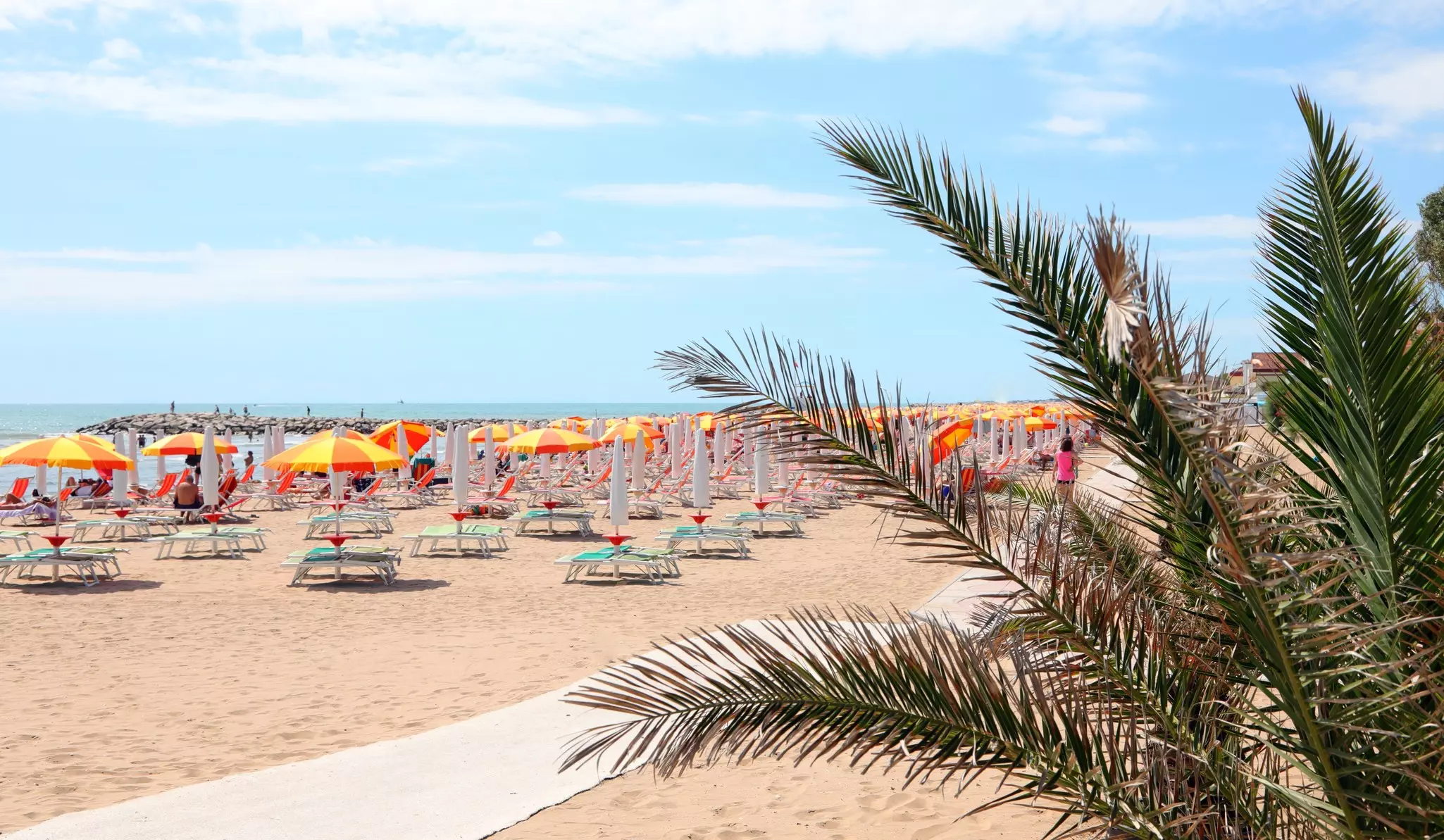
Grab an espresso at one of the nearby cafes and head to one of Ravenna’s nine main beach towns, each with a range of clubs and vibes. Try heading to MaPa Beach, hire out a sunbed and doze your final hours in the Adriatic sunshine, listening to the gentle lapping of waves on the golden sand. If you feel a bit more energetic, you can find kayak hires, paddleboarding facilities or even get stuck into a game of volleyball. And many of these beaches are backed by pine forests and nature reserves through which you can stroll at your own pace. In Italy, it is common to pay for beach use and sunbed hire, but there are also Spiaggia Libera, free beaches where you can enjoy the day free of charge.
Some beachside venues, like the Zanzibar Spiaggia 56, turn into lively night venues as the sun goes down, so stay for the party or head back, get showered and refreshed, then duck into the lively Mercato Coperto. The old market was redeveloped in 2020 and is now the home to local food suppliers and, of course, several restaurants ready for a final indulgence of Italian cuisine. After that, pick up a famous Italian gelato as you head through the streets towards Piazza del Popolo and take in all the life, history and vibrancy that this Italian city has to offer.
Come morning, it’s time to head off. But as you stand in Piazza del Popolo one last time, gelato in hand, watching the city go about its day, you may find that Ravenna has other plans for you.
Book your Italy trip with Lonely Planet Journeys
See Italy how it's meant to be seen
Accommodations, activities and ground transportation all taken care of, so you can focus on the fun part. Tell us what your dream trip to Italy looks like, and our local experts will build it from scratch. Or start with one of our itineraries and make it your own.

Explore related stories