Feb 18, 202613 min read
An Unforgettable Expedition to Antarctica and the South PoleFeb 18, 2026
13 MIN READ

Writer
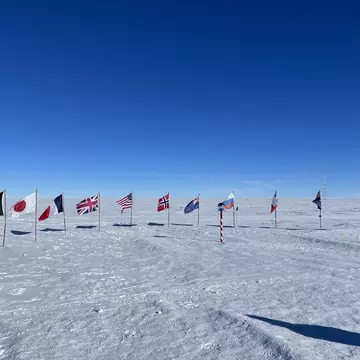
Ceremonial South Pole. Sandie Kestell/Lonely Planet

Writer
Lonely Planet may earn a commission from affiliate links on our site. All recommendations and reviews reflect our own independent opinions.
Antarctica is a dream destination. The combination of remote, snow-covered wilderness, extraordinary wildlife and the history of the Heroic Age of Antarctic Exploration has lived in my imagination for as long as I can remember. While planning and saving for my first expedition cruise, another itinerary presented itself – one I had never imagined. I joined Antarctic Logistics & Expeditions (ALE) on a 7-day expedition to Three Glacier Retreat, a small exclusive camp in the Heritage Range of the Ellsworth Mountains, deep in the interior of Antarctica. No ship, no icebergs and no wildlife, just snow, ice and adventure, and an overnight at the South Pole.
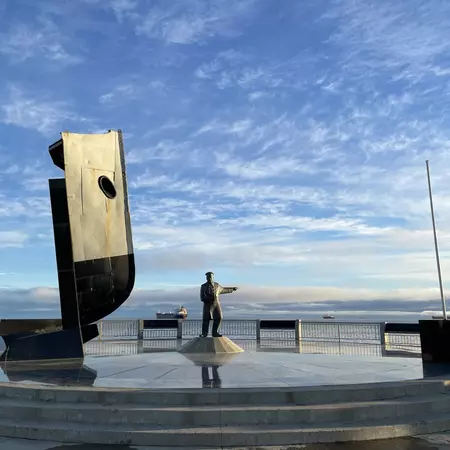
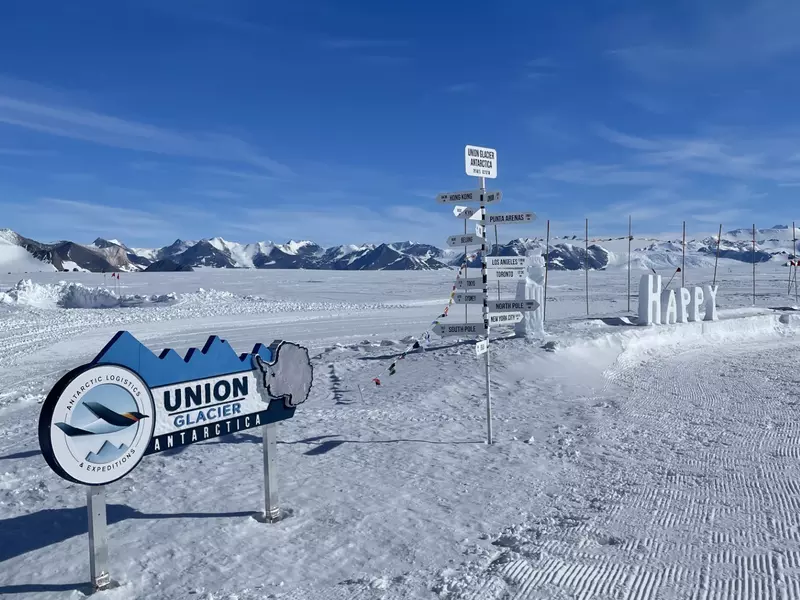
The adventure began in Punta Arenas, Chile, ALE’s departure point for flights to the interior. I arrived a few days ahead of our departure date to allow time for briefings and gear checks, and in case my luggage got lost or delayed along the way. The days in Punta drifted by in anticipation of the adventure to come.
When our departure day finally arrived, the excitement was on another level. At the airport we met other travelers joining our expedition to Three Glacier Retreat and the South Pole and expeditioners embarking on other adventures, including a group skiing the last degree to the South Pole and another going to skydive on the white continent. We were all ready to go when we heard our flight had been postponed due to an unforeseen northern wind blowing fog onto the blue-ice runway at Union Glacier, ALE’s hub in the Antarctic interior where we were due to land. Though we were bitterly disappointed, safety comes first. We spent another day in Punta and hoped for better conditions the next day. In Antarctica, weather dictates everything.
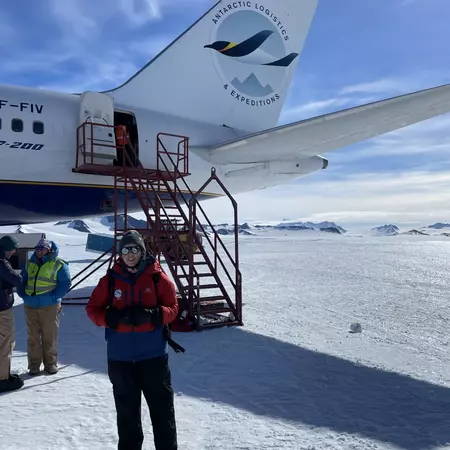
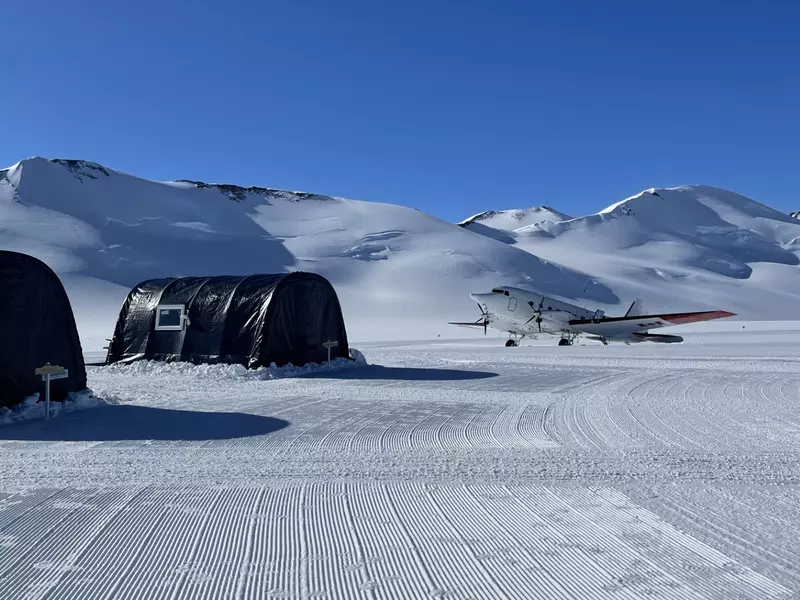
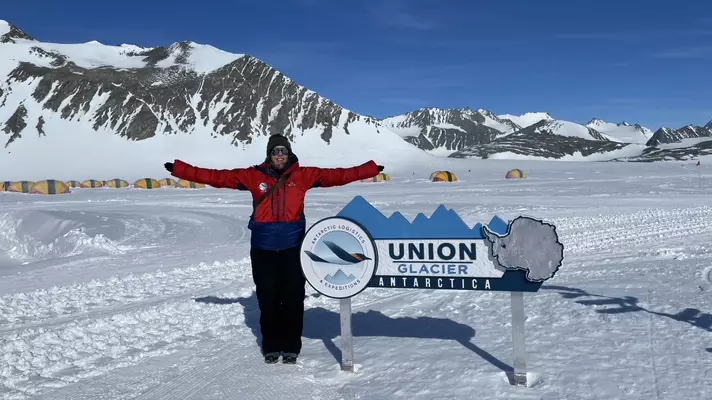
We ran through the same process again a day later, this time knowing that no departure is guaranteed. Fortunately, the weather was on our side. A Boeing 757-200 operated by Icelandair, chartered by ALE and decorated with the ALE’s flying penguin logo, flew us 3021km through the southern skies from Punta Arenas to Union Glacier in just under 4 hours and we touched down smoothly on the natural blue-ice runway. We had made it! From the runway it’s a short van ride to ALE’s camp at Union Glacier, with views of Mt Rossman (1450m) and the dramatic natural ice sculptures of the Drake Icefall frozen waterfall.
Union Glacier Camp is a base camp and general hub of activity, with expeditioners coming and going. We briefly got the lay of the land and had a warm drink in the Fram dining tent – named after the legendary ship that took Roald Amundsen to Antarctica on his South Pole expedition – before setting off to our own camp, Three Glaciers Retreat. Just 30km away, it’s a 9-minute flight on a Twin Otter equipped with skis to make the journey. Over crevasses and with the Ronne Ice Shelf in the distance, we caught a glimpse of Mt Sporli (2255m) and then landed on the skiway at Three Glaciers Retreat. We were at the head of the Driscoll, Schneider and Schanz glaciers, 1340m above sea level in a rather mild -8℃ (18°F).
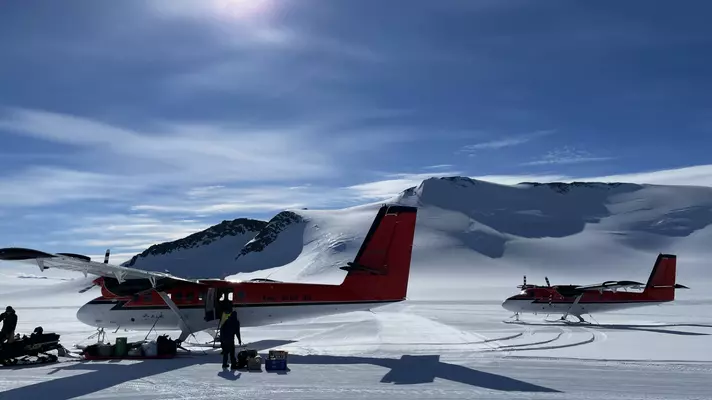
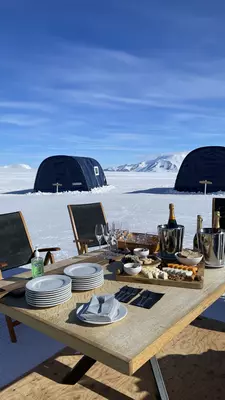
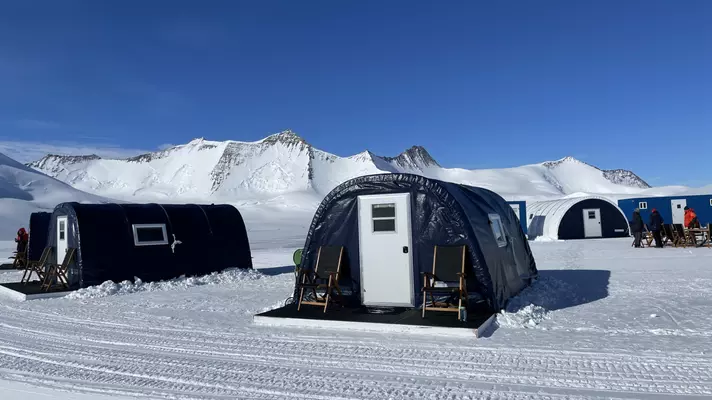
This remote, one-of-a-kind retreat was our main base for our time in Antarctica, a peaceful winter world, but in the Antarctic summer. There are eight inviting Polarhaven sleeping tents, each measuring roughly 4x6m, all arranged in a semicircle around the main dining and lounge tent. For me, it was love at first sight with the perfect balance of comfort and adventure.
The hospitality team prepared a welcome reception with Champagne and nibbles before dinner, and with such mild temperatures, we sat outdoors. We began to settle in, meeting the team and taking in our new surroundings. One thing was immediately clear: from staff to expeditioners, this was a tribe of people who love high, cold places and we immediately clicked.
We got a surprise announcement that first evening. The weather forecast for the next 2 days looked promising for a flight to the South Pole the following morning, with clear skies and good visability predicted. Of course, we all knew the pole was on the cards, but we didn’t expect it to happen so early in our adventure. Our briefing that night gave us an overview of what to expect at the pole, from a primer on the Amundsen–Scott South Pole Station to the ceremonial and geographic poles, right through to the ins and outs of ALE’s South Pole Camp and the elevation gain we’ll experience (the pole is at 2835m above sea level).
We were on standby in the morning until we got confirmation that the weather conditions were right for us to have a clear window to land at the pole. We passed the time with a lecture on the history of the discovery of the southern continent of Antarctica, covering attempts and first visits as well as the establishment and evolution of the Amundsen–Scott station and the Ceremonial South Pole and the Geographic South Pole.
Word finally came through that the opening in the weather was a sure thing. We took a short flight back to Union Glacier on the Twin Otter first and then boarded a 1960s-era Basler DC-3. Just under 4 hours later we touched down on the South Pole skiway. We clambered down the aircraft stairs, immediately felt the colder temperature of around -20℃ (-4°F) and took our first steps on the polar plateau, walking on ice almost 3000m thick. It was the literal end of the world and I was pinching myself.
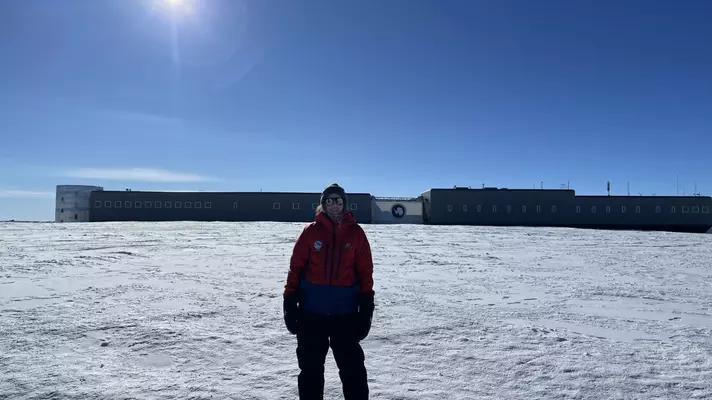
Access to the Amundsen–Scott South Pole Station is limited to scientists and with no tours running in the 2025/2026 summer season, we expected to just see the station from the outside and move on to the poles. We soon learned that we were probably the luckiest group to visit the South Pole this season. A member of our group, with connections in the scientific community, pulled a few strings and we were invited inside for a tour. It was an enormous and unexpected privilege and I was lost for words, with giddy excitement taking over as we entered the station. We met Grace Slembrouck from the station’s logistics team and our guide for the tour. As we moved through the station, we stopped to admire former pole markers on display, winterover photos and glass cabinets filled with bits and pieces from the station’s history. Grace took us to the library, common rooms and medical unit and out onto a balcony where she pointed out a compass signpost where all four arrows pointed North. (The running joke here is: Which way is north?) We learned about station life for the 170–180 people down here for the Antarctic summer, from game nights and volleyball practice to 4-minute showers and a once-a-week laundry routine. It all ended too soon and I found myself wondering if the station was hiring…
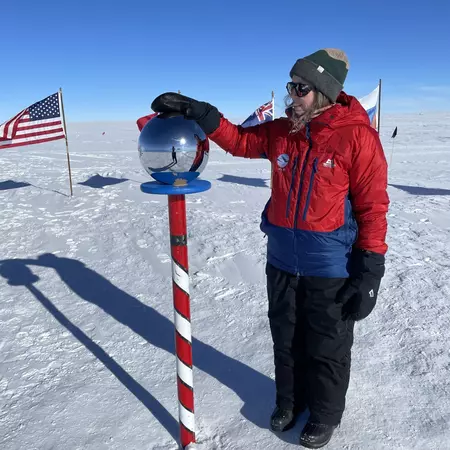
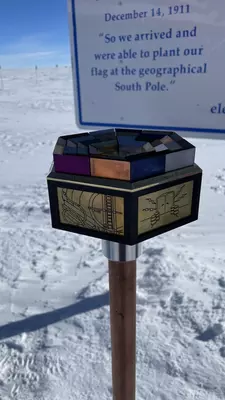
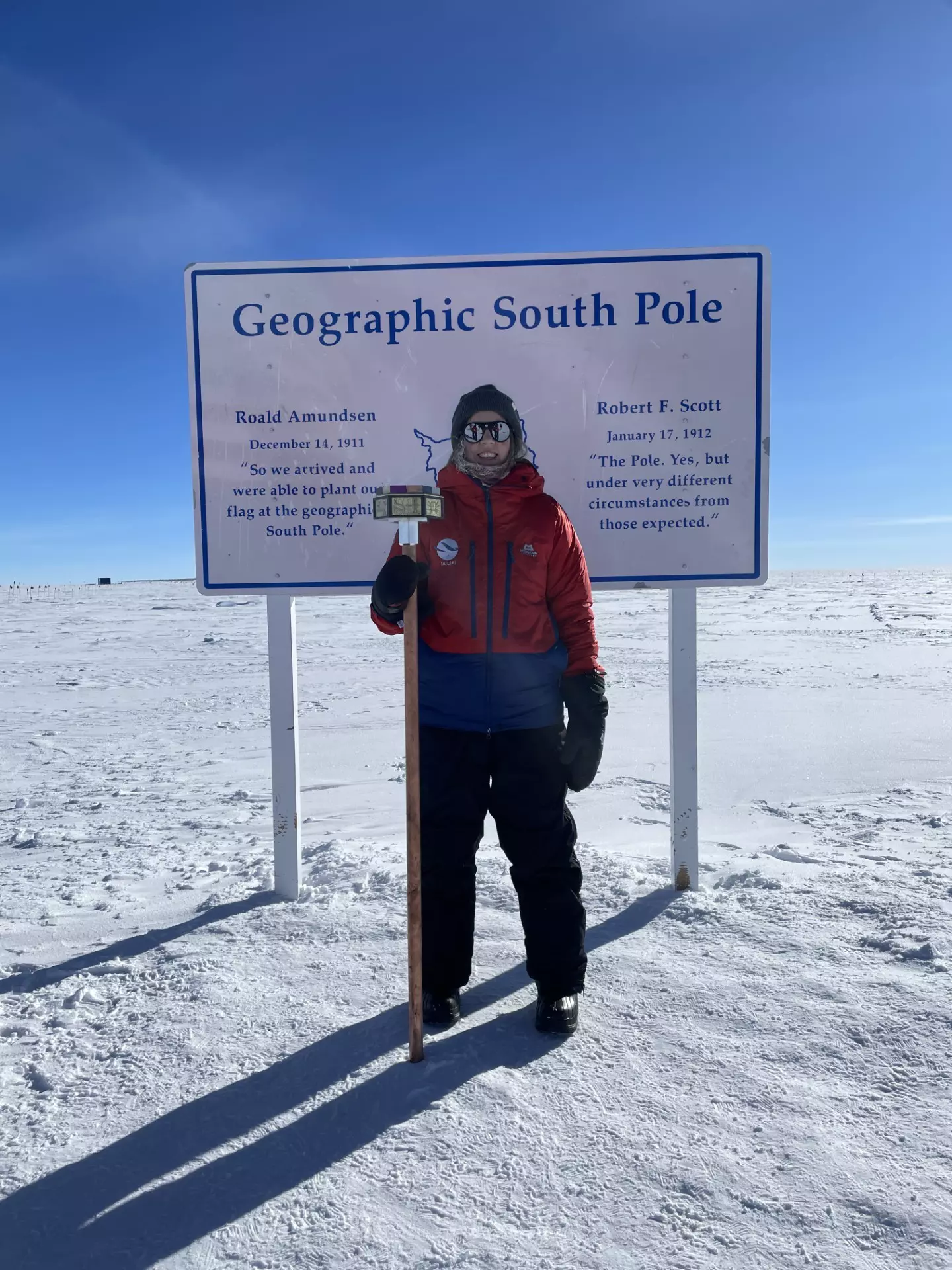
Back outside on the plateau and just beside the station, we made our way to the Ceremonial South Pole. Here the flags of the 12 signatories of the Antarctic Treaty wave in a semicircle around a red-and-white-striped pole topped with a chrome-colored globe. A few hundred meters away is the Geographic South Pole, where the new 2026 pole marker, designed by the overwintering staff, marks the end of the Earth. Standing on this spot makes you the slowest moving person on the planet. A traditional quick run around the marker also took me through all the world’s time zones in a few seconds.
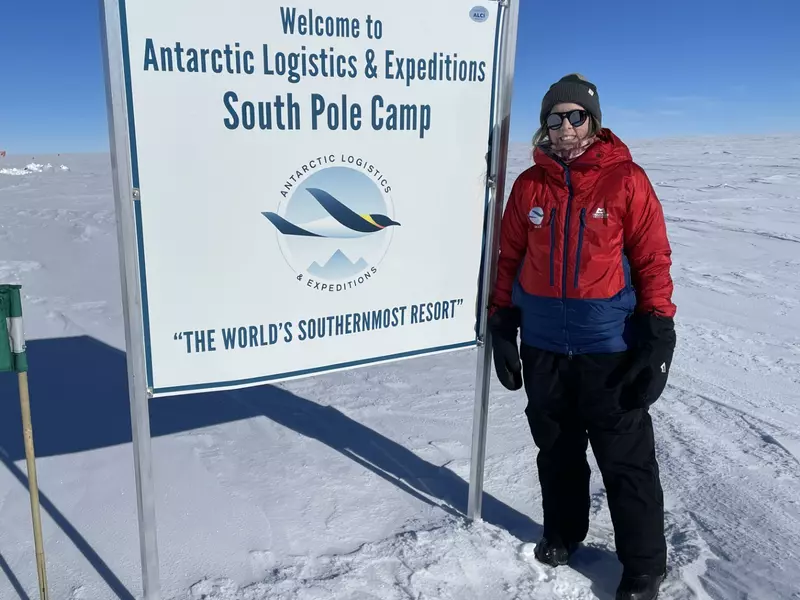
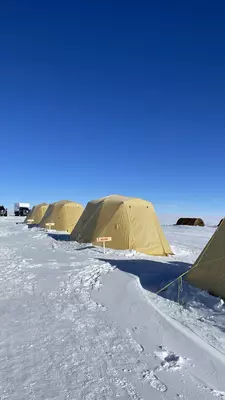
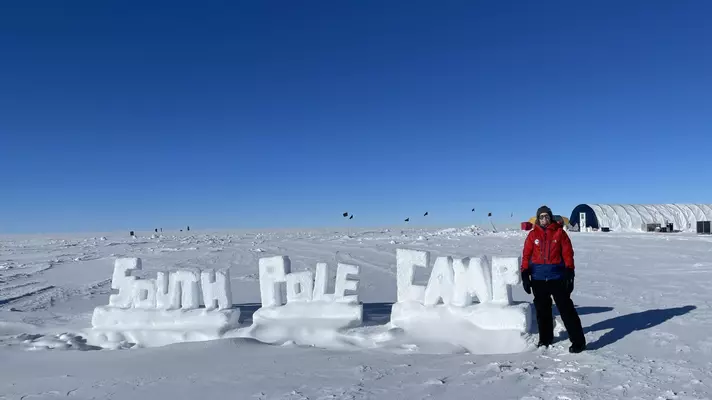
From the pole we made our way a few hundred meters to ALE’s South Pole Camp. It is a unique place: the southernmost resort in the world. We dined on the most southerly meal you could ever eat and raised a celebratory toast to those that struggled to reach the South Pole just over a century ago. Amundsen and Scott and their respective teams are never far from mind, not to mention Shackleton who came so close but never reached the pole. After a warm and cozy night in our bright yellow Arctic Oven tents, we began the next day with a lecture about Captain Scott and his doomed South Pole expedition. I know the story well, but every time I hear it, I can’t help but find myself hoping that it will turn out differently this time. We visited the pole again before the time came to return to Three Glacier Retreat. This is an incredible place, and I’ll be raving about my stay here forever more.
Each day at Three Glacier Retreat began with a morning briefing outlining the excursions on offer for the day. Evenings were filled with lectures and presentations, including one from guide Rob Smith on his 2019 ski expedition to the South Pole across the Axel Heiberg Glacier in the footsteps of Amundsen, and lecturer Craig Morton’s take on Antarctic myths, legends and conspiracies.
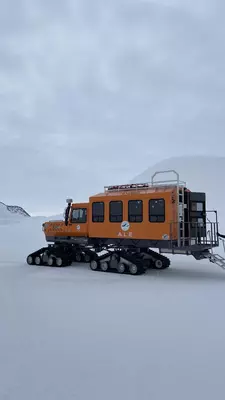
Our first day was overcast and the light was flat, so the weather was limiting what activities we could do. We opted to take the Tucker Sno-Cat on an excursion down the Driscoll Glacier and onwards to the Hidden Valley to explore its unusual ice formations. We slipped microspikes onto our polar boots to meander around and admired the honeycomb patterns in the blue ice while chatting to our guide about the folds in the rocks.
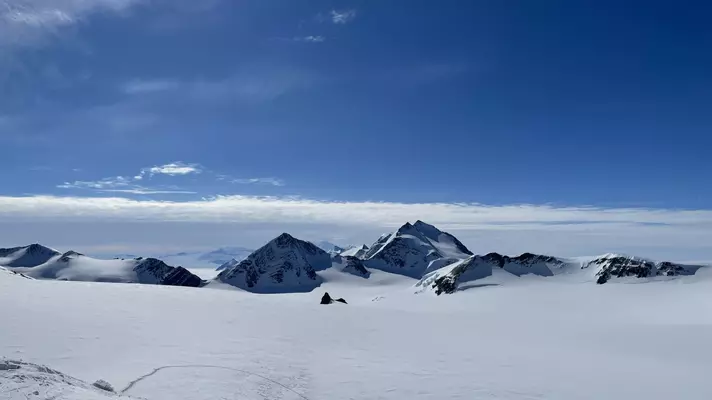
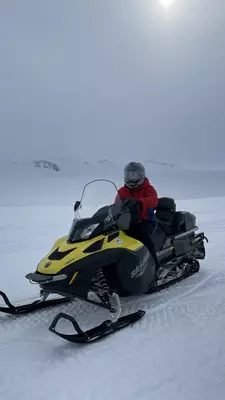

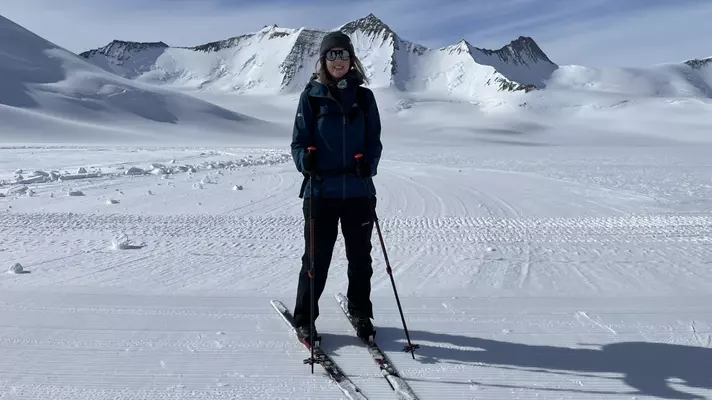
After lunch a group of us put on cross-country skis – my first time! – and glided at a relaxed pace around the 3km groomed loop beside camp. The beauty here is off the charts. We're in a calm white paradise surrounded by wild snowy peaks. I can see this type of skiing becoming a future obsession (could I ski the last degree to the pole?). Next we took things up a notch with a lesson in driving a snowmobile. Our guide Yoshi Miyazaki took us through the basics and after a little bit of practice, we headed into the wide-open expanse of the Antarctic, zipping up to different lookouts to marvel at the landscape.
The next day, the blue ski was back and it was perfect skiing weather so I opted for a morning of ski touring. Two experienced guides, Rob Smith and Nickel Wood, led our group of four skiers of varying abilities, from instructor level (me) to brave advanced beginners and improvers, but none of us with much backcountry experience. We slipped on our touring boots and stuck skins to the underside of the skis to ensure we could slide up the hill without slipping back. And off we went. Once we reached the top we peeled the skins off again and skied back down. This was all on the gentle incline of Ski Hill right beside Three Glacier Retreat. After some snowfall the previous night, the fresh powder was soft and inviting. It was a lot of fun and we were all smiles at the bottom, looking back at our tracks and cheering on as the other skiers made their way down.
In the afternoon, we ventured further from Three Glacier Retreat aboard a little convoy of snowmobiles that towed our skis behind us in a sled. It was a fun drive to the untouched wilderness at Sporli Col, where we quickly clipped into our skis to ski a gloriously long stretch of low-angle terrain below Mt Sporli. I could have stayed there all day – or longer – but there was another can’t-miss item on the day's agenda: a scenic flight to Mt Vinson (4897m) in the Sentinel Range of the Ellsworth Mountains. So, we left our tracks behind us and snowmobiled our way back to camp to board one of the Twin Otters for our exciting flight. There’s endless incredible untouched scenery in every direction: mountains peaks, crevasses and pristine snow. Vinson is the highest peak in Antarctica and one of the Seven Summits (the highest mountains on each continent). It’s a privilege to appreciate it from the air.
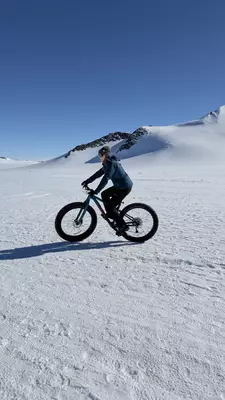
Our last day arrived too quickly but it brought a welcome surprise. We had been on standby for our flight back to Punta Arenas and word trickled in around midmorning that the flight was being postponed to the following day due to weather conditions. So, it wasn't our last day after all! To say I was delighted is an understatement. Three of us celebrated by taking fat-tire bikes around the camp’s 3km groomed loop. Cycling on snow is a little trickier than I thought it would be. We laughed our way around most of the loop as one or other of us tried to get to grips with the gears, seat height or rough patches of snow.
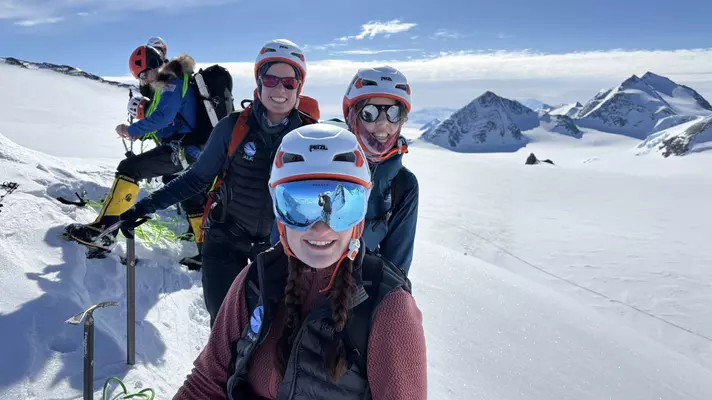
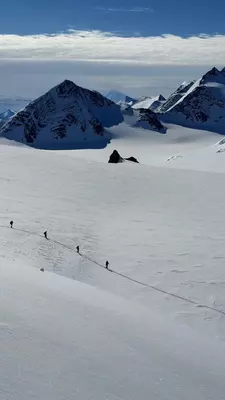
After lunch we gathered our mountaineering kit for an excursion to Sporli Spur. We rode the snowmobiles to the same area we skied the day before, but this time we were heading up instead of down. Crampons on, ice axe in hand and roped together in two groups of four, we set off on a slow-and-steady uphill climb to Sporli Spur. Halfway to our goal we reached a flat plateau where we took a break and had superb views of the Larson Valley and its pyramid peaks in one direction and the Drake Icefall in the other. We pressed on to the spur, the only sound being the crunch of the snow under our crampons as we climbed a fairly steep section. Our view is nothing short of spectacular.
Before the day was over there was one more chance after dinner to ski and I had to take it. We skinned up the Ski Hill at camp and skied down one last time, leaving our final tracks on the snow in Antarctica.
A day later, the weather window for our flight back to Punta Arenas was confirmed and we packed up, flying to Union Glacier to check in. We grabbed hot drinks, mingled with Mt Vinson climbers and skydivers, and caught a documentary about the discovery of the wreck of Shackleton’s Endurance before it was time to depart. Our time down here had been extraordinary – everything I hoped for and so much more. I boarded the flight with new friends that share a unique Antarctic camaraderie born out of our experiences on the ice. Like all of the Antarctic enthusiasts I’ve met here, the ice is starting to call me back and I’m already planning my return.
The price for the South Pole Overnight at Three Glaciers Retreat is US$87,975. You can contact Antarctic Logistic & Expeditions for prices for custom itineraries at Three Glacier Retreat as well as other expeditions of varying cost, including one to the Gould Bay Emperor Penguin Colony.
Expeditions take place during the Antarctic summer from November to January.
Antarctic Logistics & Expeditions is committed to sustainable Antarctic tourism and a founding member of the International Association of Antarctica Tour Operators (IAATO). Departure briefings in Punta Arenas cover sustainability, biosecurity and responsible behavior in detail and staff on the ice reinforce this message during expeditions.
Sandie Kestell was a guest of Antarctic Logistics & Expeditions. Lonely Planet does not accept freebies in exchange for positive coverage.
Explore related stories