Sep 21, 202612 min read
What’s the Best Way to Visit the Galápagos Islands?Sep 21, 2026
12 MIN READ

Writer
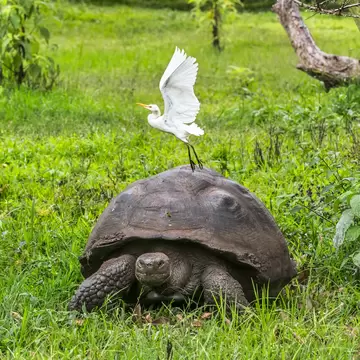
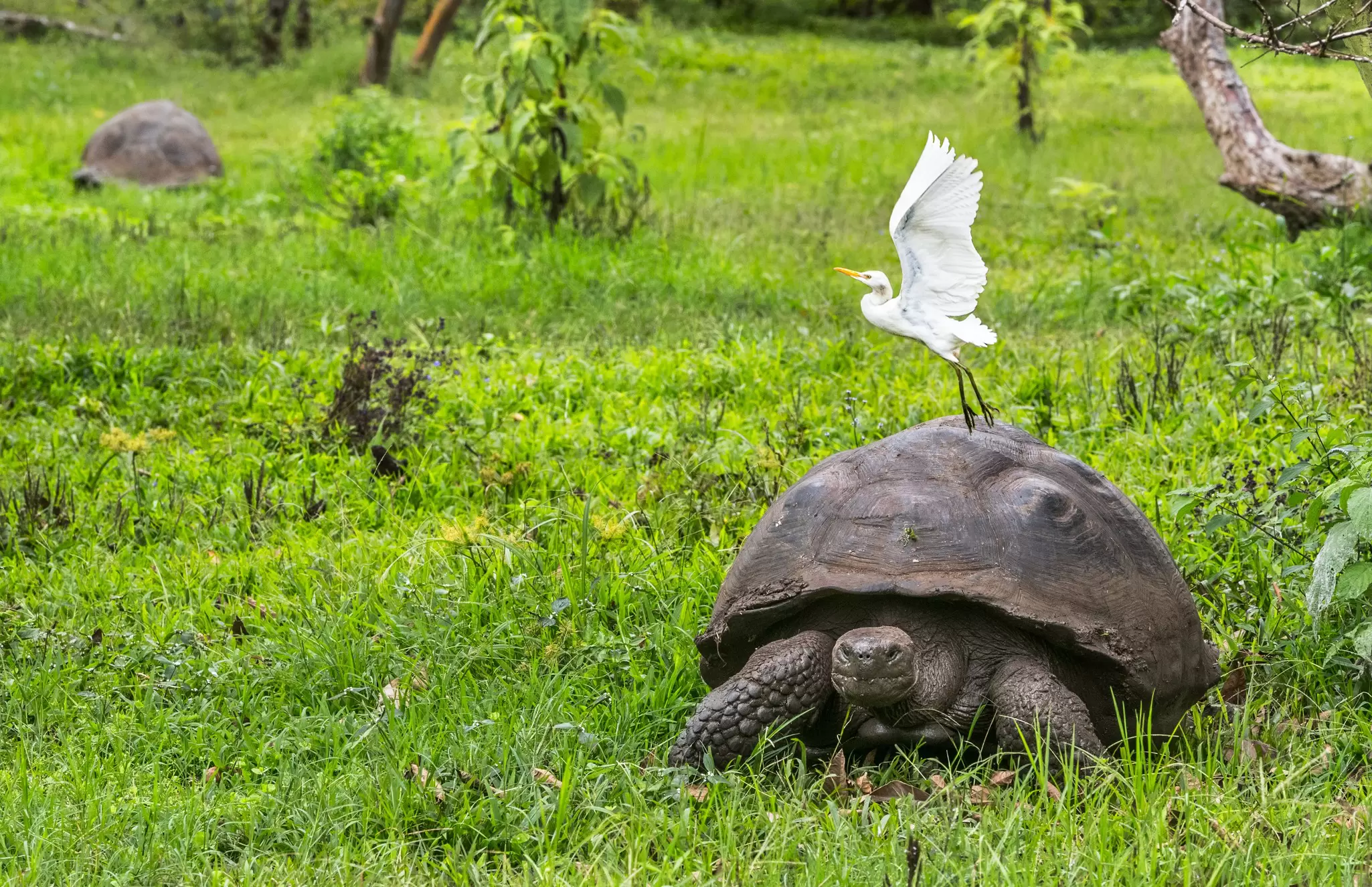
A Galápagos giant tortoise and egret bird, Santa Cruz Island. Maridav/Shutterstock
Writer
Lonely Planet may earn a commission from affiliate links on our site. All recommendations and reviews reflect our own independent opinions.
With unique-on-Earth wildlife, otherworldly landscapes, crystal-clear waters and tropical weather, the Galápagos are like nowhere else, and a trip to the remote Ecuadorian archipelago is a dream come true for many travelers. Once you’ve committed to this monumental journey, a crucial question arises: should you stay on land or book a cruise?
A cruise through the Galápagos promises a comprehensive, action-packed experience that will whisk you all around the archipelago. Once you’re on board your vessel, everything is planned out for you; all you have to do is kick back and enjoy.
Staying on land, on the other hand, gives you more flexibility and control over your own itinerary. Rather than following a predetermined program, you can craft your trip around your own interests, pace and budget – whether that means relaxing by the pool, shopping for souvenirs or booking a day trip into the national park.
I’ve explored the Galápagos both on a boat and on my own, on land; each offers a distinctly different way to experience this one-of-a-kind place. And while I certainly have my own takeaways about the pros and cons of each, I thought I’d seek out an expert to weigh in – someone who knows the islands in and out and has seen firsthand what works best for different kinds of travelers. So I put the question to Klaus Fielsch, who spent 14 years as a guide in the Galápagos and now serves as a manager at Metropolitan Touring, one of the pioneers of tourism in the archipelago and a longtime operator of both hotels and expedition cruises in the islands. Consider our recommendations below your expert travel analysis.
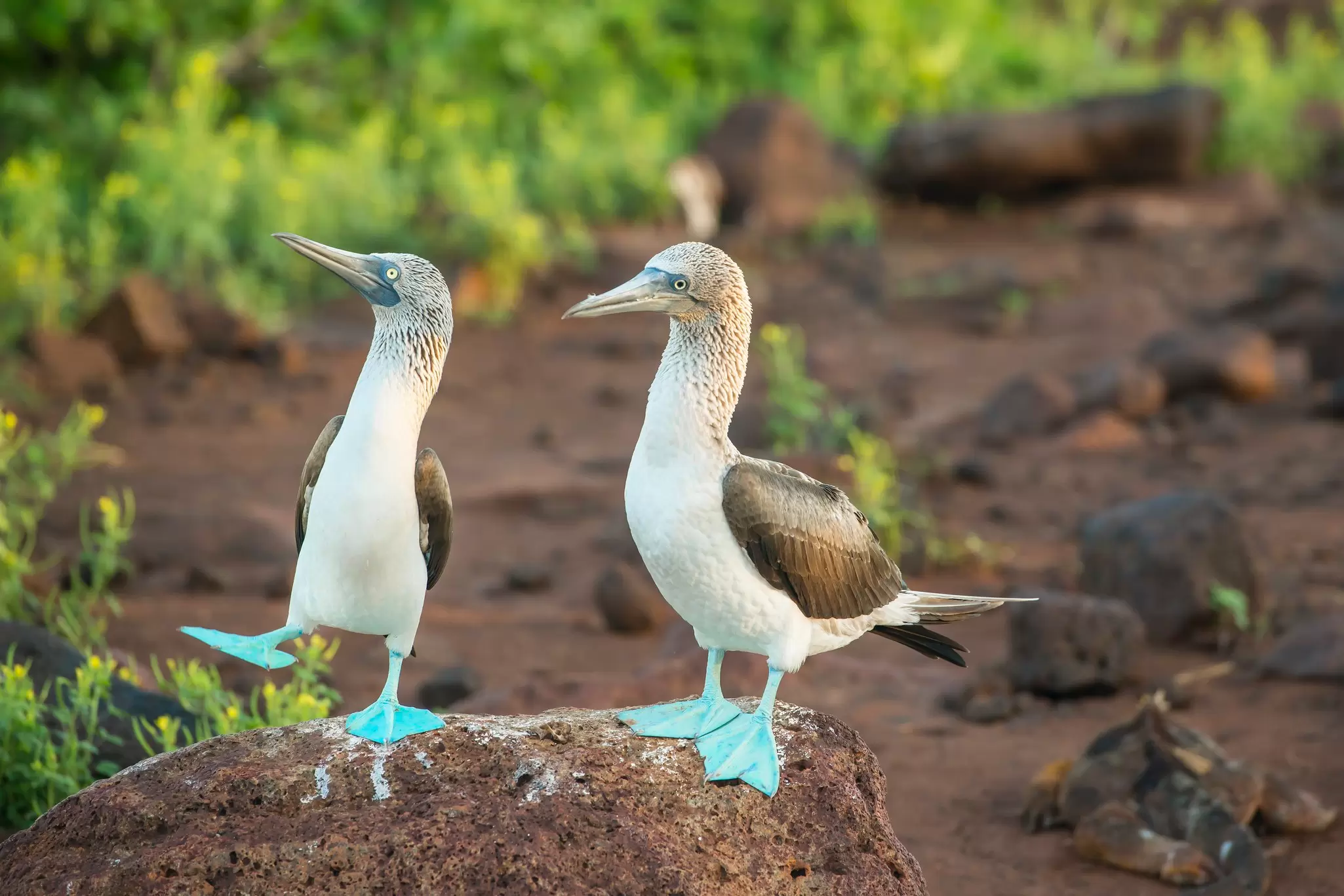
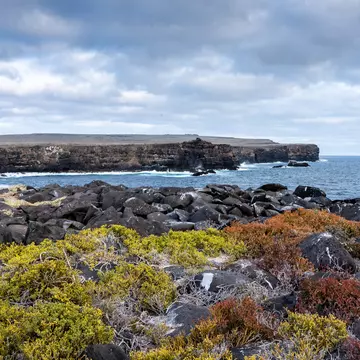
First, a quick primer. Governed by Ecuador, the Galápagos Islands are a remote archipelago in the Pacific Ocean, some 600 miles west of mainland South America. Just four of the 127 volcanic islands, islets and rocks are inhabited by people, with 97% of the islands’ landmass protected as Galápagos National Park. The surrounding waters are also protected within the Galápagos Marine Reserve.
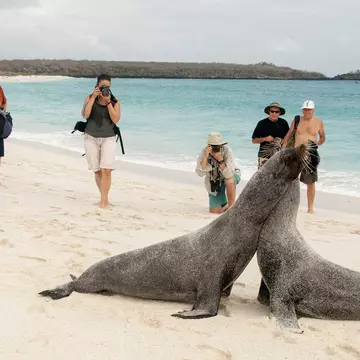
A UNESCO World Heritage Site since 1978, the islands are perhaps best known for their connection to Charles Darwin, who spent a month here in 1835 during the HMS Beagle’s 5-year voyage to map the seas. Darwin’s observations of the islands’ extraordinary birds and animals would later help shape his theory of evolution by natural selection. Today, you can see many of the same species Darwin encountered, often at remarkably close range: since many evolved without significant land-based predators, they have little fear of humans.
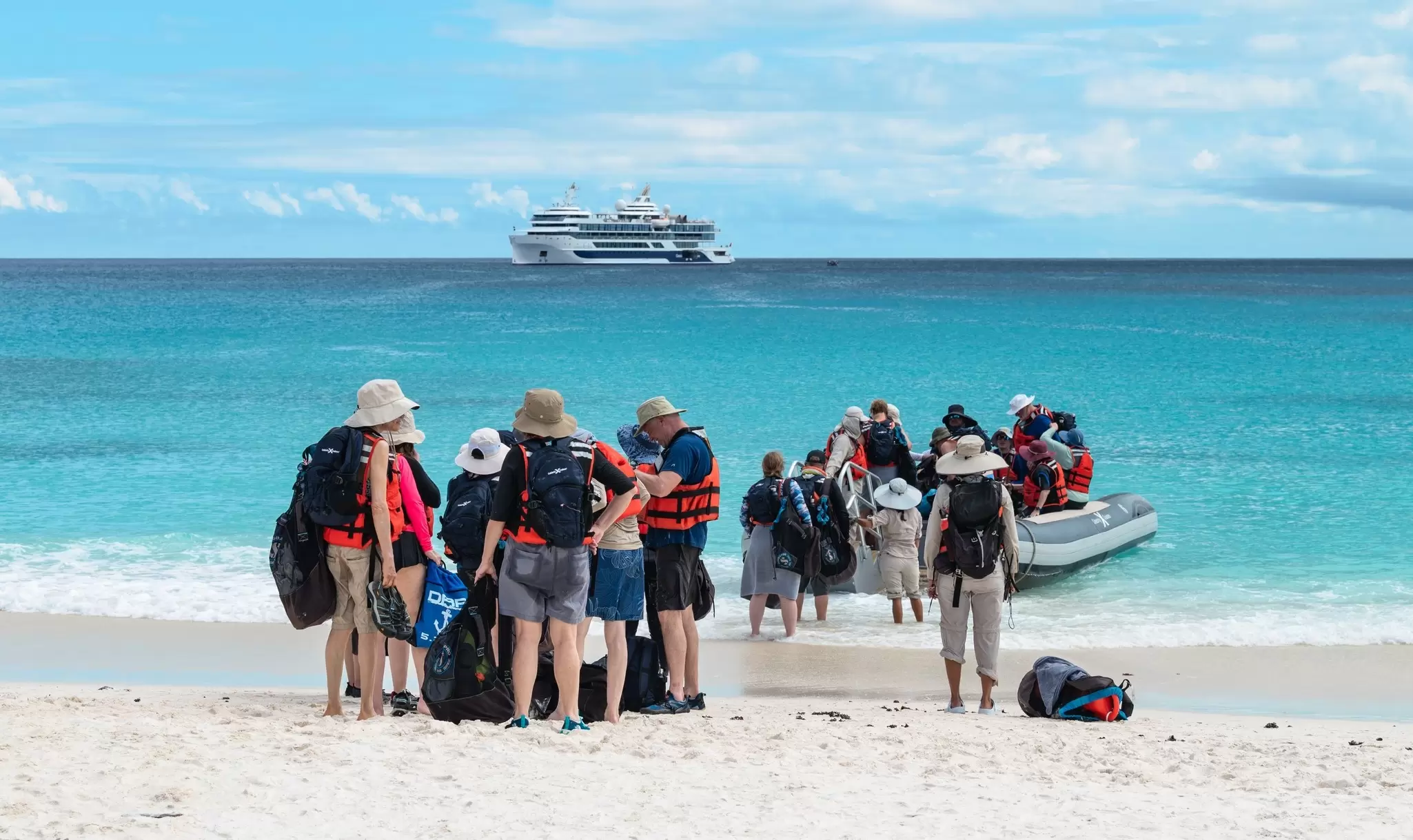
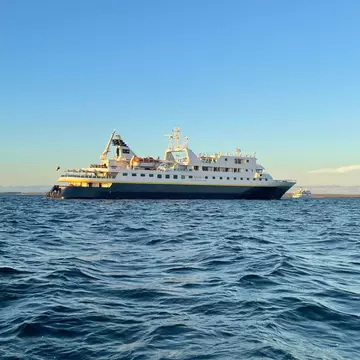
For many travelers, the best way to take in the Galápagos is aboard a ship. Indeed, a multiday cruise is a natural choice for exploring a group of such spread-out specks. If you’re immediately thinking of the city-size ocean liners seen in the Caribbean or Mediterranean, fear not: expect to sail aboard an expedition vessel capped at a maximum of 100 passengers, or (if you want something more high-end) on a yacht accommodating as few as 16 people. What’s more, the total number of vessels in the archipelago is limited to protect nature and prevent overtourism.
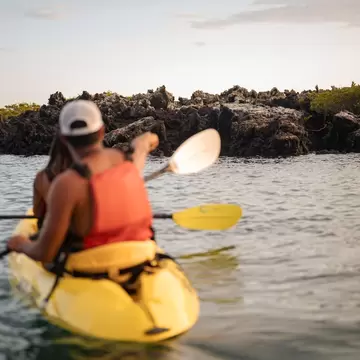
All ships are equipped with such outdoorsy gear as kayaks, stand-up paddleboards, snorkeling equipment and glass-bottom boats to help travelers immerse themselves in the islands’ natural wonders. You won’t find any casinos, waterslides or theatrical spectacles here.
Expedition cruise itineraries in the Galápagos brim with activities. You might take a guided hike at sunrise, return to the ship for breakfast, then head back out for a coastal kayaking session. As you take lunch onboard, the ship might sail to another island, where you’ll go snorkeling, change, then venture back out for a late-afternoon hike. After dinner, you might listen to a short lecture on Darwin, then meander onto the deck for a stargazing session – all before falling into bed so you can wake up in an entirely new place…and do it all over again the next day.
Because these islands don’t have traditional cruise ports, passengers typically travel ashore aboard small inflatable panga tenders, meaning you can’t just walk on and off as you please. Additionally, because visitors to the national park must be accompanied by a guide at all times, excursions are carefully managed and run on a set schedule. If you’re an independent traveler who likes to make your own plans and change them on a whim, this level of structure may not be for you. If, however, you prefer that someone else take care of the logistics during your vacation, it can be a major perk. You simply show up and let the expedition team handle the rest.
“On a ship, you’re going to see more and do more in a shorter amount of time,” says Fielsch. Cruise ships make some short crossings during the day, but typically cover longer distances between islands overnight, while you’re sound asleep – which, Fielsch says, makes a cruise an incredibly efficient way to explore the Galápagos, including remote islands that are simply too far to visit on a day tour from land. If you’re hoping to see waved albatrosses, for instance, you’ll want to go to Española (from April through December, when they’re nesting) – and the only way to do that is aboard a cruise ship. Similarly, Genovesa, home to huge numbers of red-footed boobies, is only accessible via boat.
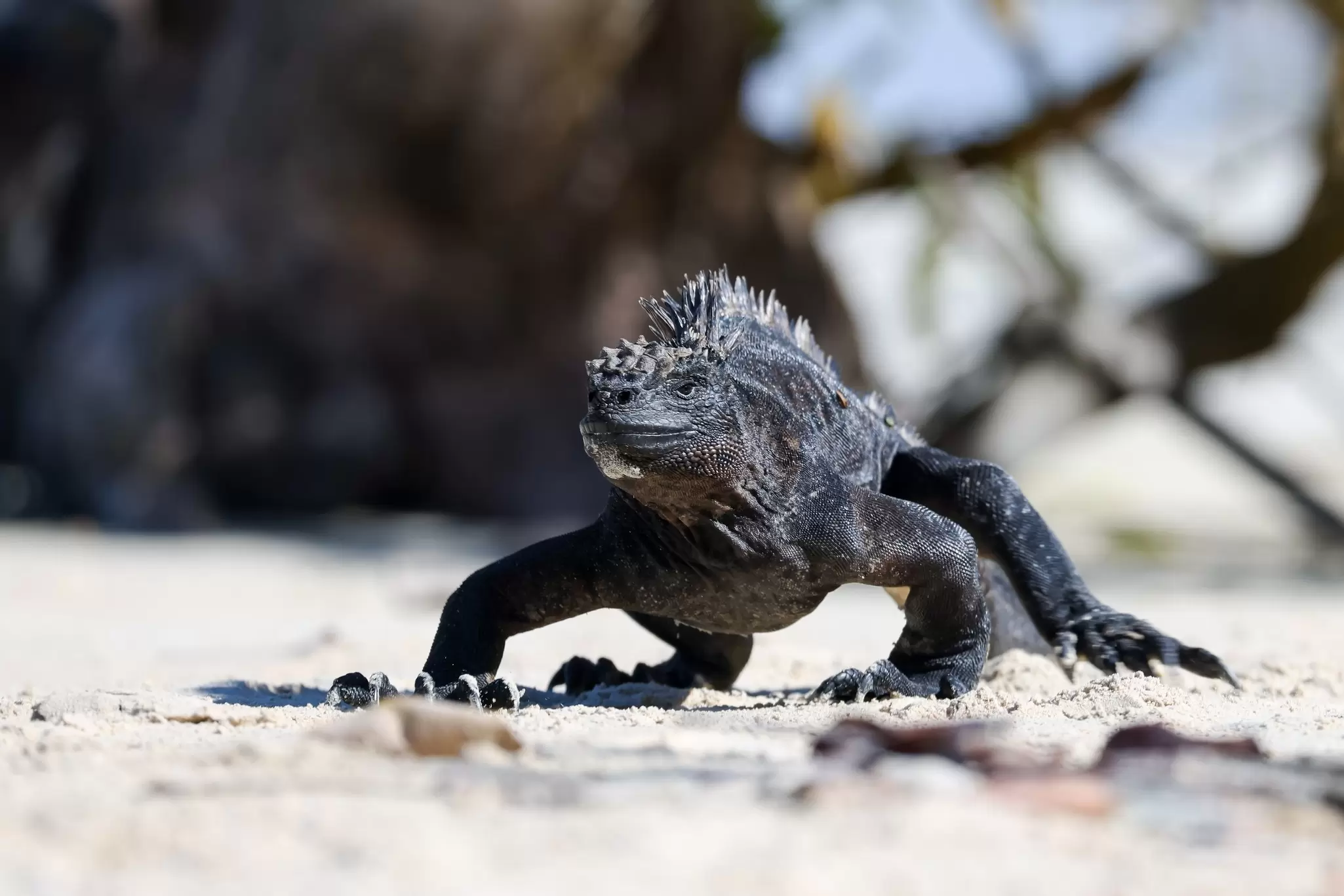
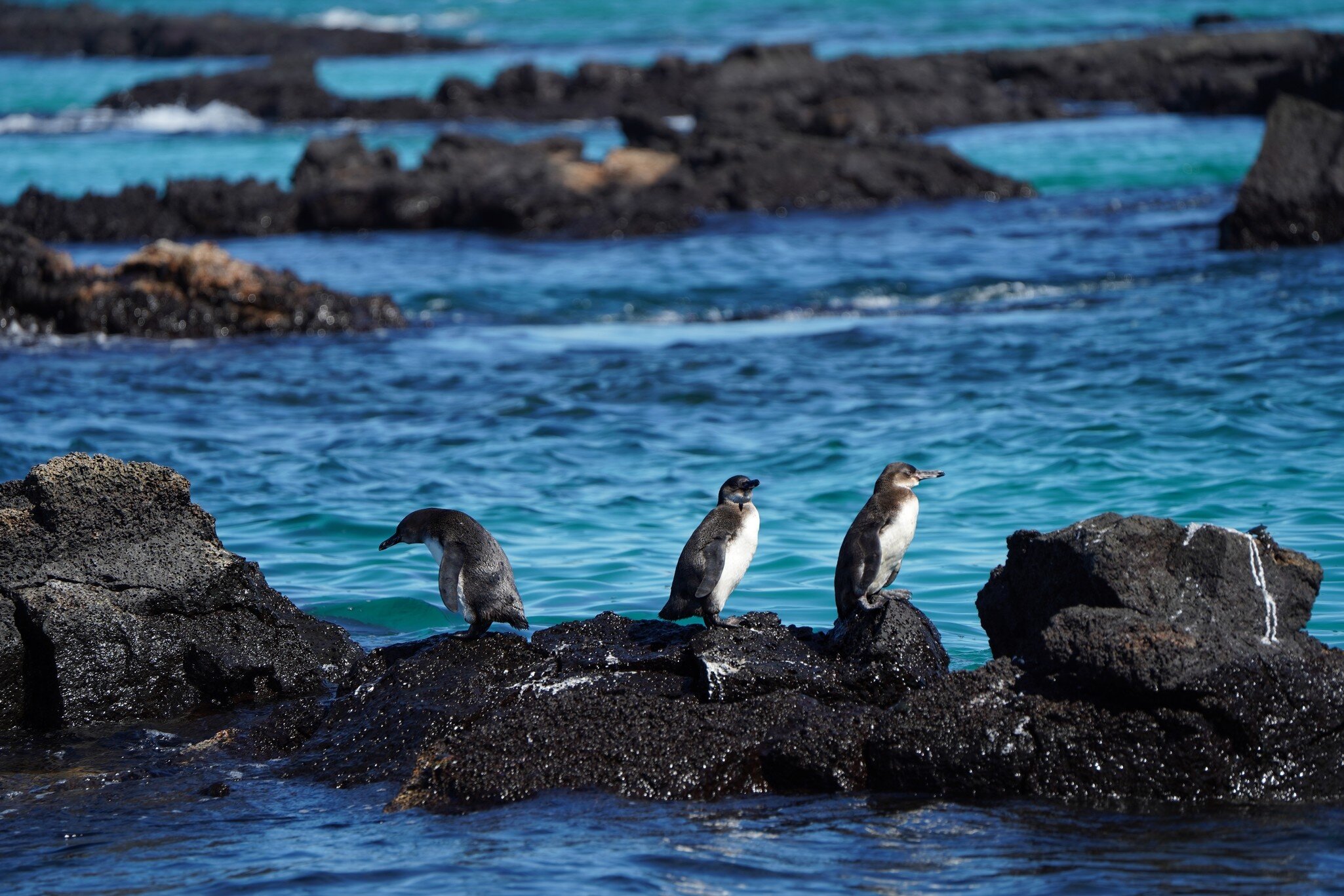
As you sail in comfort from island to island, you’ll have the chance to see a diverse range of wildlife, including many – if not all – of the “Big 15,” the Galápagos’ version of the African safari’s “Big Five.” Blue-footed boobies, magnificent frigatebirds, Galápagos penguins, marine iguanas and Galápagos fur seals are just a few of the creatures you might encounter. And on a cruise, you count on seeing many, if not most, of them.
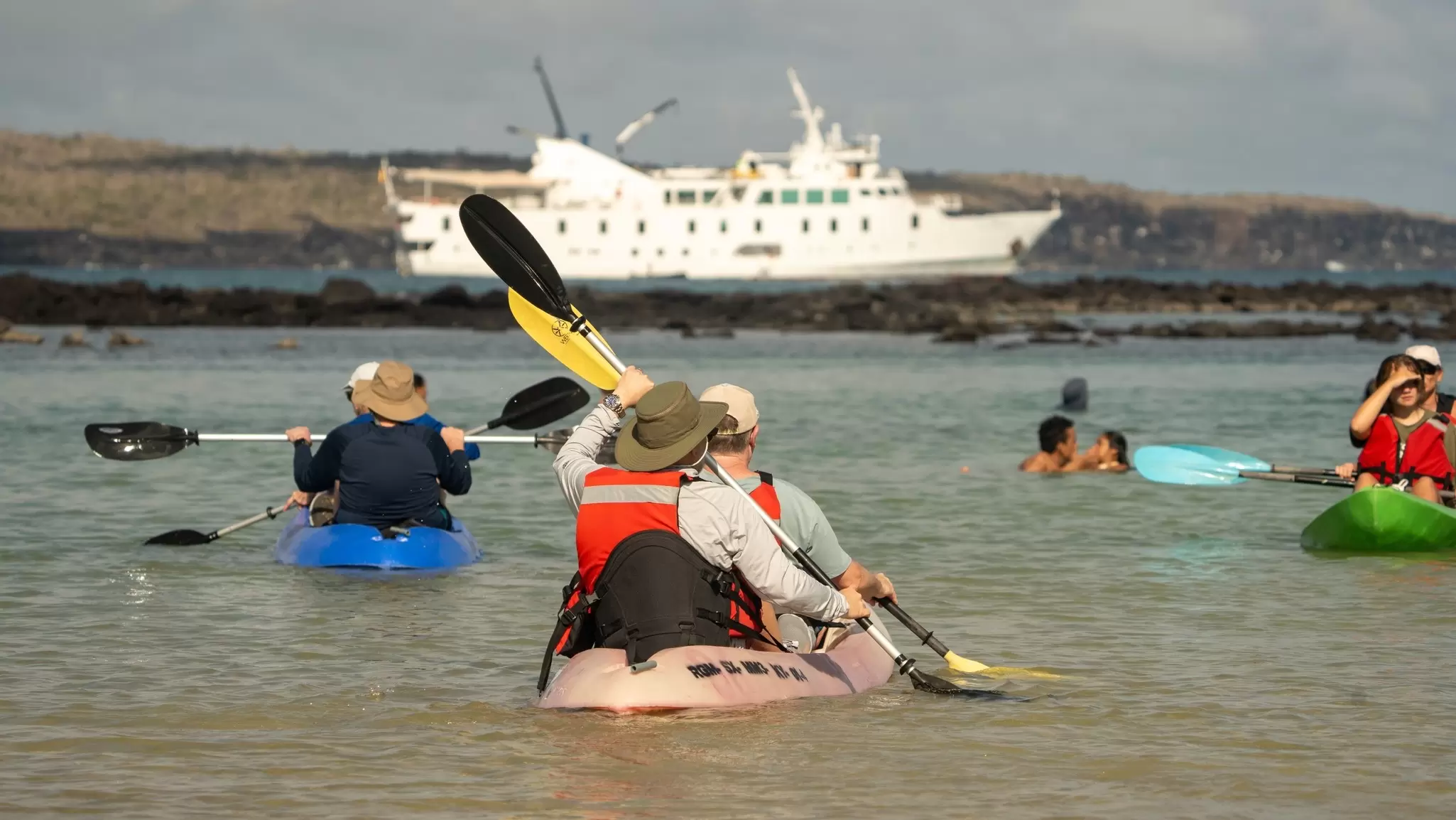
Cruises are especially well-suited for groups and families of different ages and ability levels, allowing everyone to enjoy the trip in their own way. Larger vessels have multiple guides onboard, which means one group can head out for an adventurous snorkeling outing while another opts for a more leisurely glass-bottom-boat excursion. Hikers can similarly split into groups based on their pace and experience. If you don’t feel like joining one of the numerous excursions offered each day, you can simply stay onboard and relax – without really missing out on anything, since there’s a good chance seabirds will be soaring overhead, and marine animals will be swimming near the ship.
No matter how you spend your time onboard, you’ll likely discover a built-in sense of camaraderie on these intimate ships, where you dine with the same fellow travelers and join them on excursions day after day. You’ll find yourself naturally bonding over shared, unforgettable experiences – like watching a newborn sea lion pup waddle across the sand or spotting a hammerhead shark glide past during a snorkeling excursion.
It’s true that landside hotels and vacation rentals tend to be larger – and they don’t pitch and roll while you’re trying to sleep. But cruise ship cabins have come a long way in recent years and can be extremely comfortable. Since you’ll spend so much of your time snorkeling, hiking, kayaking and exploring, the dimensions of your room will matter less than you might expect. And when you are on board the ship, your cabin is never far away, making it easy to duck back for a quick nap or shower.
The Galápagos is an expensive destination overall, and cruise rates can deliver a bit of sticker shock. Yet once you consider what’s included in the price – all overnight lodging, meals, activities, guides, gear, medical care if necessary, and often transfers or other logistical support – the overall value proposition becomes much more appealing. You’ll have a sense of how much your total trip will cost up front, making it easier to budget without having to track your expenses along the way.
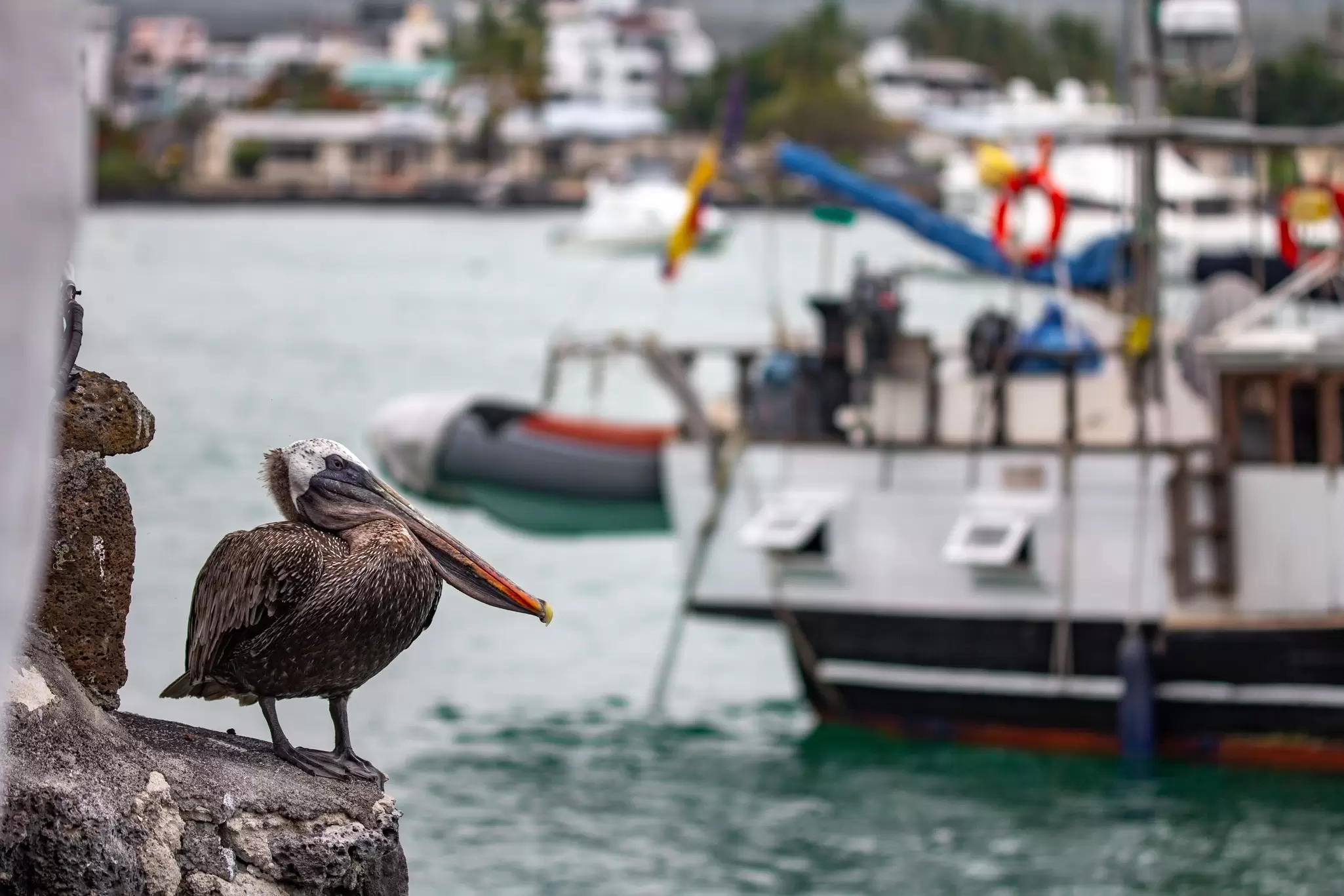
If you’re more of a landlubber, you can still experience the magic of the Galápagos by staying at a hotel or vacation rental. The key, Fielsch says, is to book guided day tours that will take you into the national park by boat. After all, he says, you didn’t come all the way to the Galápagos to stay in town.
“Anyone who goes into the national park with a guide comes back as an ambassador,” Fielsch says. “They speak very fondly of the archipelago.”
Some hotels, such as the Finch Bay Galapagos Hotel and Pikaia Lodge, have their own yachts to ferry guests to wildlife-rich sites throughout Galápagos National Park, usually with opportunities to hike and snorkel. Otherwise, you can book day trips with local outfitters. It is essential to book these excursions in advance, as only a limited number of spots are available each day.
“There are only 12 yachts with a combined capacity of 200 [day trip] spaces,” says Fielsch. “If you wait to book or try to find last-minute deals, there’s always the risk that you might not be able to get a spot, or that the only trip that’s available is to an island you’ve already visited.”
One other thing to consider: if you’re skipping a cruise because you’re prone to seasickness, remember that you’ll still need to board a boat to see the wildlife and scenery of the national park. Day-trip boats usually stick to the leeward sides of the islands, Fielsch says, so the waters tend to be on the calm side. Even so, you might encounter rough water.
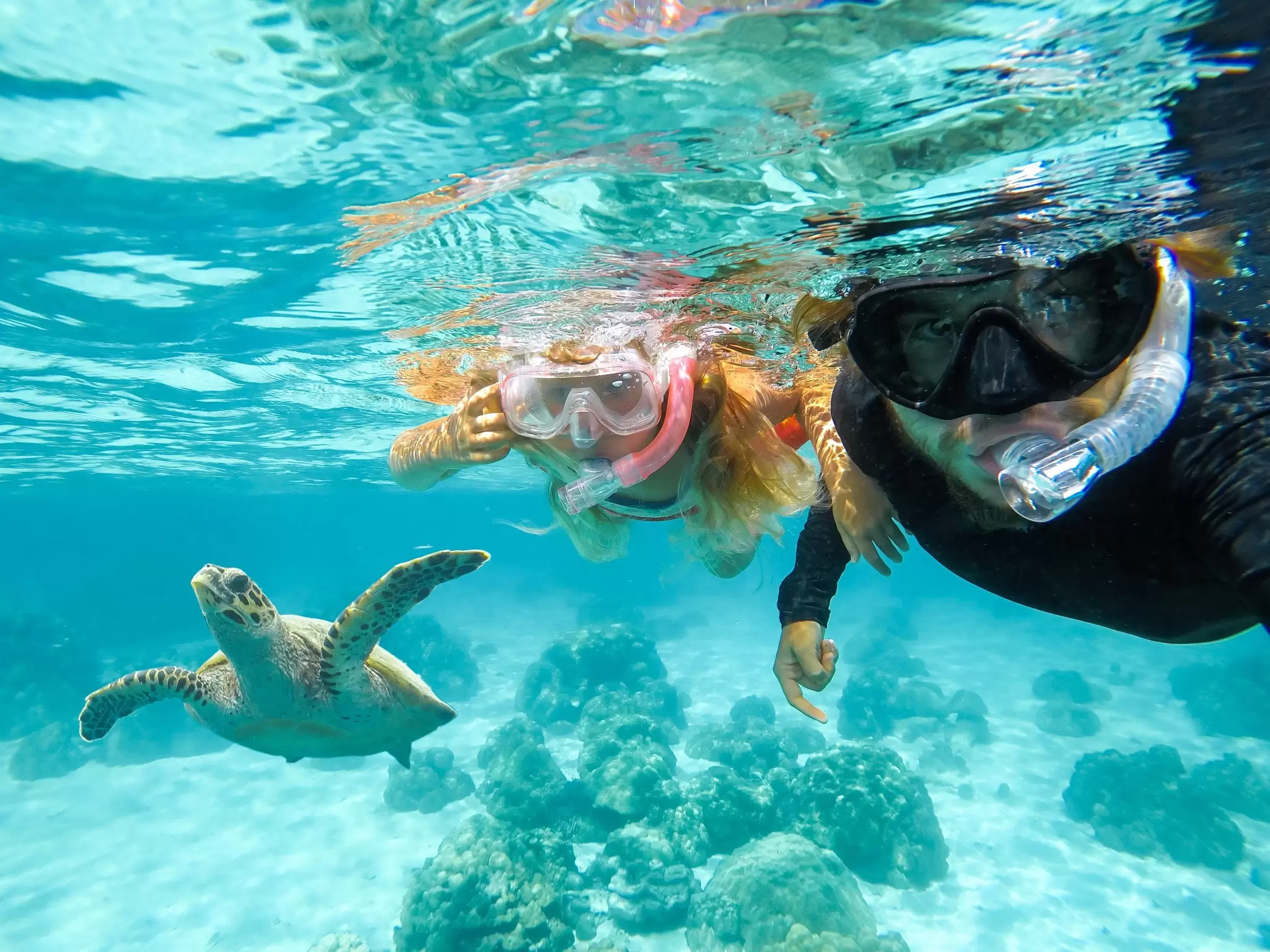
If you’re stretching your budget, a land-based trip offers more options, says Fielsch – not least in range of accommodation. Still, even though you may be starting off with a lower spending floor on a land-based trip, expenses can add up quickly once you start shelling out for lodging, meals, drinks, day tours, transfers, tips and all the other extras.
On a similar note, staying on land gives you more control over the pace of your trip. You might spend one day exploring part of the national park on a day tour, then devote the next to lounging by the hotel pool or enjoying a spa treatment. You can wake up early for a sunrise stroll on the beach – or sleep until noon, then stay up late stargazing. You’ll have a bit of this on a cruise, yet a ship’s busy schedule and preset times for meals and excursions make it harder to set your own rhythm.
Land-based trips also offer more freedom to be spontaneous. You can try a different restaurant each day, decide when and where to eat on a whim or linger over a long lunch without worrying about the time. If you don’t have a scheduled activity booked, you can simply see where the day takes you, letting your curiosity guide the way. Landside visitors also have more opportunities than cruise passengers to interact with Galapagueños, the people who live and work on the islands. (The ability to speak Spanish will enhance this.)
Overall, though, this very freedom to create your own program also means you need to put in much more effort and advance planning than you would on a cruise. Unless your hotel offers its own excursions, you’ll need to research and book day tours yourself, adding another layer of logistics to the trip. If you're the type who loves planning (and maybe more than a bit of control), this may be a huge pro.
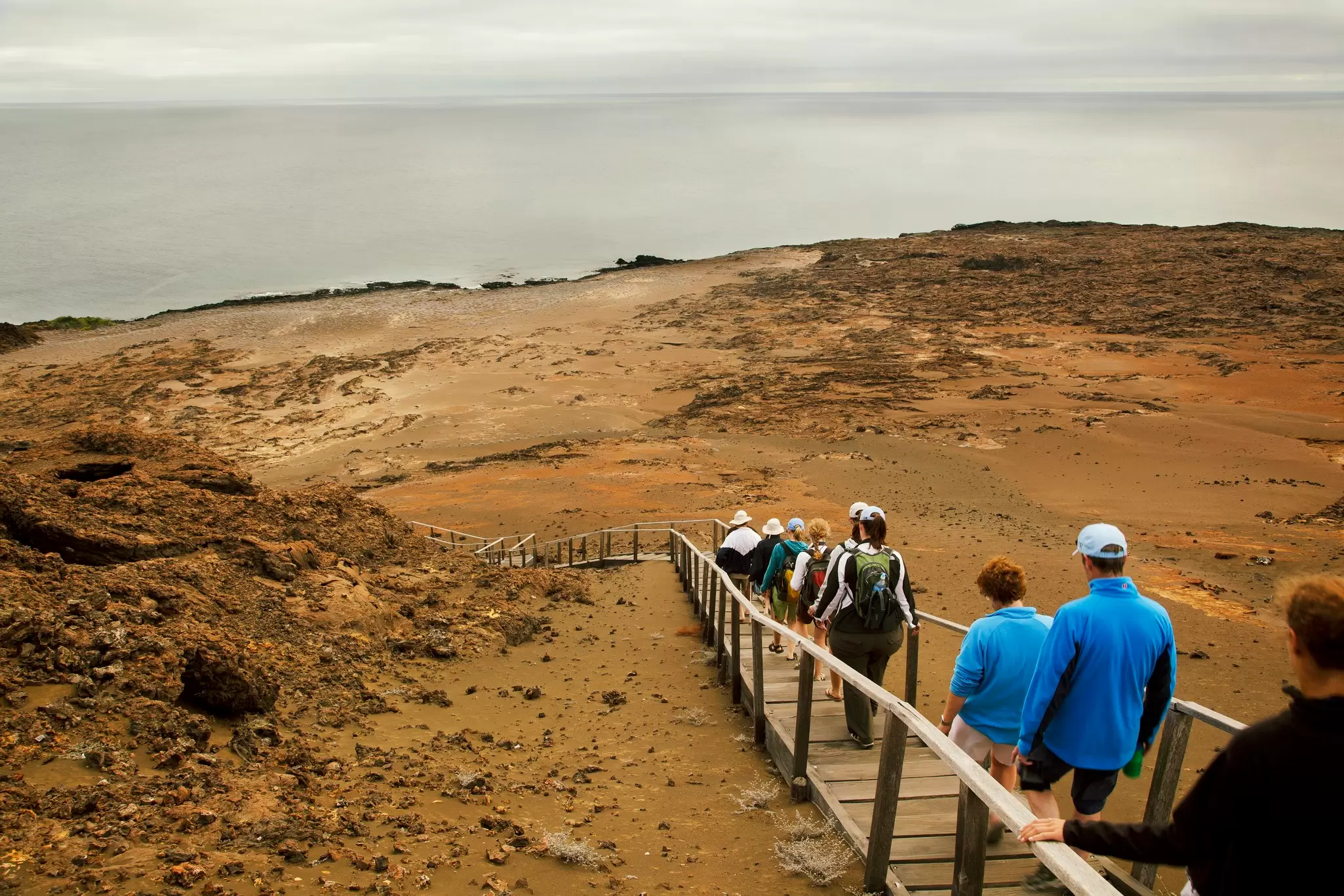
Puerto Ayora, the most populous city in the archipelago, is an ideal place to base yourself on land. Located on Santa Cruz Island, this colorful city is a central hub for tourism in the Galápagos – indeed, many cruises call here.
From Puerto Ayora, you can take day tours to nearby destinations within the national park, including North Seymour Island, South Plaza Island, Bartolomé Island and Santa Fe Island. You can also arrange other activities, like trips into the Santa Cruz highlands to see the archipelago’s famous giant tortoises, or tours of the nonprofit Charles Darwin Research Station, home to even more tortoises, which you can see up close. On your own, you can enjoy shops, restaurants, bars, beaches, swimming, snorkeling and wildlife-watching (look for the adorable sea lions snoozing on the dock).
If you want to island-hop during your stay on Santa Cruz, inter-island ferries are available to Isabela, San Cristóbal and Floreana; these trips take about 2 hours each way.
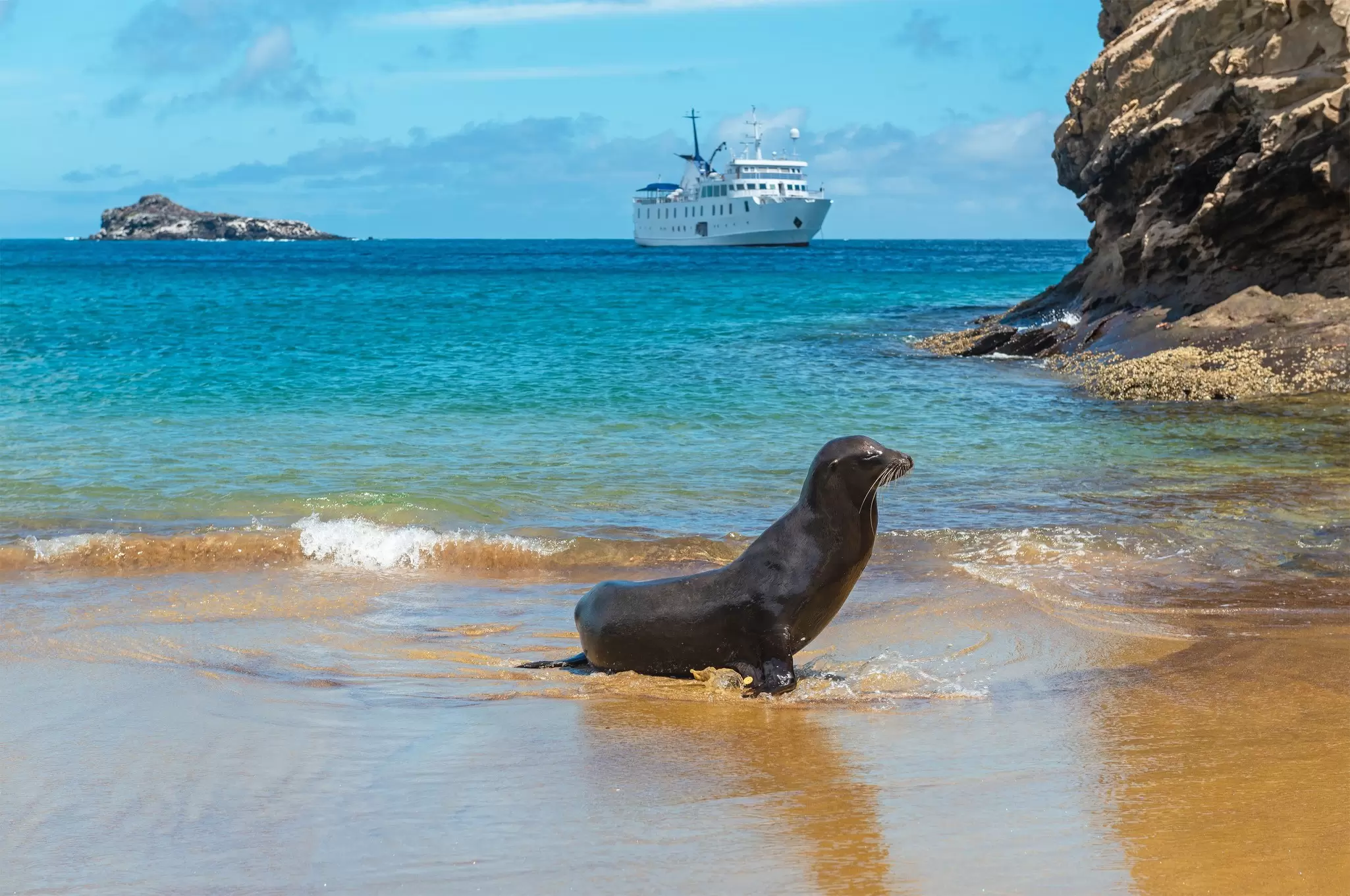
The Galápagos are extremely hard to get to – so if your time and budget allow, I highly recommend combining a cruise with a land-based stay.
During my most recent trip, I spent 5 bustling days on Yacht La Pinta visiting some of the archipelago’s central and northeastern islands, followed by 2 blissfully relaxed days at the Finch Bay Hotel. The time on land gave me time to slow down, decompress and reflect on everything I’d seen and experienced during the cruise – while still getting plenty of opportunities to spot wildlife. Together, a cruise followed by a hotel stay provided the perfect combination of fast-paced adventure and serene island living, giving me the chance to experience the archipelago in two very different ways.
If you’re coming from a far-flung time zone, consider spending a few nights on land before your cruise, too, so you can recover from the jet lag, says Fielsch. “If you can combine a ship with a hotel, that’s brilliant,” he says.
Book your Galapagos trip with Lonely Planet Journeys
See Galapagos how it's meant to be seen
Accommodations, activities and ground transportation all taken care of, so you can focus on the fun part. Tell us what your dream trip to Galapagos looks like, and our local experts will build it from scratch. Or start with one of our itineraries and make it your own.

Explore related stories