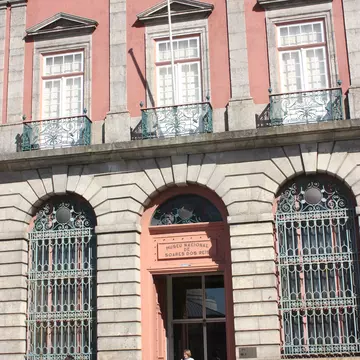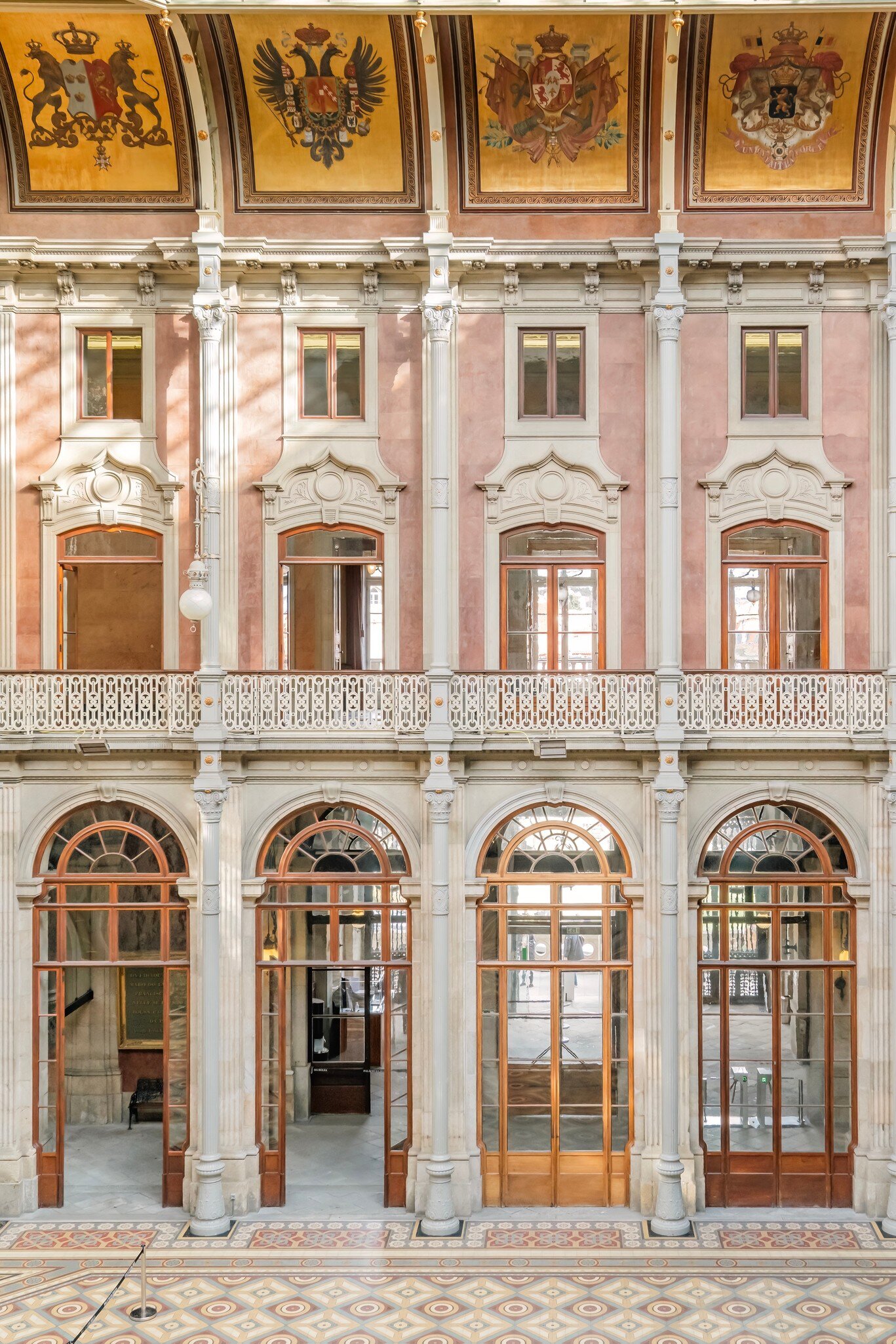
While Porto never had a royal palace, it eventually built its own temple honoring the city’s deep-rooted cosmopolitan nature, economic ties and independent artistic visions. Built over the ashes of a former convent, the Palácio da Bolsa came to represent the eclectic taste of a city that was slowly moving away from the monarchy and establishing itself as an autonomous power.
Getting Down to Business
Porto has always had a privileged relationship with northern Europe, especially the British who played a crucial role in establishing the city’s Port wine industry. The building’s facade recalls the Palladian architecture style seen in places like London’s Mansion House, while the entrance hall features 20 coats of arms of countries that Portugal had traded with.
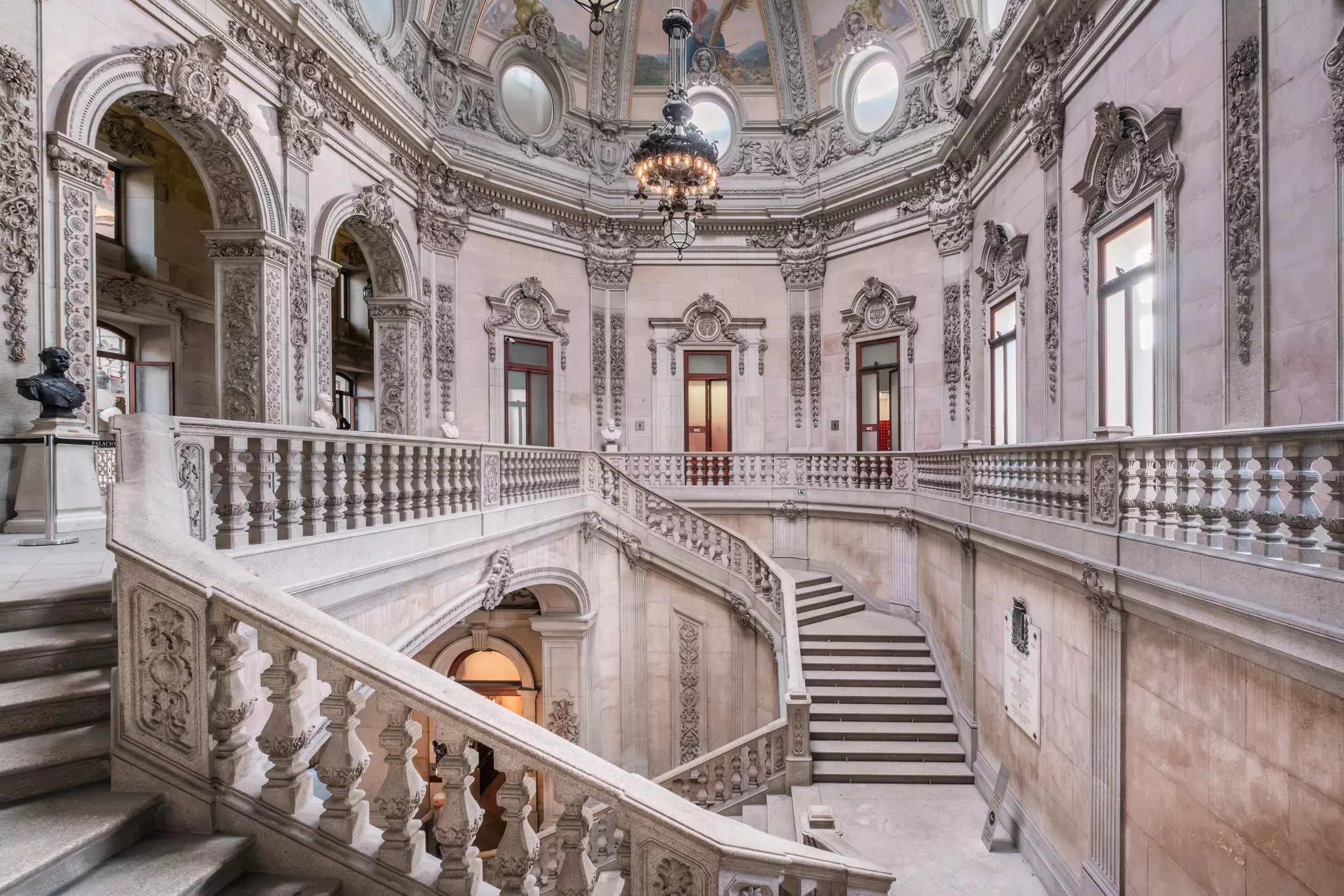
For the first few years, Palácio da Bolsa functioned as a stock exchange, attracting wealthy investors to the city and serving as a welcoming base for state representatives (the late Queen Elizabeth shared a lunch with Charles and Diana here once). A guided tour will take you through the palace’s iconic rooms, most of which can also be booked for events.
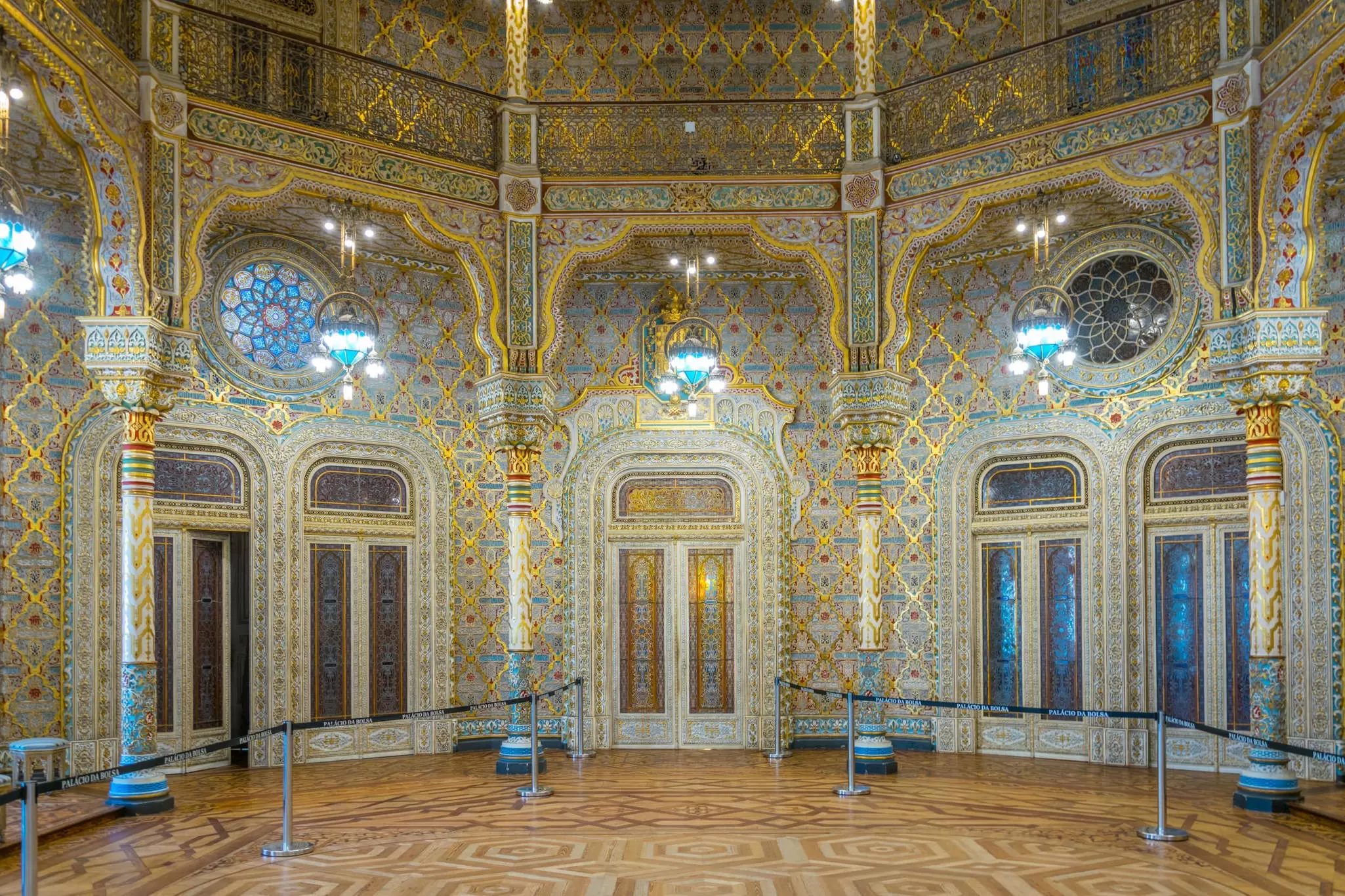
A Moorish Revival
Portugal’s Moorish roots are better seen in the south. So having a Neo-Arab Room in Porto feels somewhat out of place. But considering the Arabs' connection with trade and their influence throughout the country, for the Romantics of the time it made sense to bring back this style. And they really went all out, using 18kg of gold leaf to decorate its walls, adding exquisite marquetry floors and carving detailed inscriptions in Arabic mentioning Allah and Queen Maria II, who donated the land for the palace.
Prolong your stay by booking a meal at the palace’s restaurant O Comercial (ocomercial.com)