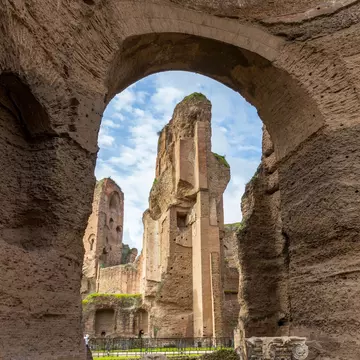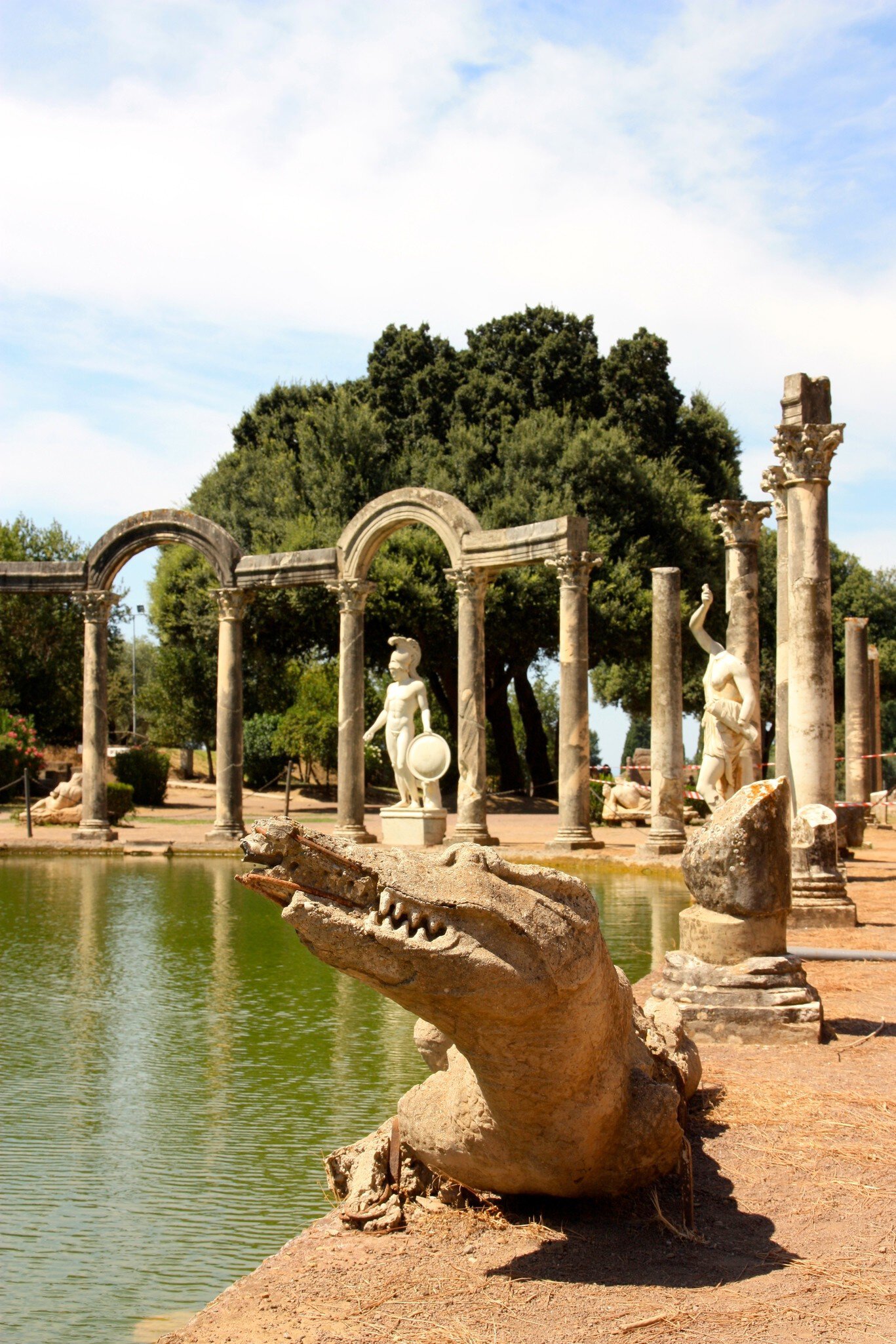
The Emperor Hadrian's 120-hectare country estate was larger than the city of Pompeii. The excavated ruins of Villa Adriana are mind-boggling: the emperor was well-traveled and an enthusiastic architect, and he based many of his ideas on buildings he'd seen on his travels around his empire. Let your imagination take you to how sumptuous this palace must have once been.
Hadrian's Wanderlust
Hadrian traveled to every single province in the Roman Empire, on the road for almost 10 years of his imperial rule. After the death of Trajan, his right-hand man, Hadrian became emperor, having been posthumously adopted by his predecessor. The new emperor, already an avid traveler (he was in Syria when he heard he had become emperor), set about securing the empire's borders rather expanding them.
During his reign, he traveled to Gaul, Germania and Britannia, North Africa, and repeatedly to Greece. He not only visited, but left some major souvenirs, most famously, an 80-Roman-mile-long wall (Hadrian's Wall, to keep out the rampaging Scots, 73 miles in modern measurements). His passion for the culture and architecture of the places he visited on his travels fed back into the building – and materials – of places he'd visited abroad.
Pecile
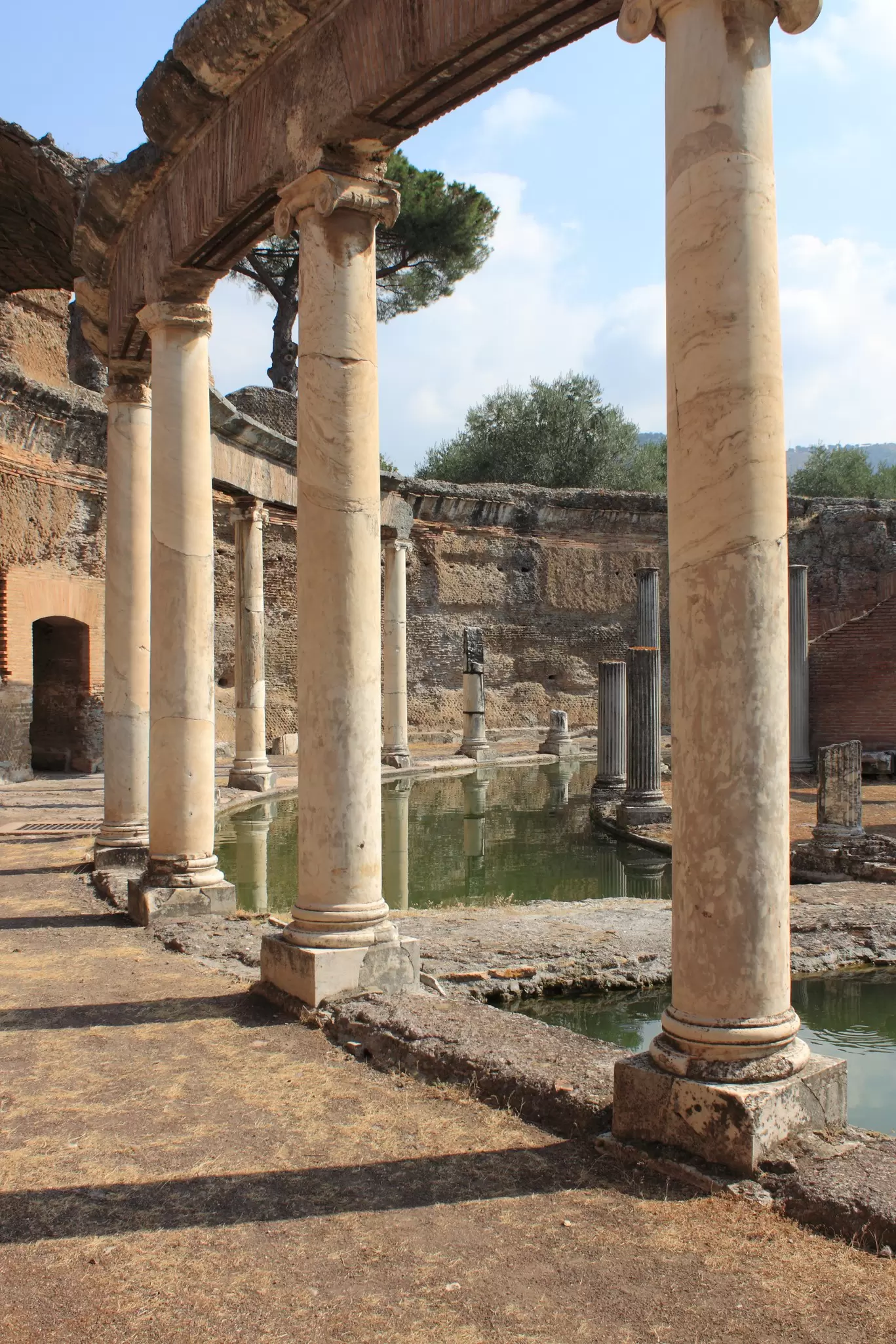
The Pecile is centered on the large pool that reflects the sky like a mirror and would have been overlooked by all-weather covered walkways: strolling around these allowed ancient Romans to keep up their step count. It is believed to have been modeled after the Stoa Poikile in Athens. Around the Pecile are the remains of the Cento Camerelle ('100 rooms'), which would have been hidden from view by a facade, and seems to have been rooms for staff, as evidenced by multiple latrines. North of here is the hidden-feeling colonnaded Ninfeo Fede (Tempio di Venere), a small circular temple.
Teatro Marritimo
To the northeast of the Pecile, the Teatro Marittimo is a circular mini-villa set on an island in the center of an artificial pool. This wasn't a "theater," but Hadrian's personal refuge that could only be accessed by swing bridges, and feels like an intimate space.
Hadrian's Lover, Antinous
The Emperor Hadrian was almost 50 when he became besotted with a slave around 35 years his junior. He became the emperor's trusted companion, famous for his beauty and intelligence. During a trip they took to Egypt in 130 CE, the 21-year-old drowned in the Nile in mysterious circumstances.
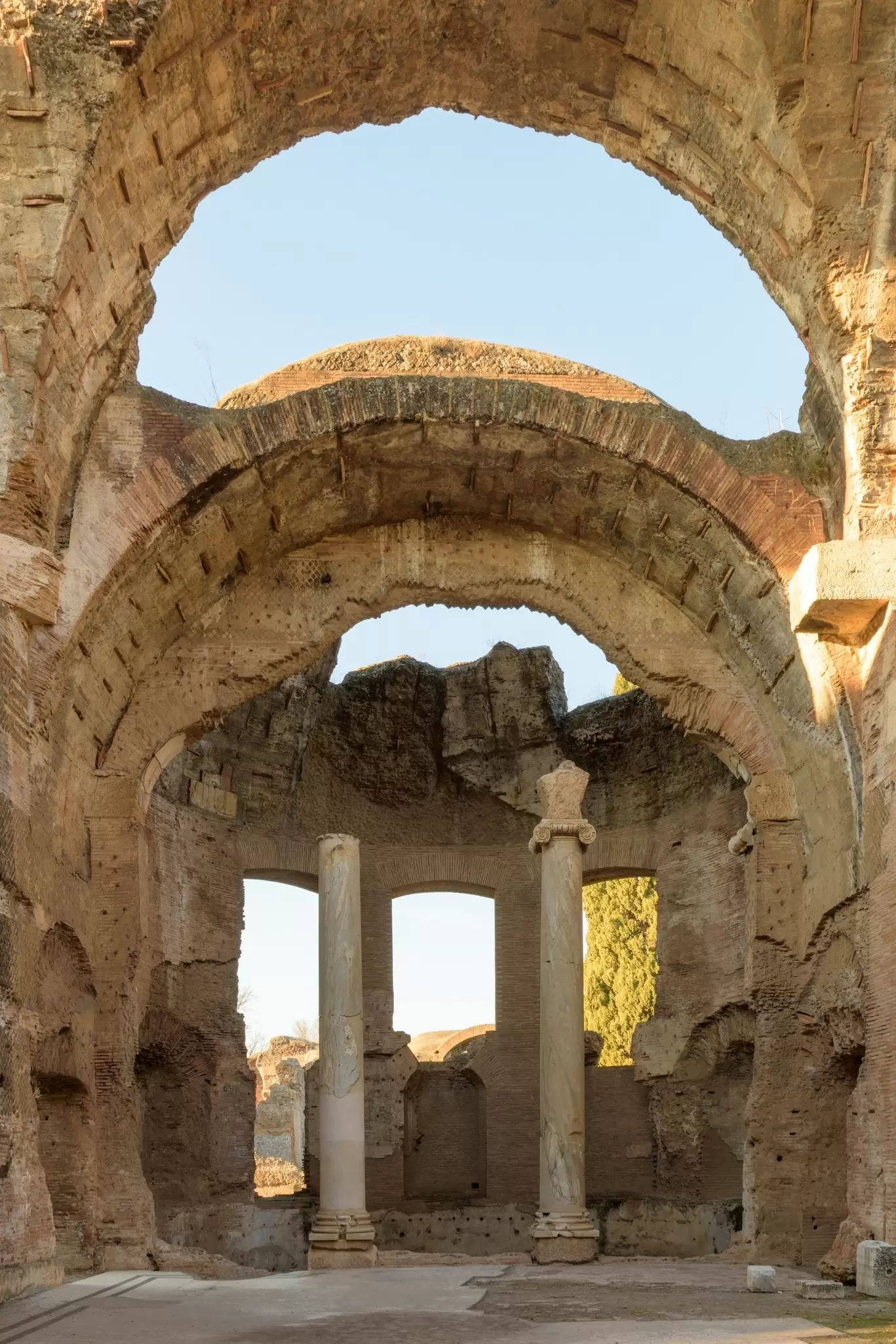
Hadrian was beside himself with grief. He founded a city close to where he died, Antinoöpolis, and made him a god, flooding the empire with works in his image – over 100 statues of the young man have been discovered across former imperial territories. The Antinoeion in Villa Adriana, built in 134 CE, is thought to have possibly been the tomb of Antinous, with several Egyptian-influenced sculptures discovered here.
Canopus & Serapeum
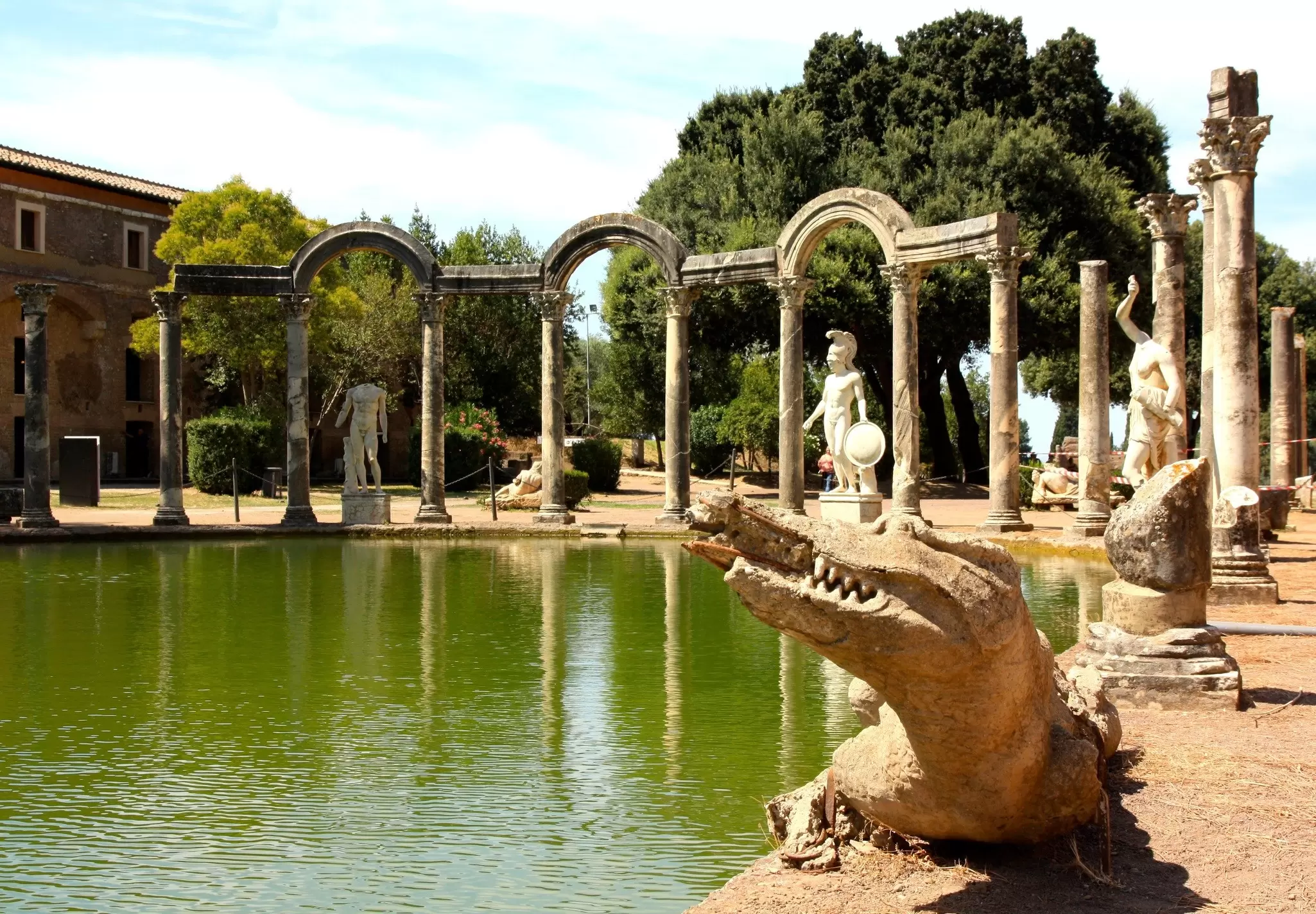
This grand banqueting area of Canopo (Canopus) was inspired by the canal in the Egyptian town of Canopus, which was famous for its festivals. The narrow 120m-long pool is flanked by sculptural figures. The naked Ares, God of War, strikes a pose at the water's edge. At its head, the Serapeum is a semi-circular nymphaeum (shrine to the water nymph), almost like a multilevel stage, once used to host summer banquets, with a complex aquatic system creating a curtain of cooling water. Food would be floated across the water to give the dinner that je ne sais quoi.