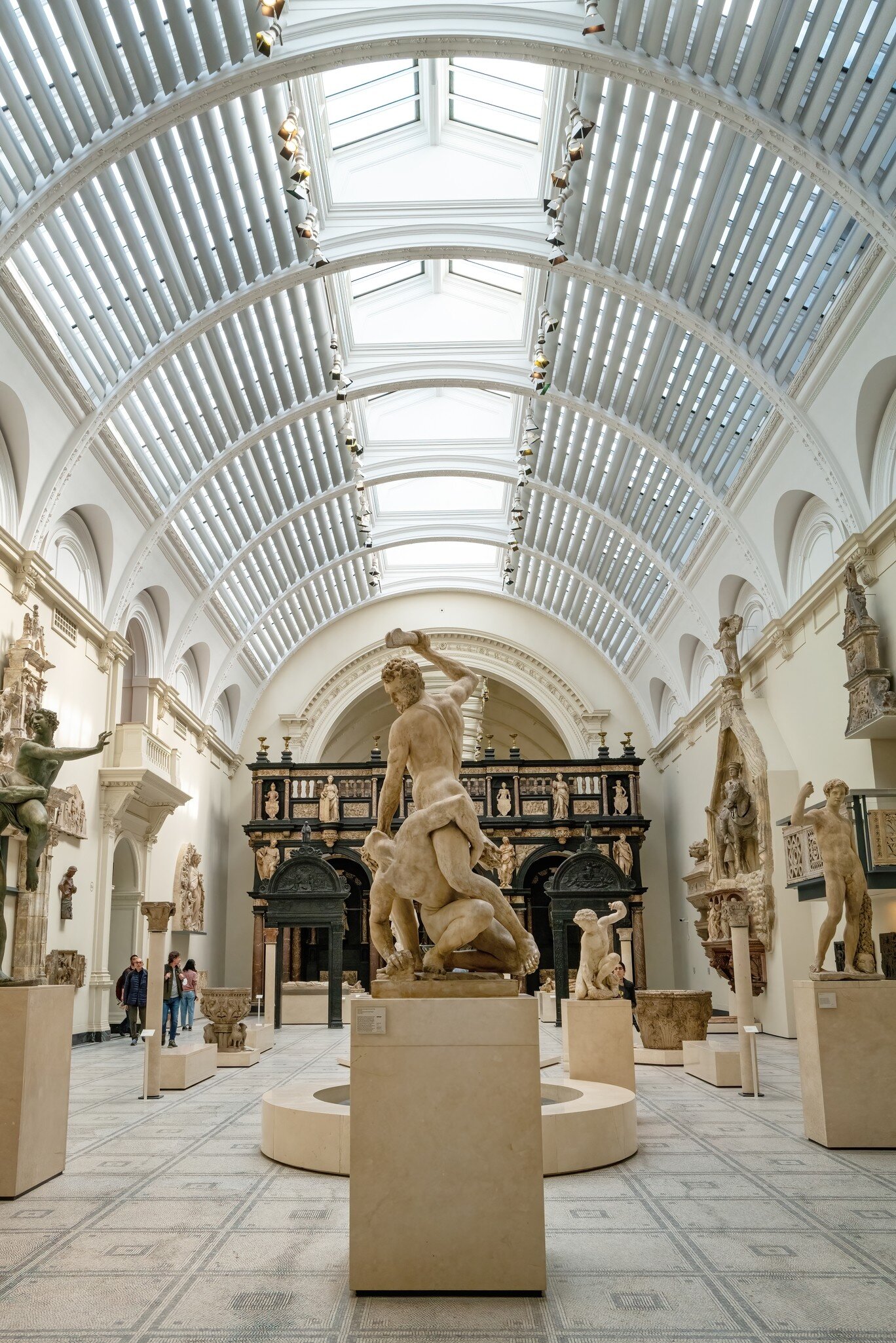
The V&A features an unfathomable collection of beautiful things, spanning 5000 years of human creativity and bursting at the seams with more than two million objects (60,000 objects on display) from ancient Middle Eastern carpets and centuries-old garments to ornate furniture and musical instruments.
It’s almost impossible to digest the V&A's (vam.ac.uk) seven miles of galleries in one visit – but it's free to visit, so come back as many times as you like.
British Galleries (Level 1)
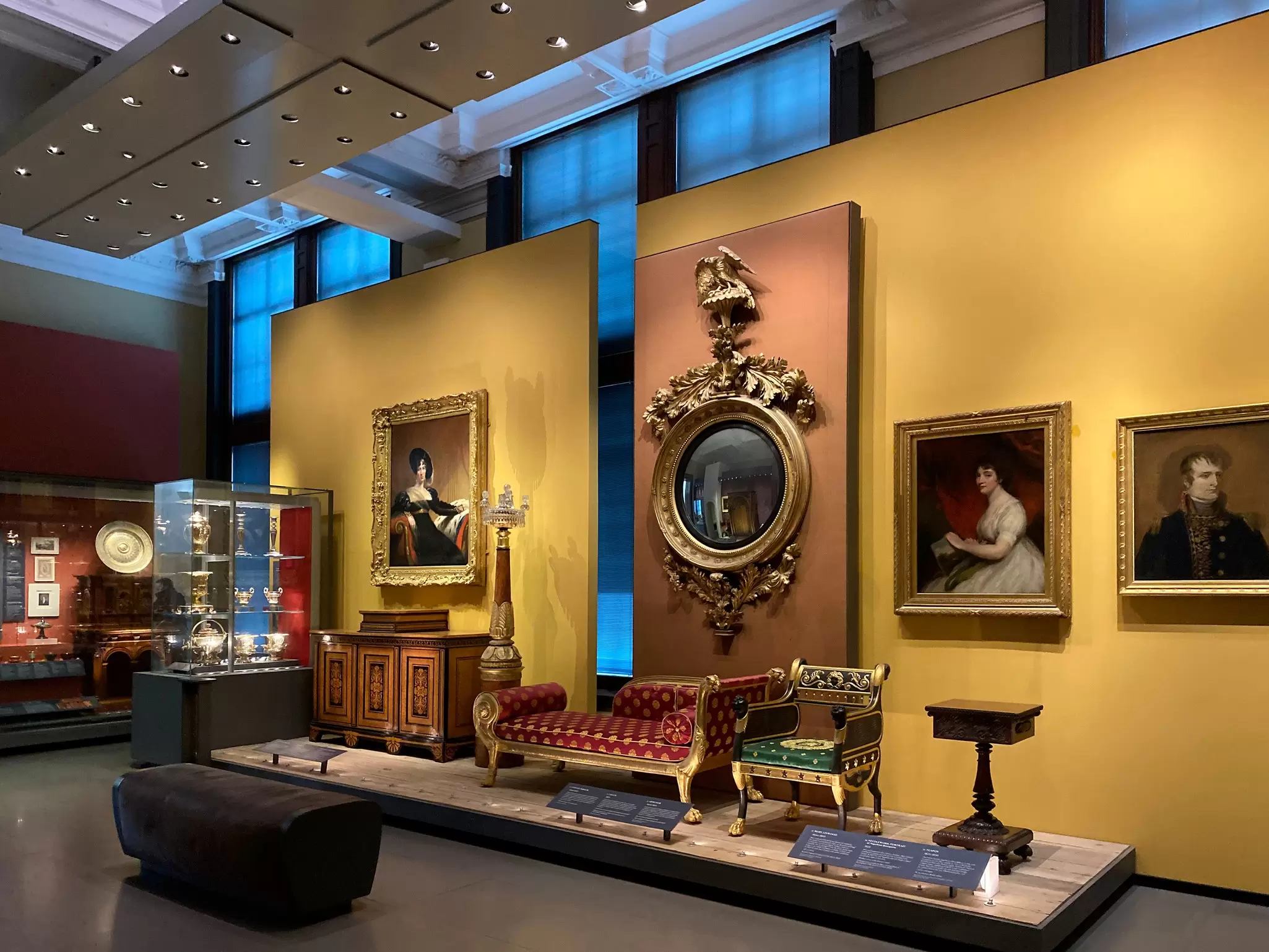
Dive into the history of British design, spanning 400 years from Tudor to Victorian times, with 3000 pieces on display, such as wallpaper and ceramics. Particular highlights include Britain's most famous bed – the Great Bed of Ware, the first super king four-poster bed, which was made to promote a Hertfordshire inn in the 1590s. It measures more than 11ft long and 10ft wide, and was mentioned in Shakespeare’s Twelfth Night. Also on display is the oldest desk in the building, a 1525 leather-lined writing box owned by Henry VIII and decorated with miniature gold paintings.
Europe 1600–1815 (Level -1)
Seven galleries on this level display 1100 objects depicting a time when France had taken over as the leader in art and design. On display is a silver victory service set given to the Duke of Wellington by Portugal after he defeated Napoleon Bonaparte and liberated the occupied country, plus French-designed clocks, chairs and wallpaper from the early 1800s, and a formal men’s suit from 1780. There are luxury tea sets and a lavishly decorated bed, plus a harpsichord from 1786, painted with chinoiserie scenes and Asian-style lacquer – thought to be extremely exotic at the time.
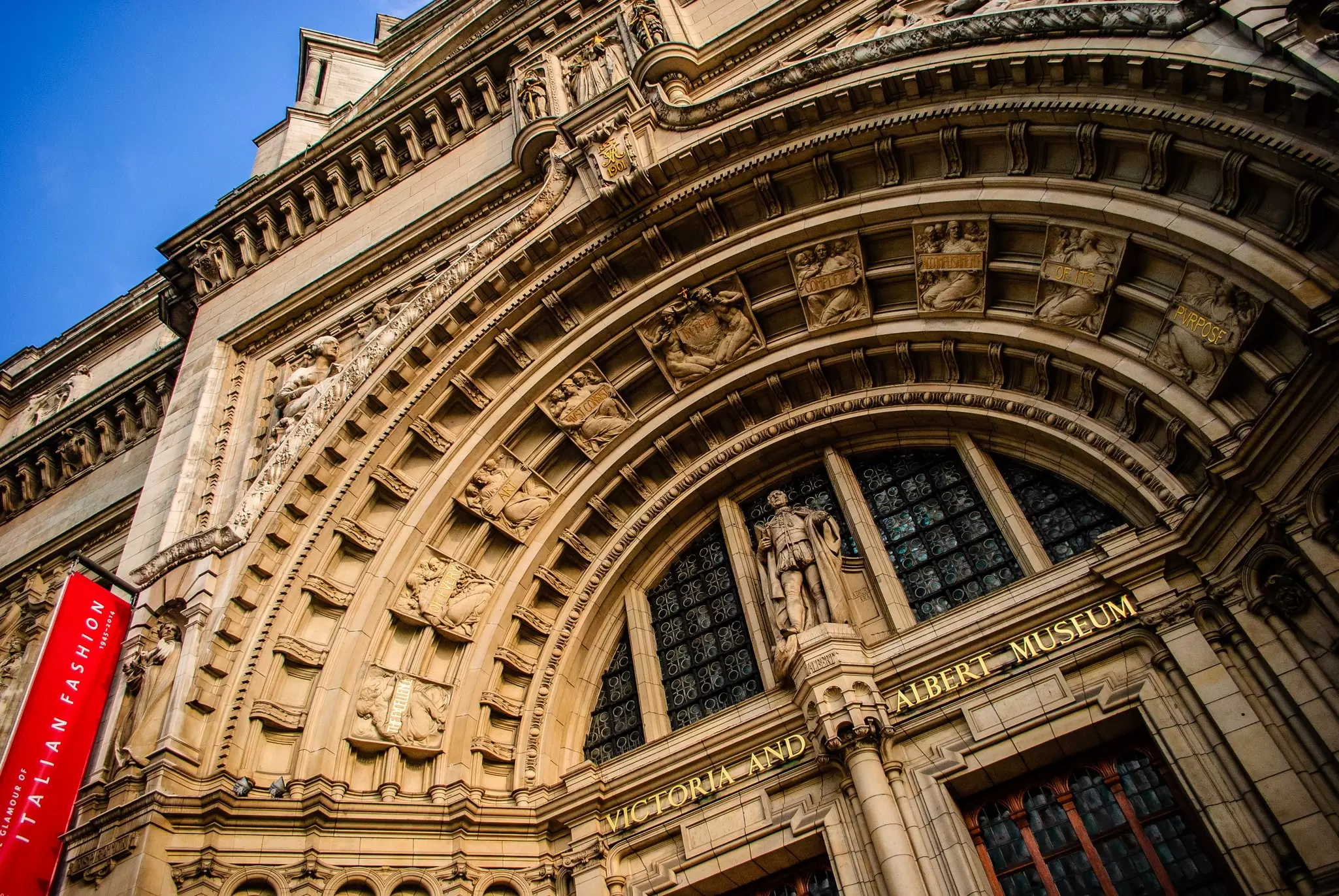
The Jewellery Gallery (Level 2)
This gallery showcases 3500 jewels spanning 3000 years of history, including brooches, hair ornaments, collars, pendants and crowns. There’s a gold plaque dating to 220–420 CE from the Wei-Jin period in China, Queen Victoria’s sapphire and diamond coronet, a wearable piece of art made from cowrie shells by Lafalaise Dion and Beyoncé’s giant green butterfly ring edged with diamonds, designed by British jeweler Glenn Spiro.
Cast Courts Gallery (Level 0)
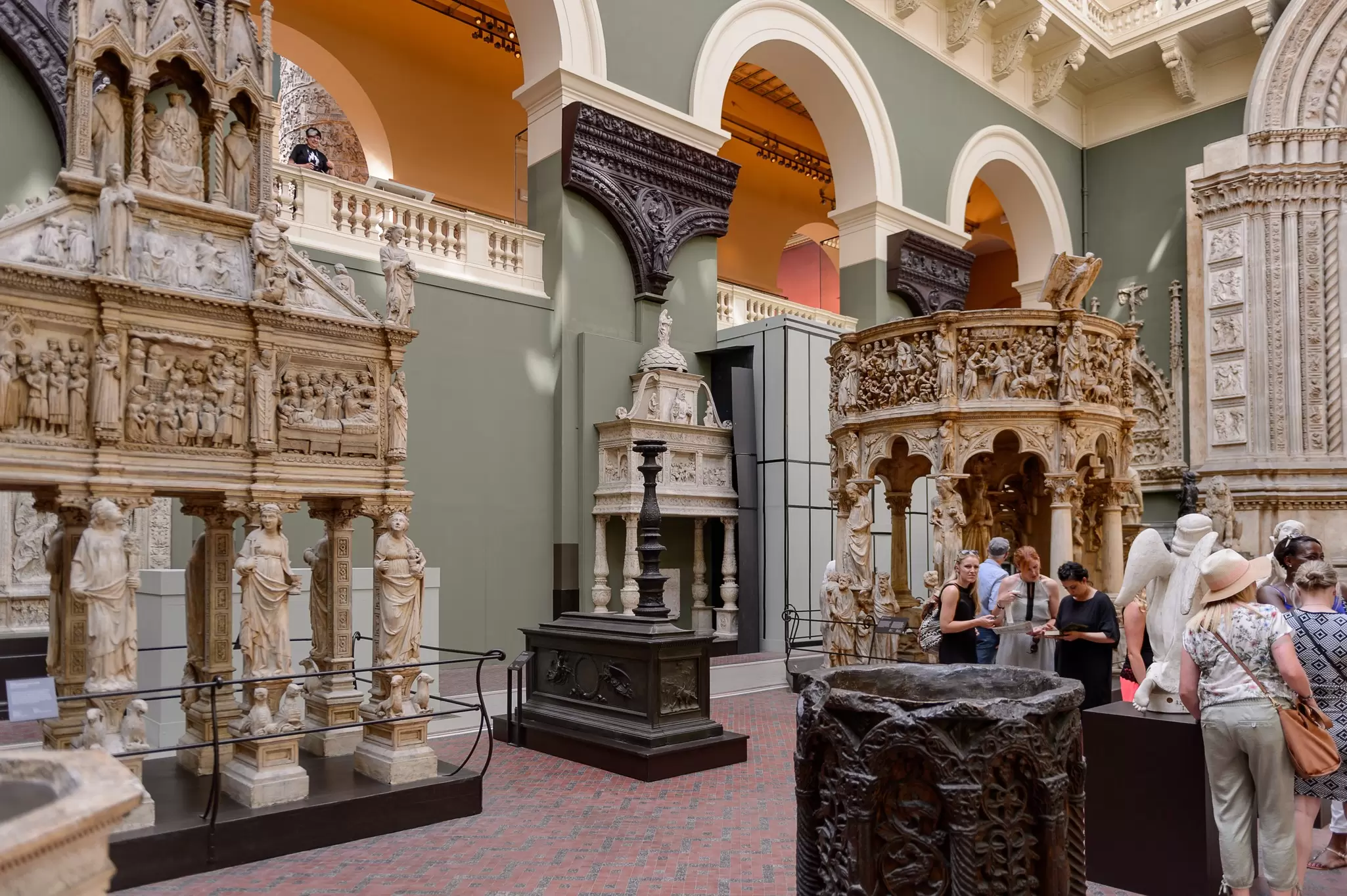
When the museum was founded, it showed casts (created using plaster molds), electrotypes and other copies of notable national monuments, so they could be studied in Britain. There’s the western Portal from Aix Cathedral in France, a cast of the Tabernacle in Belgium and a cast of the Pórtico de la Gloria in Spain, but Trajan’s Column (35.6m high) from Rome is one of the most striking pieces. The nude plaster cast of David by Michelangelo, meanwhile, supposedly caused much controversy when it was first shown in modest Victorian Britain; a suitably proportioned fig was hooked over his private area when dignitaries visited.
The Photography Centre (Level 2)
Home to the largest permanent collection of photography in the UK, seven galleries at the time of research displayed varied photographs capturing diverse kinds of energy. Images range from striking portraits of Queen Elizabeth II by Cecil Beaton taken in London in 1953 on the day of her coronation to an image photographed in 1942 by Sunil Janah, capturing a burning vehicle during the Quit India Movement, which demanded independence from Britain. The Kusuma Gallery has hundreds of photography books visitors can peruse; pull up a chair and browse.
South Asia Gallery (Level 0)
From Himalayan art to Burmese gilded, lacquer-tiered headdresses, the South East Asia collection has 60,000 objects, including some 10,000 textiles and 6000 paintings. Tippoo's Tiger is one of the most popular items on show, made for Tipu Sultan, ruler of Mysore in South India from 1782 to 1799. It depicts a man believed to be a European soldier who is being savagely attacked by a tiger. Inside the tiger is an organ, played via a handle. This wooden semi-automaton was found in Tipu’s palace and was sent to London.
Islamic Middle East Gallery (Level 0)
On display in this gallery is the Ardabil Carpet, thought to be the world’s oldest carpet, made between 1539 and 1540 in Iran, plus a range of Mamluk secular art, enameled and gilded glass, woodwork, inlaid brass and textiles that date to the 1st century. There's also a detailed carved wood and ivory pulpit used for sermons, likely in Cairo between 1468–96. Egyptian Sultan Qa'itbay, who ruled Egypt and Syria during this time, is named in several of the pulpit's inscriptions. Don’t miss the impressive carved turquoise pieces of Buyanquli Khan’s tomb (a descendant of Genghis Khan).
The Fashion Collection (Level 0)
This is the largest collection of fashion items in the world, spanning five centuries, from rare 17th-century gowns to 1930s eveningwear, and from '60s daywear to modern Dr Martens. Spy hip-hugging 1937 bathing costumes, plus ball gowns and evening dresses. Big designers range from Prada to Yves Saint Laurent.
Ironwork (Level 2)
Many skip the museum's ironwork for the more popular displays, but descriptive metalwork is strangely captivating. There are more than 45,000 examples of finely shaped metals dating from the Bronze Age to today. Check out the impressive collection of cast-iron patterned fireback and stove places, plus learn about ancient keys. The most impressive of all on display is the iron screen from Hereford Cathedral, which was painstakingly reassembled by 38 people with 14,000 pieces; it took a year to complete.
Medieval & Renaissance Galleries (Level 1)
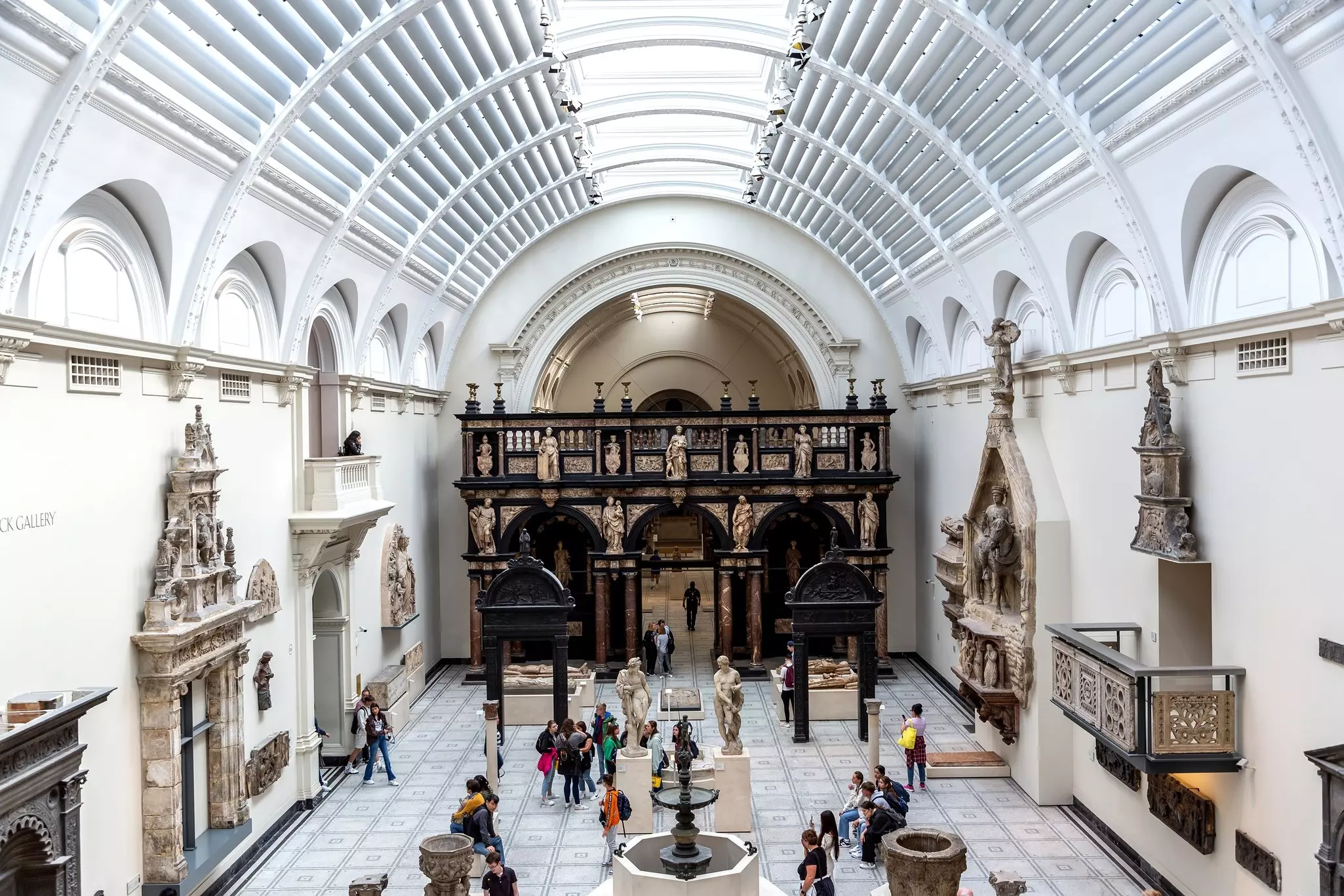
From the fall of the Roman Empire to the end of the Renaissance, this is the place to see statues and religious depictions, plus early English stained glass made for Winchester College and Italian Renaissance works by Della Robbia, Donatello and Michelangelo. A highlight is Leonardo Da Vinci’s original notebooks.
Book a Tour
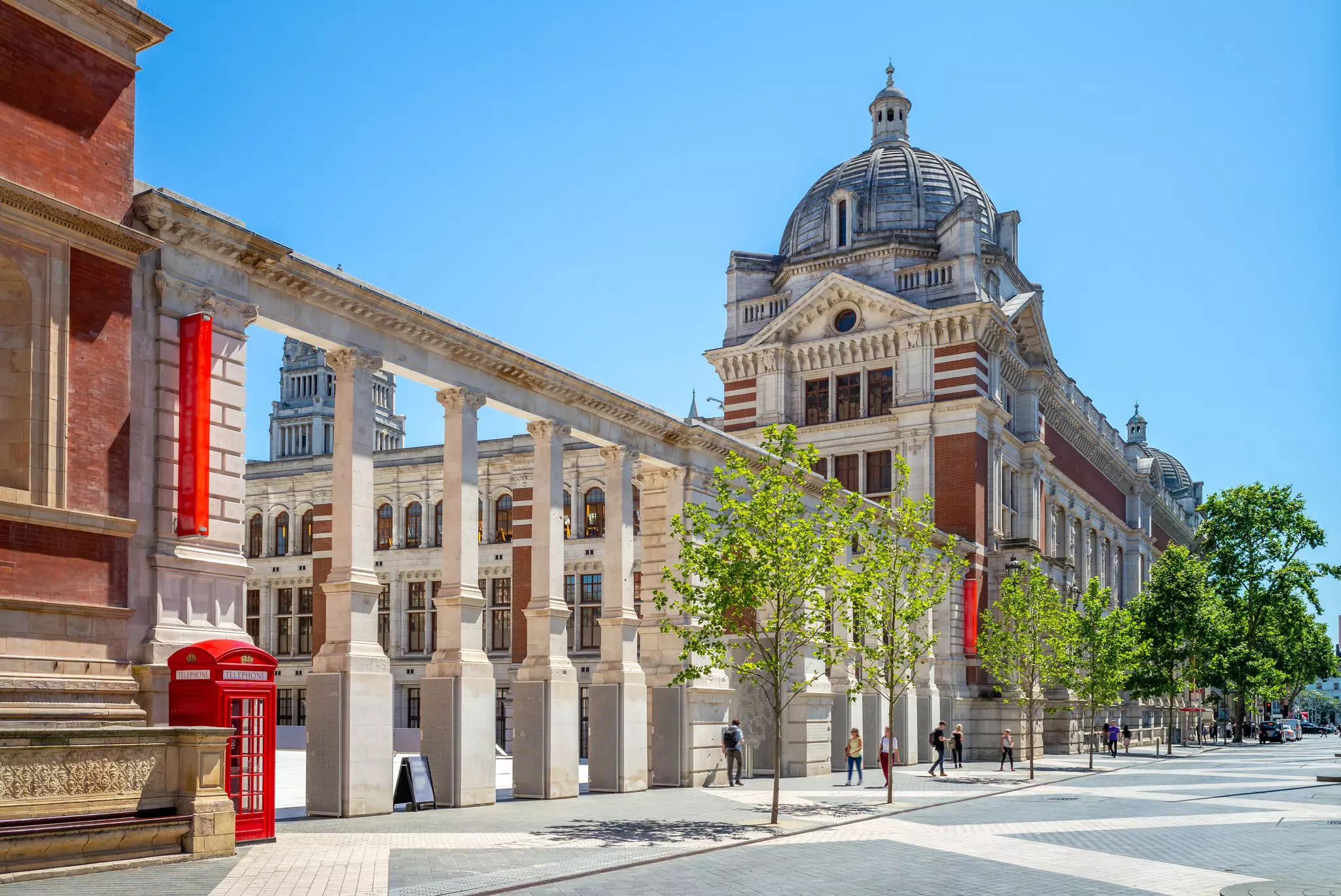
Rotating free tours range from the popular V&A Highlights Tour, Fashion Tour and LGBTQIA+ Tour, to the more specialist Remarkable Women Tour, and Historical and Hidden Caribbean Tours.
Take a Break
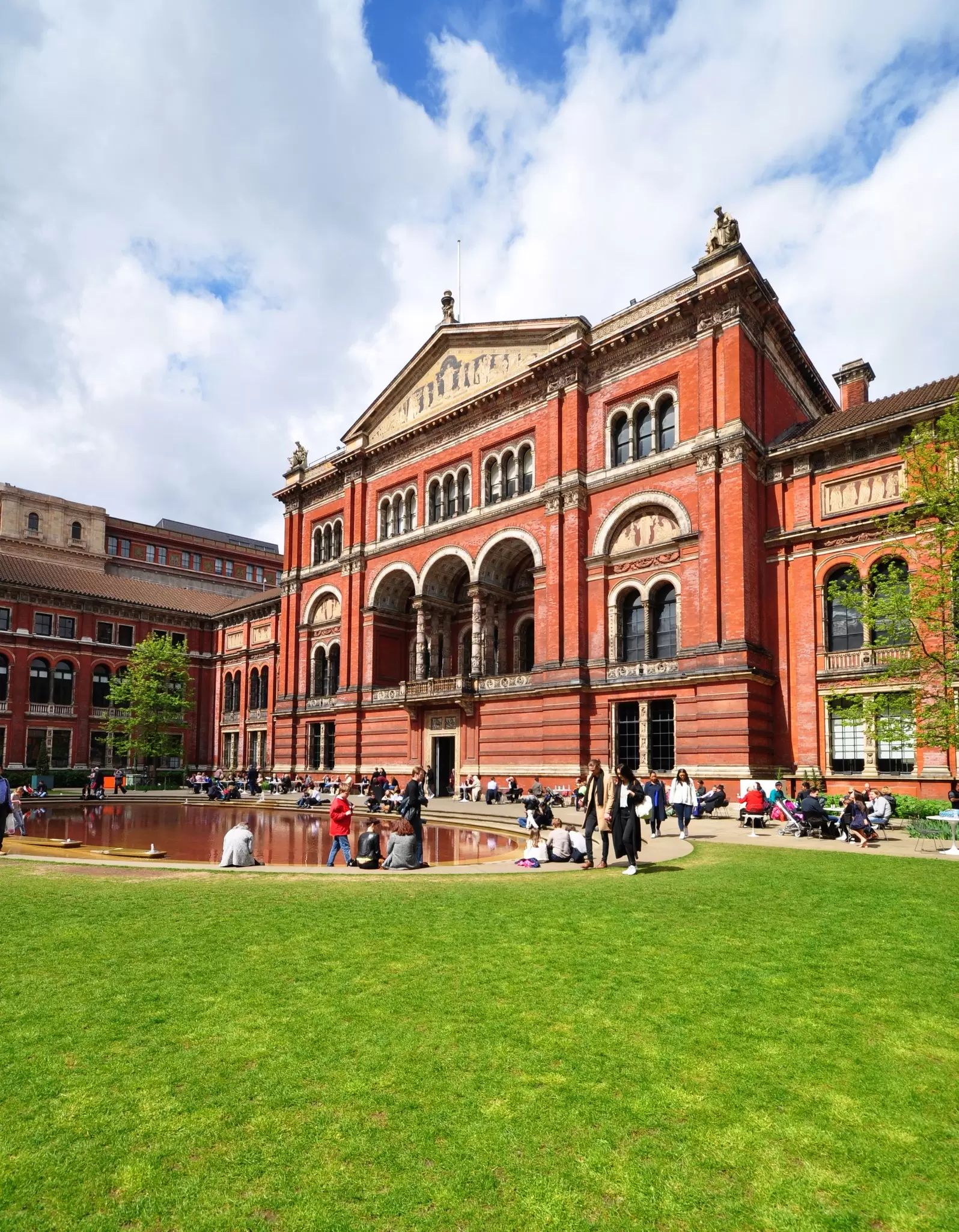
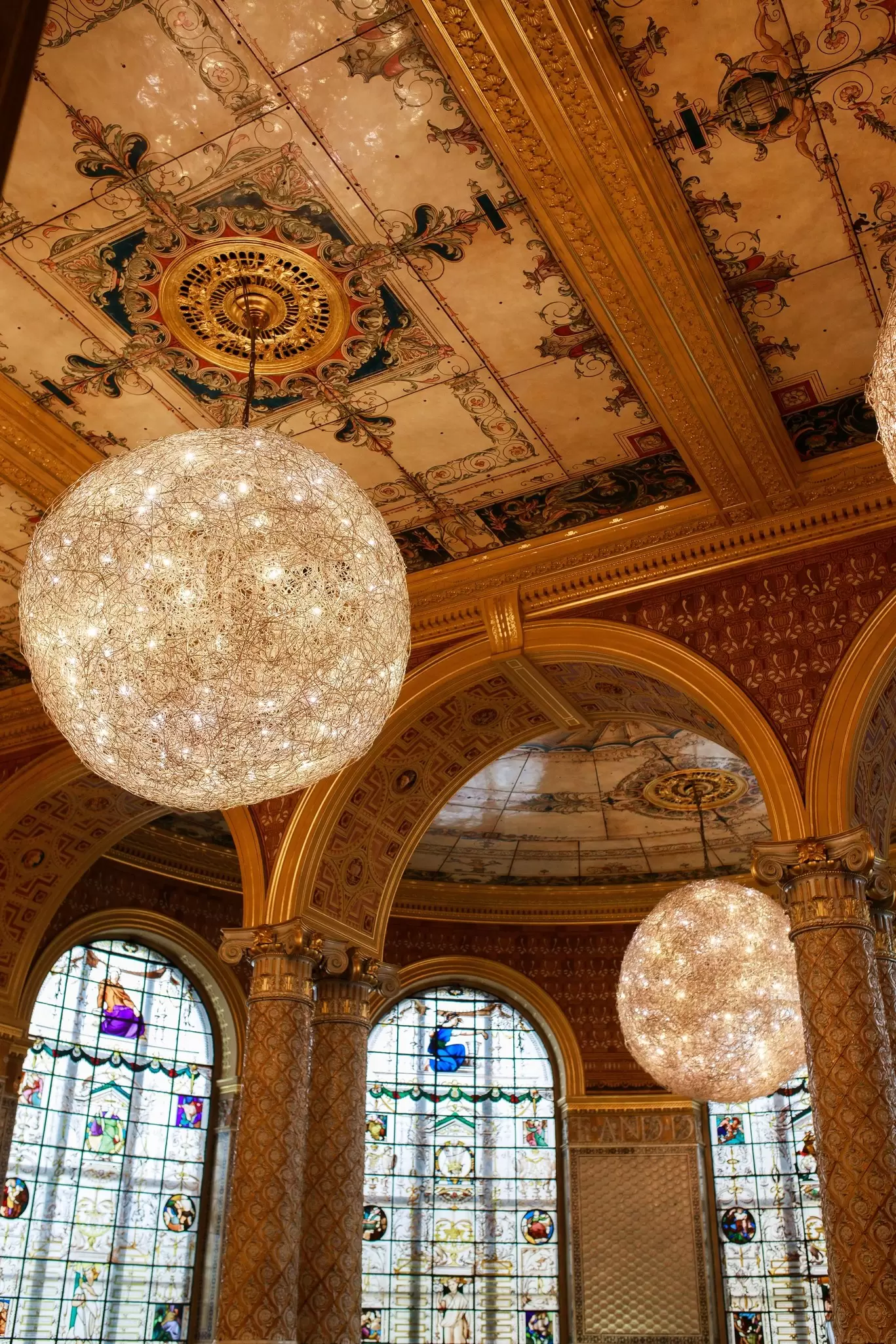
The landscaped John Madejski Garden is a lovely place to get some fresh air around a central oval pool. Fuel up with cakes and sandwiches at the Garden Café or in the museum’s opulent refreshment rooms, the Morris, Gamble and Poynter Rooms, opened in 1868 as the first public restaurant inside a museum. Each room is dazzling in its own right – the Gamble room is a dramatic space, with high, gold-painted ceilings and intricately decorated columns. The Poynter room has painted tiles and stained-glass windows, and the Morris room is filled with the designer’s distinctive arts and craft wallpaper.
Continue Learning
The V&A Academy has courses and workshops on everything from virtual reality and illustration to photography. Check online to see what is available during your London stay. Lectures and talks take place weekly. Many are free and cover subjects spanning from Medieval Treasures talks with a curator to lectures about esteemed designers like Coco Chanel.