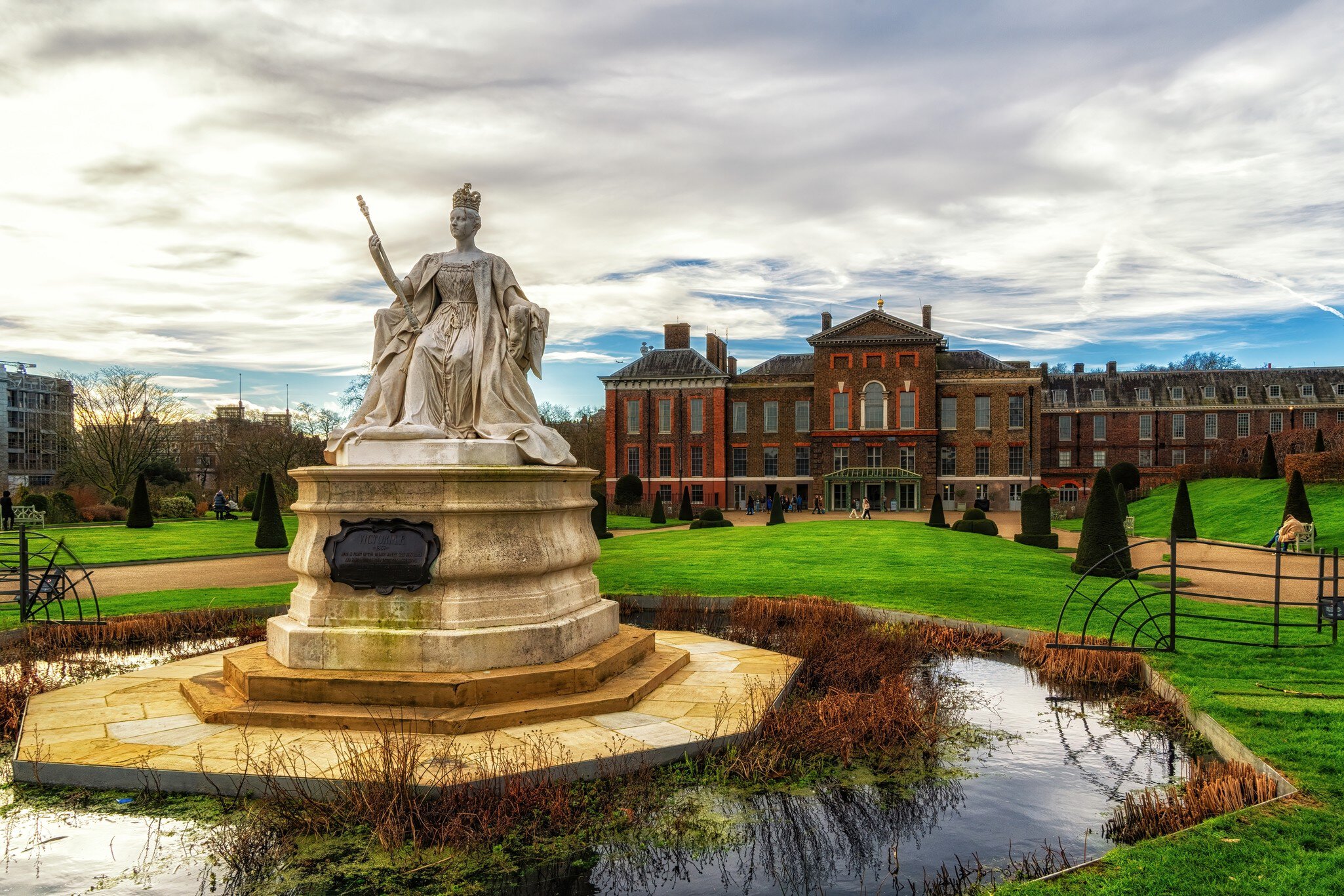
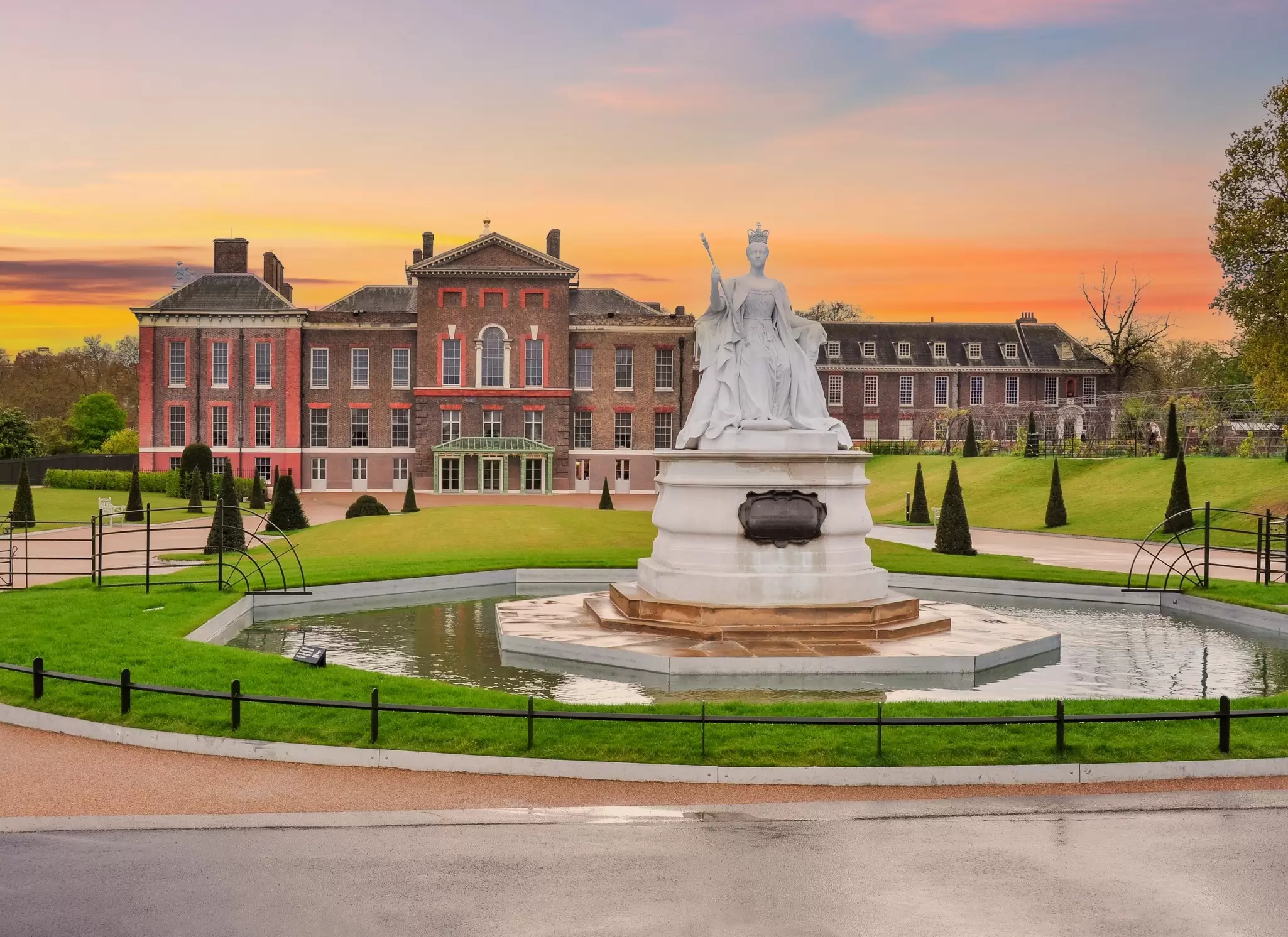
One side of this mercilessly resplendent royal residence, Kensington Palace and former home of various monarchs, is open to visitors. Roam around lavish rooms in the public and private palace, including the grand King’s State Apartments. The off-limits bits are currently the official living quarters of the Prince and Princess of Wales (William and Kate) and their children.
The King’s Staircase
Walking up the King’s Staircase is a dizzying feast of life-sized painted characters from George I’s court, who appear through realistic arches under a gilded ceiling. These iron-flanked stairs have made a lasting impression on meticulously dressed visitors for hundreds of years. The 45 intriguing characters standing on balconies were painted by William Kent, who drew inspiration from the palaces of Rome, where he trained as an artist. Kent has placed a selfie on the ceiling; spot him holding an artist's palette and wearing a brown turban. A painting of George II by John Shackleton hangs at the entrance to the King’s Apartments at the top of the stairs.
King’s State Apartments
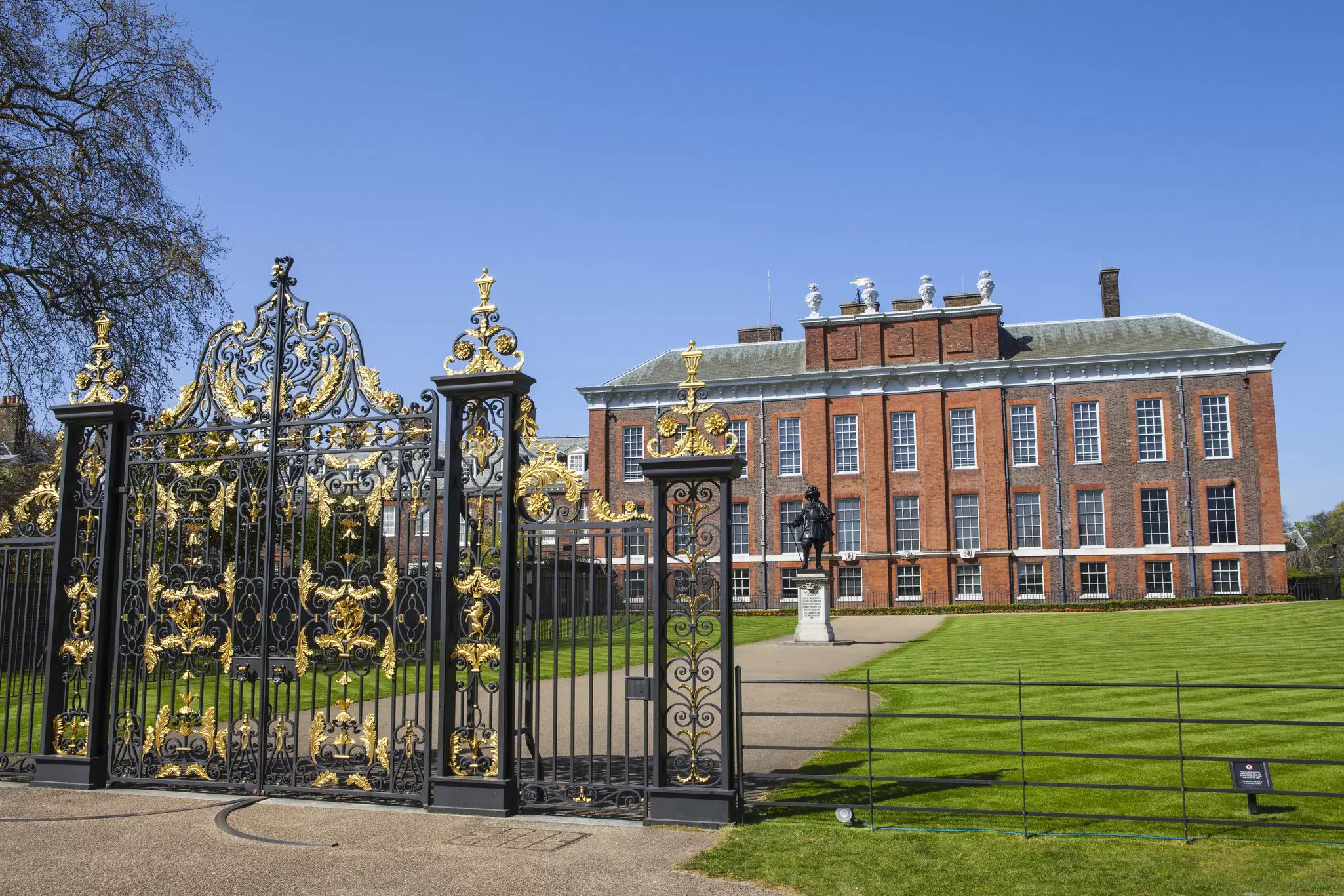
The most lavish rooms guests can visit were the home of George II and Queen Caroline from June 1927, when Kensington Palace once again became the center of court life. Portraits line the red fabric walls of the King's Gallery, with paintings of important Georgian figures, while the ceiling is filled with canvases depicting scenes from the life of Ulysses. A dial with compass directions sits on a gold-adorned painting of the British Isles over the fireplace. This was connected to a wind vane on the roof and allowed the King to know what direction the wind was blowing without going outside.
The adjacent King’s Drawing Room was one of the King's main places to entertain his courtiers, with wine, card games and networking (or gossiping). It has a huge oval painting on the ceiling, chandeliers and gold-bordered paintings of St Agnes, plus architects and scholars on the walls. Things get more impressive yet in the beautiful Cupola Room, adorned with gilded statues and topped with a striking, detailed painted ceiling. This was where court balls were held, and dancing was meticulously scrutinized. Queen Victoria was baptized in this room many years later.
The Temple of the Four Grand Monarchies is home to the palace’s most magnificent clock, decorated with silvers and bronzes – it once played music by Handel, Geminiani and Corelli. The Privy Chamber is where Queen Caroline and George II covered the walls with family portraits (they were born in Germany, so this was a lesson to those who doubted their right to rule). The oval ceiling painting depicts Mars, the Roman God of War. King George II was the last British King to lead troops into battle.
Queen’s State Apartments
The oldest part of the palace was the domain of the Stuarts, King William III and Queen Mary II, who chose this to be their country retreat in 1689. The rooms here are far more intimate and less showy. The Drawing Room is where Queen Mary did her entertaining, with Japanese and Chinese porcelain collections, wall tapestries and a kneehole desk decorated with floral marquetry (where the Queen would do her royal correspondence).
The King and Queen would enjoy a private meal in the beautifully paneled Queen’s Dining Room, away from the watchful eyes of the court. Fish and beer were reportedly their favorites – a tradition that has lasted in Britain today. The Queen’s Gallery is where the most significant paintings hung, plus where she would display her collections from China, Japan and India. Ladies in waiting would often read or work on embroidery in this room, and the Queen's pugs would lounge around on scatter cushions. The Queen’s Stairs, meanwhile, are deliberately in stark contrast to the King’s, with simple oak paneling instead of giant frescoes. But their location was hugely practical, allowing her and her ladies easy access to the garden.
Jewel Room
Containing specially commissioned jewels for Queen Victoria by her husband, Albert, this room includes a glistening Fife Diamond Tiara, given to the Queen on her wedding day by Albert, the Duke of Fife, with pear-shaped diamonds. Victoria would frequently wear a tiara instead of a crown when she was with her husband at events.
She would also intentionally wear Albert’s designs as a nod to him, and to reassure him that she was his wife, and so as not to appear overtly superior (even though in actuality she most definitely was). There is also an emerald necklace, brooch and earrings, which dazzled guests and expressed the Queen’s power at a Trinity College, Cambridge banquet, thrown in celebration of Albert’s appointment as chancellor. Albert's keen interest in jewelry design merged his interests in science and art.
Victoria's Former Home
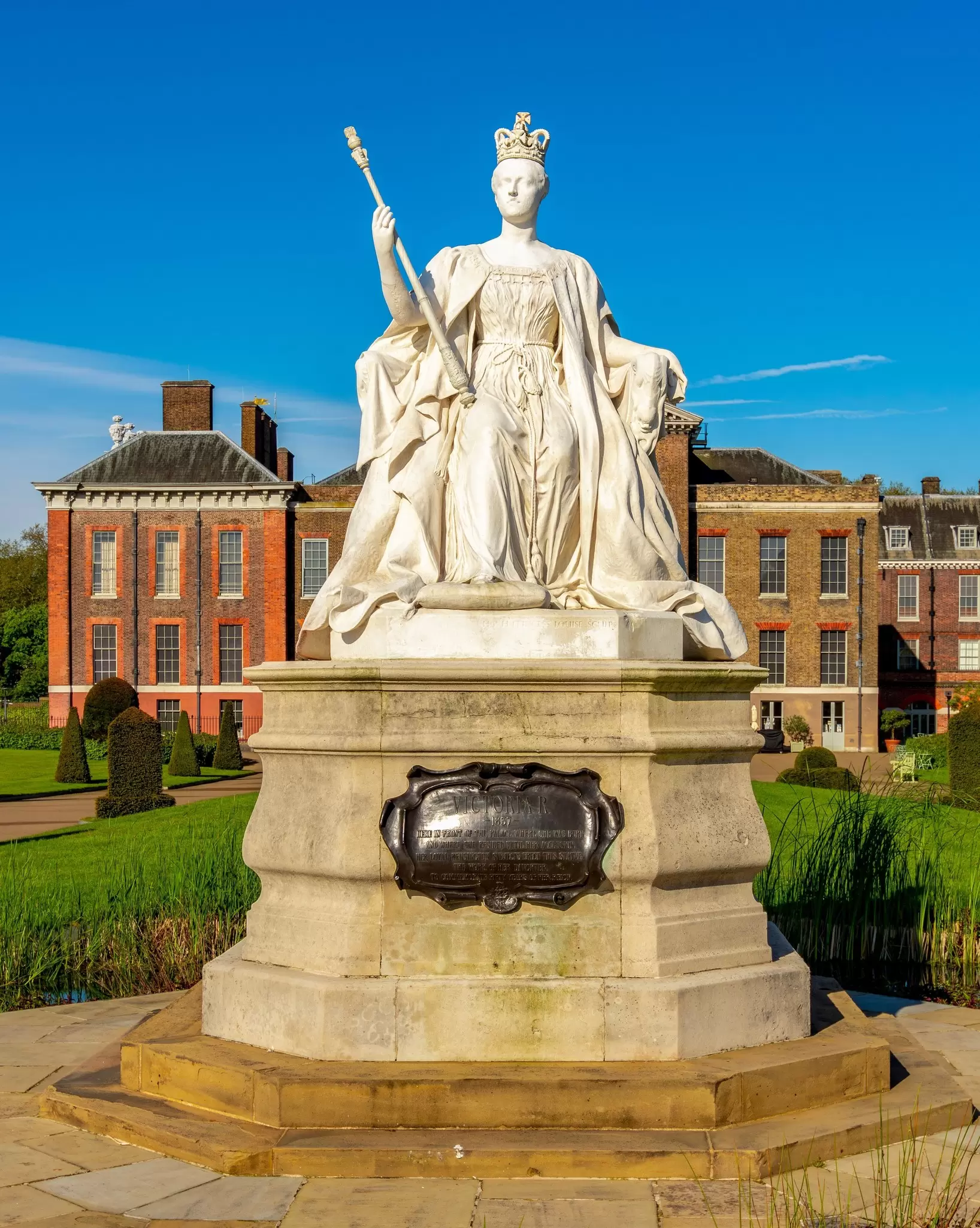
In the comparatively modest and calm, lightly painted rooms in the Victoria: A Royal Childhood exhibition, visitors can see a recreation of the environment Victoria grew up in during the first 18 years of her life, including the bed she was born in on 24 May 1819, the doll’s house and wooden peg dolls she played with and her travel bed, plus many more family heirlooms. It was here that Victoria followed the strict rules, which became known as the Kensington System, that would prepare her to be Queen.
In 1837, she learned of the King’s passing and was told she now ruled Great Britain. Shortly afterwards, in the Red Saloon, she had her first privy court session with 97 men. On loan in Kensington Palace is the first proclamation signed by Queen Victoria. Also on display are portraits of significant figures, a painting of Victoria's coronation in 1838, plus a bust of the 1st Duke of Wellington, displayed by the Duchess of Kent following his defeat of Napoleon Bonaparte. Other interesting family items include little mittens that belonged to Princess Charlotte, the daughter of George VI and Queen Caroline, who died leaving no heir.
Gift Shop
Load up on kitsch Rule Britannia gear at the Kensington Palace shop. Get Union Jack pin badges and pens, coronation tankards and all manner of chintzy homewares (from tea towels to china) or jewels in the image of royal designs (for a fraction of the price) and Sunken Garden-inspired watercolor prints, floral motif cups, bags, aprons and diaries.
Palace Café
Try Grand Couture cake and coronation ice cream, plus a number of dainty sweet creations at the palace exit. A small selection of sandwiches (with crisps and salad), plus hot and cold drinks, are also served.