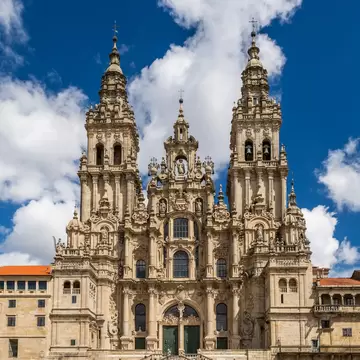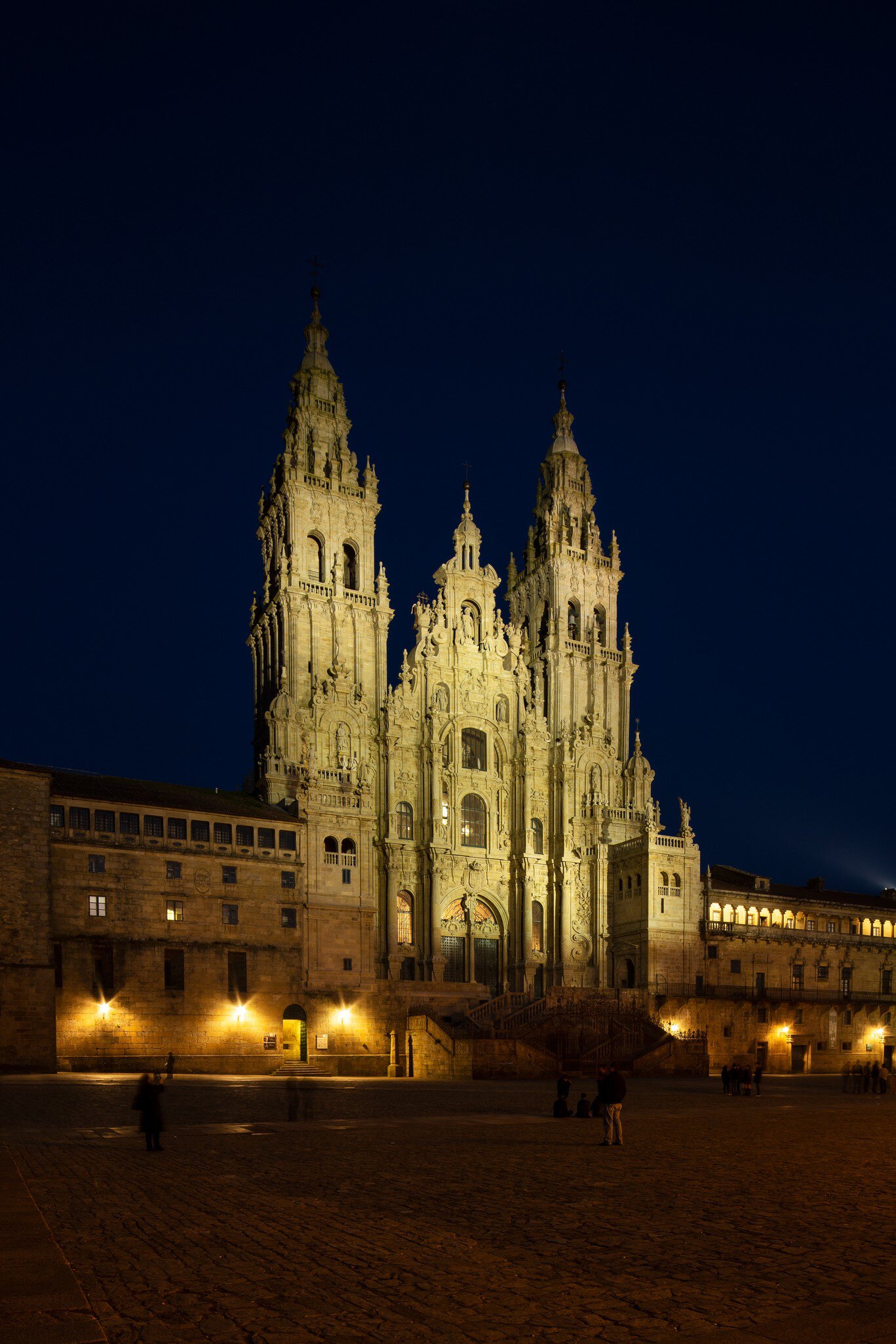
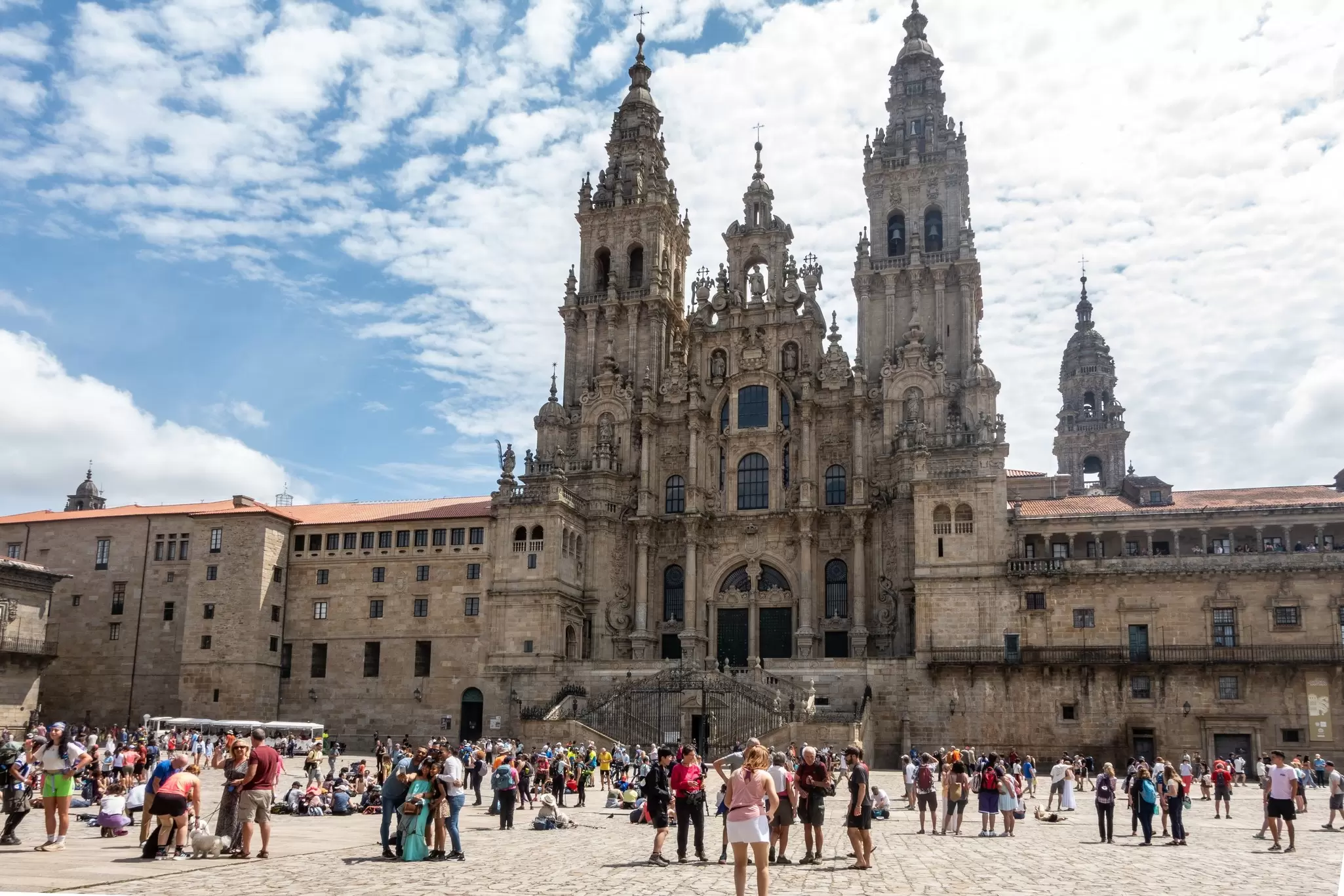
Entering Praza do Obradoiro for the first time, you’ll stop dead in your tracks, just as many thousands of pilgrims do every year, eyes magnetized by the soaring Churrigueresque facade of the cathedral believed to house the tomb of Santiago the Apostle. This is the culmination of weeks of spiritual pilgrimage for many, and one of Europe's architectural, historical and atmospheric highlights.
High Altar & Apostle's Tomb
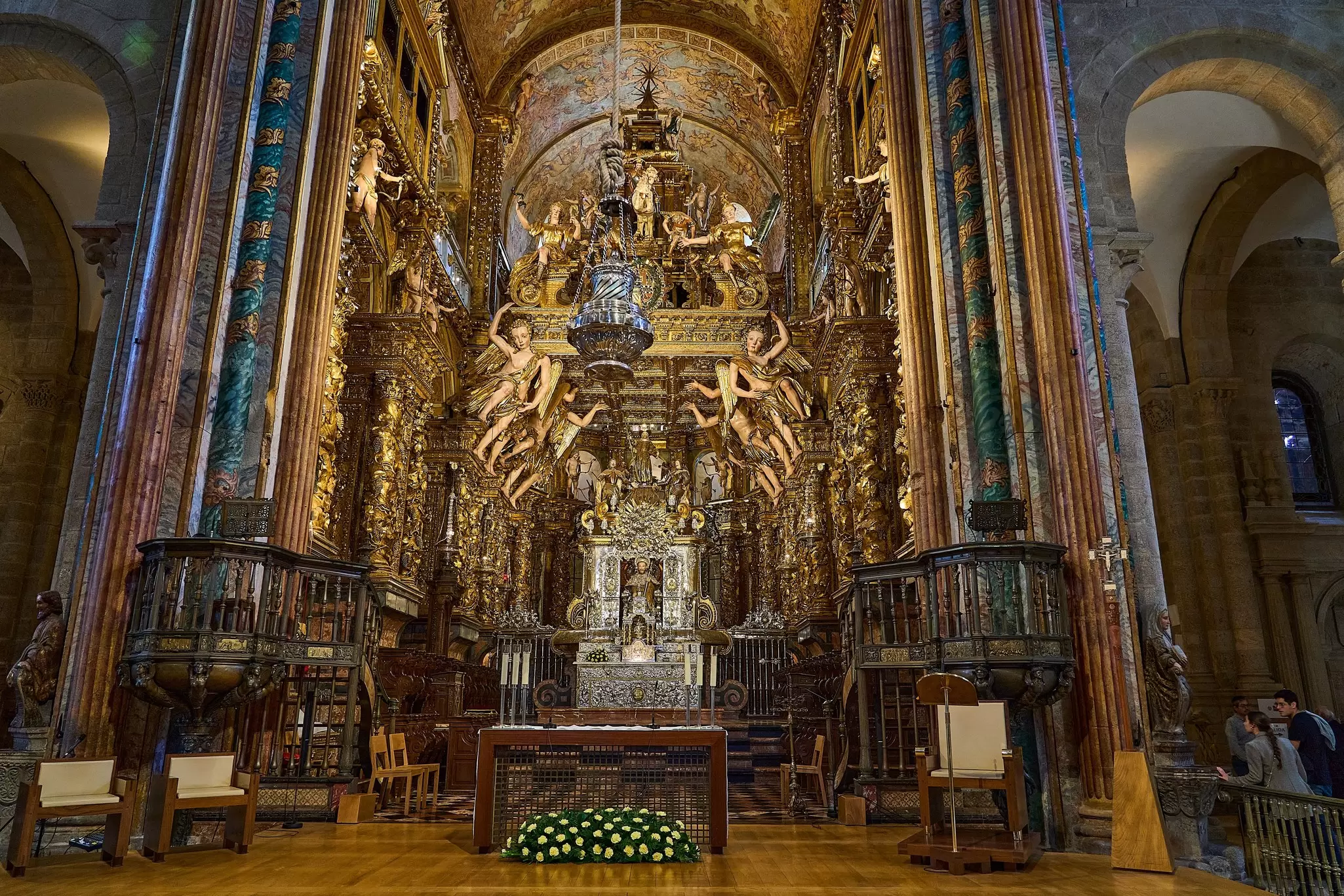
Entry to the cathedral is from Praza das Praterías, through the Romanesque south door. Inside, the Altar Mayor (High Altar) is a fantastically elaborate Churrigueresque confection with a statue of Santiago at its center and a massive golden canopy held up by a team of soaring, scantily-clad angels.
Cripta Apostólica
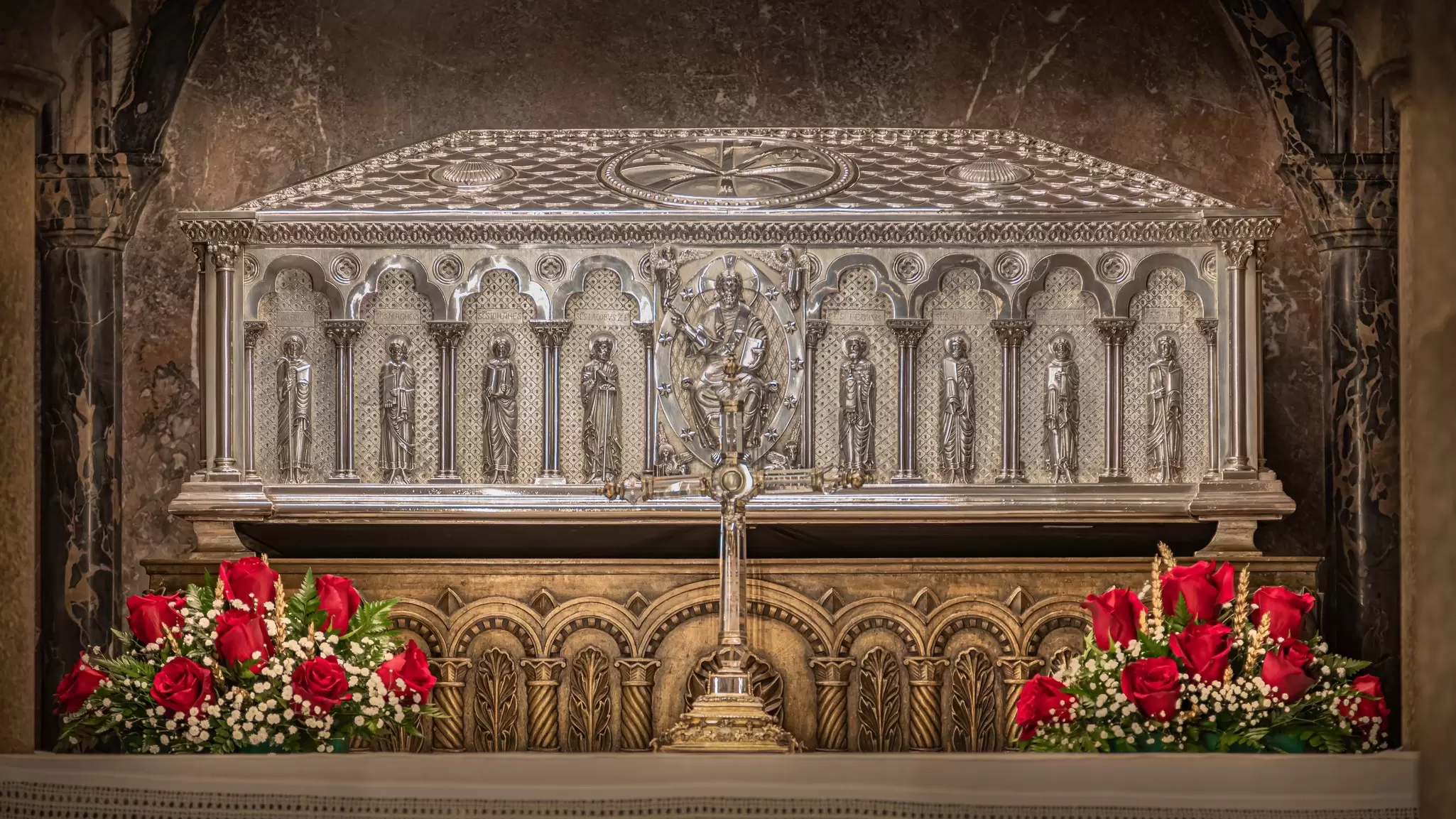
The ambulatory (walkway) round behind the Altar Mayor passes the inside of the Puerta Santa (Holy Door), which opens only in holy years – when Santiago's feast day, 25 July, is a Sunday, and plenary indulgence (forgiveness of all sins) is granted to pilgrims (next in 2027). The ambulatory brings you round to a flight of steps descending to a view of the large 19th-century silver casket that contains, we're assured, Santiago's remains. Re-emerging, you can climb up the stairs behind the Santiago statue, embrace him and make a wish.
Nave
The 11 bays of the barrel-vaulted main nave, with their side aisles and rounded Romanesque arches, stretch in stately procession away to the cathedral's west end from the Altar Mayor. Its rows of seating fill up for pilgrims' Masses several times daily.
Pórtico de la Gloria
The cathedral’s artistic high point, at the west end of the nave, the Portico of Glory features 200 Romanesque sculptures by Maestro Mateo, who was given charge of the cathedral-building program in the late 12th century. These detailed, inspired and wonderfully lifelike granite sculptures cover the Old Testament and its prophets (including a famously smiling Daniel) on the north side, and the New Testament, Apostles and Last Judgement on the south. Glory and resurrection are depicted in the central archway, where the main figure is a throned, resurrected Christ, surrounded by evangelists and angels and the 24 elders of the Apocalypse with musical instruments.
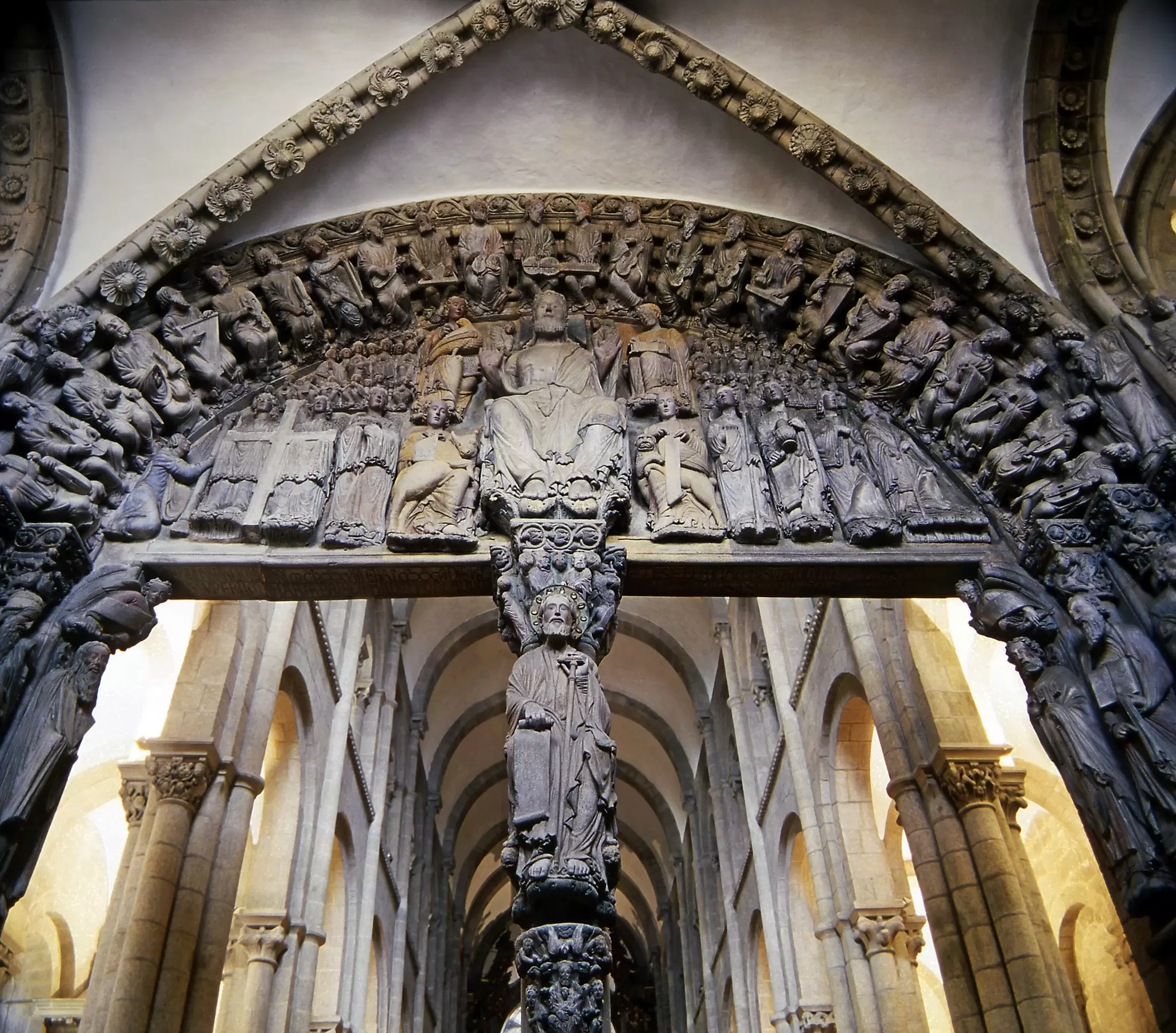
Below Christ's feet is Santiago, and below him a figure (usually identified as Samson or Hercules) holding open the mouths of two lions. Until recently, this west end of the cathedral was the main entrance, and arriving pilgrims would traditionally place their fingers in the five holes above Samson's head, created by the same act by millions of faithful over centuries. On the other side of the same pillar is a sculpture believed to represent Maestro Mateo. Another tradition called for visitors to bump heads with the maestro to acquire some of his genius. Neither of these traditional acts is now permitted.
Las Cubiertas
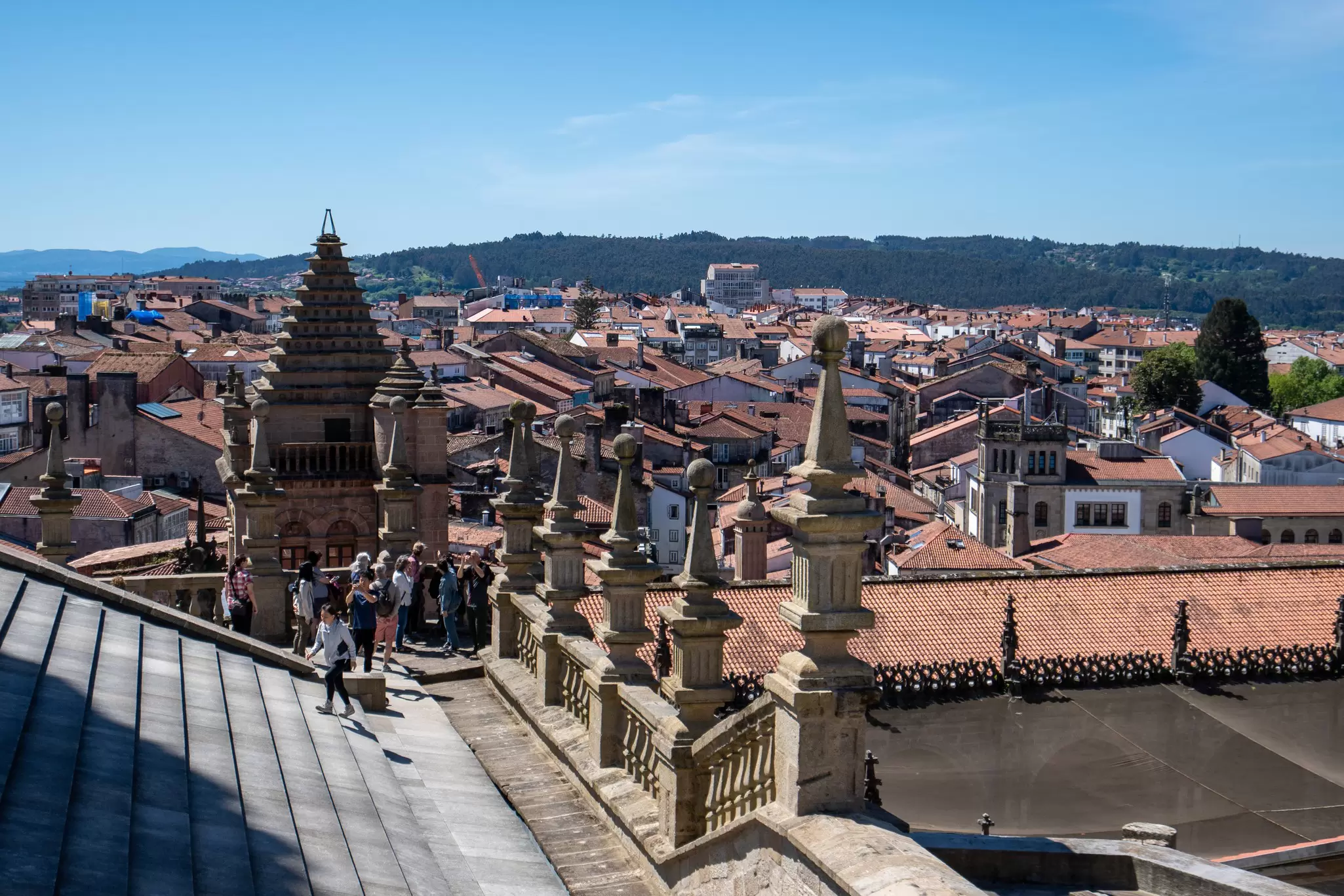
The exciting, very popular rooftop tour gives you a close-up look at the towers and their decorative adornments, plus tremendous views over the city. Be ready to climb over 150 steps. The Spanish-language guides will often break into English for the benefit of foreigners.
Museo Catedral
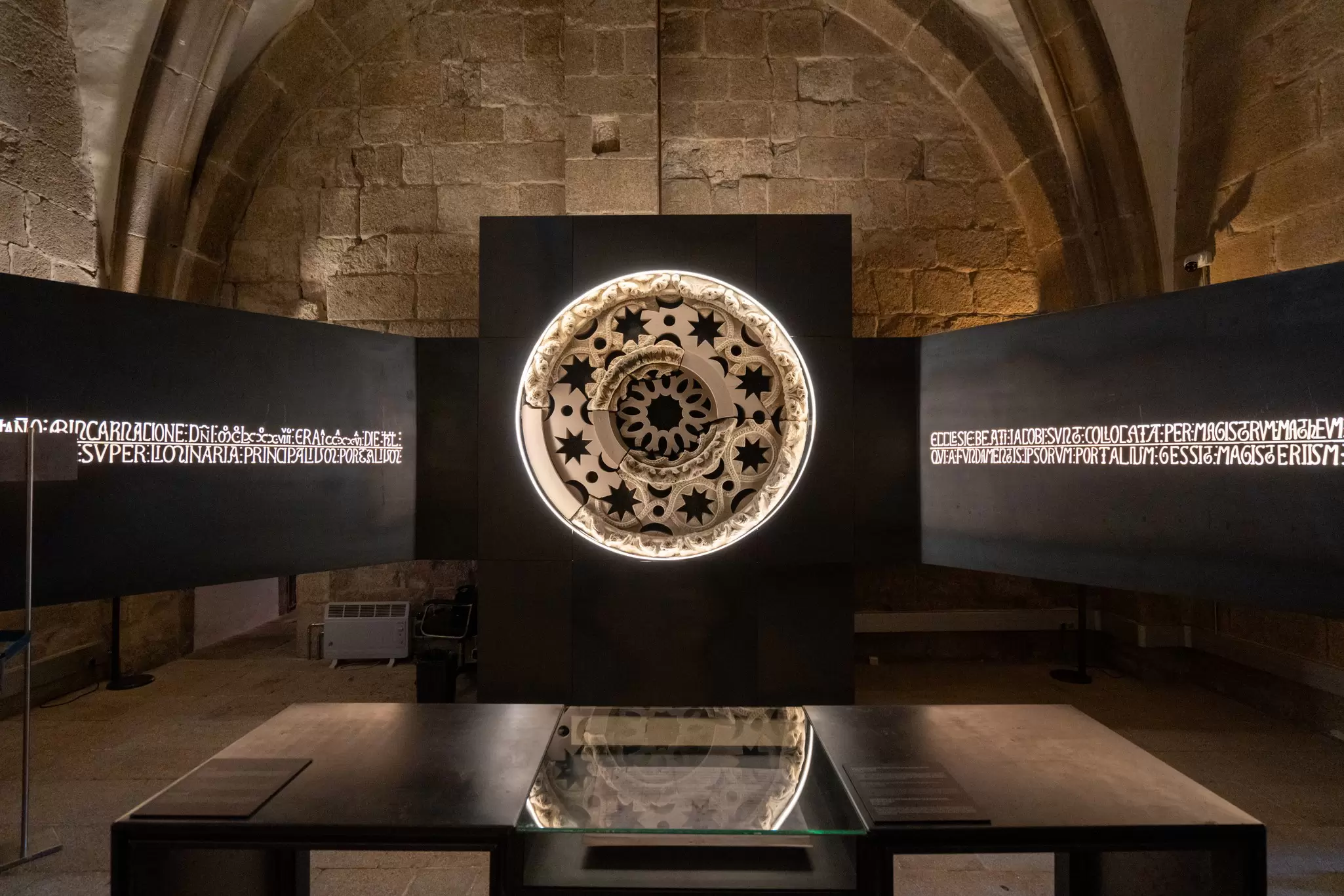
The Cathedral Museum's permanent collection, entered from Praza do Obradoiro, spreads over four floors. You'll see a sizeable section of Maestro Mateo's original carved-stone choir, the lavish 18th-century sala capitular (chapter house) where the cathedral's famed botafumeiro (incense censer) is displayed, the large 16th-century cloister and the Panteón de Reyes with tombs of medieval Galician nobility.