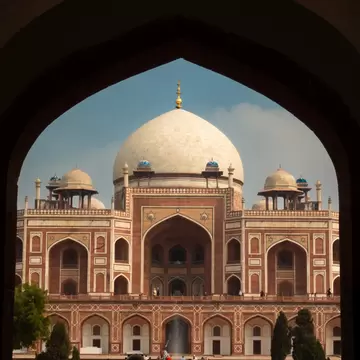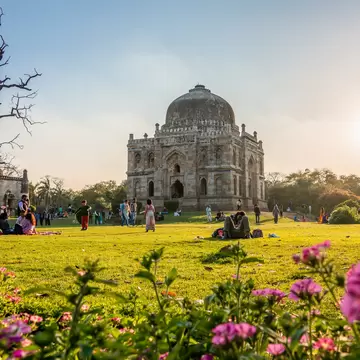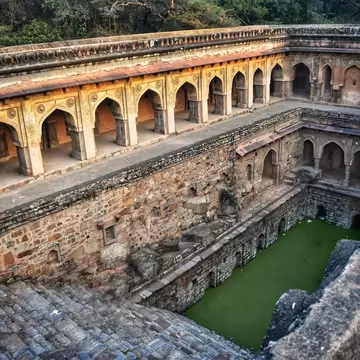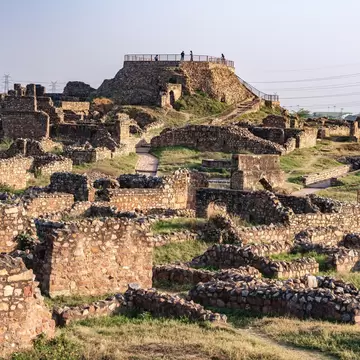
With the city founded by the Mughal emperor Shah Jahan as its core, Delhi is a sprawling, captivating collection of magnificent monuments, time-dusted tombs, British-built government buildings, djinn-haunted fortresses and tangled bazaars. Delhi’s biggest monument of them all? The legendary Red Fort (Lal Qila).
While you can (and should!) visit India’s more lavish and intact Mughal fortresses – dramatic Agra Fort comes to mind – the combination of vivid history, architectural grandeur, fascinating exhibitions and a prime location at the head of Old Delhi’s medieval market elevates the Red Fort to superstar status. It’s simply one of the top things to see in all of India.
From its historic highlights to the best times to visit, read on for all you need to know about visiting Delhi’s Red Fort.
What’s the History of the Red Fort?
The 17th-century Mughal emperor Shah Jahan ordered the construction of the Red Fort after moving his capital to Delhi from Agra in 1639. Covering 103 hectares (255 acres), this red sandstone marvel was reputedly designed by Ustad Ahmad Lahori, the architect behind the Taj Mahal, and formed the focal point of a new royal city, Shahjahanabad, dotted with marketplaces, mosques and monuments.
Despite its imposing, near-impregnable appearance, the fort was conquered and reconquered multiple times, as rival empires squabbled over India’s riches. During a period of weakening Mughal power, the Persian emperor Nadir Shah was the first to seize the Red Fort in 1739, drawn by the luster of the Peacock Throne – a medieval treasure encrusted with real gold and precious stones.
The fort later passed to the Marathas of western India, then the Afghan emperor Ahmed Shah Durrani, then back to the Marathas. Next came the Jats of Bharatpur, then the Sikh Confederacy, and finally the British East India Company. Even during this period of turmoil, various Mughal emperors remained as titular rulers, and their seat remained the fort.
After the First War of Independence (Indian Uprising) in 1857 and the summary eviction of the final Mughal ruler, Bahadur Shah Zafar, the Red Fort was taken over by the British, who demolished many of its grand structures and filled the interior with functional barrack buildings that today house museums exploring the fort’s rich history.
When Should I Go to the Red Fort?
The Red Fort gets busy during the main tourist season from October to March – so try to enter right when the gates open at 9:30am, before the sightseeing crowds and tour groups arrive. The site stays busy until closing time at 4:30pm – except on Mondays, when the fort is closed all day.
The Red Fort is quieter during the pre-monsoon period in April and May, though daytime temperatures can climb above 40°C (104°F) – hardly ideal for sightseeing. As large parts of the fort are open to the weather, visiting during the rainy monsoon months from June to September can also be challenging.
Which Metro Line Goes to the Red Fort?
The Lal Qila metro station on Line 6 (Violet) is just steps from the Lahore Gate. The Chandni Chowk station, on Line 2 (Yellow), in the heart of Old Delhi, is a 15-minute walk away.
How Much Time Should I Spend at the Red Fort?
You’ll need at least half a day to explore – and longer if you plan to visit all the museums inside the fort. If you intend to see every corner, give yourself most of a day, taking lunch or a picnic inside the fort compound.
What’s the Best Way to See the Red Fort?
Start with the Mughal monuments at the back of the compound, then work your way around the grounds, taking in its many varied museums and monuments. You’ll enter and leave through the Lahore Gate on the west side of the fort walls, which faces toward Old Delhi’s bazaars. You can hire an official guides by the fort entrance and ticket desk to help you make sense of the expansive complex.
Also consider returning for the Jai Hind sound-and-light show in the evening (except on Monday). English-language shows start at 8:30pm from September to April and at 9pm from May to August, with shows in Hindi earlier in the evening.
How Much do Red Fort Tickets Cost?
Tour agencies can book tickets ahead of time, but independent travelers can easily buy tickets to the Red Fort on arrival. Admission for foreign visitors costs around 600 rupees, while Indian visitors pay ₹50. There’s an extra ₹25 fee for using a video camera.
Pay extra for the museum ticket if you want to see the multiple museums in the Kranti Mandir complex. There’s also a separate entry ticket for the private museum at the Red Fort Centre.
What Should I Eat and Drink at the Red Fort?
If you're here at lunchtime, you can eat at the Cafe Delhi Heights inside the visitor center at the RR Barracks. Alternatively, grab some takeaway samosas, kachori (stuffed fried pastries), pakora (vegetable fritters) or parathas (buttery flatbreads) from the street food stalls in the Chandni Chowk bazaar before you enter, then enjoy a picnic inside the walls. And always take plenty of water: wandering around the grounds can be thirsty work on hot days.
What Are the Red Fort’s Must-Sees?
While every inch of the fort is soaked in history, the focus for most visitors is the collection of Mughal buildings at the rear of the compound. Lining the eastern wall, the structures once looked out directly over the Yamuna River.
Lahore Gate
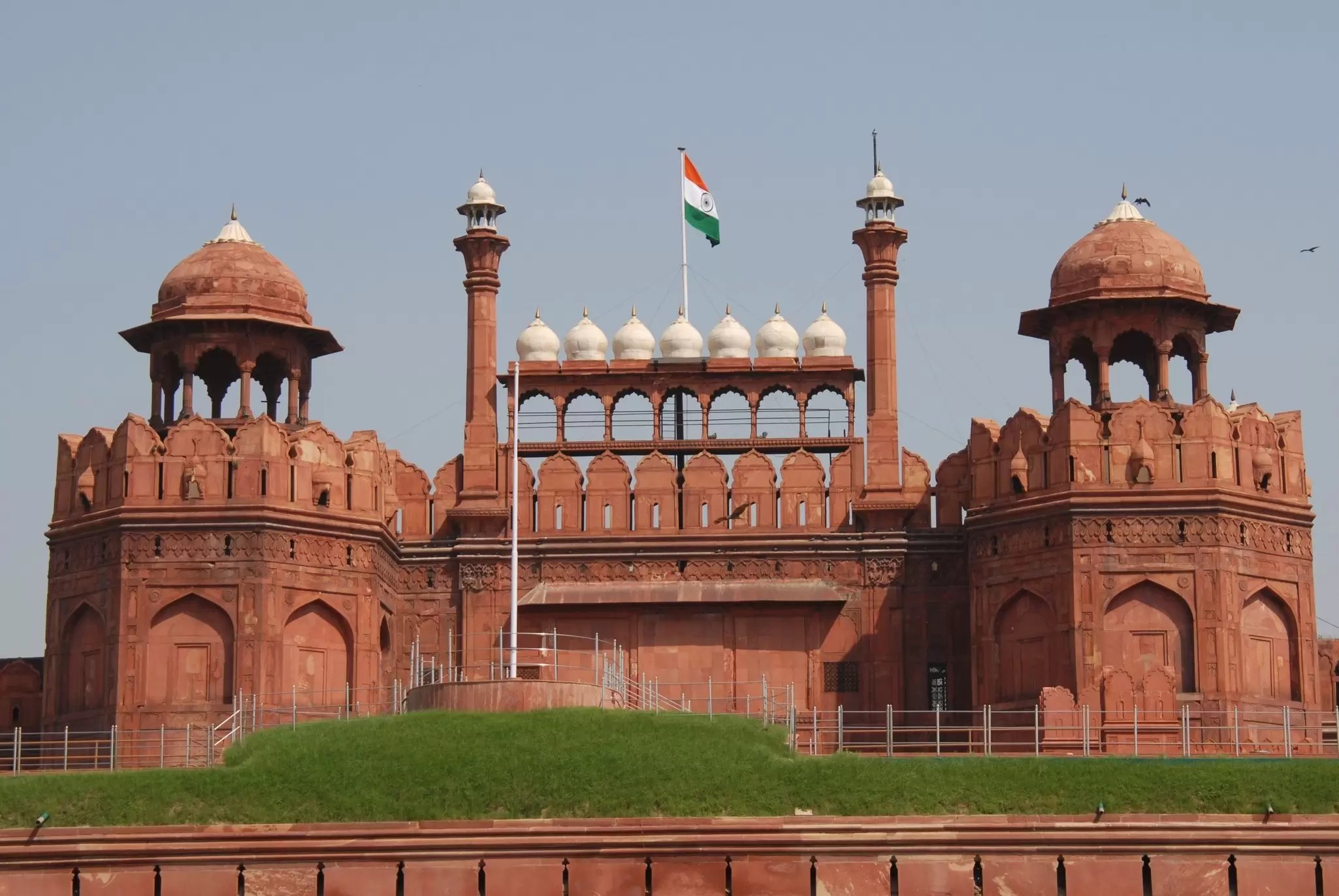
You’ll enter the Red Fort from the west, via the Lahore Gate, which faces Old Delhi. This massive red sandstone portal has become the unofficial symbol of Delhi – indeed, you might recognize it from the Indian ₹500 banknote, and from footage of Delhi’s grand Independence Day celebrations. This is where Jawaharlal Nehru first raised the tricolor flag of a newly independent India back in 1947, an event recreated every year.
The bastion in front was built by Emperor Aurangzeb for increased security, though it wasn’t enough to stop Nadir Shah from ransacking the fort for its treasures in 1739. You can still see bullet marks on the gate that date from the First War of Independence (1857), when Indian soldiers rose up against the British, leading to the dissolution of the Mughal Empire.
After the war, the British destroyed two-thirds of the buildings in the Red Fort, including the zenana (women’s quarters) and the arcaded courtyards that once surrounded each royal building. The occupiers erected a series of Victorian-style barracks in their place, since converted into museums.
Chatta Chowk
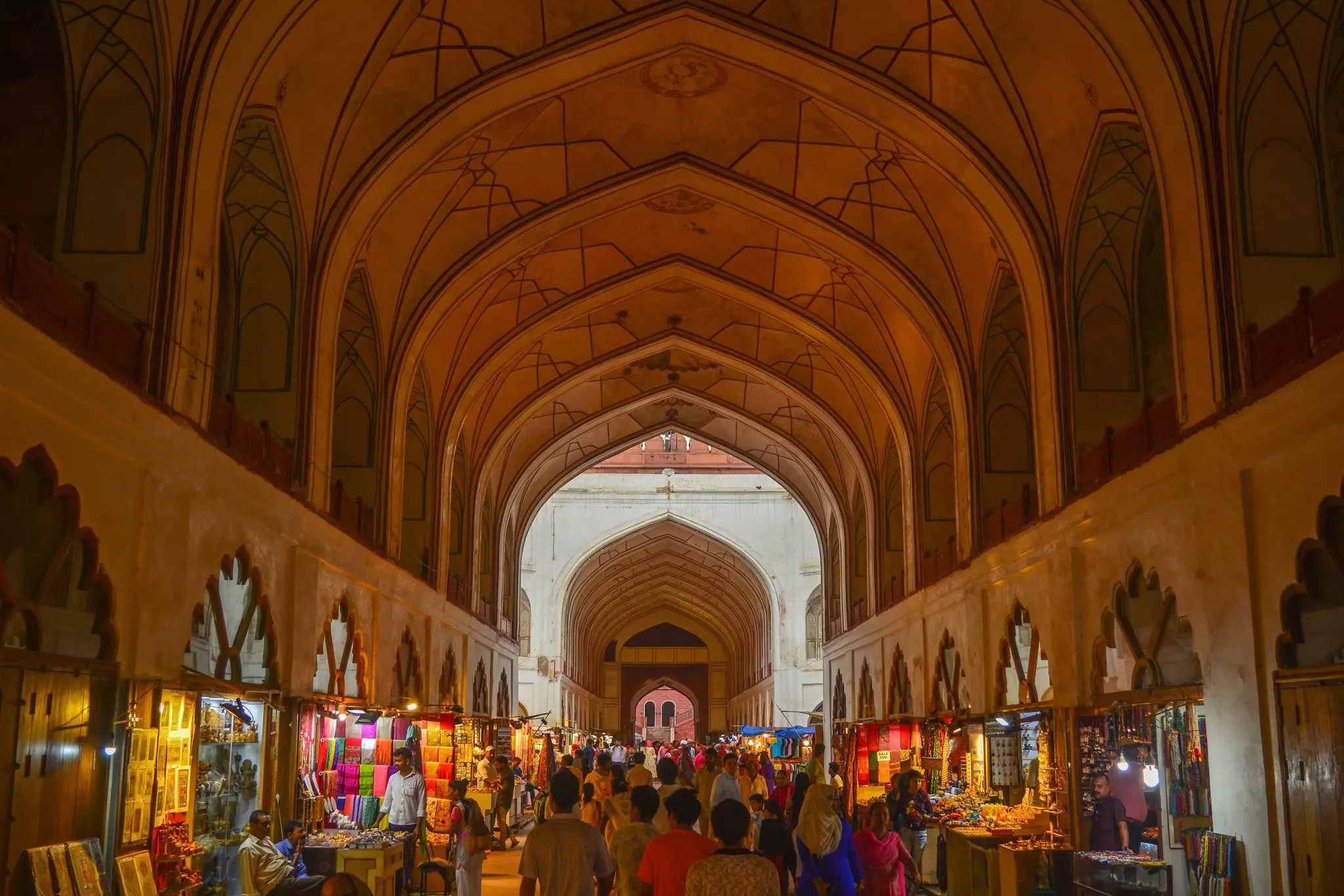
From the gateway, you’ll pass into Chatta Chowk, an atmospheric covered bazaar topped by soaring arches, which once sold silks and jewelry to the nobility. Today, its vendors to do a brisk trade in souvenirs, though prices are higher than you’ll find in some other places in Delhi.
Red Fort Centre
Beyond Chatta Chowk lies the first of the barracks museums, the separately ticketed Red Fort Centre, set in an imposing European-style building that represents a clear architectural shift from the Mughal-style structures seen so far. Inside, old photos, informative information boards and audiovisual displays help put the fort and its history into context, in an interactive presentation called Afsana. Complimenting the exhibit, a 360-degree immersive augmented-reality experience, Afreen, takes visitors back in time to the era of Shah Jahan's rule. Separate tickets to Afsana and Afreen each run ₹100 (a combined ticket is ₹150).
Naubat Khana & Diwan-i-Am
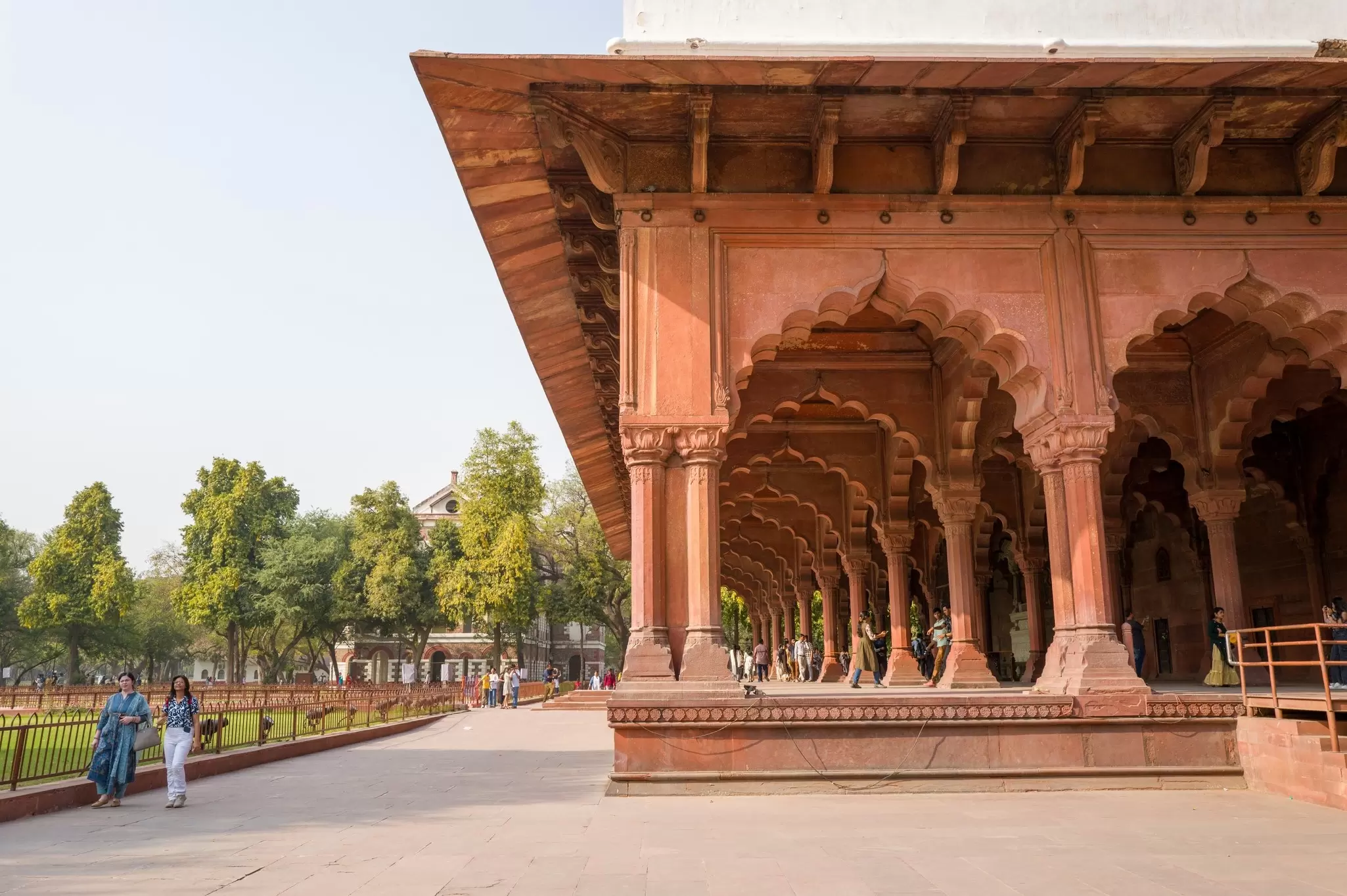
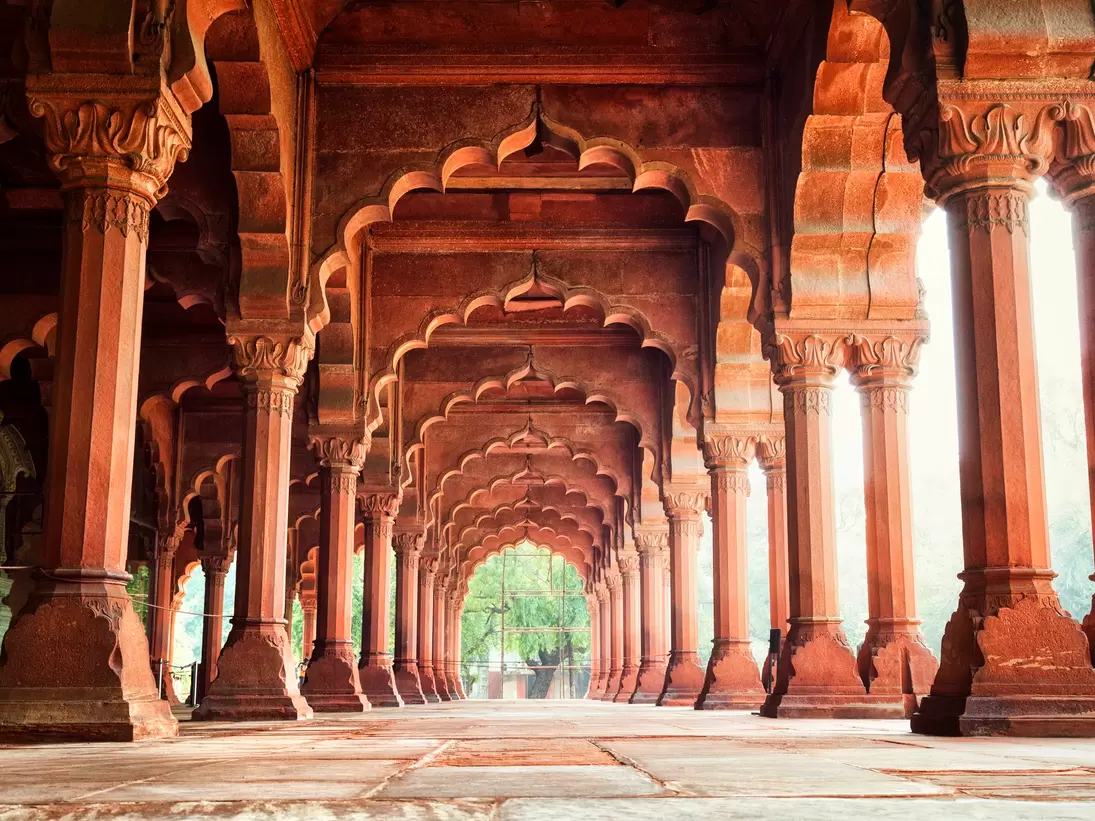
Behind the Red Fort Centre is the Naubat Khana (Drum House), where musicians once played to announce the arrival of the emperor; the three-story structure is embellished with carved designs that were originally painted with gold. From here, gardens lead east toward the imposing Diwan-i-Am – the Hall of Public Audiences – where the emperor listened to petitions from members of the public.
With its visually arresting arcades of scalloped archways, it’s a classic of Mughal architecture. It’s not hard to imagine court life in this space, when its red sandstone columns were covered in shell plaster, as polished and smooth as ivory. In hot weather, heavy red curtains were hung around the columns to block out the sun. It’s believed the panels behind the marble throne were created by Florentine jeweler Austin de Bordeaux.
Immediately south is a line of barracks buildings that are used for temporary exhibitions; take a look and see what is on display.
Khas Mahal & Rang Mahal
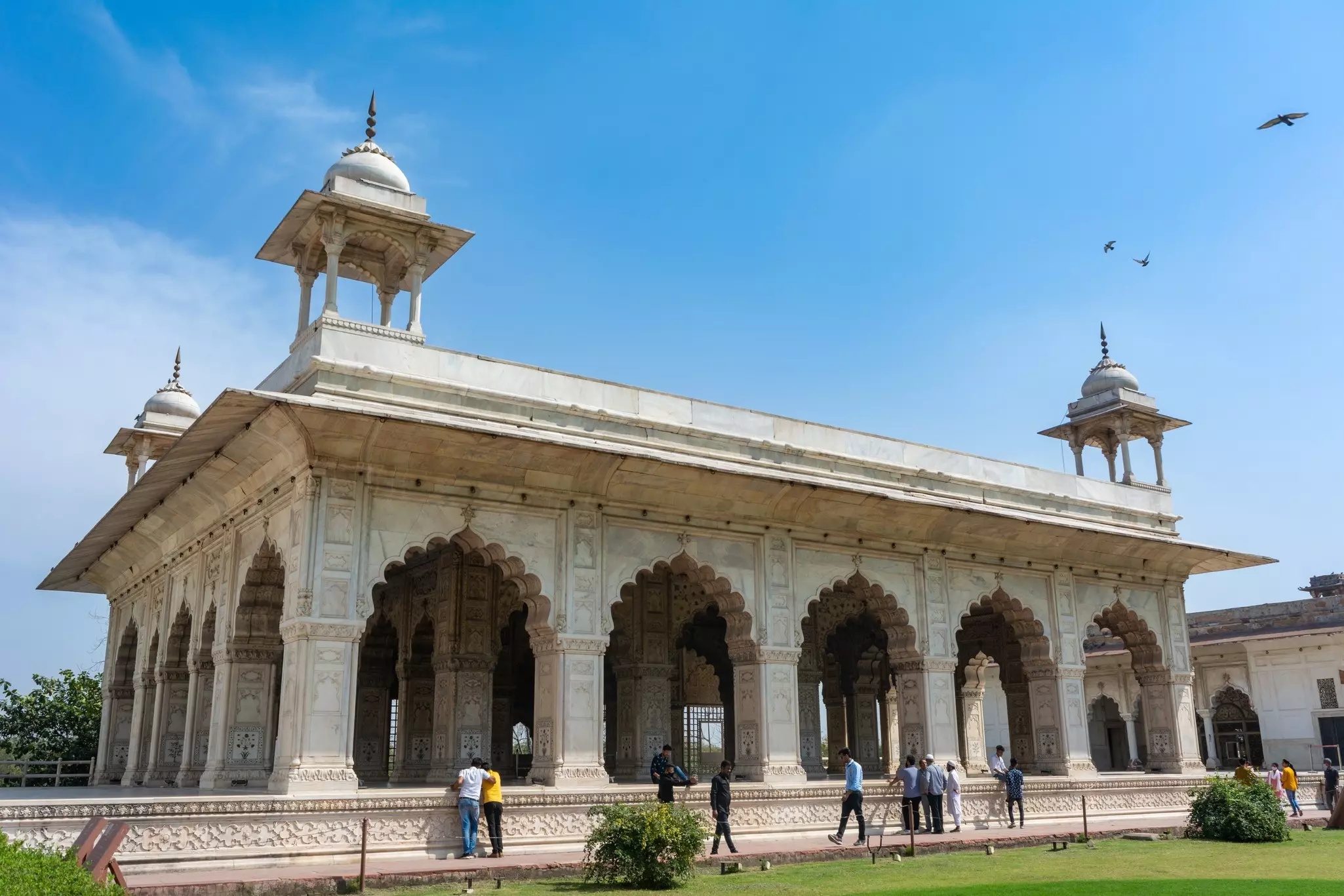
Behind the Diwan-i-Am lie the private quarters of the Mughal rulers. The Khas Mahal is a delicate white marble pavilion once reserved for the emperor, while the Rang Mahal is a pavilion used by the women of the royal household. The octagonal tower to the rear of the Khas Mahal was used by the emperor to address his subjects from the top of the fortress walls.
The most spectacular feature inside the emperor’s private residence is a beautiful marble screen at the northern end of the palace. Above, a carving of the “Scales of Justice” is suspended over a crescent, surrounded by stars and clouds.
Look out for the marble-lined channel known as the Nahr-i-Bihisht (Stream of Paradise), crossing the floor of these gleaming palaces. The watercourse was once used to cool the air using water diverted from the Yamuna, and it feeds a striking marble basin (once topped by an ivory fountain) in the Rang Mahal.
Diwan-i-Khas

To the north of the Khas Mahal is the Diwan-i-Khas, the Hall of Private Audiences – which was reserved for meetings between officials of state and the royal family. As this was the nobility-facing side of the royal compound, no expense was spared in its creation.
The walls of this delicate white-marble pavilion are dressed with carved panels decorated with pietra dura inlay work made from carnelian and other semiprecious stones. A wooden ceiling over the hall was painted in 1911 and is crowned with chhatris (domed canopies). The lace-like marble screens to the rear once looked out over the original path of the Yamuna (now the ring road), and were originally filled with colored glass.
Moti Masjid (Pearl Mosque)
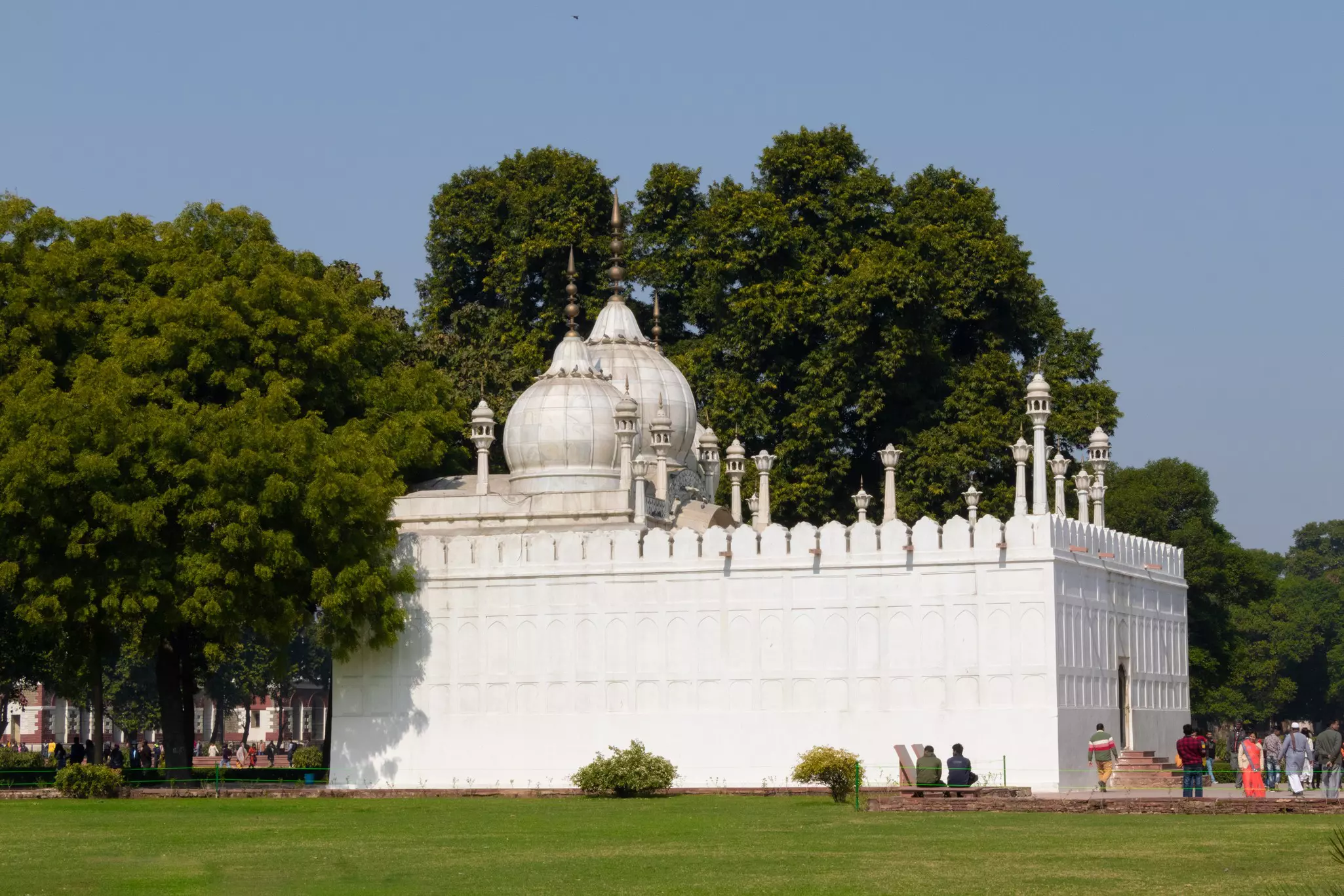
To the north of the Diwan-i-Khas is the royal hammam (bathhouse) and the dainty Moti Masjid (Pearl Mosque), built by Aurangzeb in 1662 for his personal use. Its clustered onion domes were originally covered in copper, but this was stripped and sold by the British after the 1857 First War of Independence. Inside, the mosque’s marble walls are intricately carved with vines and floral motifs, though the doors are kept closed to avoid damage (and to avoid offending religious sensibilities).
Zafar Mahal and Gardens
In front of the royal apartments lie formal gardens once used for relaxation by the emperor and his family. Many of the shady pavilions that once stood here were left to fall into disrepair by the British, but the red sandstone Zafar Mahal gives a hint of the gardens’ original elegance. This square pavilion was once surrounded by a royal bathing tank that was later requisitioned as a swimming pool for British officers.
Kranti Mandir

The line of barracks blocks on the west side of the gardens has been converted into a series of interesting museums presenting the Indian perspective on British rule. (As you might imagine, it’s less than favorable.)
Accessible with a special museum ticket are the Yaad-e-Jallian Museum, focusing on the injustices of the Jallianwala Bagh massacre in Amritsar and the experience of Indian soldiers fighting in WWI; and the Azaadi ke Diwane Museum, hailing the heroes of the Indian Independence movement.
The Netaji Subhas Chandra Bose Museum is devoted to the revered if controversial Bengali-Odishan freedom fighter, who defied the British, but also sought alliances with Nazi Germany and Imperial Japan. Then there’s the Drishyakala Museum, devoted to Indian art and artists.
Salimgarh
Reached via a pedestrian footbridge, the Salimgarh once stood on an island in the Yamuna River, built in 1546 by Salim Shah Suri and later used as a prison by Aurangzeb and the British. Today, you can explore a collection of dusty barracks and prison buildings and escape the crowds that throng other parts of the Red Fort.
My Favorite Thing to Do at the Red Fort
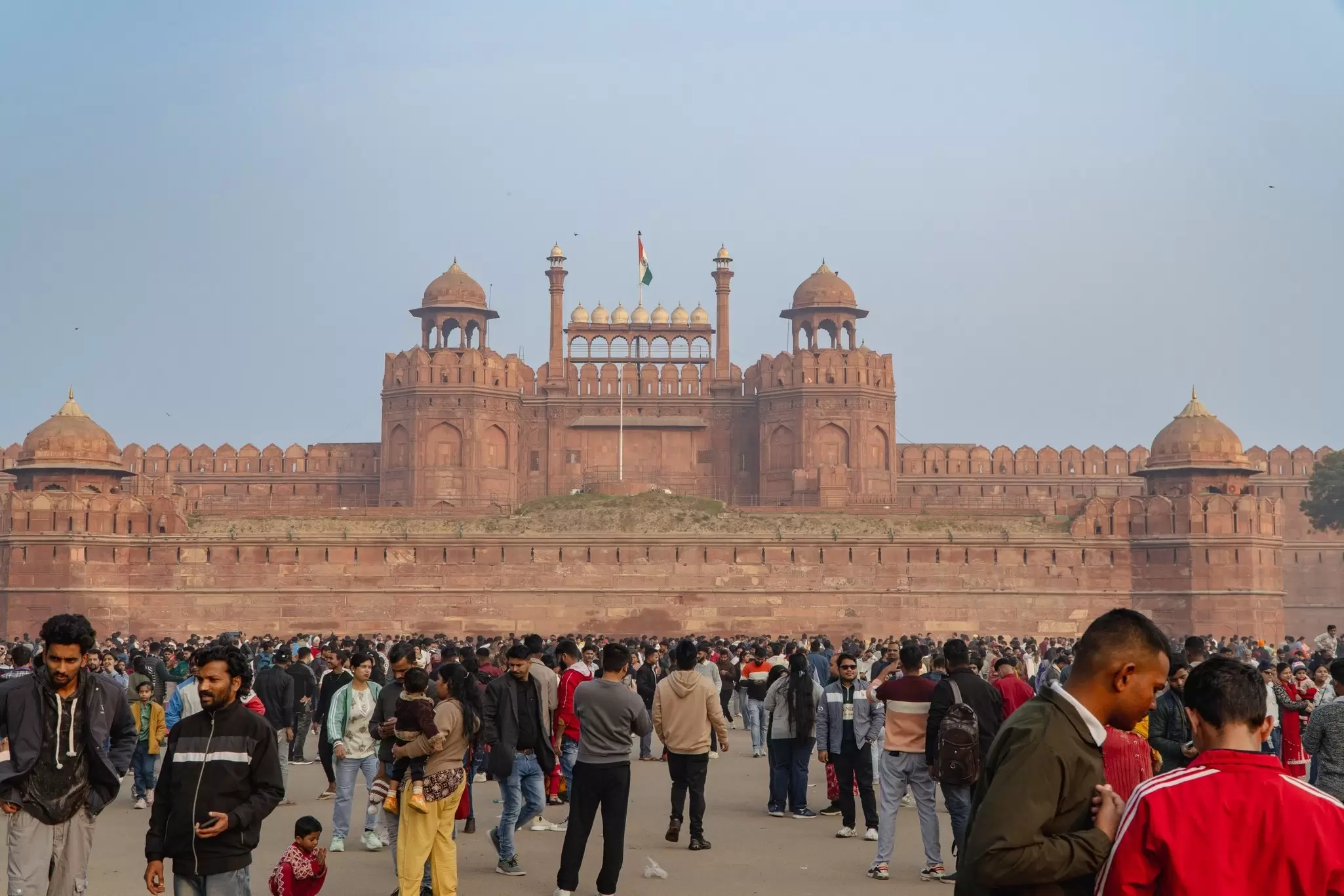
People-watch, naturally. As afternoon temperatures drop to more-comfortable levels, couples take romantic walks around the grounds, kids frolic in the gardens, and people from all over India enjoy picnics and talk animatedly about the history on all sides. Don’t be surprised if people quiz you about your experiences of the Red Fort, and – in a friendly way – your opinions on British rule.
Is the Red Fort Accessible?
Since it’s mostly on one level once you enter the Lahore Gate, the Red Fort is one of the more accessible Mughal monuments. Ramps make the palaces and pavilions wheelchair accessible, and there are few steps to climb or passageways to squeeze through. However, you may not be able to see every corner of the museums and pavilions, and the Salimgarh bridge is reached by steep steps.