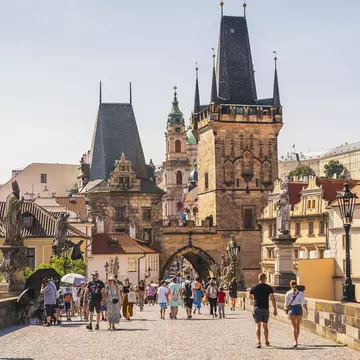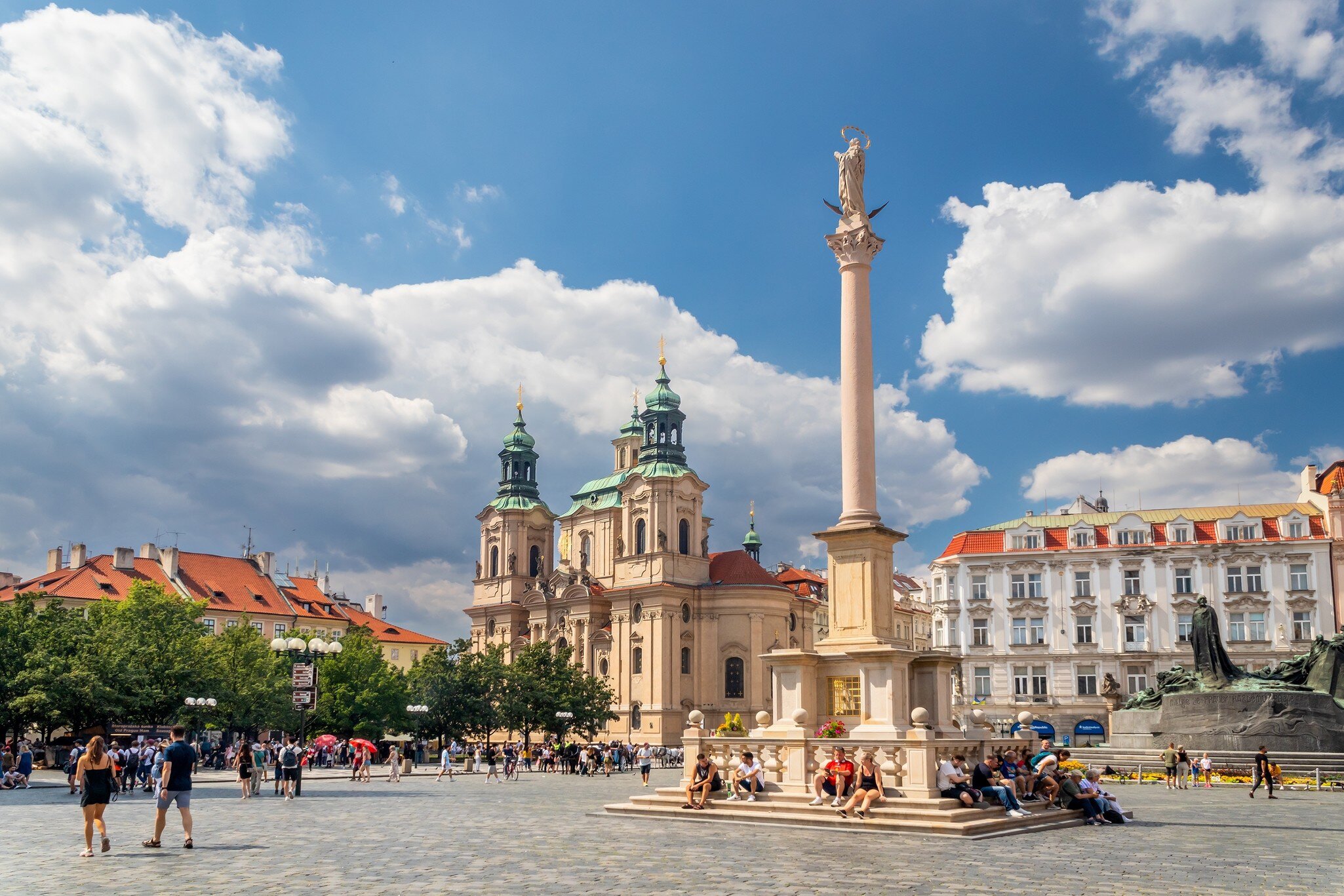
One of Europe’s most beautiful and busiest urban spaces, the Old Town Square (Staroměstské náměstí, or Staromák for short) has been Prague’s principal public square since the 10th century, and was its main marketplace until the beginning of the 20th century. Today it's where all tourists converge, some coming from Charles Bridge, some from the start of the Royal Way.
Take in the Square
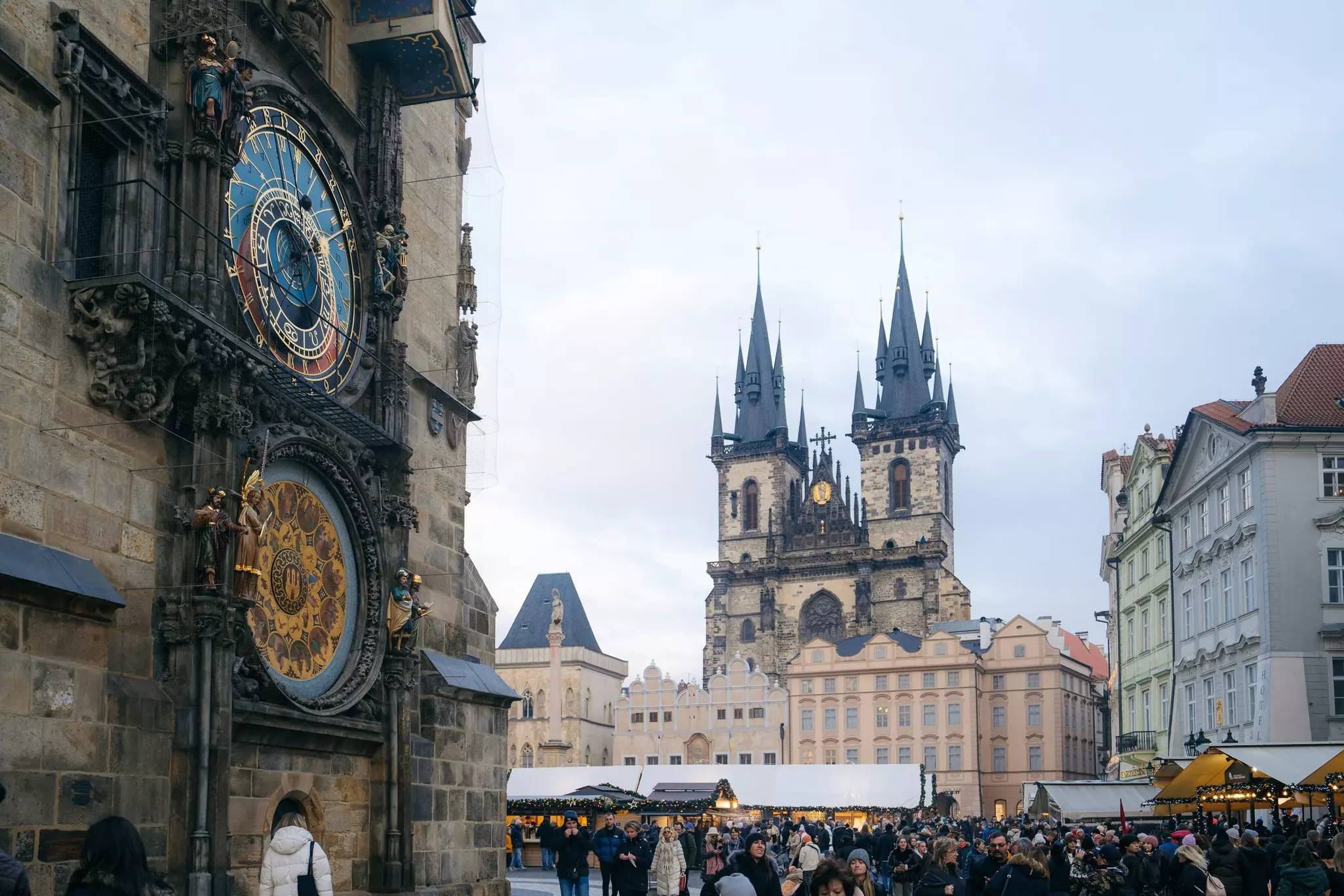
Before exploring, take a moment to familiarize yourself with the buildings surrounding this colorful, lively square. These include the 14th-century Old Town Hall, presided over by a tall Gothic tower and splendid Astronomical Clock. The most dramatic structure on the square is the twin-spired Church of Our Lady Before Týn, across the way, which stands incongruously behind a row of baroque facades. The 14th-century House at the Stone Bell is considered the square’s oldest building. This solemn Gothic structure shares the same block with the attention-grabbing, late-baroque Kinský Palace from 1765, with its riotous, pinkish facade. Find another important church, the baroque Church of St Nicholas , wedged into the northwestern corner.
Old Town Hall & Astronomical Clock
The most important building, Old Town Hall (staromestskaradnicepraha.cz), was founded in 1338 to serve as Staré Město's independent seat of government. These days it no longer has a formal governing function, and is used mostly for wedding ceremonies. The building houses a branch of the tourist information office and a gift shop.
The admission system to enter and tour the town hall is complicated and prices quickly add up. The main admission ticket includes only entry to the tower, which affords dramatic views of the square below. You can climb stairs or take the lift (the latter, though, requires a 100Kč surcharge). The family ticket (650Kč), for two adults and up to four children, takes some of the sting out the tower admission. If you'd like to see the historic interiors, including the council chambers, Gothic chapel and Romanesque and Gothic cellars beneath the building, you'll have to plump for an add-on guided tour (per person 150Kč). Tours in English are conducted daily. Tour times are listed at the ticket counter.
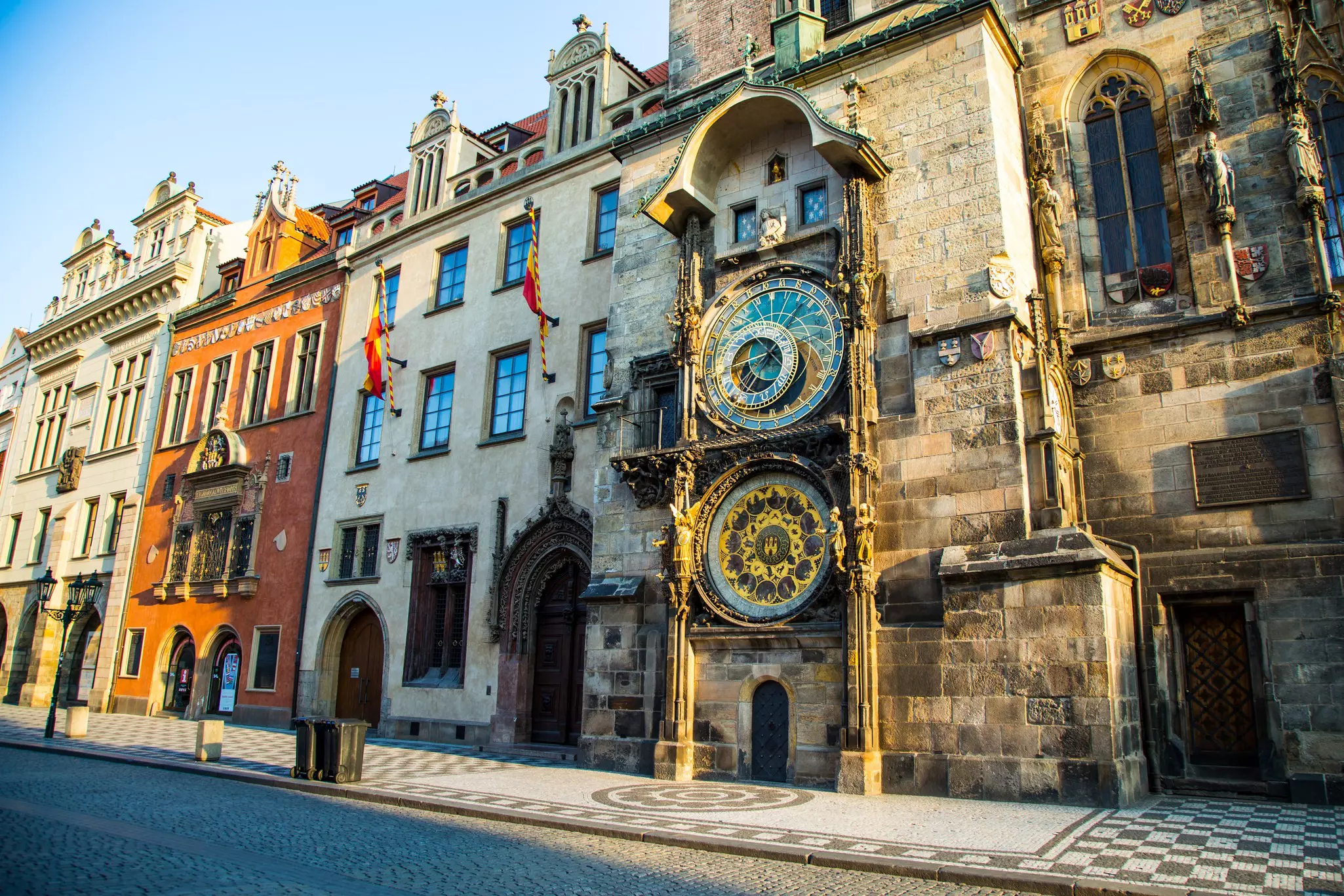
The building's main attraction is the Astronomical Clock on its south-facing exterior. On the hour, from 9am to 9pm, spectators are treated to a 45-second mechanized marionette display straight out of the Middle Ages. The four figures beside the clock represent the deepest civic anxieties of 15th-century Praguers: "Vanity" (with a mirror), "Greed" (with a moneybag), "Death" (the skeleton) and "Pagan Invasion" (represented by a Turk). On the hour, "Death" rings a bell and inverts his hourglass, and the 12 Apostles parade past the windows above the clock, nodding to the crowd. At the end, a rooster crows and the hour is rung.
Built in 1490 by a master clockmaker named Hanuš, the Astronomical Clock was a scientific feat in its day – even after various renovations, it remains a paradigm of antique technology. The upper dial, the astrolab, depicts the time in various forms and the movement of heavenly bodies through the sky. The lower dial, the calendar, shows the day of the year.
Before leaving the Old Town Hall, take a moment to examine the jagged edges of the eastern edge of the building. This wing once ran northward along the square but was tragically destroyed by Nazi gunfire at the end of WWII. The wing was never rebuilt. You'll also find a plaque here commemorating an earlier tragic event. The plaque lists the names of 27 Protestant nobles who were beheaded here by the victorious Austrian Habsburgs in 1621 after the Battle of Bílá Hora (White Mountain); the white crosses on the ground mark where the deed was done.
Church of Our Lady Before Týn
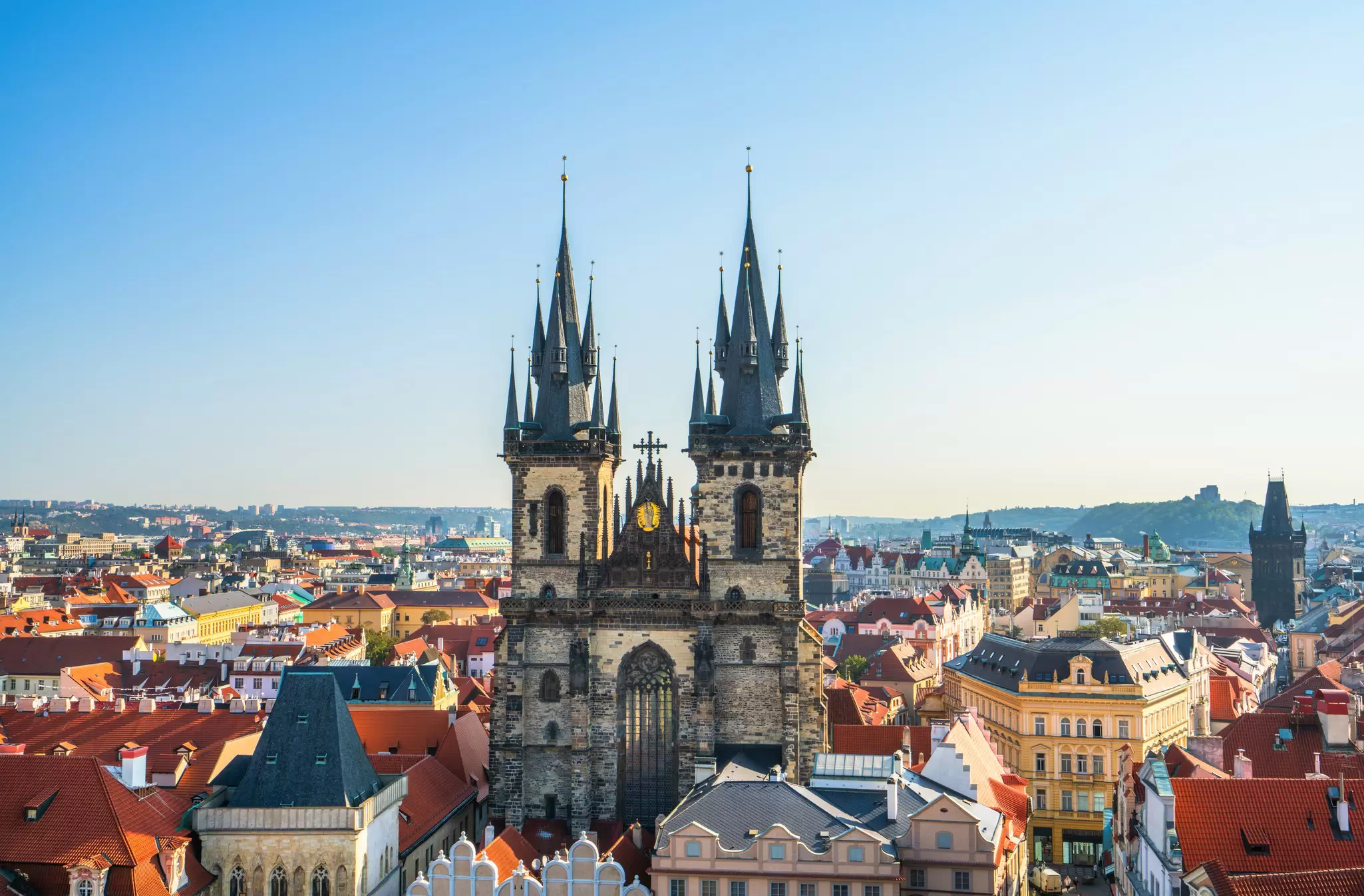
The distinctive twin Gothic spires make the Týn Church (tyn.cz; suggested donation 40Kč) an unmistakable landmark. Like something out of a 15th-century fairy tale, they loom over the square, decorated with a golden image of the Virgin Mary made in the 1620s using the melted-down Hussite chalice that previously adorned the church.
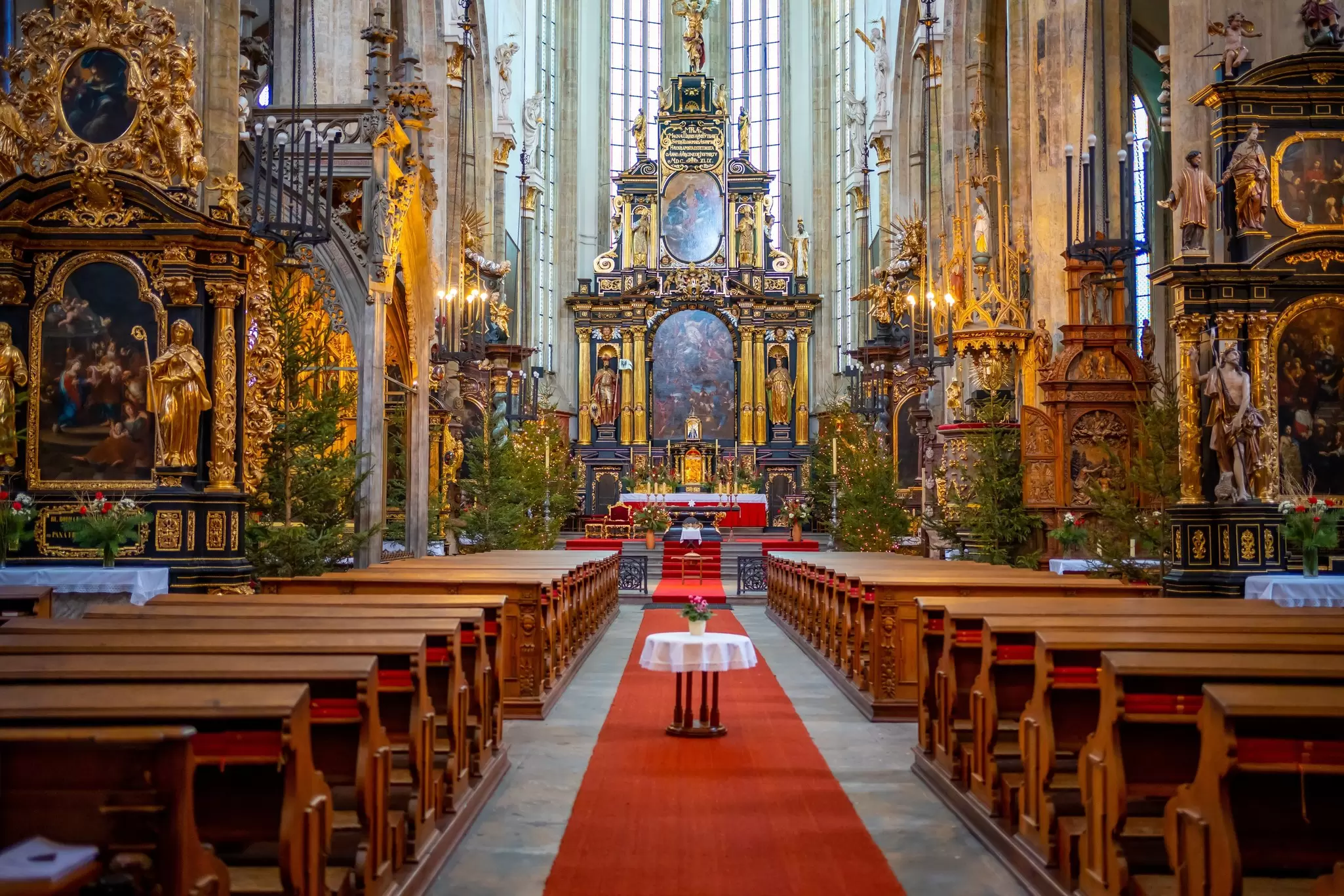
Though impressively Gothic on the outside, the church’s interior is smothered in heavy baroque. Two of the most interesting features are the main altar with its Virgin and the Holy Trinity by baroque painter Karel Škréta, and the tomb of Tycho Brahe, the Danish astronomer who was one of Rudolf II’s most illustrious court scientists (he died in 1601 of a burst bladder following a royal drinking session). Find the entrance to the church through the arcades at Staroměstské náměstí 14/604.
House at the Stone Bell
During restoration in the 1980s, a baroque stucco facade was stripped away from the elegant medieval House at the Stone Bell (ghmp.cz), next to the Týn Church, to reveal the original 14th-century Gothic stonework. The stone bell that gives the building its name is on the corner. Inside the building, two restored Gothic chapels now serve as branches of the Prague City Gallery (ghmp.cz), with changing exhibits of modern and contemporary art.
Statues of Jan Hus & Mary
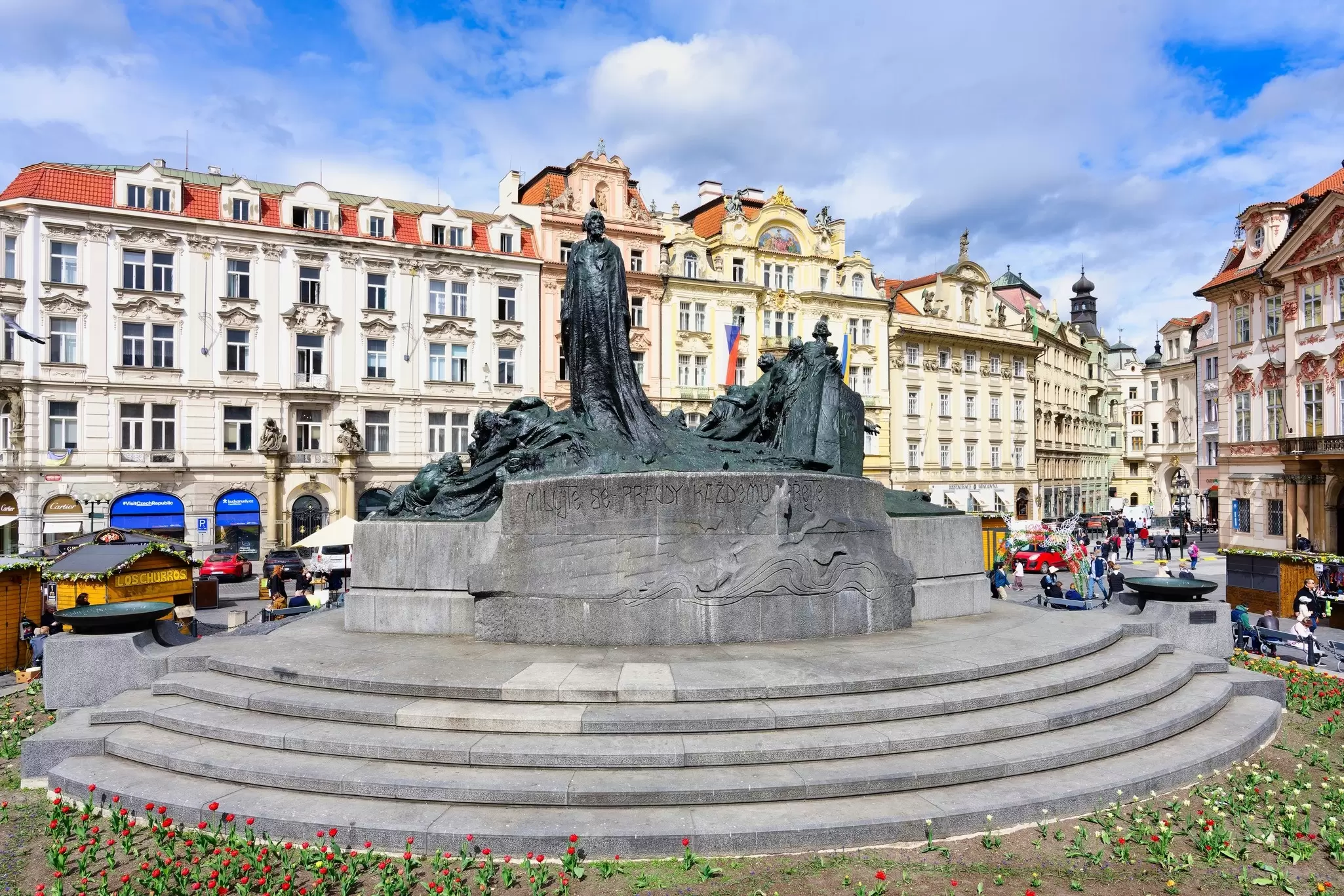
Two pieces of statuary in the middle of the square are integral to this public space. Praguers love the dramatic art-nouveau depiction of Czech religious reformer Jan Hus by Ladislav Šaloun. The statue was unveiled on 6 July 1915, the 500th anniversary of Hus’ death at the stake as a purported heretic. The newer Marian Column was installed only in 2020, and it's fair to say locals haven't quite warmed up to it yet. The column replaced a baroque original that stood for centuries on this spot that was pulled down by anti-Habsburg Czech nationalists at the end of WWI.
Church of St Nicholas
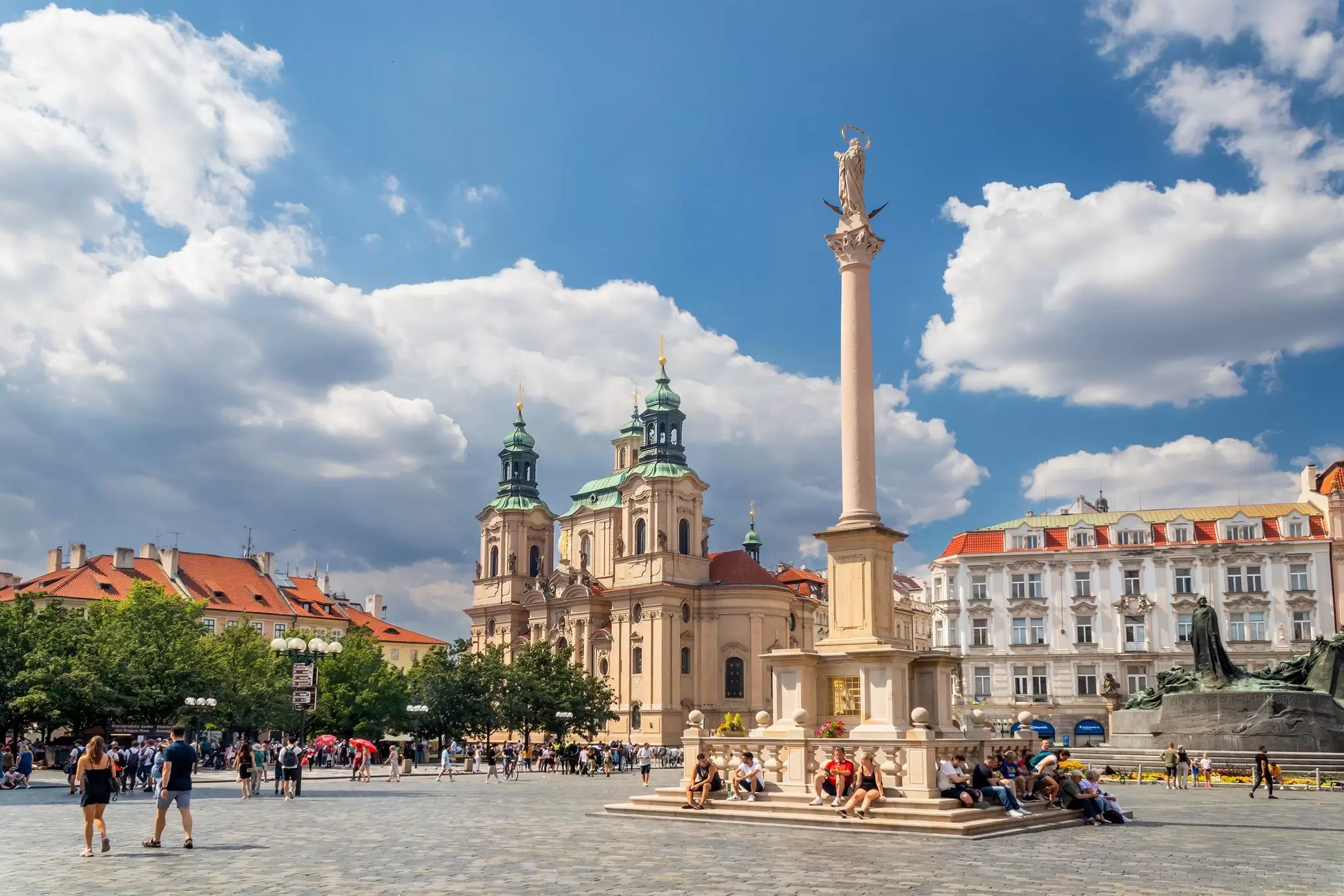
The baroque wedding-cake-style Church of St Nicholas (svmikulas.cz; concerts from 300Kč) in the far northwestern corner of Old Town Square was built in the 1730s by Kilian Dientzenhofer (not to be confused with the Dientzenhofers’ masterpiece of the same name in Malá Strana). The church was built on top of a much older house of worship dedicated to St Nicholas from the 13th century. Originally, the church was wedged behind the Old Town Hall’s north-running eastern wing (destroyed by the retreating Nazi soldiers in May 1945). The church is frequently used as a venue for chamber concerts, and you can take a tour that includes its splendid baroque interior 30 minutes before concerts begin.
Worth Searching Out
In addition to the colorful assembly of mainly baroque buildings along the square's perimeter, look out for some truly unique features. Just left of the main entrance to Old Town Hall, the ornate House at the Minute (dům U minuty) is an arcaded building covered with Renaissance sgraffito. Franz Kafka lived here (1889–96) as a child just before the building was bought by the town council.
At Staroměstské náměstí 17, look for a plaque commemorating Albert Einstein's time in Prague from 1911 to 1912. The plaque marks the former residence of socialite Berta Fanta, who ran a remarkable weekly salon in her drawing room that must have been the talk of the town. The memorial reads: “Here in this salon of Mrs. Berta Fanta, Albert Einstein, professor at Prague University in 1911 to 1912, founder of the theory of relativity, Nobel prize winner, played the violin and met his friends, famous writers, Max Brod and Franz Kafka.”