Everything about kabuki theater is truly a spectacle – from the actors' dramatically painted faces, beautiful costumes, exaggerated movements and elaborate stagecraft. Dating back to the 17th century as a popular form of folk entertainment, the art form still has a hold on the population today – and Kabuki-za (歌舞伎座) is where to see it all happen.
The Theater
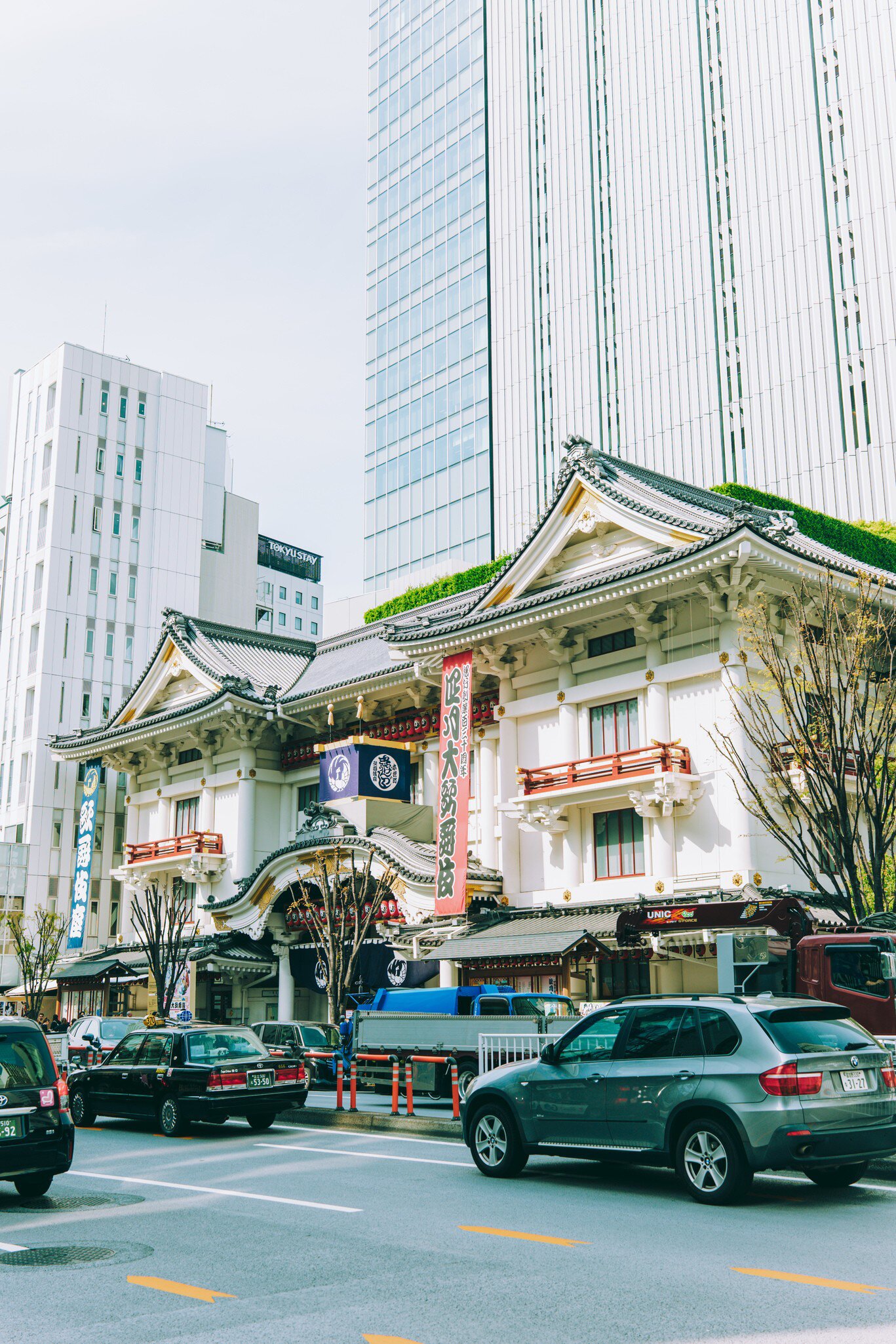
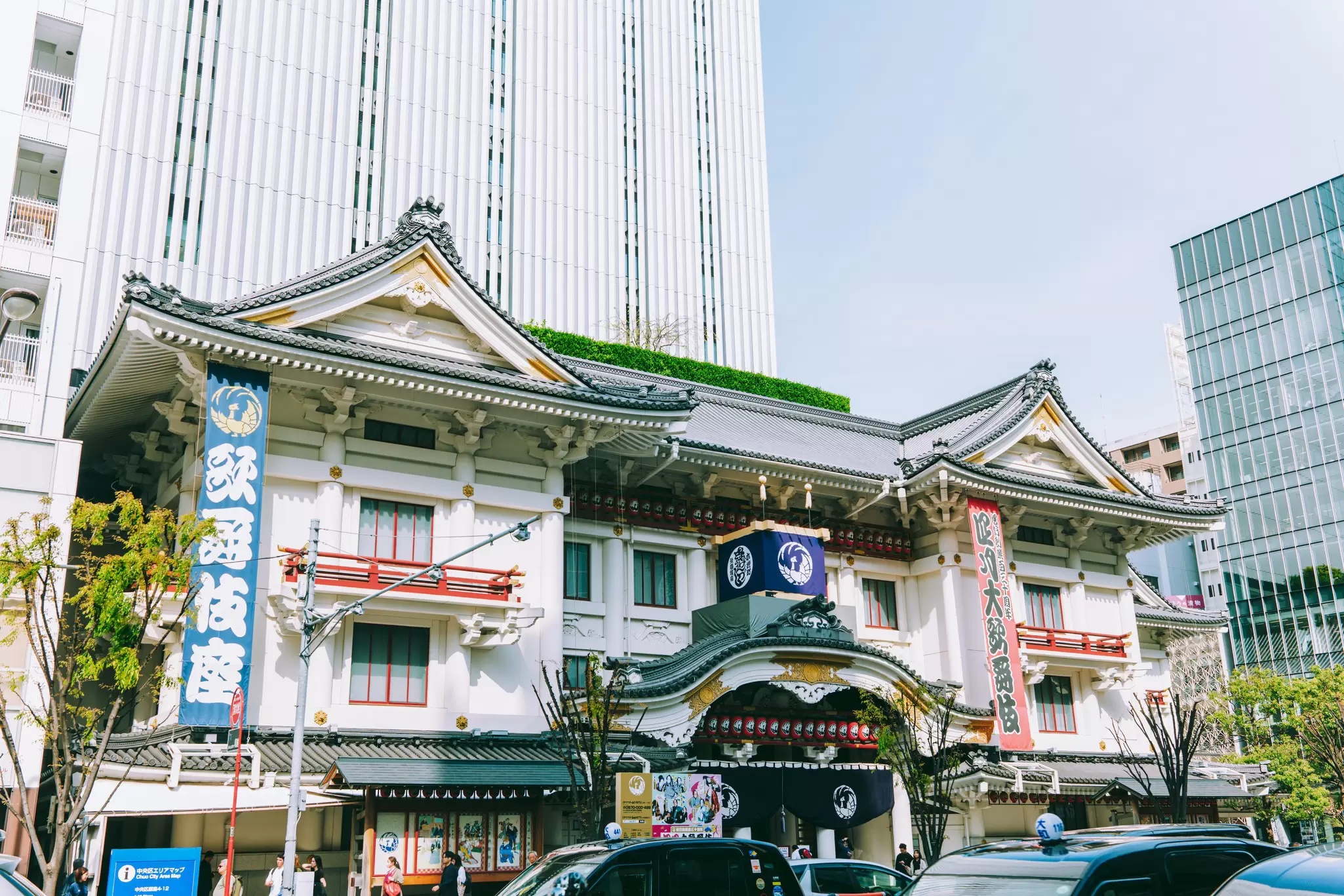
With its sloped roofs and grand facade adorned with red lanterns and towering banners, Kabuki-za is an outlier in Ginza's mostly modern, urban landscape. A theater dedicated solely to kabuki performances, Kabuki-za stages two shows daily, 25 days of the month. Though it was first built in 1889, the building has gone through several iterations after previous structures were lost due to natural disasters and fires. Its current form is the result of renovations completed in 2013 and is true to one of the theater's original designs from 1924.
The History of Kabuki
Kabuki originated in 17th-century Kyoto, when a female shrine attendant along with her troupe of female performers began garnering popularity for their distinct style of dance. For a while, kabuki actors were primarily women. However, by 1652, this had changed entirely when a concern for "morals" led to females being banned from engaging in the art form. Kabuki thus became exclusively male, and remains this way today.
Donning wigs and kimonos, the men who portray women onstage are known as onnagata (literally "female role"). Kabuki actors train from a young age for the stage, many inheriting the craft from their fathers. Head to the 4th floor of the theater and you'll come to a hallway lined with pictures of legendary kabuki actors through the ages.
The Performance
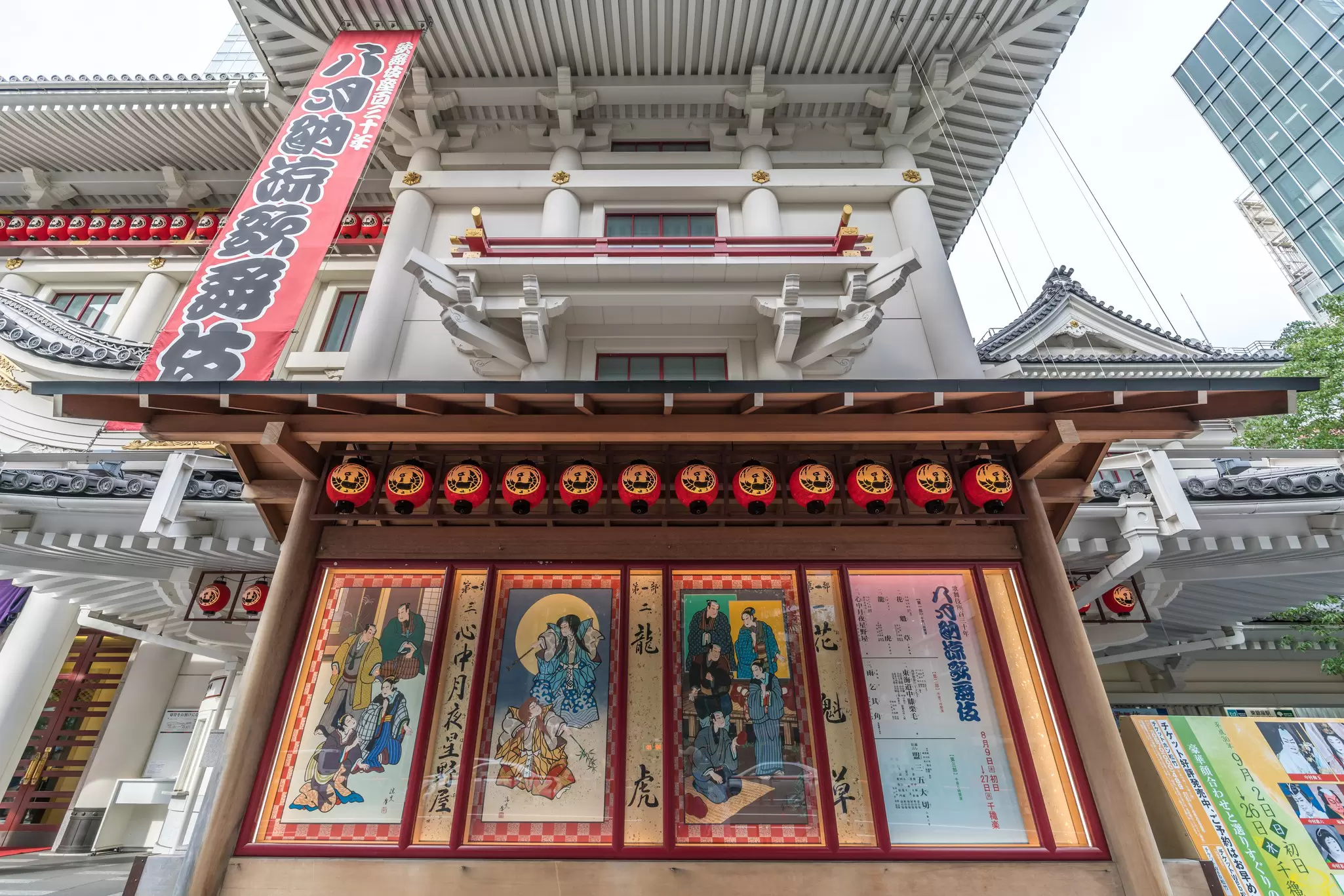
Kabuki shows often depict dramatized events from history and short stories, and some modern ones even feature anime character crossovers. Though full performances are a half-day affair, audiences looking for just a taster can purchase tickets for a single act, which typically runs for an hour, from the theater website.
Seventy seats at the back of the theater are open for purchase the day before the performance, and the remaining 20 go on sale on the day of. Though you'll be sitting at the last few rows within the hall, you still get an unobscured view of the stage. English audio guides detailing the play synopsis are available to rent.