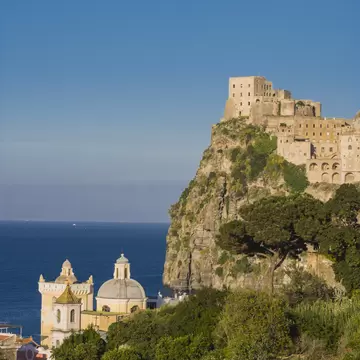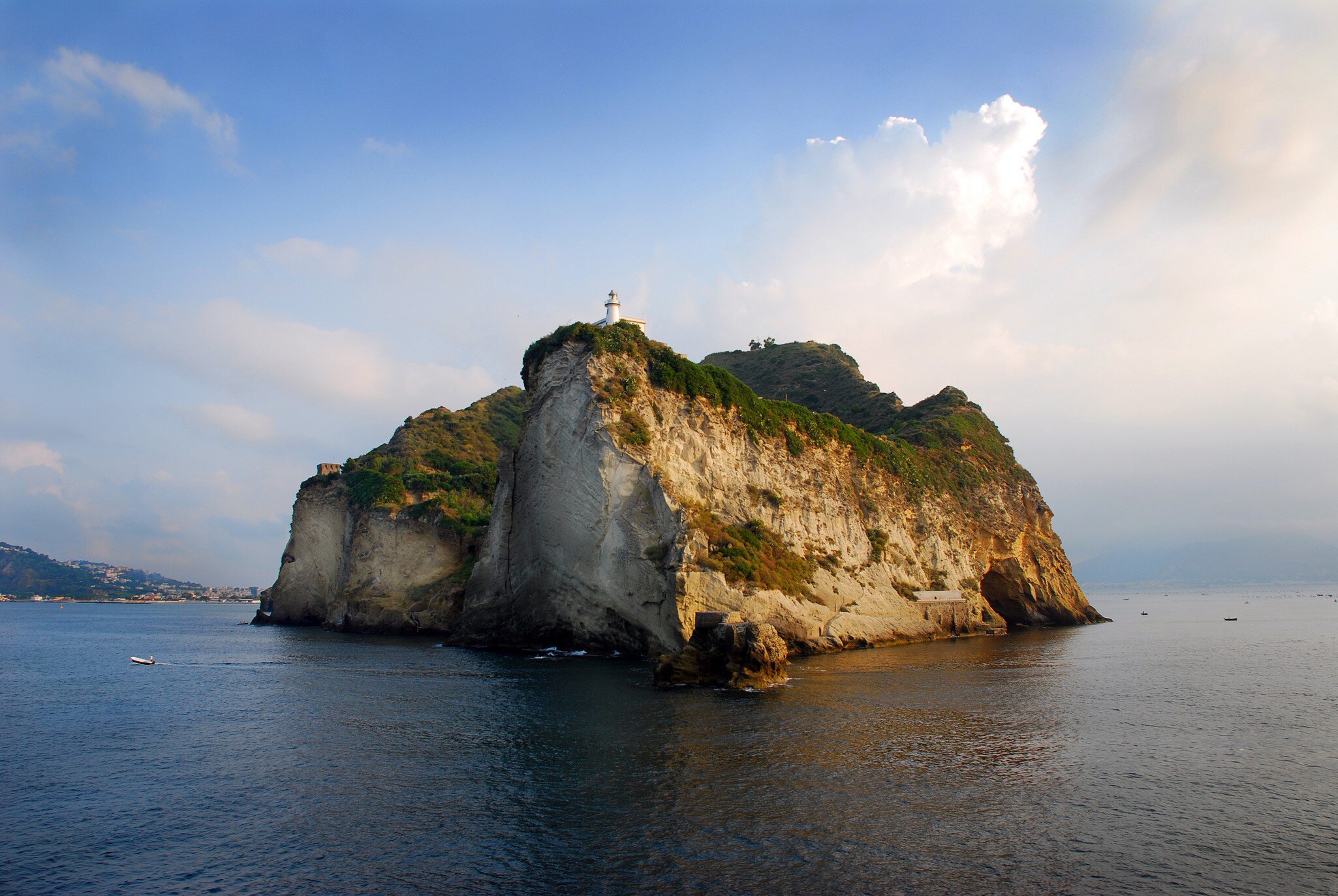
Procida sits at the westernmost edge of Campi Flegrei, one of the world's most dangerous active supervolcanoes. Underwater seismic activity gave rise to the island's black-sand beaches, striking cliffs and Vivara, a small, fish-shaped islet 4km away from Procida's southwestern tip. It has been a protected wildlife refuge since 1974 and opens periodically to human visitors exclusively through guided tours.
Arrive by Foot
There's just one way to reach Isola di Vivara: by crossing the 362m-long footbridge jutting out from the Marina of Chiaiolella.
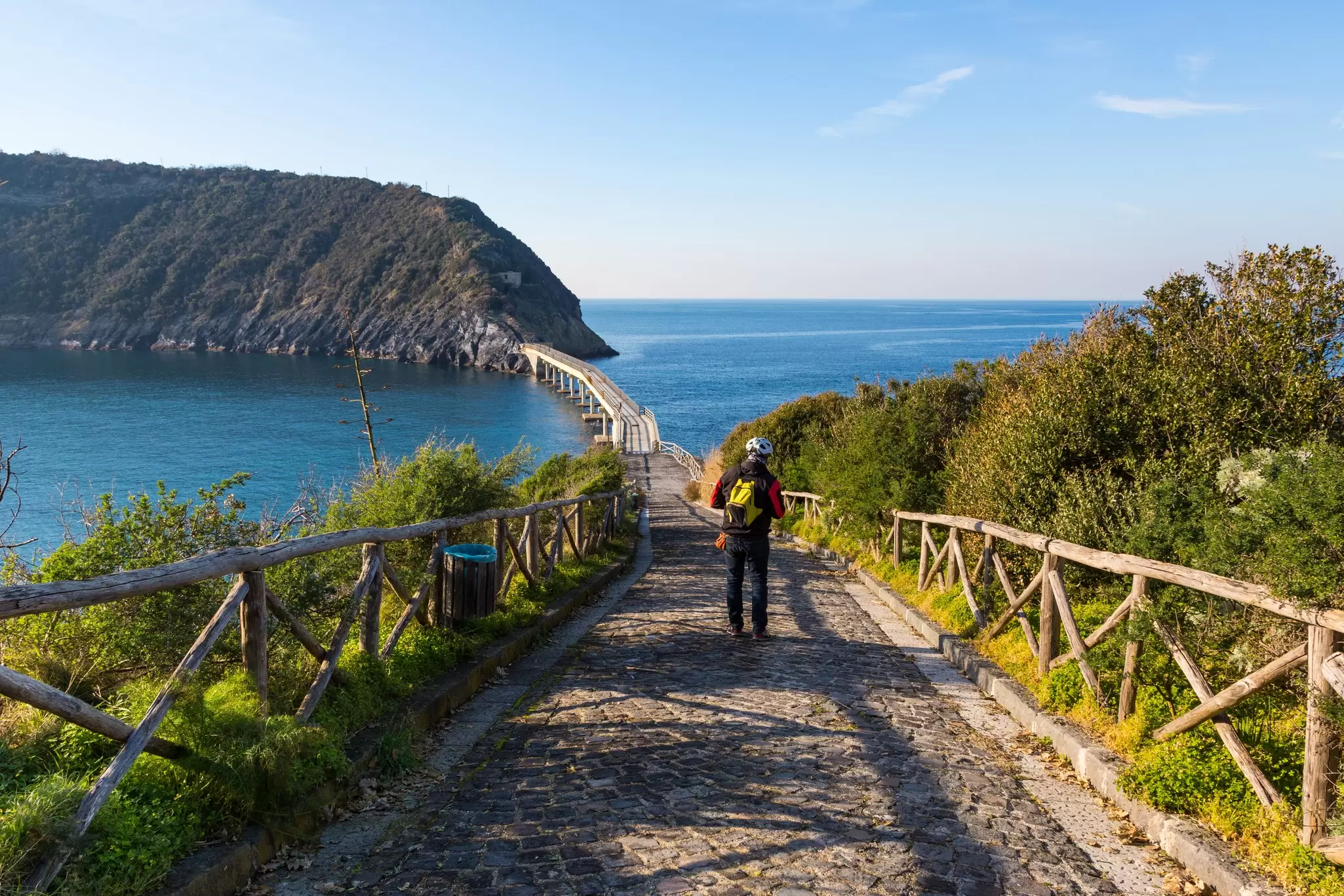
Walking along the bridge will yield amazing 360-degree views of the marina, Chiaiolella beach and the sparkling blue island waters below.
Hibernation
This sleepy islet often goes into hibernation, closing for maintenance and conservation efforts. It most recently reopened in 2023, with plans for new archaeological digs exploring Vivara's Mycenaean past.
An Untouched Natural Oasis
Apart from assorted signs of human life – Mycenaean artifacts, a Bourbon hunting lodge constructed by the Duke of Guevara in 1681, a rotating house designed by British architect Lamont Young – Vivara has always been mysteriously (almost) human-free.
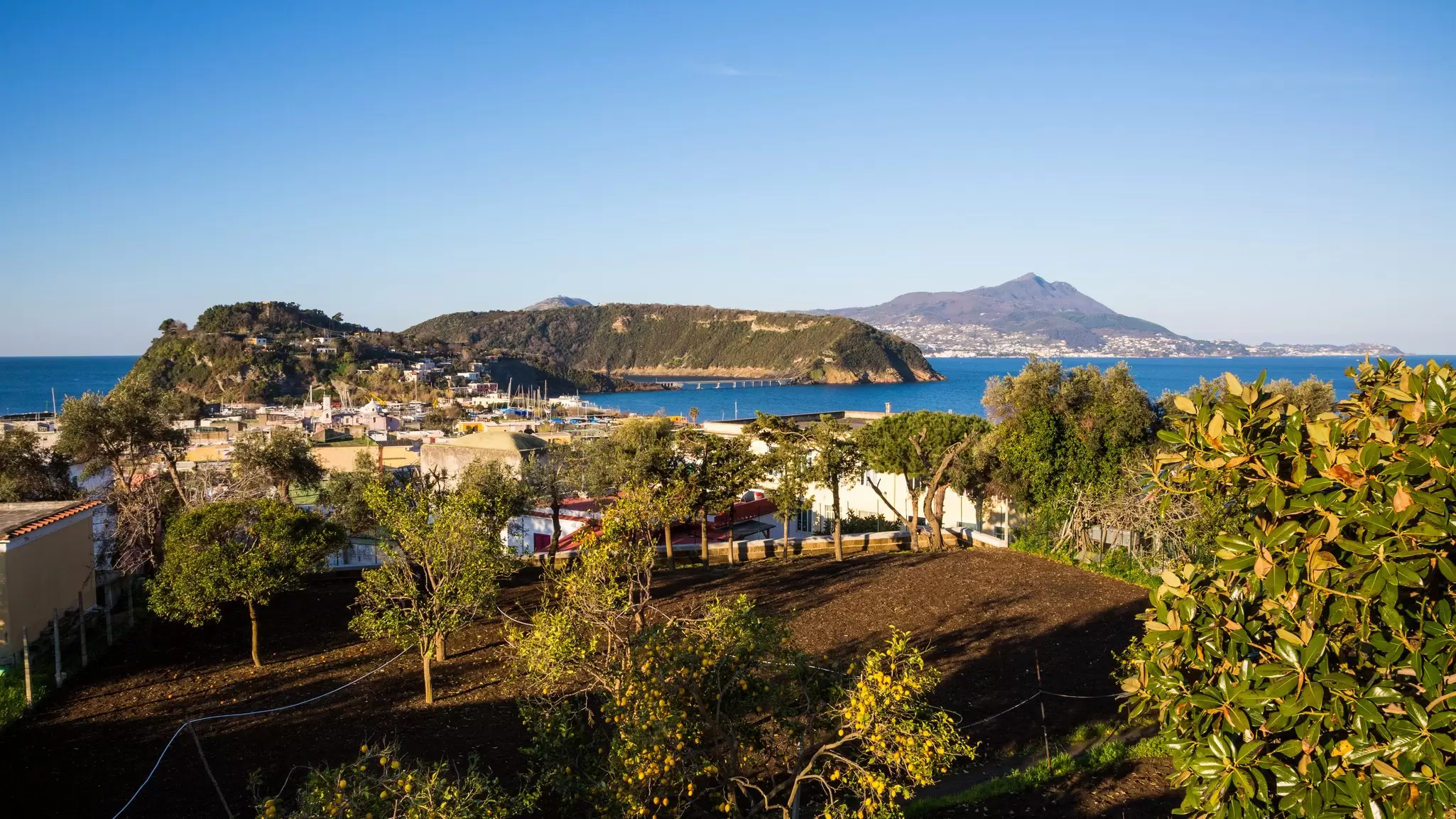
Maybe that's why, despite its teeny 32-hectare size, it's teeming with plant, animal and unique bird species, like the Audouin's gull, visible only at noon. Idyllic walking trails take you through unspoiled forest dotted with overgrown ruins, towards spectacular views of the Gulf and Ischia, winking in the distance.