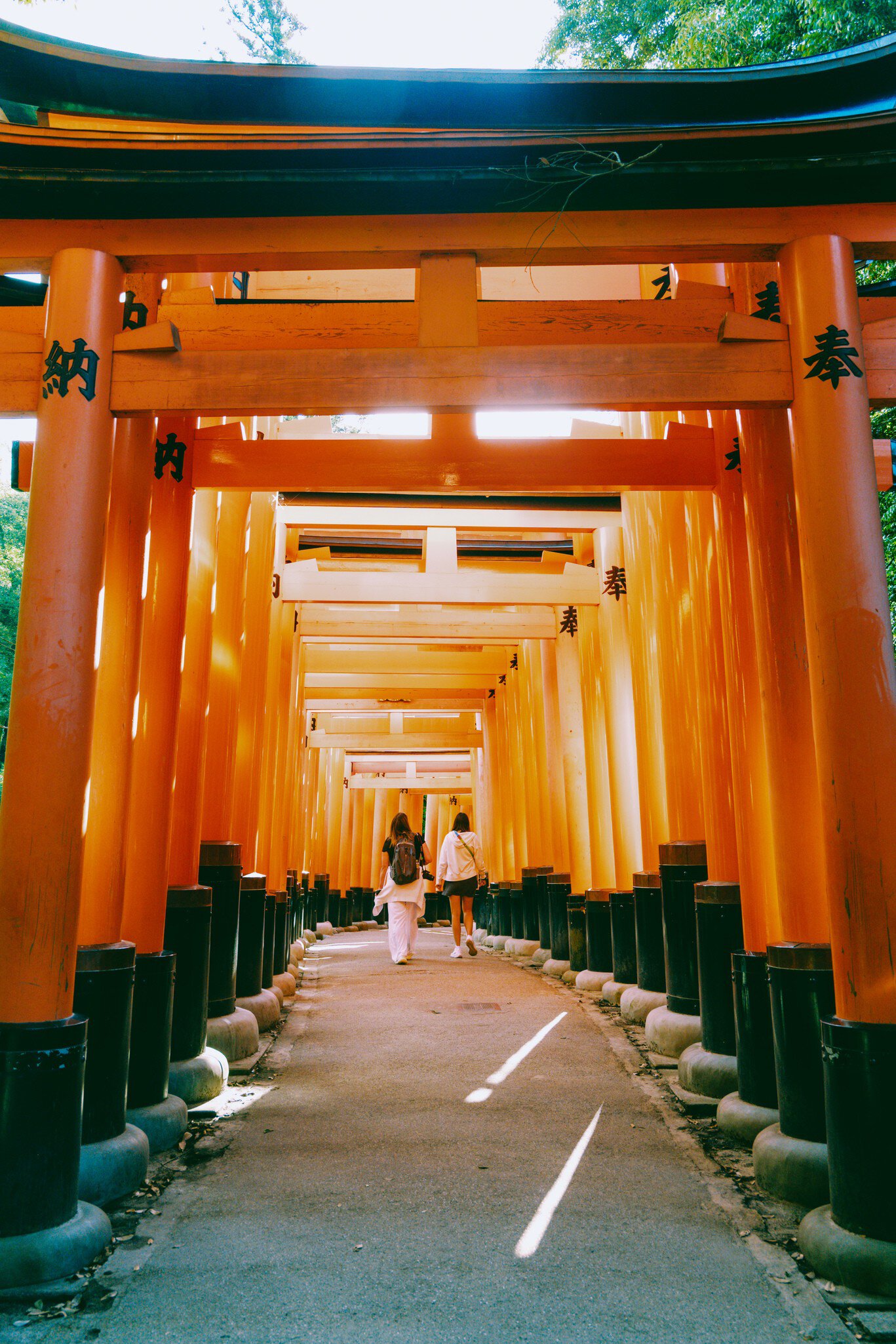
Famed for its vermilion torii, Fushimi Inari-taisha (伏見稲荷大社) is one of Kyoto's most popular destinations. The main shrine of the Shintō kami Inari is a major place of pilgrimage for devotees and, because of its iconic Senbon Torii, it also attracts hordes of Instagrammers. But time it right and you'll still be able to tap into the spiritual magic of the main shrine and its more peaceful mountain paths.
Main Buildings
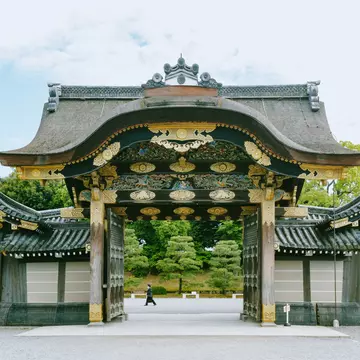
The cult of Inari, a kami of rice and prosperity, took off here in 711, but got a big push in 1589 when Toyotomi Hideyoshi credited the kami for curing his mother. In gratitude, the shogun paid for the spectacular two-story Romōn (main gate).
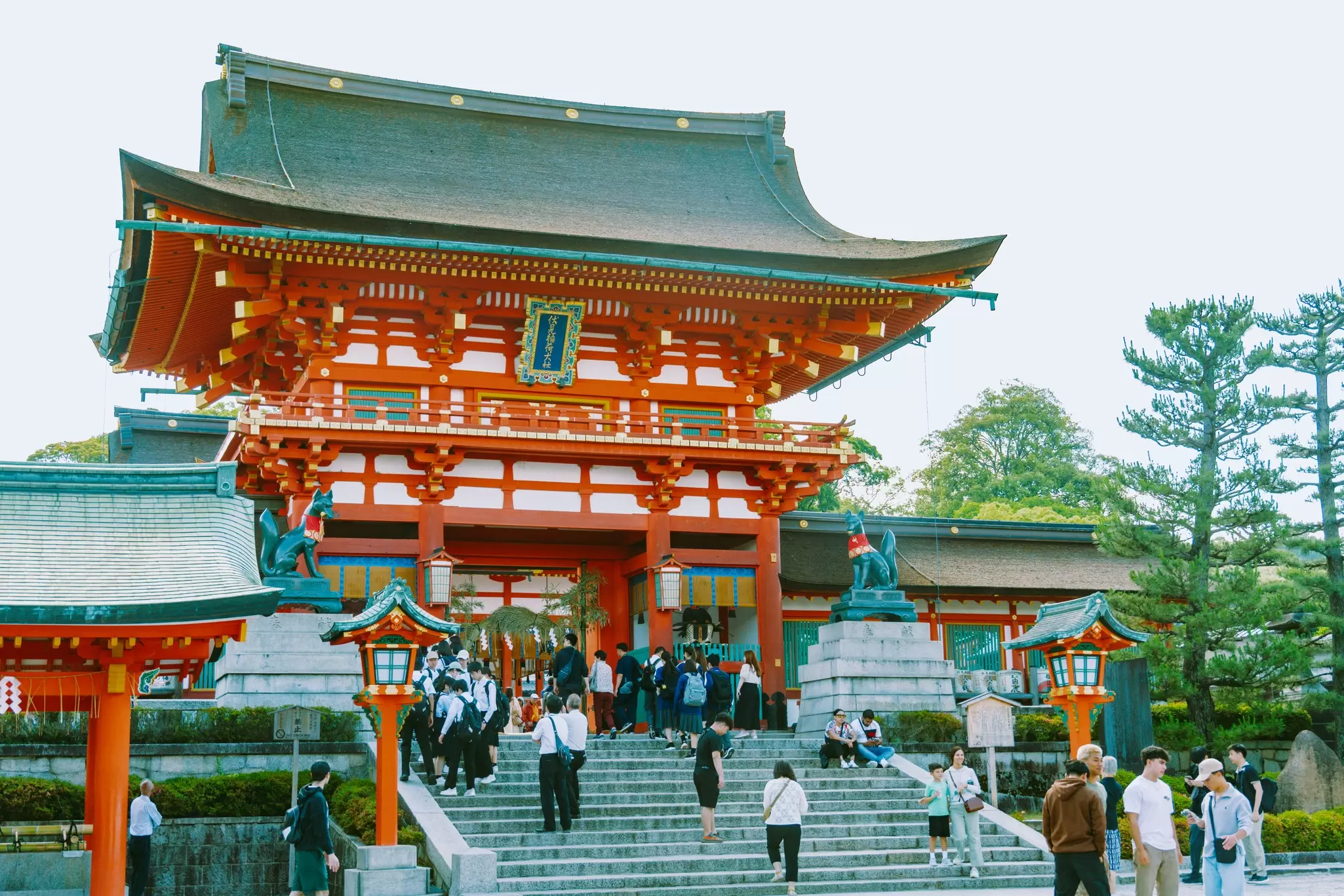
Inari is enshrined further on in red with gold trim in the 16th-century Hondan. Appearing as either a man or a woman, Inari has also taken animal form, and some devotees even conflate the deity with its messenger: the fox.
Foxes of Senbon Torii
The stairs behind the shrine to Senbon Torii are flanked by fierce fox statues, all holding something between their jaws: keys to rice granaries, sheaves of rice, jewels or scrolls.
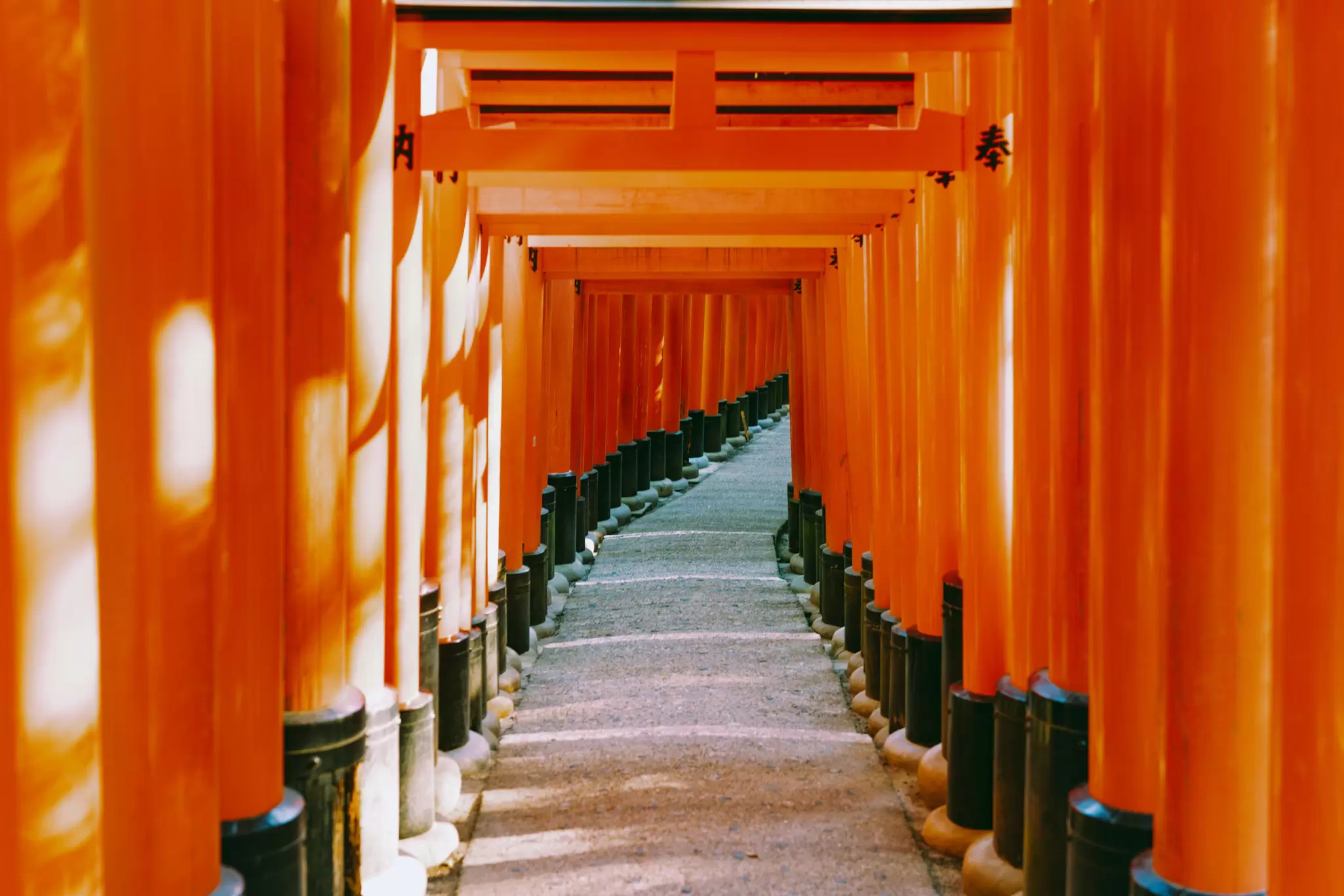
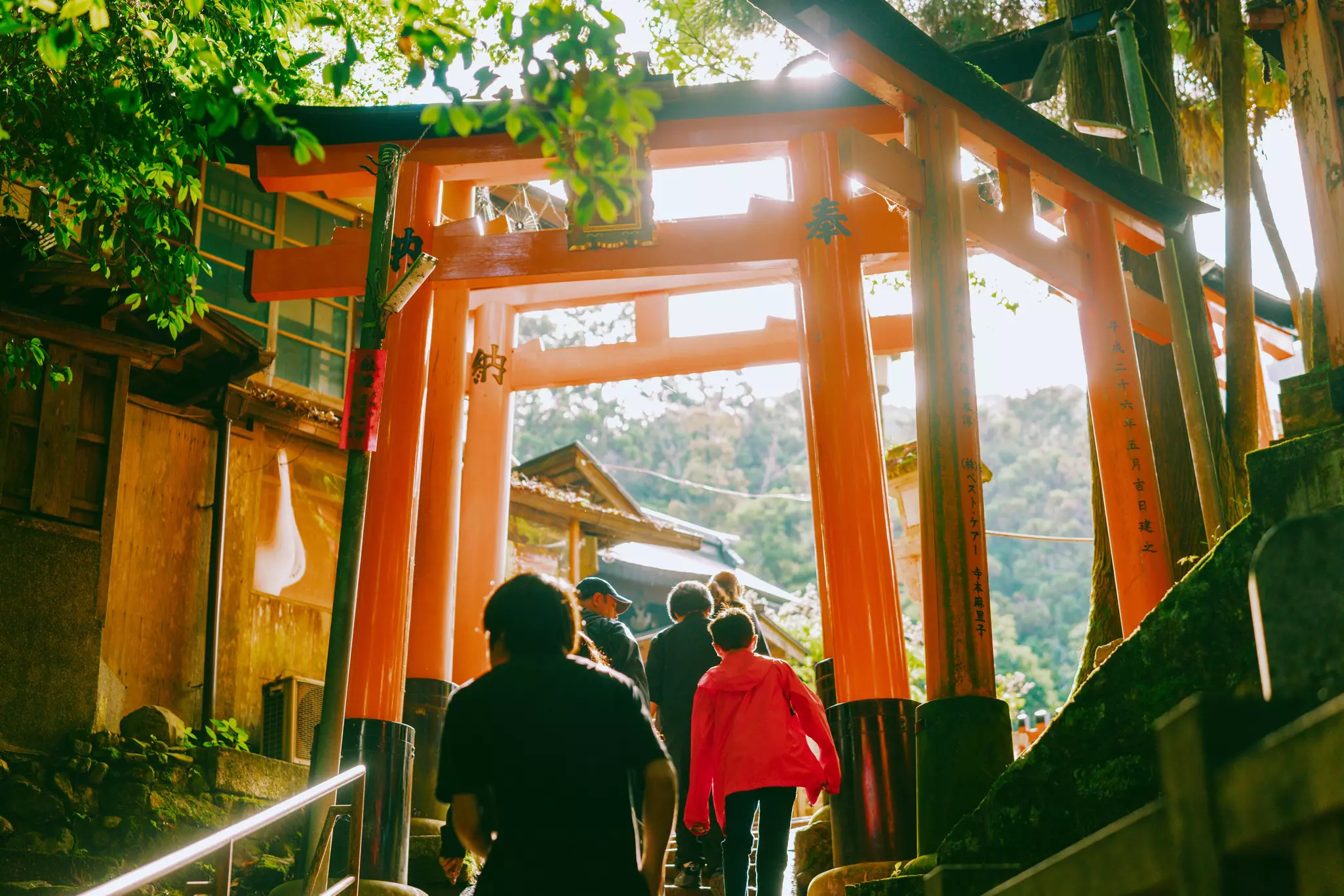
When you reach Senbon Torii (10,000 red gates), the path divides. The parallel corridors of tightly packed torii both end up in the same place, and are usually filled with people trying to capture the perfect shot. Each torii is donated by a business hoping the kami will have its back.
Mountain Paths
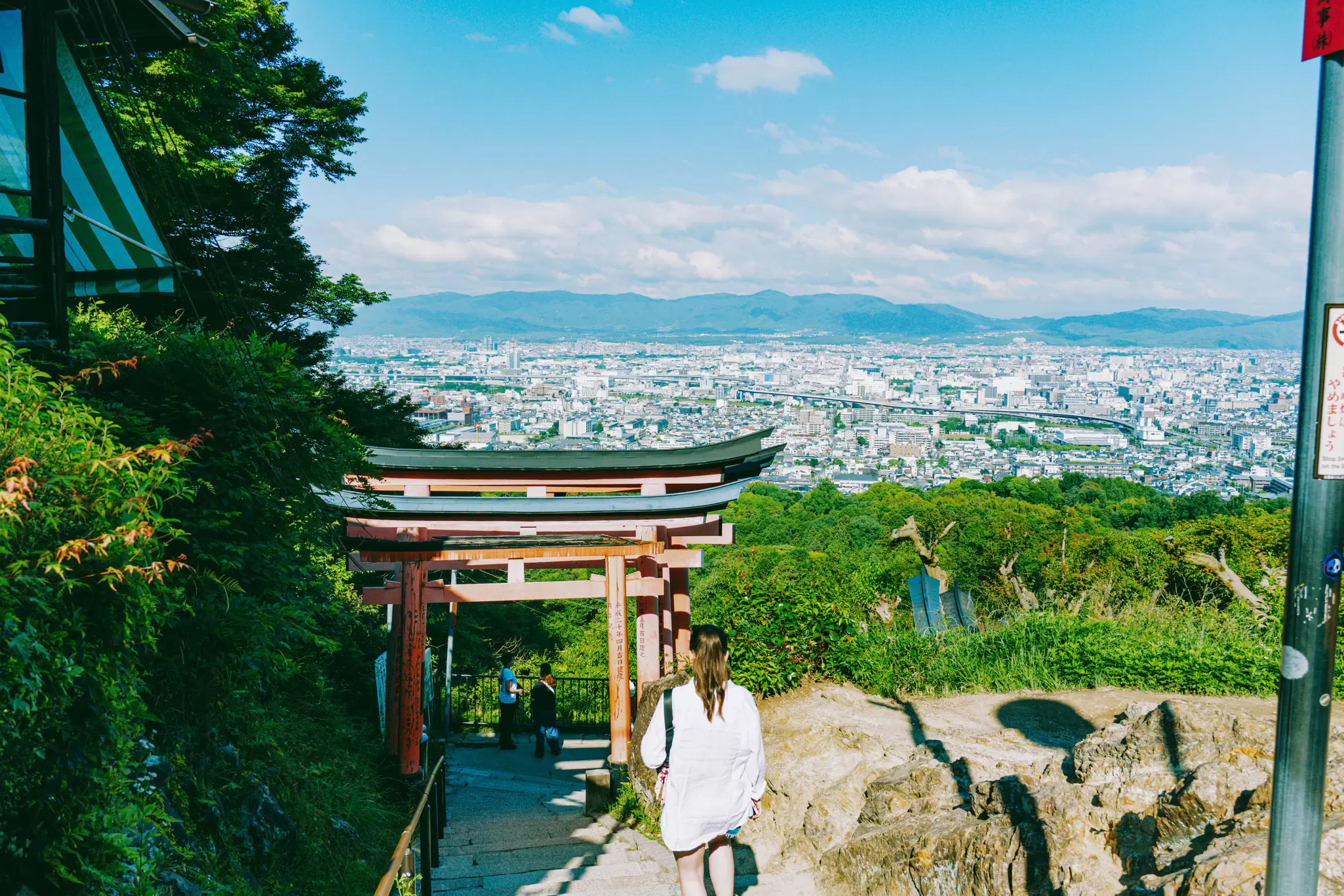
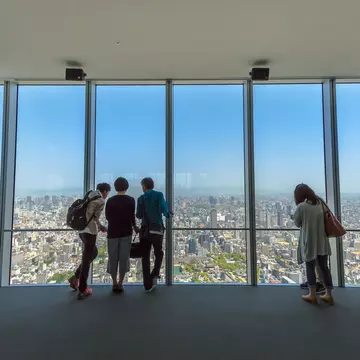
After Senbon Torii, the torii and crowds thin out. If you keep walking for 35 minutes, you'll get to some fantastic views over Kyoto at the Yotsutsuji intersection. Hikers can go around the mountain and visit small shrines. The loop takes two to three hours.