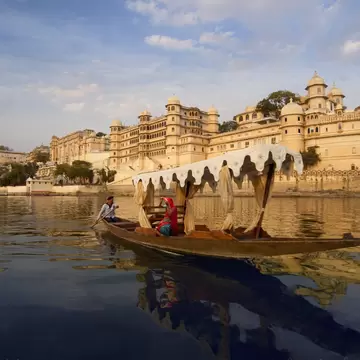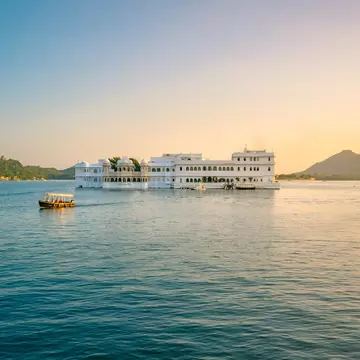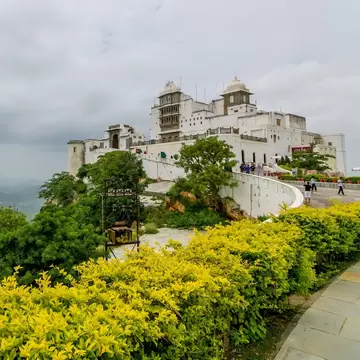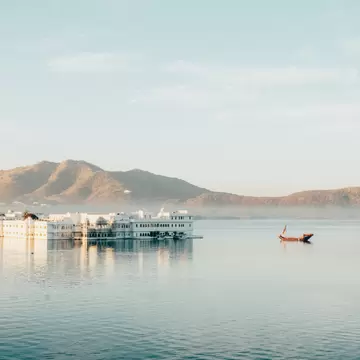
A soaring mass of bulging balconies and turrets, towering over Lake Pichola, this is Rajasthan’s largest palace and the seat of the Mewar maharanas. Taking up half a kilometer of the lakeshore, this maze-like warren of a residence was founded by Maharana Udai Singh II in 1599; inside, the treasures of the Mewar rulers are truly something to behold.
Manek Chowk
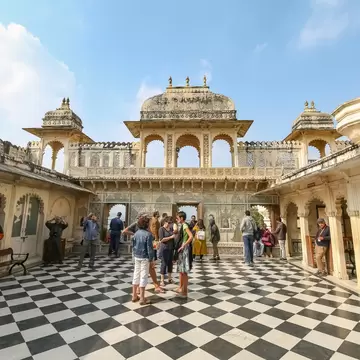
Entering via either the northern Badi Pol gate or southern Sheetla Mata gate, you'll climb to the huge open courtyard known as Manek Chowk, once the setting for royal elephant fights (life-size sculptures recreate the experience). Nearby are giant, mousetrap-like devices used to catch tigers and leopards.
Look out for the eight arches at the Tripolia Gate, commemorating the eight times the maharanas were weighed and their weight in treasure distributed to the populace. An evening sound-and-light show runs sporadically in Manek Chowk – inquire at the ticket desk.
City Palace Museum
The City Palace Museum covers the bulk of the medieval palace, centered on the Rai Angan (Royal Courtyard), where Maharana Udai Singh II met the sage who told him to build the city of Udaipur. Note the sun-topped royal crest of Mewar above the Darikhana ki Pol doorway, then enter via the ornate Toran Pol gate.
The Armoury
Bear right from the first courtyard to reach the astonishing armory, full of whistle-tooting guards trying to keep the crowds in order. You find everything from chain mail trousers to pattars (swords with a built-in gauntlet), maces, guns, spears, swords, shields and katar daggers – almost all of them lavishly inlaid and engraved. Look out for the gun-shield, and the backscratcher-like mace shaped like a giant hand.
Ganesh Chowk & Government Museum
You'll pass into open Ganesh Chowk, with a gateway leading on to the often overlooked Government Museum (₹100), accessed on a separate ticket. The faded collection includes ivory models, carved temple deities, moth-eaten taxidermy, paintings of maharanas with twirly mustaches, and a collection of turbans, including one worn by Shah Jahan, creator of the Taj Mahal.
Rai Angan
Passing through the mirror-mosaic-covered Ganesh Deodi hall, you'll reach the checkerboard Rai Angan (Royal Courtyard). Rooms along one side commemorate the Battle of Haldighati (1576), where Mewar forces gallantly fought the army of Mughal emperor Akbar to a stalemate. Look out for the bowl of genuine Haldighati battlefield dirt.
The Royal Apartments
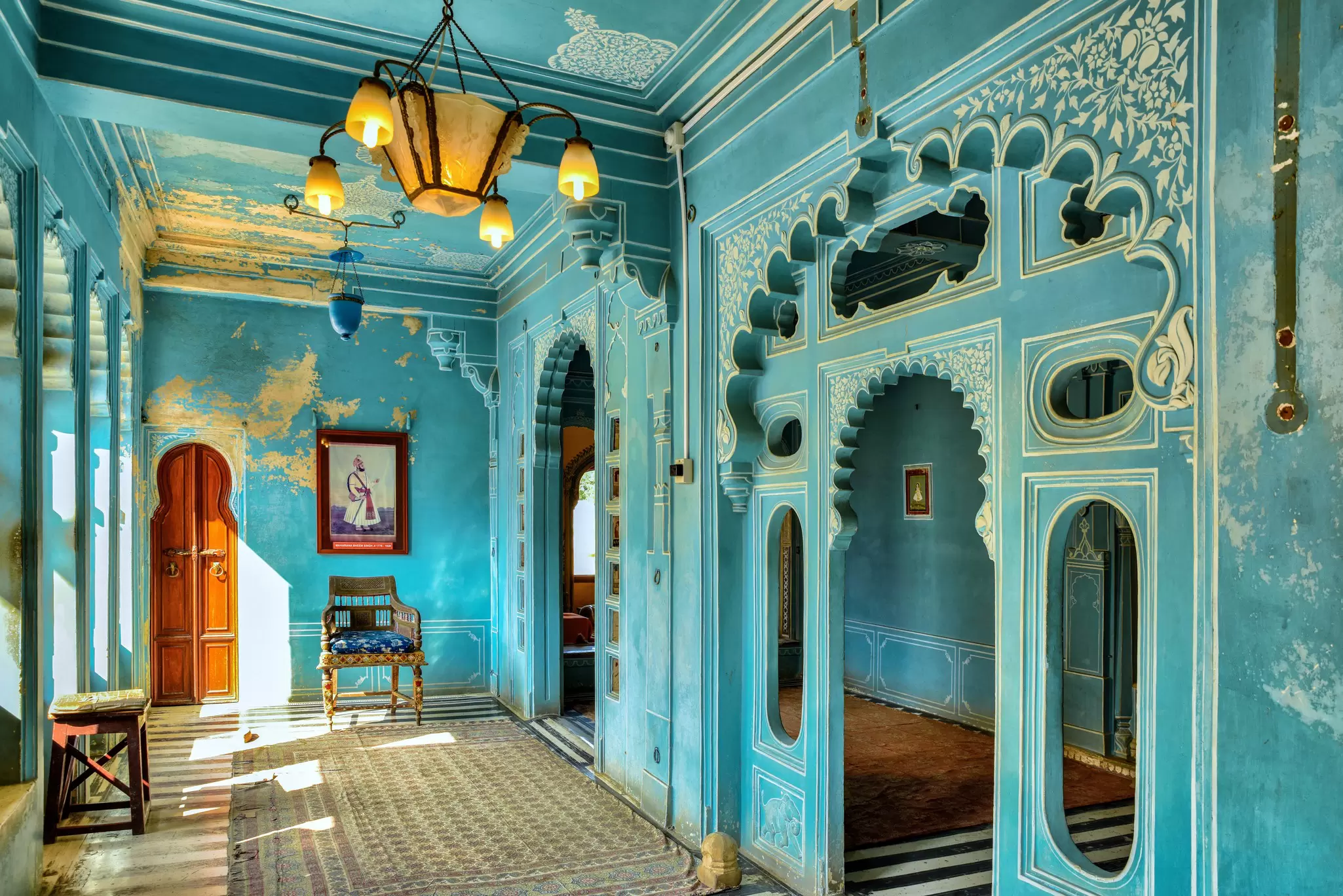
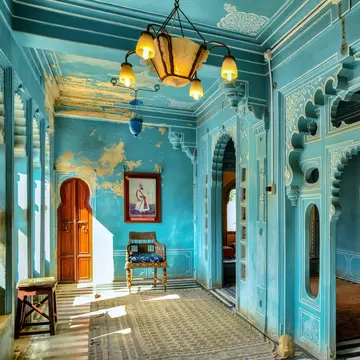
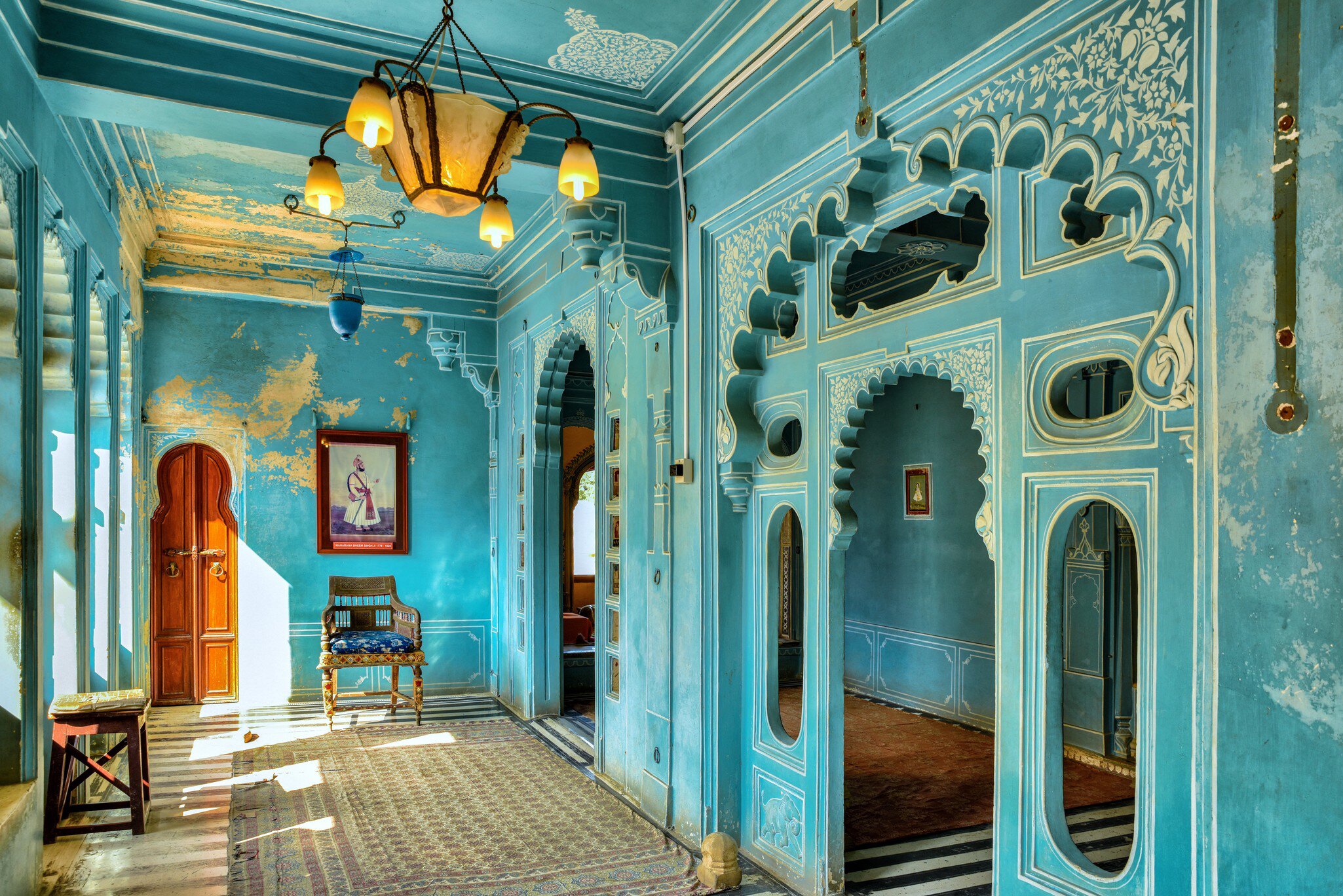
Continue through a chain of elegant apartments reserved for the royal household. Of particular note are the Baadi Mahal (from 1699), ringed by open pavilions containing fountains and colored glass, and the Kishan Vilas, with miniature paintings from the time of Maharana Bhim Singh (r 1778–1828). Executed in a Mewar-meets-baroque style, the turquoise Bhim Vilas is one of the most beautiful spaces in all of Rajasthan.
Mor Chowk & Surya Choupad
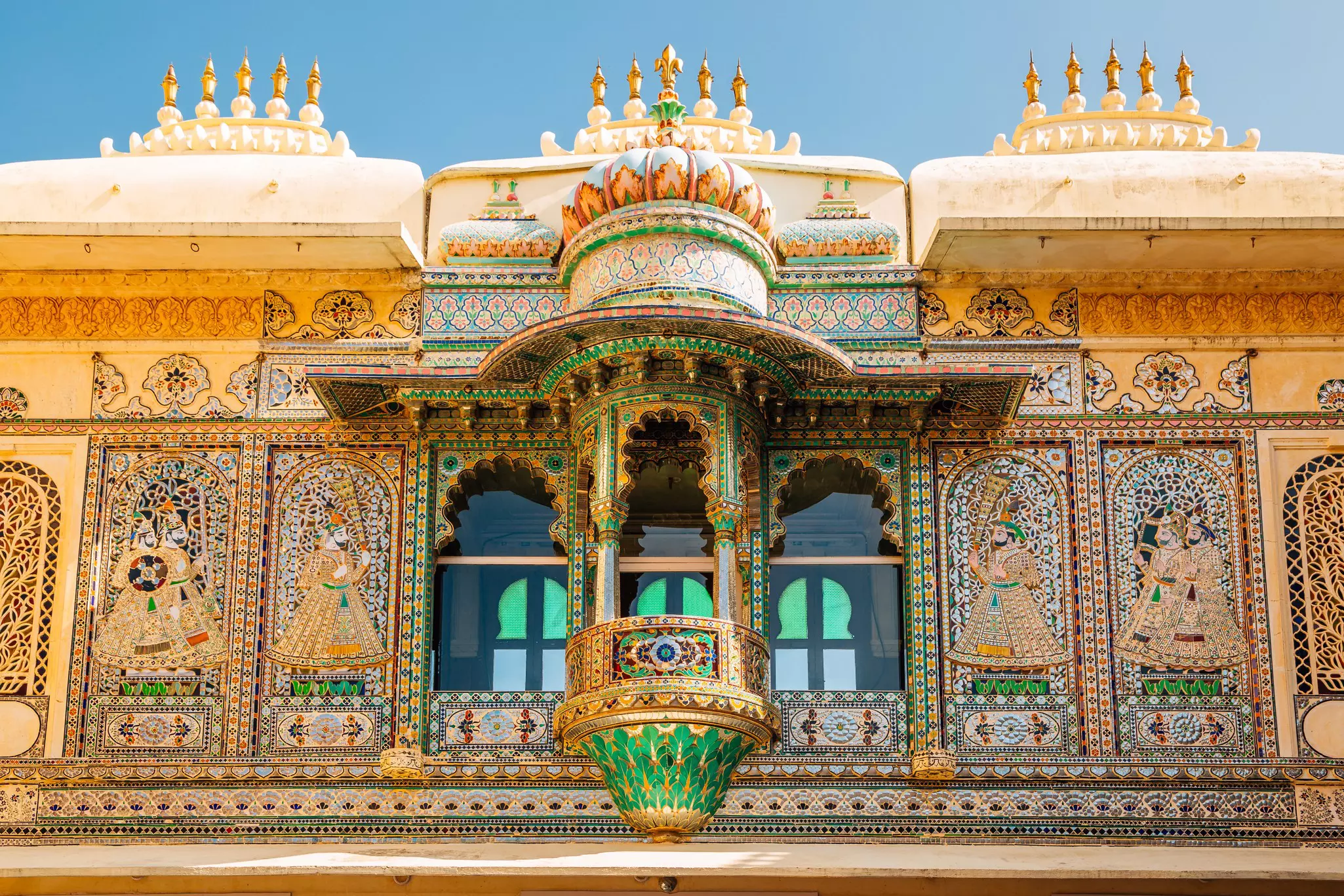
Mirrored and painted chambers lead on to the dizzyingly beautiful courtyard known as Mor Chowk – with its gasp-inducing mosaics of peacocks, flowers and maharanas. Beyond lies the mural-filled Surya Choupad, dominated by a huge metal mask of Surya, patron deity of the Mewar dynasty.
Zenana Mahal
The southern end of the museum is dominated by the 17th-century Zenana Mahal, the royal ladies’ quarters. Devote some time to the thoughtful displays on female life in the palace, the collection of musical instruments and the interesting "Picturing Place" exhibition, exploring Mewar history through old maps.
You'll emerge onto enormous Laxmi Chowk, containing a beautiful white pavilion and displays of royal outfits, howdahs (elephant saddles), palanquins and other posh-people-carriers. Exit via Toran Pol to complete the circuit.