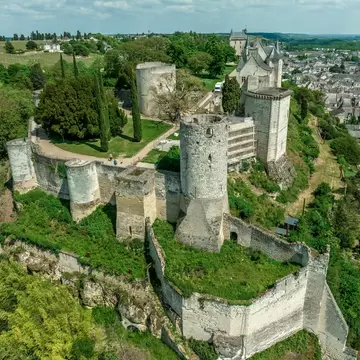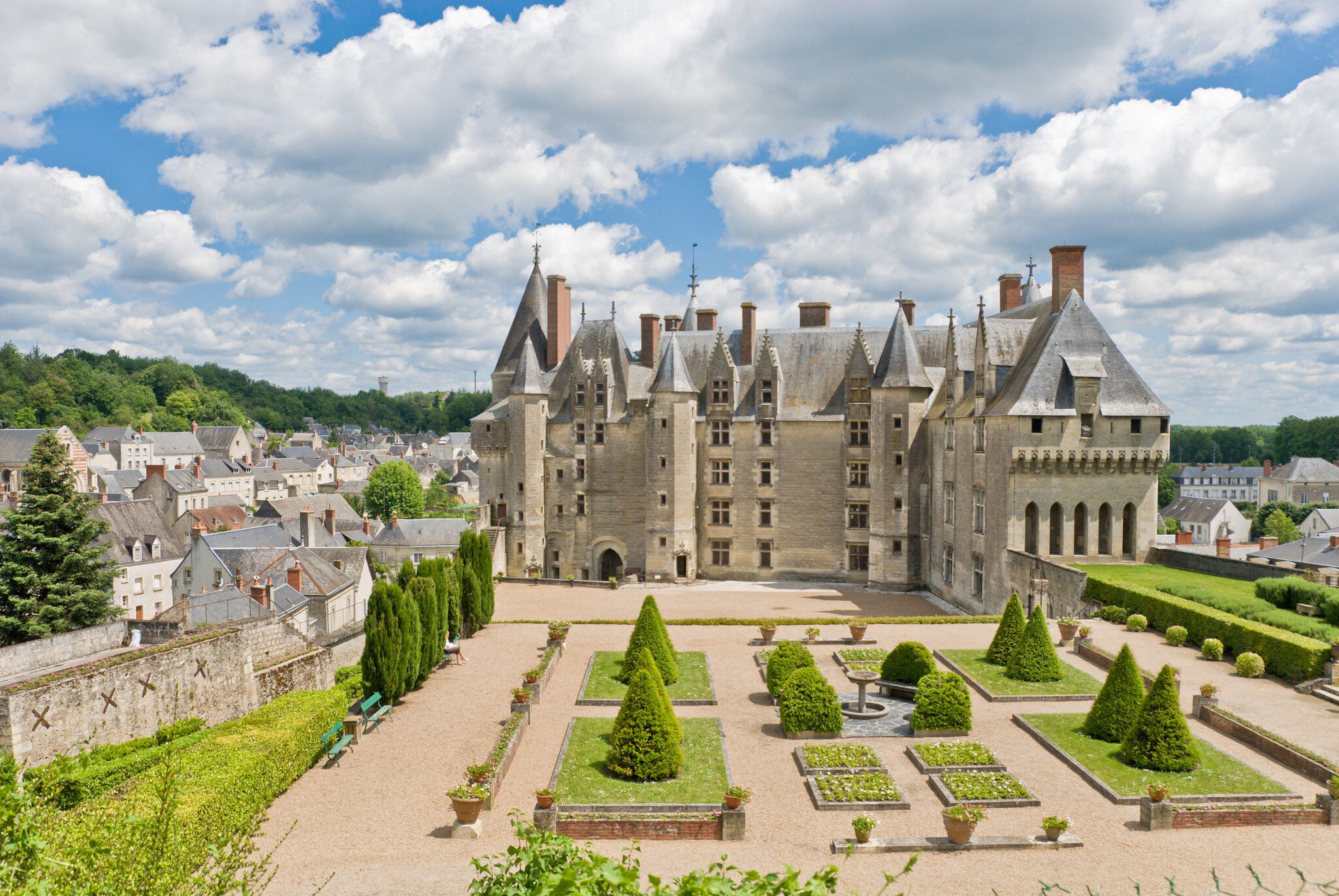
No castle in the Loire is more authentically medieval in architecture, furnishings and spirit than the Château de Langeais (chateau-de-langeais.com; adult/child €12/6). Built in the 1460s, it looks much as it did during the last decades of the Middle Ages, with crenelated ramparts and massive towers dominating the surrounding village. Original 15th-century furniture fills its flagstoned chambers, making it easy to imagine what aristocratic life in the Loire Valley was like six centuries ago.
Superbly preserved both inside and out, the château presents two faces to the world. From the town you see a fortified castle, nearly windowless, with machicolated walls rising forbiddingly from the drawbridge, which staff open and close by hand at the start and end of each workday. But the newer sections facing the courtyard, built on the cusp of the Renaissance, have large windows, ornate dormers and decorative stonework designed for more refined living.
In one room, an eerily realistic wax-figure tableau portrays the top-secret – and highly political – marriage of Charles VIII and 14-year-old Anne of Brittany, held right here on 6 December 1491, which brought about the historic union of France and Brittany. The story is dramatically narrated by Stéphane Bern.
Among the château’s many fine, if faded, Flemish and Aubusson tapestries, look out for one from 1530 depicting astrological signs; three intricate panels with millefleurs ("thousand flowers") motifs; and seven panels from the famous Les Neuf Preux series (woven 1525–40), whose nine "worthy knights" – personages from the Old Testament, Greco-Roman antiquity and the Middle Ages – represent the epitome of medieval courtly honor. In each room, plasticized sheets in eight languages elucidate its history, architecture and furnishings. The Chemin de Ronde (Parapet Walk) gives you a knight’s-eye view from the ramparts; gaps underfoot (machicolations) enabled boiling oil, rocks and excrement to be dumped on attackers.