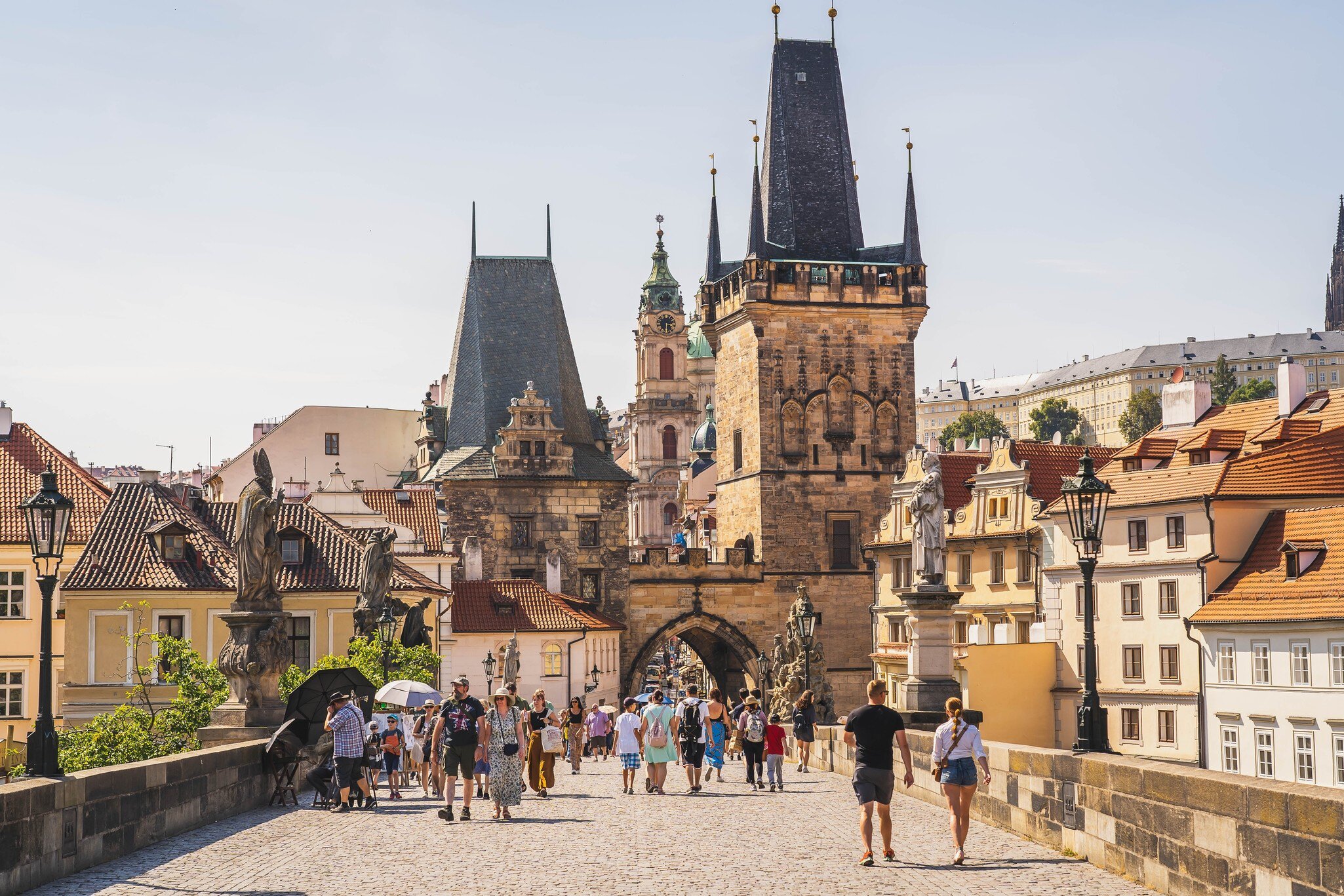
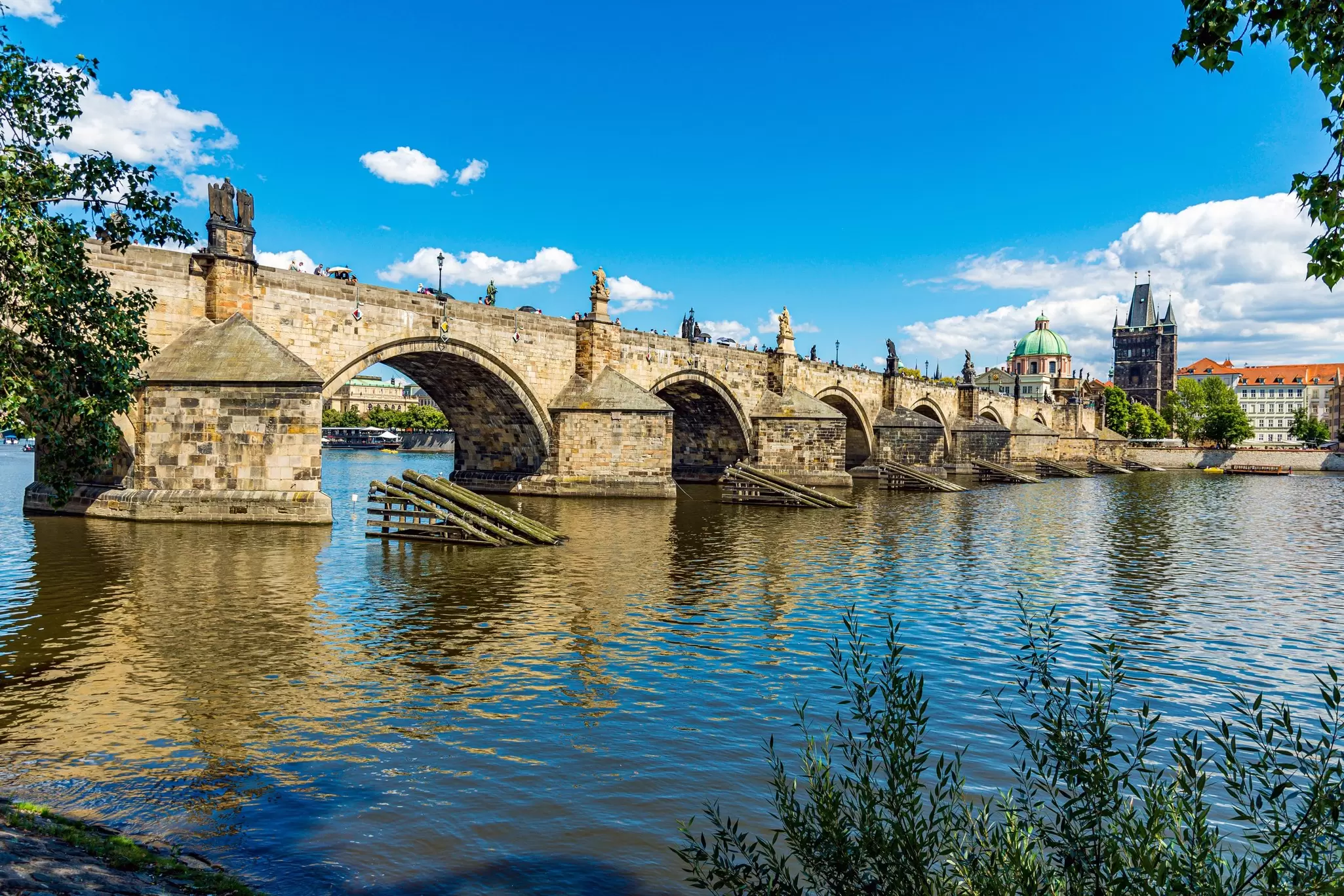
Who knew a bridge could ever be this beautiful or that mounting 30 baroque statues along its edges might elevate a handsome Gothic structure into a public work of art? Charles Bridge (Karlův most) is a world-class attraction. One of the signature Prague enjoyments is emerging from the Old Town onto a sunny bridge filled with busking musicians and people from around the world.
A Little History
Charles Bridge began life in 1357 when Emperor Charles IV commissioned Peter Parler (architect of St Vitus Cathedral) to replace the older, 12th-century "Judith Bridge," which had been washed away by floods in 1342. The new bridge was completed in 1390. It took Charles’ name only in the 19th century – before that it was known simply as "Kamenný most" (Stone Bridge).
The statues came three centuries later, when the bridge’s first monument, the Crucifix near the eastern end, was mounted in 1657. The invocation in Hebrew reads: "Holy, holy, holy Lord" (funded by the fine of a Jew who had mocked it in 1696). The first statue – the Jesuits’ 1683 tribute to St John of Nepomuk – inspired other Catholic orders, and over the next 30 years a score more went up. Not everyone loved the new statues at the time, which some viewed as Catholic overreach to mark out new territory.
Climb the Towers
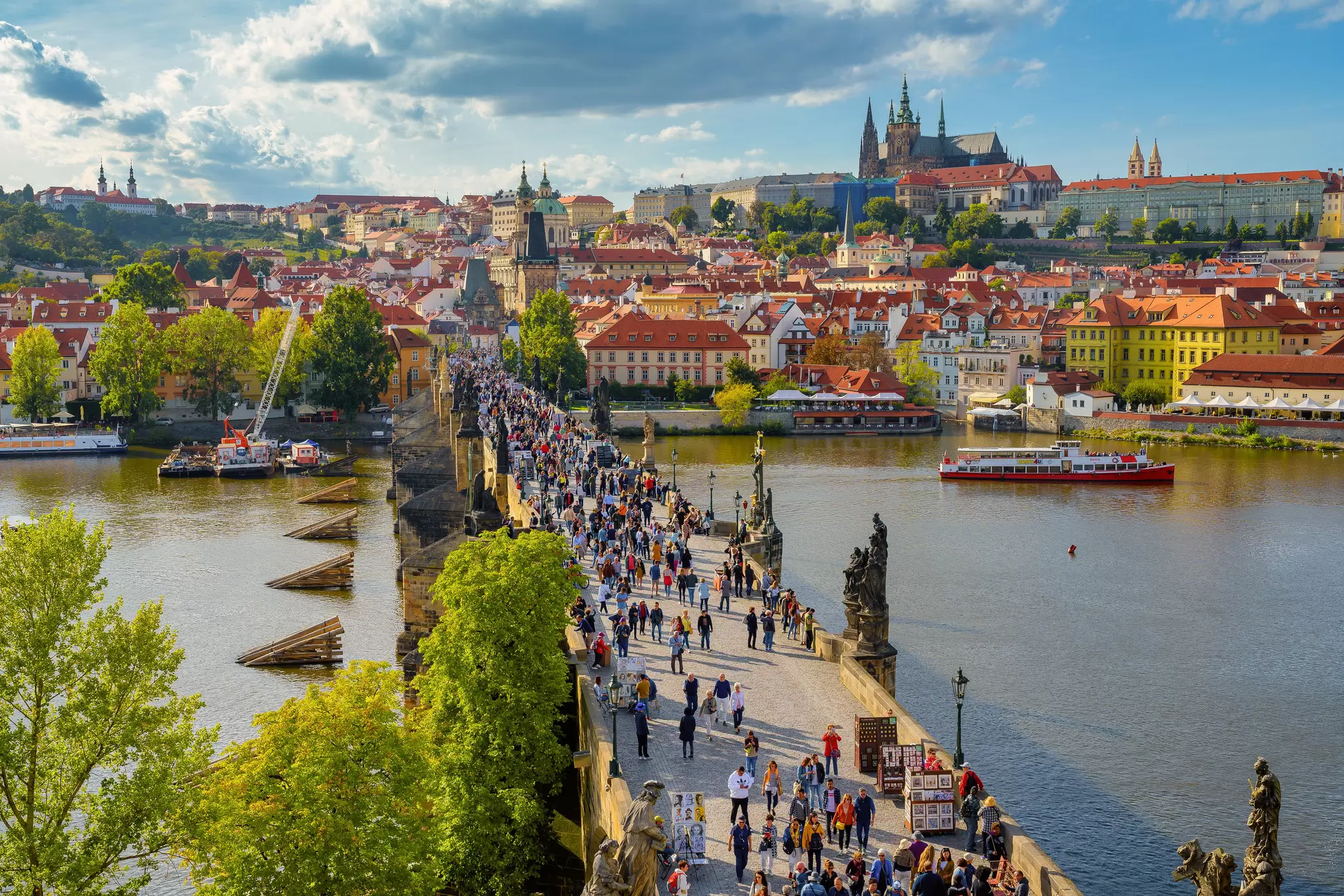
Perched at the eastern end of Charles Bridge in Staré Město, the elegant, late-14th-century Old Town Bridge Tower (prague.eu) was built not only as a fortification, but also as a triumphal arch marking the entrance to the Old Town. Like the bridge itself, the tower was designed by Peter Parler and incorporates many symbolic elements. While the tower houses a small exhibition about the bridge, the main justification for the admission fee is the amazing view from up top of the busy bridge below.
There are actually two towers at the Malá Strana end of Charles Bridge. The lower one was originally part of the long-gone 12th-century Judith Bridge, while the taller one was built in the mid-15th century in imitation of the Staré Město tower. The taller Malá Strana Bridge Tower (prague.eu) is open to the public and houses a small exhibit on the tower's history but, like its Staré Město counterpart, the main attraction is the view from the top.
Rub St John of Nepomuk
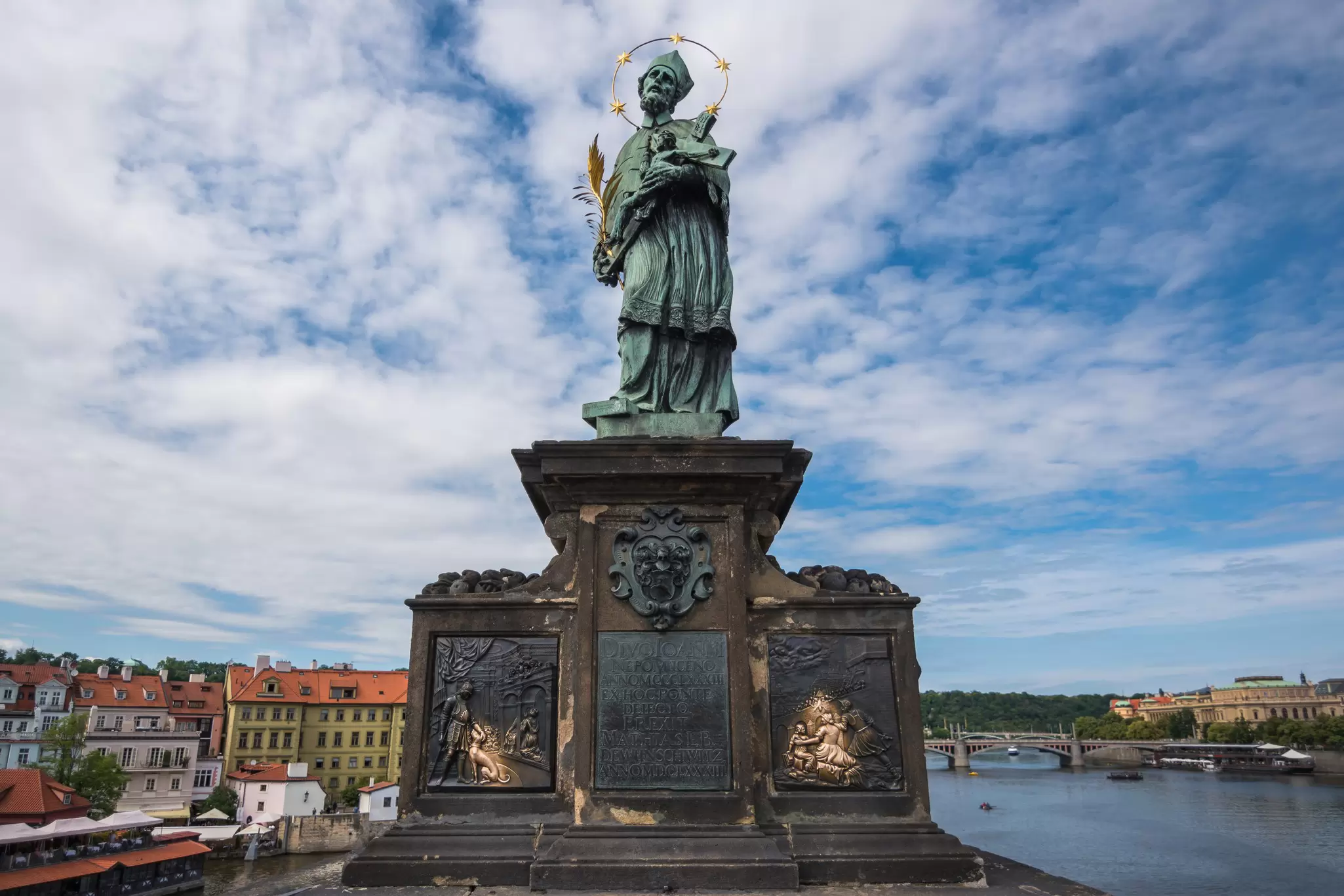
The bridge is home to a stunning array of 30 valuable baroque statues (though some have now been replaced by replicas). The most famous figure is St John of Nepomuk Statue . According to the legend at the base of the statue, King Wenceslas IV had him trussed up in armor and thrown off the bridge in 1393 for refusing to divulge the queen’s confessions (he was her priest). The stars in his halo allegedly followed his corpse down the river. Tradition says if you rub the bronze plaque, you'll one day return to Prague. A bronze cross set in the parapet between statues 17 and 19 marks the point where he was thrown off.
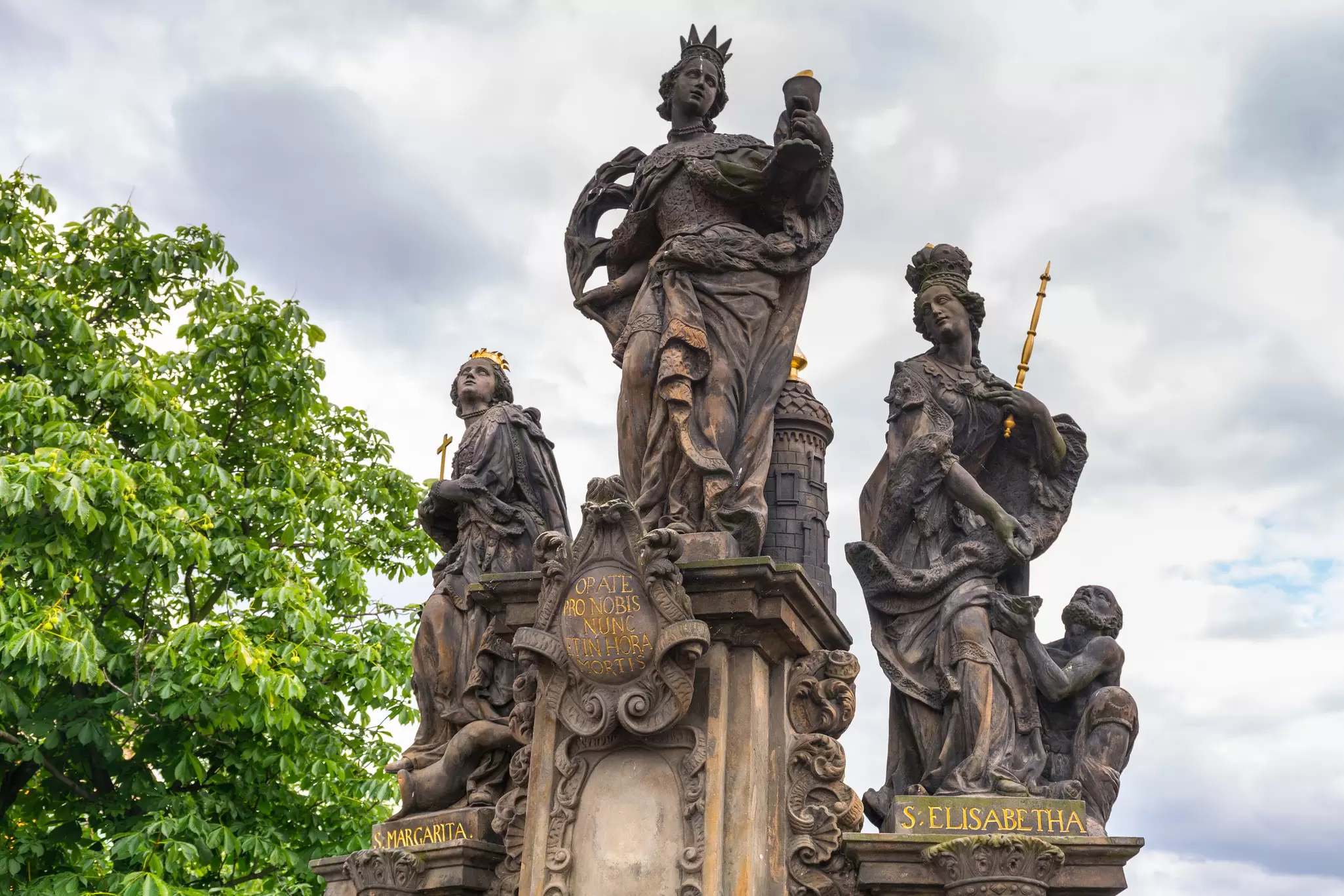
The other statues depict prominent saints at the end of the 17th and early-18th centuries. Art historians consider the statue of St Francis Xavier (1711), by the baroque master Ferdinand Maxmilián Brokoff, to be the most valuable. The Vision of St Luitgard (1710) is another contender. This monument depicts Christ appearing before a blind saint and allowing her to kiss his wounds.