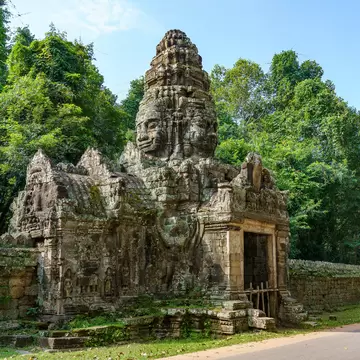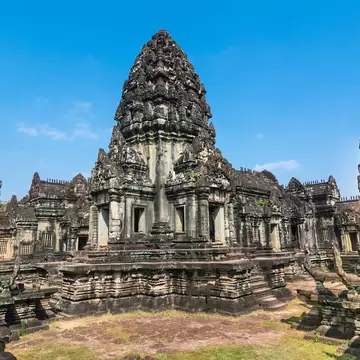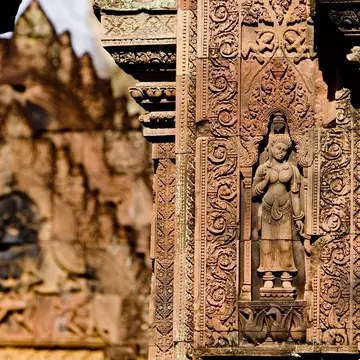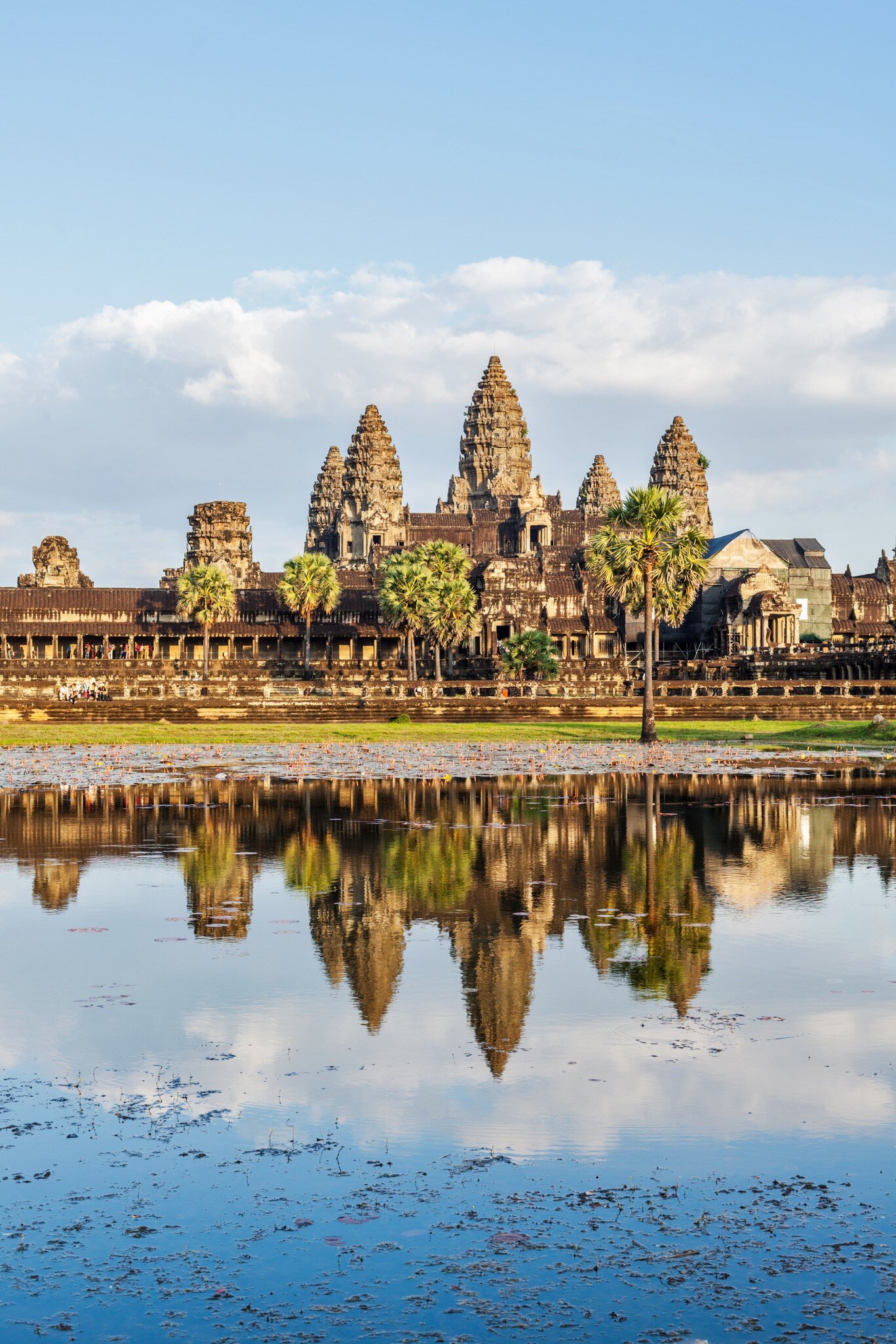
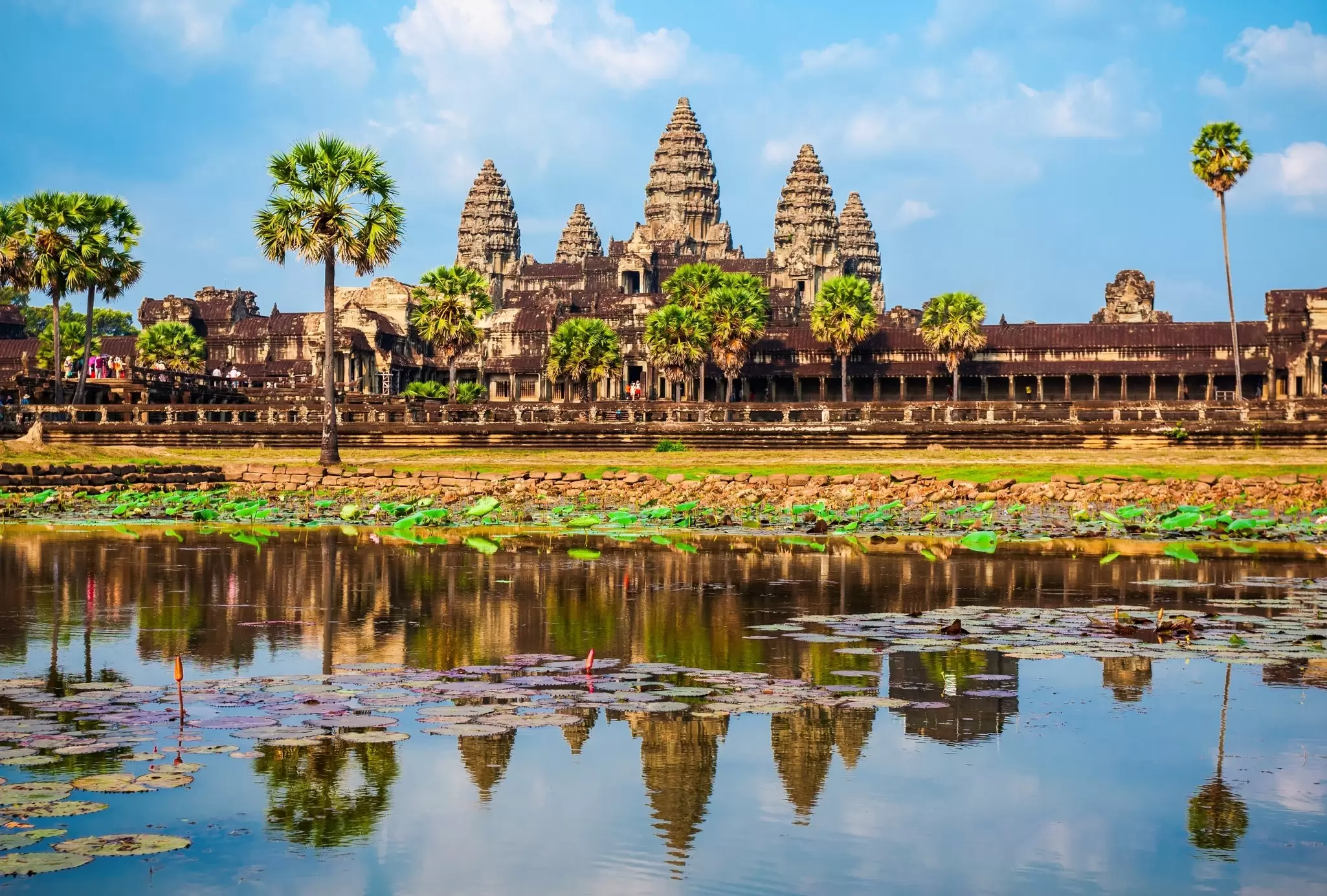
Angkor Wat is the heart and soul of Cambodia: it is the national symbol, the epicenter of Khmer civilization and a source of fierce national pride. Soaring skyward and surrounded by a moat that would make its European castle counterparts blush, Angkor Wat was never abandoned to the elements and has been in virtually continuous use since it was built in the 12th century.
Heaven on Earth
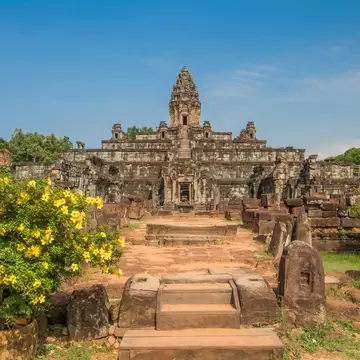
Angkor Wat is, figuratively, heaven on earth. It is the earthly representation of Mt Meru, the Mt Olympus of the Hindu faith and the abode of ancient gods. The "temple that is a city," Angkor Wat is simply unique, a stunning blend of spirituality and symmetry, an enduring example of humanity’s devotion to its gods. Angkor Wat is surrounded by a 190m-wide moat, which forms a giant rectangle measuring 1.5km by 1.3km. An avenue – 475m long, 9.5m wide and lined with naga balustrades – leads from the main entrance to the central temple, passing between two graceful libraries and then two pools, both popular spots from which to watch the sun rise.
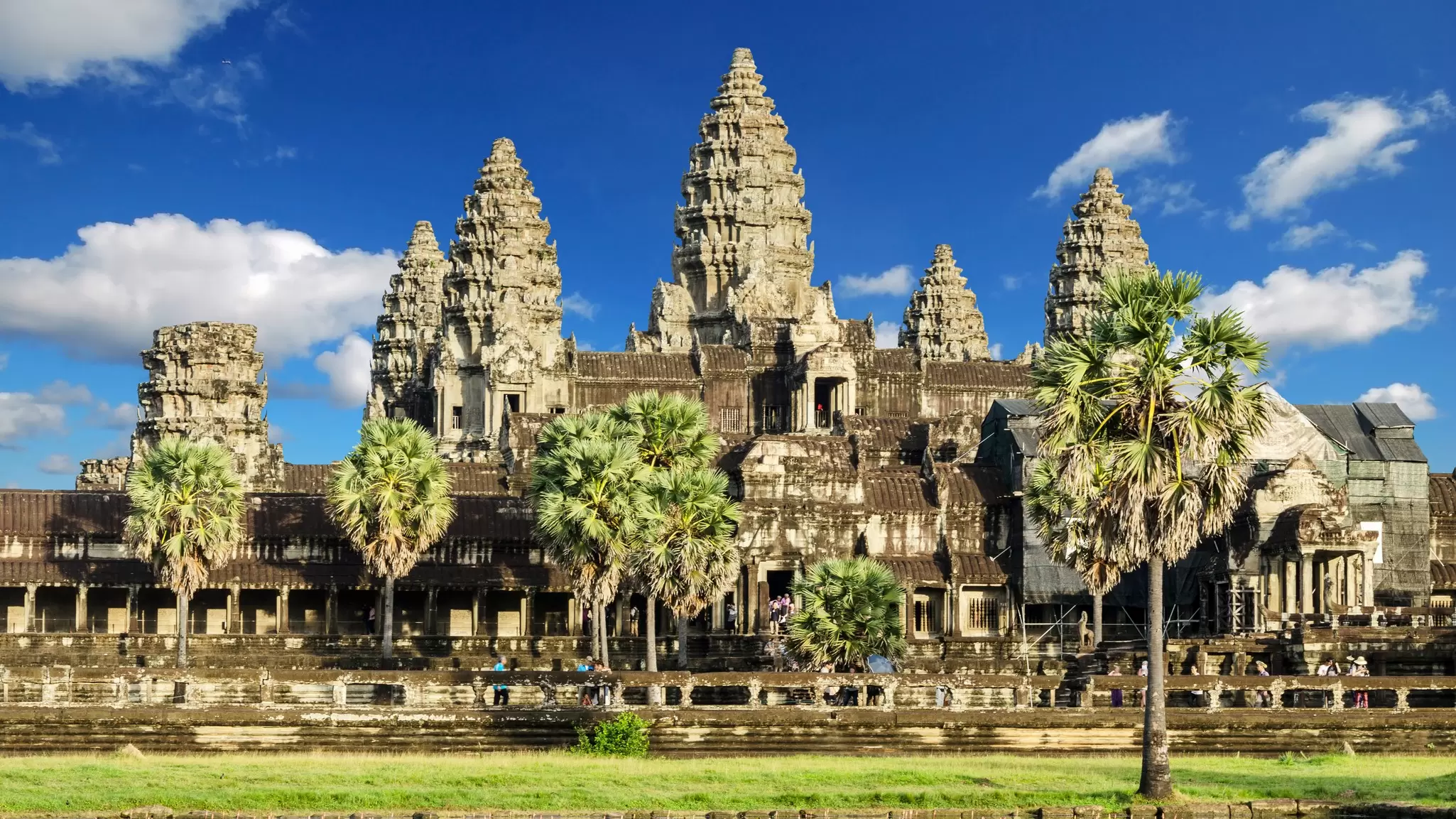
The central temple complex consists of three stories, each made of laterite, which enclose a square surrounded by intricately interlinked galleries. The corners of the second and third stories are marked by towers, each topped with symbolic lotus-bud towers. The stairs to the upper level are immensely steep, because reaching the kingdom of the gods was no easy task.
Symbolism of Angkor Wat
Eleanor Mannikka explains in her book Angkor Wat: Time, Space and Kingship that the spatial dimensions of Angkor Wat parallel the lengths of the four ages (Yuga) of classical Hindu thought. Thus the visitor to Angkor Wat who walks the causeway to the main entrance and through the courtyards to the final main tower, which once contained a statue of Vishnu, is metaphorically traveling back to the first age of the creation of the universe.
Like the other temple-mountains of Angkor, Angkor Wat also replicates the spatial universe in miniature. The central tower is Mt Meru, with its surrounding smaller peaks, bounded in turn by continents (the lower courtyards) and the oceans (the moat). The seven-headed naga becomes a symbolic rainbow bridge for humanity to reach the abode of the gods.
A Unique Temple
There is much about Angkor Wat that is unique among the temples of Angkor. The most significant fact is that the temple is oriented towards the west. Symbolically, west is the direction of death, which once led many scholars to conclude that Angkor Wat must have existed primarily as a tomb. This idea was supported by the fact that the magnificent bas-reliefs of the temple were designed to be viewed in an anticlockwise direction, a practice that has precedents in ancient Hindu funerary rites. Vishnu, however, is also frequently associated with the west, and it is now commonly accepted that Angkor Wat most likely served both as a temple and as a mausoleum for Suryavarman II.
While Suryavarman II may have planned Angkor Wat as his funerary temple or mausoleum, he was never buried here, as he died in battle during a failed expedition to subdue the Dai Viet (Vietnamese).
Western Causeway
From the west, a sandstone causeway crosses the moat. The sandstone blocks from which Angkor Wat was built were quarried more than 50km away (from the holy mountain of Phnom Kulen) and floated down the Siem Reap River on rafts. The logistics of such an operation are mind-blowing, consuming the labor of thousands. According to inscriptions, the construction of Angkor Wat involved 300,000 workers and 6000 elephants, yet it was still not fully completed.
Statue of Vishnu
The rectangular outer wall, which measures 1025m by 800m, has a gate on each side, but the main entrance, a 235m-wide portico richly decorated with carvings and sculptures, is on the western side. There is a statue of Vishnu, 3.25m in height and hewn from a single block of sandstone, located in the southeast tower (it was originally housed in the central tower of the temple). You may also see locks of hair lying about. These are offerings both from young people preparing to get married and from pilgrims giving thanks for their good fortune.
Sunrise Ponds
There are two royal bathing ponds on the west side of Angkor Wat and these are the most popular place to witness sunrise over this iconic temple. Traditionally the northern pond was the most popular, but due to ongoing archaeological work there, most visitors now choose the southern pond. Sunrise is usually around 5.45am, but most people try to arrive at the temple by 5.30am to find a good spot. If you are lucky enough to be at Angkor Wat for the spring or autumn equinox, you will see the sun rise directly over the central tower.
Gallery of a Thousand Buddhas
The Gallery of a Thousand Buddhas (Preah Poan) used to house hundreds of Buddha images before the war, but many of these were removed or stolen, leaving just the handful we see today. Many Cambodians make a pilgrimage here to be blessed in front of the standing Buddha, the same location Angelina Jolie received her blessing in Lara Croft: Tomb Raider.
Bakan Sanctuary
Also known as Bakan, the upper level of Angkor Wat is open to a limited number of visitors per day with a timed queuing system (8am to 5pm daily, except religious holidays; ages 12 and over). Ascend to the 55m summit, savor the cooling breeze, take in the extensive views and then find a quiet corner in which to contemplate the sheer scale of this Everest of temples. Clothing that covers to the elbows and knees is required to visit this upper level.
Deciphering the Bas-Reliefs
Stretching around the outside of the central temple complex is an 800m-long series of intricate and astonishing bas-reliefs. The majority were completed in the 12th century, but in the 16th century several notably inferior new reliefs were added to unfinished panels. Highlights include the Churning of the Ocean of Milk and the Army of Suryavarman II.
Churning of the Ocean of Milk
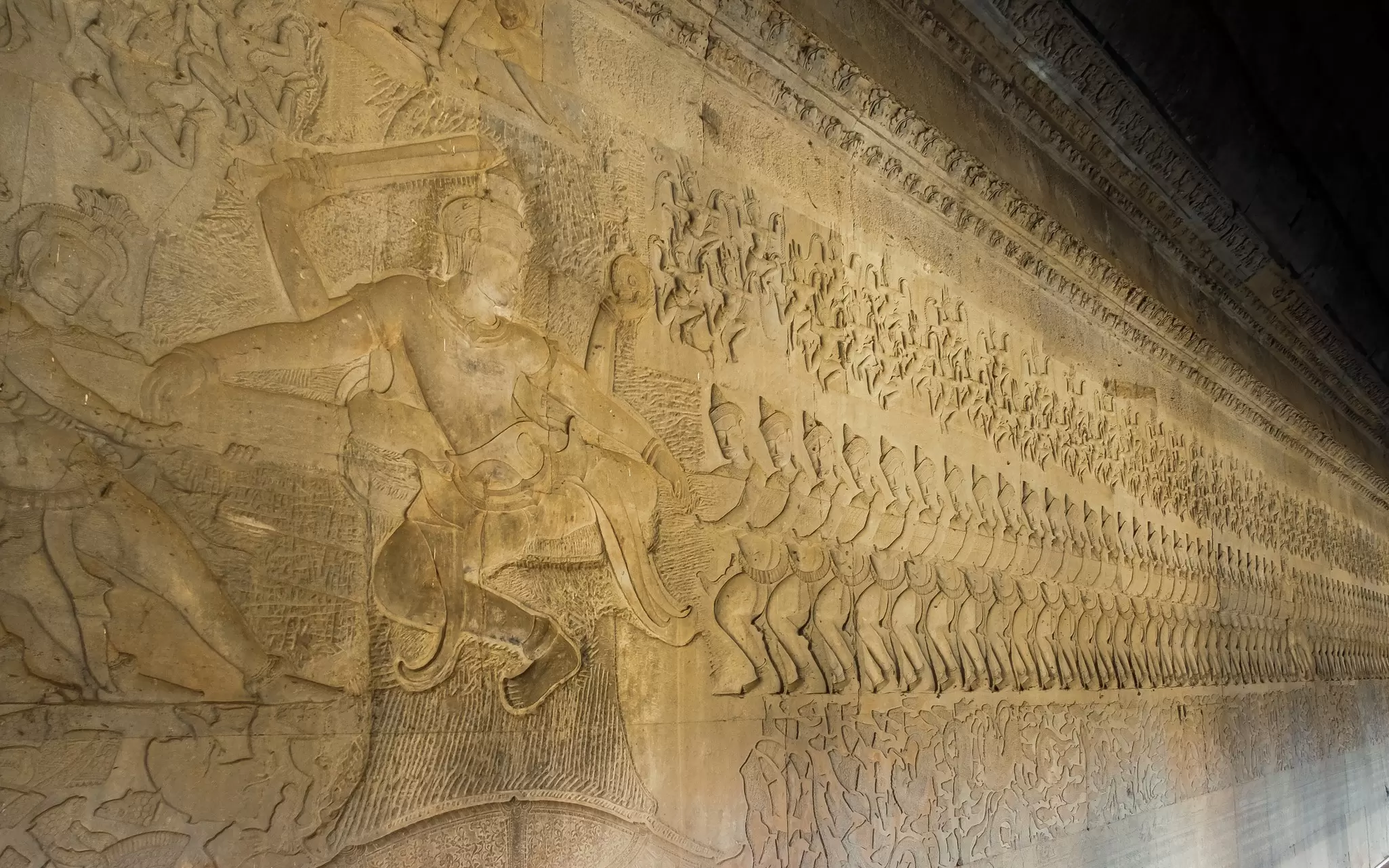
The southern section of the east gallery is decorated by the most famous of the bas-relief scenes at Angkor Wat, the Churning of the Ocean of Milk. This brilliantly executed carving depicts 88 asuras on the left, and 92 devas, with crested helmets, churning up the sea to extract from it the elixir of immortality.
The demons hold the head of the serpent Vasuki and the gods hold its tail. At the center of the sea, Vasuki is coiled around Mt Mandala, which turns and churns up the water in the tug of war between the demons and the gods. Vishnu, incarnated as a huge turtle, lends his shell to serve as the base and pivot of Mt Mandala. Brahma, Shiva, Hanuman (the monkey god) and Lakshmi (the goddess of wealth and prosperity) all make appearances, while overhead a host of heavenly female spirits sing and dance in encouragement.
Army of Suryavarman II
The remarkable western section of the south gallery depicts a triumphal battle march of Suryavaraman II's army. In the southwestern corner about 2m from the floor is Suryavarman II on an elephant, wearing the royal tiara and armed with a battleaxe; he is shaded by 15 parasols and fanned by legions of servants. Compare this image of the king with the image of Rama in the northern gallery and you’ll notice an uncanny likeness that helped reinforce the aura of the god-king.
Further on is a procession of well-armed soldiers and officers on horseback; among them are bold and warlike chiefs on elephants. Just before the end of this panel is the rather disorderly Siamese mercenary army, with their long headdresses and ragged marching, at that time allied with the Khmers in their conflict with the Chams. The Khmer troops have square breastplates and are armed with spears; the Thais wear skirts and carry tridents.
Battle of Kurukshetra
The southern portion of the west gallery depicts the Battle of Kurukshetra, from the Hindu Mahabharata epic, in which the Kauravas (coming from the north) and the Pandavas (coming from the south) advance upon each other, meeting in furious battle. Infantry are shown on the lowest tier, with officers on elephants, and chiefs on the second and third tiers.
Over the centuries, some sections have been polished (by the millions of hands that have fallen upon them) to look like black marble. The portico at the southwestern corner is decorated with sculptures representing characters from the Ramayana.
Heaven and Hell
The punishments and rewards of the 37 heavens and 32 hells are depicted in the eastern half of the south gallery. On the left, the upper and middle tiers show fine gentlemen and ladies proceeding towards 18-armed Yama (the judge of the dead) seated on a bull; below him are his assistants, Dharma and Sitragupta. On the lower tier, devils drag the wicked along the road to hell.
To Yama’s right, the tableau is divided into two parts by a horizontal line of garudas: above, the elect dwell in beautiful mansions, served by women and attendants; below, the condemned suffer horrible tortures that might have inspired the Khmer Rouge. The ceiling in this section was restored by the French in the 1930s.
Epic Hindu Battles
The northern half of the west gallery shows scenes from the Ramayana. In the Battle of Lanka, Rama (on the shoulders of Hanuman), along with his army of monkeys, battles 10-headed, 20-armed Ravana, captor of Rama’s beautiful wife Sita. Ravana rides a chariot drawn by monsters and commands an army of giants.
The western section of the north gallery depicts a Battle of Gods and Demons, between the 21 gods of the Brahmanic pantheon and various demons. The gods are featured with their traditional attributes and mounts. Vishnu has four arms and is seated on a garuda, while Shiva rides a sacred goose.
The eastern section of the north gallery shows Vishnu incarnated as Krishna riding a garuda. He confronts a burning walled city, the residence of Bana, the demon king. The garuda puts out the fire and Bana is captured. In the final scene Krishna kneels before Shiva and asks that Bana’s life be spared.
The northern section of the east gallery shows a furious and desperate encounter between Vishnu, riding on a garuda, and innumerable devils. Needless to say, he slays all comers. This gallery was most likely completed in the 16th century, and the later carving is notably inferior to the original work from the 12th century.