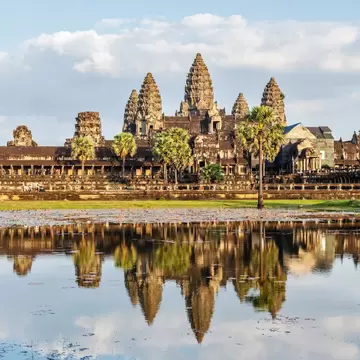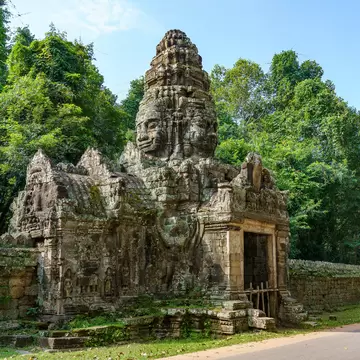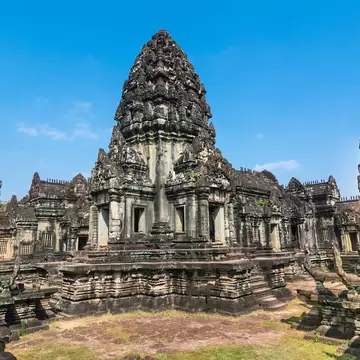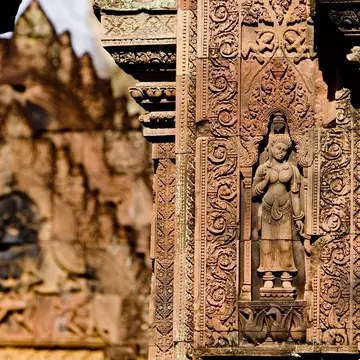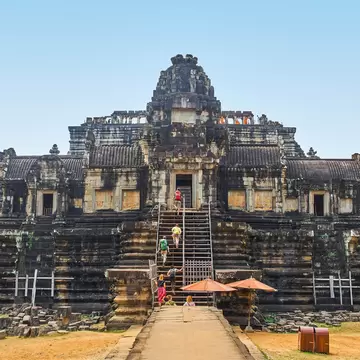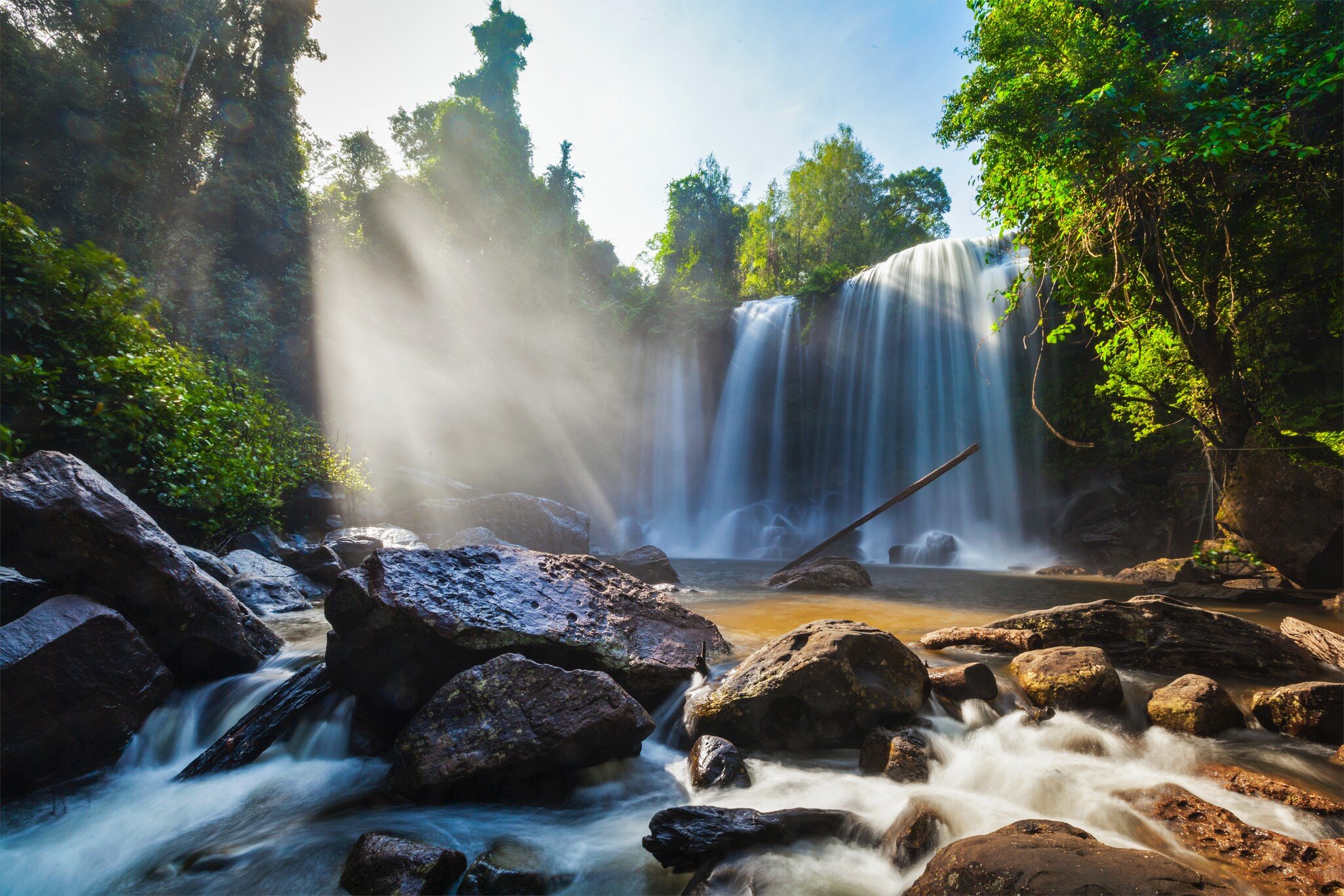
The Mount Olympus of Cambodia, Phnom Kulen is considered by Khmers to be the most sacred mountain in the country and is a popular place of pilgrimage on weekends and during festivals. It played a significant role in the history of the Khmer empire, as it was from here in 802 CE that Jayavarman II proclaimed himself a devaraja (god-king), giving birth to the Cambodian kingdom.
The Lost City of Mahendraparvata
Phnom Kulen hit the headlines in 2013 thanks to the "discovery" of a lost city known in Angkorian times as Mahendraparvata. Using jungle-piercing LIDAR radar technology, the structures of a more extensive archaeological site were unveiled beneath the jungle canopy. The LIDAR research confirmed the size and scale of the ancient city, complete with canals and barays. Some new temples and features were found beneath the jungle, but they remain remote and inaccessible due to the remote terrain. An additional LIDAR survey of the entire Kulen plateau was conducted in 2015.
Buddhas, Lingas & Waterfalls
From the entrance, a sealed road winds its way through some great jungle scenery, emerging on the plateau after a 12km ascent. The road eventually splits: the left fork leads to the picnic spot, waterfall and ruins of a 9th-century temple; the right fork continues over a bridge (you'll find the riverbed carvings around here) to the base of Wat Preah Ang Thom, which sits at the summit of the mountain and houses the large reclining Buddha carved into the sandstone boulder upon which it is built. This is the focal point of a pilgrimage for Khmer people, so it is important to take off your shoes and any head covering before climbing the stairs to the sanctuary. These days the views from the 487m peak are partially obstructed by foliage run amok.
The waterfall is an attractive spot and was featured in the movie Lara Croft: Tomb Raider. However, it could be much more beautiful were it not for all the litter left here by families picnicking on weekends. Near the top of the waterfall is a jungle-clad temple known as Prasat Krau Romeas, dating from the 9th century.
Off the Beaten Track
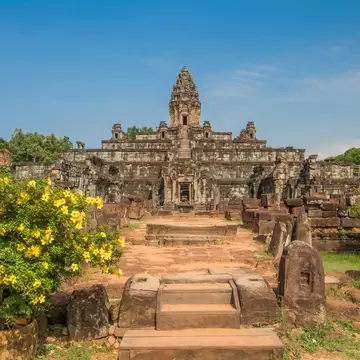
There are plenty of other Angkorian sites on Phnom Kulen, including as many as 20 minor temples around the plateau, the most important of which is Prasat Rong Chen, the first pyramid or temple-mountain to be constructed in the Angkor area. Most impressive of all are the giant stone animals or guardians of the mountain, known as Sra Damrei (Elephant Pond), including a life-size replica of a stone elephant and smaller statues of lions, a frog and a cow. These were constructed on the southern face of the mountain and from here there are spectacular views across the plains below. Getting to Sra Damrei requires taking a moto from Wat Preah Ang Thom for about 12km on very rough trails. It's a two-hour trip to explore this area and you should carry plenty of water.
Other worthwhile sites include the ancient rock carvings of Poeung Tbal, an atmospheric cluster of enormous boulders with rock carvings, and the partially restored temple of Prasat Damrei Krap. There are big plans to turn Phnom Kulen into a major visitor attraction, with an Orchid Centre already open and new walking trails on the mountain, including the Anlong Run Waterfall Trail.
It's a long journey to Phnom Kulen (take a moto or rented car, not a tuk-tuk as the hill climb is too tough), so it's best to spend a full day exploring.
Capitalising on Royal Power
Phnom Kulen was the first capital of the Khmer empire from 802, but the capital moved during the following centuries, including to Roluos in the late 9th century and Angkor Thom and, briefly, Koh Ker in the early 10th century.