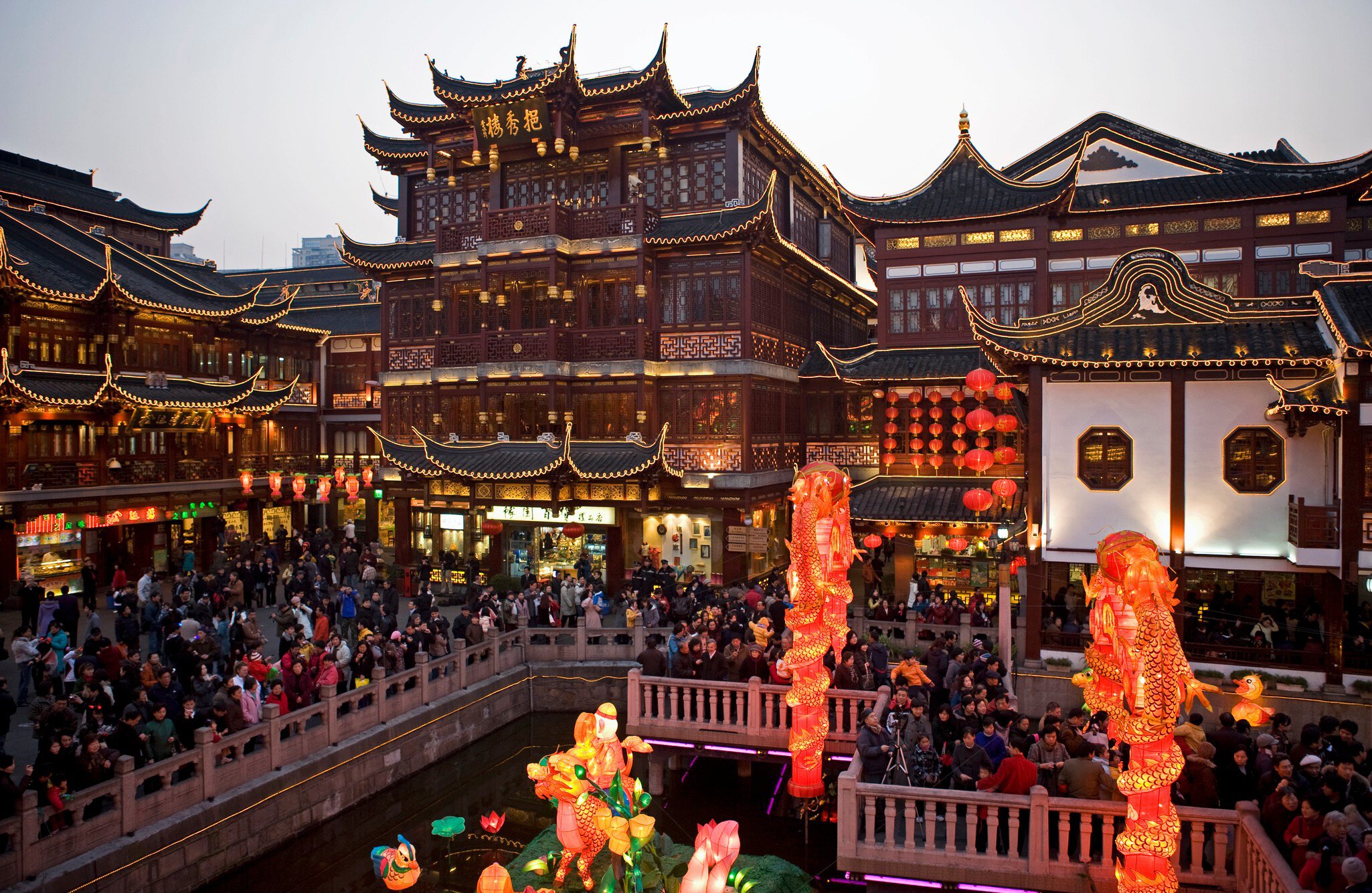
A fine example of Ming garden design, the Yuyuan Gardens & Bazaar (豫园、豫园商城, Yùyuán & Yùyuán Shāngchéng; Anren St, 安仁街) are one of Shanghai’s most popular attractions, with a maze of passageways, tranquil fish pools, gardens, striking pavilions and shaped archways. A five-ton stone, named the Exquisite Jade Rock, sits at the center. The surrounding bazaar is an attraction in itself, with a warren of shops and places to try food from around China.
The Pan family founded the "Yu" gardens – meaning "pleasing and peace" in Chinese – over 18 years between 1559 and 1577. Sadly the gardens were wrecked a few centuries later in 1842 during the Opium War, and trashed again during the Taiping Civil War between 1850 and 1864. Restored to their former glory, they opened to the public in the 1960s.
Spring and summer is the best time to visit, when blossoms fill the air with a fragrant scent. Along with the gardens are various architectural features, including more than a dozen halls and pavilions, such as the Hall of an Emerald Touch of Spring, the Dian Chun Hall (once the headquarters of the rebellious Shanghai Small Sword Society; 1853–1855) and the resplendent Ancient Opera Stage (the setting for much singing and dancing over the years). Inside the He Xu Hall is a set of unique twisting furniture made from the roots of a banyan tree, while the Yi Fang (boat house) is designed in the shape of a boat, and the Yu Hua Hall was the study of owner Pan Yunduan and has jade stone details and fine furnishings, along with his original writing brush and ink stick. Each hall has a special significance.
Next to the garden entrance is the Mid-Lake Pavilion Teahouse, once part of the gardens and now one of the most famous teahouses in China.