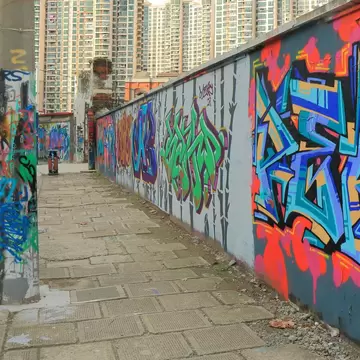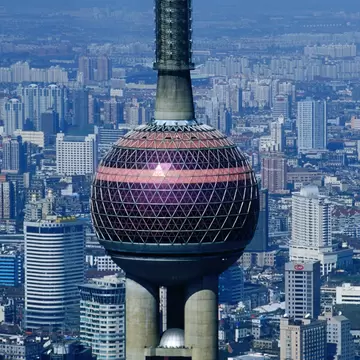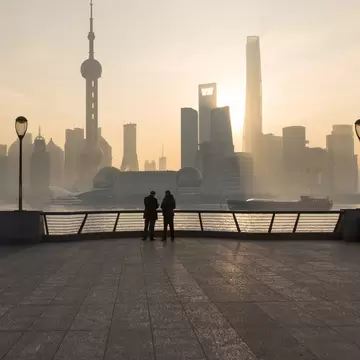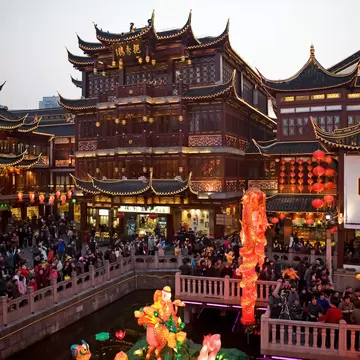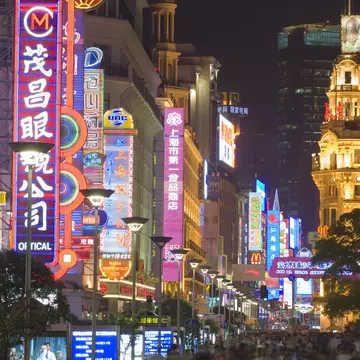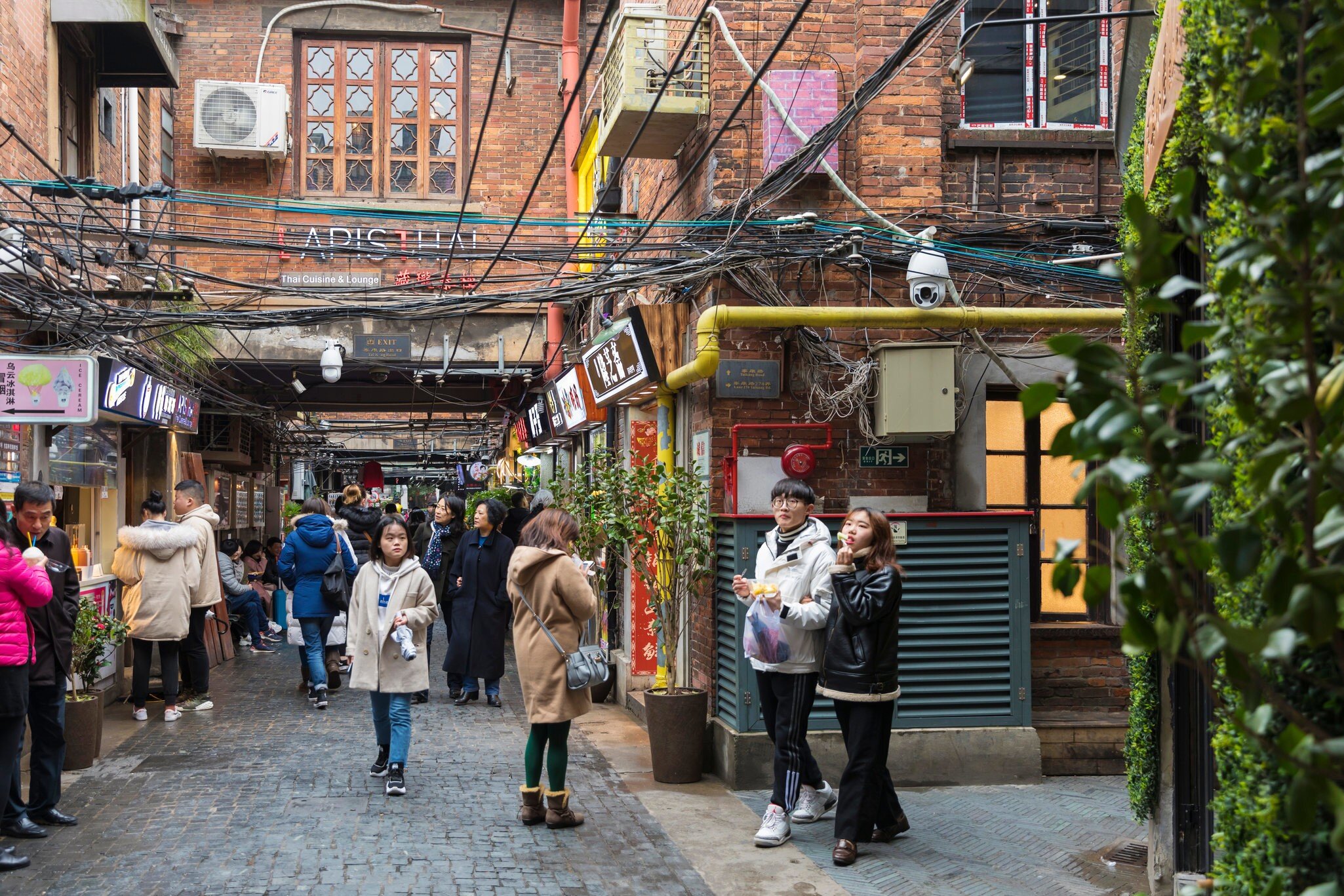
This vibrant grid of traditional alleyways is one of the most accessible and captivating examples of Shanghai’s trademark historical back-lane architecture. As Shanghai looked to modernize, traditional housing was snubbed by many residents in favor of shiny modern tower blocks. But as more original lane houses were torn down, their desirability grew. Now the area known as Tianzifang (田子坊, Tiánzǐfáng) is a full-on tourist attraction.
Architecture & Bearings
Located at Lane 210, Taikang Rd, Tianzifang is a less polished version of Xintiandi, with one big difference – people still live here and have continued to do so for almost a century. Built in 1931, it's survived the vicissitudes of the 20th century and is a beautiful example of local shíkùmén ("stone warehouse gate") architecture, with big black doors and detailed stone-carved archways leading into the lane houses, which line tiny, snaking alleys. Three main north–south lanes (Nos 210, 248 and 274) are intersected by east–west alleyways – it's easy to get lost, but that's half the fun! Visitors will find display boards about the history of the area, plus art studios, craft stores, street-facing hole-in-the-wall bars, and little cafes and tea shops.
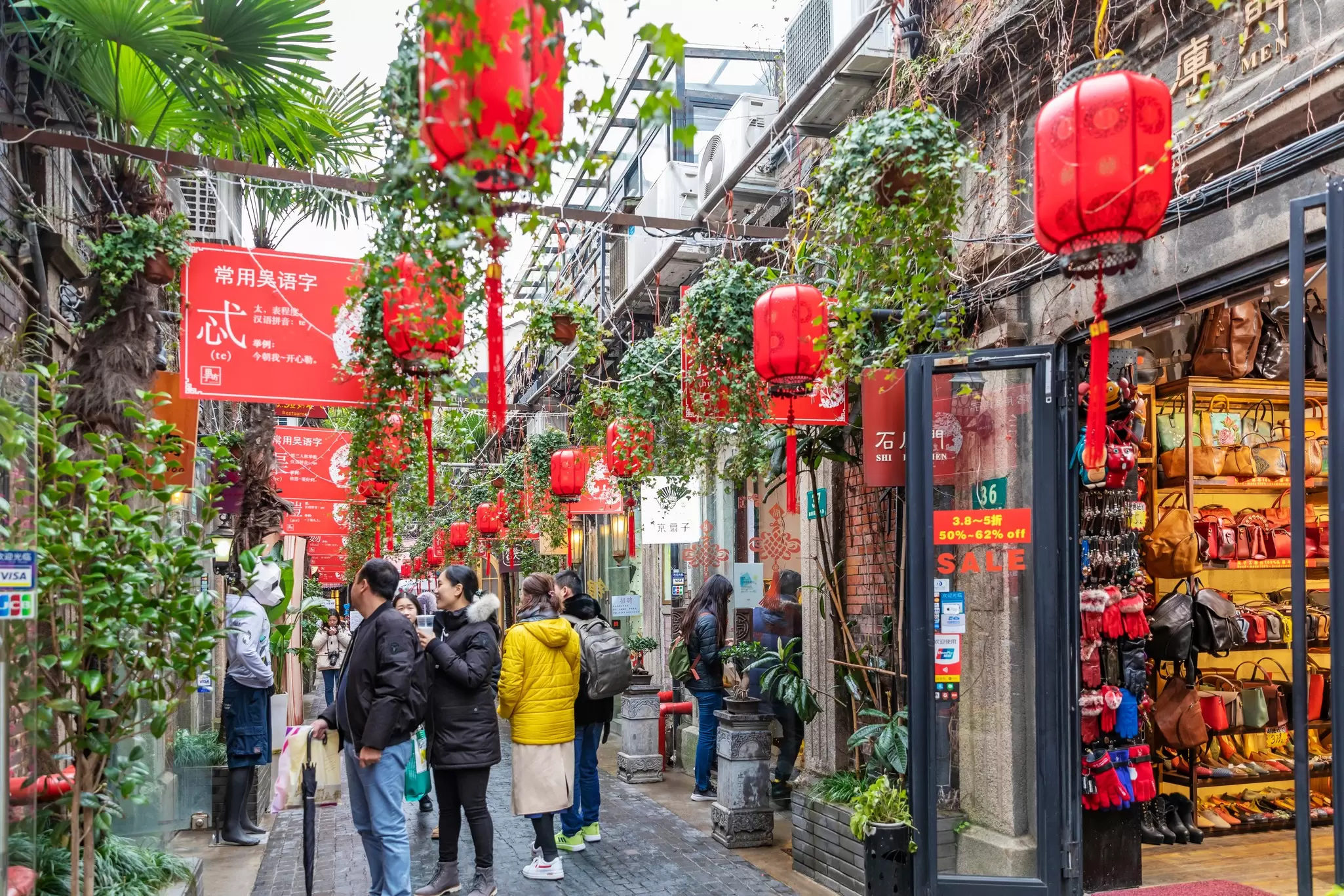
Living spaces in lane houses were built in small dimensions, forcing residents to share facilities such as water. Life in lòngtáng is social; people catch up over tea and exercise outside. Old-fashioned sinks can still be seen outside the buildings, washing lines remain overhead and plants and vines grow over some buildings – it's a living, breathing, organic example of a typical lane-house complex. But, as more people have discovered the area, naff tourist gift shops have appeared in the lanes.
Artists & Creatives
Artists have been using this area of lane houses for decades. When it was built in the 1930s it was originally named "Zhicheng Fang," meaning "realization of ambition neighborhood." The area adopted the moniker "Tianzifang" in recent years, after being renamed by Chinese painter Huang Yongyu (Tianzi Fang was an ancient Chinese painter, thus giving a nod to the area's artistic connection). Galleries and boutiques are still located around the twisting alleys, but there are fewer of them than in previous decades. Buy leather satchels at Qiuzhen Leather (Lane 274, Taikang Rd, 泰康路274弄), or vintage glasses frames (from the 1940s to the 1990s) and old watches at Shanghai Code (No 9, Lane 274, Taikang Rd, 泰康路247弄9号). And grab a pair of sneakers from Feiyue, just outside the entrance to the lanes (264 Taikang Rd, 泰康路264号). This famous Shanghai sneaker brand dates back to the 1920s – its street shoe is Shanghai's answer to Converse.
Food & Drink
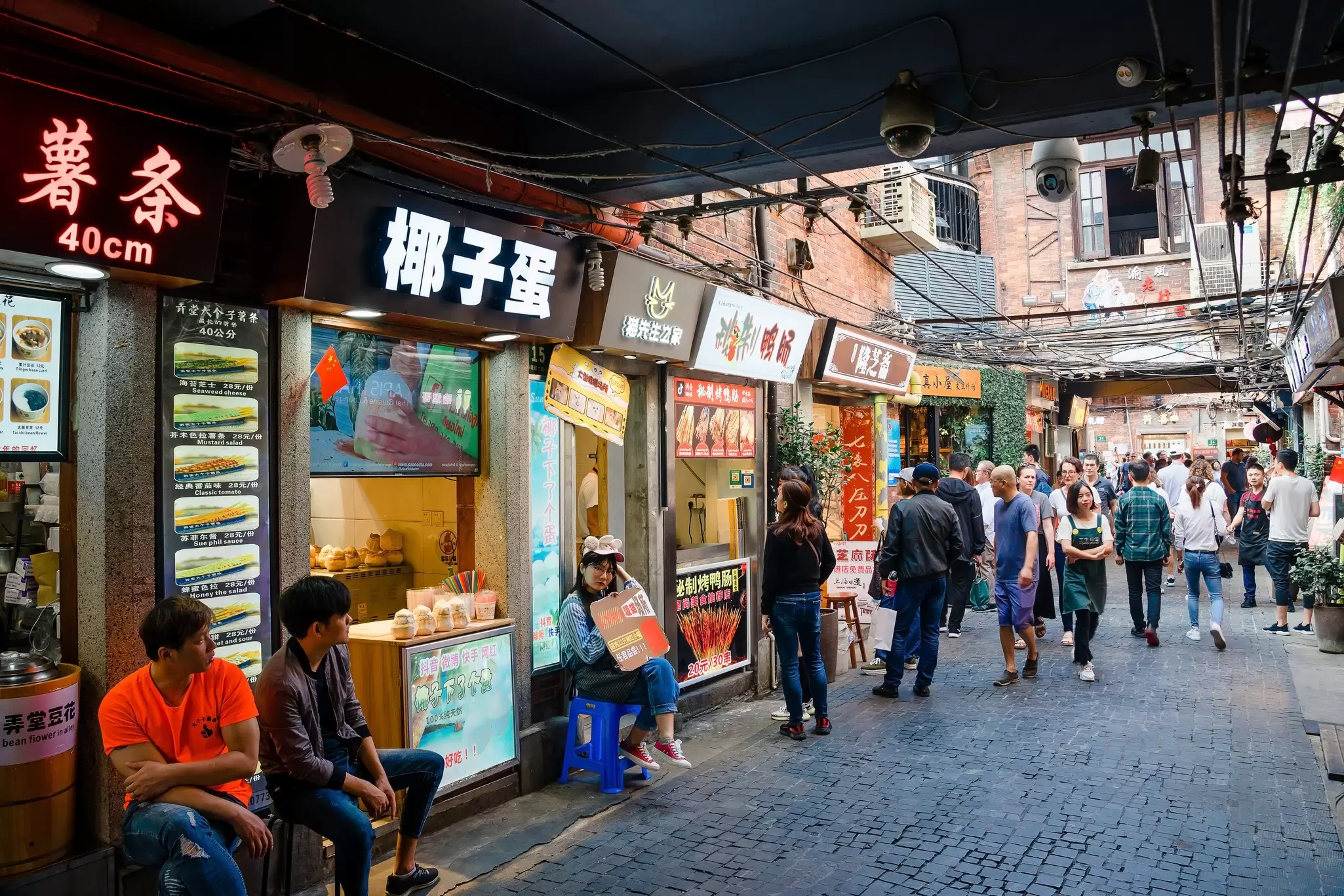
Little hole-in-the-wall bars can be found all around Tianzifang. Hungry? The excellent Michelin-listed Weixiang Zhai (opposite Dapuquio Station) has been serving up delicious bowls of steaming noodles slathered with sesame sauce since 1937. Find it just outside the entrance to the lanes. Next door is the Taikang Food Market, an authentic wet market with various stations selling homemade dumplings, unique vegetables, live eels, frogs, crabs and more – it's a wonderful place to soak up local life in action.
Liuli China Museum
When wandering along Taikang Rd it's hard to miss the building covered in 5000 handmade petals, weighing 1.5 tons. In the 1960s this building was the Shanghai Watch and Clock Factory, but in 2010 it became the wonderful Liuli China Museum (25 Taikang Rd, 泰康路25号). Founded by Taiwanese artists Loretta Yang and Chang Yi, it's chock-full of glass sculptures, from earrings and belt buckles to dragons.
Double Rainbow Massage House
After pounding the streets of Tianzifang head over to the consistently good Double Rainbow Massage House (45 Yongjia Rd, 永嘉路45号) to unwind. Don't expect a fancy setting; this place has simple, clean rooms and excellent, very affordable massages given by visually impaired masseuses, sure to rid you of aches and pains. Chinese massage here is typically hard, so don't forget to request your preference – soft, medium or hard.