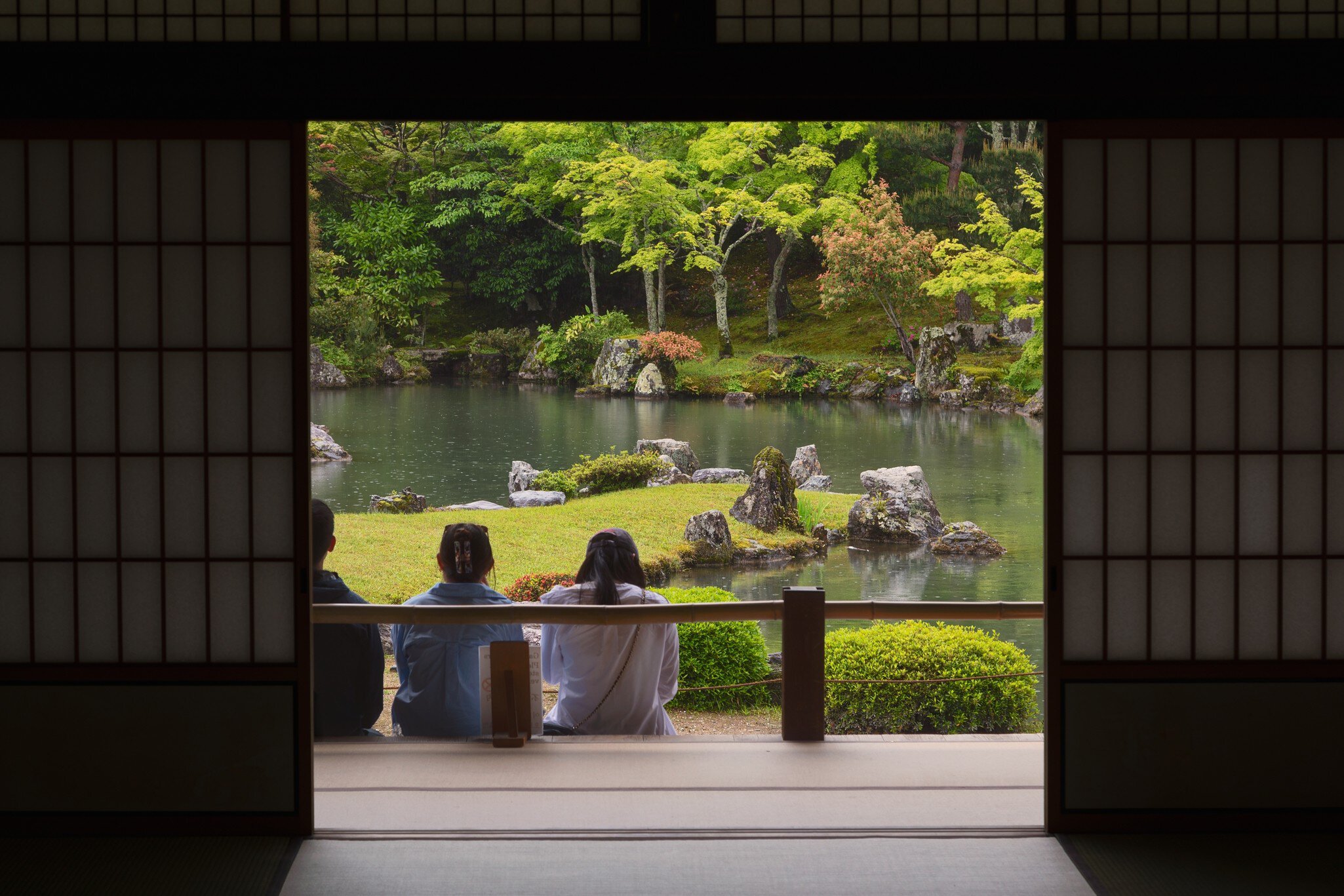
Dating from 1339, Tenryū-ji (天龍寺; tenryuji.com/en) is a major temple of the Rinzai school of Zen, with one of the most attractive gardens in all of Kyoto. Most of the current buildings date from around 1900, but the garden was designed by Tenryū-ji's first abbot, Zen master Musō Soseki. The large, central koi pond forms the shape of the kanji (Chinese character) for heart, and Musō had some of Japan's best shakkei (borrowed scenery), the Arashiyama mountains, as a backdrop. For an extra charge, enter the Hojō (abbot's quarters) to contemplate the garden from the veranda. Rocks across the pond represent a waterfall; it is said that, if the koi can climb it, it will turn into a dragon, a symbol of enlightenment – look for the imposing 19th-century fusuma-e (sliding door painting) of a fearsome yet happy dragon behind you.
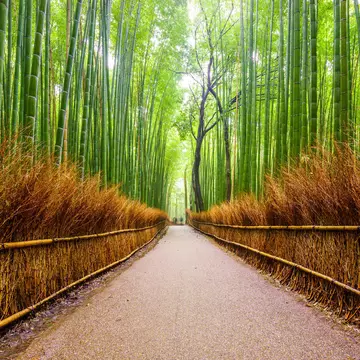
The temple was built on the old site of Go-Daigo’s villa after a priest had a dream of a dragon rising from the nearby river. The dream was seen as a sign that the emperor’s spirit was uneasy and so the temple was built as appeasement – hence the name tenryū (heavenly dragon). You will find Arashiyama’s famous bamboo grove situated just outside the north gate of the temple.