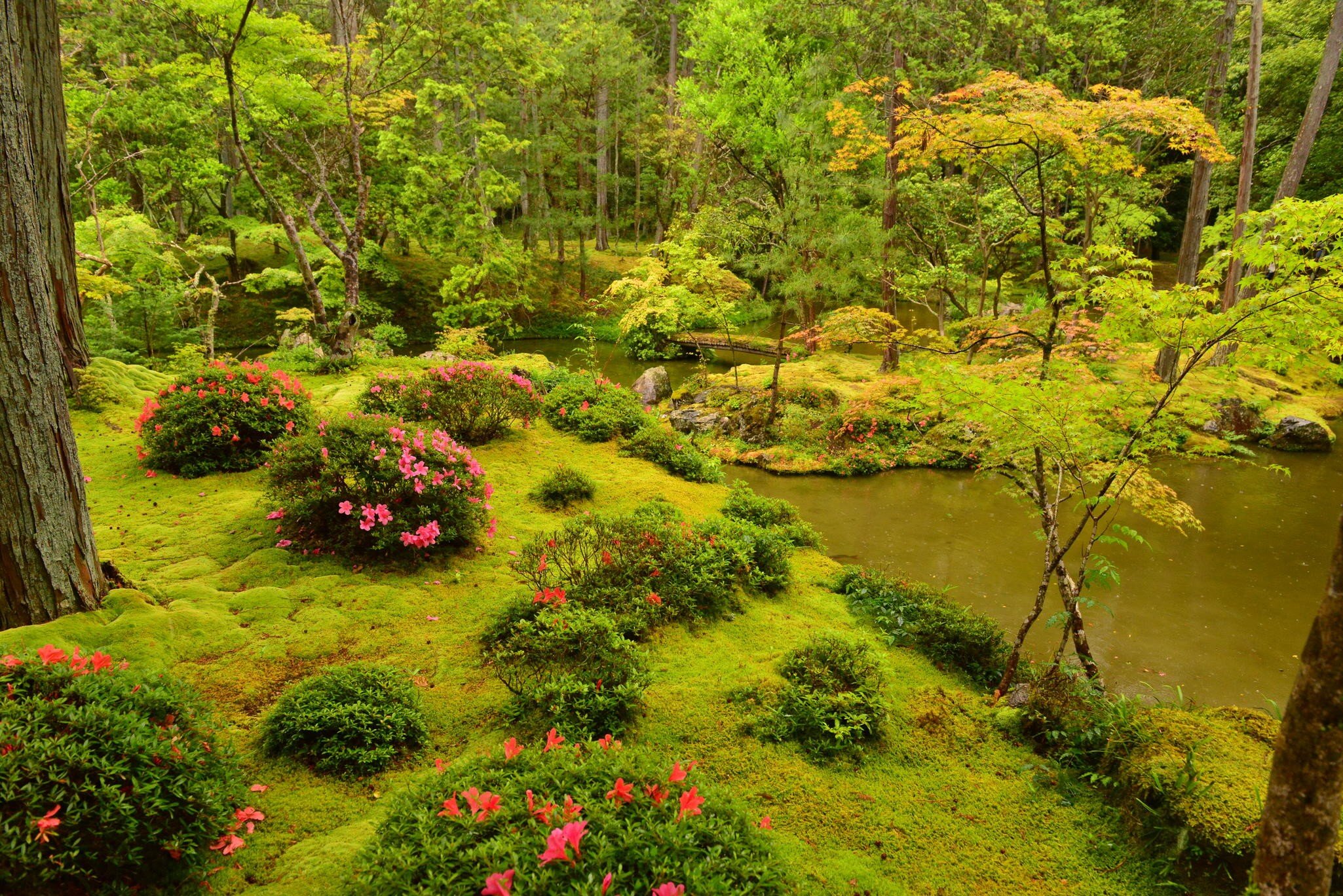
Saihō-ji, one of Kyoto's best-known gardens, is famed for its superb moss garden, hence the temple's nickname: Koke-dera (Moss Temple). The heart-shaped garden, laid out in 1339 by Musō Kokushi, surrounds a tranquil pond and is simply stunning. In order to limit the number of visitors, you must apply to visit at least three weeks in advance, though the earlier the better to avoid disappointment.
To make a reservation to visit, you need to send a letter (or print and fill out the template on the website) and include your name, address, number of visitors and preferred dates, along with a self-addressed postcard for a reply to your address (in Japan or overseas). Note visitors must be at least 18 years old. The address to send it to is: Saihō-ji, 56 Matsuo Jingatanichō, Nishikyō-ku, Kyoto-shi 615-8286, JAPAN. Your return postcard will let you know the date and time of your visit. Payment is cash only on arrival.
When you arrive at Saihō-ji, visitors are required to copy a sutra with an ink brush. Foreigners are generally just required to write their name, address and a prayer, rather than attempt to copy the sutra. Once in the garden, you are free to explore on your own and at your own pace. The whole visit usually takes around one hour.
While the process might seem a little over the top, it's certainly worth the small effort to organize, particularly if you have a fondness for Japanese gardens.