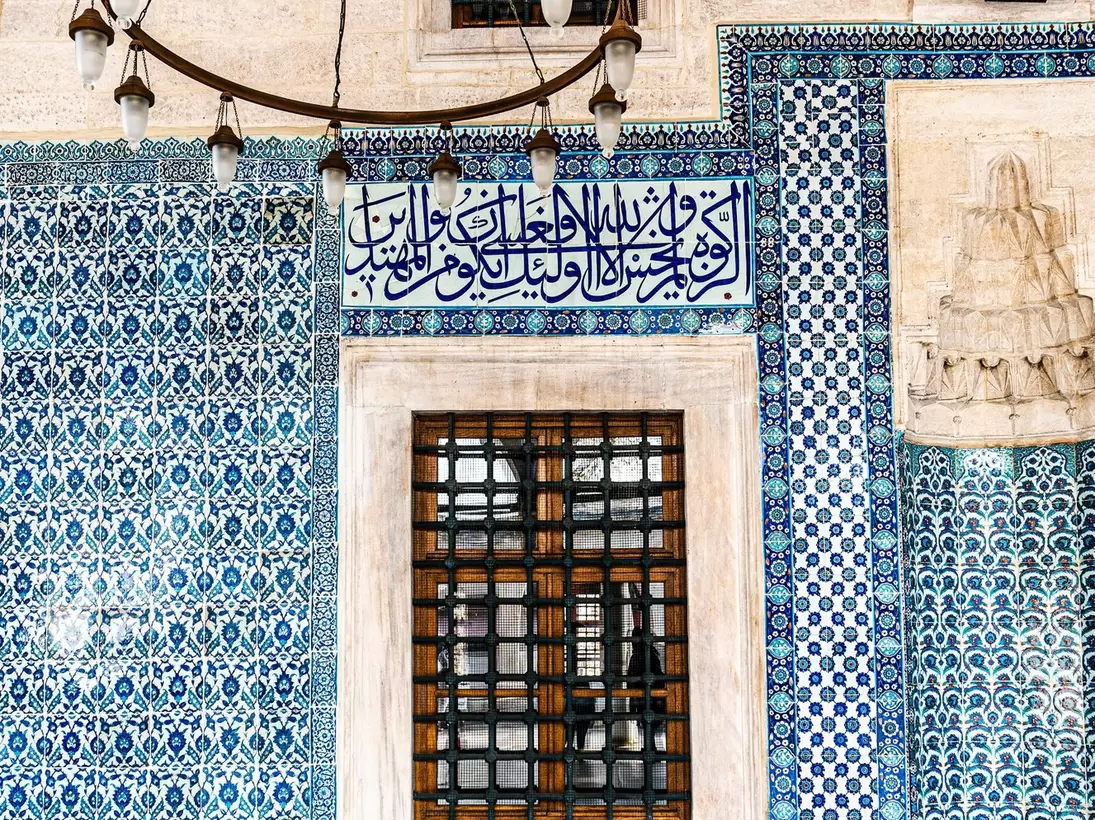
Nestled in the busy Tahtakale shopping district to the immediate west of the Spice Bazaar, the Rüstem Paşa Mosque is an absolute gem. Dating from 1560, it was designed by Mimar Sinan for Rüstem Paşa, son-in-law and grand vizier of Süleyman the Magnificent. A showpiece of the best Ottoman architecture and tile art, it is thought to have been the prototype for Sinan's greatest work, the Selimiye Mosque in Edirne.
The mosque is easy to miss because it's not at street level. There's a set of access stairs on Hasırcılar Caddesi and another on the small street that runs right (north) off Hasırcılar Caddesi towards the Golden Horn. At the top of the stairs, there's a terrace and the mosque's colonnaded porch. Exquisite panels of İznik tiles are set into the mosque's facade. The interior is covered in more tiles and features a lovely dome, supported by four tiled pillars. The preponderance of tiles was Rüstem Paşa's way of signaling his wealth and influence, with İznik tiles being particularly expensive and desirable.