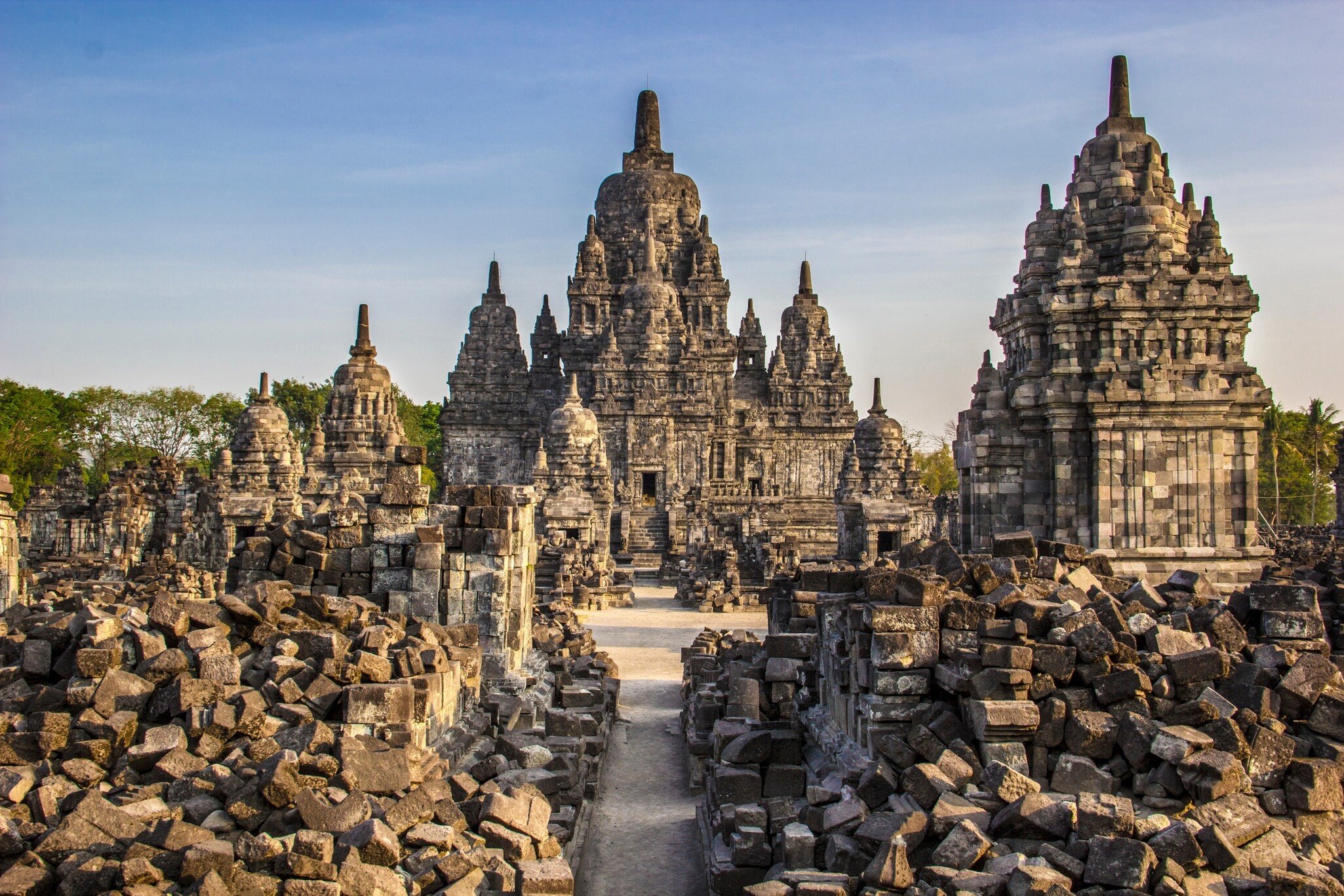
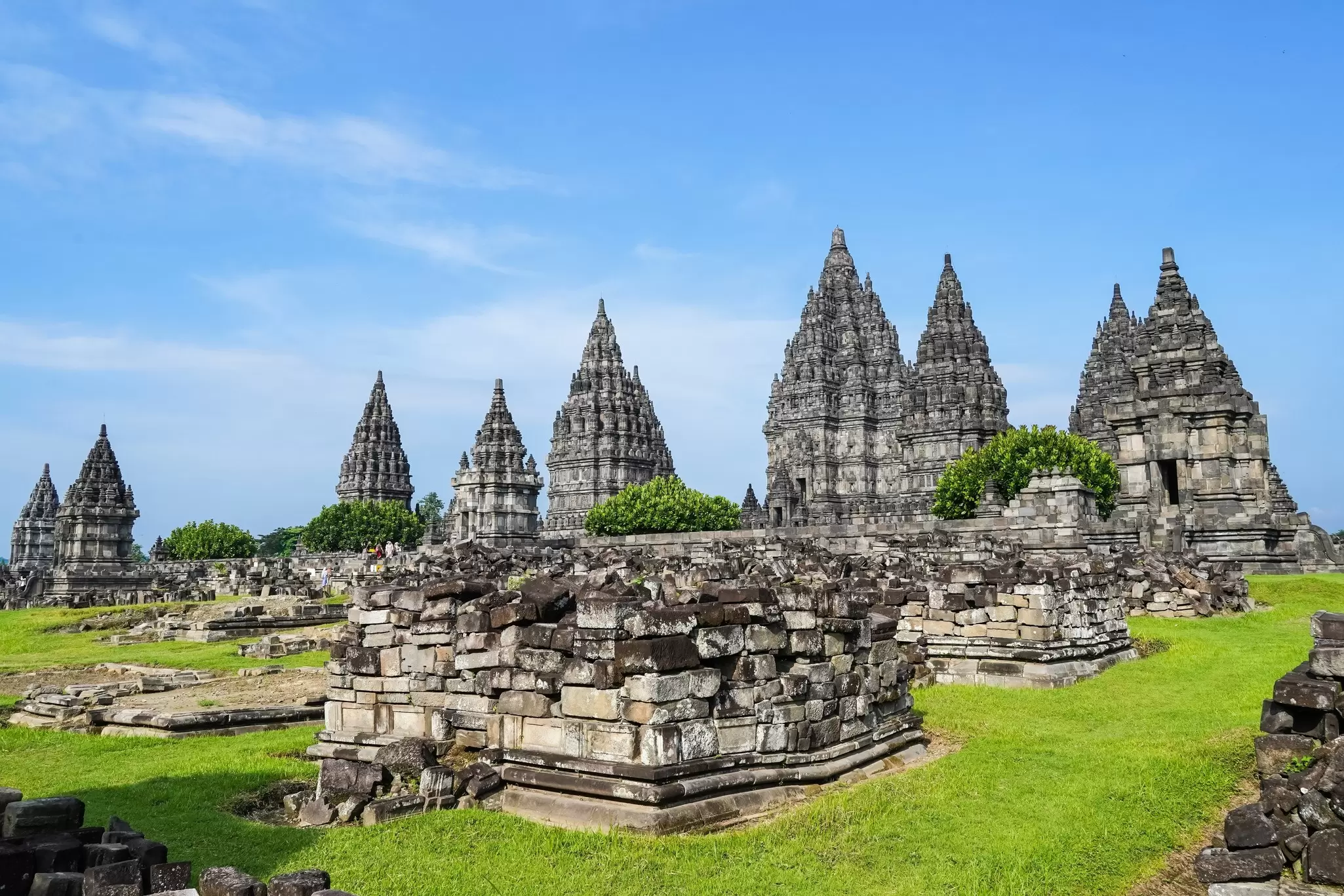
Prambanan, Indonesia’s largest and most impressive Hindu temple complex, is an astounding place to visit. It was constructed in the 9th century and comprises 240 temples in total. The three main temples, dedicated to the gods Brahma, Vishnu and Shiva, tower as high as 47m and are adorned with beautifully detailed bas-reliefs of the Hindu epics Ramayana and Bhagavata Purana.
The Main Temples
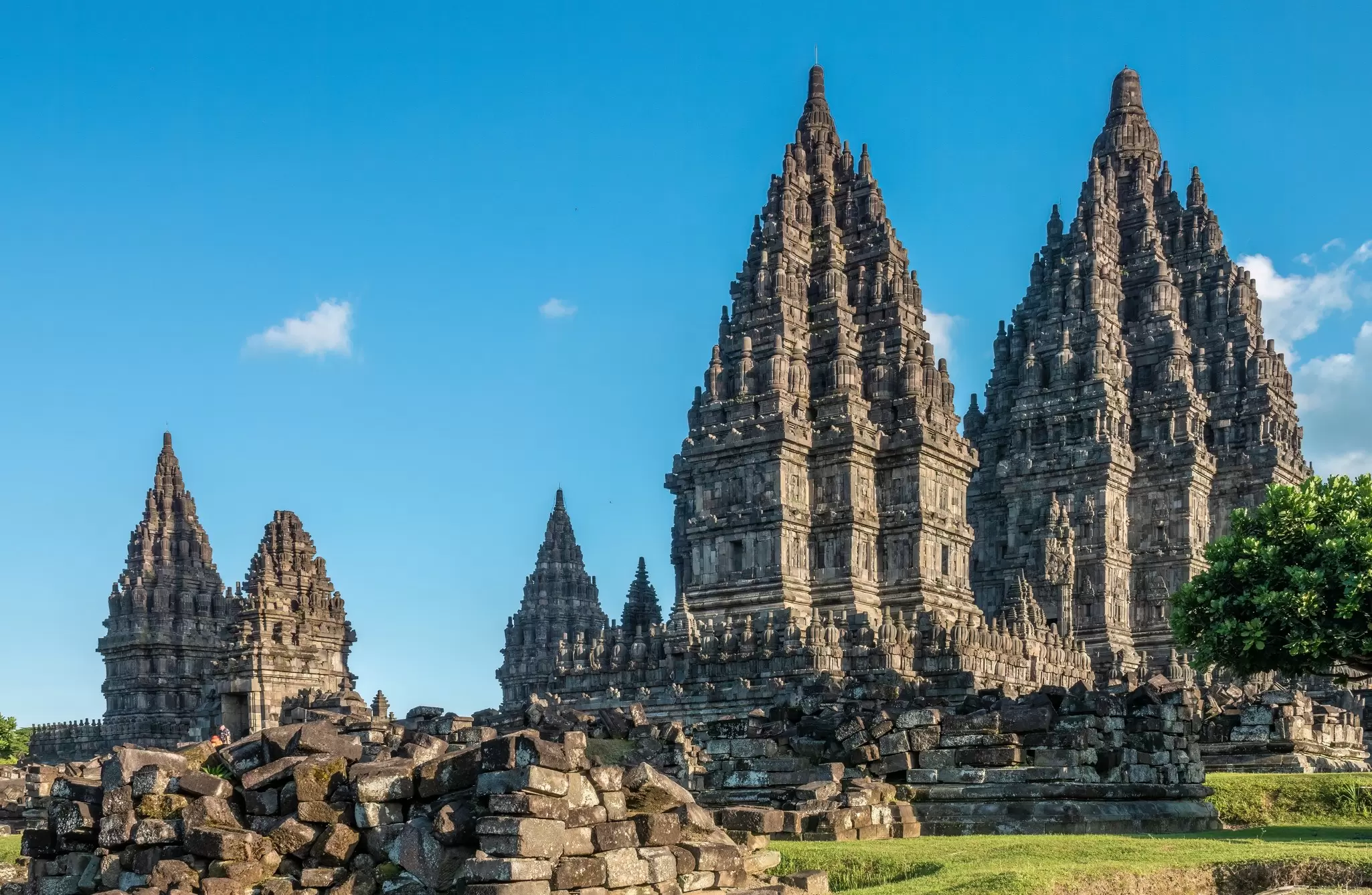
The three main temples of the Prambanan complex are the most impressive, towering into the sky with their distinctive pointed construction. When approaching the temples, you will walk up a long path and stairs directly into the complex. Don’t miss the billboards at the bottom of the stairs that have some information about the temples and the site. As you walk around the main temples, take note of the angles of the sun. Head away from the crowds and around to the rear of the temples, where you will find a grassed area and a couple of trees. Photos are easier here, as the sun generally doesn’t cause as much backlight.
A Complete Rebuild
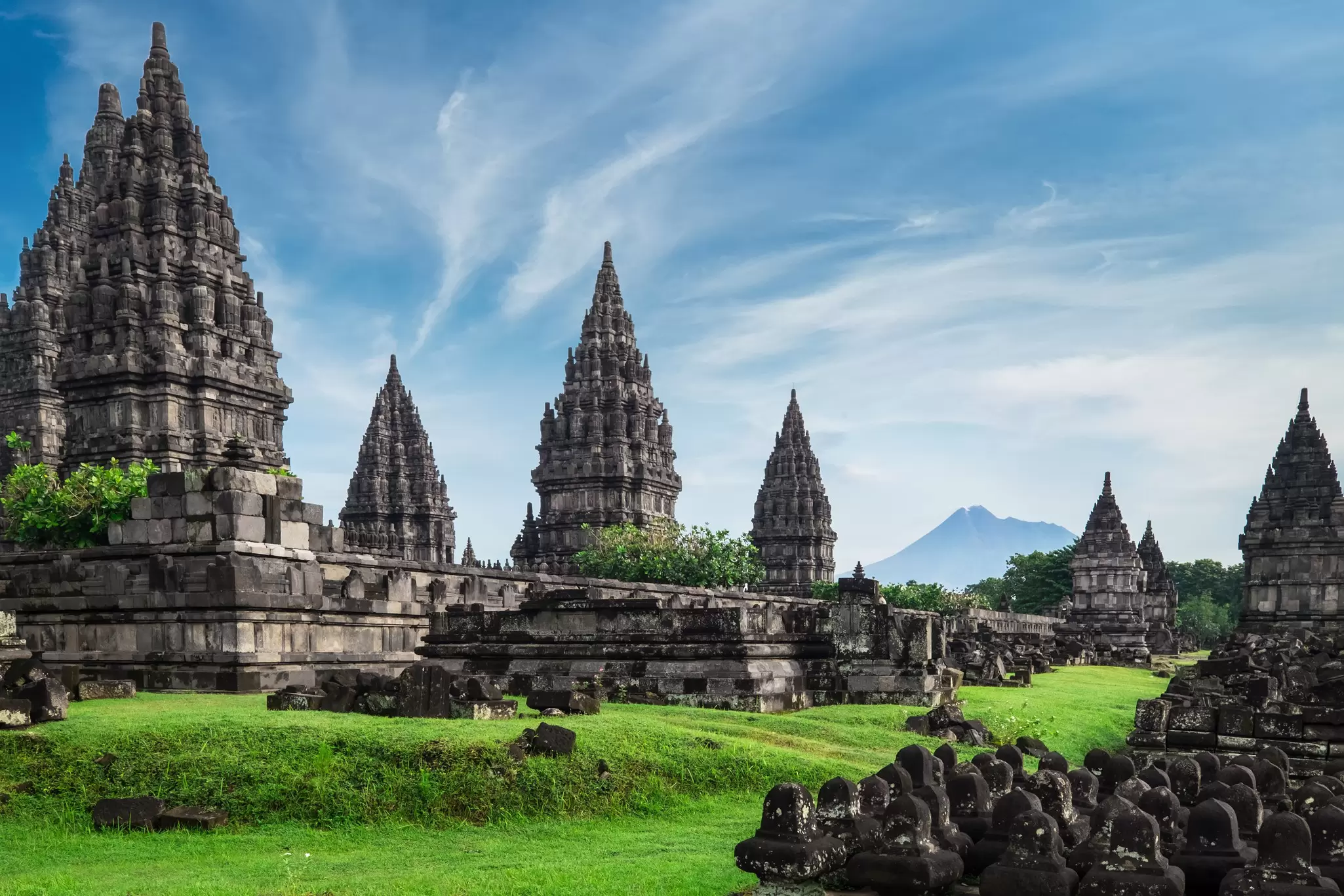
Much of the Prambanan complex still lies in ruins, the result of several large earthquakes over the past few hundred years. The main temples have been rebuilt, and restoration of the lesser temples is ongoing. Construction of the original temples was incredible, with no mortar or steel rods involved. Instead, every piece was carved to fit into its spot perfectly. Due to a lack of funding, only a few teams of builders and archaeologists are able to work at any one time, making the process painstakingly slow. It's estimated work on the entire complex will take over 200 years to complete.
The Prambanan Complex
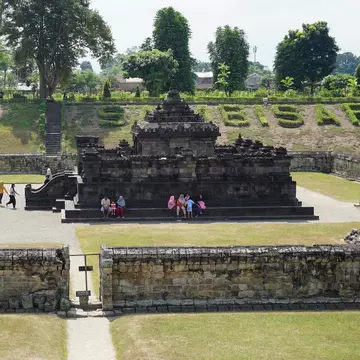
Away from the main complex lie three smaller temple complexes (many visitors are not aware of this unless they have a guide): Lumbung, Bubrah and Sewu. Exit the main temple complex on the side opposite where you entered, and follow the paved path towards the first temple. You have a few options to get around: on foot (it’ll take about 20 minutes to walk to Sewu, the furthest temple) or you can hire an electric scooter (15min 30,000Rp), a bicycle or tandem, golf cart, a Segway or scooter (per person 20,000Rp).
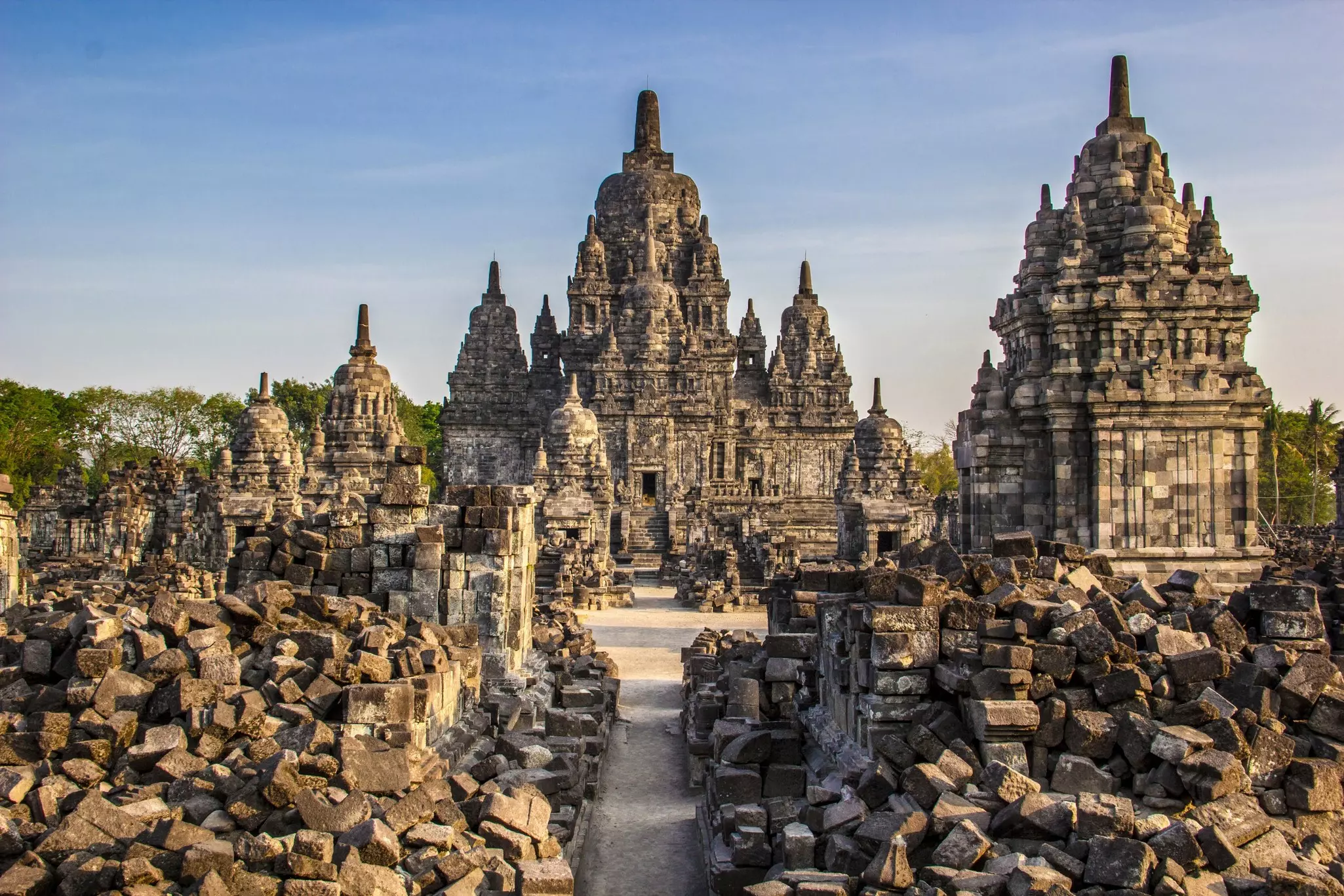
The last temple, Sewu, is the largest and most impressive, and is well worth investigating. Also around the complex you will find the Ramayana Ballet, an outdoor theater where dances with over 200 performers are held after sunset, with the Prambanan temples as a backdrop. To learn more about Prambanan, visit the Museum Candi Prambanan, which is home to artifacts, statues and fossils from the area.
And, if you purchase a combined Prambanan/Ratu Boko ticket (adult/child 675,000/450,000Rp), don’t miss Kraton Ratu Boko; though it’s not part of the complex, a shuttle service is included in the ticket price. These tickets are available at the gate, where you can also buy a combined ticket for Prambanan and Borobudur that's valid for two days (adult/child 750,000/450,000Rp).
The Local Legend
Local legend says that the complex was constructed by Prince Bandung Bondowoso, who fell in love with Princess Rara Jonggrang. The princess rejected his marriage proposal, and set him the impossible task of building 1000 temples in one night before she would agree. Thus he created the Prambanan complex overnight, with the assistance of demons conjured from the earth. The princess, aware of the feat, played a trick on him: she stopped him from completing his task by getting the roosters to crow early, heralding in sunrise. In anger he turned her to stone, and visitors can now see her, frozen for eternity in the image of Durga, in the north cell of the Shiva temple of Prambanan.
Hire a Local Guide
To get the most out of your experience, hire a local guide (150,000Rp) from inside the main entrance. A guide truly adds value to your visit, filling you in on the history of the temple and the stories the bas-reliefs tell. Guides know all the best spots and angles for photos, plus shortcuts between the temples and ruins – information that’s absolute gold on a hot day.