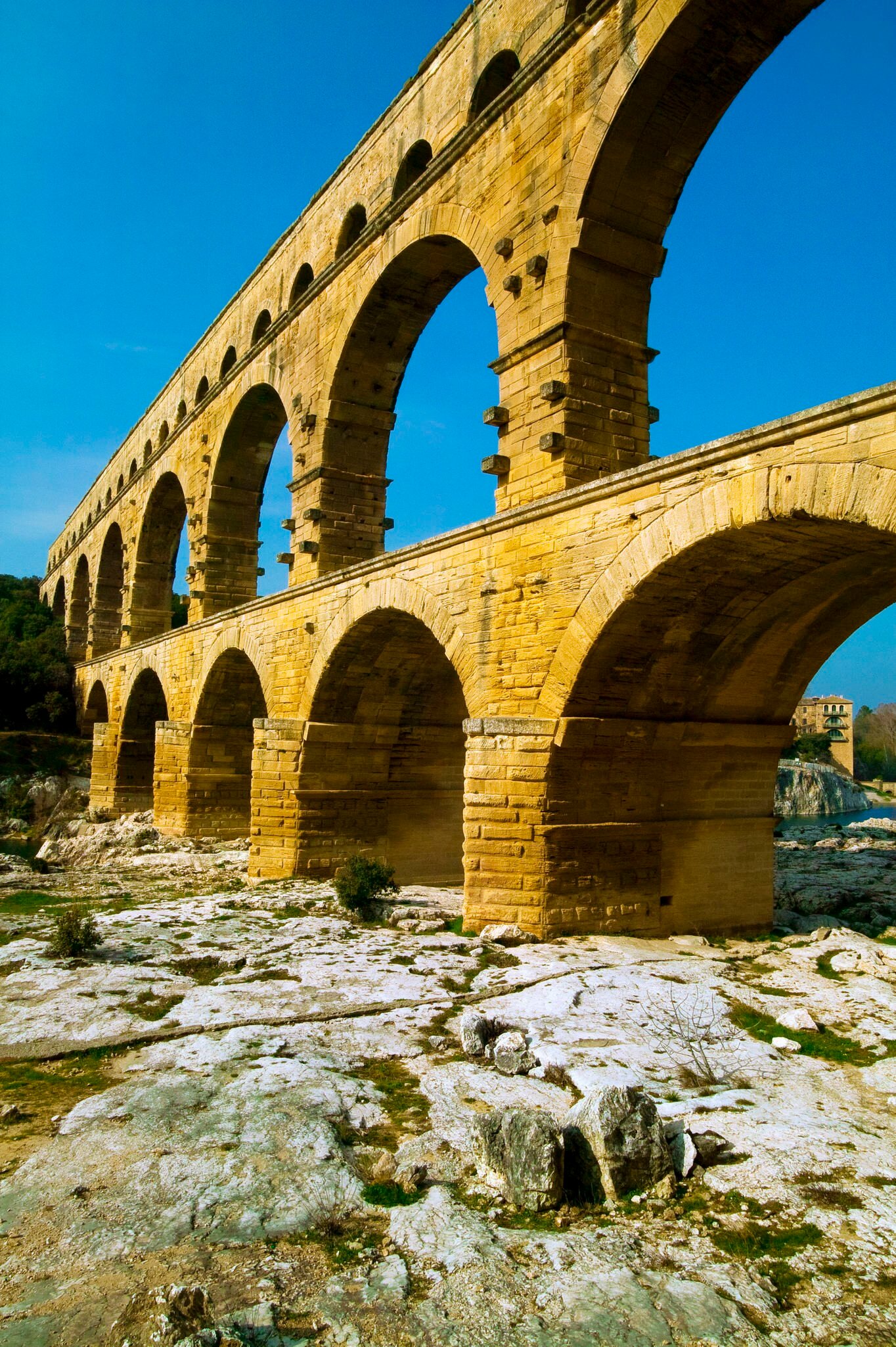
The extraordinary three-tiered Pont du Gard was once part of a 50km-long system of channels built around 19 BCE to transport water from Uzès to Nîmes. The scale is huge: the bridge is 48.8m high, 275m long and graced with 52 precision-built arches. It was the highest in the Roman Empire. At the visitors center on the left, northern bank, there's an impressive, high-tech museum featuring the bridge, the aqueduct and the role of water in Roman society.
Each block was carved by hand and transported from nearby quarries – no mean feat, considering the largest blocks weighed over 5 tonnes. The height of the bridge descends by 2.5cm across its length, providing just enough gradient to keep the water flowing – an amazing demonstration of the precision of Roman engineering.
You can walk across the tiers for panoramic views over the Gard River, but the best perspective on the bridge is from downstream, along the 1.4km Mémoires de Garrigue walking trail. If you buy the Pass Aqueduc, you can walk the bridge's topmost tier, along which the water flowed (guided tour). Guided tours onto the bridge's top level cost €6. For kids, there's the Ludo play area.
The site gets extremely busy in summer; early evening is a great time to visit, as admission is cheaper (adult/child €5/free) and the bridge is stunningly illuminated after dark. Entry to the site is included with the Pass Romanité and the four- and seven-day versions of the Nîmes Citypass.
It's 21km northeast of Nîmes, about a 30-minute drive.