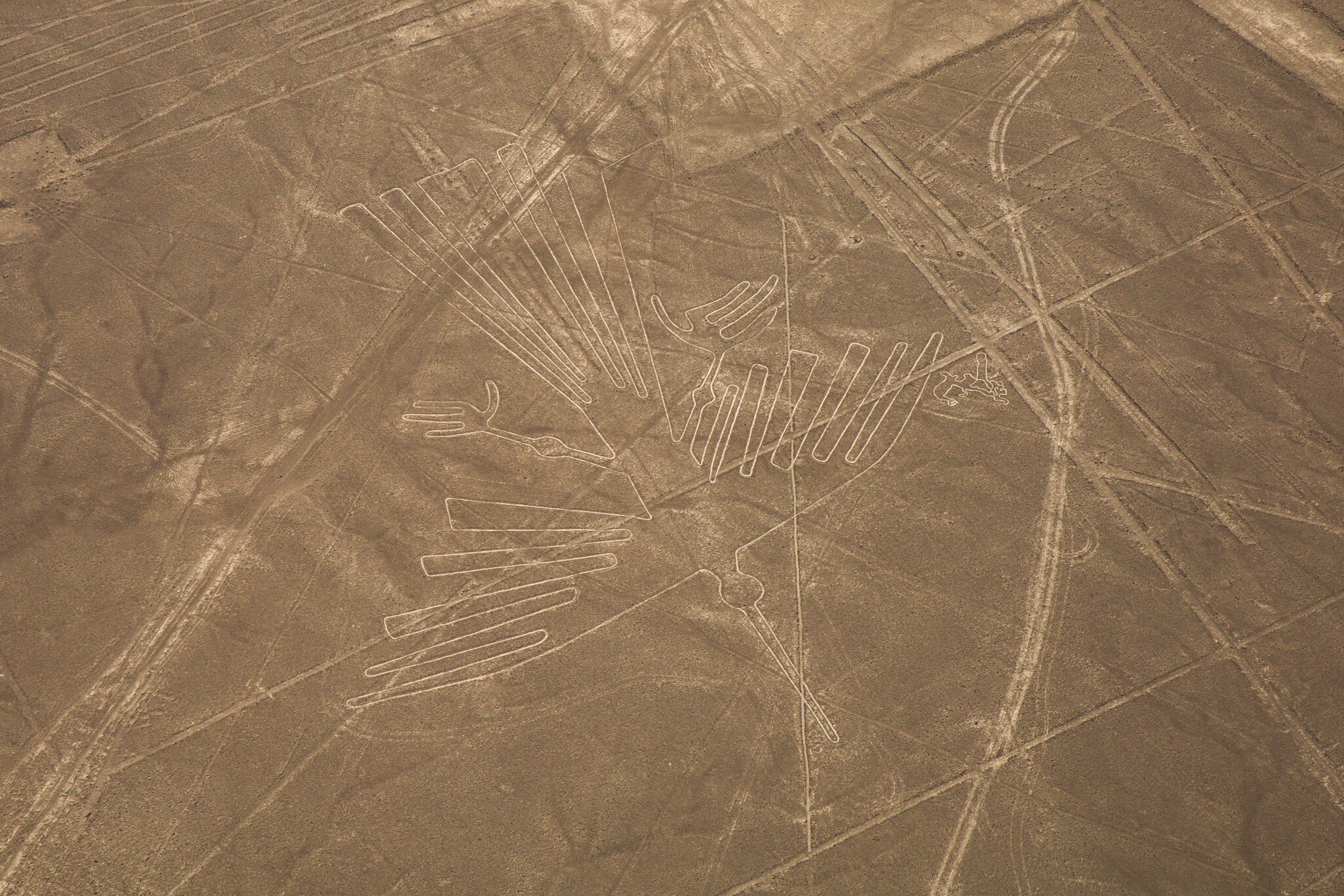
Splayed over 500 sq km of stark, rock-strewn plain, the UNESCO-listed Nazca Lines are an ancient alfresco canvas of more than 800 lines and 700-plus geoglyphs – geometrical figures and biomorphic drawings representing plants, animals and humans – that are almost imperceptible on the ground. From above, they form a striking network of stylized patterns best discerned on a sobrevuelo (overflight).
How the Nazca Lines Were Made
It is thought the Lines were mostly created by the Nazca culture between 450 and 600 CE. It is likely, however, that many were etched far earlier and hark back to at least 500 BCE. German archaeologist Maria Reiche, one of the most famous long-term researchers into the Lines, believed that some could date to as early as 900 BCE, making them the work of the earlier Paracas culture, too, with additions made by the Wari culture in the 7th century CE.
The Lines were made by removing the dark sun-baked stones from the surface of the desert and piling them up on either side of the Lines, thus exposing the lighter, powdery gypsum-laden soil below.
Shapes to Spot
While impressive, the 800-odd lines in the desert, extending for more than 1300km and with one line alone stretching for 24km, are not what most visitors come to see.
The most elaborate designs representing animals, plants and people are the most popular to see and are what most overflights focus on spotting. One of the longest is the 180m-long Lizard, while the Monkey has an extravagantly curled tail, the spiral possibly demarcating or celebrating a water source. The Condor has a 130m wingspan, and there's also the 97.5m-long Hummingbird, plus the Spider and the Dog. There is also the Tree and, among the human forms, the nine splayed digits of the Hands and a figure known as the Astronaut. The latter is so called because it seems to show a person with a goldfish-bowl-shaped head on a hillside, though plenty of other theories abound as to what this figure depicts, including a priest wearing a mask.
If you take an overflight above the Lines, the guide will likely point out all these figures and more. If you confine yourself to the land-based viewing tower on the Panamericana, you will see parts of the Lizard, the Tree and the Hands.
Fantastic Theories
Since their rediscovery in the 20th century, the Lines have attracted a huge amount of attention. Unsurprisingly, numerous theories as to their original purpose have developed. It's interesting to familiarize yourself with some of these before visiting the lines yourself to get your own cogs turning as to their function.
Reiche's theory was that they were a grand astronomical calendar created for agricultural purposes. However, the handful of alignments Reiche discovered between the sun, stars and lines were not enough to convince scholars.
A more down-to-earth theory, given the value of water in the sun-baked desert, was suggested by anthropologist Johann Reinhard, who believed that the Lines were involved in mountain worship and a fertility/water cult. Recent work by the Swiss-Liechtenstein Foundation (SLSA; slsa.ch) agrees that they were dedicated to the worship of water, and it is thus ironic that their theory about the demise of the Nazca culture suggests that it was not because of drought but destructive rainfall caused by a phenomenon such as El Niño.
English documentary maker Tony Morrison hypothesized that the Lines were walkways linking huacas (sites of ceremonial significance). Japanese archaeologist Masato Sakai, who has studied the lines for 30 years, expounds that the Lines and geoglyphs in themselves may have been used as ritual sites. Other slightly more surreal suggestions include that of explorer Jim Woodman, who held that the Nazca people knew how to construct hot-air balloons and that they did, in fact, observe the lines from the air. Or, if you believe author George Von Breunig, the Lines formed a giant running track.
Overflights over the Lines
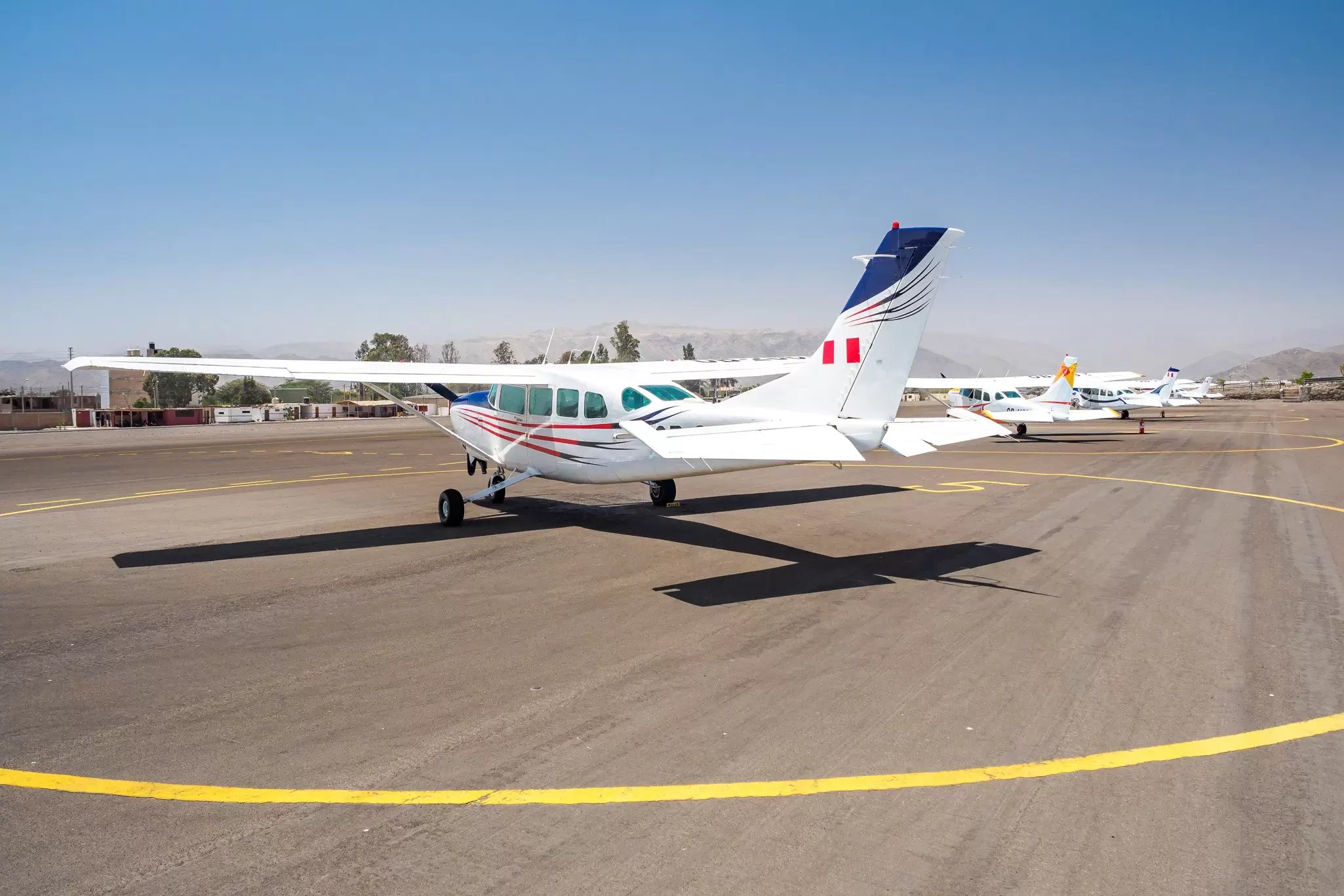
Overflights offer the only way to properly appreciate the Lines. While bad publicity wrecked Nazca Lines tourism during the early years of the 21st century, when several aircraft offering overflights of the giant desert drawings crashed, the response to this entailed implementing several changes to how flights work. Planes now fly with two pilots (one acting more as a guide that indicates specific geoglyphs to passengers), and more thorough safety inspections have been implemented. Prices have gone up to ensure that companies don’t cut corners with poorly maintained aircraft or overfilled flights.
Put safety over price when choosing a flight. Operators AeroNasca (aeronasca.com) and AeroParacas (aeroparacas.com.pe), are among those with long-standing good reputations. Book your flights online through their websites or at the offices at Nazca's Aeropuerto Maria Reiche Neuman. Flights cost US$80 to US$90, which buys you a 30- to 45-minute flyover. You also need to pay an S30 airport departure tax. There are places to buy refreshments at the airport. It's worth booking your tour several days in advance for peace of mind.
Another company with a good reputation, Aerodiana (aerodiana.com.pe), offers more expensive flights from Aeropuerto Capitán FAP Renán Elías Olivera near El Chaco.
Land-Based Line-Looking
The cost of a flight may be a prohibitive factor for some. For budget visits to the Lines, the mirador (S3, 6am-6pm), a viewpoint on the Panamericana 20km north of Nazca, offers a solution. This viewing tower provides an oblique view of three figures: the Lizard, the Tree and the Hands. It’s also a lesson in how vulnerable the Lines are to damage. The Panamericana Sur runs right through the tail of the Lizard, which from nearby seems all but obliterated.
To get to the observation tower from Nazca, catch any bus, combi or colectivo bound north for Ica along the Panamericana (S3, 30 minutes).
Heed signs near the viewpoint warning that walking on the Lines is strictly forbidden.
Palpa Lines
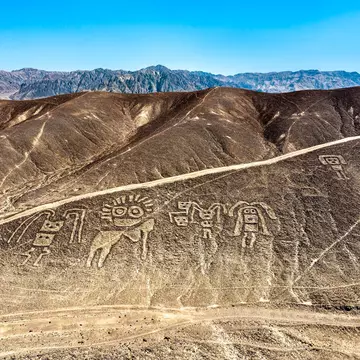
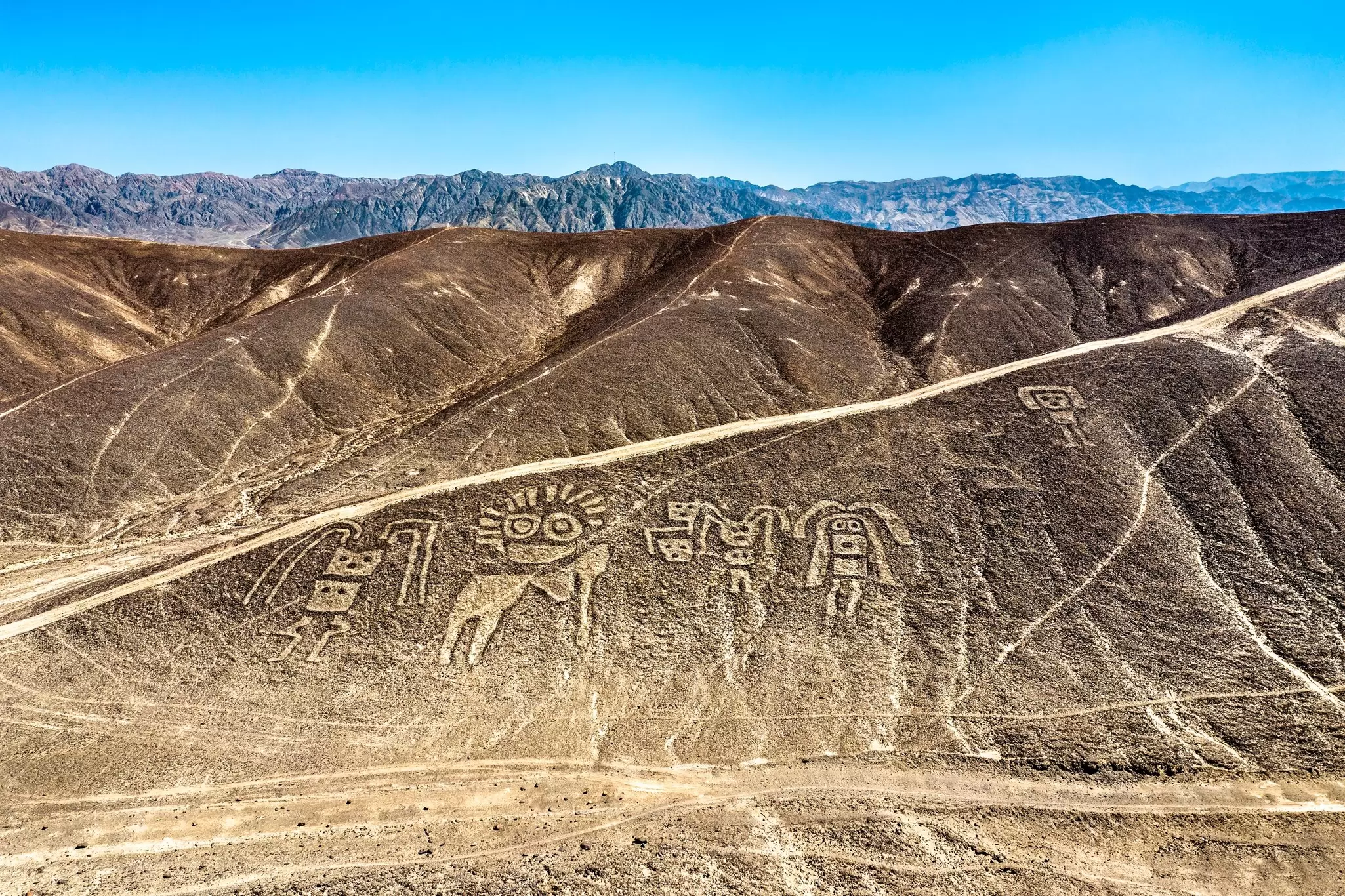
Palpa, 50km northwest of Nazca, is similarly surrounded by perplexing geoglyphs, the so-called Palpa Lines. Serially overshadowed by the Nazca Lines, the Palpa Lines display a greater profusion of human forms, including the Familia Real de Paracas, a group of eight figures on a hillside.
View some of the Lines from terra firma at the Palpa Lines Mirador, a signposted lookout 8km south of Palpa, where a small museum hut offers further explanations in English and Spanish. However, the best way to see these lines is on an overflight from Nazca combined with the Nazca Lines. Ask operators if they include the Palpa Lines on their itineraries.