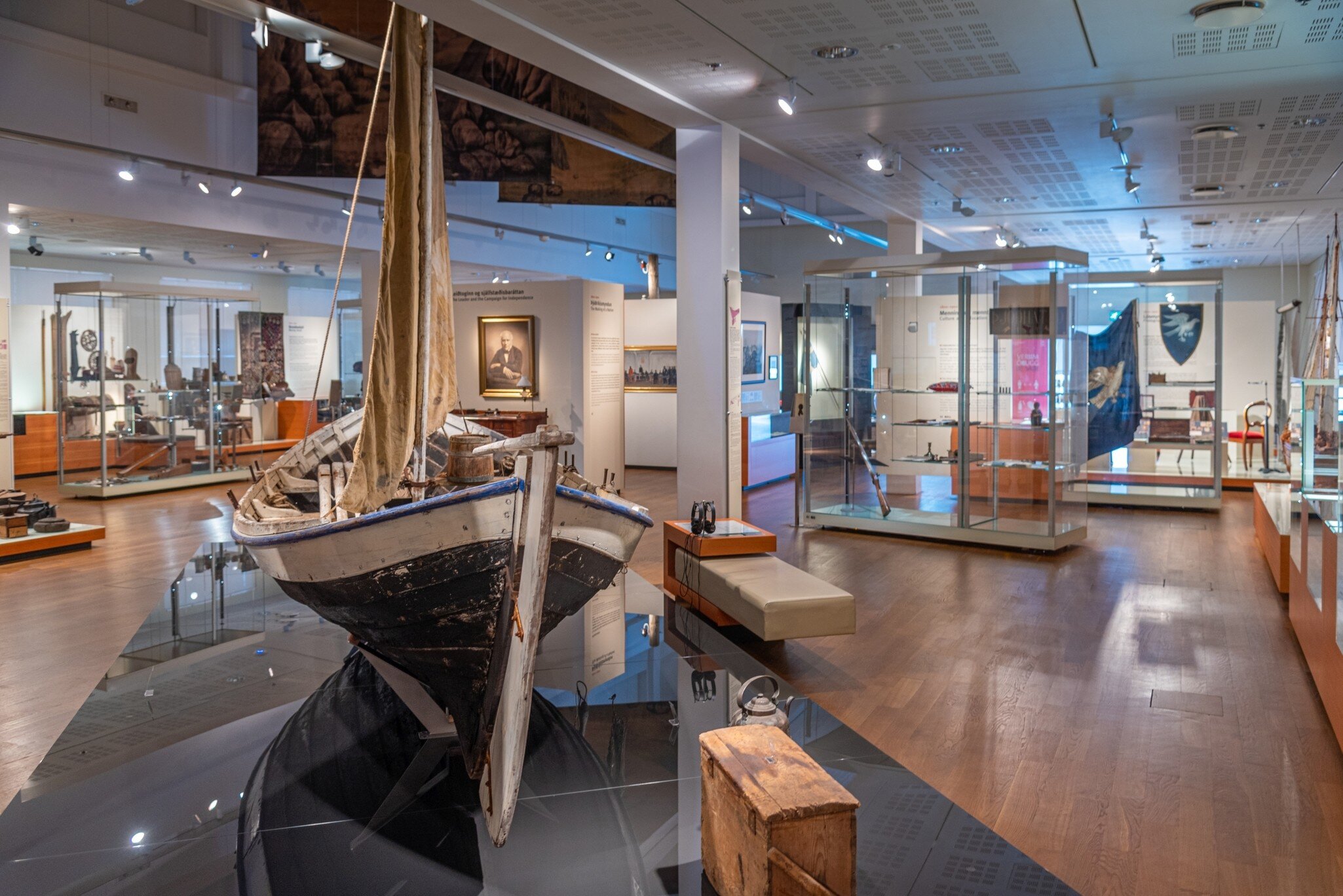
The superb National Museum of Iceland provides a meaningful overview of Iceland’s history and culture. You'll see how this wild volcanic island over 600km from its closest neighbor became a country. Brilliantly curated exhibits lead you through the struggle to settle the forbidding island, the radical changes wrought by the introduction of Christianity, the lean times of domination by foreign powers and Iceland’s eventual independence.
Settlement-Era Finds
The premier section of the museum describes the Settlement Era – including the rule of the chieftains and the introduction of Christianity.
The Age of Settlement is traditionally defined as between 870 and 930, when political strife on the Scandinavian mainland caused many to flee. Most North Atlantic Norse settlers were ordinary citizens: farmers and merchants who settled across Western Europe, marrying Britons, Westmen (Irish) and Scots.
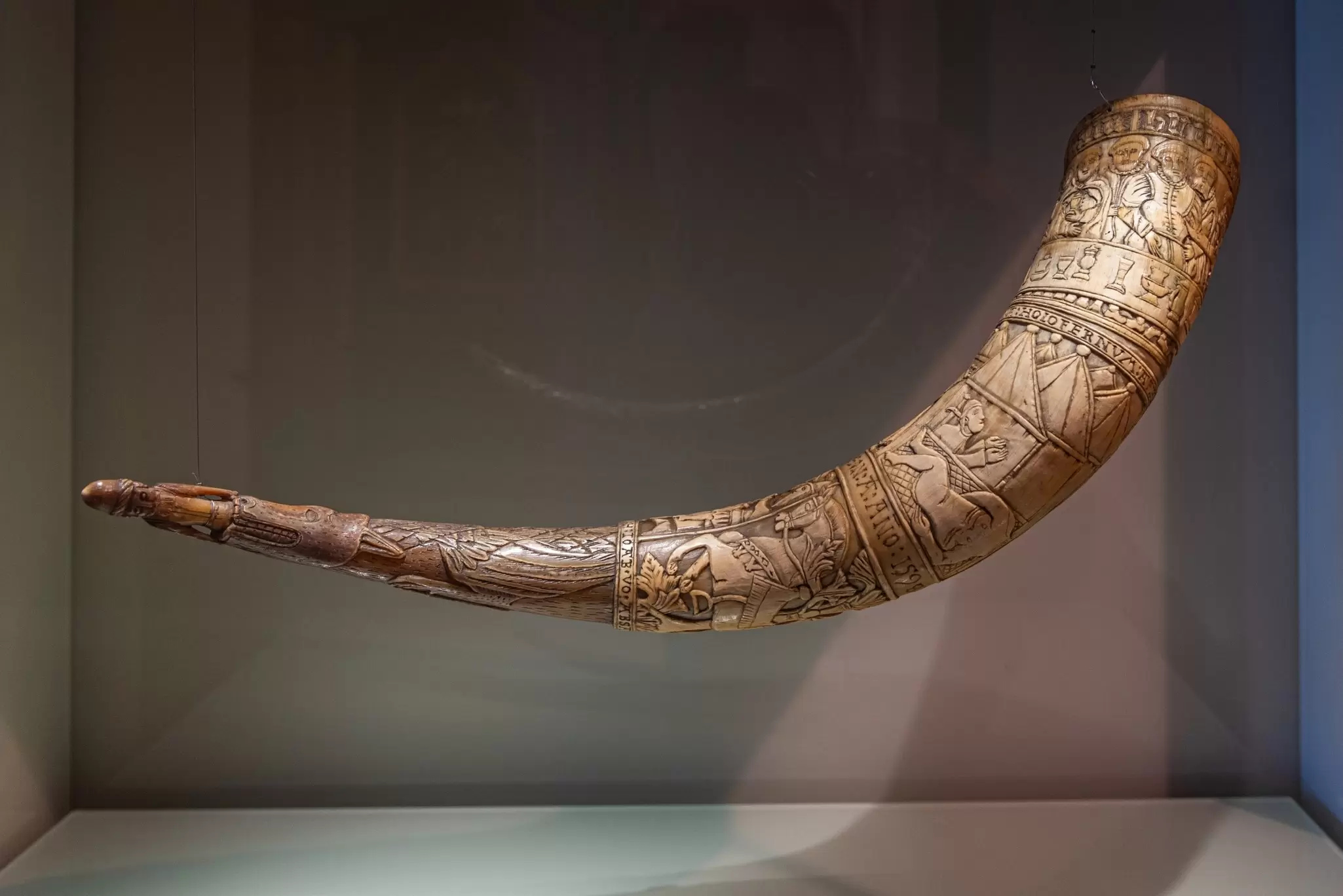
Start with a look at the kind of ship medieval explorers would have used on their journey to Iceland. Displays in this part of the museum feature swords, drinking horns, silver hoards and the most prized item: a tiny Eyrarland bronze statue from around 1000 CE, widely understood to represent the Norse god Thor with his hammer.
Exhibits explain how the chieftains ruled and how people survived on little, lighting their dark homes and fashioning bog iron. There’s everything from the remains of early skyr (an Icelandic cheese that's like yoghurt) production to intricate pendants and brooches. Look for the Viking-era hnefatafl game set (a bit like chess). This artifact’s discovery in a grave in Baldursheimar led to the founding of the museum.
Viking Graves
Look down! Encased in the floor are Viking-era graves with precious burial goods: horse bones, a sword, pins, a ladle, a comb. One of the tombs containing an eight-month-old infant is the only one of its kind ever found.
Among Iceland’s first Norse visitors was Norwegian Flóki Vilgerðarson, who uprooted his farm and headed for Snæland around 860. He navigated with ravens, which, after some trial and error, led him to his destination and provided his nickname, Hrafna-Flóki (Raven-Flóki). Hrafna-Flóki sailed to Vatnsfjörður on the west coast but became disenchanted with the conditions. On seeing the icebergs in the fjord he dubbed the country Ísland (Iceland) and returned to Norway. He did eventually settle in Iceland’s Skagafjörður district.
Christian Artifacts
Reykjavík remained just a simple collection of farm buildings for centuries. In 1225 an important Augustinian monastery was founded on the offshore island of Viðey, although this was destroyed during the 16th-century Reformation.
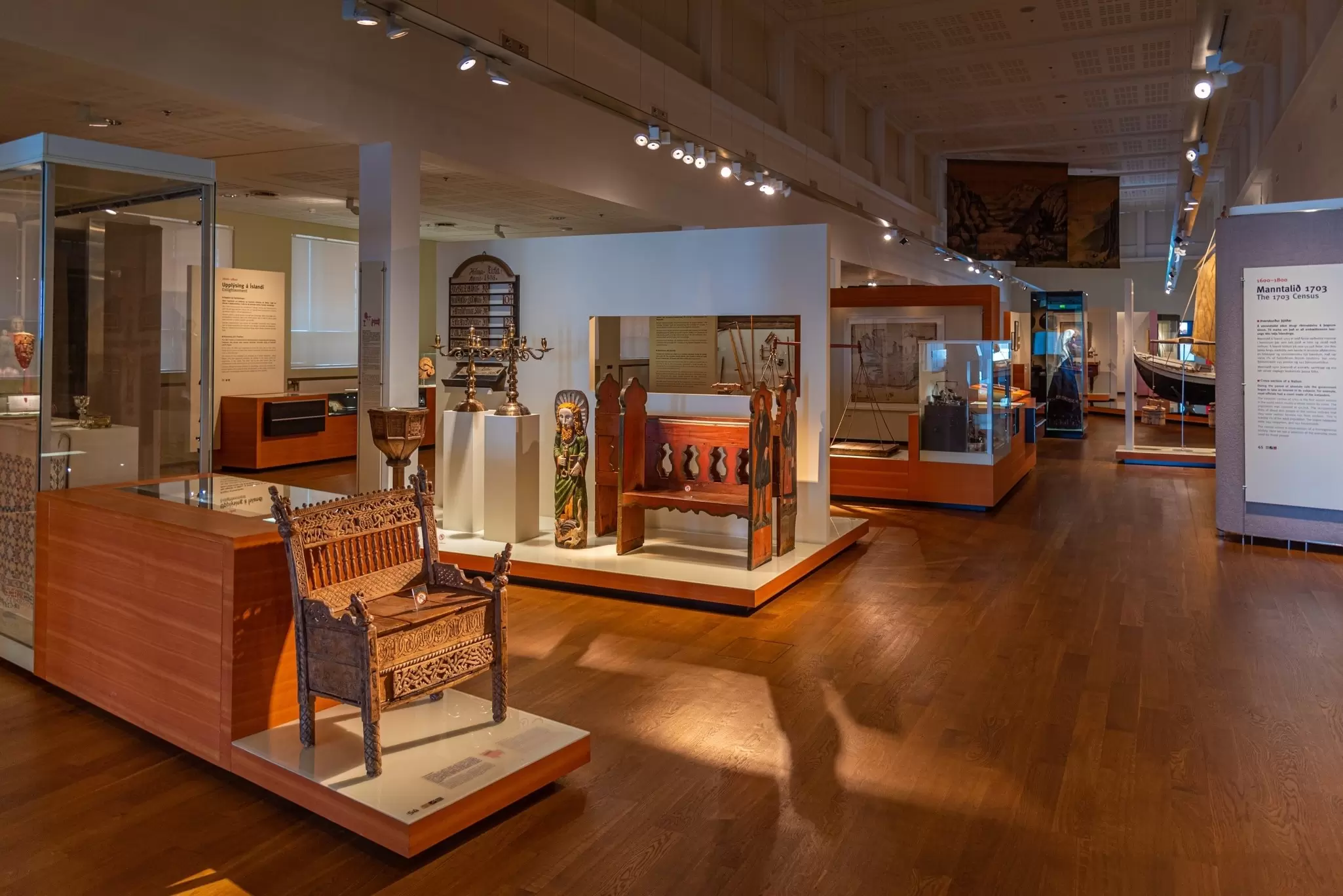
The section of the museum that details this introduction of Christianity is chock-a-block with rare art and artifacts. Make sure to seek out the priceless 13th-century Valþjófsstaðir church door carved with the story of a knight, his faithful lion and a passel of dragons. There’s also Guðbrandur’s Bible. The Bible was the first book printed and widely distributed in Iceland. About 500 copies were printed, and this one still has its original binding intact.
The Modern Era
Upstairs, collections span from 1600 to today and give a clear sense of how Iceland struggled under Danish rule, developed a constitution then home rule, and finally gained independence on 17 June 1944, before going on to modernize.
Simple objects use every scrap of materials – check out the gaming pieces made from cod ear bones, and the wooden doll that doubled as a kitchen utensil. Also look for the perfectly preserved papers and belongings of Jón Sigurðsson (1811–1979), the architect of Iceland’s independence.