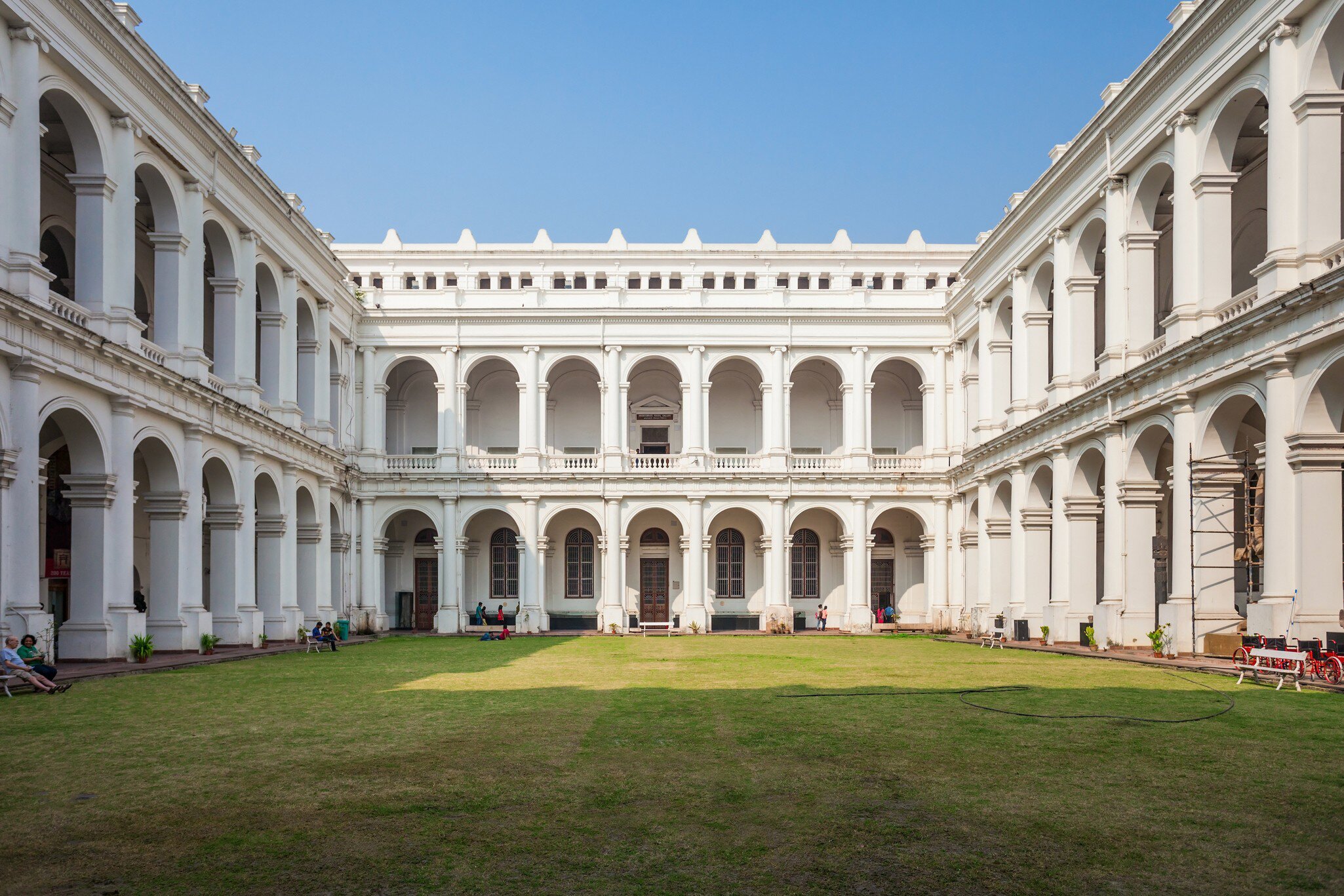
A deep legacy of Indian architecture and artistry is on display at what is billed as one of the country’s premier museums. Opened in 1814 by the Asiatic Society, the broad remit of the collection at the Indian Museum (indianmuseumkolkata.org; ₹500) includes a woolly mammoth skeleton, artifacts recovered from the Buddhist 1st century BCE site of Bharhut, and an Ancient Egyptian mummy. No wonder it’s known locally as Jadu Ghar (The House of Magic).
Ground-floor highlights include artifacts from Bodhgaya, a numismatics room with an impressive silver coin (c 336–23 BCE) featuring Alexander the Great atop his horse Bucephalus, and various Hindu sculptures from around the country. The series of Mughal miniatures in the upper floor’s Painting Gallery are the highlight of the museum’s art holdings, providing a glimpse at daily palace life behind the royal walls.
There are some oddball exhibits, too, such as 7kg of rings and bangles found in the tummy of a gigantic crocodile. No bags are allowed inside. Hand carriages can be stored at the entrance, but don’t arrive with a big backpack. Avoid visiting on Sundays or public holidays, when the place can be packed with local tourists and playful children's groups.
Although it's a large museum, you're unlikely to need more than a few hours here.