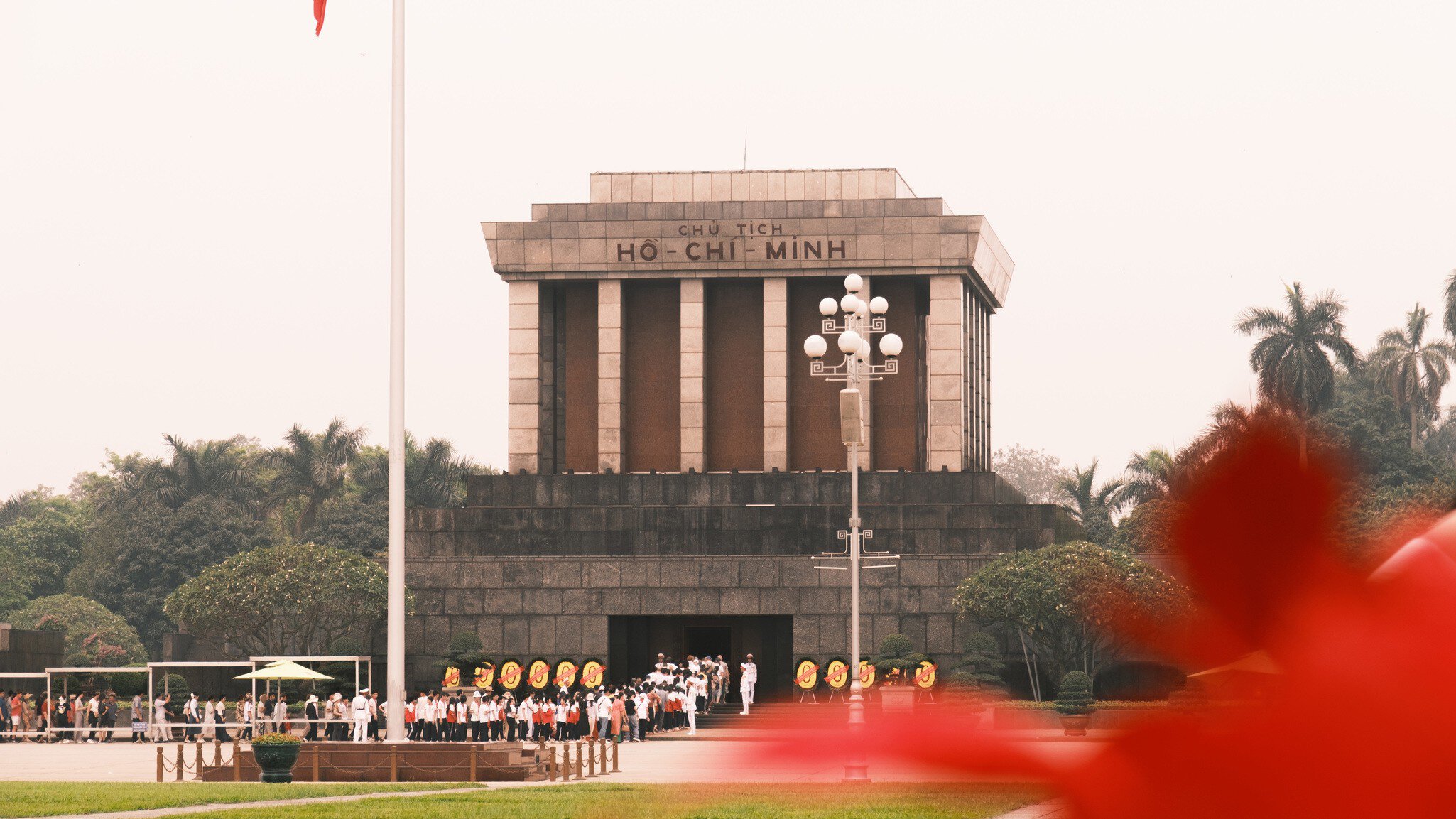
The Ho Chi Minh Mausoleum complex in Ba Dinh Square is a solemn tribute to Vietnam's revolutionary leader. This sprawling site houses the preserved body of Ho Chi Minh, alongside museums, gardens and his modest stilt house.
Ho Chi Minh’s Mausoleum In the tradition of Lenin, Stalin and Mao, Ho Chi Minh’s Mausoleum(bqllang.gov.vn; free entrance) is a monumental marble edifice. Contrary to Ho Chi Minh’s desire for a simple cremation, the mausoleum was constructed from materials gathered from all over Vietnam between 1973 and 1975. Set deep in the bowels of the building in a glass sarcophagus is the frail, pale body of Ho Chi Minh. The mausoleum can be closed for large chunks of the year for maintenance, but generally opening times are most mornings except Mondays and Fridays. Talking, photography, shorts, sleeveless T-shirts or hats strictly prohibted.
If you’re lucky, you’ll catch the changing of the guard outside the mausoleum – the pomp and ceremony displayed here almost rivals the British equivalent at Buckingham Palace in London.
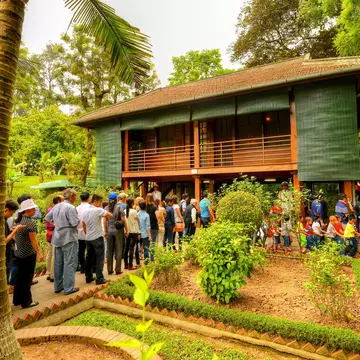
Ho Chi Minh's Stilt House
This humble, traditional Ho Chi Minh’s Stilt House(admission/audio guide 40000/50000d) where Ho lived intermittently from 1958–69 is set in a well-tended garden adjacent to a carp-filled pond and has been preserved just as Ho left it. The clear views through the open doorways and windows permit fascinating insights into his everyday life. Visitors may wander the grounds, strolling along the Mango Path where Ho Chi Minh used to go for a walk every day, and visiting House 54 where he lived and worked from 1954–58, before moving into the stilt house.
Ho Chi Minh Museum
The huge concrete Soviet-style Ho Chi Minh Museum(entry 40,000d) is a triumphalist monument dedicated to the life of the founder of modern Vietnam. The often-confusing exhibition is a mixed bag; highlights include mementos of Ho’s life, and some fascinating photos and dusty official documents relating to the overthrow of the French and the onward march of revolutionary socialism.
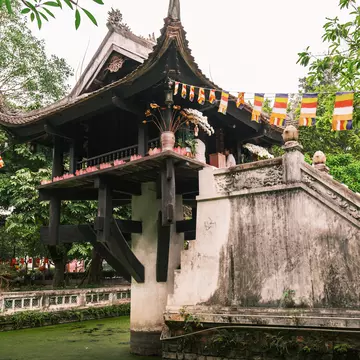
One Pillar Pagoda
The One Pillar Pagoda is exactly that: a pagoda that is supported, rather elegantly, by a singular pillar that rises from a lotus pond. It was originally built by Emperor Ly Thai Tong, who ruled from 1028 to 1054. According to the annals, the heirless emperor dreamed that he met Quan The Am Bo Tat, the Goddess of Mercy, who handed him a male child. Ly Thai Tong then married a young peasant girl and had a son and heir by her. As a way of expressing his gratitude for this event, he constructed a pagoda here in 1049.
Presidential Palace & Ba Dinh Square
The Presidential Palace is an opulent restored colonial mansion that was flung up in 1906 as the Palace for the Governor General of Indochina. The yellow beaux-arts palace is now used for official receptions and isn’t open to the public, but Ba Dinh Sq in front makes for pleasant (but shadeless) wandering. This is where Ho Chi Minh declared independence for Vietnam to a crowd of half a million in 1945 and it has been the political heart of the city since.
Botanical Garden
French landscape gardeners designed the Botanical Garden(admission 5000-15,000d), which occupies a large plot behind the Presidential Palace, in 1890. After the French defeat, the new government opened the park to the public and it’s been popular with the athletically inclined (badminton players in particular) ever since.