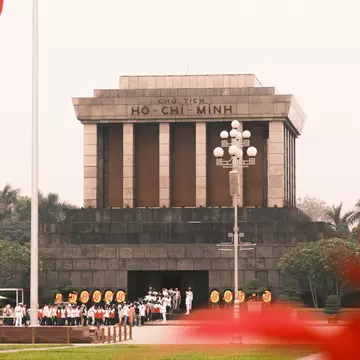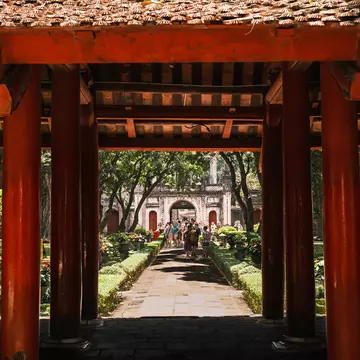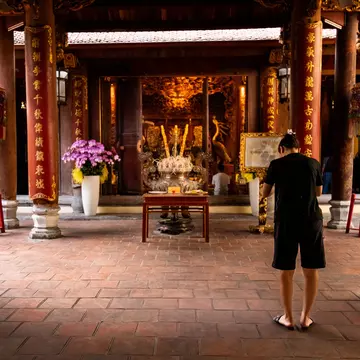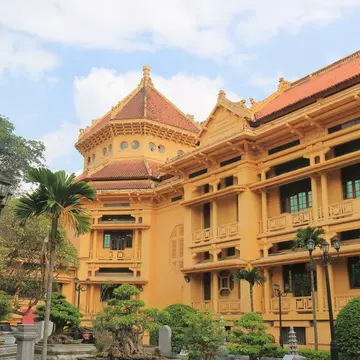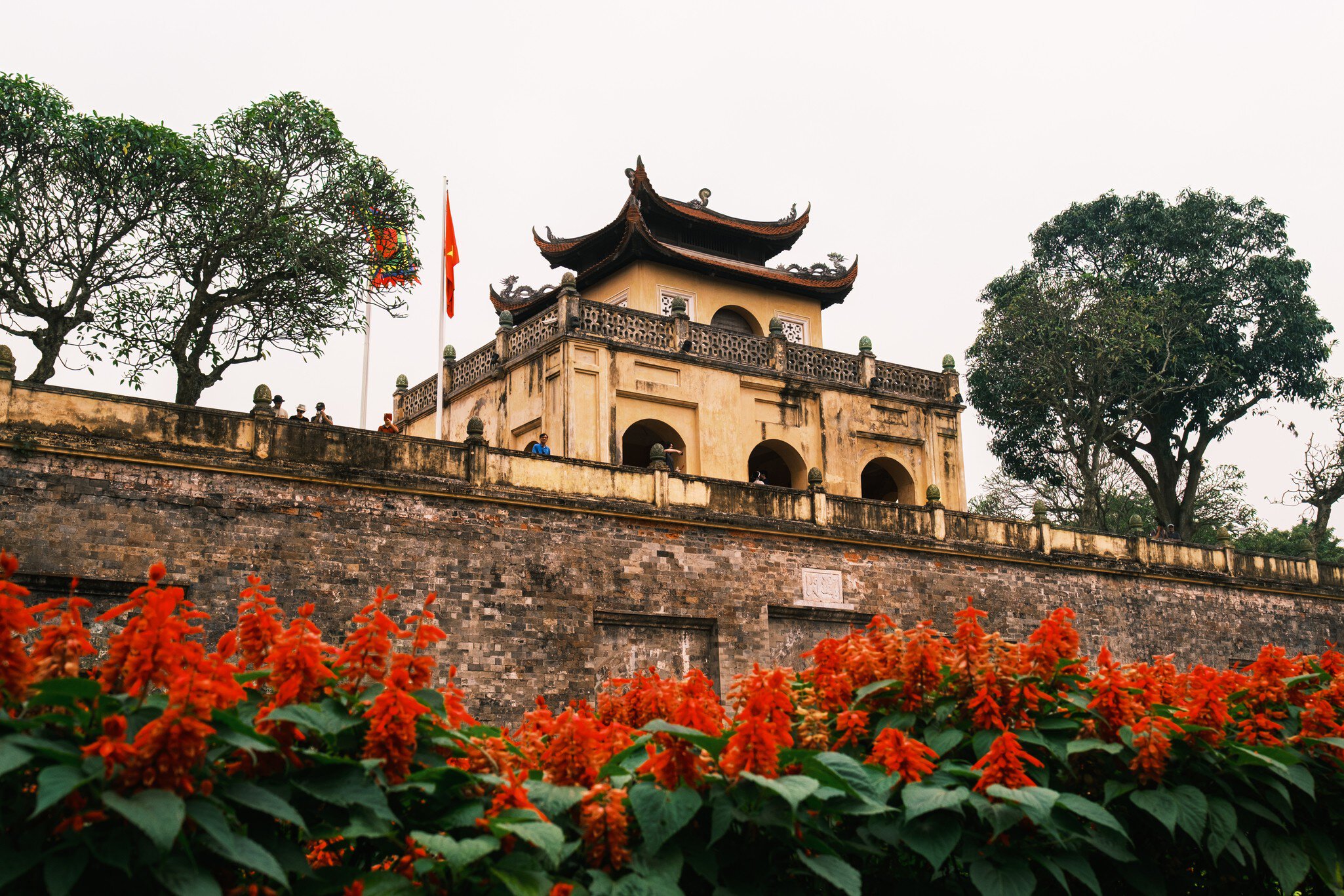
Added to UNESCO’s World Heritage List in 2010, the Imperial Citadel of Thang Long Complex was the hub of Vietnamese military power for over 1000 years. Ongoing archaeological digs continue on site, revealing remains of ancient palaces, grandiose pavilions and imperial gates.
Hanoi Flag Tower (Ky Dai)
Begin the journey of the Imperial Citadel of Thang Long Complex at Hanoi Flag Tower, one of the city’s symbols. Built under the Nguyen Dynasty from 1805–12, the 33.4m-high pillar includes three levels of base, body and watchtower. Inside the tower is a spiral staircase leading to the top for panoramic views.
Doan Mon
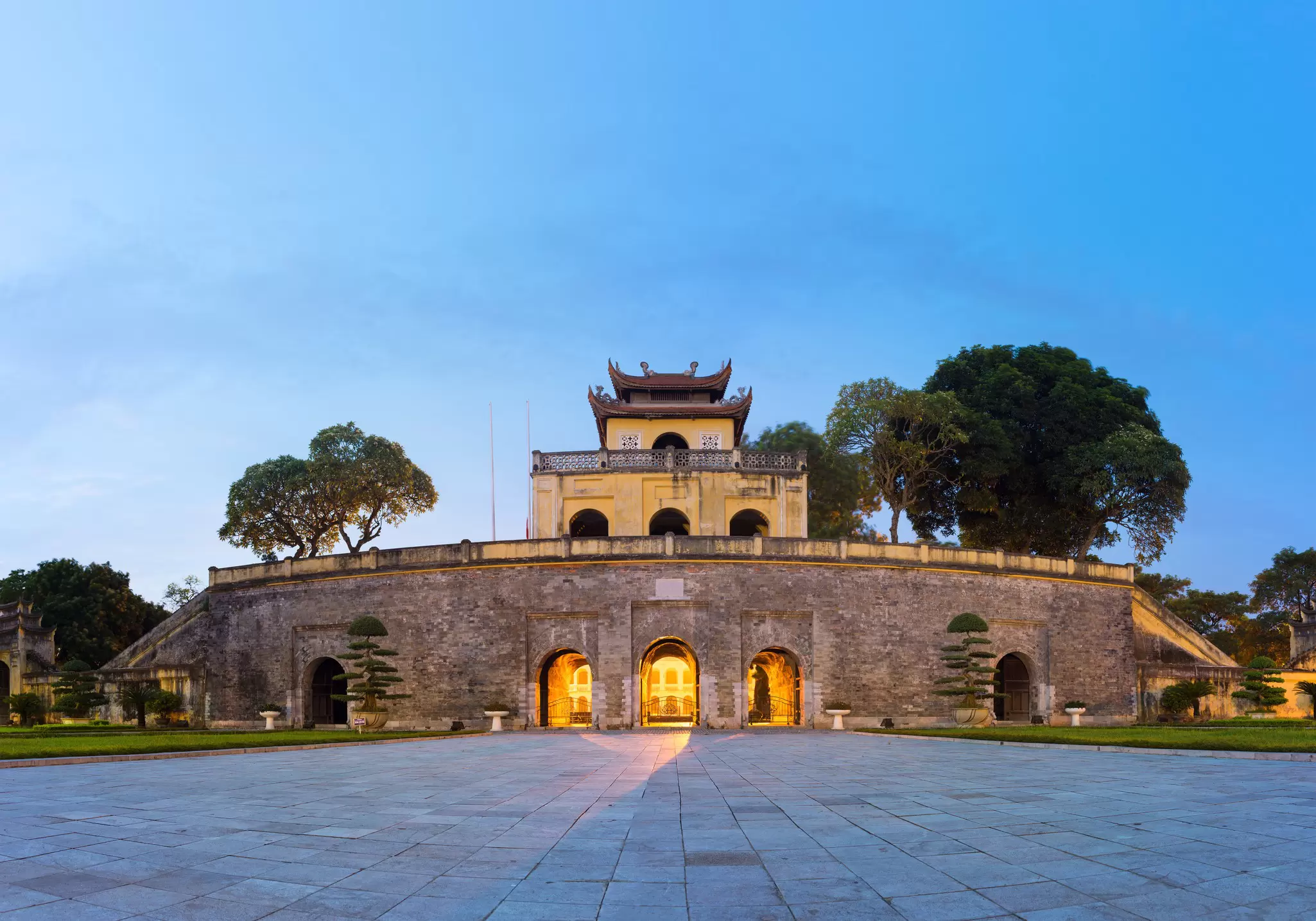
Named after its counterpart in Beijing's Forbidden City, Doan Mon is the Imperial Citadel's impressive main gate. Dating back to the 15th Ly Dynasty, it was later renovated by the Nguyen Dynasty in the 19th century. Positioned in the southern city wall, Doan Mon features five doorways. The grand central door was reserved exclusively for the king, while the four flanking entrances served mandarins and royal family members.
Upon entering through Doan Mon, you'll encounter the archaeological foundation unearthed in 1998–99, revealing layers of history: 1.2m deep from the early Le Dynasty; 1.9m from the Tran Dynasty; and 2m from the Ly Dynasty.
Kinh Thien Palace
Cross the expansive Long Tri courtyard to reach Kinh Thien Palace, the heart of the Imperial Citadel complex. Constructed in 1428, Kinh Thien Palace witnessed the coronation of King Le Thai To and later served as the venue for grand royal ceremonies and receptions. Today, only the foundation and two ornate stone dragon steps remain.
While passing the courtyard, remember to visit the exhibit "Treasures of Royal Thang Long," introducing antiques excavated at the Imperial Citadel from 2002 to present.
Lady Pavilion (Hau Lau)
Built after the Later Le Dynasty, Lady Pavilion initially housed queens and princesses. During the Nguyen Dynasty, it became a residence for imperial concubines and royal entourage. This brick palace features a rectangular base with a multi-tiered structure. Its roof, designed in traditional Vietnamese style with crescent blades, is made of brick and concrete but covered with tiles.
North Gate (Cua Bac)
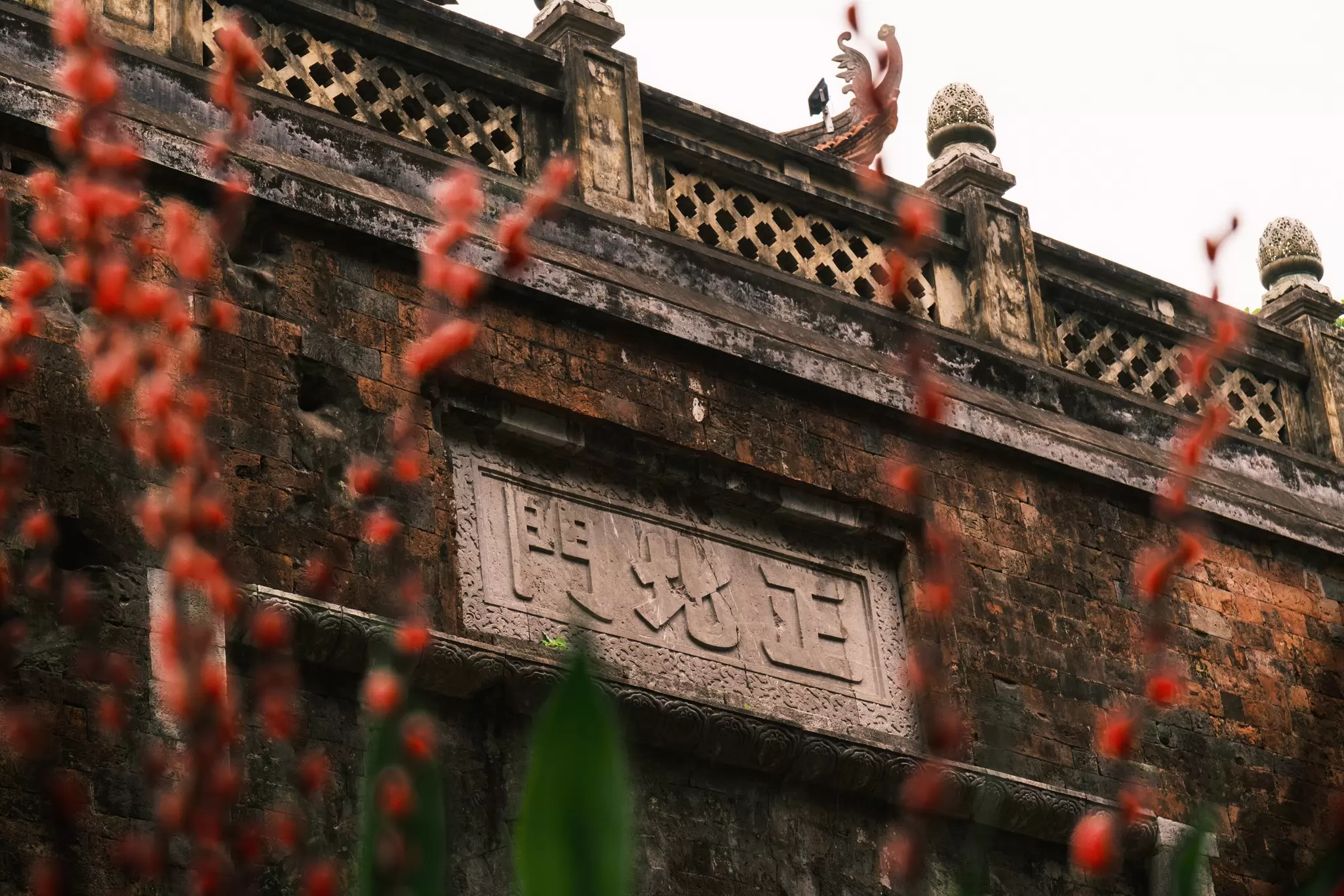
Completed in 1805, North Gate is the sole surviving entrance of Hanoi's ancient citadel from the Nguyen Dynasty. This unique structure follows a gazebo style, with a fortified base supporting an upper floor. Today, the upper level serves as a shrine honoring Governors Nguyen Tri Phuong and Hoang Dieu, who valiantly defended the citadel alongside Hanoi's citizens to the death.
D67 Revolutionary House
Fascinating military command bunkers from the American War (built in 1967) – complete with maps and 1960s communications equipment – used by the legendary Vietnamese general Vo Nguyen Giap.
Archaeological Site 18 Hoang Dieu
Cross P Hoang Dieu to explore the archaeological site where relics from various dynasties over 1300 years have been discovered. These relics, unique in their continuous overlay, contribute significantly to the area’s value. The deepest layer, from the Early Thang Long period (Dai La), includes wooden columns, foundations, sewers, wells, and artifacts from the 7th-9th centuries. Above this, the Ly-Tran Dynasties (11th-14th centuries) layer features stone pillar foundations, brickyards, sewers and roof ornaments.
Traces of the Dinh-Early Le Dynasties (10th century) are also present. The top layer, from the Le Dynasty (15th–18th centuries), contains remnants of wooden-hammer brick architecture, well systems and decorative tiles. Some areas also have traces of the Nguyen Dynasty (19th–20th centuries).