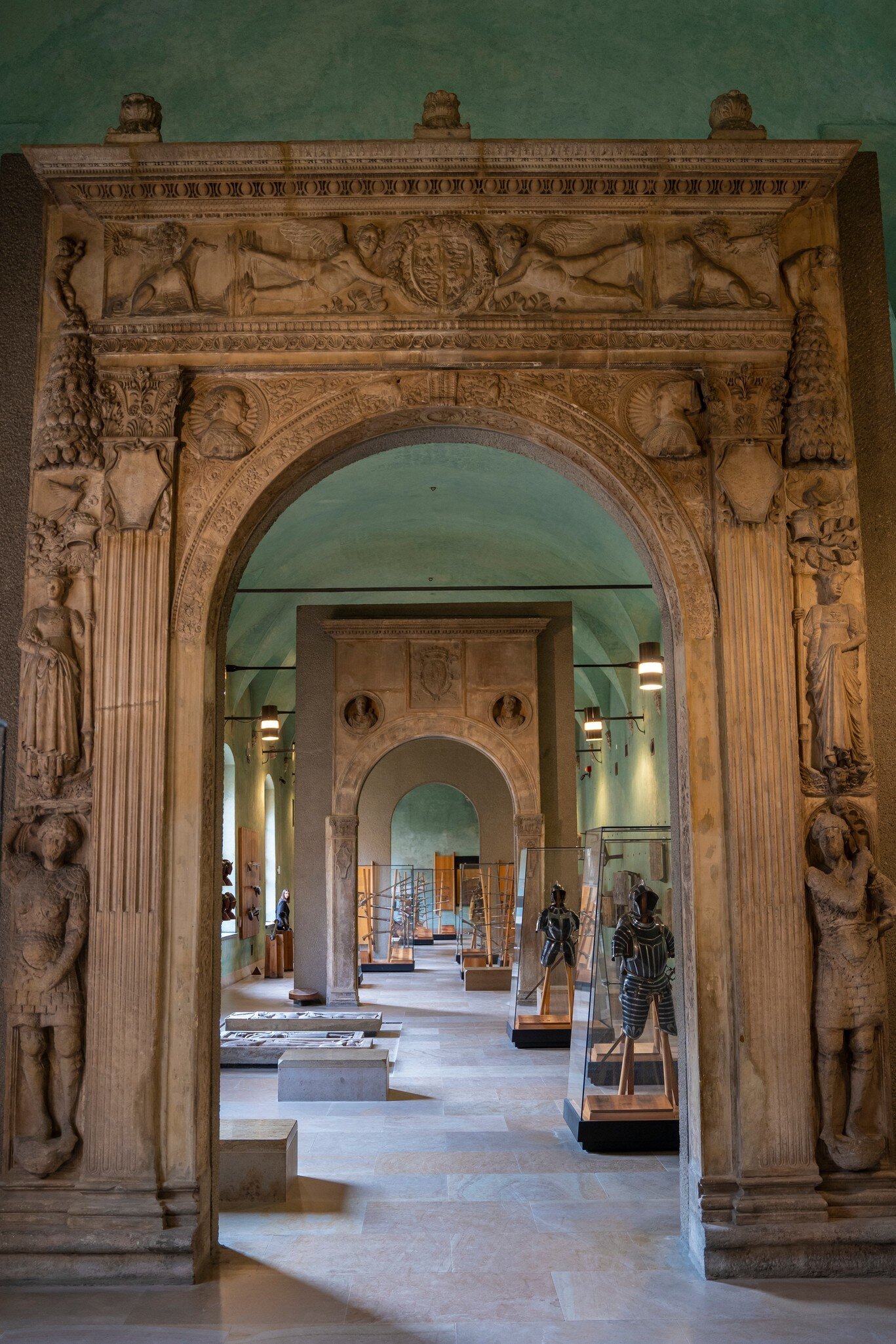
Lording over Parco Sempione's southeast side, red-brick Castello Sforzesco was home to the mighty Sforza dynasty that ruled Renaissance Milan.
Its defenses were designed by da Vinci; Napoleon later drained the moat and removed the drawbridges. Today it shelters seven museums, showcasing parts of Milan’s cultural and civic history, from the medieval equestrian tomb of Bernabò Visconti to Michelangelo’s Rondanini Pietà.
Musei d'Arte Antica
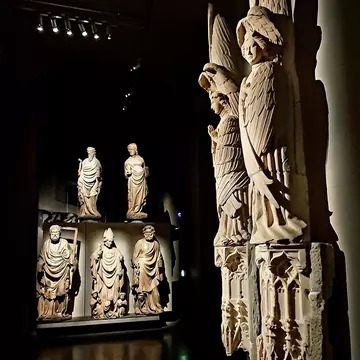
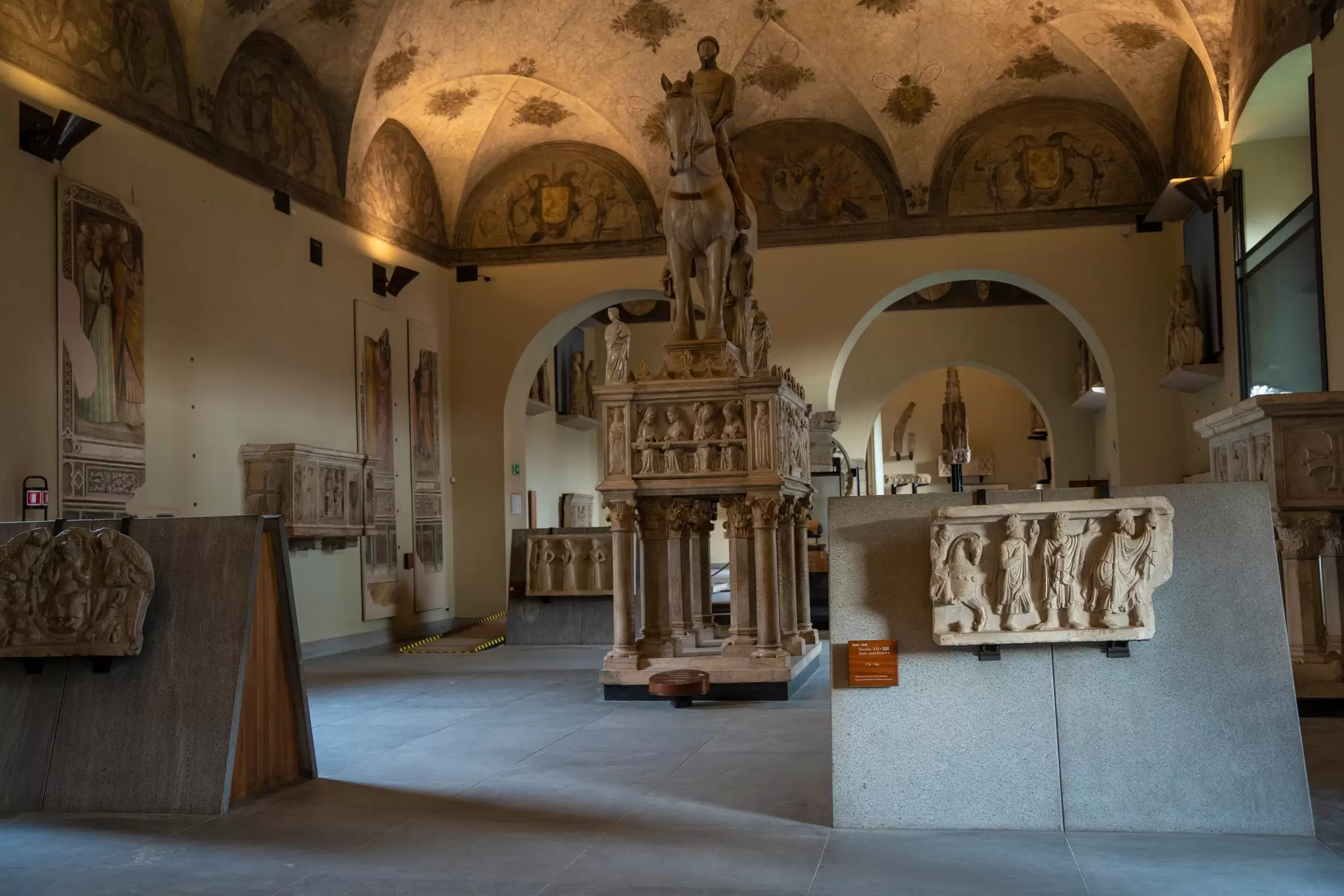
Housed in the frescoed ducal apartments, the Museum of Ancient Art has a stellar medieval collection. From paleo-Christian frescoes to the fine equestrian tomb of Bernarbò Visconti and sculpted reliefs depicting Milan’s triumph over Barbarossa, the artworks relate the murderous and ambitious story of Italy’s first city comune.
Da Vinci frescoed the octagonal ceiling of the Sala delle Asse (room VIII) while other rooms sport heraldic coats of arms. In Room VI is the tremendous 5m-high Gonfalcon (ensign) of Milan which depicts St Ambrose embroidered in gold thread, pearls and rubies.
Rondanini Pietà
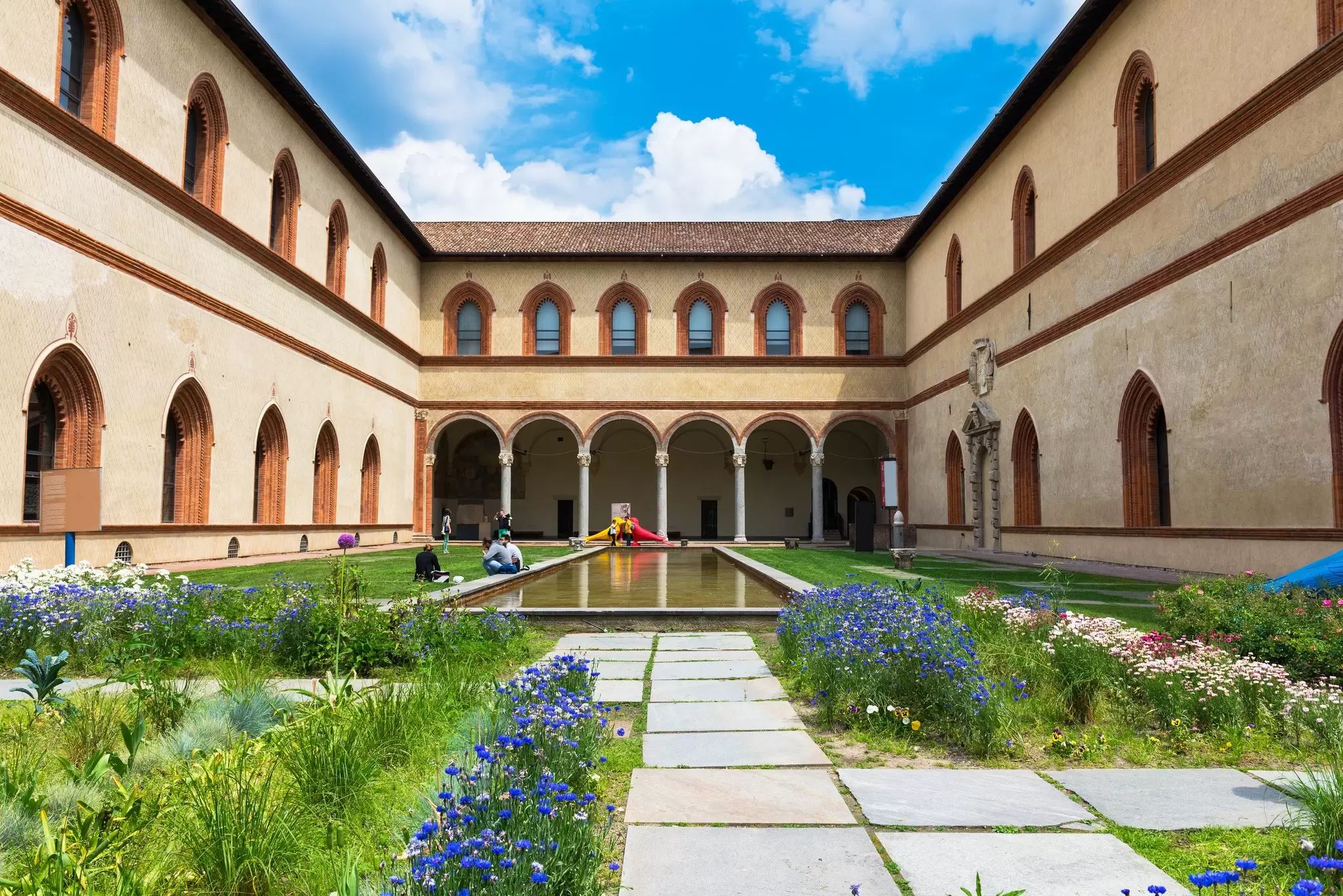
Named for the Roman palace where it long stood, Michelangelo’s Rondanini Pietà is his final, and some say finest, piece of work. Depicting a slender Mary struggling to support the dying figure of Christ, the sculpture conveys Michelangelo’s ebbing life force and an aching spirituality.
With its exaggerated simplicity, many consider it to be the earliest piece of modern art, although it was unfinished at Michelangelo’s death in 1564. It now stands in the castle’s frescoed, 16th-century Spanish Hospital.