It’s impossible to miss the 3.2km-long crenellated walls of the Arsenale, built to keep prying eyes away from the shipbuilding secrets that established Venice as Europe’s greatest naval power.
One of history’s most significant industrial and military sites, the Arsenale these days reveals its mysteries to the largely oblivious patrons of the alternating art and architecture Biennales.
Porta Magna
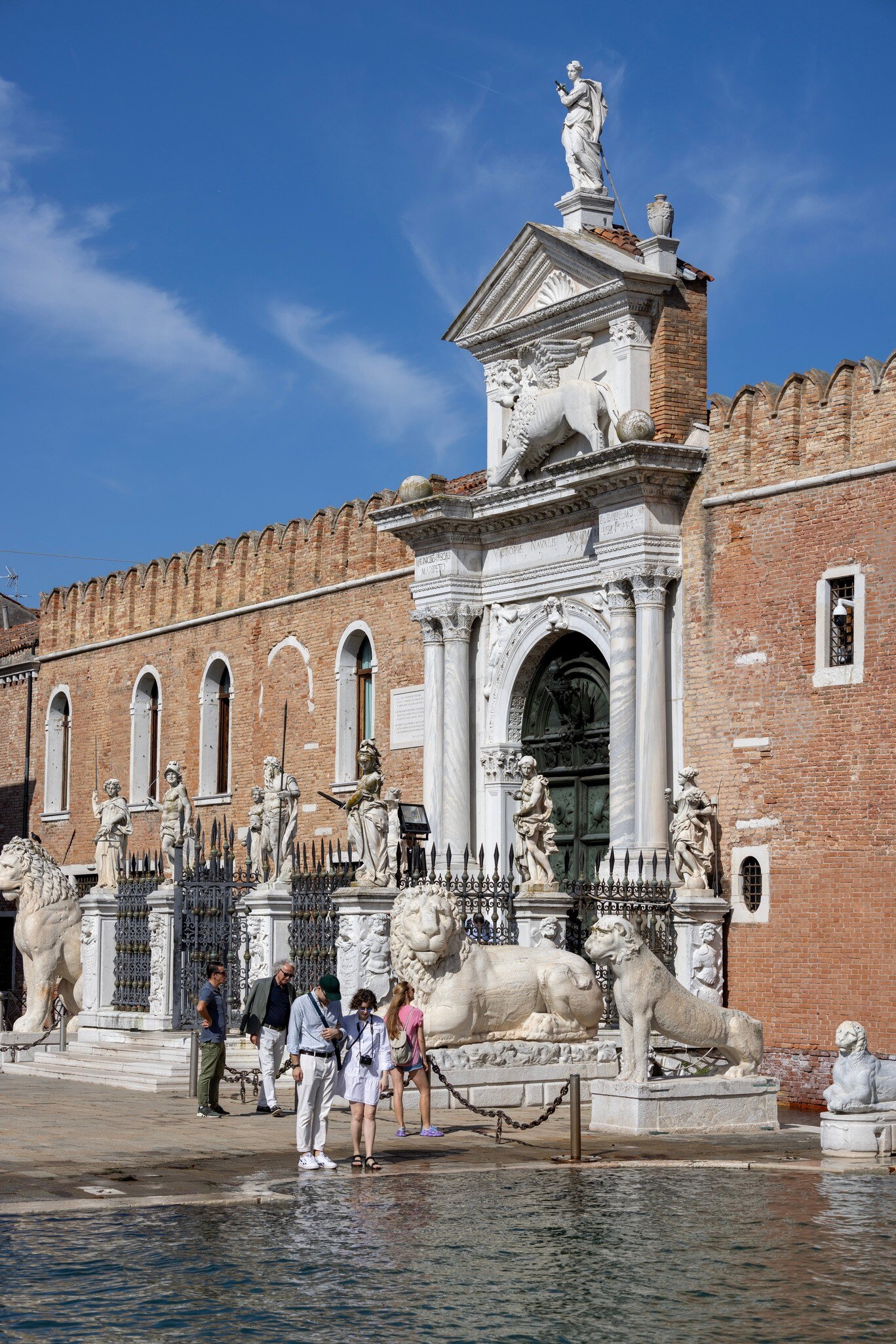
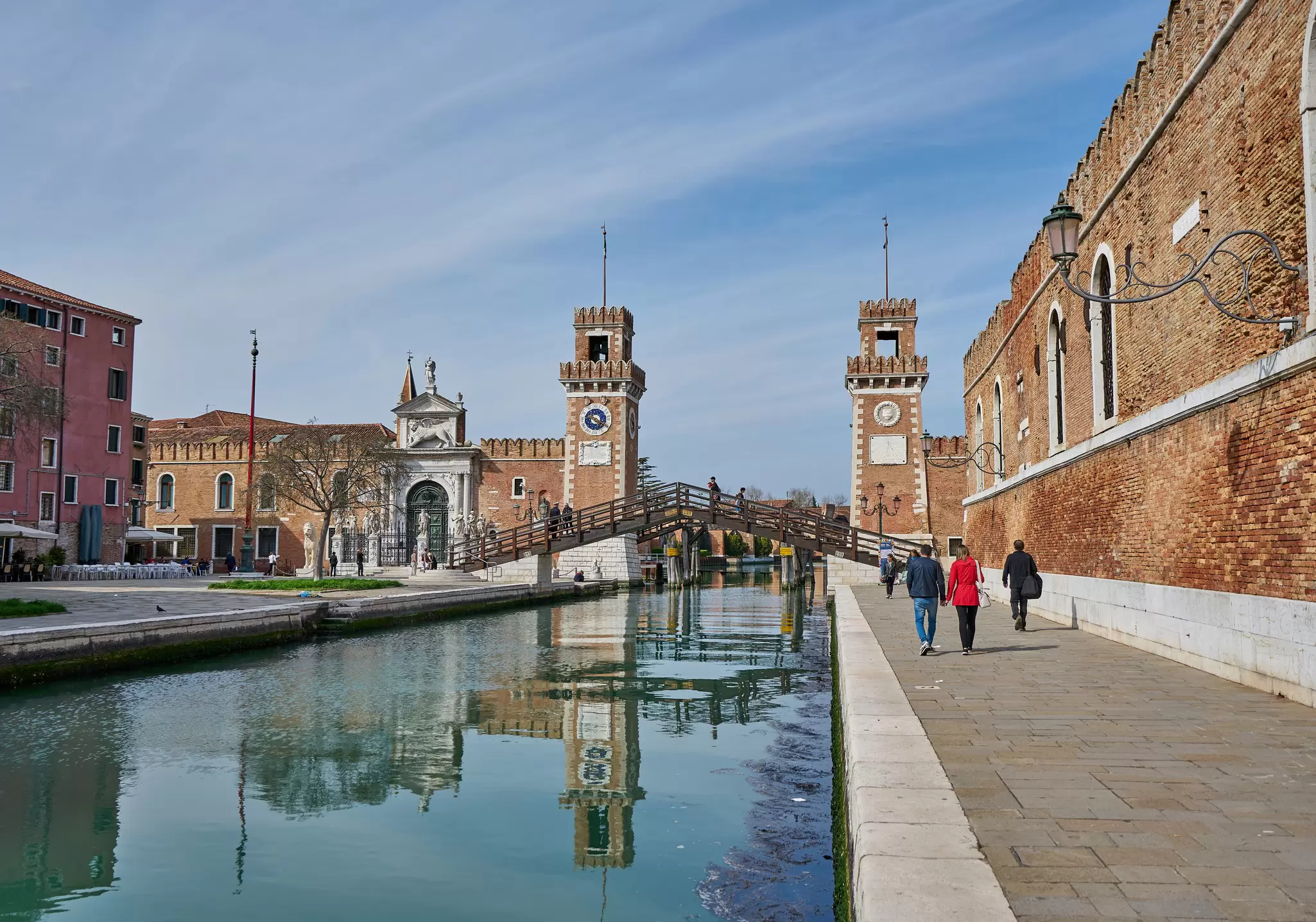
This ornate landward gate is one of the few parts of the Arsenale readily accessible to the public year-round. Built around 1460, the Porta Magna is thought to be the earliest Renaissance structure in Venice. Aside from the eye-catching architecture, it's worth visiting for the tantalizing glimpse into the heart of the Arsenale from the bridge over the nearby canal. This is the closest you'll get to the large chunk of the complex still controlled by the Italian navy.
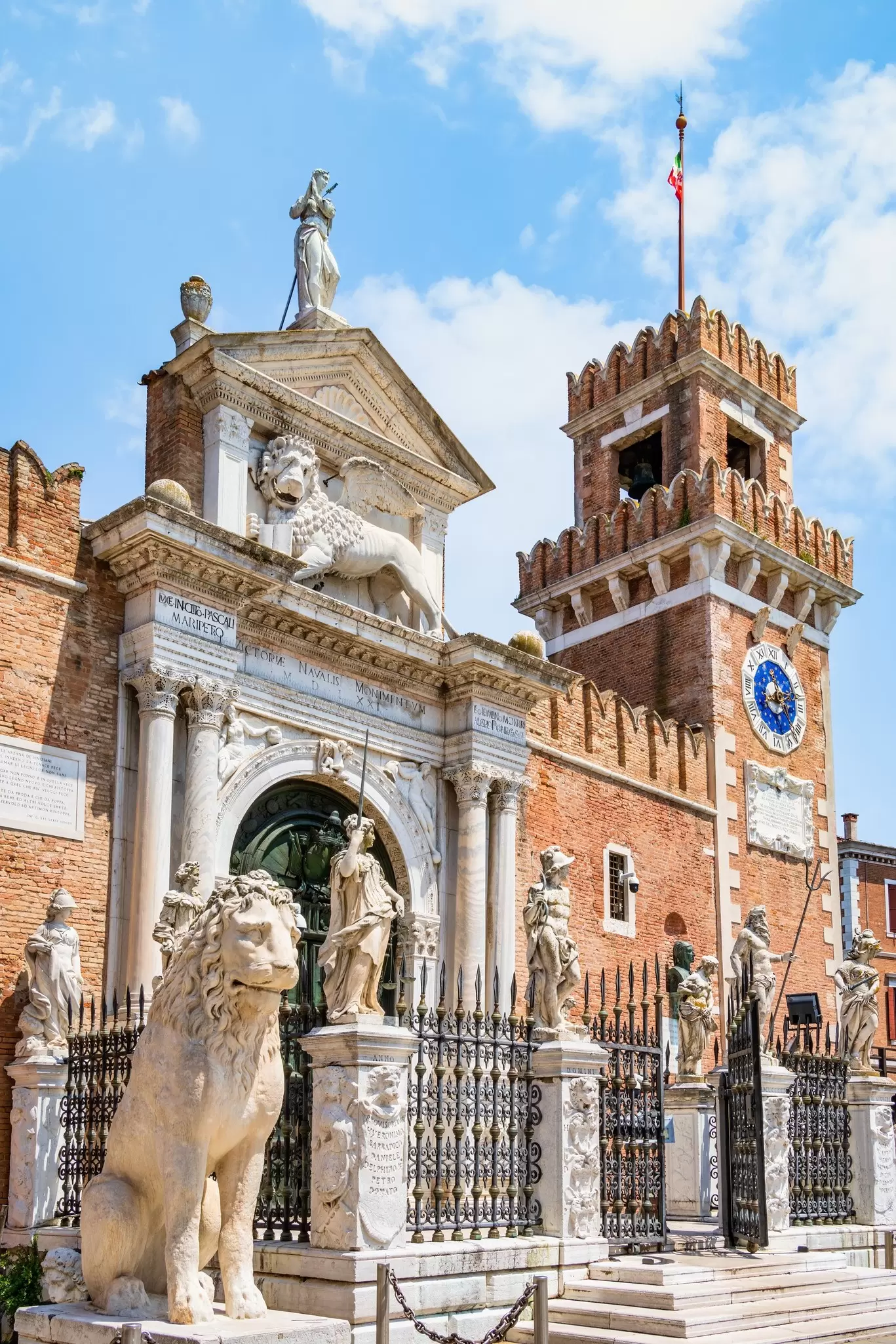
The Arsenale has always been a naval installation, and the inscription above the gate celebrates the great Venetian victory over the Ottoman fleet at Lepanto in 1571.
Lions are everywhere in Venice, but the Porta Magna has a whole pride of them. Prominently positioned above the portal is the familiar winged lion of St Mark, while another four are lined up in front. The slender chap second from the right was pilfered from the sanctuary of Apollo on the island of Delos, the most sacred site in Ancient Greece, where it was once part of a row of at least nine lions (only five of which remain in situ). Standing 3m high, the big guy to the left of the gate is the Piraeus Lion, looted from the port of Athens in 1687. At nearly 2400 years of age, it was already ancient when some 11th-century Viking mercenaries carved runes into its flanks. The inscription is very faint, but you can still see traces.
Just across the bridge is the entrance to the Padiglione delle Navi, a 2000-sq-meter warehouse – an annex of the Museo Storico Navale – used to house the navy's collection of historic Venetian boats.
Biennale Time
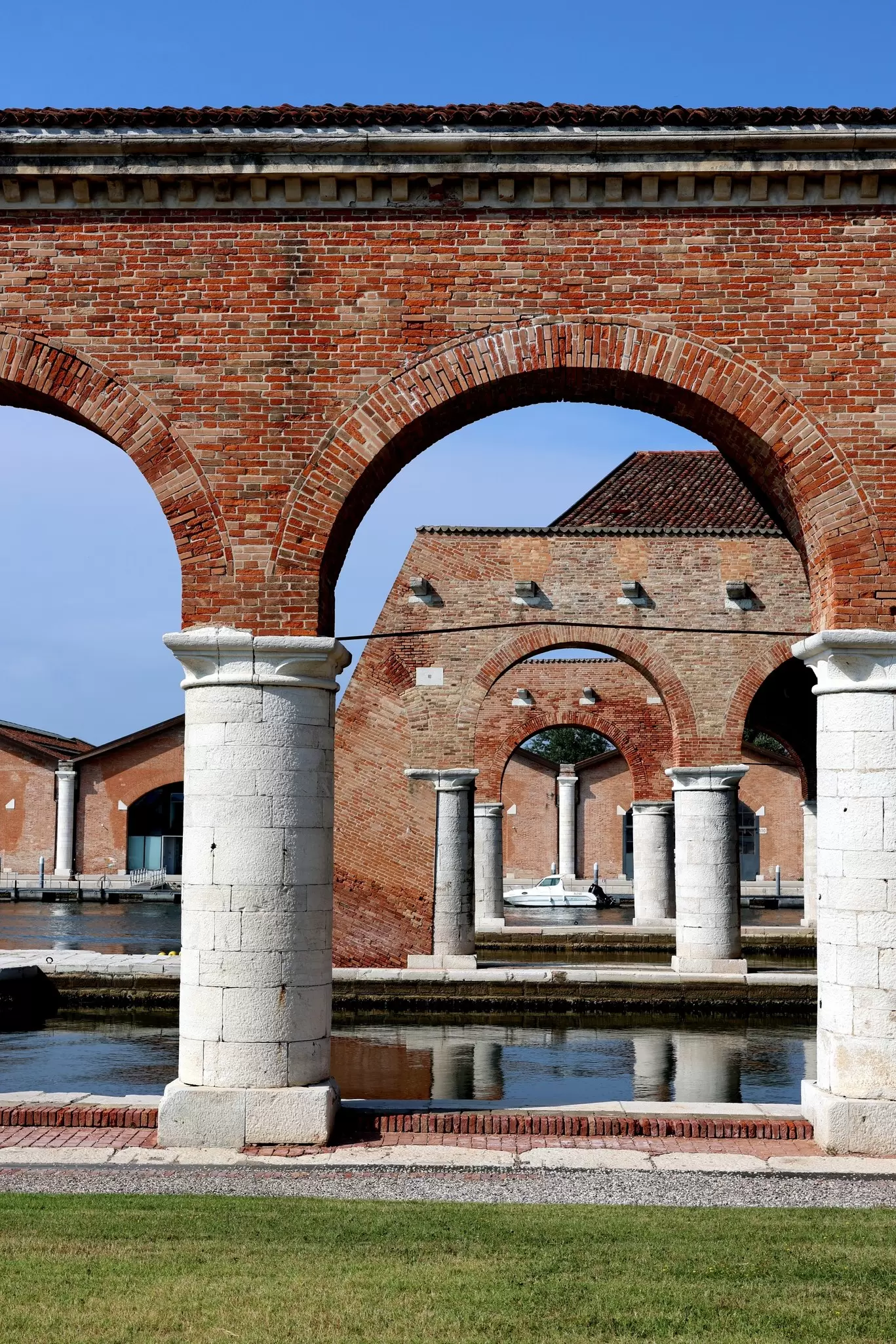
The main opportunity to enter the once-top-secret interior of the Arsenale is to visit during the alternating art and architecture Biennales (April to November), when a series of massive sheds are put to use as exhibition spaces. These include the former corderia (where ships’ cables were made), artiglierie (gun workshop) and the magnificent arcaded gaggiandre (dry dock), designed by Jacopo Sansovino.
During the Biennale, even without a ticket, it's possible to enter via the Ponte dei Pensieri (Bridge of Thoughts) into the Giardino delle Vergini (Garden of Virgins) hidden behind the southeastern walls – part of another monastery dissolved by Napoleon. Beyond here, free boats regularly shuttle back and forth across the basin to Arsenale Nord.
Beyond the Biennale
A section of Arsenale Nord is open to the public daily during the Biennale and from 8am to 3pm on weekdays otherwise. This includes Tesa 105, a large brick shed converted into offices and a cafe/bar. Other striking features of this section include the historic Porta Nuova Tower at the entrance to the basin and the Building Bridges sculpture by Lorenzo Quinn, showing interlocking, oversized hands spanning a dock.
Other nearby tese (sheds) are used for events such as the exhibition accompanying the Arte Laguna Prize (an international contemporary art competition) in November/December and the Salone Nautico Venezia (Venice Boat Show) in May/June.