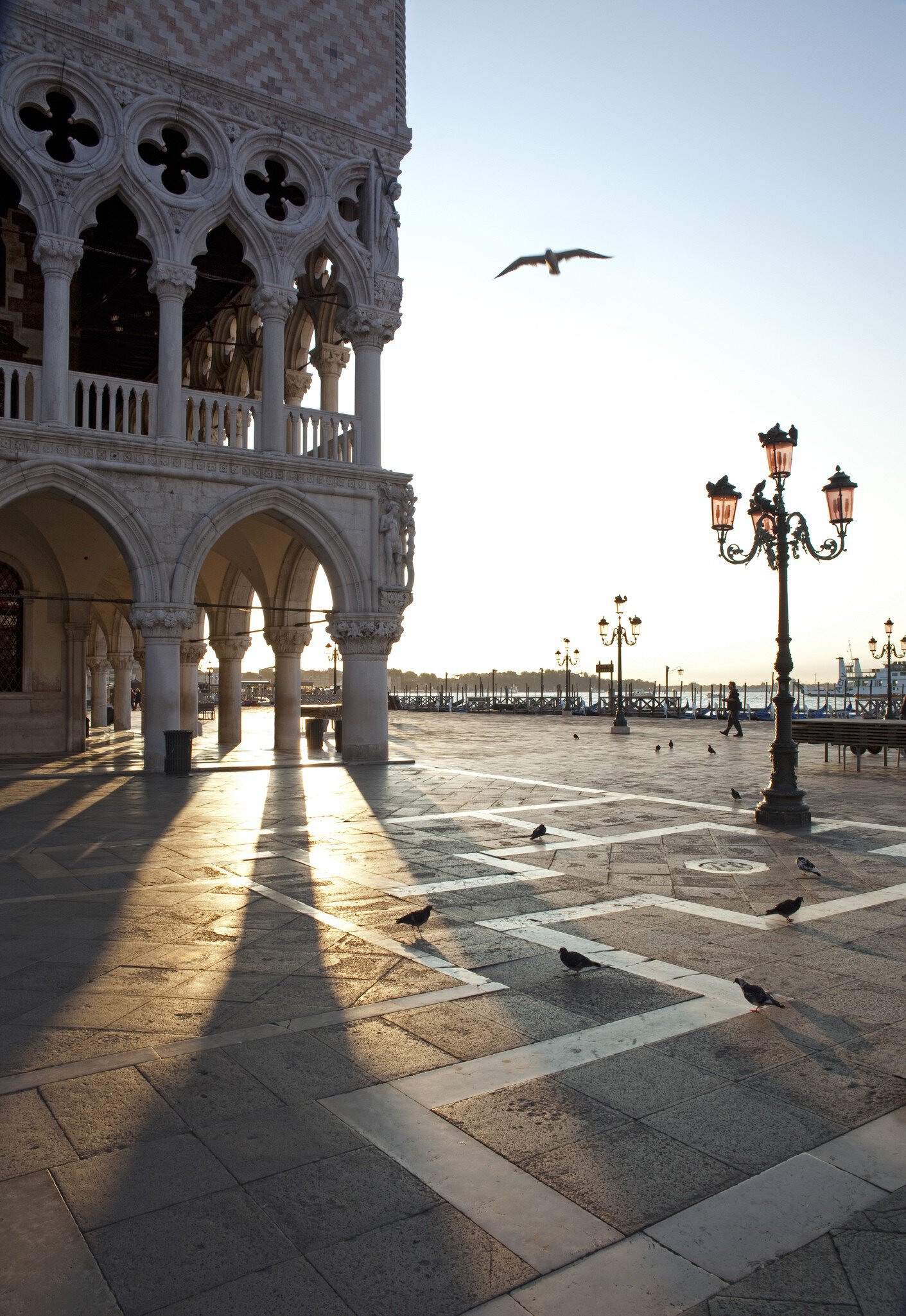
Don’t be fooled by its genteel Gothic elegance: behind that lacy pink-and-white patterned facade, the doge’s palace shows serious muscle and a steely will to survive.
The seat of Venice’s government for more than seven centuries, this powerhouse stood the test of storms, crashes and conspiracies – only to be outwitted by Casanova, the notorious seducer who escaped from the attic prison.
Exterior Details
The doge's official residence probably moved to this site in the 10th century, though the current complex only began to take shape around 1340. In 1424, the wing facing Piazzetta San Marco was added and the palace assumed its final form, give or take a few major fires and refurbishments.
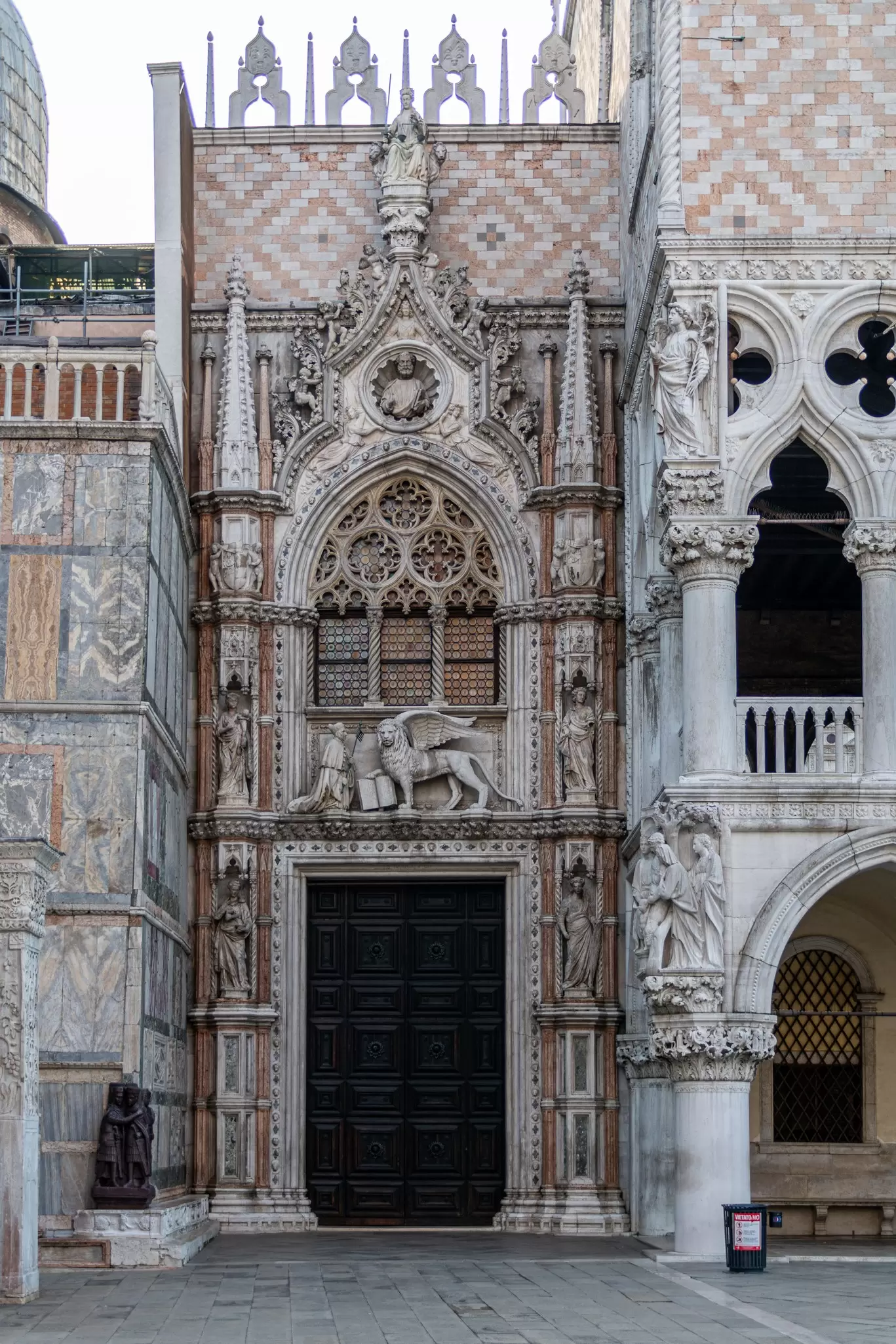
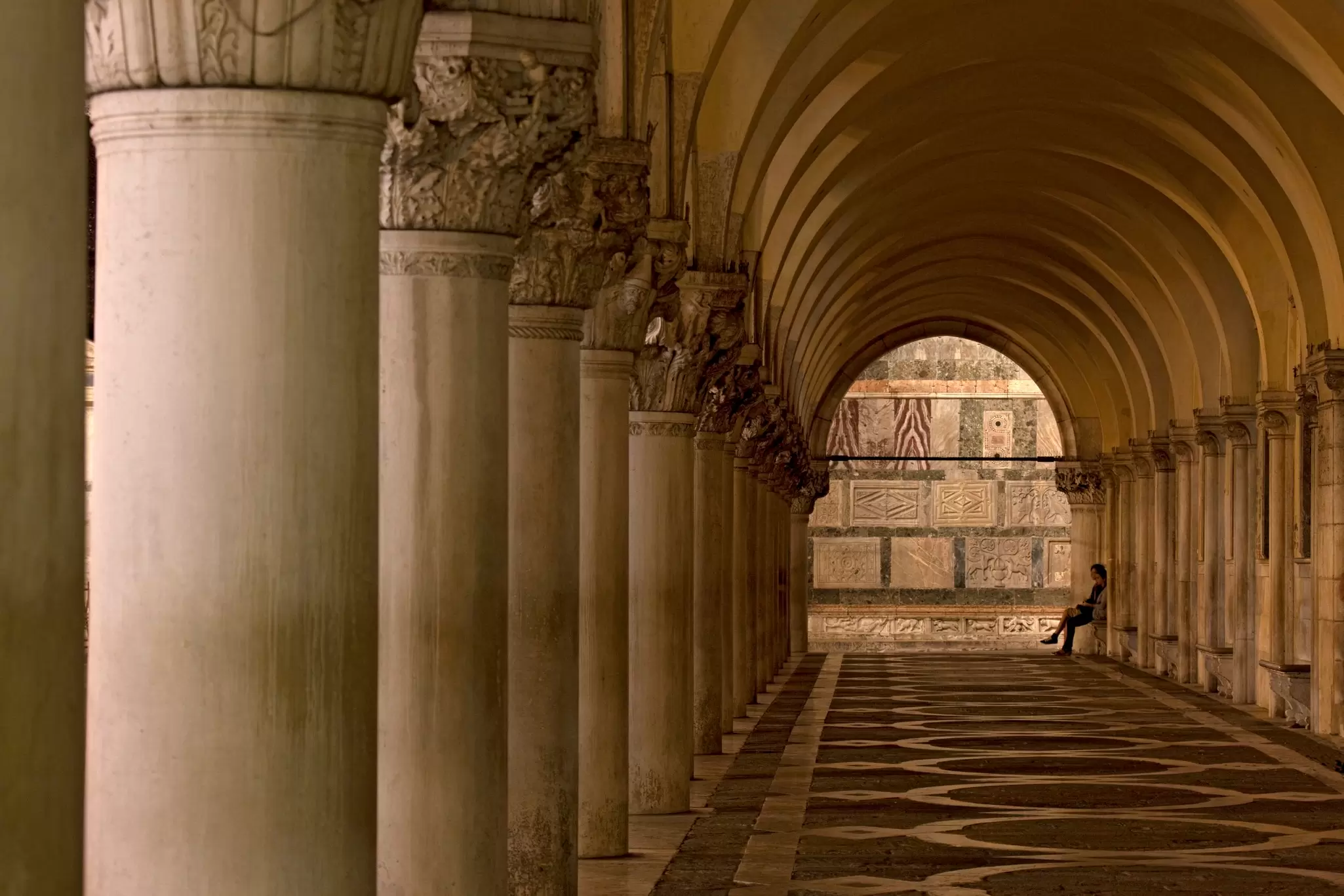
The 1st-floor loggia fronting the square may seem like a fanciful flourish, but it served a solemn purpose: death sentences were read between the darker-colored ninth and 10th columns from the left.
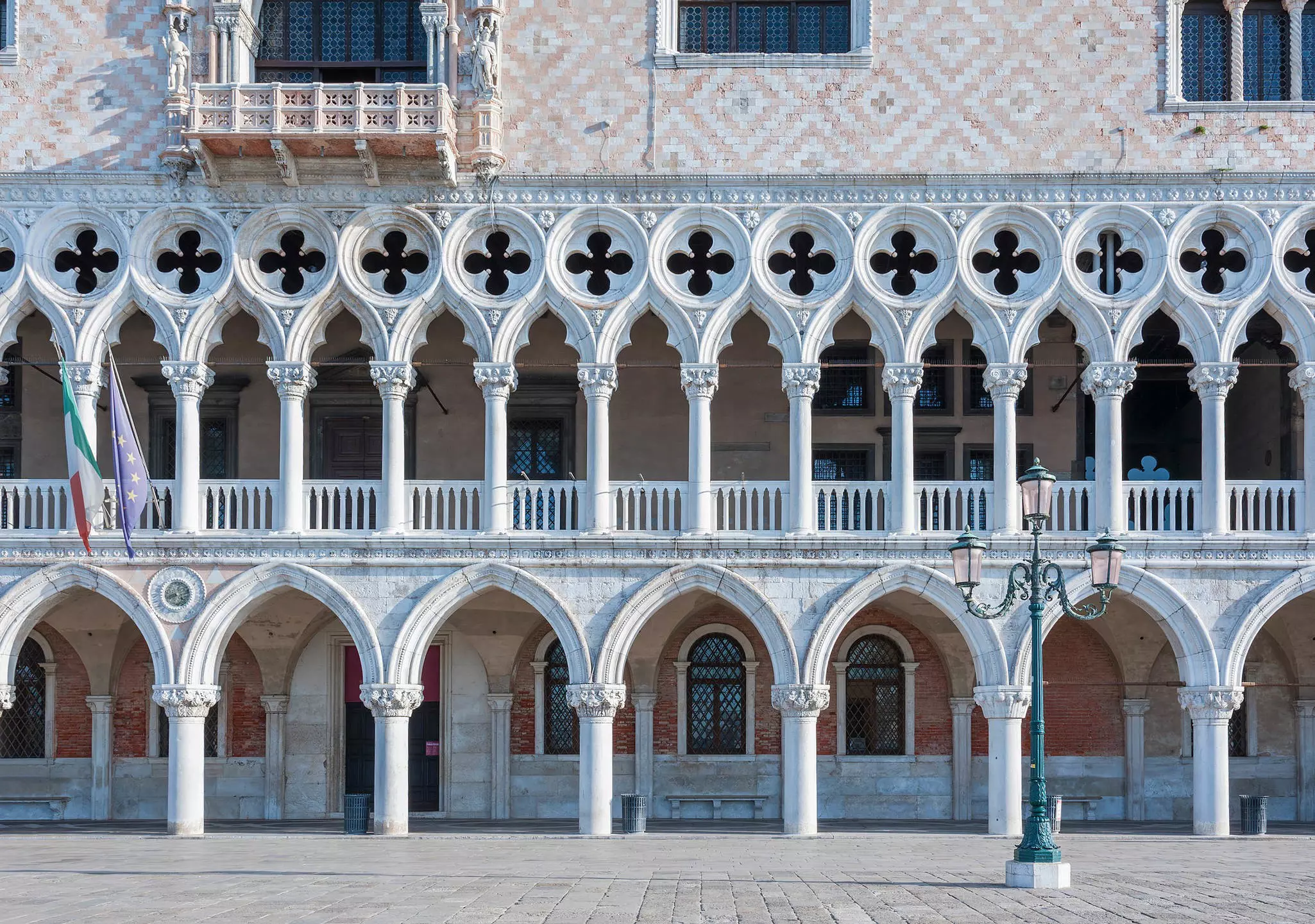
Abutting Basilica di San Marco, Giovanni and Bartolomeo Bon’s 1443 Porta della Carta (Paper Door) was an elegant point of entry for dignitaries, and served as a public bulletin board for government decrees.
Palace Courtyard
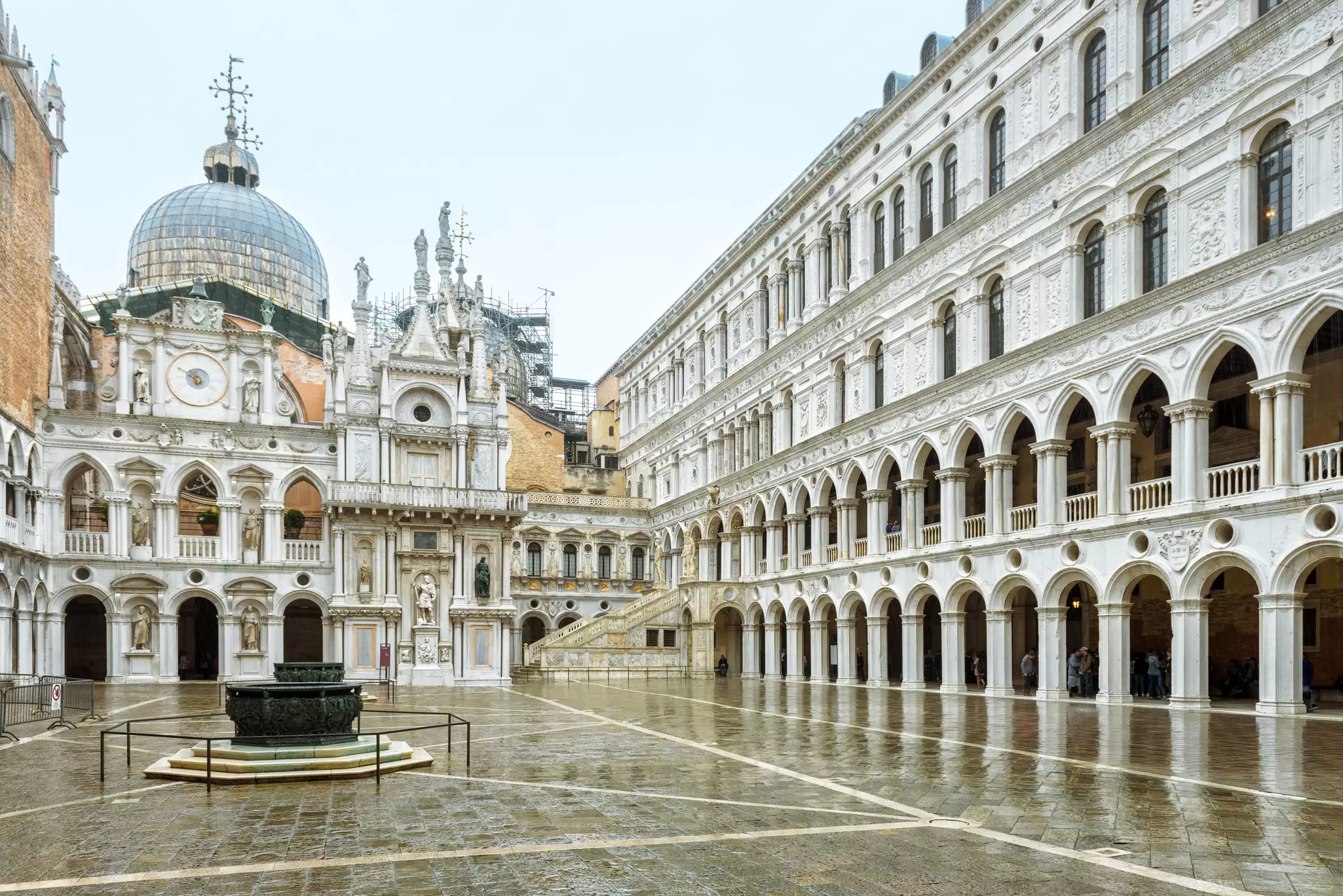
Regardless of whether you’ve prebooked your ticket, entry to the palace is from the building's waterfront side. From here, you’re led into the magnificent colonnaded courtyard. Note its varying architectural styles, from the Gothic elegance of the south and west wings to the Renaissance exuberance of the east and north sides. The 16th-century bronze wells are by Nicolò de’ Conti and Alfonso Alberghetto, while the brawny statues of Apollo and Neptune flanking Antonio Rizzo’s Scala dei Giganti (Giants’ Staircase) are by Sansovino.
Off the courtyard, the Museo dell'Opera displays stone columns and capitals from previous incarnations of the building: leave it for the end of your visit if you have time.
Level 2
A standard entry ticket takes you on a circuit through the palace's main state and institutional rooms, as well as the armory and prisons.
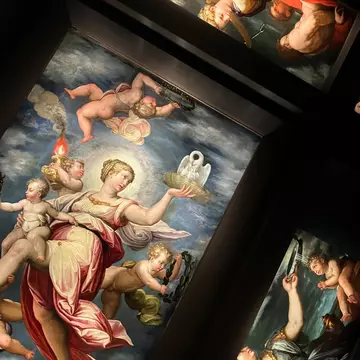
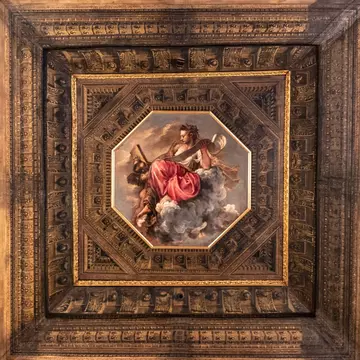
From the loggia level, head to the top of Sansovino’s 24-carat gilt stucco-work Scala d’Oro (Golden Staircase), emerging into rooms covered with gorgeous propaganda. In Palladio’s Sala delle Quattro Porte (Hall of the Four Doors), ambassadors awaited ducal audiences under a lavish display of Venice's virtues by Giovanni Cambi. Other convincing shows of Venetian superiority include Titian’s 1576 Doge Antonio Grimani Kneeling Before Faith, amid approving cherubim, and Tiepolo’s 1740s Venice Receiving Gifts of the Sea from Neptune, where Venice is a gorgeous blonde figure casually leaning on a lion.
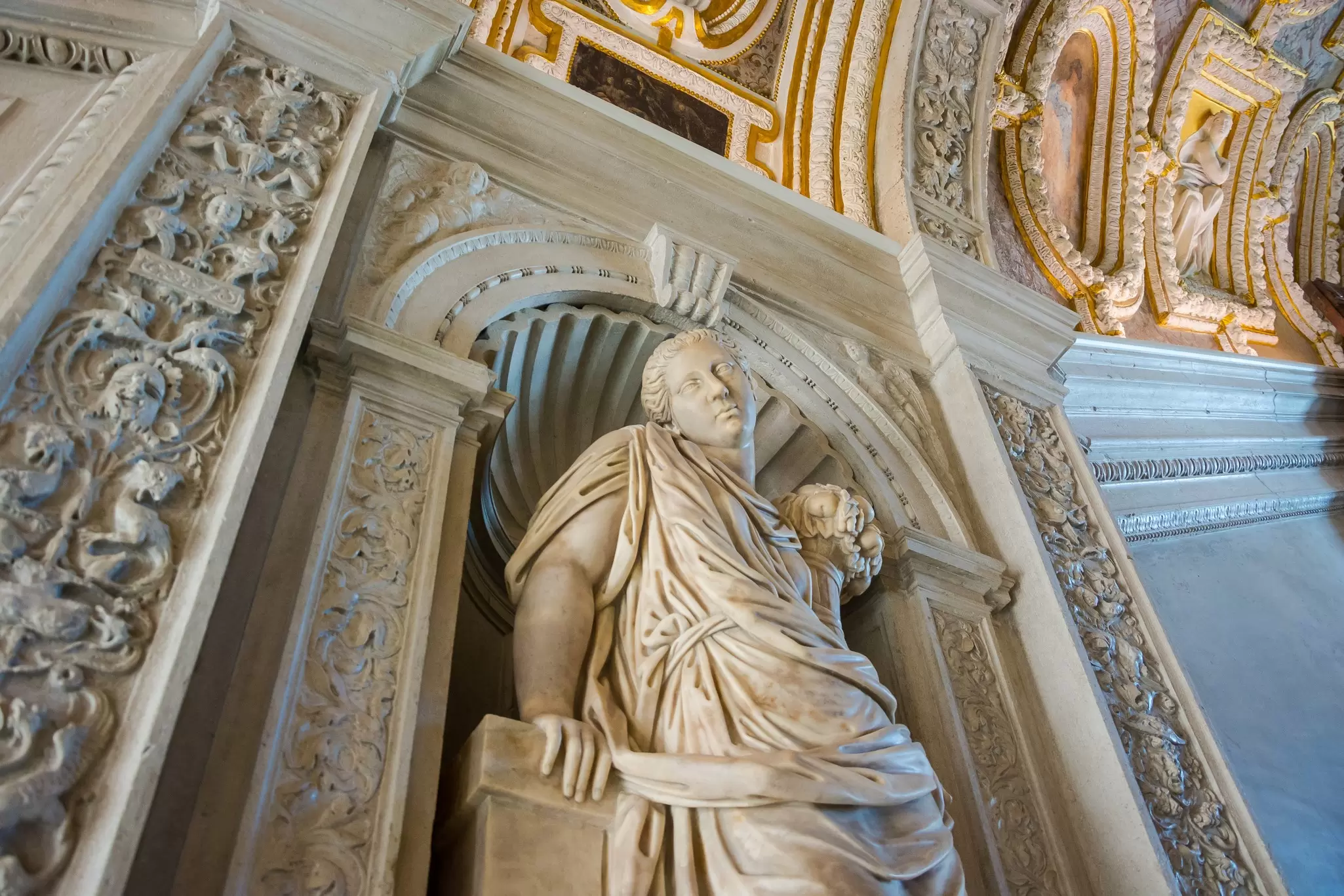
Delegations waited in the Anticollegio (Council Antechamber), where Tintoretto drew parallels between Roman gods and Venetian government: Mercury and the Three Graces rewards Venice’s industriousness with beauty, and Minerva Dismissing Mars is a Venetian triumph of savvy over brute force. The restored ceiling is Veronese’s 1577 Venice Distributing Honors, while on the walls is a vivid reminder of diplomatic behavior to avoid: Veronese’s Rape of Europe.
Few were granted an audience in the Palladio-designed Collegio (Council Chamber), where Veronese’s 1575–78 Virtues of the Republic ceiling shows Venice again as a blonde figure waving her scepter like a wand over Justice and Peace. Father-son team Jacopo and Domenico Tintoretto attempted similar flattery, showing Venice keeping company with Apollo, Mars and Mercury in their Triumph of Venice ceiling for the Sala del Senato (Senate Chamber), but frolicking lagoon sea monsters steal the scene.
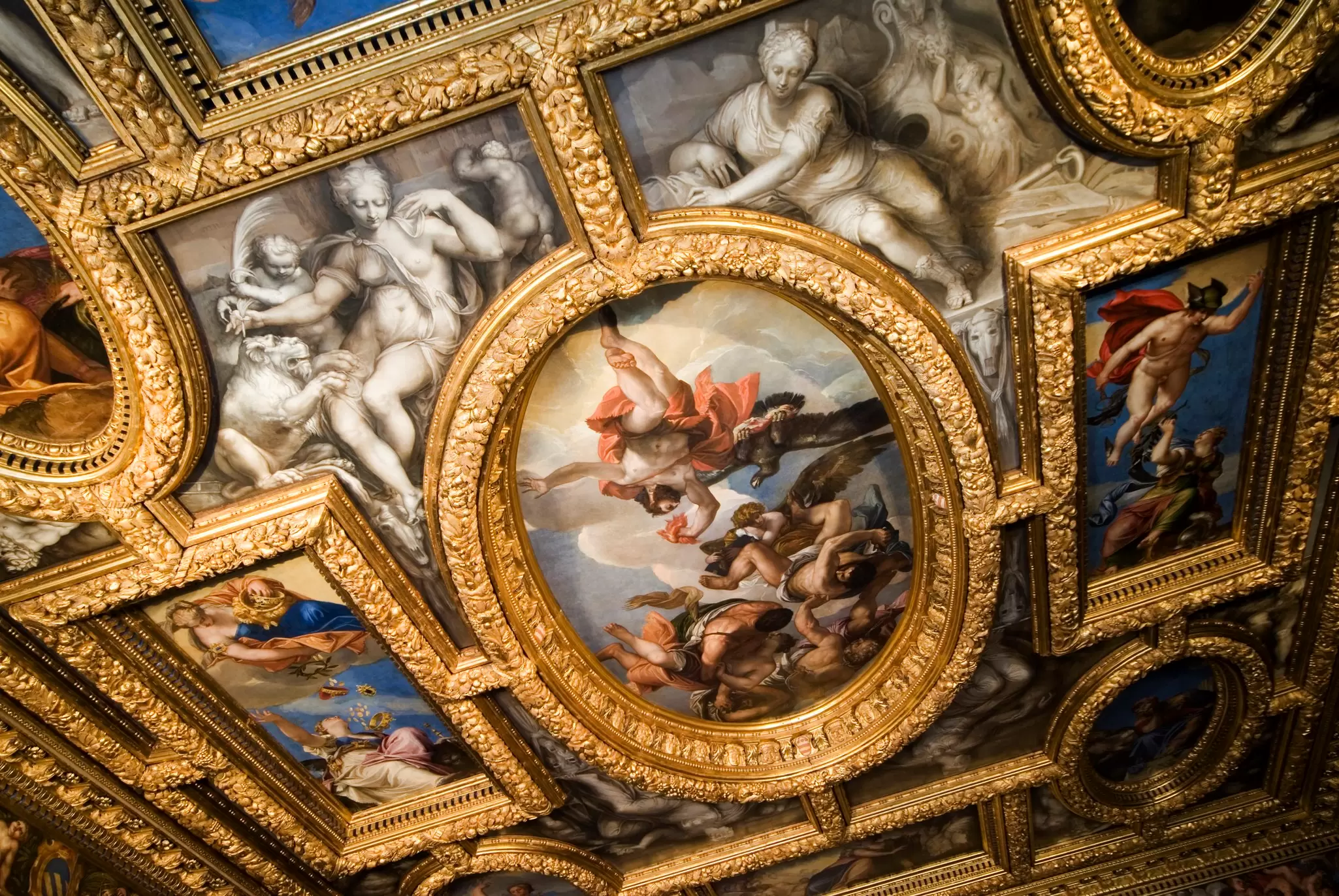
Government cover-ups were never so appealing as in the Sala del Consiglio dei Dieci (Chamber of the Council of Ten), where Venice’s star chamber plotted under Veronese’s Juno Bestowing her Gifts on Venice, depicting a glowing goddess strewing gold ducats. Above the slot where anonymous treason accusations were slipped into the Sala della Bussola (Compass Room) is Veronese's St Mark in Glory ceiling. The route finishes in the weapon-laden Armoury.
Level 1
Outside the Armoury, stairs lead down to the chambers of the Quarantia Civil Vecchia (Council of Forty), a kind of court split into sections dealing with criminal matters, civil disputes concerning Venetians and civil disputes pertaining to Venice's other territories.
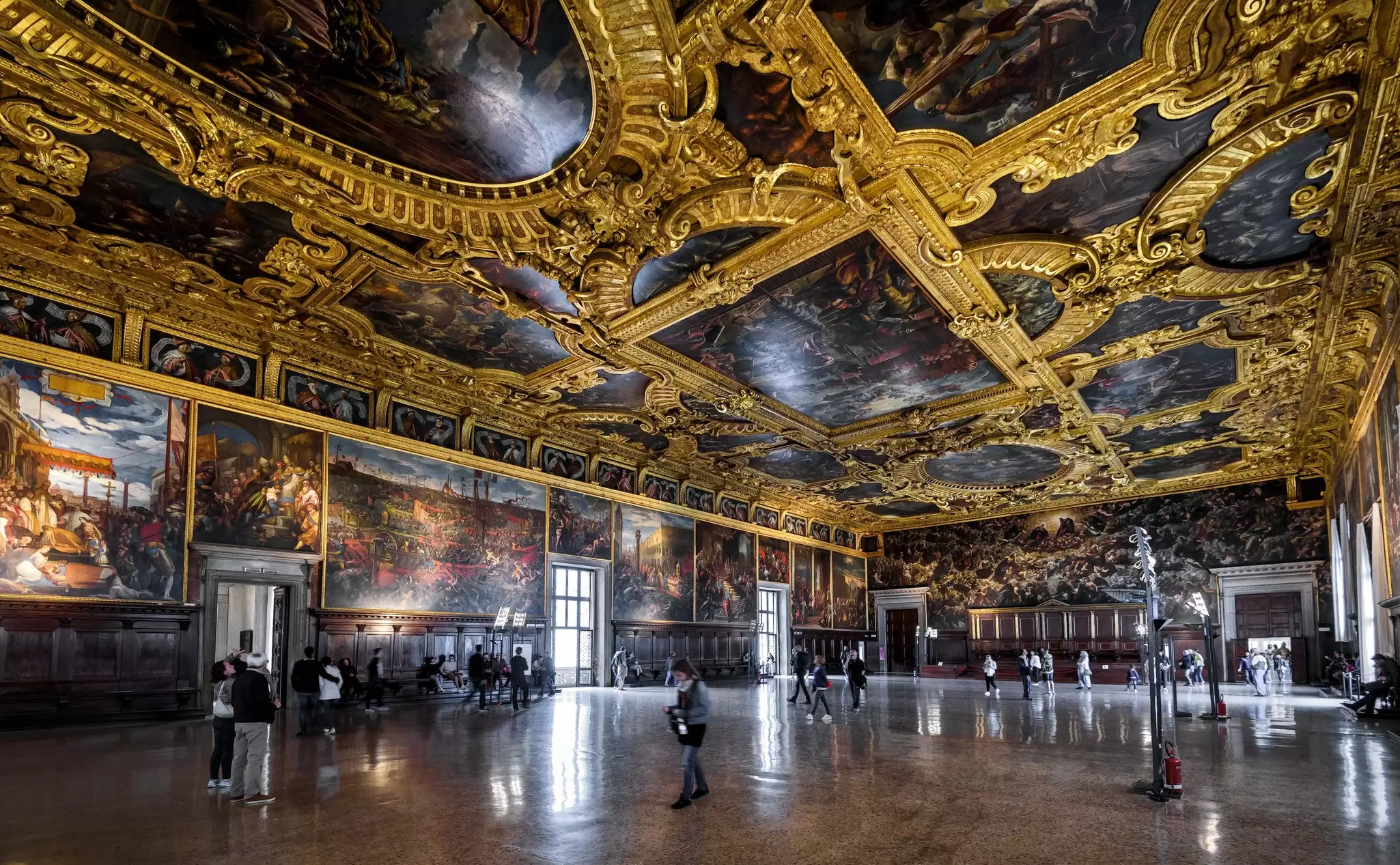
The Sala dell’Armamento exhibits fragments from the 14th-century fresco by Guariento executed for the Sala del Maggior Consiglio (Grand Council Chamber). The vastness of the chamber – your next stop – is staggering. The doge's throne once stood in front of the 22m-by-7m Paradise backdrop (by Tintoretto’s son, Domenico). In it, heaven is crammed with 500 prominent Venetians, including several Tintoretto patrons. Veronese’s political posturing is more elegant in his oval Apotheosis of Venice ceiling, where gods marvel at Venice’s coronation by angels, with foreign dignitaries and blonde Venetians rubbernecking on the balcony below. This room opens onto the Sala dello Scrutinio (Ballot Room), a former library that was subsequently used for elections of the doge and the various councils of state.
The route continues through Palazzo Ducale’s compact Quadreria (Picture Gallery) before leading into the prisons.
Prisons
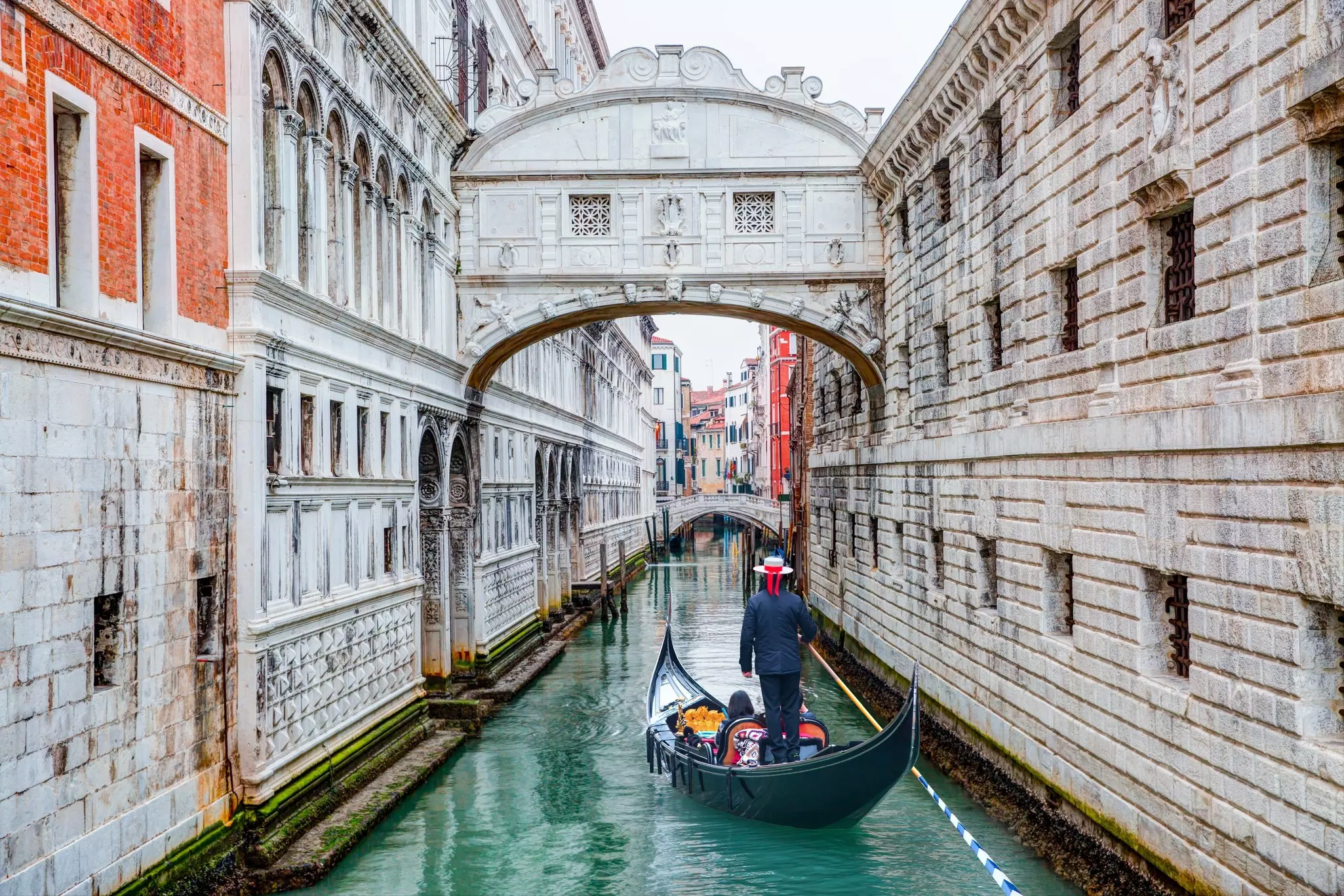
Follow the path of the condemned across the Ponte dei Sospiri to Venice’s 16th-century Prigioni Nove (New Prisons). Dank cells covered with graffitied protestations of innocence are spread over three floors, with a central courtyard. You have the choice of two prison routes: short or complete. It’s worth opting for the latter to wander the quieter, eerier lower levels. After crossing back over the bridge and past a small display of archaeological finds, the route descends to the loggia level and through the rooms of the censors, state advocates and naval captains.
Doge's Apartments
The doge's suite of private rooms takes up a large chunk of the 1st floor above the loggia. The 18 roaring lions decorating the Sala degli Stucchi are a reminder that Venice's most powerful figurehead lived like a caged lion in his gilded suite, which he couldn't leave without permission.
The Sala dello Scudo (Shield Room) is particularly intriguing, covered with world maps that reveal the extent of Venetian power (and the limits of its cartographers) from c. 1483 and 1762. The New World map places California near Terra Incognita d'Antropofagi (Unknown Land of the Maneaters), aka Canada, where Cuzco is apparently located. This space is now used for high-profile art exhibitions, ticketed separately.
Secret Itineraries Tour
Further rooms, too small for the masses, can be visited on a fascinating 60-minute guided tour. It takes in the damp ground-floor cells known as Pozzi (wells) and then heads through a hidden passageway into the cramped Council of Ten Secret Headquarters. Beyond this ominous office suite, the Chancellery is lined with hand-painted cabinets of top-secret files, including reports by Venice's far-reaching spy network, accusations by Venetians against their neighbors and judgments copied in triplicate by clerks. The accused might be led to the Torture Chamber, where, until 1660, confessions were sometimes extracted from prisoners dangling from a rope.
Upstairs lie the Piombi (Leads), the attic prison cells where Casanova was condemned to five years’ confinement in 1756 for corrupting nuns and the more serious charge of spreading Freemasonry. Casanova made an ingenious escape through the roof, then convinced a guard he was an official locked into the palace overnight.