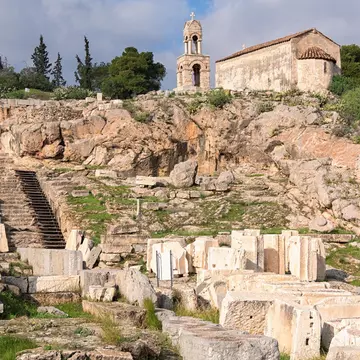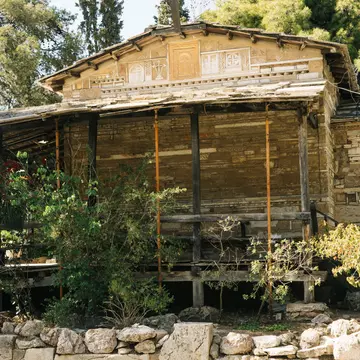
The state-of-the-art Acropolis Museum displays the surviving treasures from the temple hill, with emphasis on the Acropolis as it was in the 5th century BCE, the apotheosis of Greece’s artistic achievement.
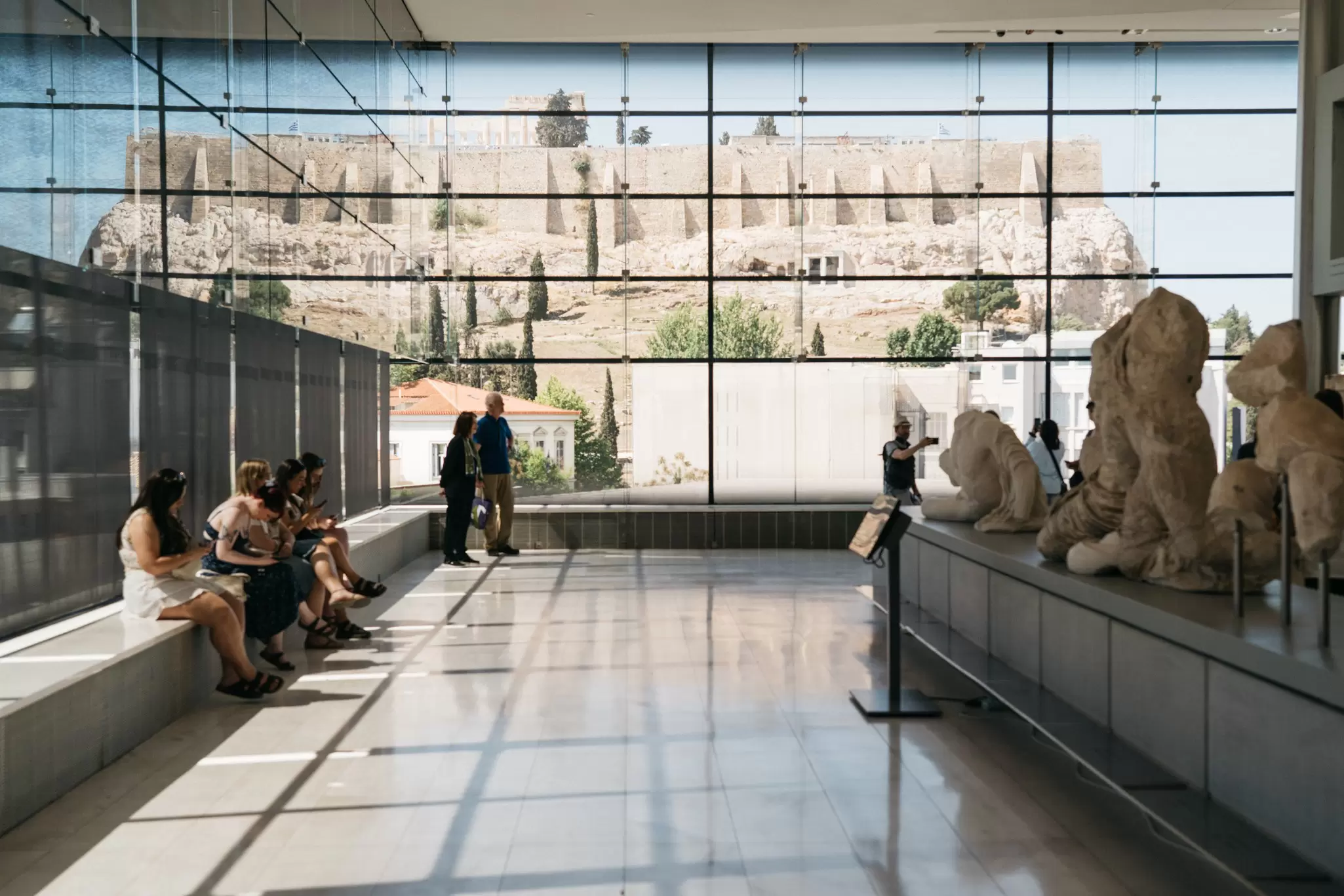
Layers of history are revealed and interpreted in the Acropolis Museum: glass floors expose subterranean ruins, and the Acropolis itself is visible through the floor-to-ceiling windows, so the masterpieces are always in context.
Entry Gallery & Ruins
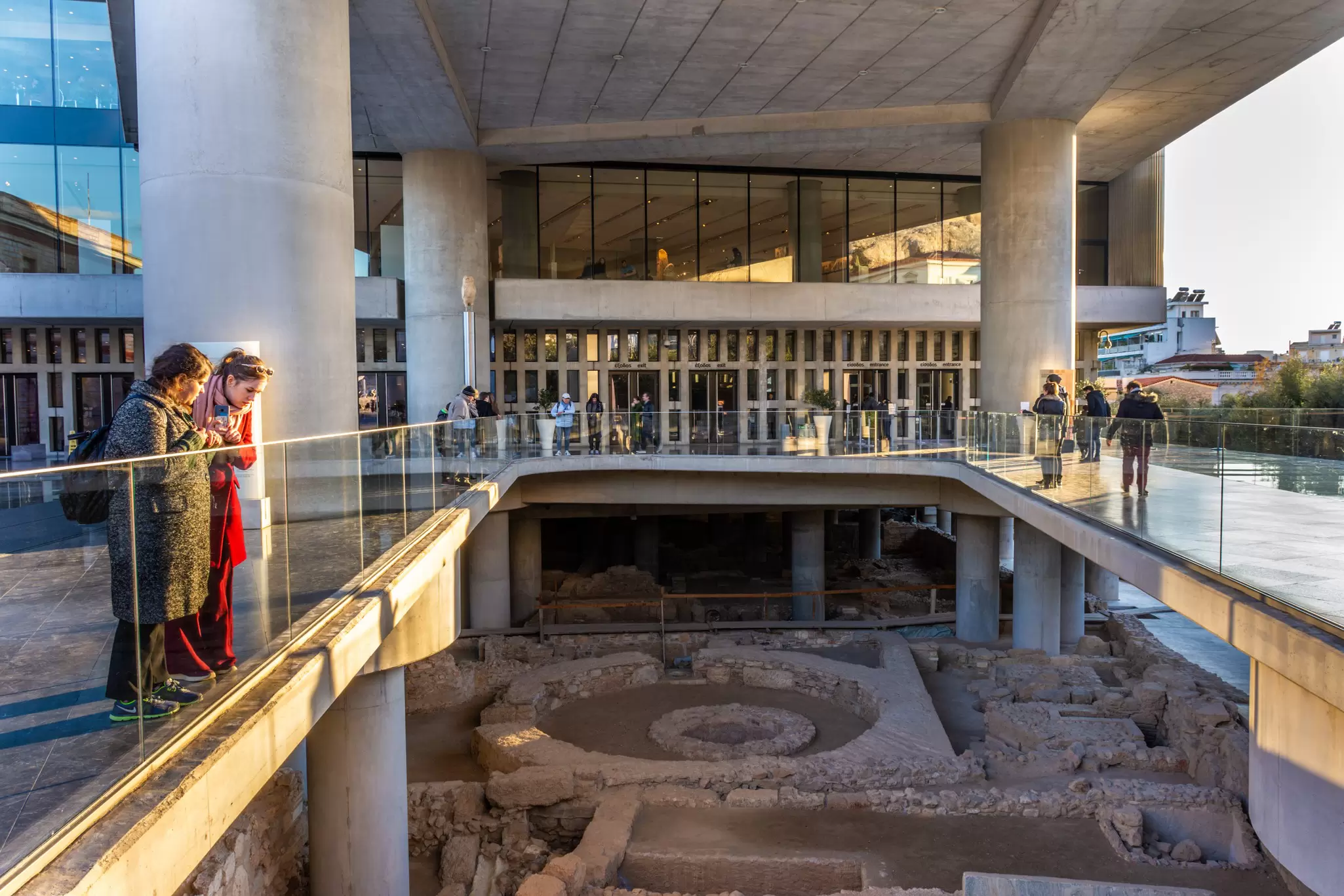
As you enter the museum, look down through the glass floor to view the ruins of an ancient Athenian neighborhood. These were uncovered during the museum's construction and had to be preserved and integrated into a new building plan. It was all designed after years of planning by US-based architect Bernard Tschumi with Greek architect Michael Photiadis, and replaced the small museum on the Acropolis summit near the Parthenon.
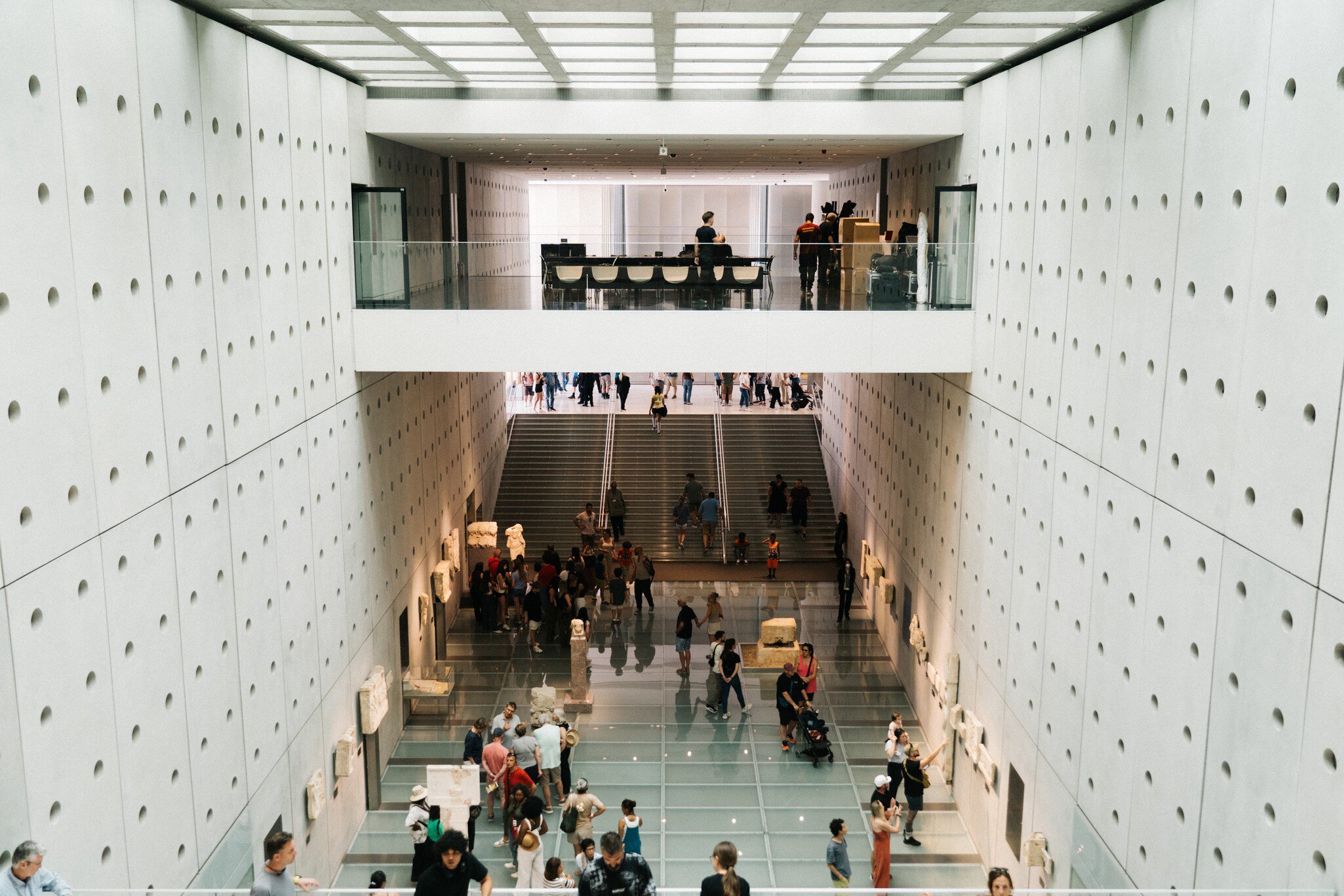
Finds from the slopes of the Acropolis fill the entryway gallery. The floor's slope echoes the climb up to the sacred hill, while giving glimpses of ruins beneath the museum foundation. Objects here include votive offerings from sanctuaries and, near the entrance, two clay statues of Nike.
Archaic Gallery
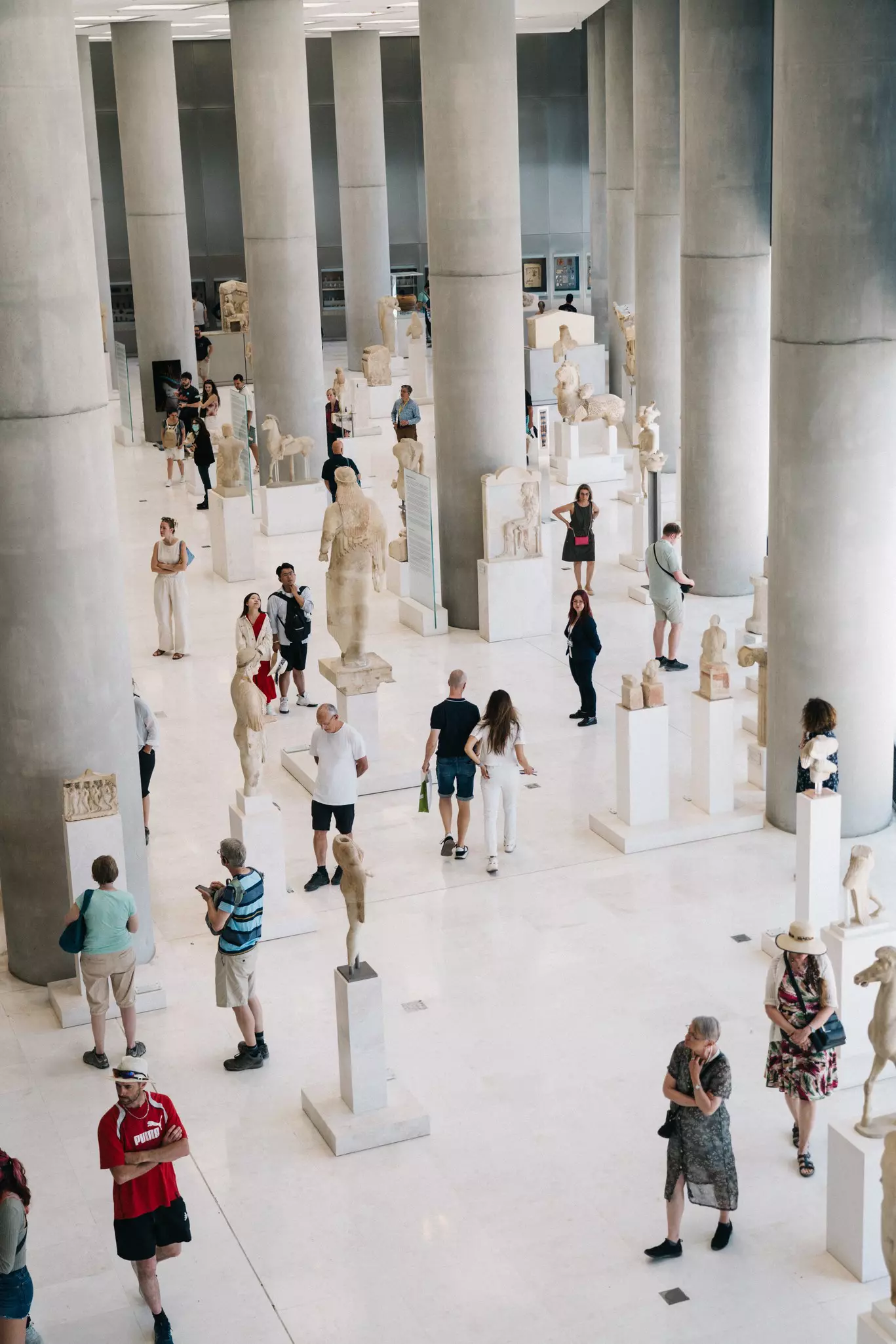
Bathed in natural light, the first floor is a veritable forest of statues, mostly votive offerings to Athena. These include stunning examples of 6th-century Kore – statues of young women in draped clothing and elaborate braids. Most were recovered from a pit on the Acropolis, where the Athenians buried them after the Battle of Salamis. The youth bearing a calf, from 570 BCE, is one of the rare male statues discovered. There are also bronze figurines and artifacts from temples predating the Parthenon (destroyed by the Persians), including wonderful pedimental sculptures, such as Hercules slaying the Lernaean Hydra and a lioness devouring a bull.
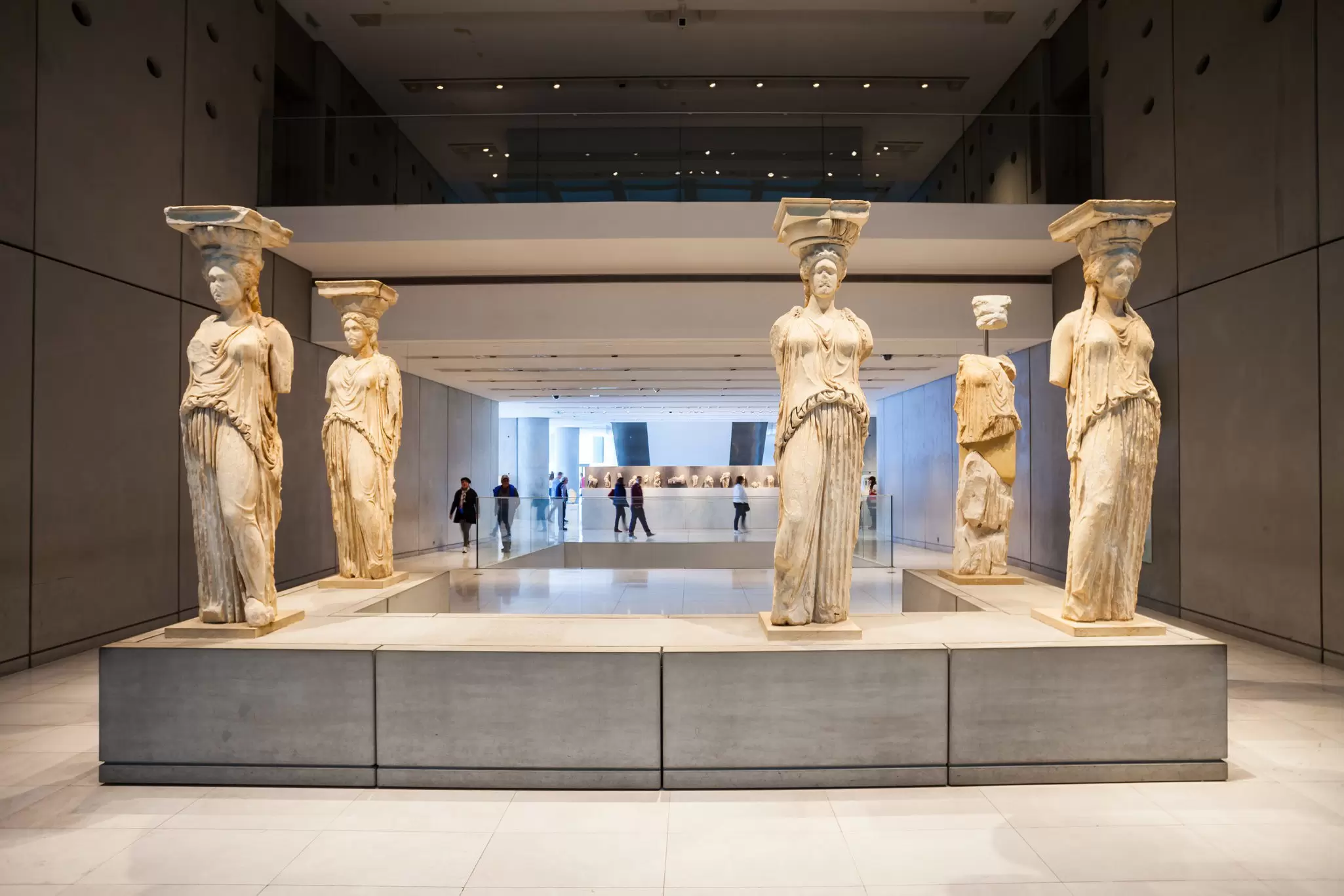
Also on this floor are five of the original Caryatids, the world-famous maiden columns that held up the Erechtheion (the sixth is in the British Museum in London).
Missing Statue of Athena Parthenos
The statue for which the Parthenon was built and which once stood at its center – the Athena Parthenos (Athena the Virgin) – was considered one of the wonders of the ancient world. It was taken to Constantinople in 426 CE, where it disappeared. Designed by Pheidias and completed in 432 BCE, it stood almost 12m high on its pedestal and was plated in gold. Athena's face, hands and feet were made of ivory, and the eyes fashioned from jewels. You can see a tiny replica at the National Archaeological Museum.
Parthenon Gallery
The museum’s crowning glory, this top-floor glass atrium, is built in alignment with the Parthenon, which is visible through the wraparound windows. It showcases the Parthenon’s pediments, metopes and 160m frieze. The frieze depicts the full Panathenaic Procession, starting at the southwest corner of the temple, with two groups splitting off and meeting on the east side for the delivery of the peplos (shawl) to Athena. To really understand the reliefs, see the film that is screened on this floor.
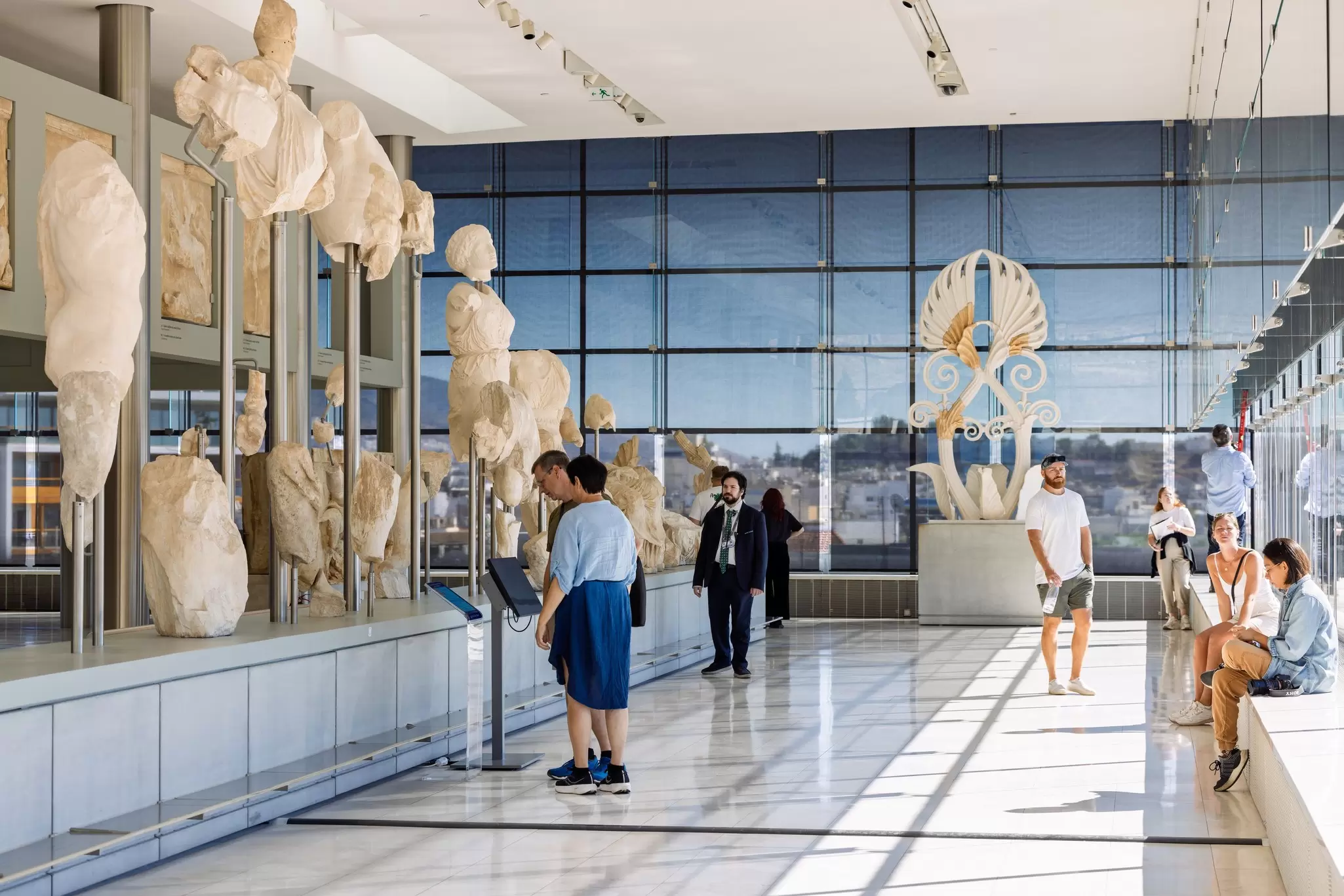
Interspersed between golden-hued originals are white plaster replicas of missing pieces, including the Parthenon Marbles – the sections removed (along with plenty of other antiquities) by the British diplomat Thomas Bruce, Earl of Elgin, in 1801. Encouraging conversations in 2022 and 2023 offered a glimmer of hope that they may one day return to Athens from the British Museum, perhaps on temporary loan.
Restaurant Views
The Acropolis Museum's 2nd-floor restaurant is worthy of a visit in its own right. Eat inside or sip a coffee on the terrace with prime Acropolis views. Dishes are made with local seasonal ingredients and are reasonably priced, given the superb location. You don't need a museum ticket to go to the restaurant – just stop in at a the front desk to get a pass. Every Friday and Saturday the restaurant is open until midnight; great for a date.