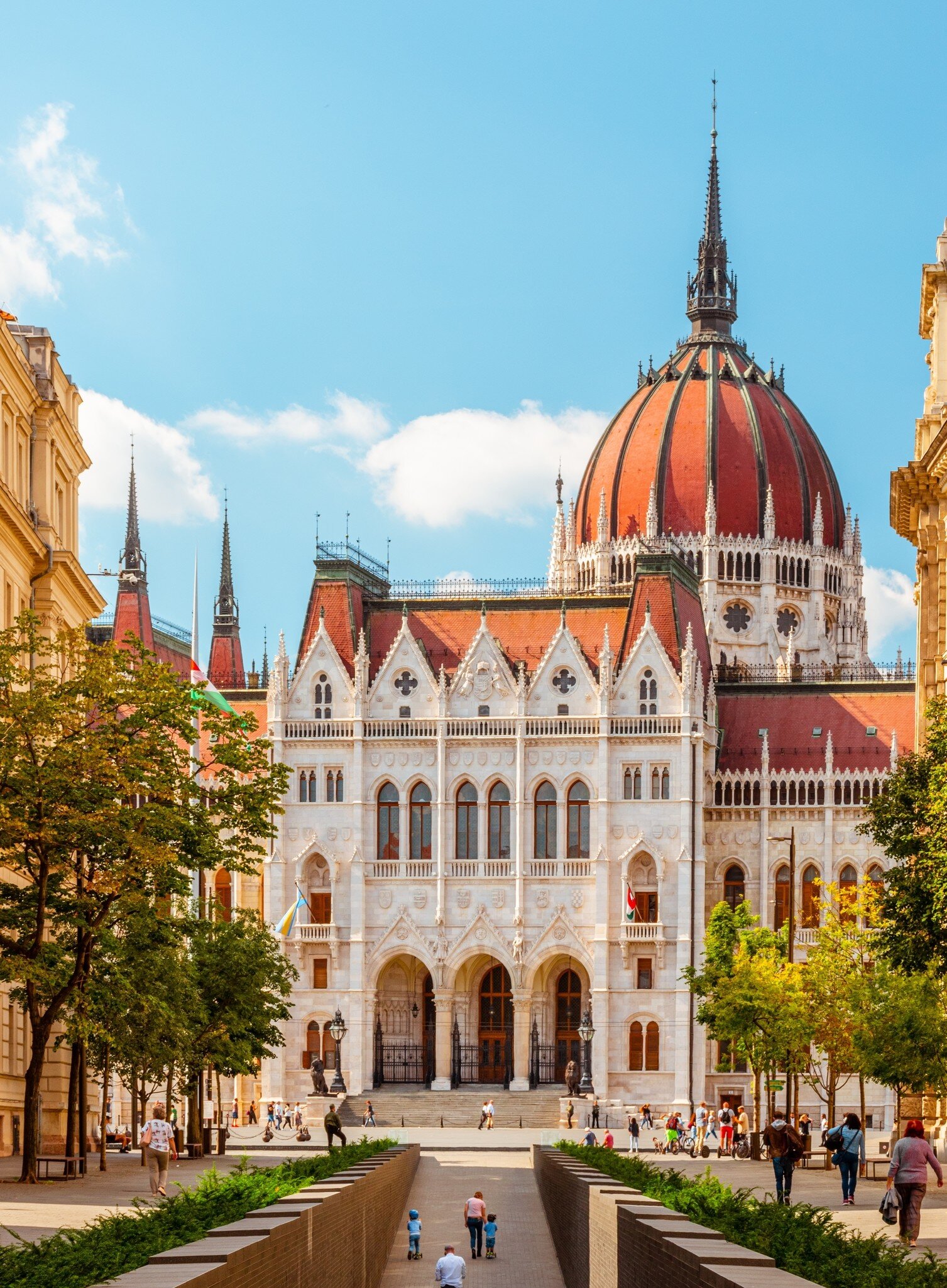
Hungary’s largest building, Parliament, stretches for 268m along the left bank of the Danube in Pest. It's a vast, stately building and repository of national treasures, a symbolic counterweight to the Royal Palace on Buda Hill across the river. The idea behind its placement was that the nation’s future lay with popular democracy and not royal prerogative.
Parliament from Outside
It is thought that the inspiration for this iconic structure, designed by Imre Steindl in 1885 and completed just weeks before his death in 1902, was London’s rebuilt Palace of Westminster, which had opened in 1860. The building is a blend of many architectural styles (neo-Gothic, neo-Romanesque and neo-Baroque).
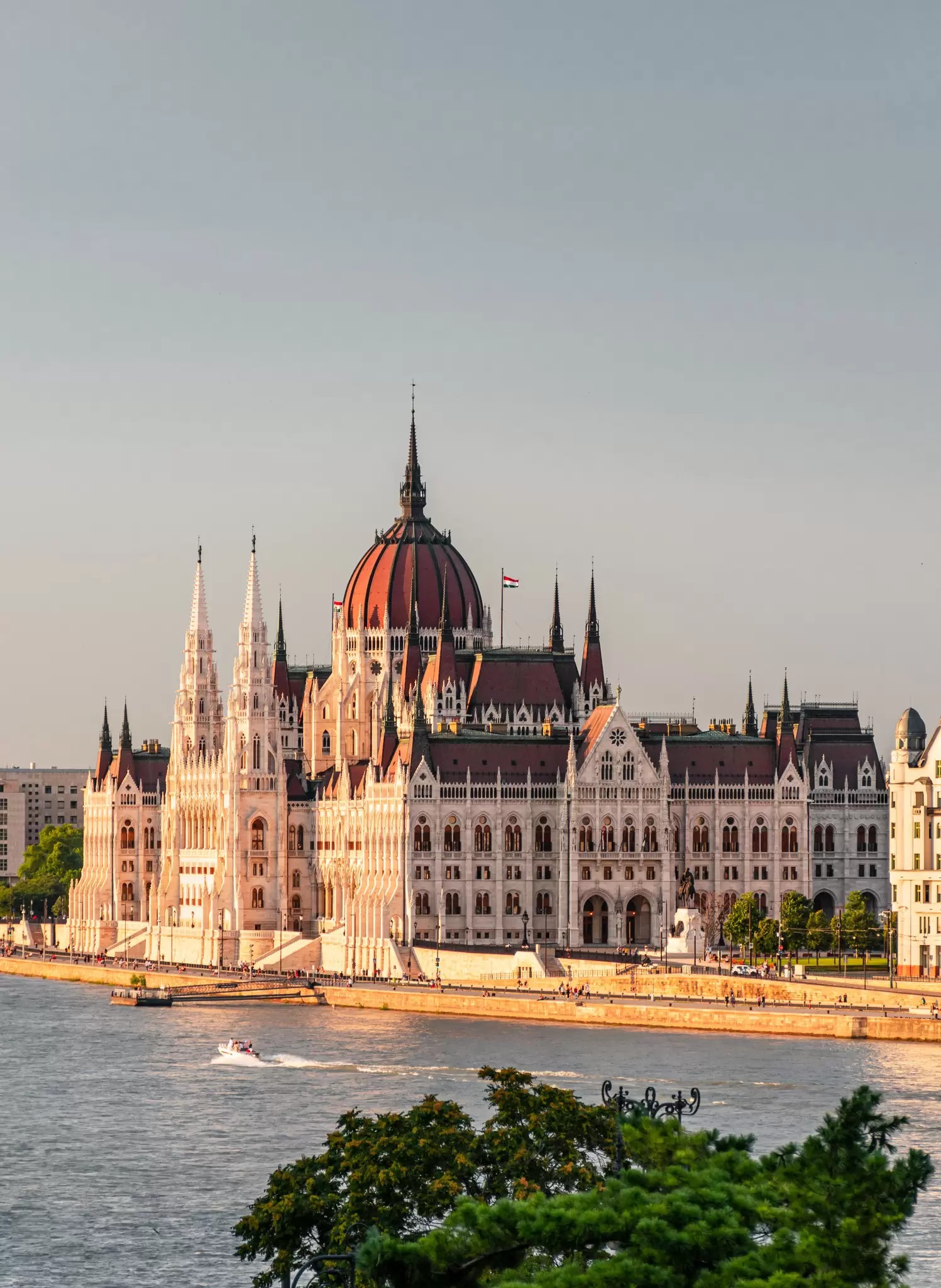
Sculptures of the great and the good – kings, princes and historical figures – gaze out onto the river from the western facade, while the main door, the Lion Gate, is off renovated Kossuth Lajos tér, which has a state-of-the-art subterranean visitors’ center on its northern side, with its own cafe, shop and two exhibition spaces: the eight-room 1000 Years of Hungarian Legislation just outside the entrance and History of the House where the tour concludes.
A Look Within
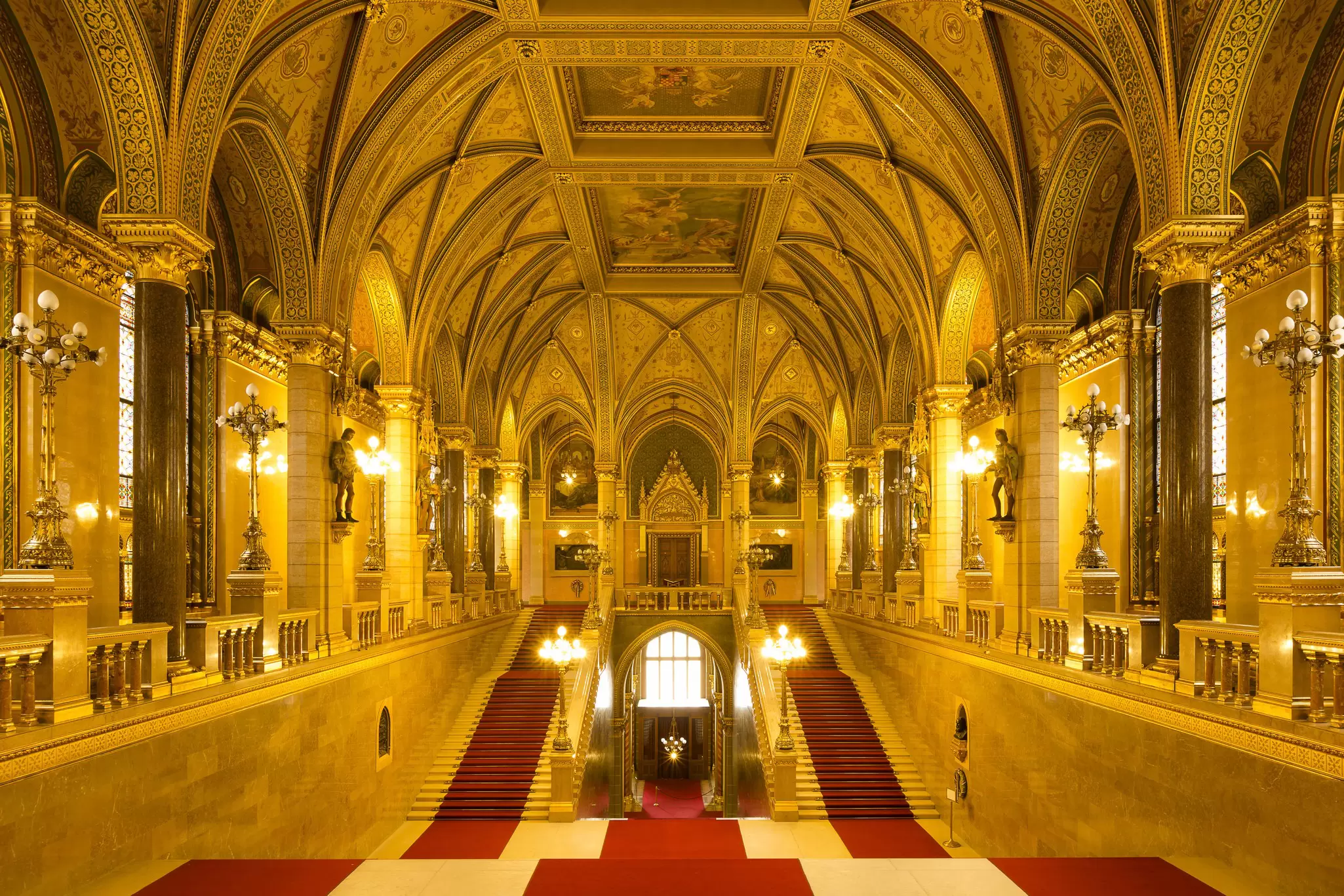
The interior contains just short of 700 sumptuously decorated rooms, but you’ll only get to see a handful on a 45-minute tour by audio guide of the North Wing. From the visitors’ center, ascend the 132 steps of the opulent Golden Staircase with sumptuous ceiling frescoes by Károly Lotz and stained glass by Miksa Roth. A long corridor leads to the 16-sided, 66m-high Dome Hall, where the coronation regalia, including the crown of St Stephen, is on display, along with the 15th-century ceremonial sword, double-cross orb (1301) and the oldest object here: the 10th-century Persian-made scepter with a large crystal head depicting a lion.
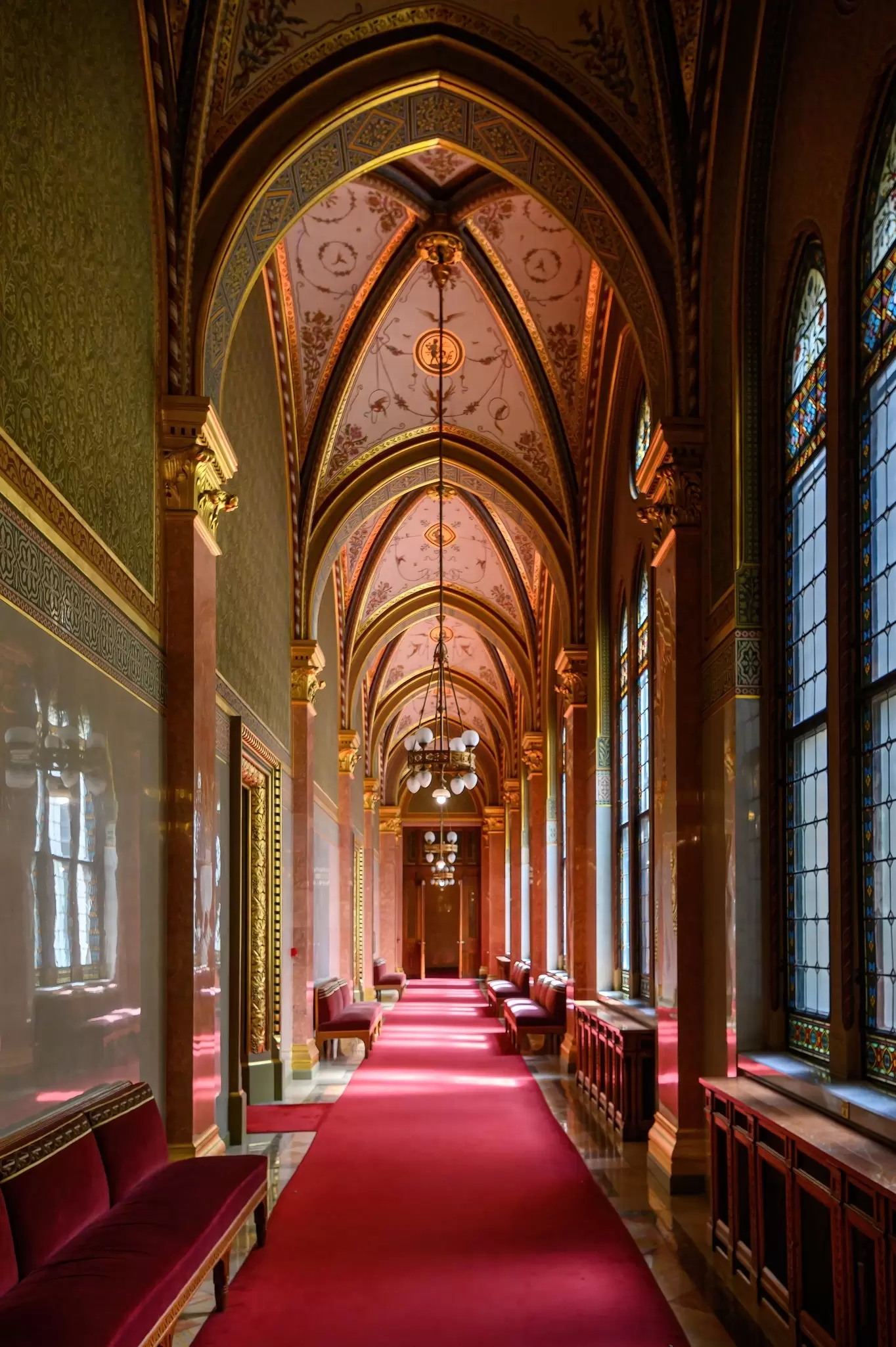
The guards here change hourly between 8am and 7pm. The sweeping 96-step Grand Staircase descends to the Lion Gate, open for MPs only; you’ll move on to the vaulted Debating Chamber, with some three-dozen statues of traditional tradespeople, and the 400-seat Congress Hall, where the upper house of the one-time bicameral assembly sat until 1944. It is almost identical to the National Assembly Hall, where parliamentary sessions are held in the South Wing.
Crown of St Stephen
Legend tells us that it was Asztrik, the first abbot of the Benedictine monastery at Pannonhalma in western Hungary, who presented a crown to Stephen as a gift from Pope Sylvester II around 1000 CE, thus legitimizing the new king’s rule and assuring his loyalty to Rome over Constantinople. It’s a nice story, but it has nothing to do with the 2kg object on display in the Dome Hall. The two-part crown here, with its characteristic bent cross, pendants hanging on either side and enameled plaques of the Apostles, dates from the 12th century. Its provenance notwithstanding, the crown of St Stephen has become the very symbol of the Hungarian nation.
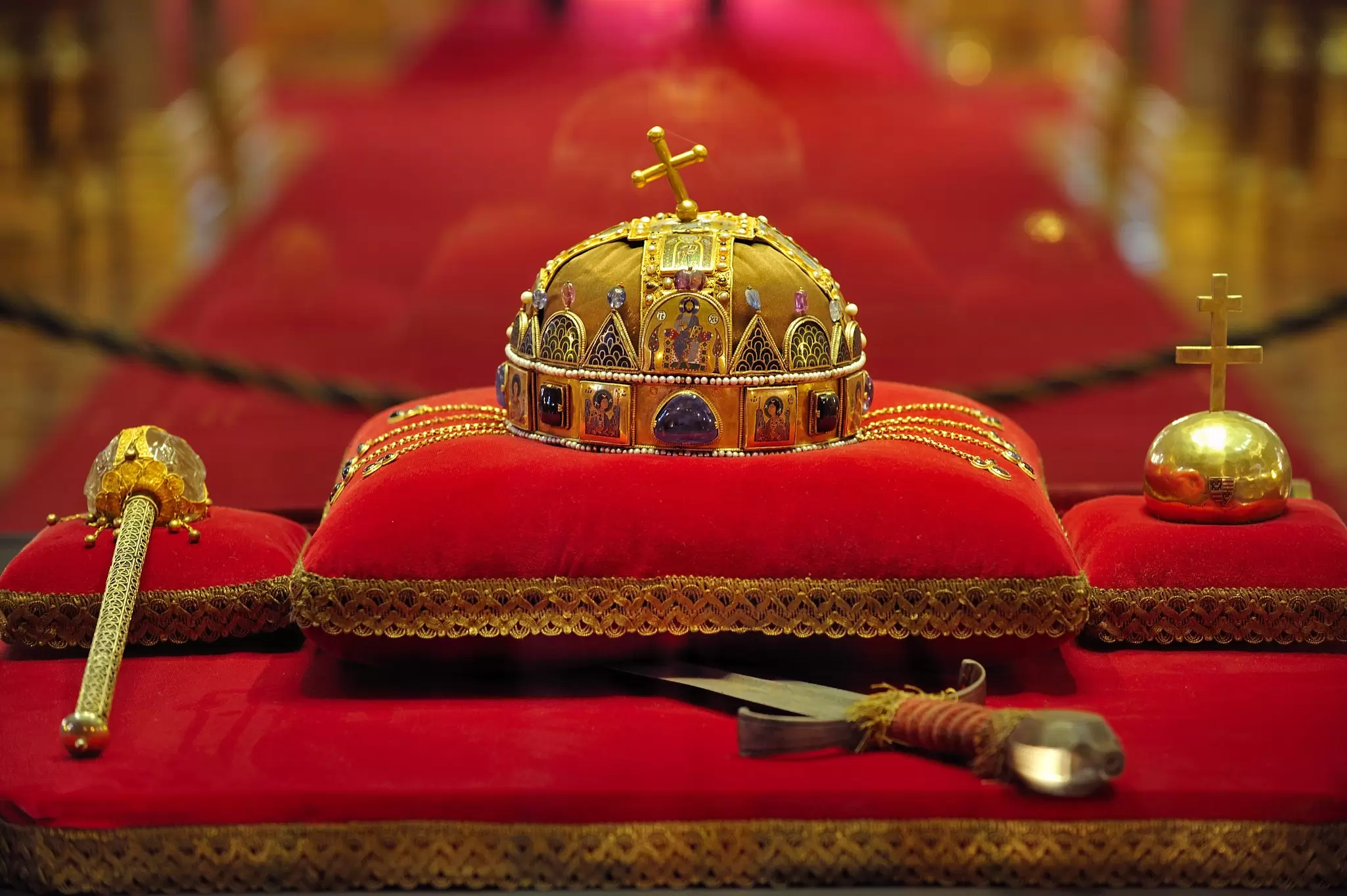
The crown has disappeared several times over the centuries – purloined or otherwise – only to reappear later on. During the Mongol invasions of the 13th century, it was dropped while being transported to a safe house, giving it that slightly skewed look. More recently, in 1945, Hungarian fascists fleeing Budapest ahead of the Soviet army took the crown to Austria. Eventually, it fell into the hands of the US Army, which transferred it to Fort Knox in Kentucky. In January 1978, the crown was returned to Hungary with great ceremony – and relief. Because legal judgments had always been handed down "in the name of St Stephen’s crown," it was considered a living symbol and thus to have been "kidnapped!"