Sep 5, 20269 min read
The Ultimate Pincho Crawl on Calle Laurel in LogroñoSponsored by
Sep 5, 2026
9 MIN READ

Writer
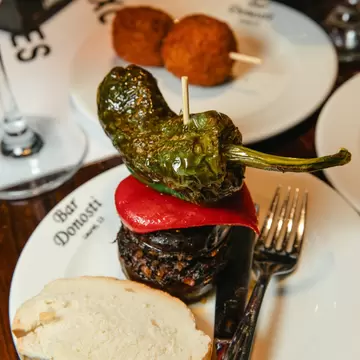
Pinchos at Bar Donosti on Calle Laurel in Logroño, Spain. Andrea Arevalo for Lonely Planet

Writer
The thriving food and drink scene in Logroño, Spain, revolves around wine. Which is really no surprise since it's surrounded by vineyards. Logroño is the capital of La Rioja province in northern Spain, and it sits on the banks of the Río Ebro. This famous river winds through the Rioja wine region, an area incorporating parts of the Basque province of Álava and the autonomous community of Navarra as well as La Rioja province.
Although Logroño is not in the Basque Country, its proximity and cultural ties mean that many of the city’s bars serve Basque pintxos (the Basque spelling, pronounced pinchos, and spelled that way in Spanish): snacks named for the wooden pintxo (cocktail stick) that usually holds them together. Pinchos are individual portions. In contrast, tapas are Spanish snacks served on small plates for sharing.
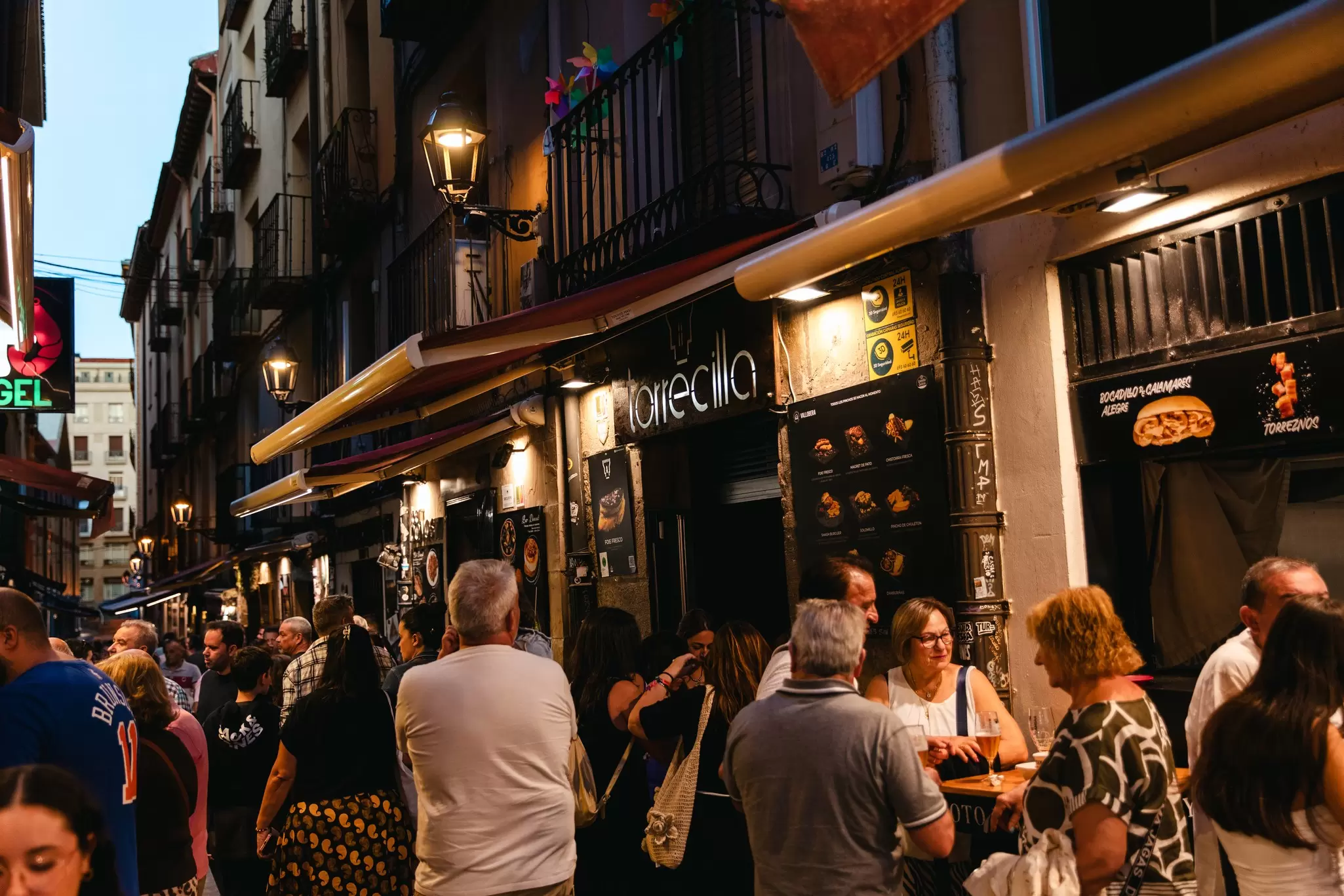
Of all the bustling, bar-lined streets on which to sample pinchos and Riojan wine, Calle Laurel holds the unofficial title as the place for a night out in Logroño. This narrow, 200-meter-long lane is lined with more than 30 bars (with yet more on neighboring Calle San Agustín and Calle San Juan). Many specialize in one tapa or pincho, each designed to pair perfectly with La Rioja’s wines; knowing what to order in each bar is the key to a perfect night of snacking and sipping. Our outing takes in six of Calle Laurel’s most legendary establishments, each famous for a particular bite and put together to make the perfect pincho crawl.
What are pintxos or pinchos? Bite-size Basque bar snacks, usually served on a piece of bread.
What time should I start? Logroño can seem sleepy during the post-lunch siesta. Most bars on Calle Laurel open at midday, shut at around 4:30pm, and reopen at around 8pm. Plan on heading out at around 8:30pm, when the street comes alive with drinkers and diners. Most bars close at around midnight.
How do I order and pay? Order your pinchos and drinks at the bar and pay, then carry them through the crowds to a table or standing space. Keep your eyes peeled and be ready to swoop in on an empty table; the constant flow of punters from bar to bar means tables frequently become free.
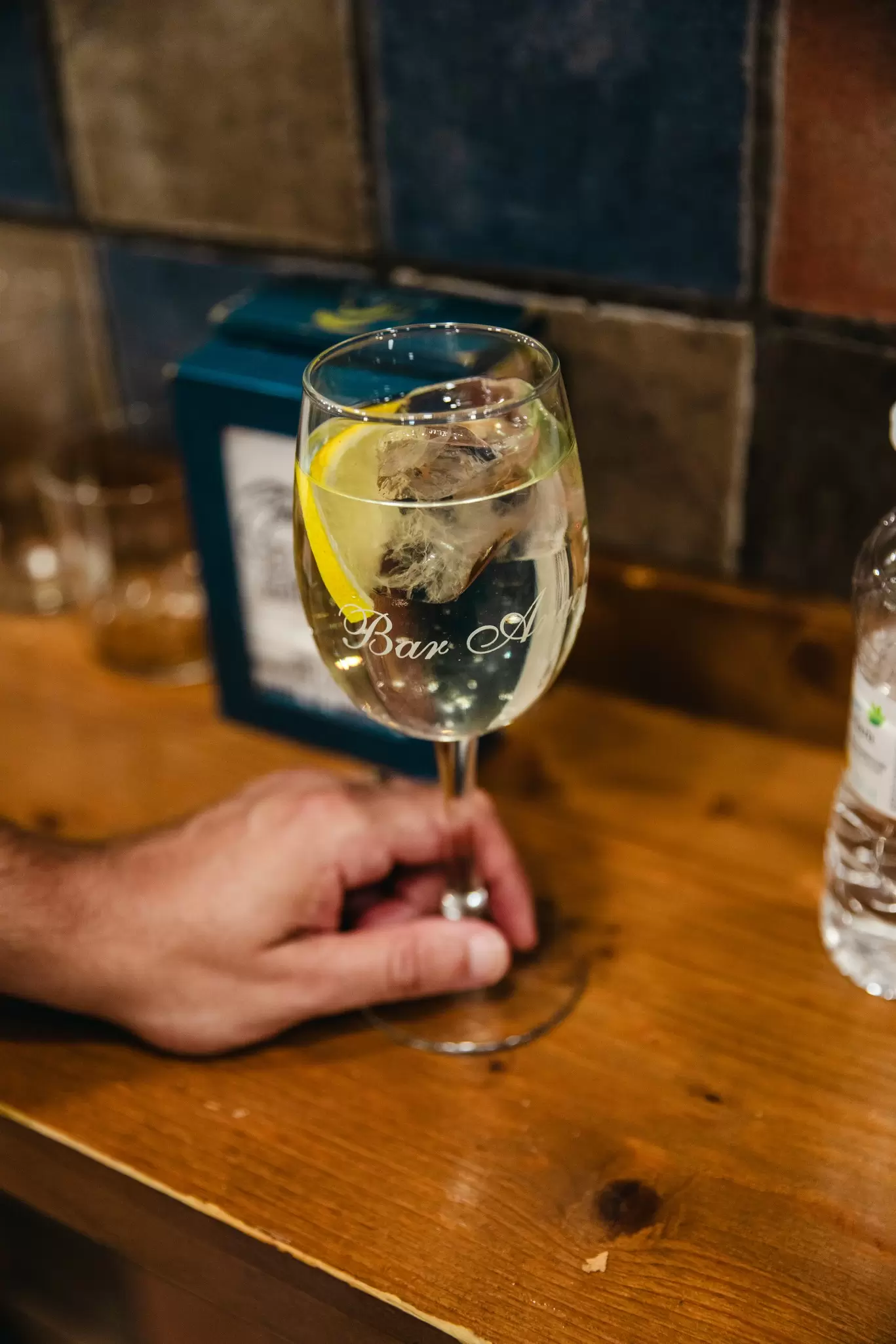
What are the local wines and beers I should look for? Calle Laurel’s bars serve a range of Riojan wines from nearby vineyards by the glass or bottle. For tinto (red), ask for crianza (fruity wines aged for at least two years) or reserva (wines with more complex flavor profiles that have aged for at least three years). Gran reservas are more expensive, oaky wines that have aged for at least five years. Beer lovers should stop at La Rúa del Laurel to try local craft beers from La Rúa Brewery in La Rioja.
Where should I stay near Calle Laurel? For elegant rooms inside a beautiful neo-baroque former post office, stay at Áurea Palacio de Correos; it’s just one block north of Calle Laurel. Nearby, the Sercotel Calle Mayor offers good-value rooms with contemporary decor.
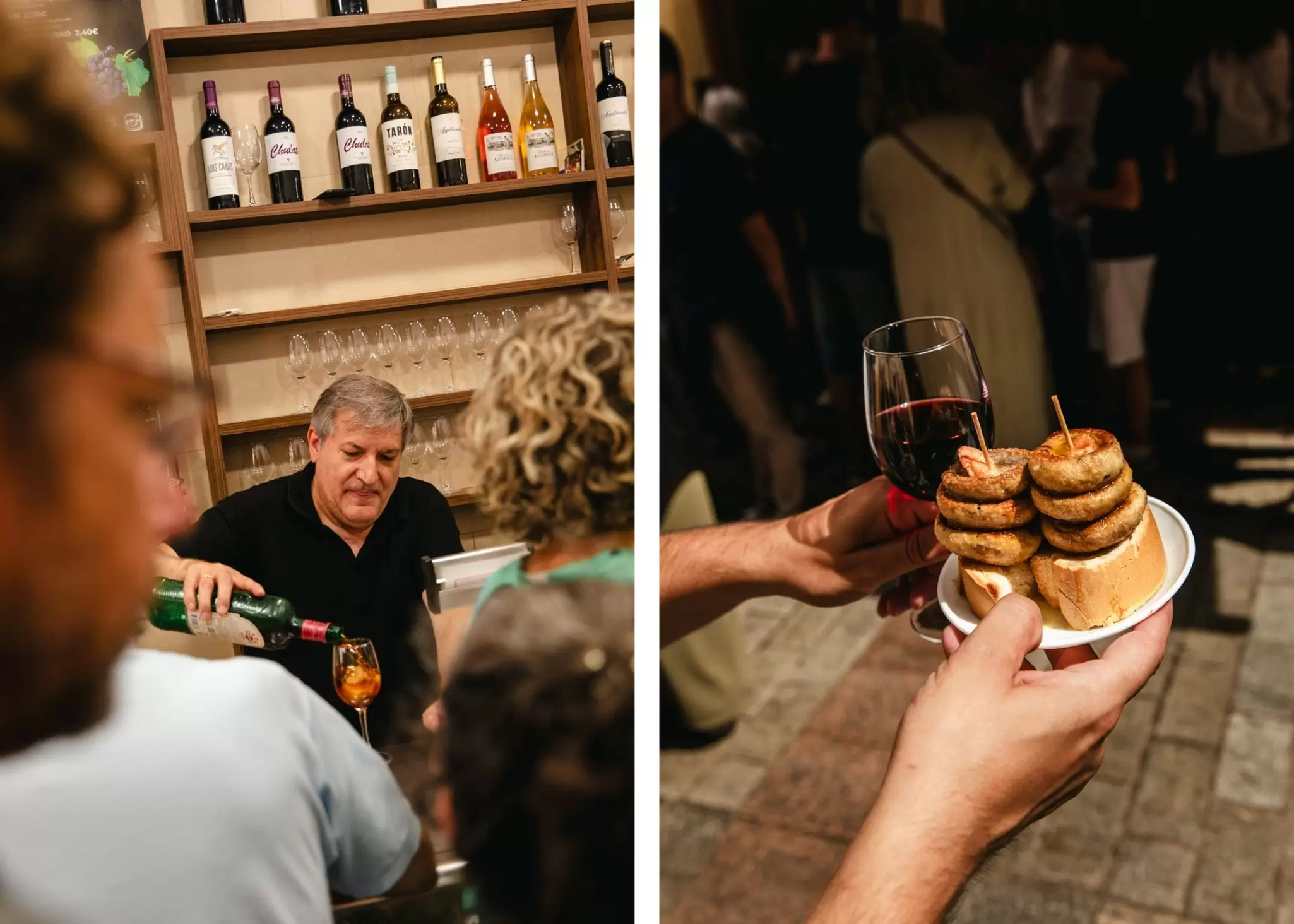
Vibes: Cram inside this narrow bar to order at the counter, then carry your pincho and wine outside to stand around old wine-barrel tables and enjoy.
Small bite to order: Hanging above the door is a mushroom-shaped sign that tells you all you need to know. Since 1972, Bar Soriano has offered just one item: the champi (three grilled mushrooms topped with garlic oil and a shrimp, made fresh and served on a piece of bread).
Drink to get: A blackboard behind the bar lists wines to choose from. Ask for a crianza; a fruity red is the perfect accompaniment to this snack.
Insider tip: To eat your champi without staining your clothes, put a napkin underneath the bread and spear a cocktail stick right through the middle of the pincho. Hold the stick between two fingers underneath the napkin and deliver it to your mouth.
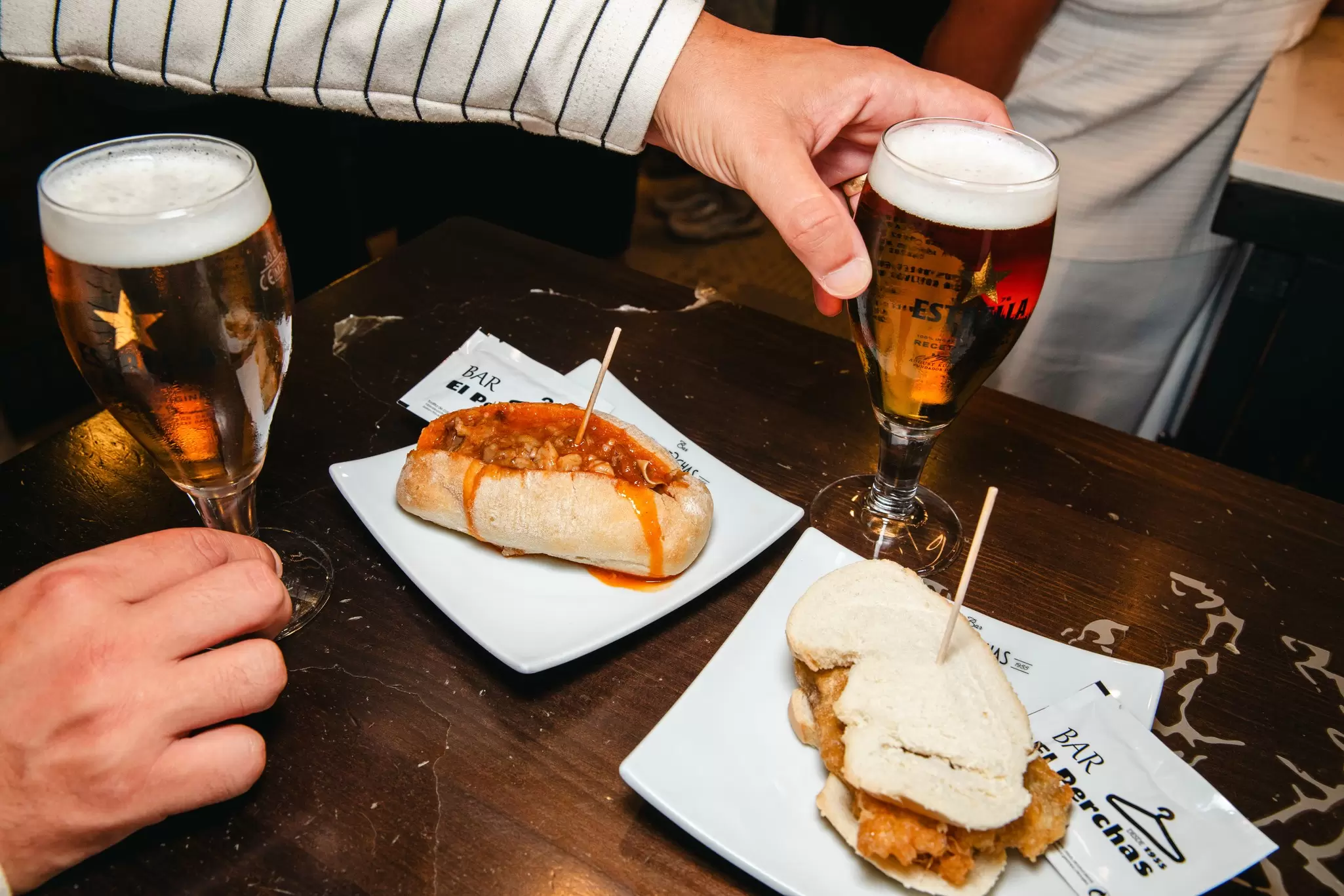
Vibes: A traditional bar with images of cheery pigs keeping watch from the walls, Bar El Perchas has won critical acclaim for its authentic pinchos, made using the same recipe since 1955.
Small bite to order: This one’s for adventurous eaters (vegetarians, look away now); El Perchas specializes in oreja de cerdo (pig’s ear), served in a variety of ways. Try the oreja rebozada (ear fried in breadcrumbs) or the oreja picante (spicy ear).
Drink to get: A cold beer or a glass of young red wine.
Insider tip: The spicy ears are flavored with Riojan chorizo, tomato and Alegría Riojana(a hot local chili pepper).
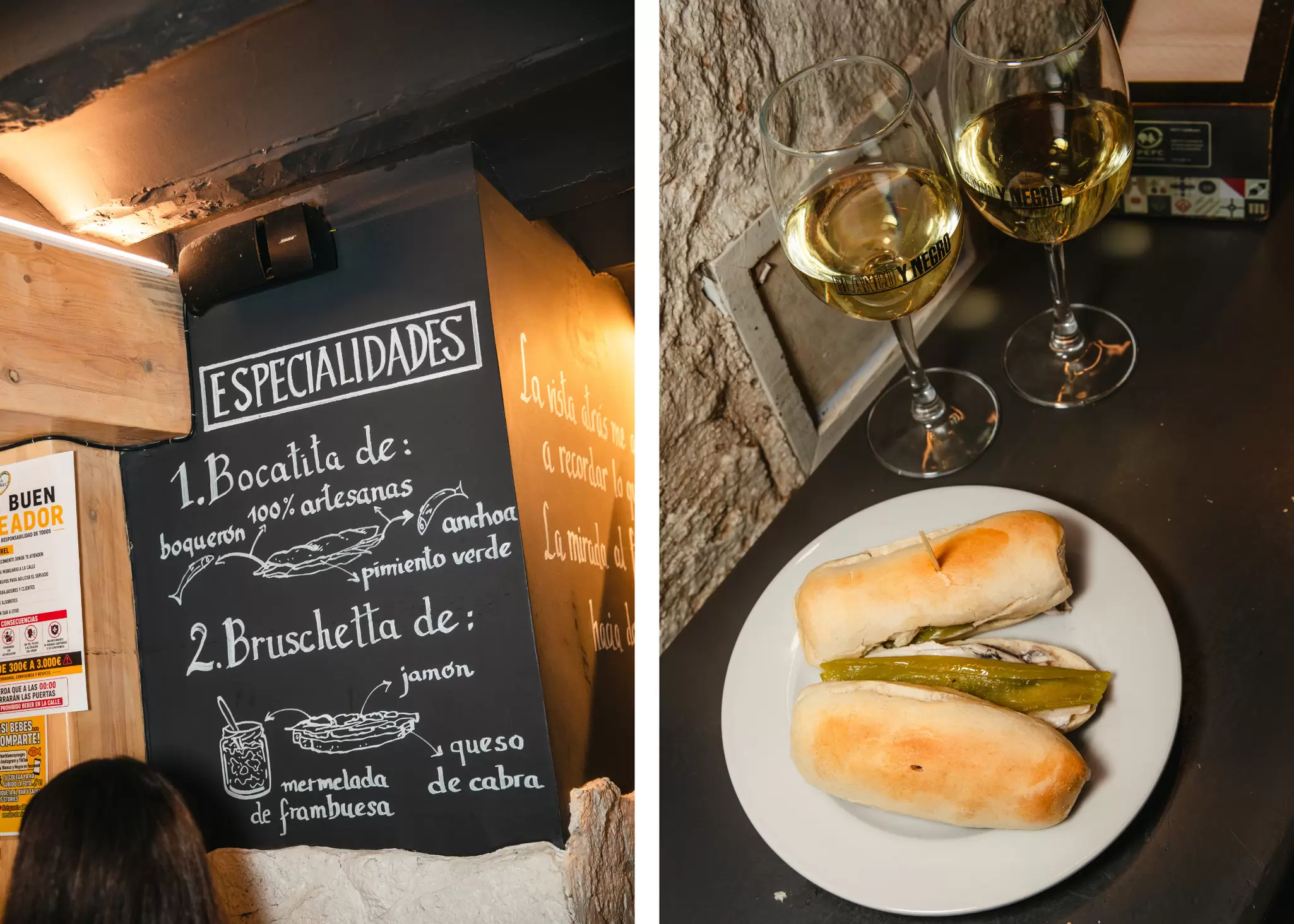
Vibes: In business for more than 100 years, Blanco y Negro is Calle Laurel’s oldest bar. The black-and-white interior feels steeped in history, with exposed stone and brick walls.
Small bite to order: Try the matrimonio, a “marriage“ of cured and fresh anchovies with green pepper, served in a bocatita (a small crusty baguette sandwich).
Drink to get: A crisp Riojan verdejo (a light-bodied white wine with citrus notes) is the perfect pairing for this salty snack.
Insider tip: The bread used to make the bocatitas is baked in-house. Gluten-free options are available.
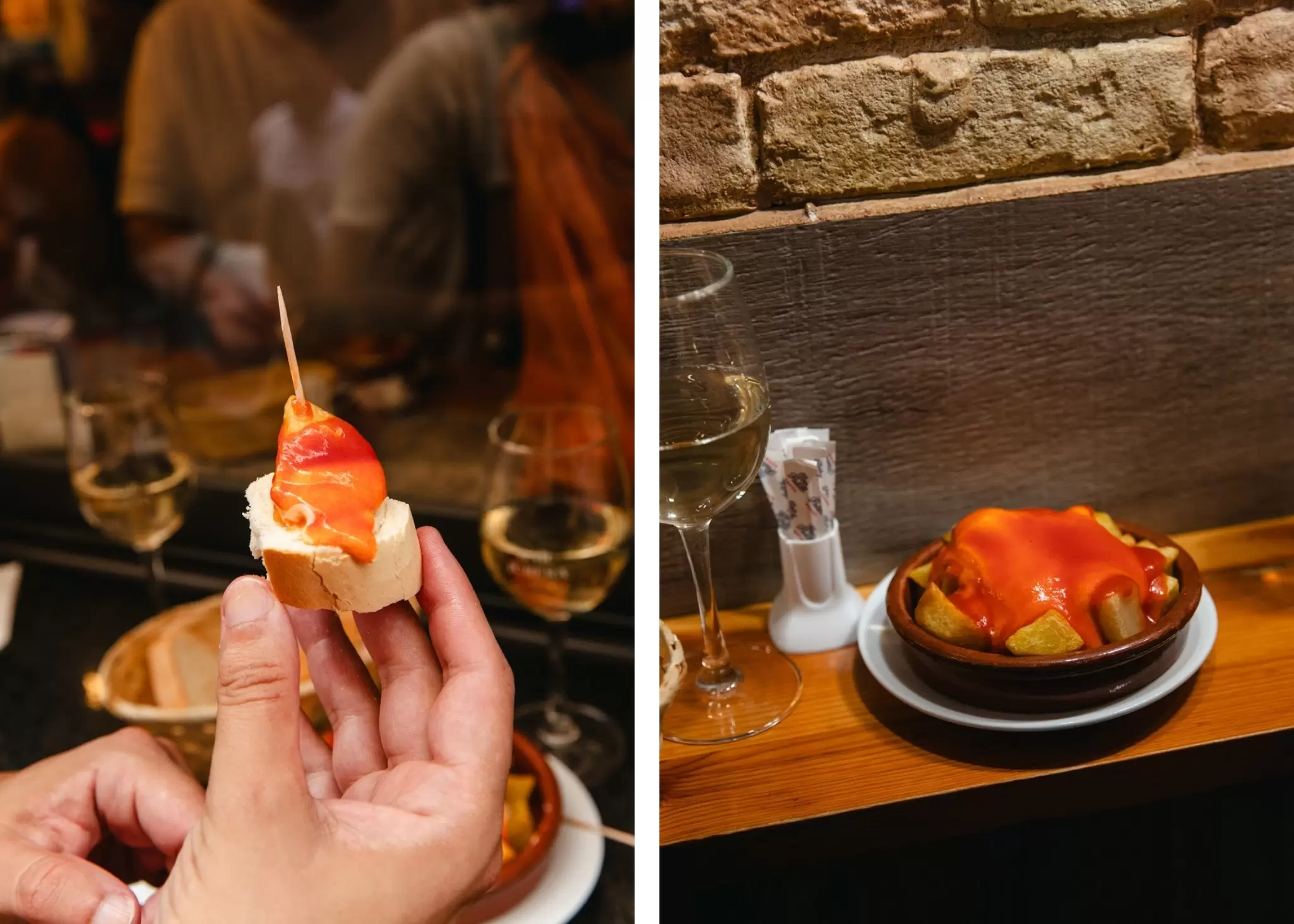
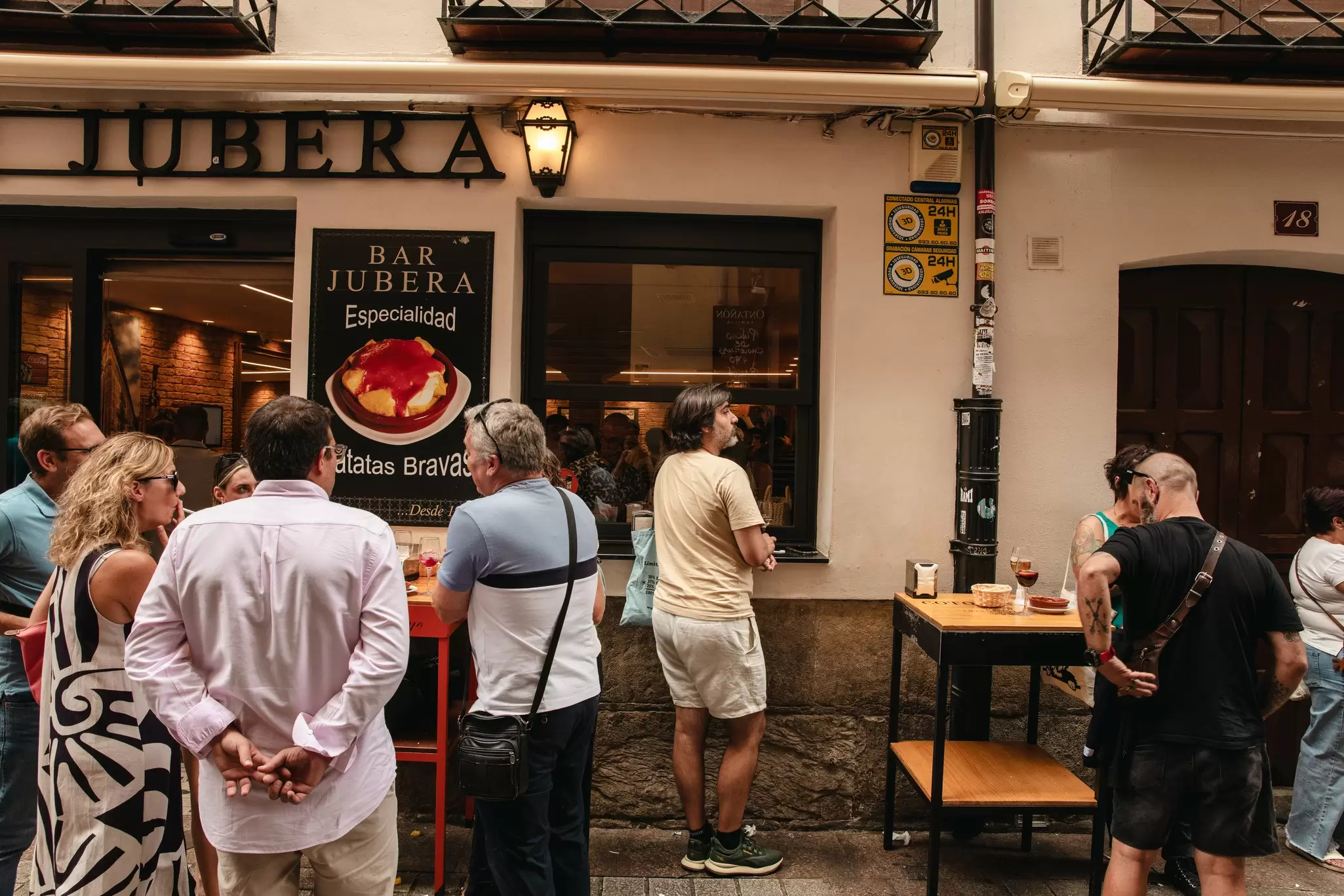
Vibes: You’ll have to shout to make yourself heard over the crowds inside brightly lit Bar Jubera, but you won’t mind because the jovial atmosphere is infectious.
Small bite to order: The house specialty is patatas bravas (cubes of fried potatoes in a spicy tomato sauce with aioli).
Drink to get: Sparkling wines pair well with patatas bravas. Order a glass of Espumoso de Calidad de Rioja (sparkling Rioja wine).
Insider tip: This is a tapa for those who like their bravas picante (spicy); the tomato sauce has a notable heat.
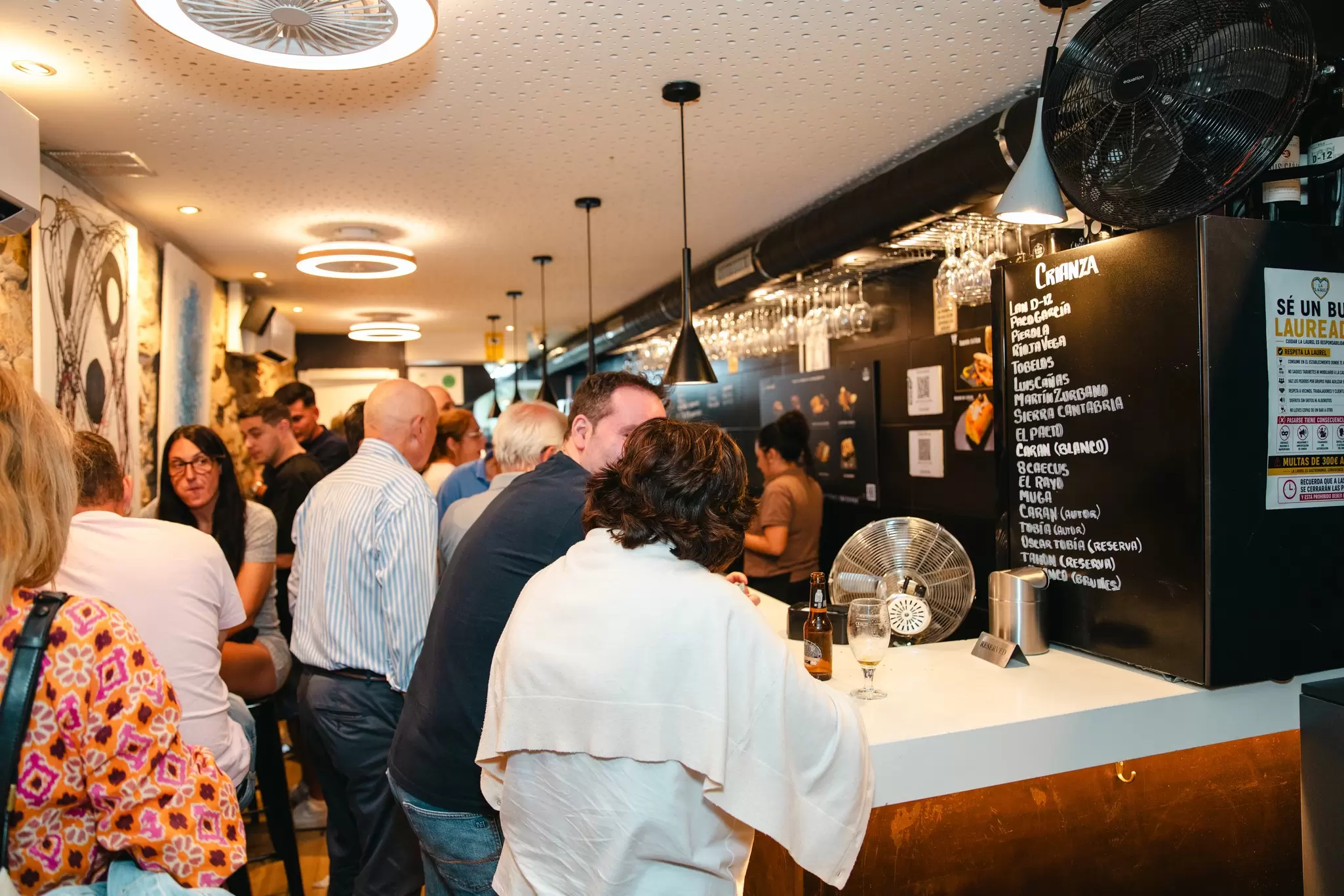
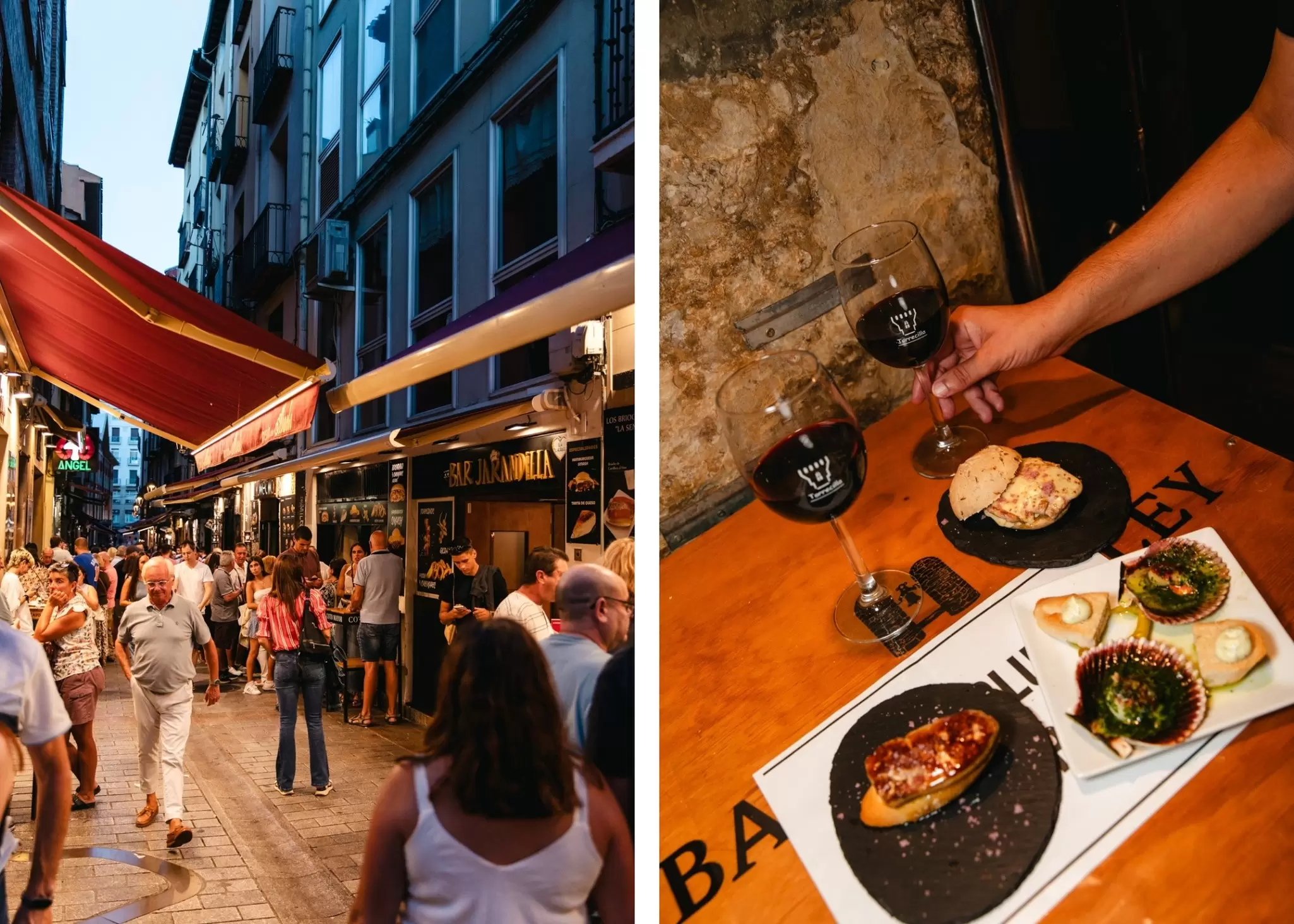
Vibes: Bar Torrecilla has a sleek, contemporary interior with art on the walls and a more upscale feel than other Calle Laurel bars. Tapas are made fresh to order.
Small bite to order: Try the solomillo tapa. This is tenderloin served with honey and mustard sauce and a barbecue foam in a nut and raisin bread roll. The foie fresco (foie gras) is popular here too.
Drink to get: Check the blackboard behind the bar for a list of local wines served by the glass; choose a crianza.
Insider tip: The tapas here are nicely presented and served on slate plates. Have your camera ready for social media posts.
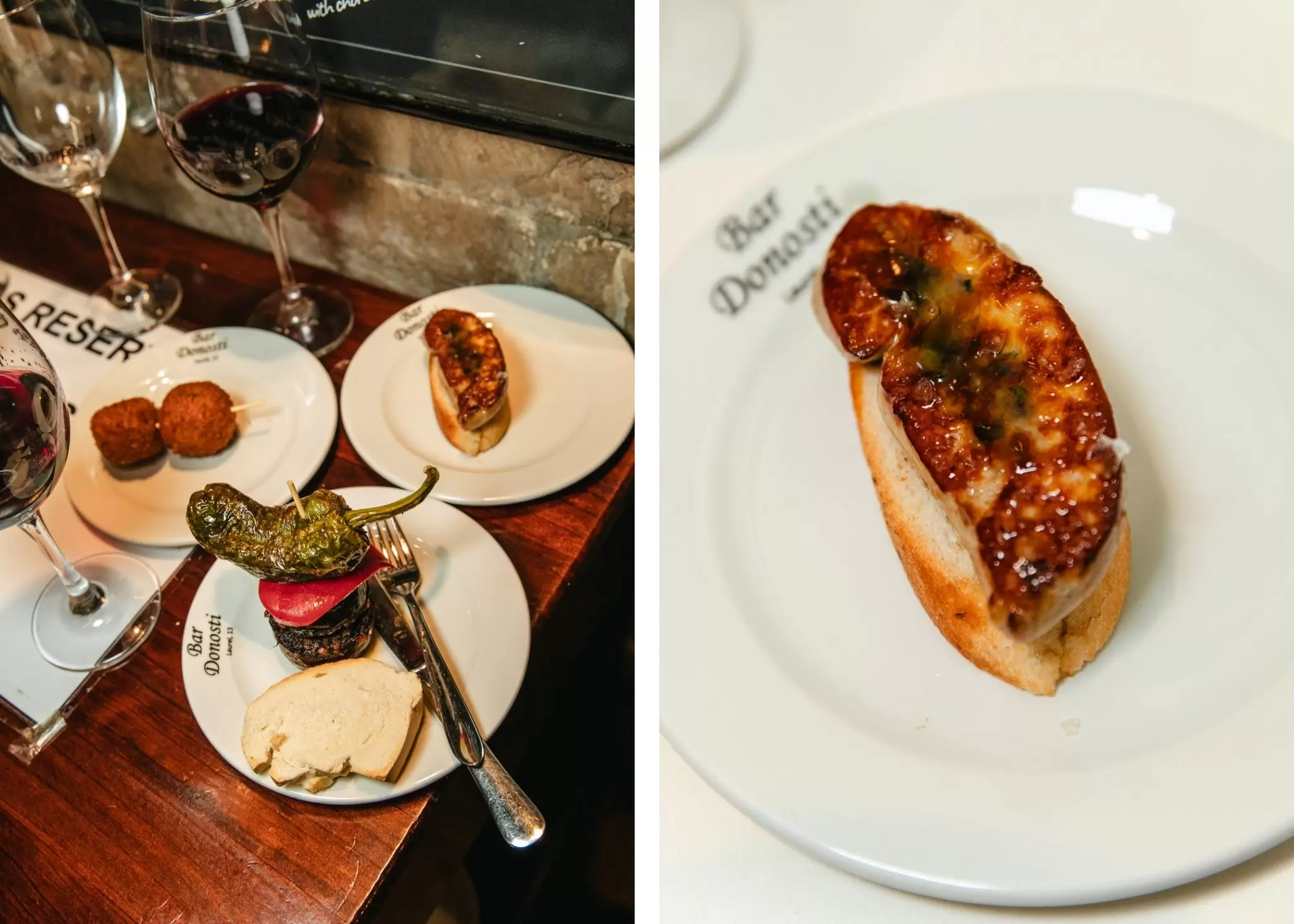
Vibes: Bar Donosti is a family-run bar that’s a local favorite. It’s right in the center of Calle Laurel, making it the perfect place to end the night with new friends.
Small bite to order: The best pincho here is foie a la plancha (grilled foie gras), served on toast with lavender jam.
Drink to get: A bold Riojan red will go well with this dish. Try a glass of reserva with oaky notes.
Insider tip: The morcilla (blood sausage) is also good here, while the croquetas (croquettes) have a local following. Ask at the bar for gluten-free options.
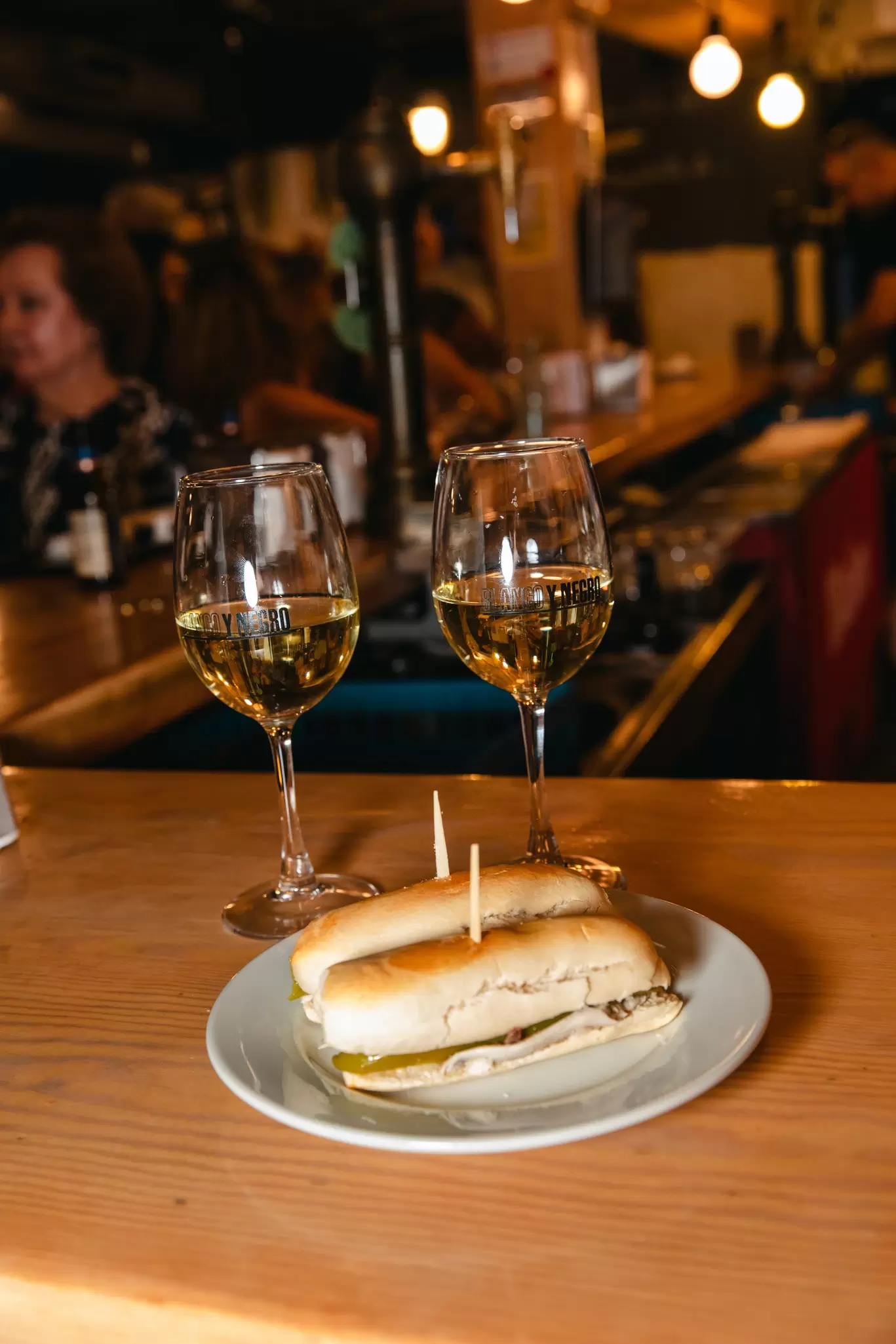
You'll see these items on a lot of menus. Here is what to expect:
Champiñones a la plancha (grilled mushrooms): Made with mushrooms grown in La Rioja, this is the signature pincho of Calle Laurel.
Morcilla (blood sausage served with La Rioja's mild pepper): A regional specialty.
Croquetas (croquettes): Deep-fried fritters made with bechamel sauce; popular fillings include jamón (ham) and bacalao (cod). Try them at Divina Croqueta.
Pimientos rellenos (stuffed peppers): In La Rioja, this local staple comes filled with minced beef or pork flavored with a range of herbs and spices.
Seasonal specialties: In fall, look for pinchos made with wild mushrooms. In summer, cool down with an ice cream from Heladeria della Sera on Calle Portales.
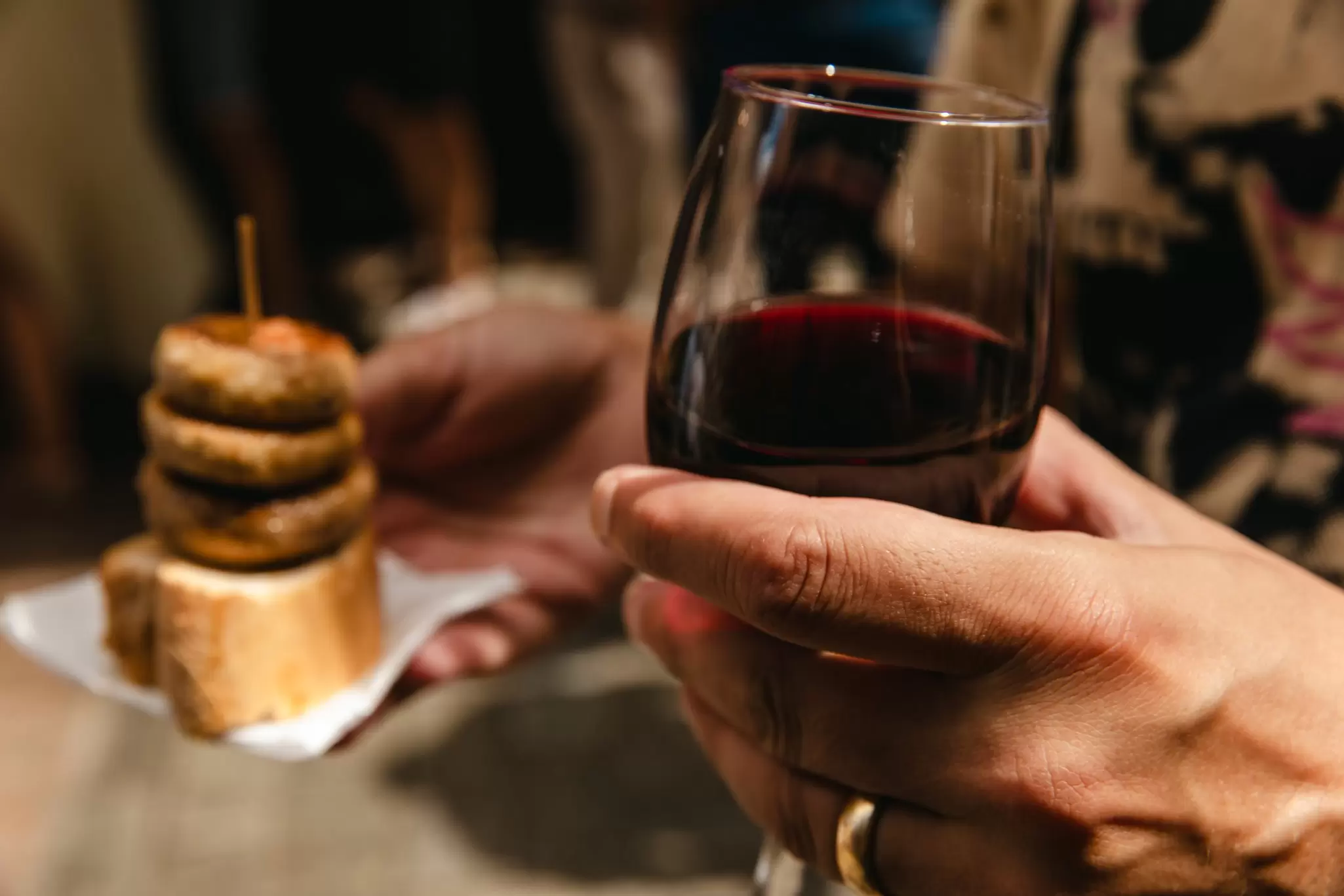
Local Rioja wine by the glass: Most Riojan reds are tempranillos, but garnacha is on the rise, particularly in the Rioja Oriental region, east of Logroño.
Vermut: Served on ice, vermouth is the ideal pre-pincho aperitif. Head to Terraza del Laurel for vermouth on tap.
Clarete: Not to be mistaken for rosé (which is known as rosada in La Rioja), clarete is a light Rioja wine made with a blend of red and white grapes, which pairs well with pinchos.
Top tip: You’ll be charged as much for mineral water as wine in Lorgroño, so don’t let your budget hold you back.
Many visitors arrive in Logroño on foot: the city is a popular stop with pilgrims walking the Camino de Santiago. You can also explore the region by bicycle.
The closest international airport is Bilbao, around a one hour and 30 minute drive north of Logroño. You can also fly in and out of Madrid Barajas international airport or Zaragoza. There are direct tains from Logroño to Bilbao, Zaragoza, Madrid and Barcelona. Buses connect Logroño with Pamplona and other destinations.
Explore related stories