Jun 1, 20269 min read
Guide to Overtourism in Nepal's Everest Base Camp RegionJun 1, 2026
9 MIN READ
Writer
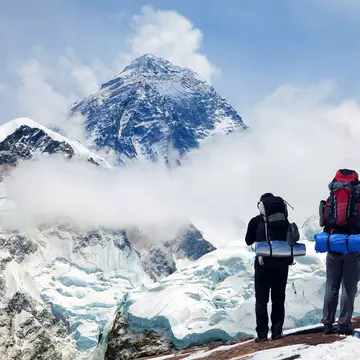
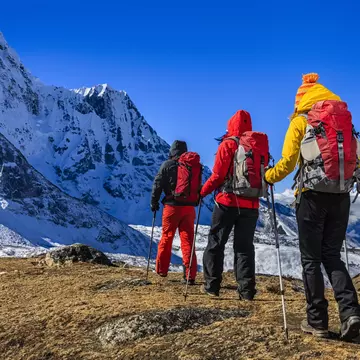
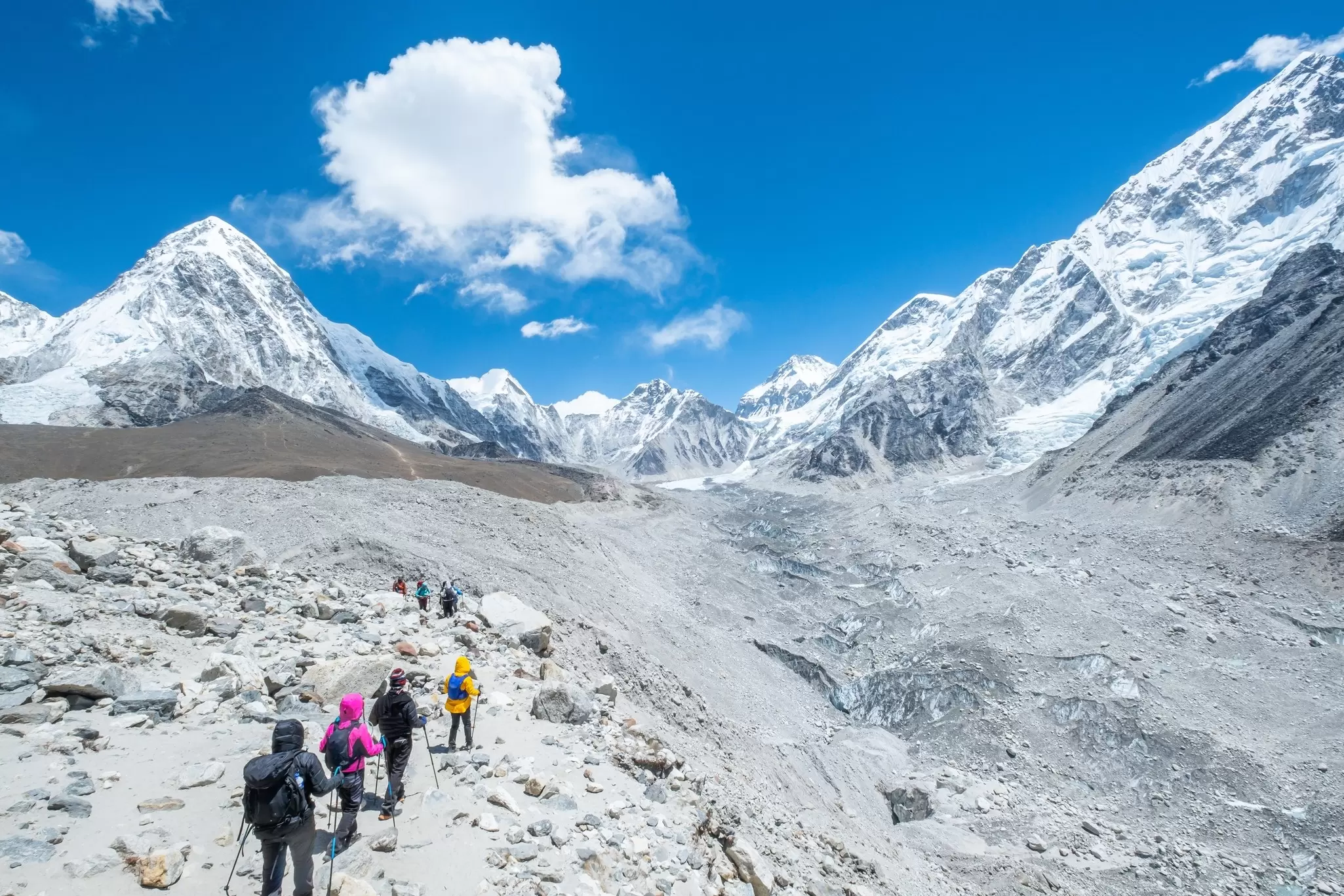
Trekkers in Khumbu Valley, Sagarmatha National Park, Nepal. CravenA/Shutterstock
Writer
Lonely Planet may earn a commission from affiliate links on our site. All recommendations and reviews reflect our own independent opinions.
Few will ever stand atop Everest. For many, base camp is the closest they’ll come to the world’s highest peak.
And that’s becoming an issue, as thousands of trekkers from around the world set out for Nepal’s Everest Base Camp (EBC), eager to tick off the iconic destination from their bucket lists, mostly during spring and fall months – March, April, September and October – when clear skies offer unobstructed Himalayan views. The journey mostly begins in the capital, Kathmandu, or in Ramechhap district, with a stomach-churning flight to Lukla, the gateway to Everest, known as Sagarmatha in Nepali.
Nearly 59,000 people trekked to EBC between mid-July of 2024 and 2025, with about 80% arriving in the Khumbu region during the peak spring and fall seasons. For comparison, only about 34,500 visited the region a decade ago. Overcrowding has become a growing concern in Khumbu, where trail congestion, packed teahouses and mounting waste are straining local infrastructure and the fragile mountain ecosystem.
“We’re mostly promoting blue sky tourism and that’s creating immense pressure during peak seasons,” said Raj Gyawali, founding director of socialtours, a tour company which promotes sustainable travel. “EBC trek can be done in other months – the mountains are always going to be there. You might need a little extra time, but it’ll create far less pressure on the place and the people.”
Here are some ways to beat the crowds, travel sustainably and get the best of a once-in-a-lifetime trip to the world's rooftop.
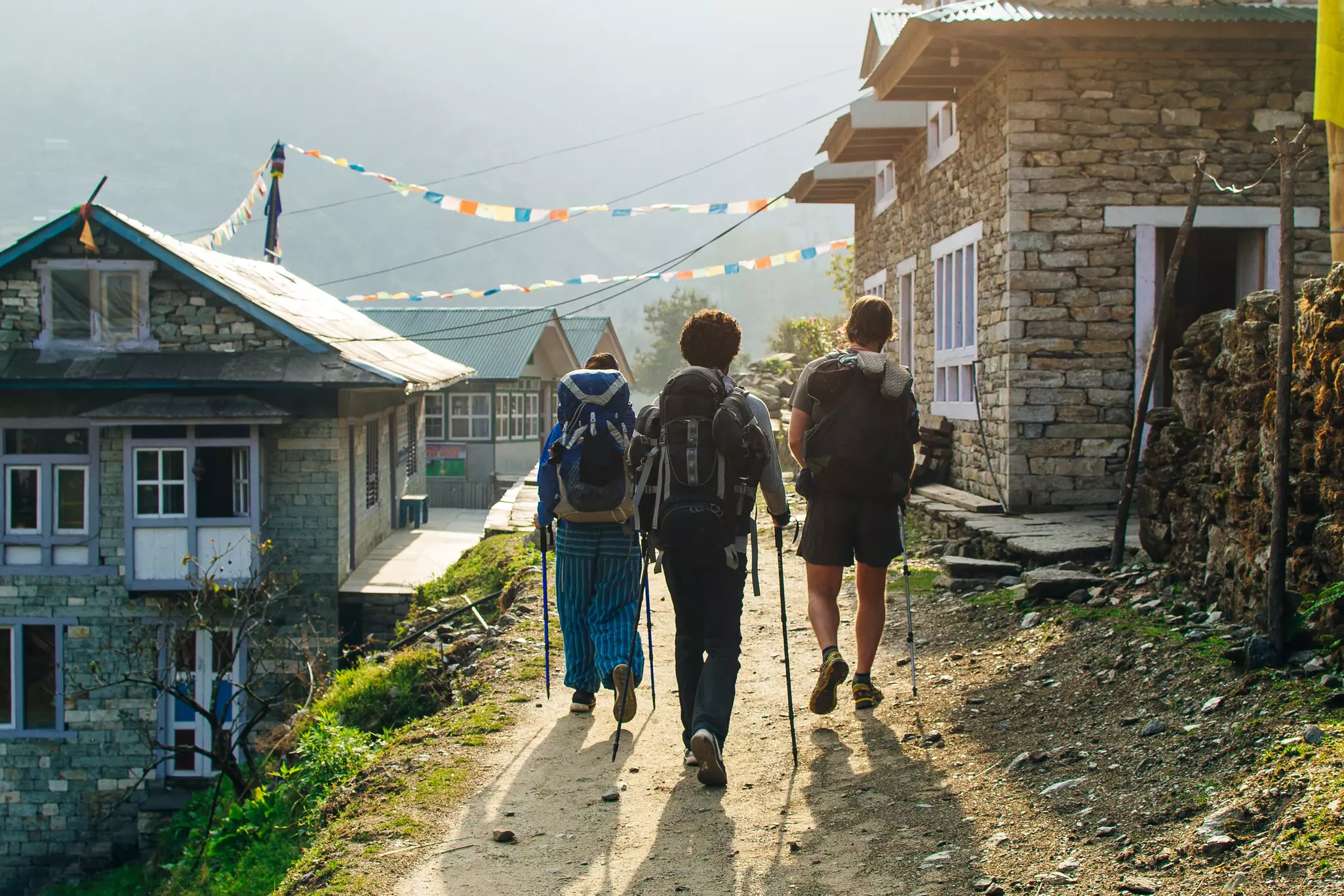
If you’ve seen the viral 2019 photo of mountaineers lining up to scale Everest, expect similar congestion along the EBC trail during peak seasons, as trekkers, porters and yak caravans take turns to pass the narrow paths. To avoid the crowd, travel during the shoulder months of December, January, February and May, when trails are quieter and teahouses have plenty of vacant rooms.
Traveling during shoulder months also provides steadier income to local businesses, a vital lifeline for the Khumbu region’s roughly 9000 residents. Timing your trek around the region’s major festivals, such as Mani Rimdu, Gyalpo Losar and Dumje, offers an enriching experience of Sherpa culture and natural landscapes.
“You’ll end up getting the best service in the less crowded months,” says Gyawali. “Also, December is the new October now with climate change and changing weather patterns.”
While October marks the end of the monsoon, climate change has altered the weather. In October and November 2025, the country received nearly 300% more precipitation than normally expected during those months. This has a particularly adverse impact on EBC trekkers, as flight cancellations can stretch for days at the highly weather-dependent Lukla airport.
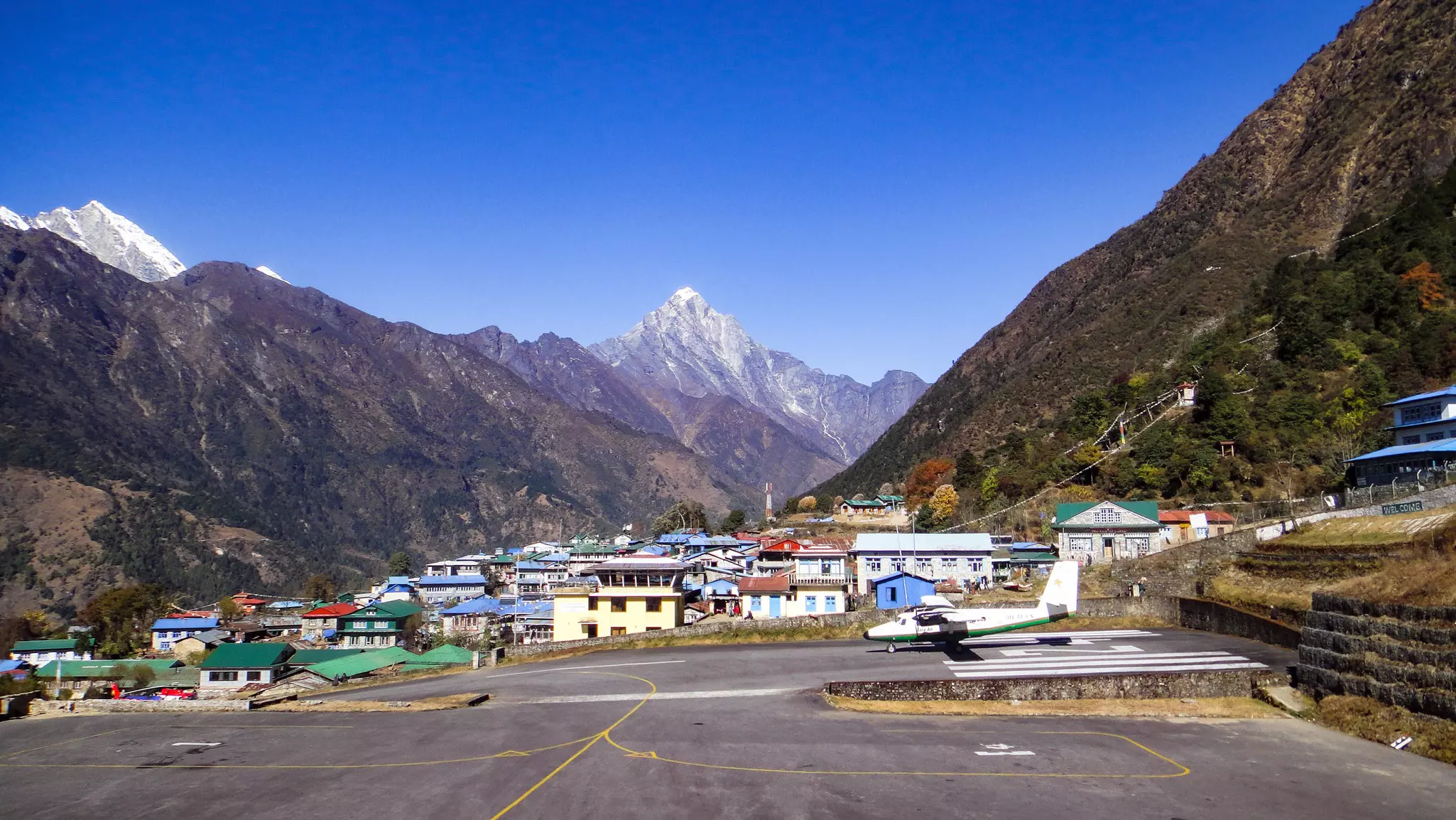
During peak season, travelers usually jostle for limited flights to Lukla, but taking an overland route offers a quieter and more rewarding alternative. Estimates suggest that carbon emissions from the approximately 30-minute flight from Kathmandu to Lukla amount to 415.8kg of carbon dioxide per passenger, with quick helicopter rides for an EBC breakfast experience creating noise pollution that affects both the environment and wildlife.
Take the “pioneer’s route” taken by the first Everest summiteers, Tenzing Norgay Sherpa and Sir Edmund Hillary, starting from Jiri to Lukla and onward. Adding roughly an extra week to the standard 12-day trek opens a window to Nepal’s diverse landscapes and cultures, including stops in the Sherpa village of Junbesi and Thupten Choling Monastery, an important center of Tibetan Buddhism in exile.
For time-constrained trekkers, adding an extra day or two allows exploration of nearby villages, such as Phortse and Thame, and local monasteries along the standard EBC trail. Phortse, known as the “village of climbers,” is often missed but offers a glimpse into the lives of Sherpa mountaineering families, while Thame acquaints visitors with Sherpa culture and the impacts of climate change in the region.
“EBC is not just about mountains,” says Shanti Rai, co-founder of the women-run travel company Duluwa Outdoors. “It’s also about the people, and spending time in villages allows visitors to learn about the community and how their travel is having an impact [on local communities].”
She says visitor interactions can mostly be limited to interactions with hotel owners while traveling in large groups, as visitors race to beat the crowds and reach the base camp. But a pre-arranged side trip that deviates from the standard trail can offer trekkers a more personal, enriching and a learning experience. “Hire a local expert or guide, even for an hour, if you can,” Rai says.
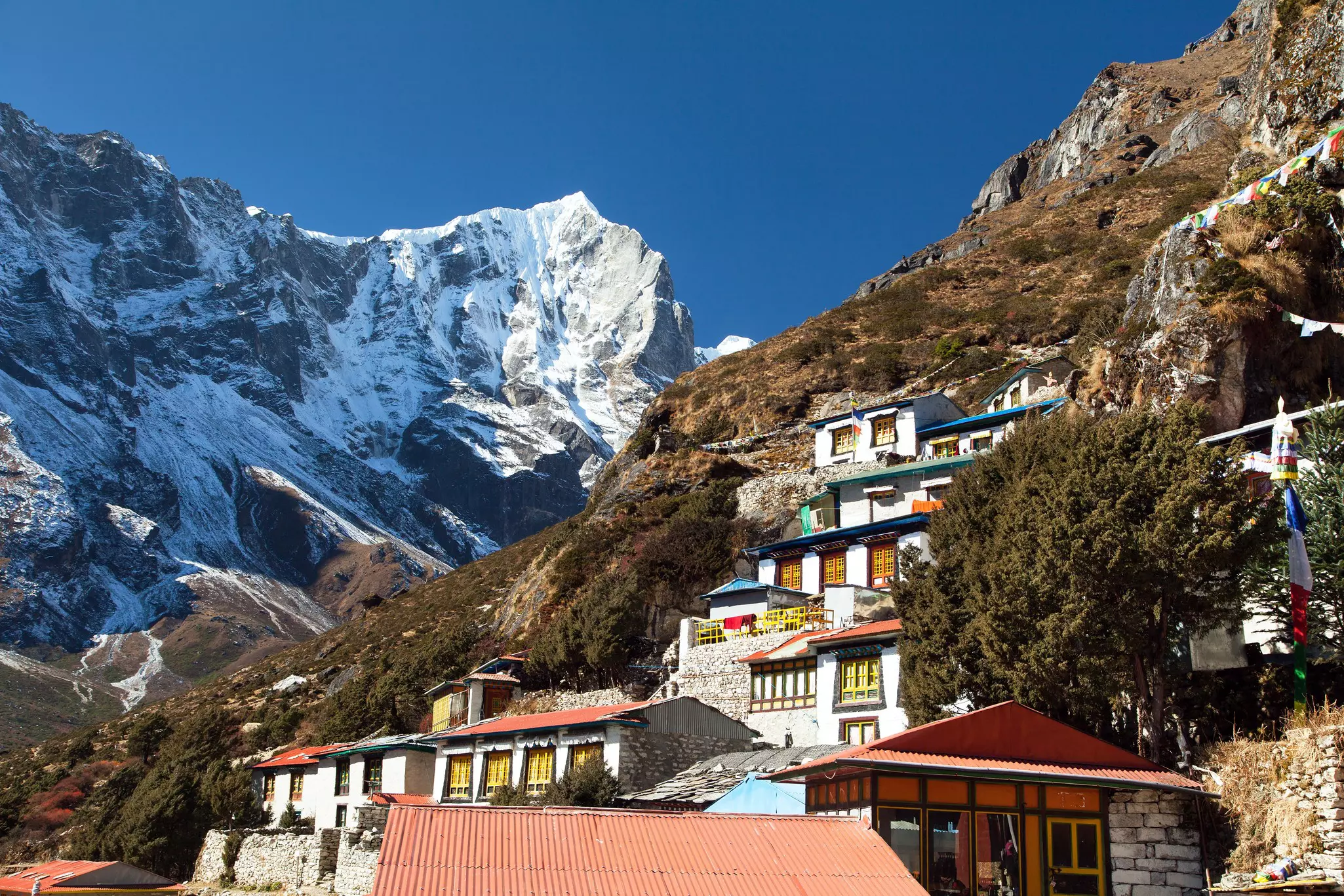
While EBC is the destination, the journey can be undertaken in multiple ways, though some can be strenuous and may take additional days.
“That’s also part of the Nepali ethos,” says Gyawali. “If you want to achieve something, you need to make an effort – it’s like a pilgrimage. The trek doesn’t have to be concentrated in four months, which is not a good experience for everyone involved.”
The Three Passes trek follows a high-altitude circuit across Renjo La, Cho La and Kongma La via the pristine Gokyo Lake to the base camp. The route through Panch Pokhari is longer and offbeat, allowing trekkers to cross Zatr La before joining the main EBC trek. Meanwhile, the trek via Pikey Peak starts from Dhap Bazaar, an eight-hour bus ride from Kathmandu, and connects with the traditional Everest route at Junbesi – a good option for those willing to skip flying.
Chhukung Valley, located east of the popular stops of Pheriche and Dingboche, branches off from the main EBC trail and offers a quieter route. The Bhote Koshi Valley, located west of Namche Bazaar, is another less-crowded and culturally rich valley that serves as an alternate route to EBC.
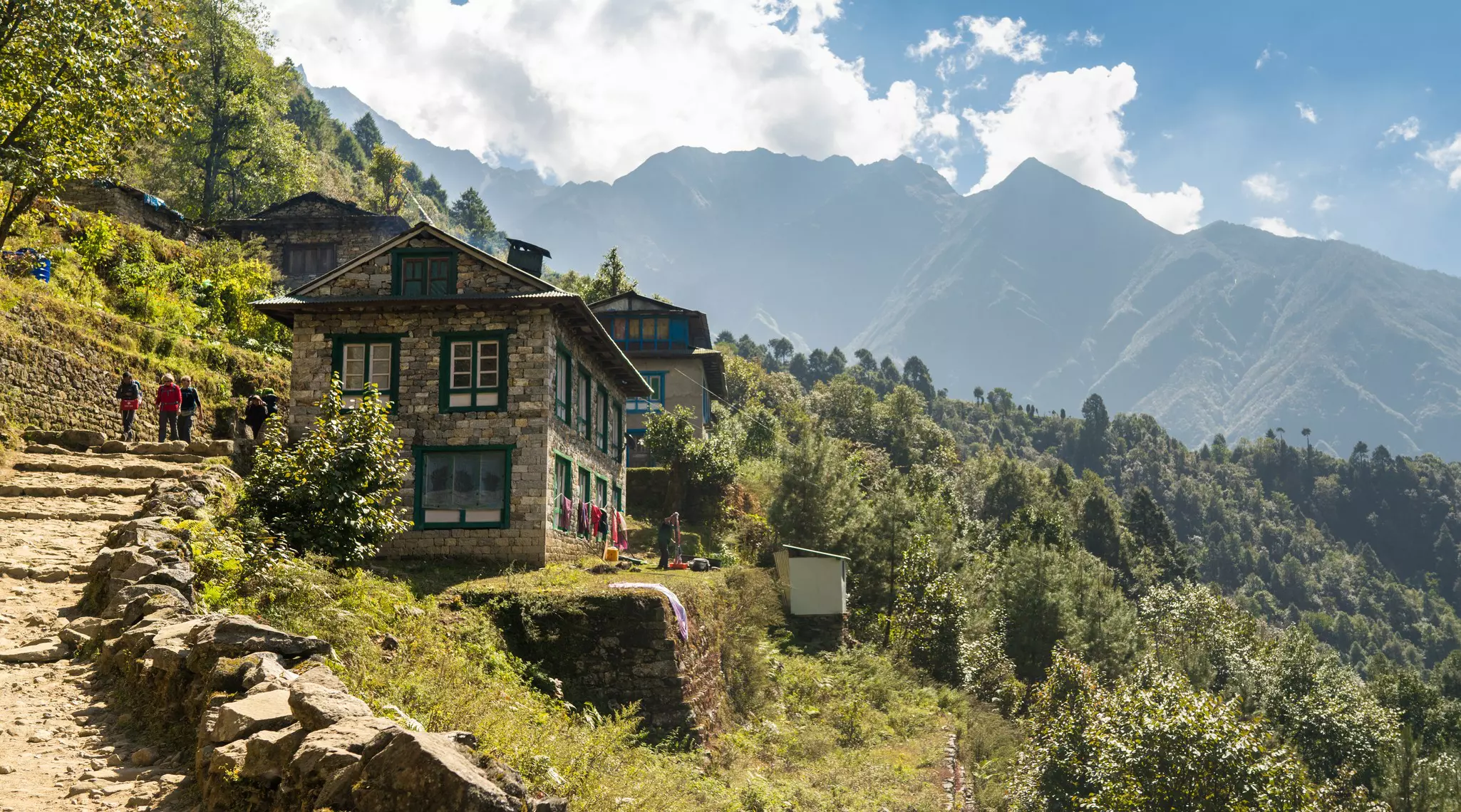
Almost all teahouses and lodges along the EBC trail are locally run, but choosing sustainable options helps reduce the carbon footprint of overtourism. Many lodges rely on LPG cylinders carried by mules or porters – a common sight along the trail – transported from Kathmandu, alongside firewood used for cooking and heating.
Check whether your accommodations use renewable energy instead – solar panels are becoming increasingly common and visible on rooftops throughout the trek – or yak dung-powered heaters to warm common living areas. Also, reconsider hot showers if the lodge uses gas heaters, as they increase your carbon footprint.
There are also premium accommodations such as Mountain Lodges of Nepal, employing mostly locals, sourcing farm-to-table recipes and working closely with the Pasang Lhamu Foundation – named after Nepal’s first woman mountaineer to scale Everest – to improve local infrastructure and livelihoods, and give back to the community.
“Western” food items such as pizzas, burgers and spaghetti are widely available along the trek, but it’s better to opt for meals made with locally grown and sourced ingredients. Potatoes and buckwheat are regional staples, and dishes such as shyakpa or rikikur – the Sherpa potato stew and pancake, respectively – are widely available.
When in groups, consider ordering the same dish (rather than a variety of options) to reduce cooking time and energy use.
“Explore small eateries or bhattis [serving snacks and alcoholic beverages] outside the lodges, especially in places like Namche Bazaar and Lukla, so you can taste authentic food and help small local businesses,” says Rai.
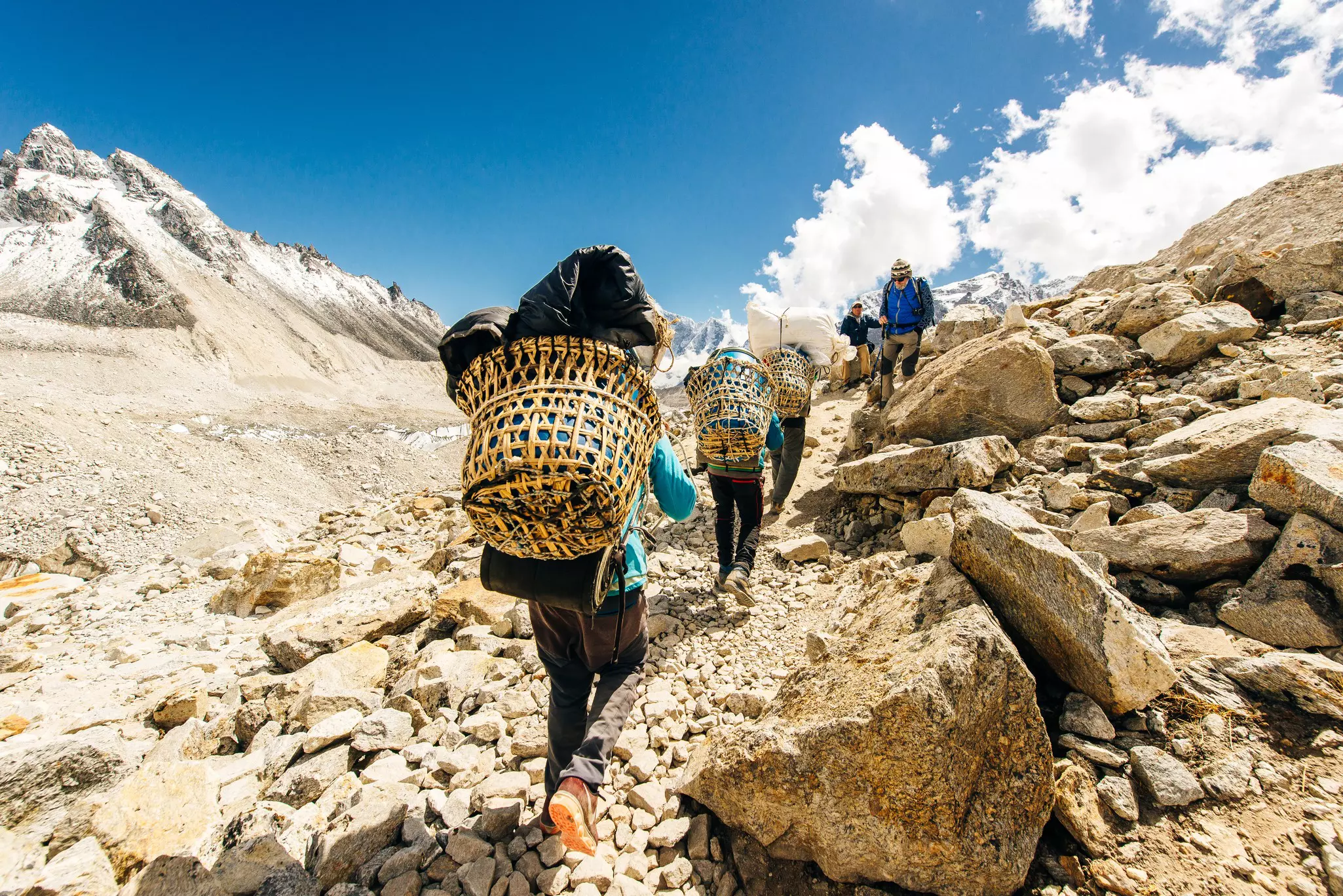
Not all guides and porters are Sherpas. Sherpa is an ethnic group, primarily from Nepal’s mountainous region, who have often been mischaracterized and incorrectly used as a synonym for porters in mountaineering, largely by foreign expeditions, travelers and media outlets.
But guides and porters who perform backbreaking work still don’t receive the respect or pay they deserve – many have a lack of proper equipment, are unaware of their rights and are usually exploited by travel companies. While rates vary by experience, follow the Trekking Agencies’ Association of Nepal’s guidelines on fair minimum wages, or consult non-profits like the Kathmandu Environmental Education Project, working on porter welfare. Ask trekking agencies about insurance for guides and porters, and ensure proper lodging and food arrangements along the trail, as they’re often treated differently.
“You should be asking all the right questions – about fair payment, proper accommodation and food, adequate gear, load capacity and insurance for guides and porters, among others – before and during the trip,” says Gyawali. “Guests should keep talking about the welfare and equal treatment of guides and porters, as they still sleep in shelters. Demanding does make an influence.”
Mount Everest is not just overcrowded but also overflowing with waste left behind by mountaineering expeditions, with authorities now aiming to curb pollution. The Sagarmatha Pollution Control Committee (SPCC), a local non-profit led by the region’s Sherpa community, has been working since 1991 to address the growing waste problem.
SPCC has installed trash cans separating recyclable and non-recyclable items along the trail. Lama Kazi Sherpa, the non-profit’s chairperson, urges trekkers to be mindful of waste in one of the world’s fragile ecosystems, while encouraging them to participate in SPCC’s “Carry Me Back” initiative, where trekkers carry a 1kg bag of recyclable waste from collection centers in Pangboche and Namche Bazaar and drop it off in Lukla.
Sagarmatha Next, a sustainability experience center in Syangboche, also showcases artwork and sells souvenirs made from recycled mountain waste.
“Trekkers carry around 35,000kg of trash annually through Carry Me Back,” Lama Kazi Sherpa says. “Locals are doing their part in managing the region’s waste. But as the number of visitors increases, they should equally be responsible in managing the growing waste to keep the region clean.”
Everest is not only naturally pristine but also culturally sacred for the locals. And to walk through that wonder is a once-in-a-lifetime opportunity that must come with responsibility.
A little planning and a willingness to go slower can go a long way in protecting the region that already faces severe threats from the climate crisis. Sustainability is a conscious choice, and the journey to the roof of the world should be a lesson not to take it lightly.
Explore related stories