Sep 23, 202610 min read
Guide to American SamoaSep 23, 2026
10 MIN READ

Writer
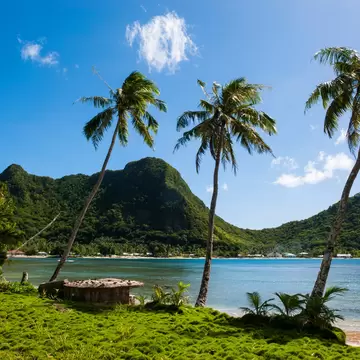
Tutuila island, part of the National Park of American Samoa. Danita Delimont/Shutterstock

Writer
Lonely Planet may earn a commission from affiliate links on our site. All recommendations and reviews reflect our own independent opinions.
There's a US national park – the only one south of the equator – where crowds are nonexistent, and park ranger briefings include advice on village etiquette. American Samoa is a handful of islands deep in the South Pacific, where fruit bats wheel over the rainforest and coral reefs guard its coastline. Those who make it here tend to arrive on US military orders or as the last tick on their national park bucket list (over 43,000 visitors came to the national park in 2025). Everyone else seems to venture to better-known spots in the region like Fiji, Tahiti or Samoa. But if you make the effort to visit, you'll be rewarded with an unfiltered perspective of Polynesia.
The national park spans three islands: Tutuila, the main island, where the capital, Pago Pago, wraps around a harbor home to the StarKist tuna factory; and Ofu and Ta'ū in the remote Manu'a group, where the national park extends underwater. The National Park Service doesn't own the land; it's leased from the Samoan villagers that've lived here for roughly three thousand years, making this as much a cultural trip as a natural one.
For most travelers, American Samoa makes more sense as part of a larger South Pacific trip than as a standalone destination – Independent Samoa sits just 40 miles west, and the two pair naturally. Still, American Samoa makes for a rewarding trip on its own terms. Some areas are a bit more rustic than some of the glossy resorts found elsewhere in the region, and the sheer number of lifted Ford trucks can make the place feel oddly unmoored. But once you catch the silhouette of Pola Island, take your first fin kicks off Ofu Beach, and laze away an afternoon with a newfound friend, the trek will have been worth it.
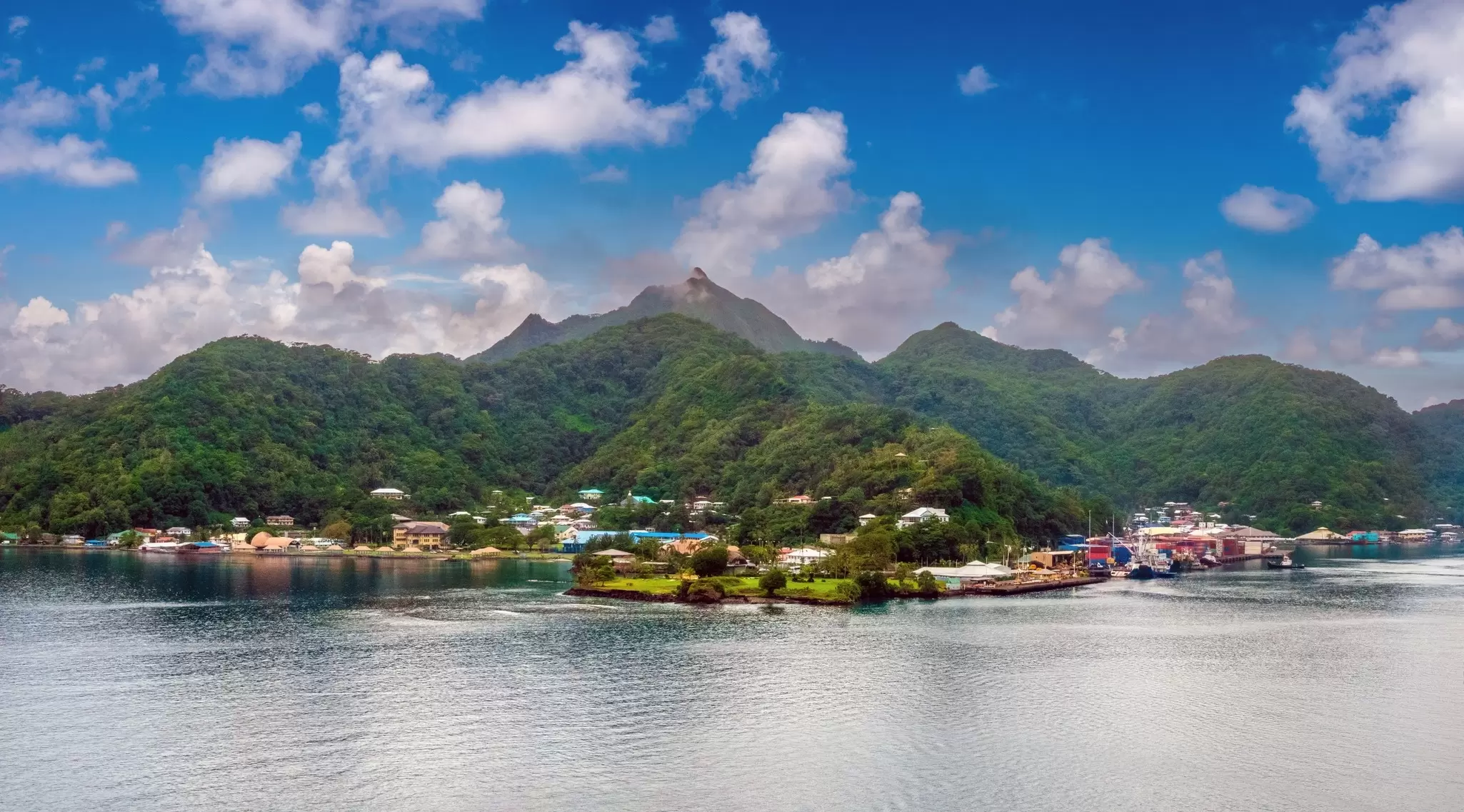
No matter when you go, American Samoa is warm and humid. Temperatures hover in the mid-80s°F year-round, with ocean temperatures lagging only a few degrees behind. The year splits into two seasons: rainy and wet. The wet season runs from November to April, peaking in January, and there's a higher chance of tropical storms. If you're coming to hike and snorkel, the rainy season may mean trail closures, and any open trails are more likely to be slippery and overgrown.
The dry season, May to October, sees sunnier skies, lower humidity and clearer waters for snorkeling and diving. This also aligns with Manu’a Cession Day on July 16th, which brings festivals, feasts and events, along with a squeeze on available accommodation.
Though American Samoa has relatively low visitor numbers, this correlates with accommodation and car rental options. Book these well in advance, especially if you’re visiting during any US, Australian or New Zealand school holidays. The shoulder months of September and October often offer great weather and fewer visitors.
No matter when you come, pack a rain jacket and sun protection. You’re likely to have sunshine and rain showers on the same day.
Four days is enough time to see the main island of Tutuila and its nearby island of Aunu'u. If you’re keen to hike in the National Park of American Samoa, budget one day to trek Mount ‘Alava. Shorter trails like Lower Sauma Ridge Trail, Pola Island Trail, and Tuafanua Trail can be hiked on the same day with careful planning. A day spent road-tripping or catching the Aiga bus around the island, stopping at its beaches, the market, lookout points, and the Jean P Haydon Museum is also worth budgeting into the itinerary.
If you’re keen to visit the Manu’a Islands of Ofu, Olosega, and Taʻū, pay close attention to the flight timetable and add a week to your visit. These islands host part of the National Park of American Samoa, including an incredible section of coral reef prime for snorkeling. Flights are via a 19-seater Twin Otter aircraft that operates once- or twice-weekly. Seats sell out quickly, and the planes don't fly in poor weather. Ferries also connect Tutuila to the outer islands, though you'll lose a full day in transit each way.
Around 12 days will give you enough time to visit Tutuila and the Manu'a Islands (go there first), with a buffer for bad weather and missed flight or ferry connections.
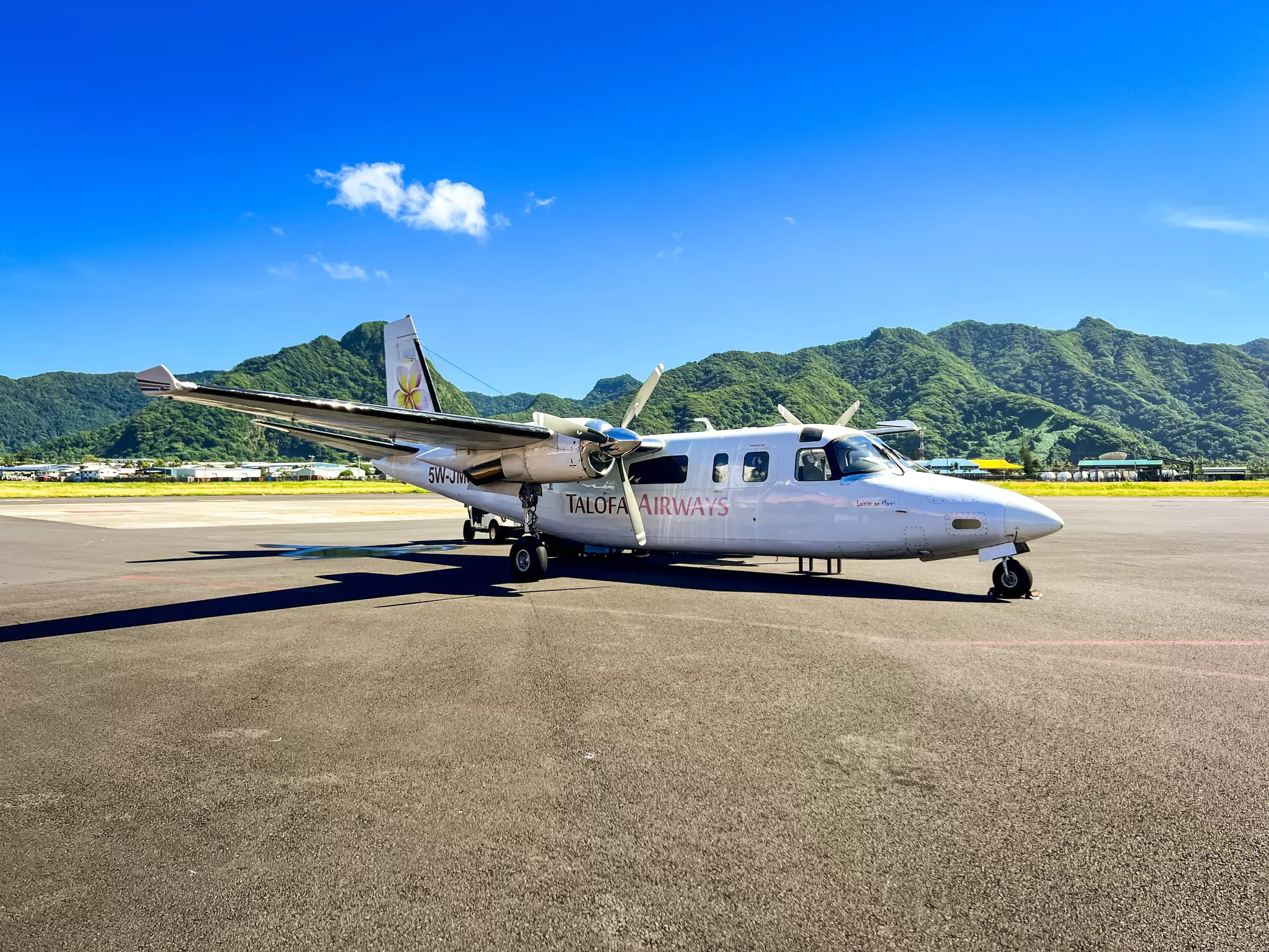
Getting to American Samoa is rarely straightforward. Pago Pago International Airport (PPG) on Tutuila is the only major gateway, connecting to Honolulu (a 5.5-hour flight) a few times per week. Those traveling from Australia and New Zealand enter via Samoa, a 30- to 45-minute flight.
Once you’re on Tutuila, the most convenient way to get around is with your own set of wheels. The 35mph speed limit keeps driving relatively low-stress, and a coastal road connects the island.
Catching the colorful Aiga doubles as a fun experience and a way to get around – listen for the music and give the driver around 1 US dollar (US$) to US$2 for a trip. Buses heading to the village of Vatia will drop you at the National Park of American Samoa’s entrance; keep in mind they don’t typically run on Sundays. Government-regulated taxis can be found at the airport or arranged through your accommodation.
To reach the Manu’a Islands, book a flight with Samoa Airways or catch the Manu’atele Ferry from Tutuila. On the Manu’a Islands themselves, there are no official car hire or public transport options, though most locals are happy to give rides and some accommodations have bikes for guests to use.
An intrepid traveler's first stop should be the exceptionally helpful National Park of American Samoa Visitor Center, where you'll get curated advice on which trails are best to hike in the current conditions.
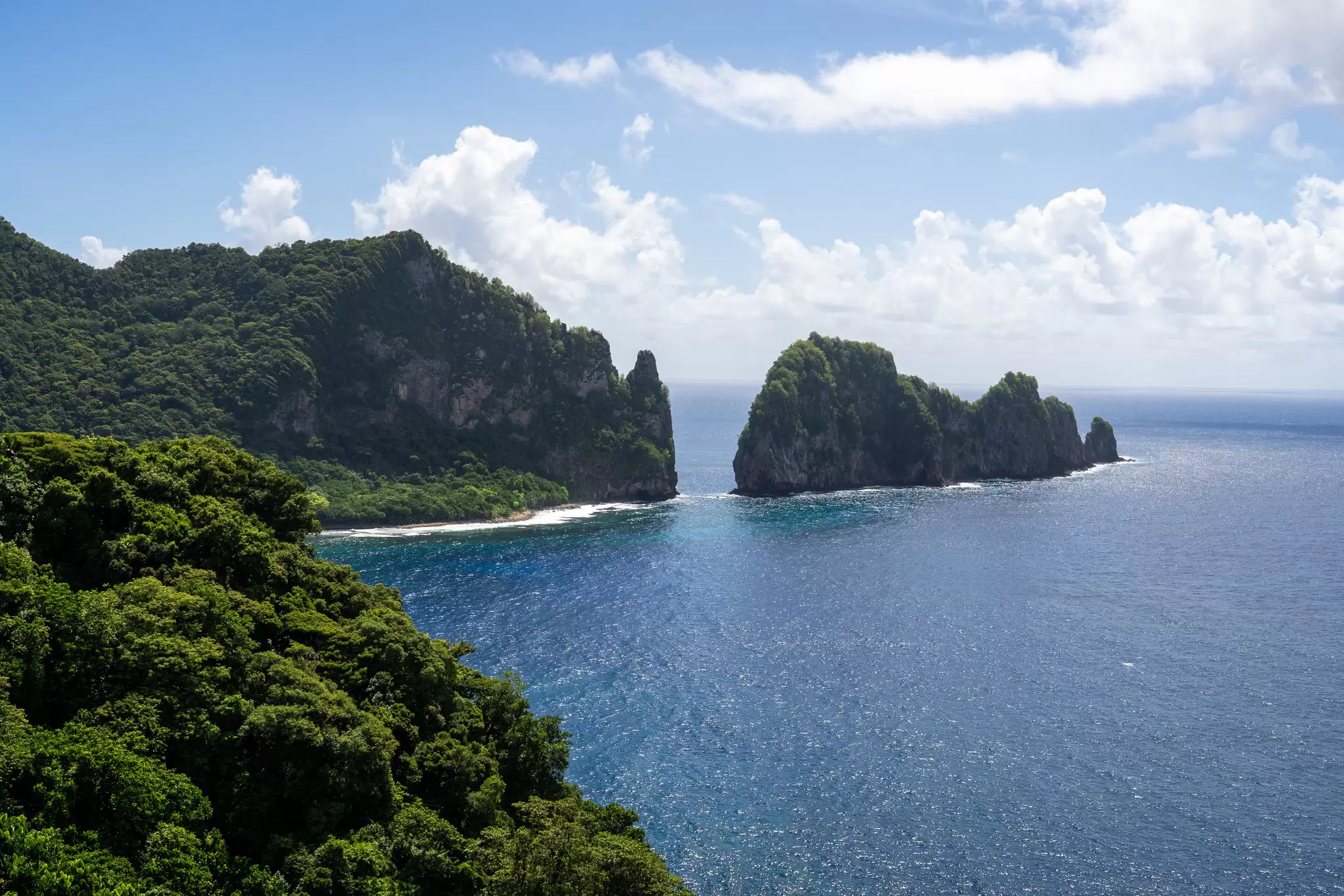
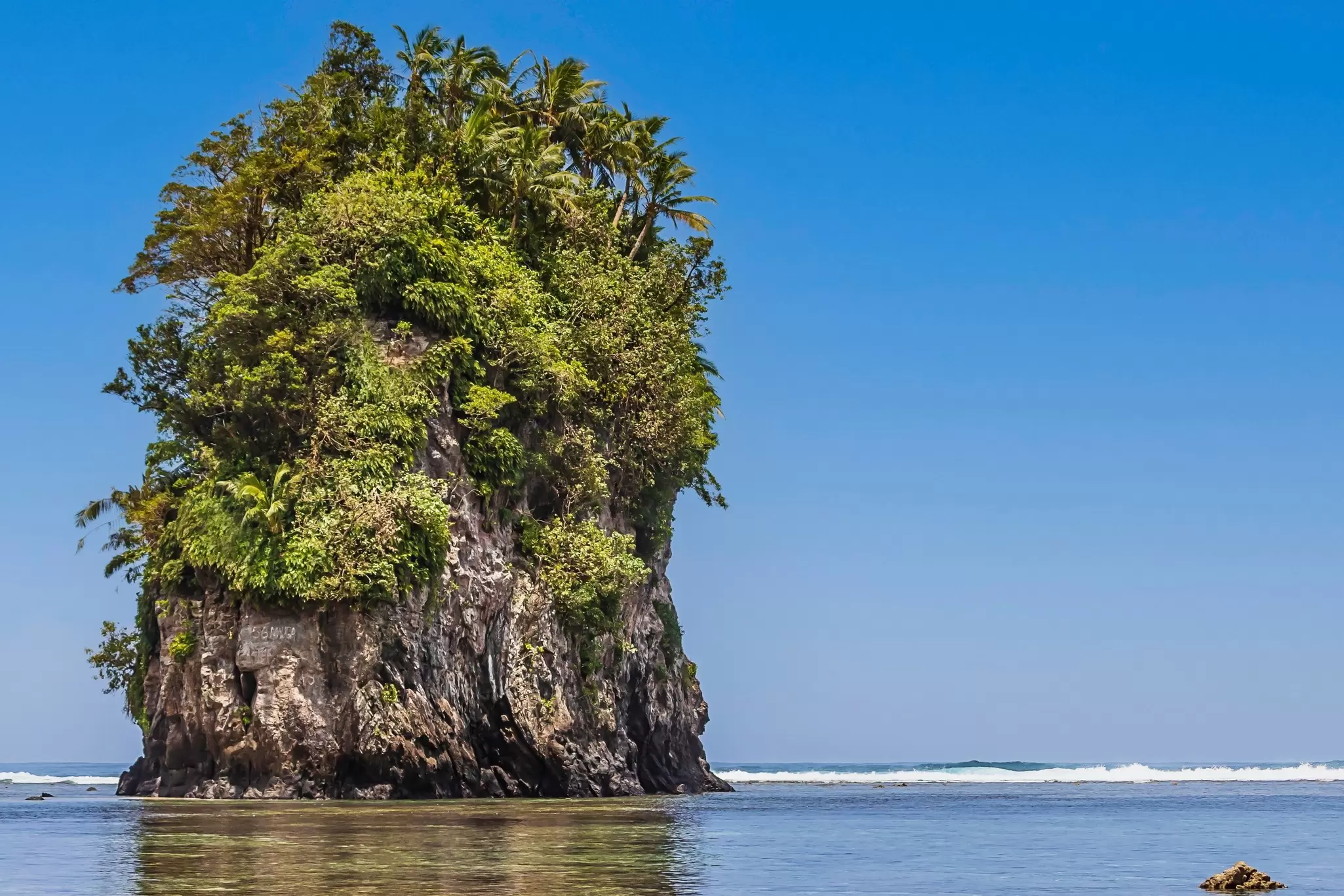
For an all-day adventure, trek the challenging Mount 'Alava Trail, where you'll be rewarded with a panoramic view of the island. Pola Island, the limestone islet and seabird sanctuary off Tutuila, is stunning from all angles. Walk along the Lower Sauma Ridge Trail for a view of its eastern end, or take the Tuafanua Trail to a desolate beach on its western side. For an up-close shot, visit Pola Island Beach.
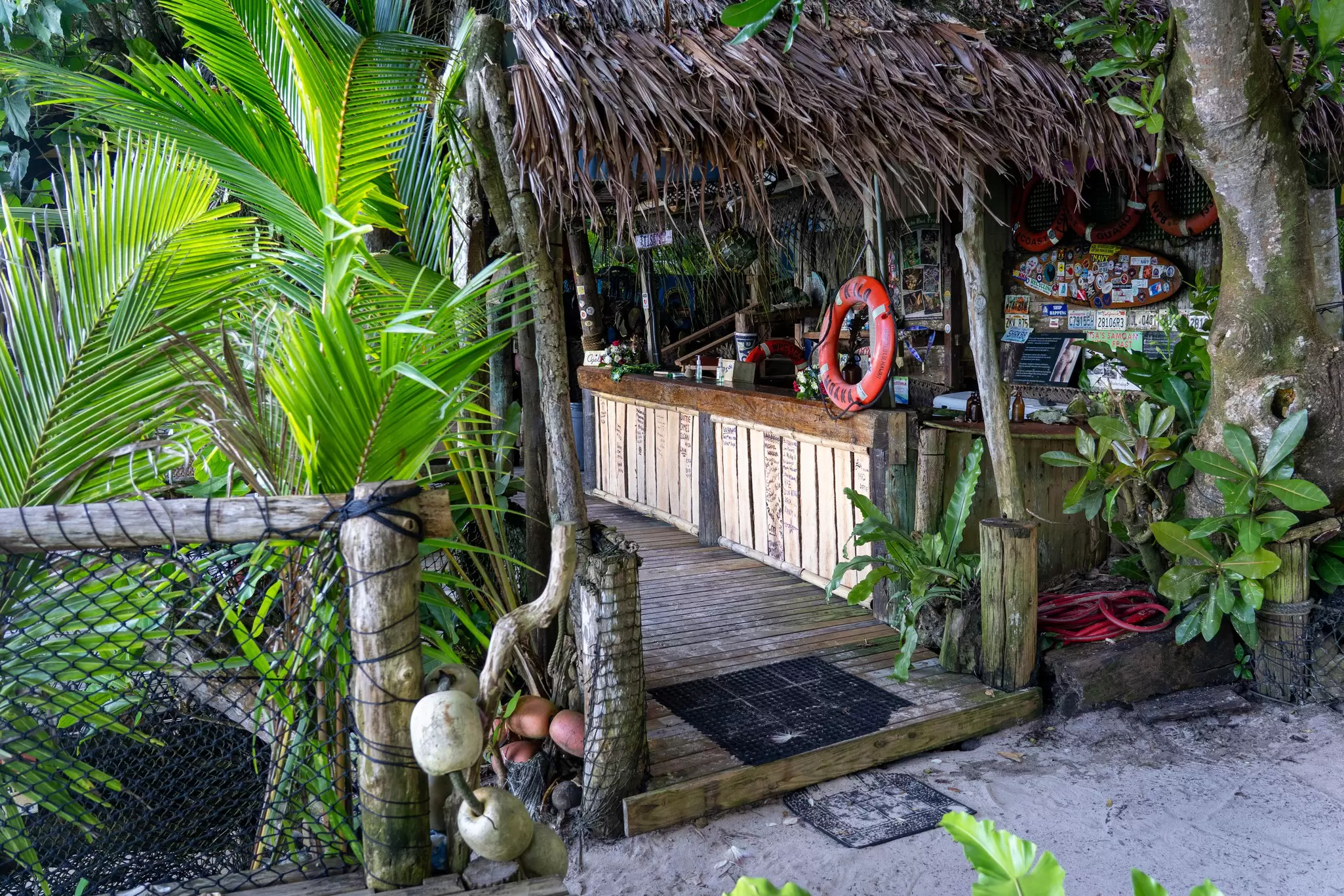
The smoky flavors of root crops and meat cooked in an oven made of hot stones, called an umu, are ones that’ll stoke any appetite. Reserve your spot at Tisa’s Barefoot Bar, which hosts a feast every Wednesday evening. Come early and go snorkeling with sea turtles in front of the property, sip a coconut water or cocktail on the overwater bar, and hang out with the owners, Tisa Fa’amuli and Candy Mann, who are always happy to share local tips, tall island tales and plenty of facts about the sacred Samoan art of tatau (tattoo).
Piles of seasonal fruits like mangoes, papayas, bananas and pineapples are sold by the heap at Fagatogo Market. Inside the main compound, shop for locally made art and wooden goods, and Samoan patterned clothing to add a fashionable flair to your stay.
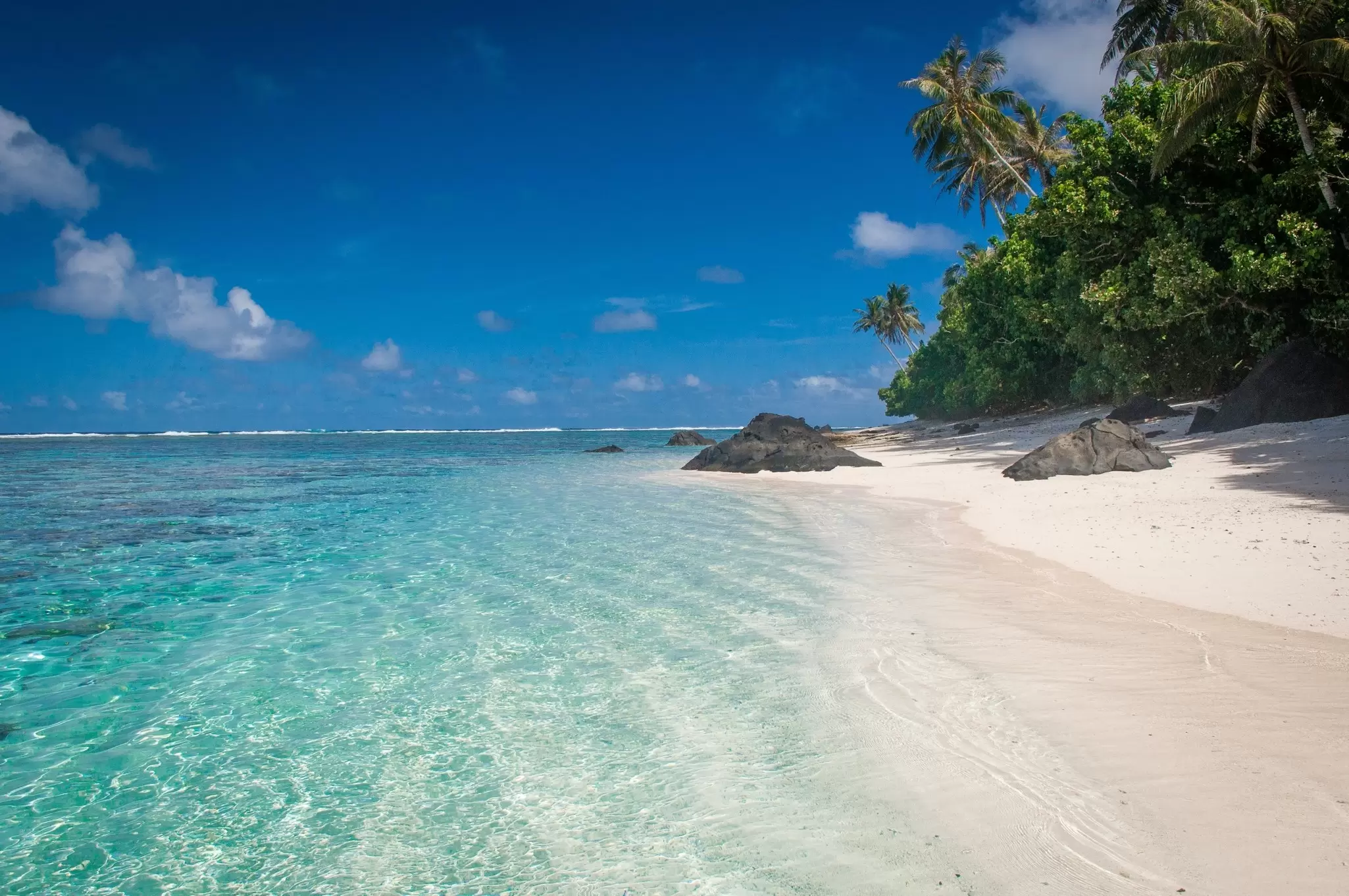
Visiting this small beach, tethered to a rocky, palm-topped islet, once cost 2 dollars (lua tala). But it's still worth the US$5 it costs now. It’s a popular spot for local families who come to wade and snorkel in the calm, shallow water, or relax on the open-air fale (traditional thatched building) with a drink in hand. Come at high tide for the best snorkeling and a chance to see reef sharks, sea turtles and rays.
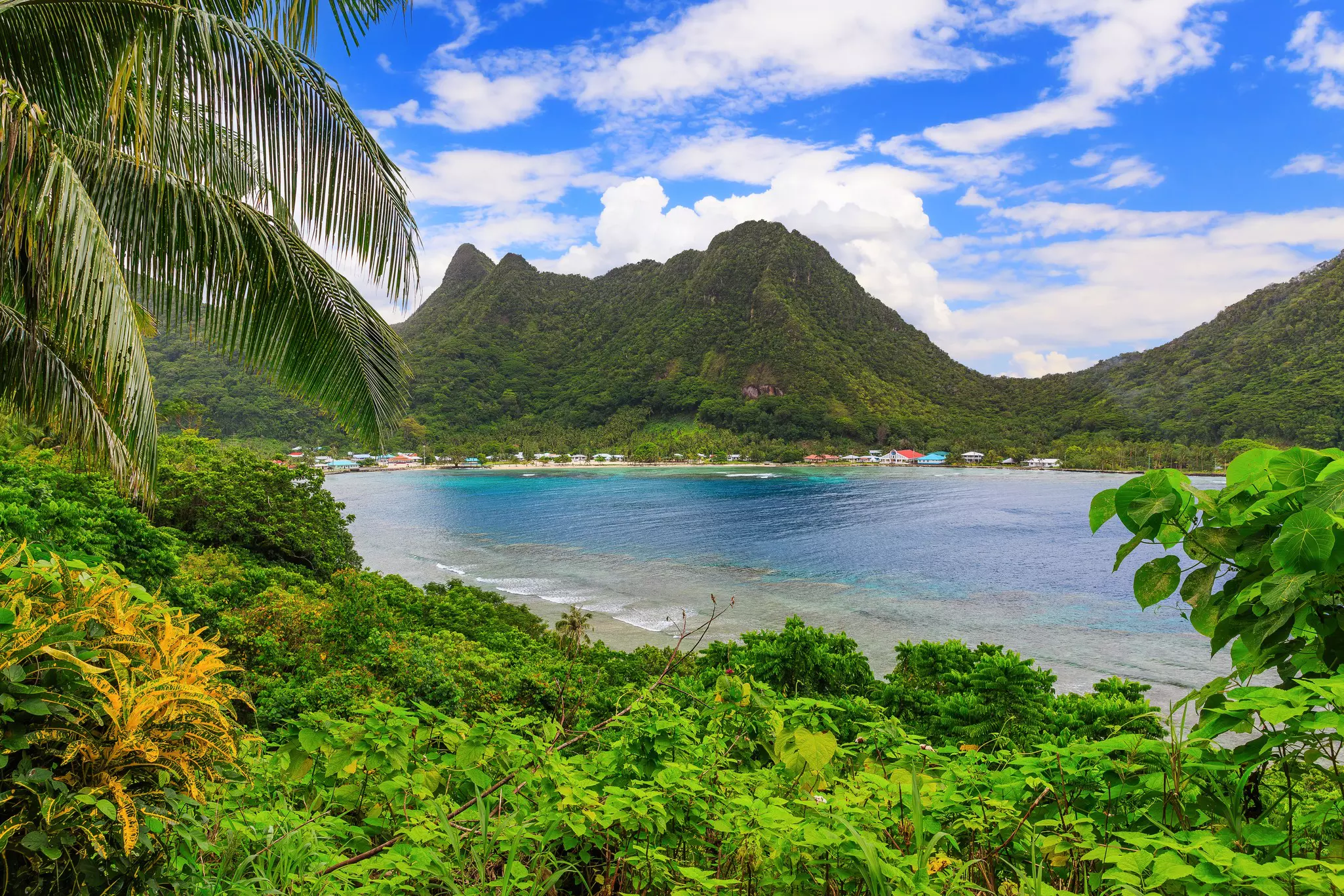
Ivona, a 74-year-old fruit seller, left her stand to pile into the truck, plopping a basket of orange plums in my lap. When she heard that Rory West, founder of North Shore Tours, was showing a tourist around the island of Tutuila, she decided to come along. I’d asked Rory not for a polished tour, but for a typical day in the life of someone living in American Samoa.
Ivona, Rory and I spent the day picking turmeric and passionfruit in his fertile garden bordering parklands, running errands for a handful of his children and distant relatives, catching up on the latest island gossip, and learning about the tabloid version of the island’s history, not found on any government website. When it was time to unwind, we relaxed in open-air fales, snacking on our harvest. Later, when I declined an invitation to a town hall gathering, Rory worried that I’d be lonely and offered to call a relative to accompany me for the rest of the evening, but I had to rush back to meet my guesthouse host for dinner!
American Samoa hasn’t developed the glossy sheen of a brochure that often accompanies big tourism marketing budgets. Even in the tourism sector, people don’t have the well-rehearsed spiel when you ask them questions about the island, making interactions feel honest and open.
Of course, there’s plenty to be said about the natural beauty – the ocean, the dramatic mountains – but nothing beats changing your plans and hanging out with the people you happen to meet along the way. If Rory isn’t free to take you around the island, grab a drink at Tisa’s Barefoot Bar and chat to whoever is there.
American Samoa uses the US dollar, and the largest expense is mostly in getting here, with flights to and within American Samoa being the biggest line item. Once you’re here, daily costs can be reasonable with Aiga buses, seasonal produce and the park being free to enter. Cash is essential, especially on the outer islands where credit cards are not accepted. It’s worth pre-paying for accommodation on the outer islands and carrying enough cash to cover a few days of delays, just in case.
Entry to the National Park of American Samoa: free
Night at a hotel on Tutuila: from US$150
Aiga bus ride: US$0.50–2
Car rental: US$100 per day
Piña colada from Tisa’s Barefoot Bar: US$15 (Cash or PayPal only)
Burger and ice-cold drink from Goat Island Cafe: from US$20
Day tour of Tutuila: from US$120 per day
Homestay on Manu’a Islands: from US$170
Plate lunch from Fagatogo Market: from US$8
Samoa Airways flight to Manu’a Islands: from US$155 one-way
Many parts of the National Park of American Samoa sit on village land. The park visitor center can give you a map of the main sights on Tutuila, some marked to show where it's advisable to ask permission first. These villages are used to receiving visitors, and simply asking whoever you see for permission to pass through is usually enough.
Most businesses are closed on Sundays in American Samoa, and buses run on a limited schedule if at all. You may hear a ringing bell or conch shell to signal sa, a time of prayer, that happens each day on the islands. Consider attending a church service if invited; it’s usually followed by a large family brunch.
All visitors, regardless of gender, are expected to wear clothing that covers their shoulders and knees, and a lavalava, a lightweight wraparound sarong, is the easiest way to stay respectful. Swimming in a long-sleeved rashguard doubles as sun protection.
Explore related stories