Advertisement
8 of the best things to do in Taipei
Supported by
Visit Taipei

Tamara Hinson
Jul 18, 2025 • 7 min read

City views, culture and history: here are the best things to do in Taipei © Nate Hovee / Getty Images
There's plenty to do on a visit to Taipei – you could be admiring spectacular views over the city, experiencing the legendary night markets or learning all about Taiwan's history and culture in its many memorial halls. There's a new experience around every corner, from unfamiliar street food to soaring temples.
And when you need a break from the urban rush, Taipei excels in quiet moments. The city is happy and safe, blending nature, flavor and calm, with mountains nearby and tea shops on every corner.
Advertisement
The city is easy to explore on Taipei MRT, which is ranked as one of the world's best for sustainability. So put these activities at the top of your list to experience the very best of Taipei on your next visit.

1. Take a hike, or taste some tea, in the wilderness surrounding the city
Taipei is a city surrounded by forested mountains and reaching the lush tracts of wilderness from the city center is surprisingly easy. The route I like best is the spectacular Jinmianshan Trail. It starts just a short walk from Xihu Station and connects with a large number of other trails, which means you can opt to hike for as little or as long as you like. But the most popular hiking route has to be the Xiangshan Trail weaving up the side of Elephant Mountain, which nudges right up against the city center.
Tea farms and teahouses fill the lush mountain area of Maokong, in the Muzha District. The farms specialize in Bouzhong tea and Taiguan Ing, and sampling them is a serene and enjoyable activity for travelers and locals alike. Consider taking the Maokong Gondola up into the mountain mist for easy hiking trails or traditional tea-tasting with panoramas over the city.
Planning tip: The Xiangshan Trail is a 1-2 hour circular route and you’ll be rewarded with breathtaking views over the city and of the Taipei 101 tower.
2. Admire the rarities at the National Palace Museum
Love a good artifact? You’ll love the National Palace Museum, which has 700,000 ancient imperial artifacts from both China and Taiwan. You’ll find plenty of rarities from China – the museum has close connections with the Palace Museum in Beijing’s Forbidden City, and many of the exhibits were originally displayed in the museum there.
The museum is especially popular with art fans, who flock here to admire the enormous collections of decorative carvings, enamelware, ceramics, lacquerware and ceremonial bronzes. My favorite exhibit is the beautifully carved jade cabbage, complete with a locust hiding amongst its leaves. It’s believed the sculpture was given to a former emperor’s consort in the late 19th century.

3. Check out Taipei's beautiful temples
Taipei lays claim to some of Asia’s most beautiful temples, many of which subscribe to the Southern Chinese style of Qing Dynasty architecture – a style you’ll probably recognize if you’ve been to Singapore. Most Taipei temples pay nods to Taoism, Buddhism and Confucianism, while a smaller number are dedicated entirely to Buddhism.
Advertisement
To see the best ones, head to Taipei’s oldest neighborhoods such as Wanhua, which was once a walled city (only one of the original city gates remain). This is where you’ll find the Bangka Longshan Temple, which dates to 1738, and the Qingshan Temple, where you’ll find a statue of Zhang Gun – a Taoist deity whose eyes are said to follow visitors as they move around the temple.
Planning tip: There’s no formal dress code, but remember to dress respectfully, remove shoes and step over each temple’s door sill, rather than on it. These sills are believed to ward off unwanted spirits and remind visitors they’re about to enter a sacred space.
4. Head up Taipei 101, one of the world's tallest buildings
Got a head for heights? Make a beeline for Taipei 101, which claimed the title of world’s tallest building between 2004 and 2009 when it was eclipsed by Dubai’s Burj Khalifa. The 1,667-ft (508m) skyscraper has been designed to withstand strong earthquakes – handy considering it’s 600ft from a major fault line.
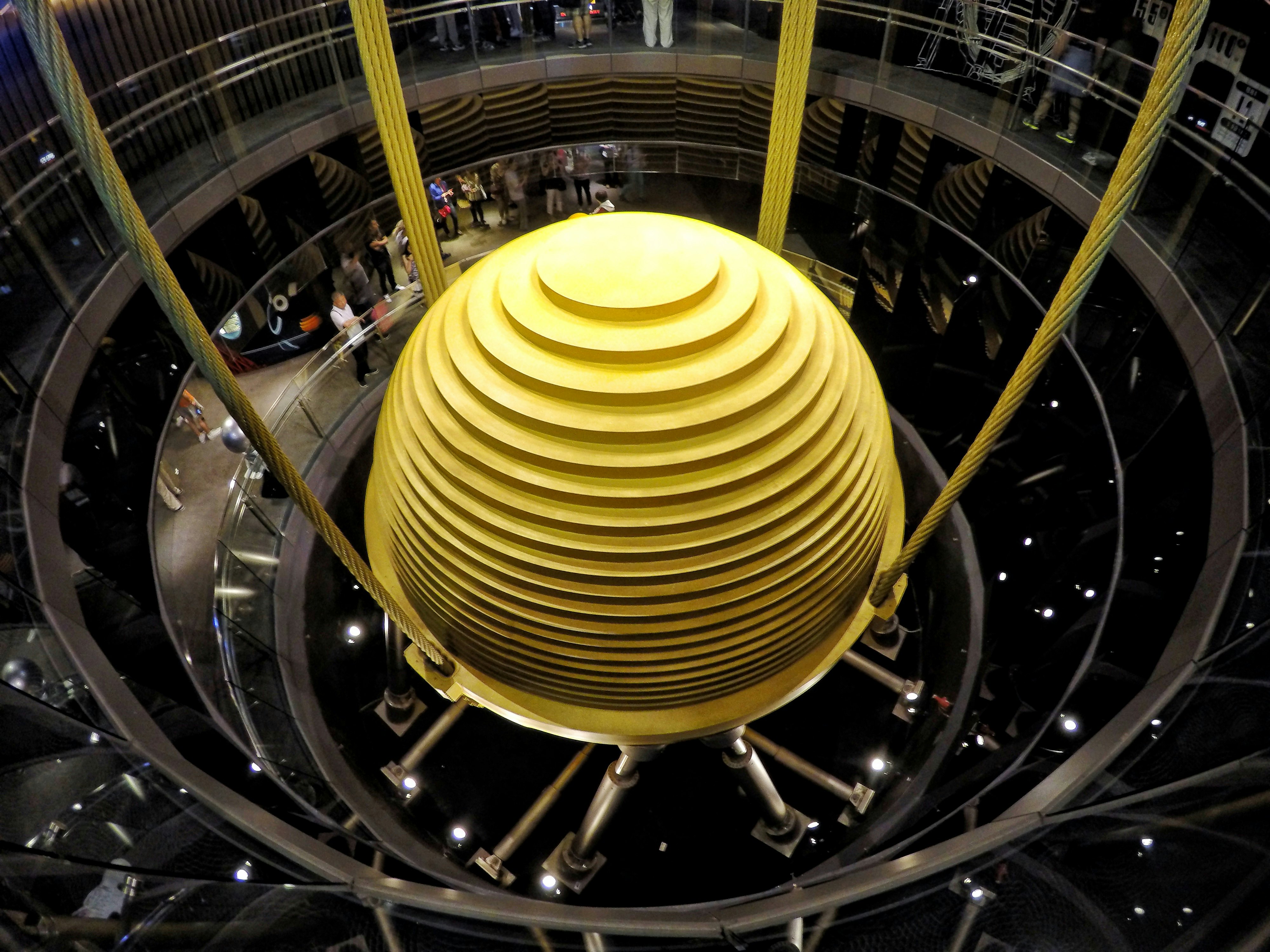
There are observation decks on levels 88, 89, and 91, although it’s worth noting that the one on level 88 has been designed mainly to provide visitors with a view of the (admittedly spectacular) mass damper – the largest and heaviest one in the world. This enormous steel sphere moves back and forth to counter any movement by the building itself. Head to level 91, which is open-air and has been the setting for several concerts, including performances by Japanese pop band AKT48.
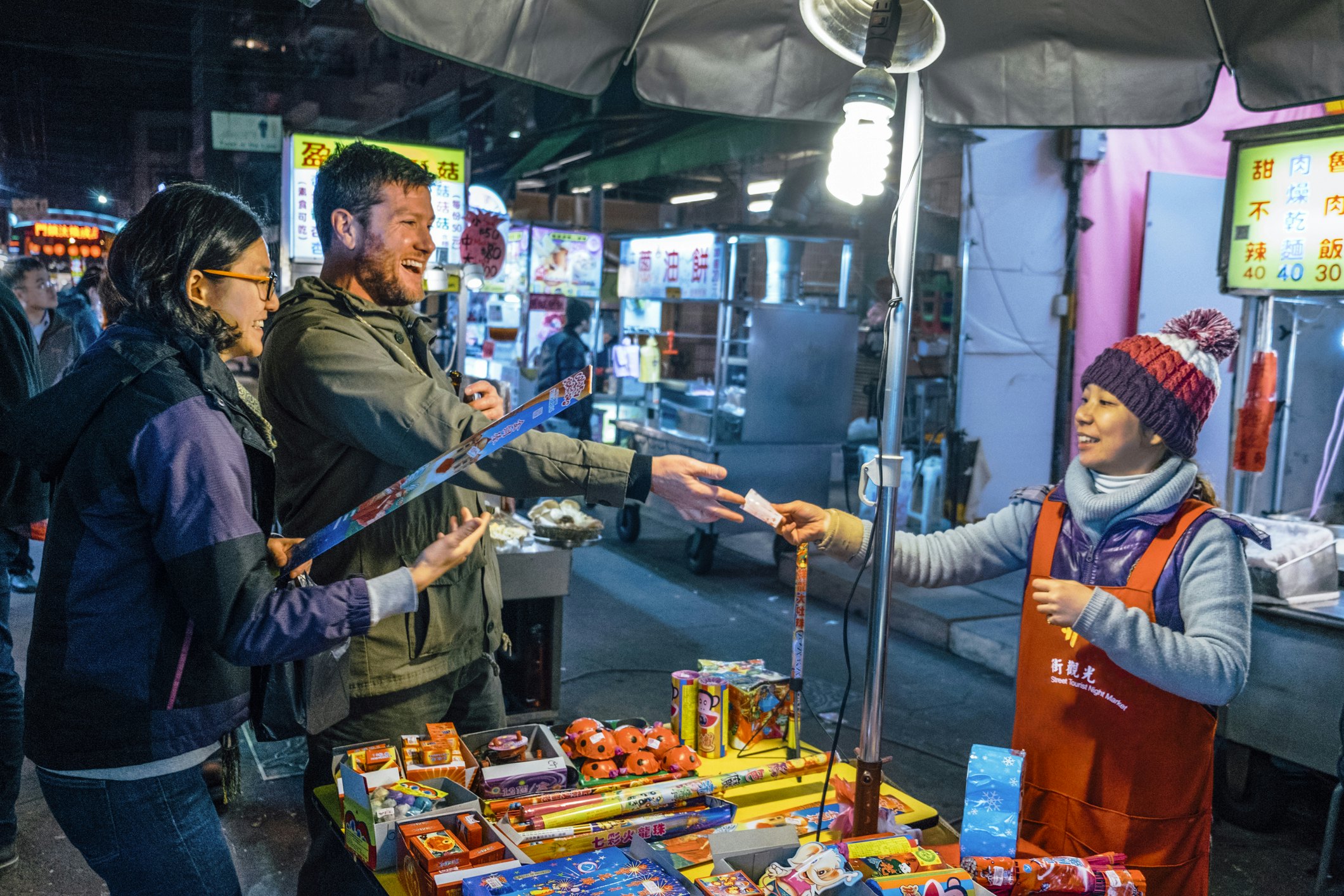
5. Go shopping at a night market
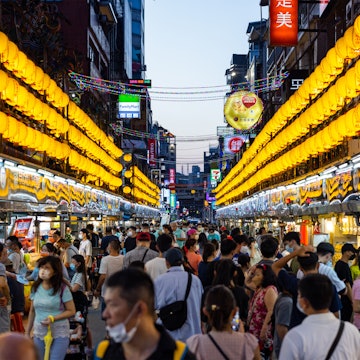
Taiwan’s night markets are legendary. You’ll find them throughout the city: sprawling clusters of stalls serving up traditional dishes such as braised pork rice, Taiwanese spring rolls and tempura. The most famous ones include Wanhua's Huaxi Night Market, where there’s a focus on traditional dishes (salty rice pudding washed down with snake wine, anyone?) although I'm also a huge fan of the market on Linjiang Street, known for its wallet-friendly cuisine. The offerings aren’t just limited to food either – market stalls sell everything from homeware to clothes.
Planning tip: Hardcore foodies should also squeeze in a visit to Ningxia Night Market, where specialties include oyster omelets, sesame-coated mochi and taro balls.
6. Eat at Din Tai Fung, Taipei's best dumpling restaurant
It’s said that you haven’t tried xiao long bao dumplings unless you’ve sampled the ones at Din Tai Fung, a chain of restaurants which dates back to the 1970s and was founded by Bing Yi-Yang, who moved to Taiwan as a youngster. In 2010, the Hong Kong branch earned a Michelin star – a first for a Taiwanese restaurant – and there are now restaurants in America, Europe and the Middle East.
Planning tip: The best place to try the dumplings is the branch at the base of Taipei 101 – a glass-walled kitchen allows visitors to watch chefs at work and waiting staff dash across the restaurant floor carrying wobbling towers of dumpling baskets. I recommend the original xiao long bao dumplings, although the braised beef soup is legendary, too.

7. Tour the Chiang Kai-shek Memorial Hall
The Chiang Kai-shek Memorial Hall is a national landmark and memorial erected to honor the late Chiang Kai-shek, the former president of China who fled to Taiwan in 1949 after Communists established the People's Republic of China. Once in Taipei, he established a government in exile and to this day remains Taiwan’s longest-serving leader, albeit a divisive one.
Many Taiwanese feel their country’s countless memorials to Chiang Kai-shek should be removed, but whatever your viewpoint, a visit to this one, with its bronze statue of Chiang and the emblem of the Chinese Nationalist Party adorning the vaulted roof, is a great option for anyone keen to learn more about Taiwan’s turbulent past.
8. Visit the National Dr Sun Yat-Sen Memorial Hall
For a different insight into Taiwan’s past, visit the National Dr Sun Yat-Sen Memorial Hall, a tribute to the man who many see as the father of the Republic of China. He was a physician, revolutionary and political leader who helped overthrow the Qing dynasty in the late 1800s. He became the first President of the Republic of China in 1912 and is revered in both China and Taiwan, where his portrait hangs in parliament.
There are several exhibition halls filled with Chinese art and a library stuffed with thousands of Chinese manuscripts. For me, though, the biggest attraction is the Central Hall’s hourly changing of the guard, when soldiers in immaculate white uniforms perform a choreographed routine in front of an enormous statue of Dr Sun Yat-Sen.
Note: The Memorial Hall is temporarily closed for renovation until 2026.
From our sponsors
Take Off Now 'Next Adventure' Begins: Taipei City has launched a campaign with EVA Air, offering a special promotion – perfect for travelers from the US. The Welcome to Taipei package features free access to the Taipei 101 Observatory and National Palace Museum. For more information, visit https://adventure.travel.taipei.
Supported by Visit Taipei
As a travel entertainment and inspirational media outlet, we sometimes incorporate brand sponsors into our efforts. This activity is clearly labeled across our platforms.
Funding for this story is provided by Visit Taipei. All editorial views are those of Lonely Planet alone and reflect our policy of editorial independence and impartiality.
With sponsored content, both Lonely Planet and our brand partners have specific responsibilities:
-
Brand partner
Only provides financial support and their logo. Doesn't make revisions or approve the story.
-
Lonely Planet
We fully control the creative and editorial approach, just like any other featured story.
Advertisement