Nov 14, 20256 min read
A Guide to Jawai, RajasthanJan 22, 2025
16 MIN READ

Writer
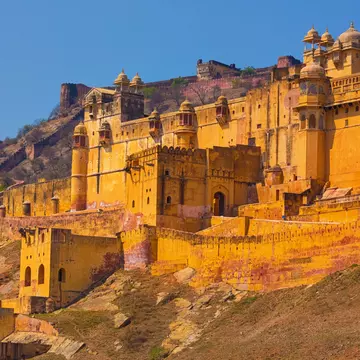
Stunning Amber Fort is just the start of the journey through desert history in Rajasthan. Olena Tur/Shutterstock

Writer
Highlights
Editors round up 17 things to do in Rajasthan, from palaces to tiger parks.
In Jaipur, tour the fretwork-fronted Hawa Mahal, City Palace and Amber Fort.
Head to Ranthambhore for tiger safaris, or watch 370 bird species at Keoladeo near Bharatpur.
Wander Udaipur's lakeside City Palace, then head to Mehrangarh Fort in Jodhpur.
Lonely Planet may earn a commission from affiliate links on our site. All recommendations and reviews reflect our own independent opinions.
Imagine towering fortresses bursting from rocky crags, looming over tangled medieval lanes. Picture palaces decked from floor to ceiling with mirrored mosaics and intricate paintings of flowers, deities and fighting elephants. See yourself rattling across dusty deserts by train or bouncing by 4WD through tiger-stalked national parks. That’s Rajasthan.
This captivating state in western India is centered on the city of Jaipur, often called the “Pink City” because of its blush-toned historic architecture. A patchwork of once-independent princely states, Rajasthan is a living monument to India’s rich history – indeed, it’s hard to travel far without stumbling across a lavish royal palace or time-scarred fortress.
Exploring Rajasthan today means hopping between the captivating, colored cities where these rulers held court, stepping on and off the tourist trail. Major cities such as Udaipur and Jodhpur rank among the most visited places in the subcontinent, while other towns lie almost untouched by mass tourism, offering a deep dive into timeless antiquity.
Whether this is your first visit to India or your fifteenth, plan your trip with this guide to the top things to do in Rajasthan.
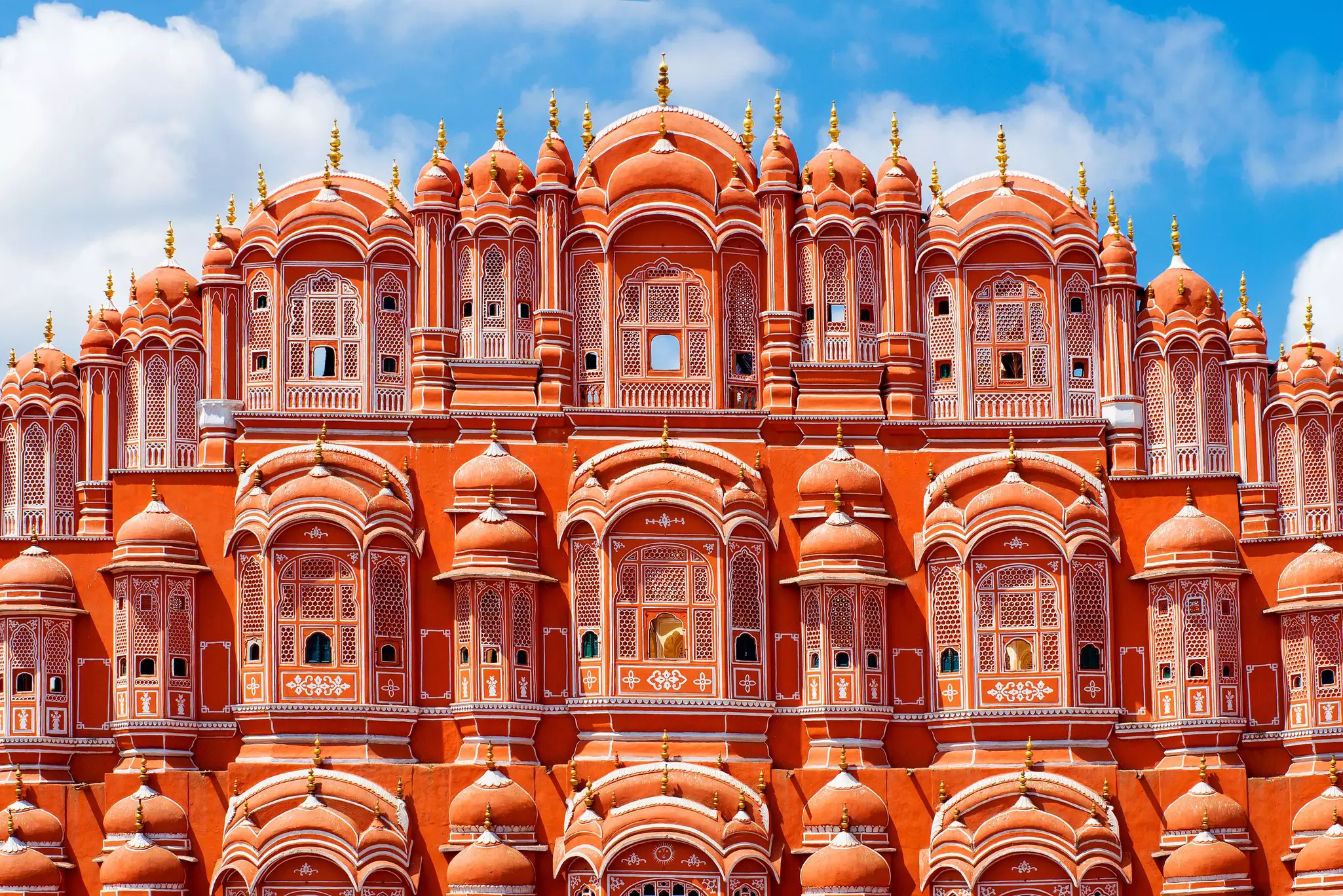
Rajasthan’s exuberant capital city, Jaipur, is a vision in pink and one of the best places to begin a tour of the state. The city’s most distinctive landmark, the 18th-century Hawa Mahal (also known as the Palace of the Winds or Palace of Breeze) is an extraordinary gingerbread house of a residence, fronted by a delicate honeycomb of fretwork and stained-glass windows.
Its five stories are linked by narrow, claustrophobic passageways. Several rooms have displays of photos, stone carvings and royal objects, with tiny, shuttered porthole windows that open onto the street below. The top levels offer stunning views over the City Palace and the surrounding streets.
Planning tip: Entry is from the south, via an alley running north from Tripolia Bazaar, but you can also get here via a passageway just north of the palace façade, passing the bright pink Sri Goverdhan Nath Temple. Visit with a composite ticket (valid for two days), which also covers entry to the Amber Fort, Central Museum, Jantar Mantar, Isarlat minaret and Nahargarh fort.
On the north side of Tripolia Bazaar in Jaipur, a grand gateway marks the maharajas-only entrance to the City Palace, the elegant home of the maharajas of Jaipur, and one of the most visited places in the city. On arrival, you’ll enter a vast, open courtyard dominated by the Mubarak Madho (Welcome Palace), built in the late 19th century for Maharaja Madho Singh II as a reception center for visiting dignitaries.
On the far side of the courtyard is the Maharaja Sawai Bhawani Singh building, an atmospherically lit space displaying a fascinating collection of historic paintings – many daubed with real gold paint. In the courtyard’s northwestern corner, the Anand Mahal Sileg Khana, formerly the Maharani’s Palace, houses the royal armory, one of India’s best collections of historic weapons.
The palace's most celebrated feature is the Pitam Niwas Chowk, an elegant courtyard flanked by four vividly decorated gateways representing the four seasons, which rank among the most photographed sights in the country.
Planning tip: Public admission to the City Palace is via the eastern gateway, known as Virendra Pol, reached via a back lane to the north of Tripolia Bazaar.
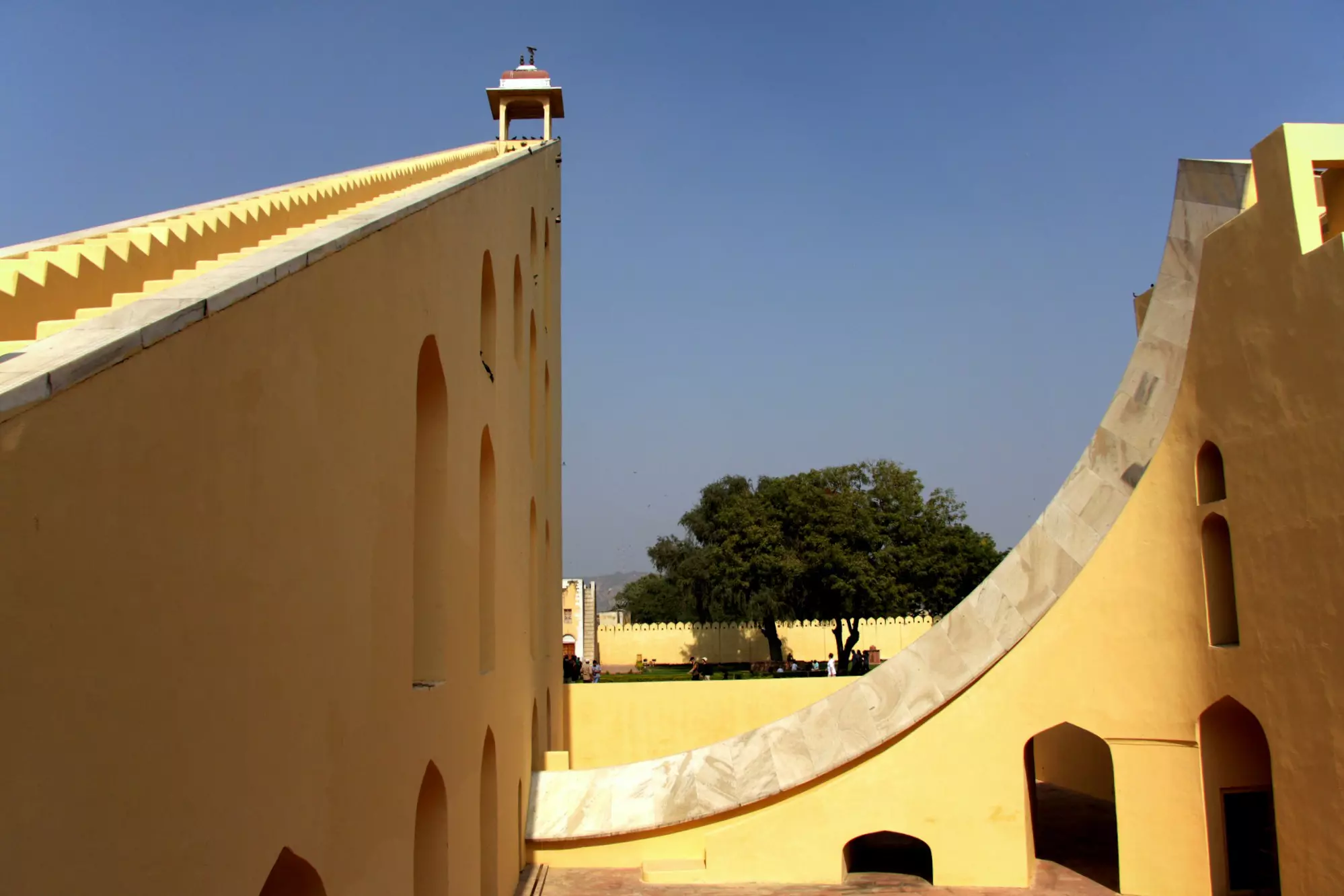
Southeast of the City Palace, Jantar Mantar – actually a giant astronomical observatory – was constructed in 1728 on the orders of the scientifically curious Jai Singh II. Stairs to nowhere climb over calibrated crescents, dangling rings function as astrolabes, and marble-lined basins allow precise calculations of the movements of the spheres.
The Laghu Samrat Yantra – a supersized sundial – can measure the time accurately to within 20 seconds (you can test it, provided the sun is shining). The name comes from Sanskrit yantra mantrana, meaning “instrument of calculation.”
Planning tip: A guide is highly recommended if you want to learn how each fascinating instrument works. The site is best explored on a composite two-day ticket covering other important Jaipur sights.
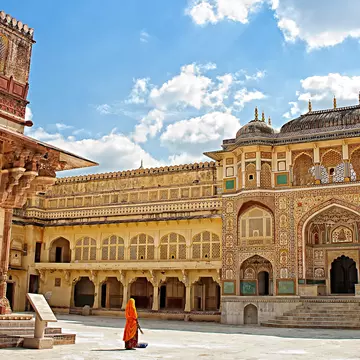
Rising over a rocky valley just north of Jaipur, Amber Fort (also called Amer Fort) is almost a fortified city, enclosed by invader-repelling yellow and pink sandstone walls. Its battlements gaze over Mughal-style gardens, ancient stone temples and a crocodile-stalked lake. Inside the walls, extraordinary audience halls and royal apartments reveal the complex ceremonial and private life of Sawai Jai Singh.
From the fort’s public courtyard, climb the stairway through the lavishly frescoed Singh Pol (Lion Gate) to the fort’s second courtyard. Other must-see spots include Ganesh Pol, frescoes in the royal’s private quarters, Aram Bagh, a Persian-style pleasure garden, and the Sukh Niwas (Hall of Pleasure).
Planning tip: From the ticket office on the Jaipur road, a zigzag pathway climbs to the imposing fort gates, or you can save yourself the 10-minute walk and pay for a transfer by 4WD or electric buggy. It’s best to avoid transfers by elephant as carrying passengers can be harmful to these vulnerable animals.
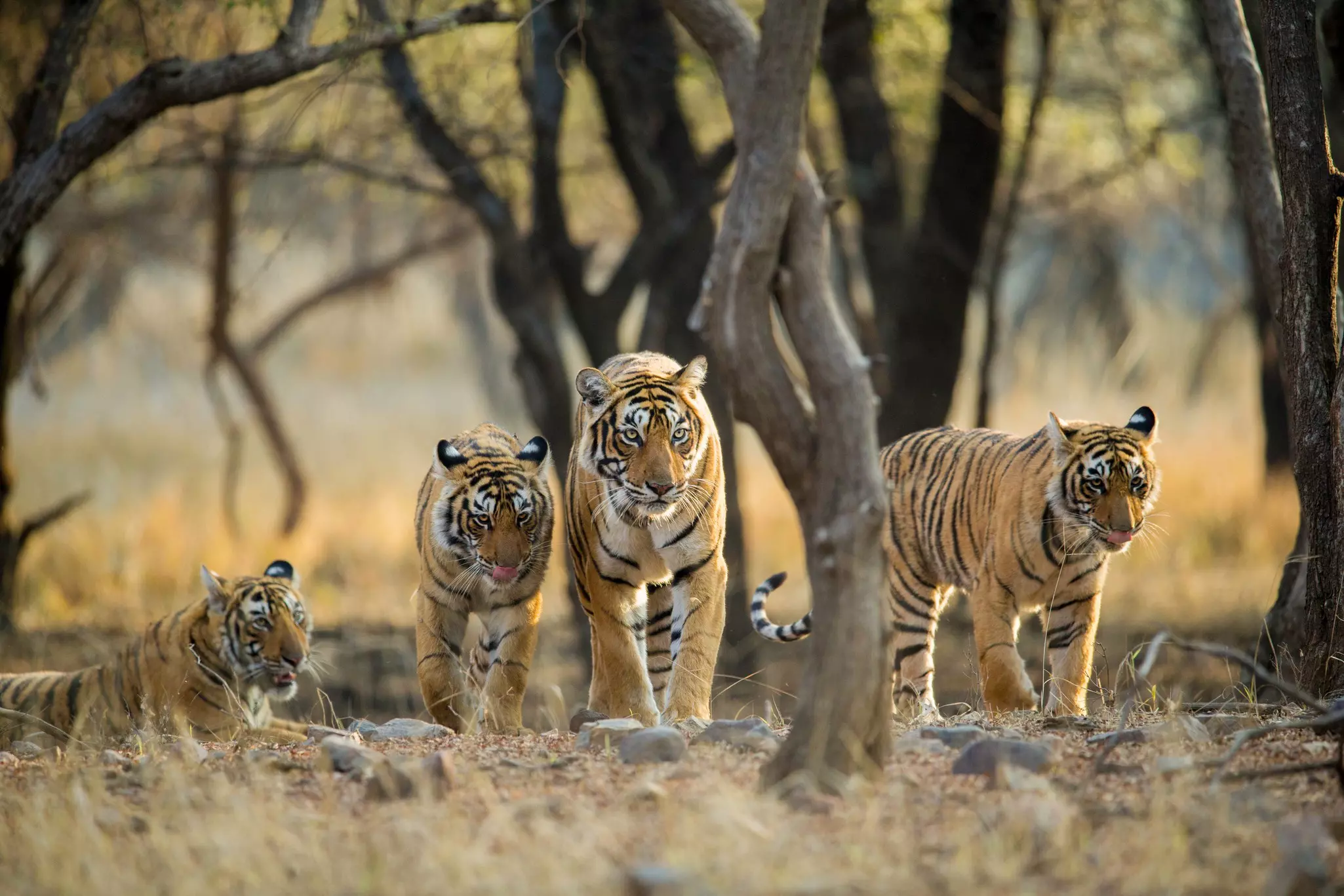
Jaipur is surrounded by some of the state’s most and least visited sights. Around 180km (112 miles) southeast, Ranthambhore National Park, with its fortress and tiger-stalked forests, is one of India’s most popular parks. Rising above the town of Sawai Madhopur, the park teems with wildlife, including numerous species of deer and birds, but its 88 resident tigers can be elusive.
Safari operators are granted access to safari zones on a rotating roster, with some zones offering easier sightings than others. Any of the hotels strung out along the road to the park entrance can arrange an early morning or afternoon safari, charging around ₹3700 (US$43) for a seat in a jeep, or ₹2800 (US$33) for a seat in a crowded canter (open-topped bus).
Planning tip: The park is two to three hours from Jaipur by road or rail, but it’s best to stay overnight as dawn safaris are best for tiger sightings. Wrap up warm for morning trips.
At the center of Deeg – a 35km (22-mile) bus ride north of Bharatpur – stands the palace of Suraj Mal, one of India’s most beautifully proportioned palaces. Surrounded by formal gardens, fountains and mature trees full of roosting fruit bats, it backs onto the ruined Deeg Fort, which offers great views from its cannon-topped bastions.
Overlooking the Gopal Sagar tank, the palace's 18th-century Gopal Bhavan building is a delightful fusion of Rajput and Mughal architectural styles. Inside, you can view the royal family’s lounge – full of faded period furniture, stuffed big cats and elephant-foot umbrella stands, with huge mechanically operated punkas (fans) on the ceiling. Upstairs is a remarkable oval marble dining table, raised just inches off the ground.
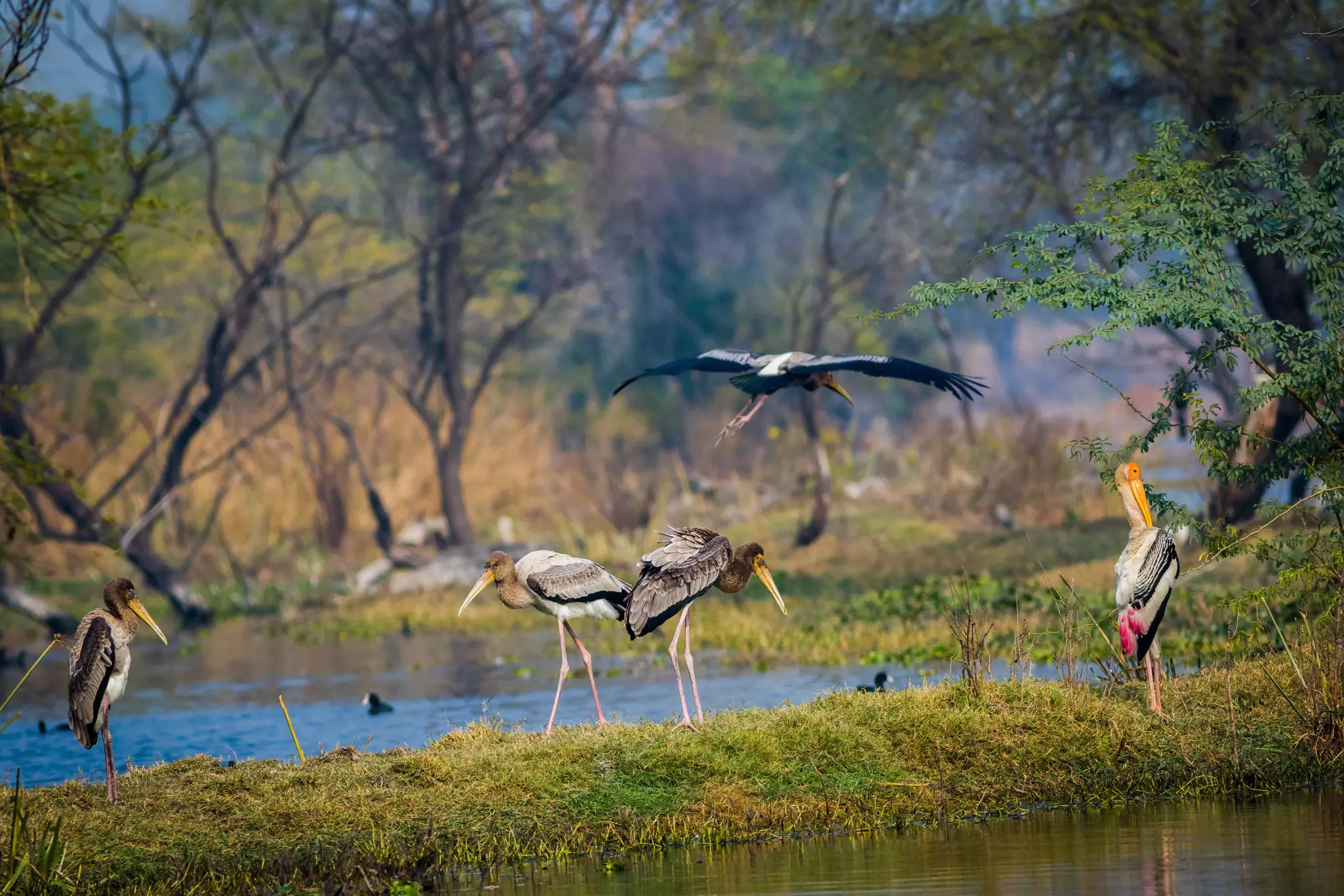
South of Bharatpur is the entrance to one of Asia’s most spectacular birding sites. Keoladeo National Park is a vital breeding and feeding ground for more than 370 bird species in the winter, including everything from herons and kingfishers to bar-headed geese, sarus and demoiselle cranes, spoonbills, eagles and flamingos.
Enjoying this richness of birdlife is a highly sustainable activity. Pay the entry fee and walk into the reserve, or explore by rented bicycle or chartered electric autorickshaw.
The sacred town of Pushkar, about 147km (91 miles) southwest of Jaipur, has a mystique that defies its small size. The town’s Brahma Temple is one of the world’s only active Brahma shrines, sacred to the creator of the universe in Hindu mythology.
Modern-day visitors focus their attention on the lakeshore, flanked by 52 ceremonial bathing ghats and 400 milky-blue temples. Non-Hindus are welcome to observe – but not photograph – the colorful puja (prayer) rituals that unfold beside the lake. Behind the ghats lie tangled alleyways with some genuinely charming places to stay, and winding local markets, selling everything from chillums and sacred threads for yogis to tie-dye tees and Day-Glo wall hangings.
Planning tip: When visiting Pushkar Lake’s ghats, only accept the blessing of a red thread (the “Pushkar passport”) if you’re happy to make a donation, and don’t feel obliged to give more than you’re comfortable with.
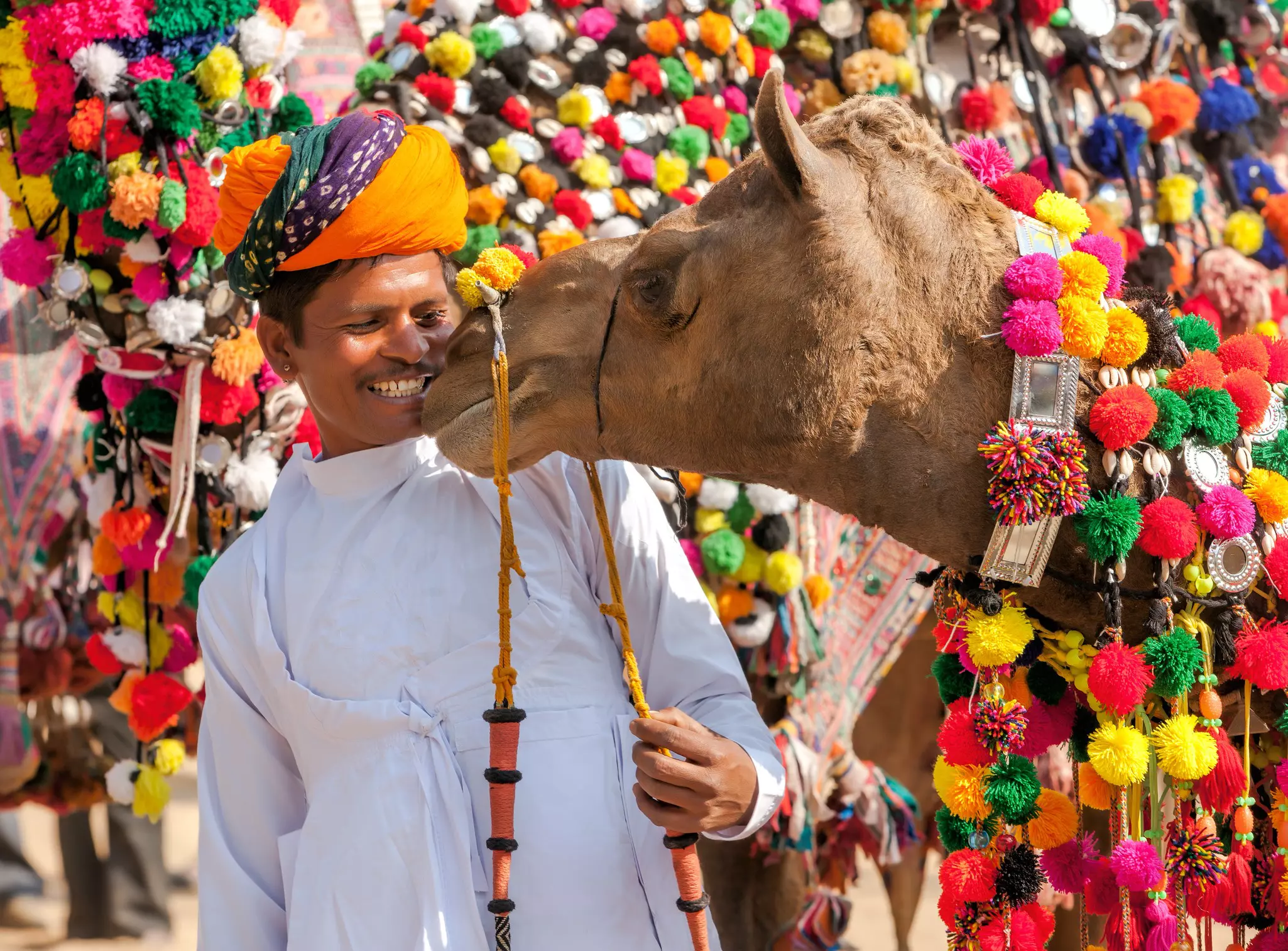
During the Hindu month of Kartika, usually in November, camel drivers from across the Thar Desert begin the long walk to Pushkar for the annual camel fair, held here since the 19th century.
The streets become an intoxicating swirl of color as they are mobbed with musicians, mystics, tourists, traders, devotees, camera crews and 50,000 camels, horses and cattle. The mercantile side of the mela (fair) gets going a week before the official, government-organized festival, when sideshows such as snake charmers and ropewalkers take center stage.
Planning tip: A few direct buses serve Pushkar, but it's easier to get here via Ajmer, a short bus or autorickshaw ride away. Book accommodation months ahead for the camel fair.
Further west, Chittorgarh is the setting for the largest fort complex in India, nearly 6.5km (4 miles) long, crowning a high clifftop and studded with temples and ceremonial towers. Rocky cliffs rise 150m (492ft) above the floodplain of the Berach River, topped by impenetrable-looking walls.
A zigzagging access road climbs for nearly a mile from the gateway known as Padal Pol at the bottom of the cliffs, passing through six further gateways to reach Ram Pol, today the fort’s main entrance. Inside, you’ll find the 15th-century Rana Kumbha Palace, the setting for one of three ritual mass suicides that took place in Chittorgarh. Nearby are a wonderful collection of intricately carved Hindu and Jain temples, ruined step-wells, more crumbling palaces, and the towering 37m-high (121ft) Tower of Victory (Vijay Stambha), erected in the 1440s.
On the east side of the fort, the restored Suraj Pol was the fort’s original entrance, offering epic views across the plains. Just north, attached to the Sri Digambar Jain temple, is the 24m-high (79ft) Tower of Fame, or Kirtti Stambha, dating from 1301. In the center of the fort, the gleaming white Fateh Prakash Palace contains a museum with a small armory and displays on Chittorgarh’s history.
Planning tip: Visit when the fort opens at dawn to beat the crowds or come late in the afternoon to catch the sunset (best admired from the viewpoint south of Padmini Palace).
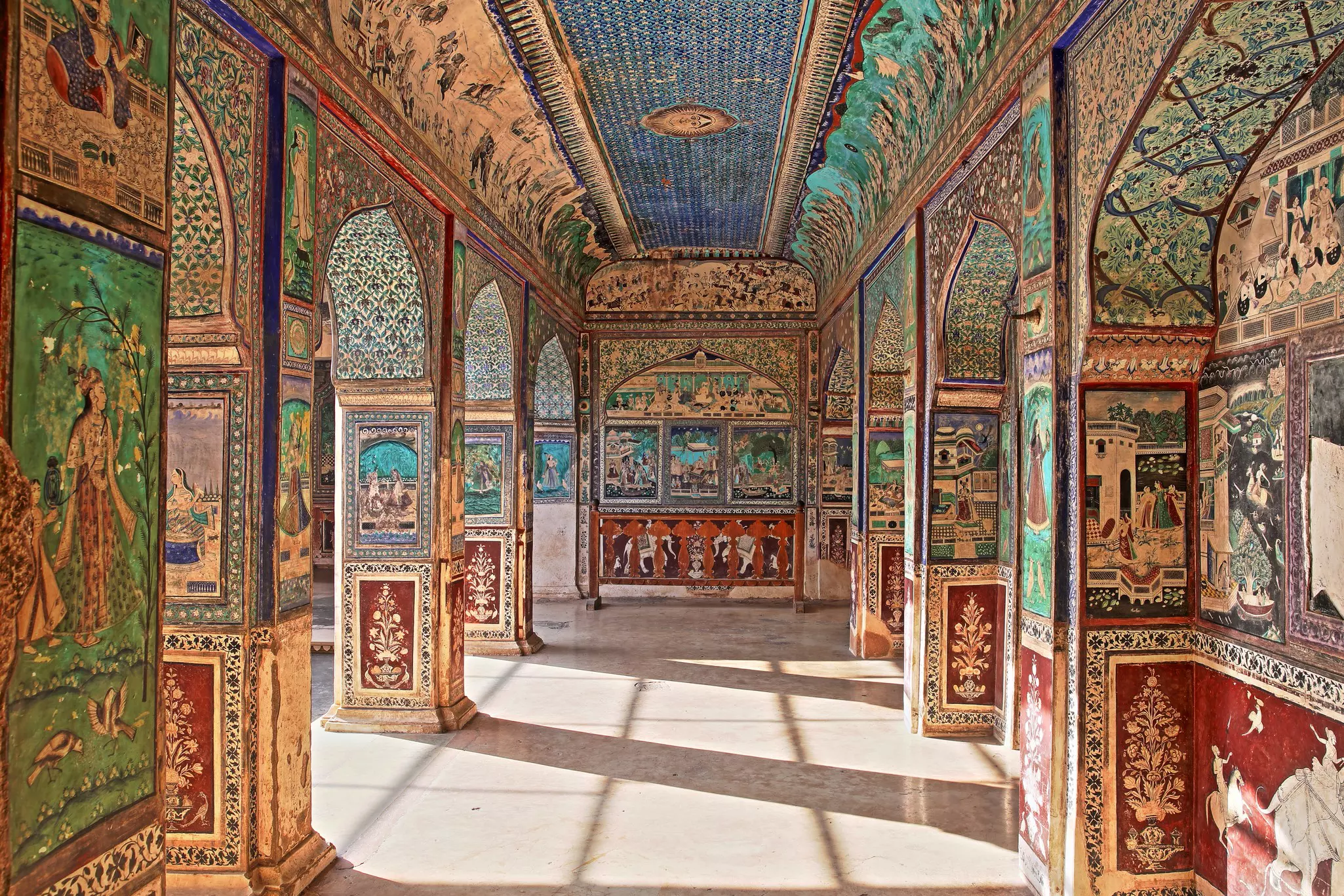
About 219km (352 miles) south of Jaipur, Bundi is a place to step off the mainstream tourist circuit and wander in calm contemplation, investigating mural-filled royal chambers, bazaars lined with bright blue houses, intriguing temples and deep and mysterious baori (step-wells). Few places in Rajasthan retain so much of the magical atmosphere of centuries past.
The extraordinary, decaying Bundi Palace seems to grow out of the rock of the hillside it stands on. Entering Bundi Palace via the elephant-topped Hathi Pol (Elephant Gate), climb the stairs to reach the Diwan-i-Am (Hall of Public Audience), with its gleaming white marble coronation throne. You’ll then pass into the Chhatra Mahal, added by Rao Raja Chhatra in 1644, with some fine but weathered murals. Stairs lead up to the Phool Mahal and Badal Mahal (Cloud Palace), constructed in 1607.
Planning tip: Constructed in the 18th century by Rao Ummed Singh, the upper section of the palace is known as the Chitrasala, and it is administered separately by the Archaeological Survey of India, with no entry fee. It’s a short walk uphill from the main palace.
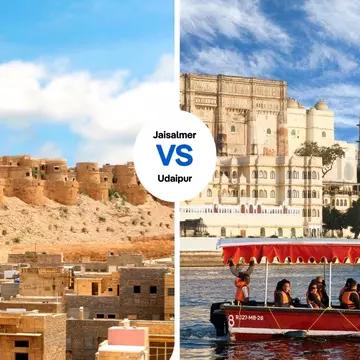
Wrapped around the banks of a shimmering, silvery lake, Rajasthan’s famous White City, Udaipur, is swooningly romantic and endlessly atmospheric. The imposing City Palace, a wondrous collection of bulging balconies and turrets towering over Lake Pichola, is Rajasthan’s largest palace and the seat of the Mewar maharanas. This maze-like warren of a residence was founded by Maharana Udai Singh II in 1599; inside, the treasures are truly something to behold.
The City Palace Museum covers the heart of the palace, centered on the Rai Angan (Royal Courtyard), where the maharana met the sage who told him to build the city of Udaipur. In the chain of apartments reserved for the royal household, of particular note are the Baadi Mahal (from 1699), ringed by open pavilions containing fountains and colorful stained glass, and the Kishan Vilas, with miniature paintings dating from 1178.
The southern end of the museum comprises the 17th-century Zenana Mahal, the royal ladies’ quarters. Devote some time to the interesting displays on female life in the palace.
Planning tip: Tickets to enter the palace compound and the City Palace Museum are sold at the Badi Pol and Sheetla Mata gates and you can enter via one and leave via the other. Arrive before 9am to beat the sometimes enormous crowds.
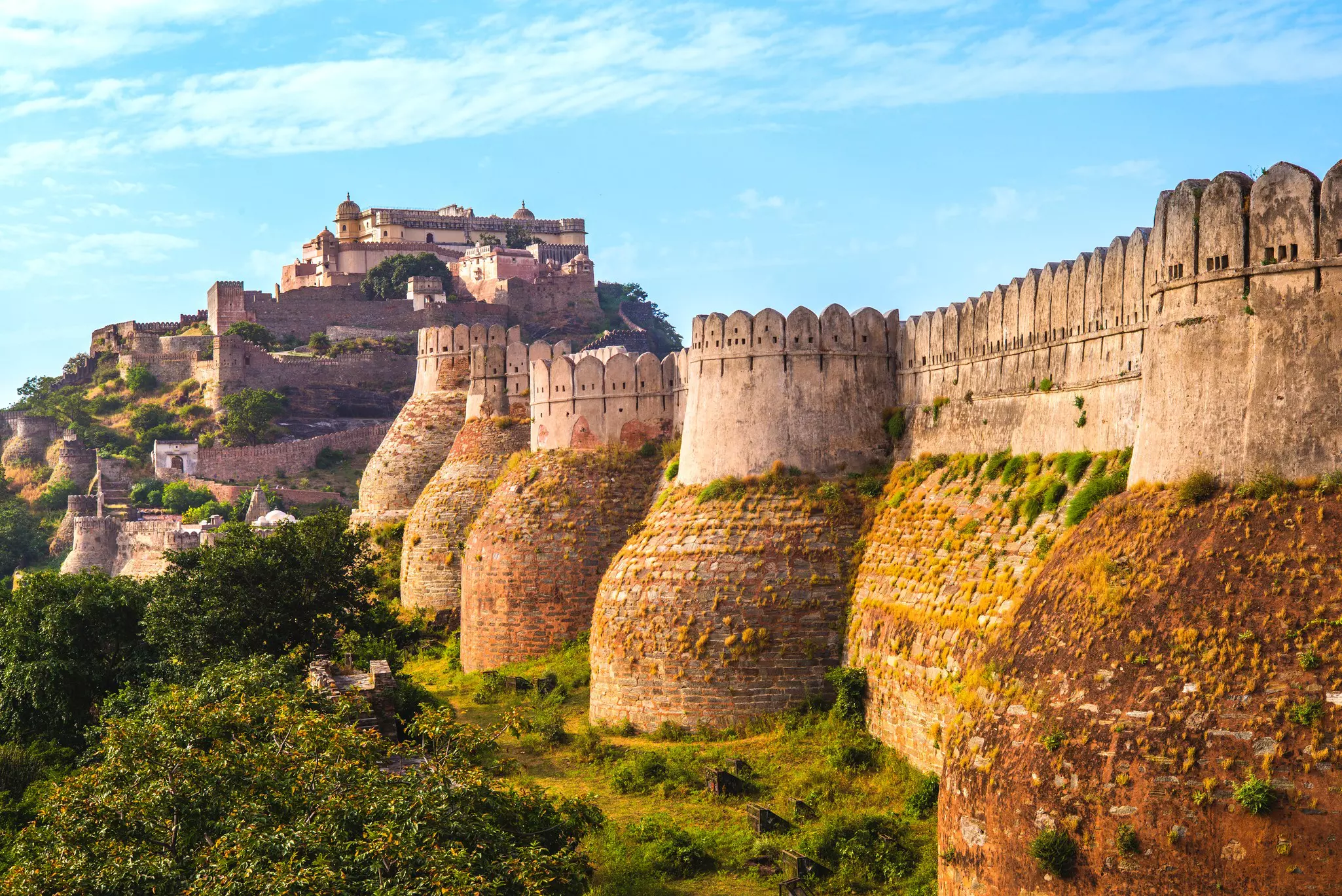
About 80km (50 miles) north of Udaipur in the tumbling Aravalli Hills, Kumbhalgarh is home to peaceful country resorts and the 14th-century Kumbhalgarh Fort, only conquered once in its history. It took the combined armies of Amber, Marwar and the Mughal emperor Akbar to breach its strong defenses and they held the fort for just two days.
The fort is famous for its wall, which was constructed over a period of 15 years. Stretching for 35km (22 miles), this serpentine construction, set at 1100m (3609ft) above sea level, is considered to be India’s “Great Wall.” Enclosing palaces, guard rooms, step wells and some 360 ruined temples, the wall makes for quite a hiking experience.
Planning tip: The easiest way to reach Kumbhalgarh is with a chartered car and driver from Udaipur, also visiting the Jain temples at Ranakpur.
The far south of Rajasthan borders Gujarat, and many Gujarati tourists are lured here by the area’s rich Jain history and temperate highlands. After Udaipur, the change in atmosphere is quite pronounced – the region’s atmospheric forts and ornately carved Jain temples see comparatively few foreign tourists, and the charming hill station of Mt Abu offers a soothing escape from the heat of the lowlands.
Mt Abu is surrounded by the 289 sq km (112 sq mile) Mt Abu Wildlife Sanctuary, a wild expanse of granite outcrops, lakes and pools, dry forest and lofty viewpoints, teeming with wildlife, including leopards, crocodiles and bears. Get a taste on the popular walk out to Sunset Point, paying the national park fee at the checkpoint south of Nakki Lake, then returning to the lake on the Bailey’s Walk nature trail via Toad Rock.
Planning tip: To sample 19th-century Mt Abu, order a drink at the bar at the Jaipur House hotel above the lake, wander around the Polo Ground, then stroll uphill to St Saviour’s Church, an English-style chapel from 1834.
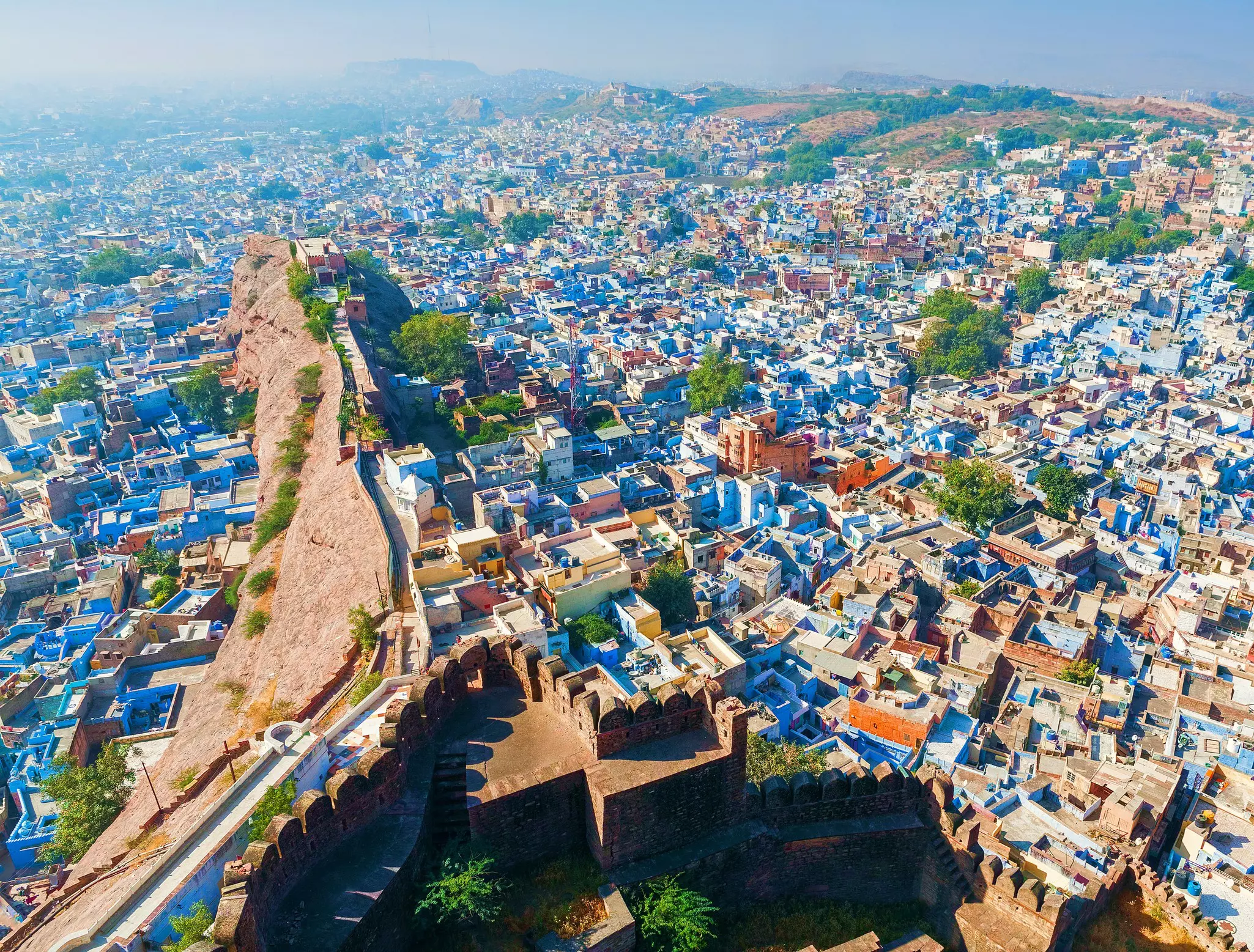
Jodhpur, Rajasthan’s famous Blue City, is more than just its indigo-colored alleyways and skyline-dominating fort. This is perhaps the most atmospheric of Rajasthan’s medieval capitals, hitting the sweet spot between tourist comfort and undiluted Rajput culture. But the Mehrangarh fort is something special – a statement of royal power executed in stone, it's one of India’s most popular tourist destinations.
Enter the fort and museum via Suraj Pol, looking up at the extraordinary windows topped by long, curved pediments. Highlights of this lavish residence include the 18th-century Sheesh Mahal, with its lavish, deity-dotted mirrored hall, and the ornate Takhat Vilas, once the bedchamber of Maharaja Takhat Singh, whose female companions included 30 maharanis and numerous concubines.
Before you leave, walk south from the Moti Mahal through calm, shady gardens for views over the blue rooftops from the cannon-crammed perimeter wall, topped by the historic Chamundaji Temple from 1460.
Planning tip: The Mehrangarh fort gets busy – be one of the first in the door at 9am, to view the galleries in relative calm. You’ll get more from the maze of palaces with an official guide, but the audio guide included in the ticket price is a decent alternative. Both can be arranged at the fort ticket desks.
Looking southeast from the Mehrangarh fort, you’ll spot the towering domes of the Umaid Bhawan Palace, home of the present head of the Rathore clan, Gaj Singh II, and one of Jodhpur’s main attractions.
You can visit several sections of the palace, which fuses Indo-Saracenic and art deco features and was designed by British architect Henry Lanchester for Maharaja Umaid Singh in 1929. The palace took more than 3000 workers nearly 15 years to complete.
Several wings are reserved for the royal family and the lavish, Taj-operated Umaid Bhawan Palace hotel, but what you can see offers a tantalizing glimpse of 21st-century royal life, including the maharaja’s fleet of cars and personal royal heirlooms. The highlight is the elegant Oriental Room, with scenes from the Ramayana – a Hindu sacred text – executed in a glorious, part Indian, part deco, part Pre-Raphaelite style.
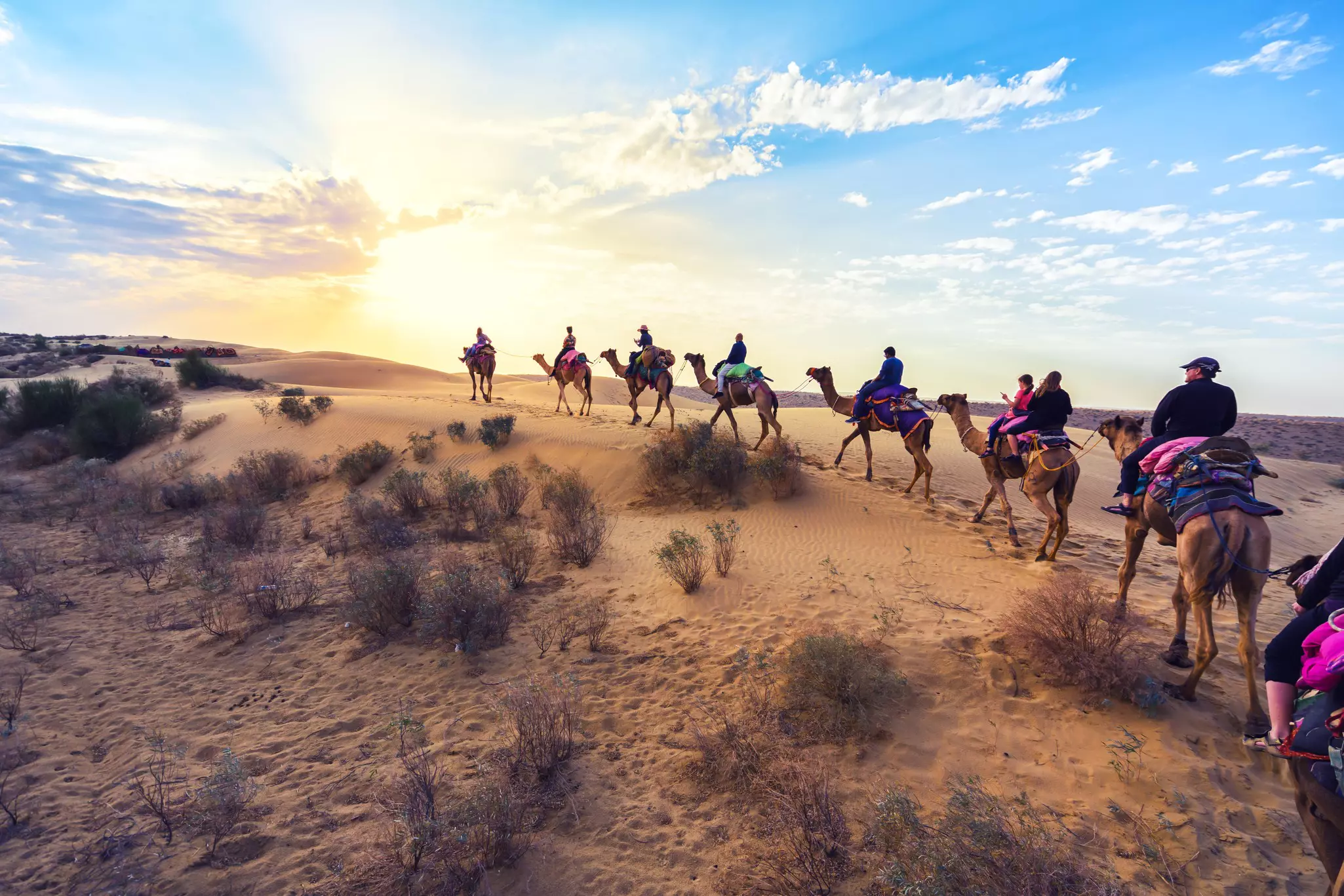
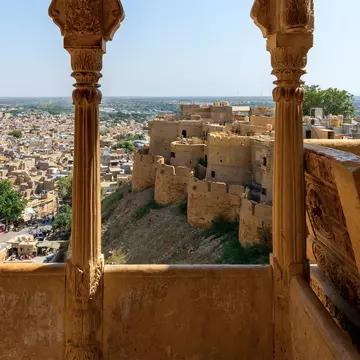
Nowhere conjures up the romance of the age of camel caravans quite like Jaisalmer in the far west of Rajasthan. A deep desert outpost far from anywhere, this handsome city’s main attraction is dramatic Jaisalmer Fort, which rises from the parched plain like an extension of the rocky desert.
Inside its mighty walls are the city’s most famous sights – elaborate temples, regal merchants’ mansions and the atmospheric Fort Palace Museum – alongside craft stalls, embroidery shops, family homes, guesthouses and cafes.
After exploring the fort, arrange an overnight camel safari into the desert around Jaisalmer to experience the stunning scenery and watch sunset over the dunes, before bedding down and sleeping under the stars.
Planning tip: Tourism takes center stage in Jaisalmer, but staying inside the fort is discouraged because of the impact of visitor numbers on water supplies and the physical structure of the fort. The good news is that the surrounding streets are similarly atmospheric, with swirling bazaars wrapped around stone-built hotels and some of the most extravagant havelis (mansions) in the country.
Explore related stories