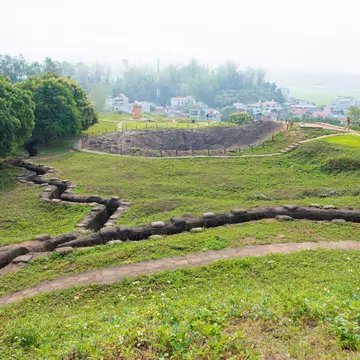
Dien Bien Phu is an essential visit for anyone interested in Vietnam’s tumultuous modern history – nowhere else in the country are so many military history sights packed into one place. You’ll need two full days to get to grips with the history and visit all the worthwhile sights.
The Battle of Dien Bien Phu
In early 1954 General Henri Navarre, commander of the French troops in Indochina, sent 12 battalions to occupy the Muong Thanh Valley in an attempt to prevent Viet Minh fighters from crossing into Laos and threatening the former Lao capital of Luang Prabang. The French units, of whom 30% were Vietnamese, were soon surrounded by Viet Minh forces, who were equipped with artillery pieces and anti-aircraft guns painstakingly carried by porters through jungles and across rivers. The guns were placed in concealed, carefully camouflaged positions overlooking the French troops.
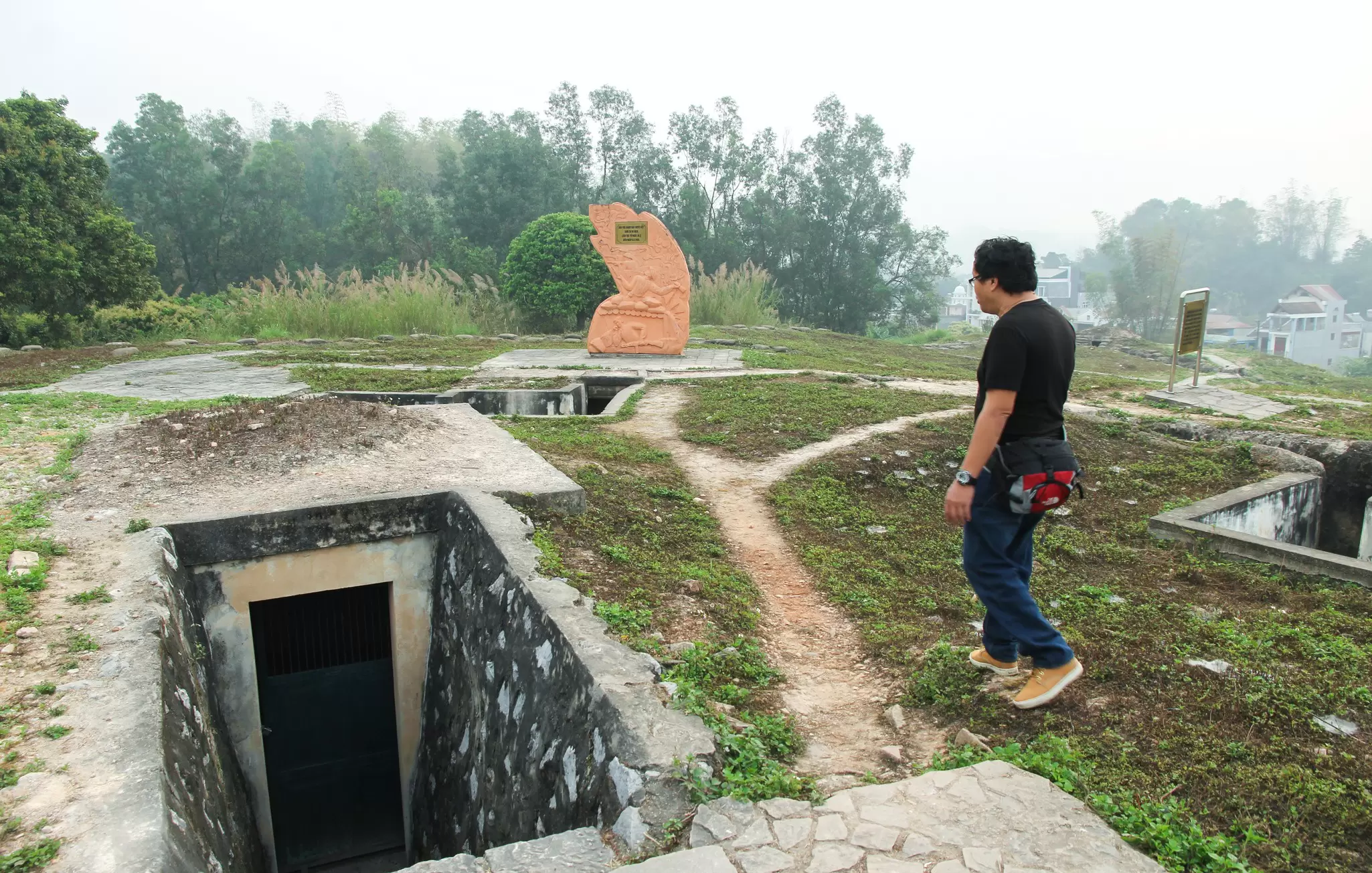
French Chief Artillery Commander Pirot had assumed it was impossible for the Viet Minh to get heavy artillery to the area, and when the guns opened fire he took his own life. Weeks of intense artillery bombardments ensued. Six battalions of French paratroopers were parachuted into Dien Bien Phu as the situation worsened, but these reinforcements proved insufficient.
The elaborate series of French trenches and bunkers were overrun by the Viet Minh after the French decided against the use of US conventional bombers and the US Pentagon’s proposal to use tactical atomic bombs. All 13,000 French soldiers were either killed or taken prisoner, and Viet Minh casualties have been estimated at many times that. Viet Minh forces finally overran the beleaguered French garrison after a 57-day siege. This shattered French morale and resulted in France abandoning Vietnam for good.
Dien Bien Phu Museum
This well-laid-out Dien Bien Phu Museum, contained in a handsome modern structure, commemorates the stages of the 1954 battle in documentary-level detail. Alongside weaponry and guns, there’s a bathtub that belonged to the French commander Colonel de Castries, a bicycle capable of carrying 330kg of ordnance, and the testimony of Vietnamese who were there. Do not miss the stunning 20m-high and 103m-long panoramic oil painting on the museum’s upper level, unveiled in 2022, that gives an epic overview of the battle.
Victory Monument
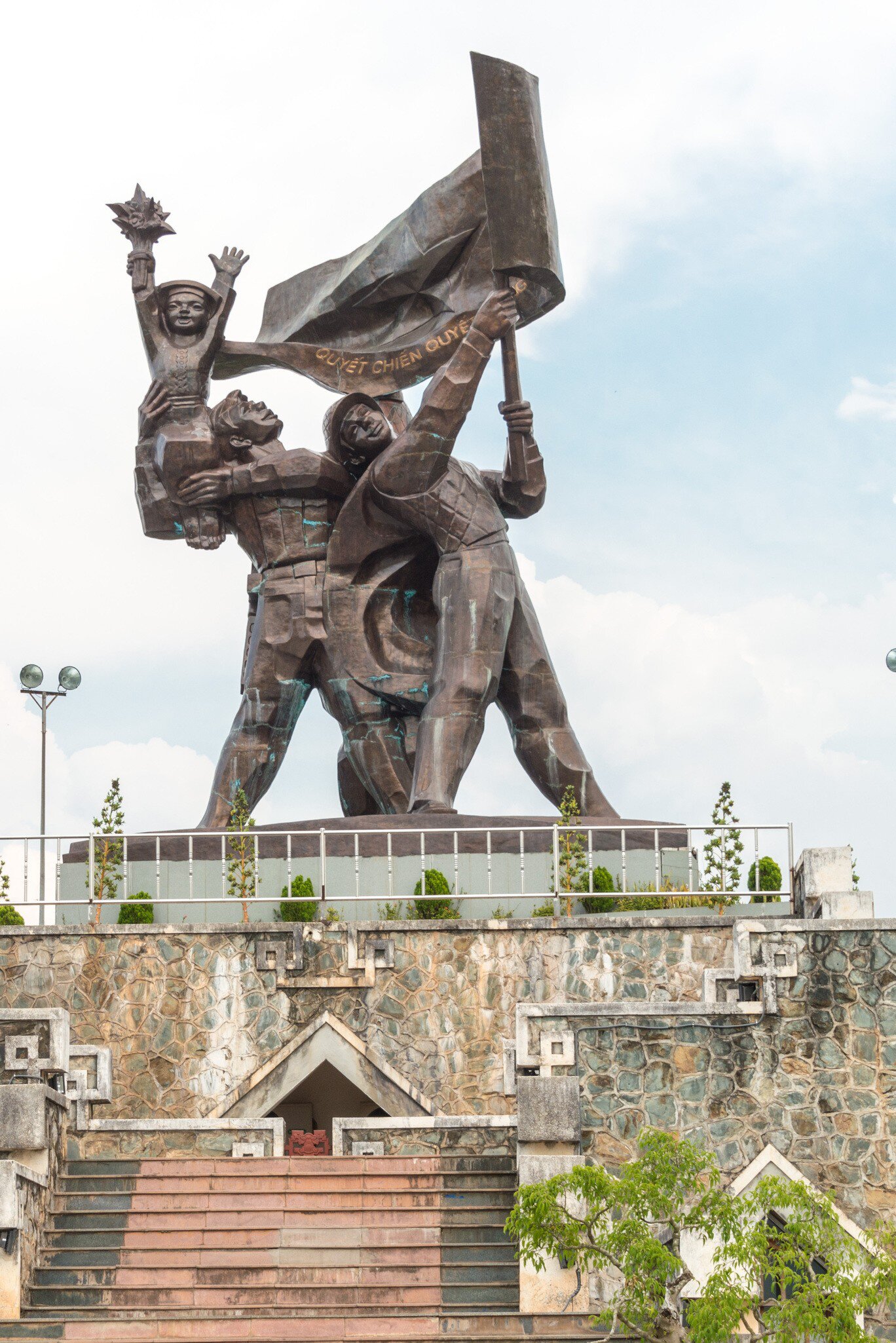
The 16m-tall Victory Monument atop D1 Hill, commemorating the 1954 battles, presides heroically over Dien Bien Phu’s main roads. Road access leads around the back of the hill, or you can climb the 320 steps from the street to the monument for epic views.
A1 Hill (or Eliane)
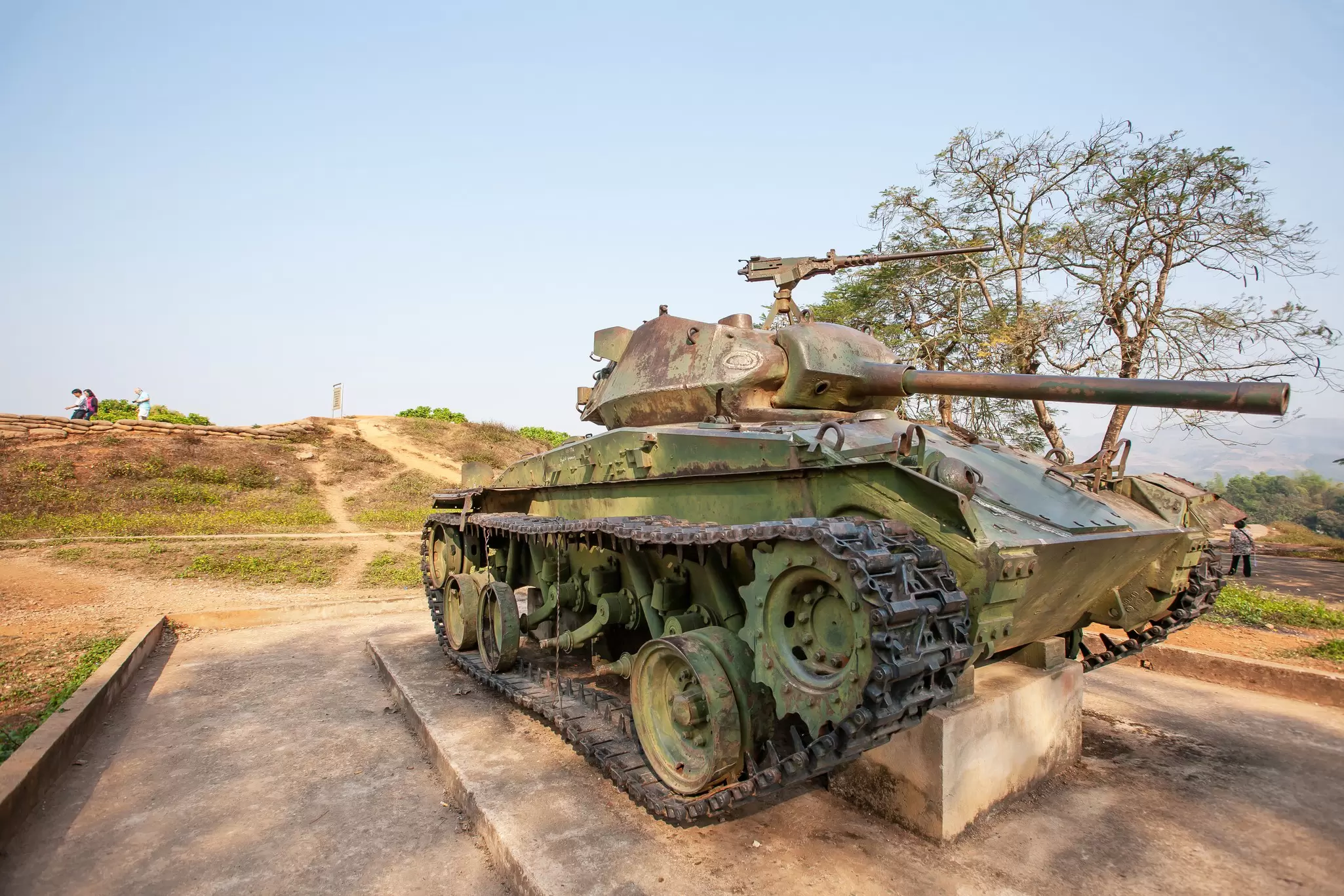
This vantage point, site of pitched battle within the city, puts you in the heart of the siege. There are tanks and a monument to Viet Minh casualties on this former French position, known to the French as Eliane and to the Vietnamese as A1 Hill. The elaborate French defense trenches have also been recreated. Little background information is given on-site.
Martyr’s Temple
A newer installation opened in 2022, this site occupies F Hill directly adjacent to A1 Hill. A short run of stairs takes you up to the large, calm temple Martyr’s Temple with an altar and 56 lamps in a semicircular memorial lake – one for each night of the siege. Look for the small entrance gate on D Hoang Van Thai.
Bunker of Colonel de Castries
The dank command Bunker of Colonel de Castries of Colonel de Castries has been recreated near the Rom River. There’s little to actually see inside the bunker, but a discarded tank and some mortar guns linger nearby along with museum-style signpost placards that give some context. You might see Vietnamese tourists mounting the bunker and waving the Vietnamese flag, re-enacting an iconic photograph taken at the battle’s conclusion.
Dien Bien Phu Cemetery
The immaculately maintained Dien Bien Phu Cemetery commemorates the Vietnamese who died in the battle of Dien Bien Phu, with each gravestone bearing the gold star of the Vietnamese flag and a clutch of incense sticks.
French War Memorial
The unsigned, understated French War Memorial, erected by a veteran of the French Foreign Legion on the 30th anniversary of the 1954 battle, commemorates the 3000 French troops buried under the rice paddies. It’s a bit difficult to find, but worth a moment’s pause.