Gargantuan. Jaw-dropping. Otherworldly. Carlsbad Caverns exceeds all superlatives, and it's accessible to everyone.
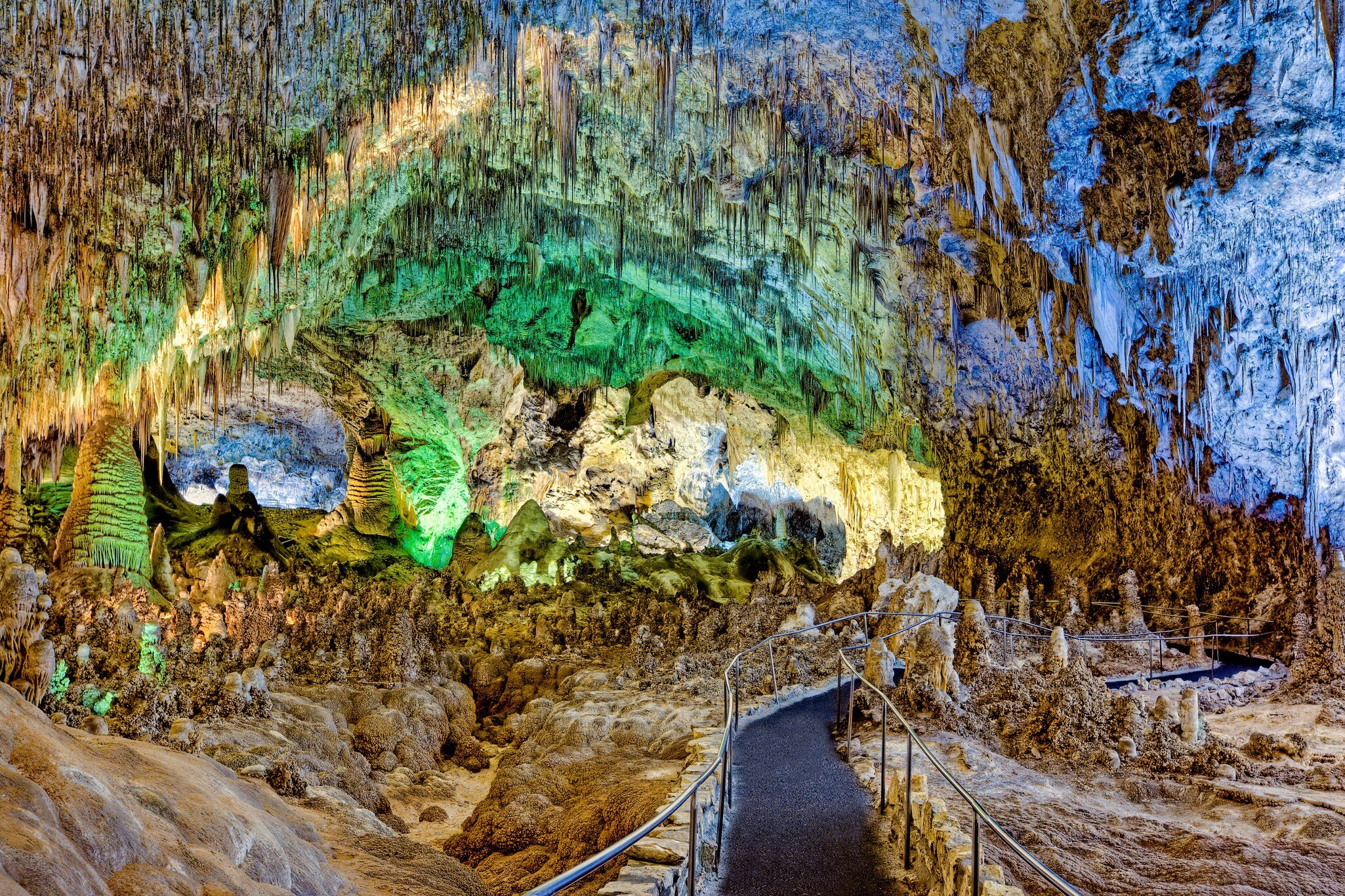
Discovered via a gaping hole in the Chihuahua Desert, 100 miles from Roswell, the 30-mile-long Carlsbad Caverns (nps.gov/cave; adult/child under 16 $15/free) descends into a universe of bizarre speleothems – popcorns, soda straws, flowstone, plus giant stalagmites and stalactites – in a space devoid of plant life and sunlight, but artificially lit for the public to explore.
Descend into a Subterranean World
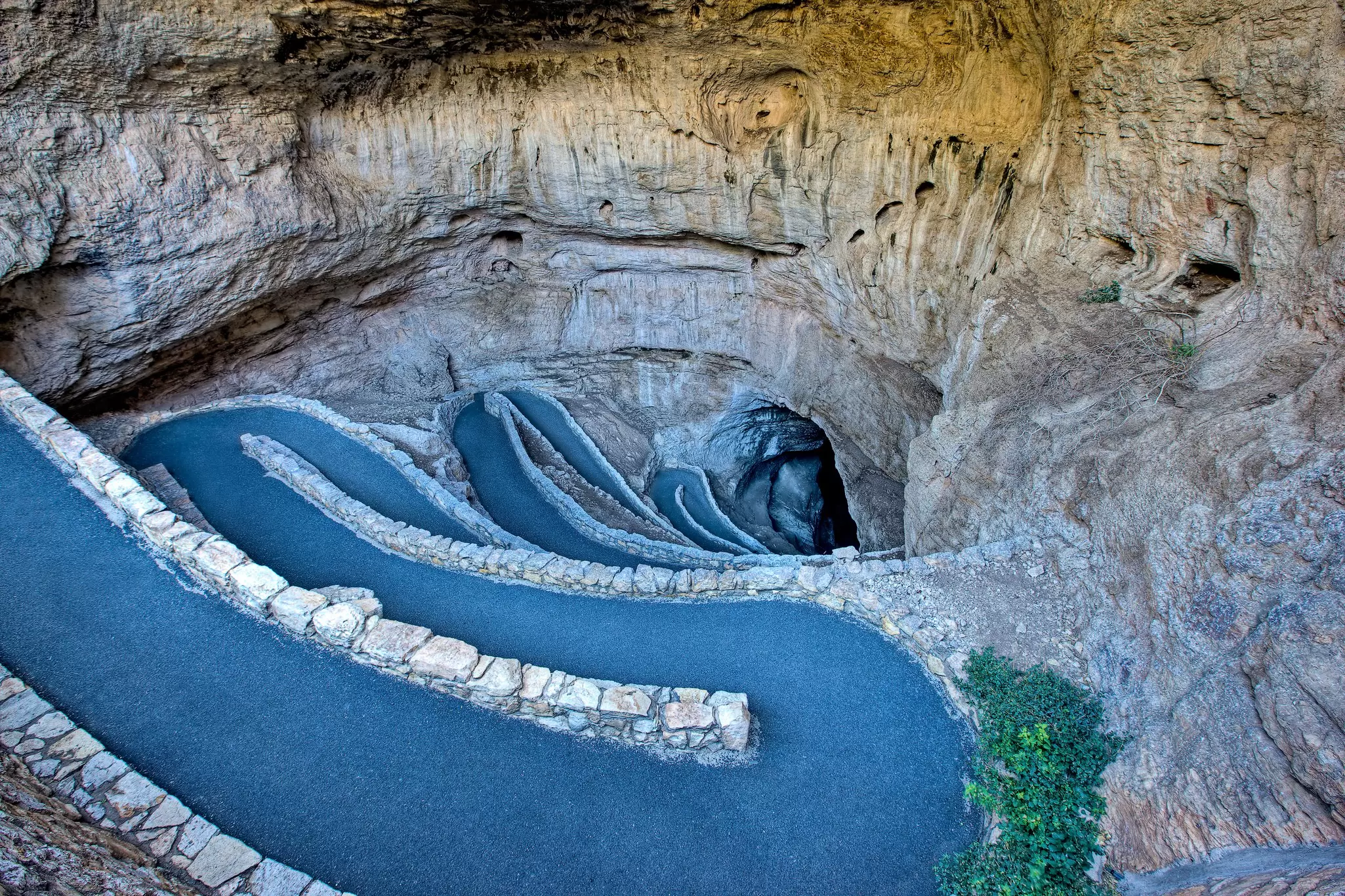
The self-guided Natural Entrance Trail follows the route that early explorers took into the cave. Through a big hole in the earth, it descends about 750ft (229m) along a 1.25-mile well-lit steep flat concrete path with many switchbacks and rails all the way through what has been named the Main Corridor. Walkers can barely believe their eyes and nose, as the light stops streaming from the entrance, the smell of bat urine fills the air and darkness takes over as the trail goes further into the bowels of the cave, lit by lamps on the path.
At each section, astonishingly impressive natural features appear. Stalagmites and stalactites glow in the darkness in every crevice and corner, each formed over 500,000 years from water dripping down onto the limestone bedrock. Some appear like needles, others like mushrooms or sea creatures. Info boards along the route give details on points of interest including the pool of water named Devil’s Spring, a larger pool named Green Lake Overview, the Boneyard, with a maze of limestone-rock spongework, and Iceberg Rock, a giant boulder weighing 200,000 tons, which fell from the ceiling (don’t worry, it was estimated to have happened around 513,000 years ago). Those who require accessible access, or prefer not to hike, can catch the refurbished elevator. It goes 750ft underground, and travels 700ft per minute, through solid limestone to the cave’s main attractions.
A 1½-hour ranger-led King's Palace Tour (book in advance, recreation.gov; adult/child $8/4; children under 6 not permitted) guides visitors around four chambers for more insight. Look out for Rock of Ages Lantern Tours in December, with rangers in costume.
Big Room
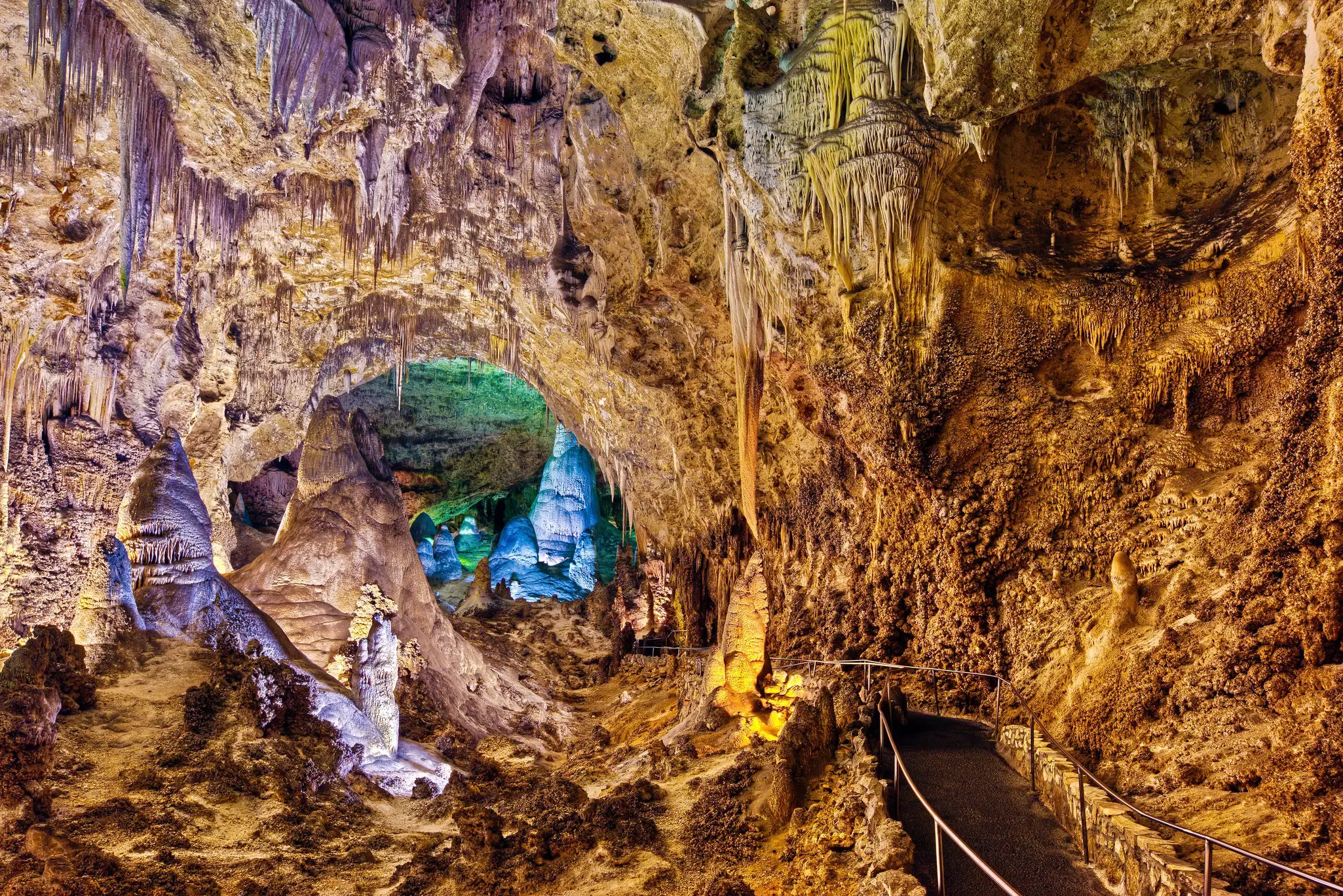
Often compared to the Grand Canyon with a roof on it, this is the largest and most breathtaking room in the cave – a whopping 8.2-acre space filled with stunning natural twisted and peculiar features, including building-high stalactites. Here you can go on a Jules Verne–style odyssey through a 1.25-mile (2km) trail looping around highlights including the big angled Bottomless Pit, dropping 140ft into darkness. In the shadows appears the 16ft-wide, 62ft-high columned limestone formation of Giant Dome, estimated to be 60 million years old – some say it looks a bit like the Leaning Tower of Pisa. Also not to be missed is Top of the Cross, the room's highest point and filled with white stalagmites – they who discovered this place thought they looked like angels.
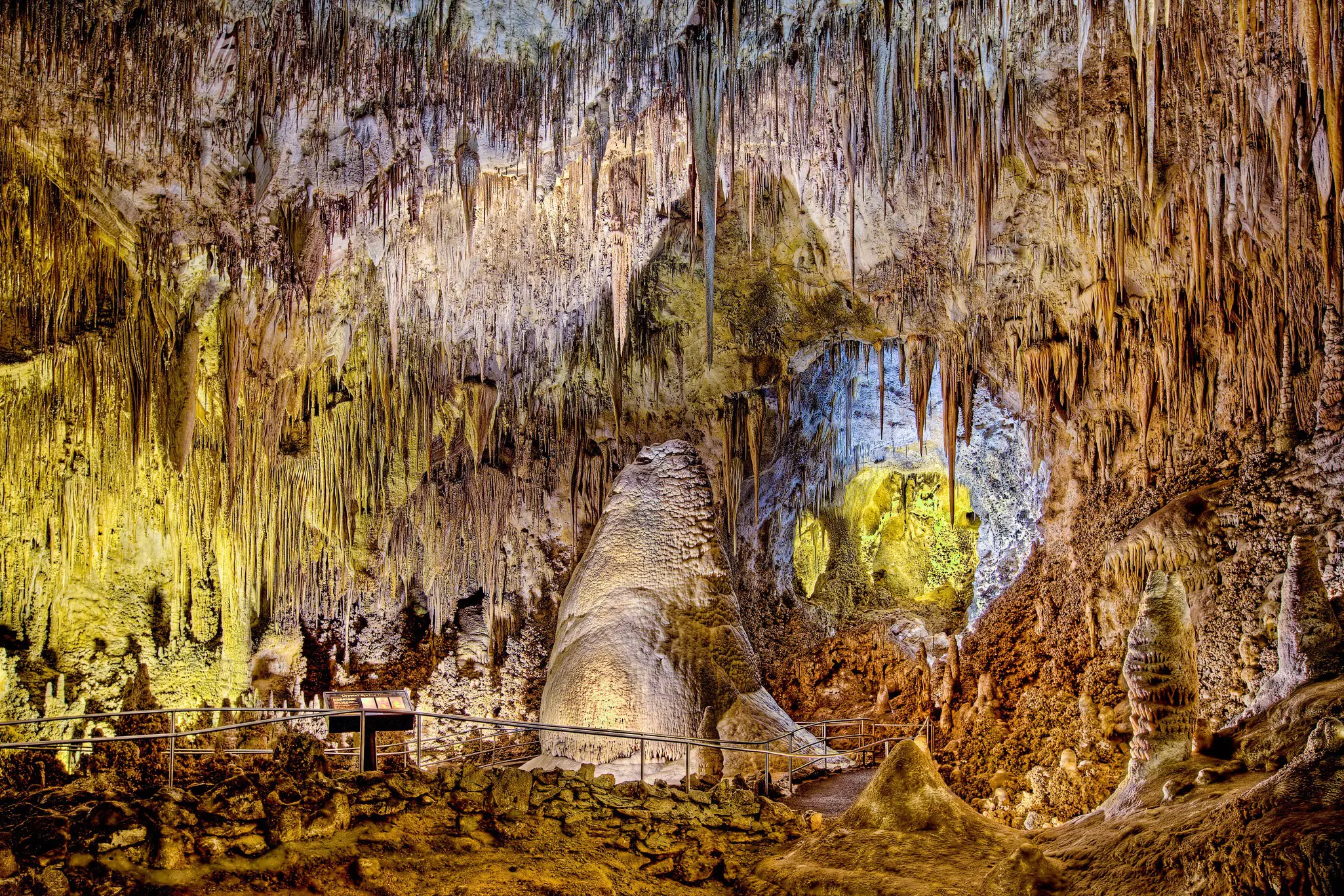
Crystal Spring Dome is the largest active stalagmite in the cave, currently 16ft wide but still growing. Climbing ropes have been left hanging from the ceiling in areas of the cavern from when the chambers were discovered. In one place there are concrete benches under a cathedral-like ceiling, where visitors can sit and gawk at the sculpted ornamentations above.
Geology of Carlsbad Cavern
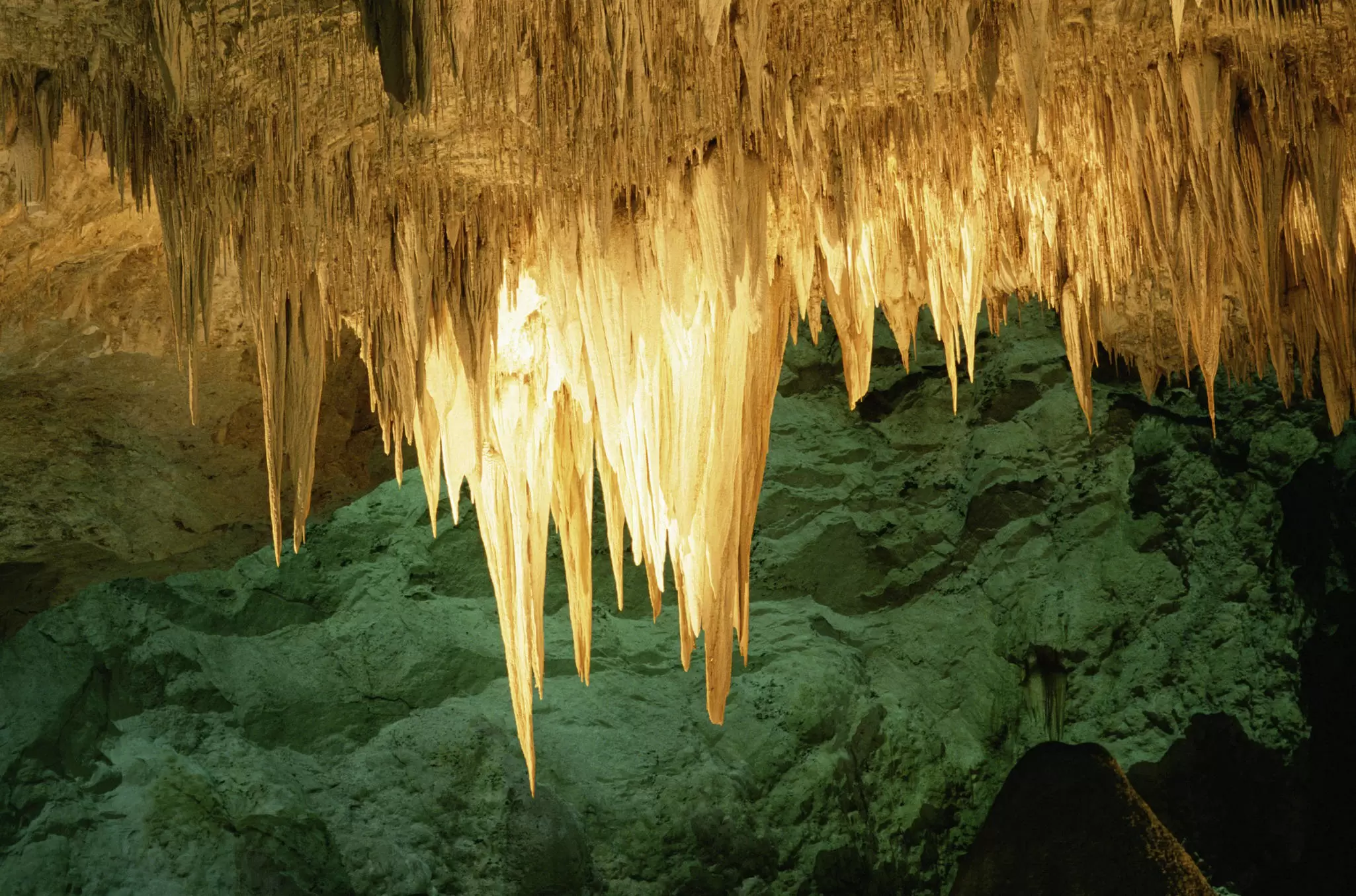
While this cave can be discovered safely by visitors, there are actually 119 known caves within the boundaries of the national park. Lechuguilla, for example, extends for more than 145 miles, and drops 1604ft, but can’t be easily explored. Formed around four to six million years ago, what makes these caves different from the others – which are typically created by surface water flowing into gaps in limestone rock, eroding the rocks over time to form passageways – is that sulfuric acid was also present in their creation, making for a more aggressive dissolving process. After you visit the cave, save time to learn about what you’ve seen at the visitor-center museum. Kids will enjoy the interactive elements – there are buttons to push and question and answer flaps to open.
Flight of the Bats
This is a show you won't find at any theater. Every evening from May to October, watch as hundreds of Brazilian free-tailed bats pour out of Carlsbad Caverns to hunt for their dinner. The program is free and you don't need reservations – seats at the Bat Flight Amphitheater in front of Natural Entrance are first-come, first-served. Before the show begins, a ranger will do a five-minute presentation to provide context. Some 17 species of bats live in the park, but up to 400,000 Brazilian free-tailed bats come to the cave to roost in summer. Throughout the year, Bat Flight is reserved for sunset (check the website as times change), and on the third Saturday of July, it's a tradition to watch the bats return to the cavern in the morning. Dawn of the Bats, as it's called, is also free.
Wider Park Area
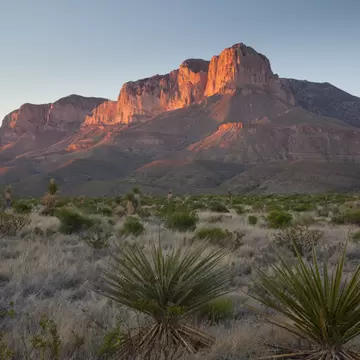
You may have some hours to kill between visiting the caves and waiting for the Flight of the Bats. This is a great chance to explore the wider park, which has eight trails, ranging from the easy and accessible half-mile Chihuahuan Desert Nature Trail to longer half-day to day hikes along ridges and through canyons. For solitude, the 9.5-mile scenic Walnut Canyon Desert Drive loops along a gravel path (4WD or high clearance recommended) through the Chihuahuan Desert for desert plant or wildlife spotting – the park is home to 67 mammal species, 357 bird species and 54 species of amphibians and reptiles.