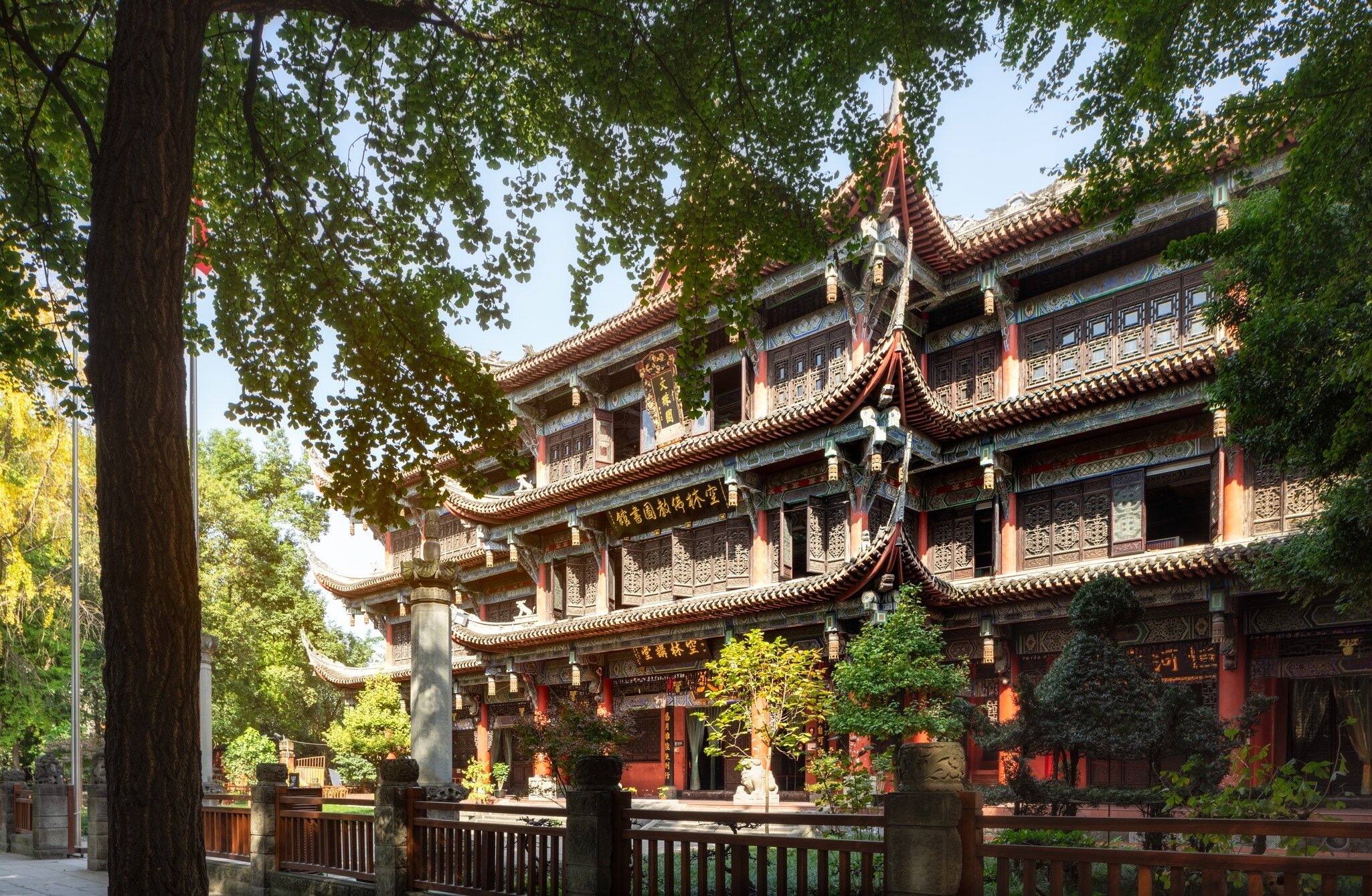
One of the largest and best-preserved Buddhist temples along the Yangzi River, and possibly the only one just outside an eponymous metro station, Wenshu Monastery (文殊院, Wénshū Yuàn) is dedicated to Wenshu (Manjushri), the Bodhisattva of Wisdom. It was first raised in the Sui dynasty (CE 581–618). Not much remains of its first iteration, except Buddha statues dating to the Liang dynasty (CE 502–557) in the (often crowded) gallery.
The monastery's last reconstruction in dynastic China was 1696, during the Qing. Allegedly, Monk Cídǔ had come to the ruins of the temple for meditative retreat. Locals saw light radiating from his person, leading them to believe he was Wenshu/Manjushri reincarnate. Long story short, he became Wenshu's first abbot.
Wenshu's current appearance is largely the result of the Qing reconstruction. Its plain vernacular style, rarely adopted for temples, features a beamless wooden structure, a rectangular layout with courtyards, and a clean, simple beauty. To cope with Chengdu's rainy climate, the gable roof has a tall row of protective cyan bricks along the ridgeline and generous overhangs that shelter wide corridors.
Inside, the air is heavy with incense and the low murmur of chanting; despite frequent crowds of worshippers, there’s still a sense of serenity and solitude. At weekends free Chinese- and English-language tours of the complex run frequently. Look for the stand advertising them inside the main courtyard.
The popular (and vegetarian) Wenshu Monastery Restaurant is on-site. The restored old streets surrounding the temple are full of teahouses, snack stalls, fortune tellers, shops and an opera theater.