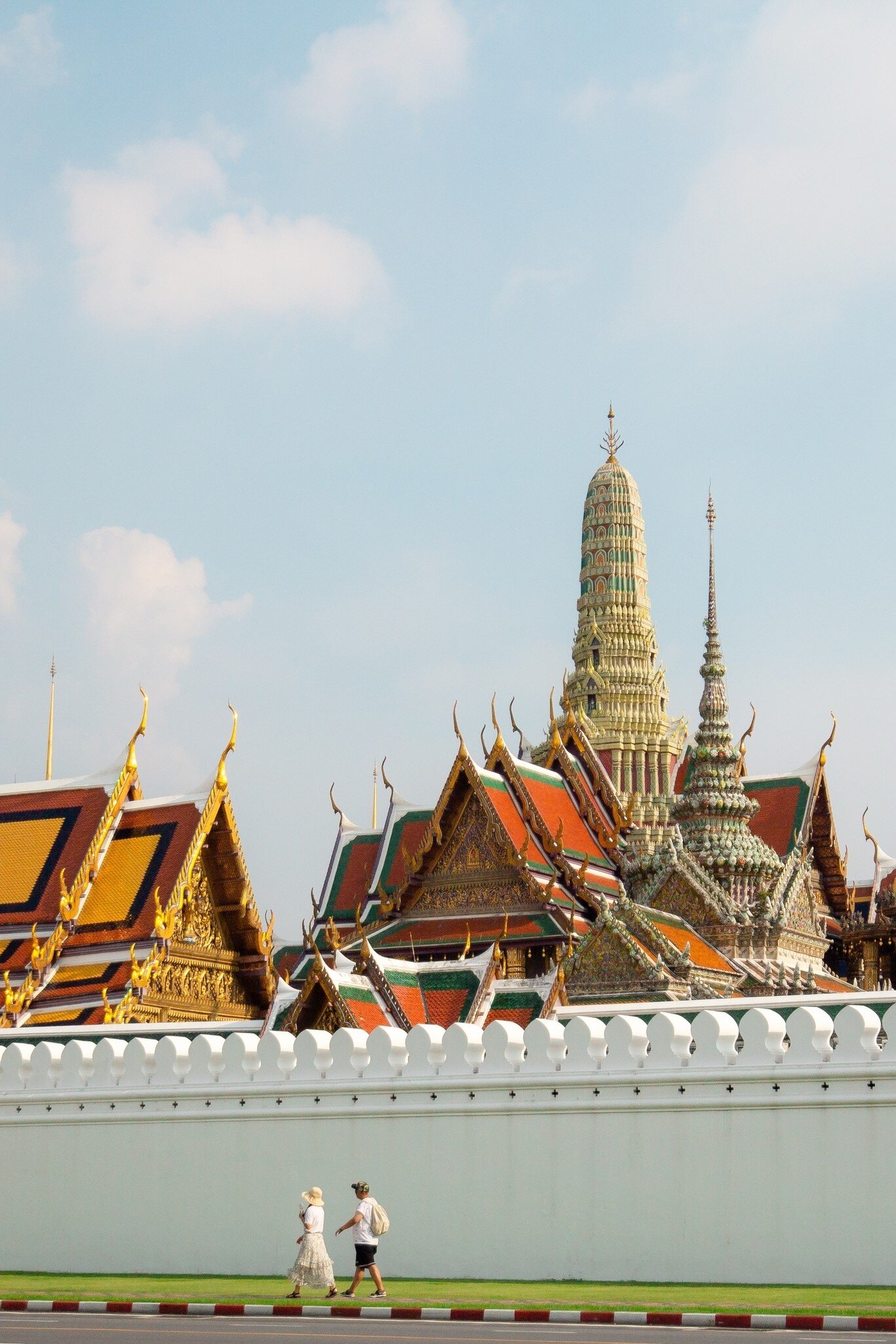
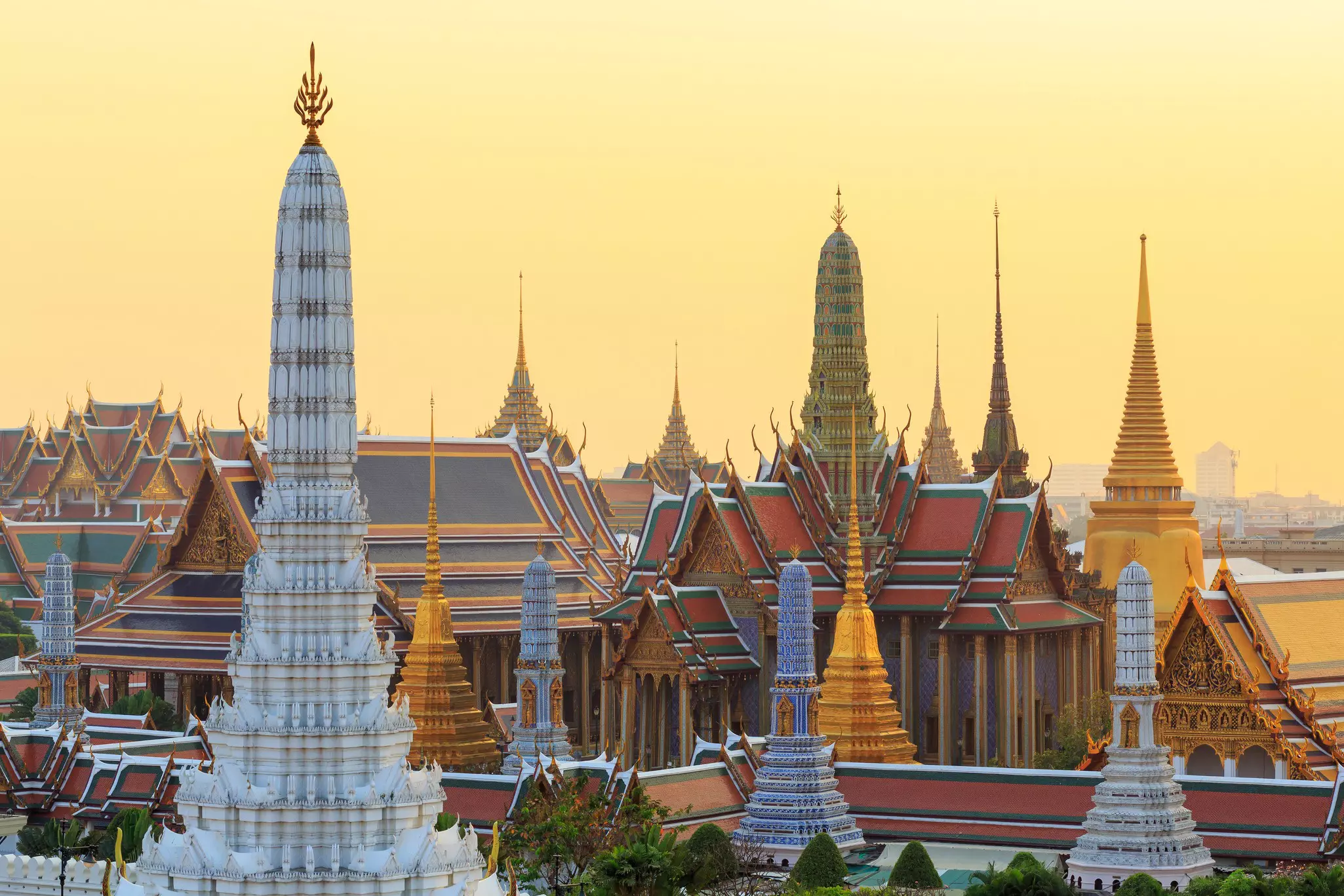
The architecturally awesome temple complex of Wat Phra Kaew (1783) is the spiritual core of Thai Buddhism and the monarchy, symbolically united in the country’s holiest image, the Emerald Buddha. The attached former royal residence of the Grand Palace is still used on important occasions. Both tourists and devout Buddhists flock here.
Emerald Buddha
Just 66cm tall, the Emerald Buddha is the most sacred object in Thailand, and the very symbol of the kingdom. At first, you might fail to spot the diminutive image sitting high above the pilgrims and worshipers who crowd out the Ordination Hall that houses it. Crafted out of semi-precious green jasper (rather than emerald), the Emerald Buddha first appeared on record in 15th-century Chiang Rai in northern Thailand. Stylistically, it seems to belong to the Thai artistic periods of the 13th to 14th centuries.
Because of its royal status, the Emerald Buddha is ceremoniously draped in monastic robes. There are three robes: for the hot, rainy and cool seasons. The robes are still solemnly changed by the king at the beginning of each season.
Ordination Hall
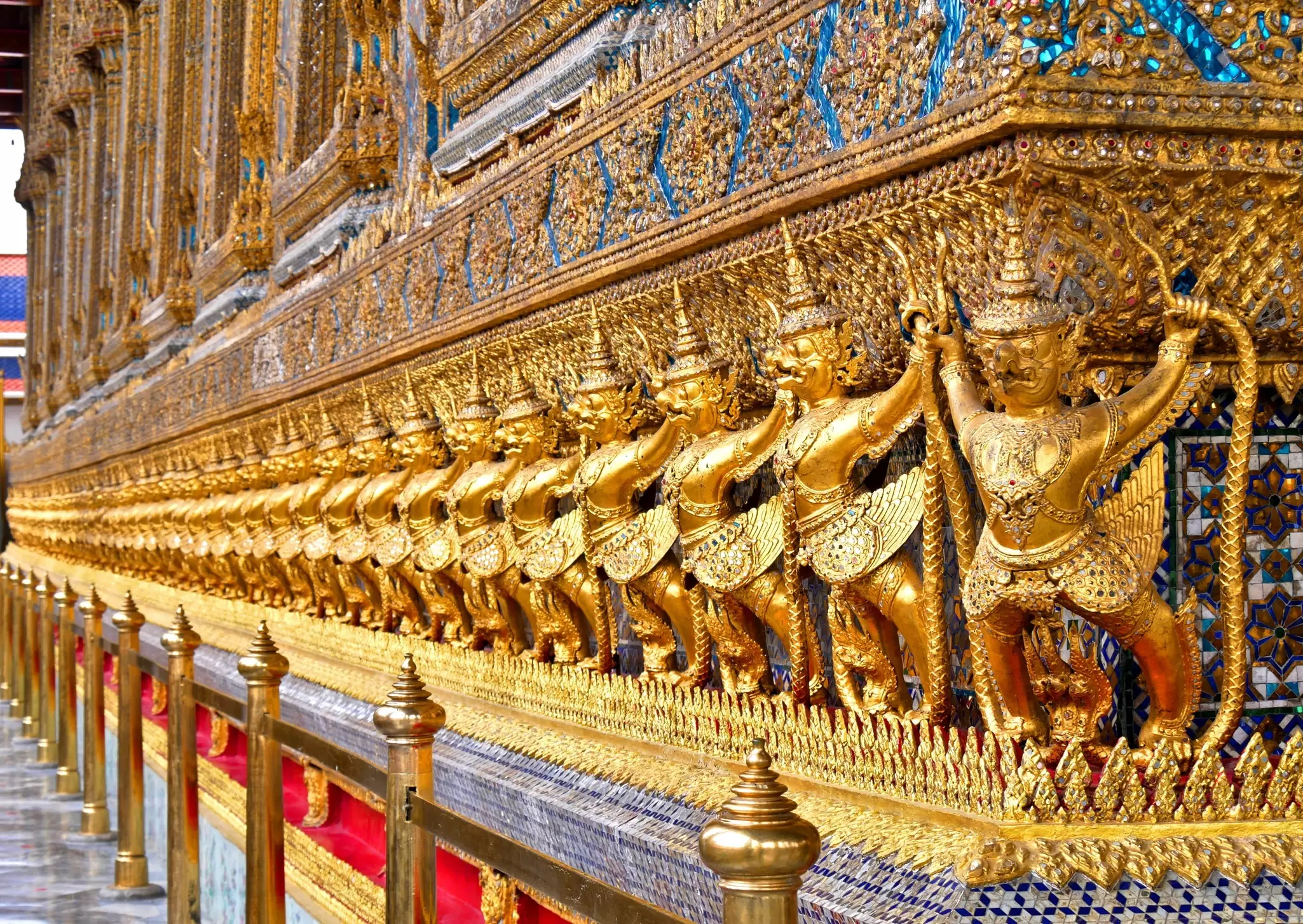
The spectacular ornamentation of the Ordination Hall, both inside and out, does a good job of distracting visitors from paying their respects to the Emerald Buddha within it. Check out the gold leaf and glass mosaics adorning the exterior walls, the colored glazed tiles on the roof and the painted murals depicting scenes from the life of the Buddha in the hall's interior.
Ramakian Murals
Lining the walls of the 2km-long cloister that defines the perimeter of the complex are 178 wonderfully vivid and intricate Ramakian murals depicting the entire Ramakian (the Thai version of the Ramayana, an ancient Hindu epic).
The murals begin at the north gate and move clockwise around the compound, telling how the hero Rama (the green-faced character) joins forces with Hanuman, the monkey king (the white monkey), to rescue his bride Sita (the topless maiden) after she’s kidnapped by the evil king Ravana (the character with numerous arms and faces). Battles and intrigue follow until it all ends happily.
Mythical Beings
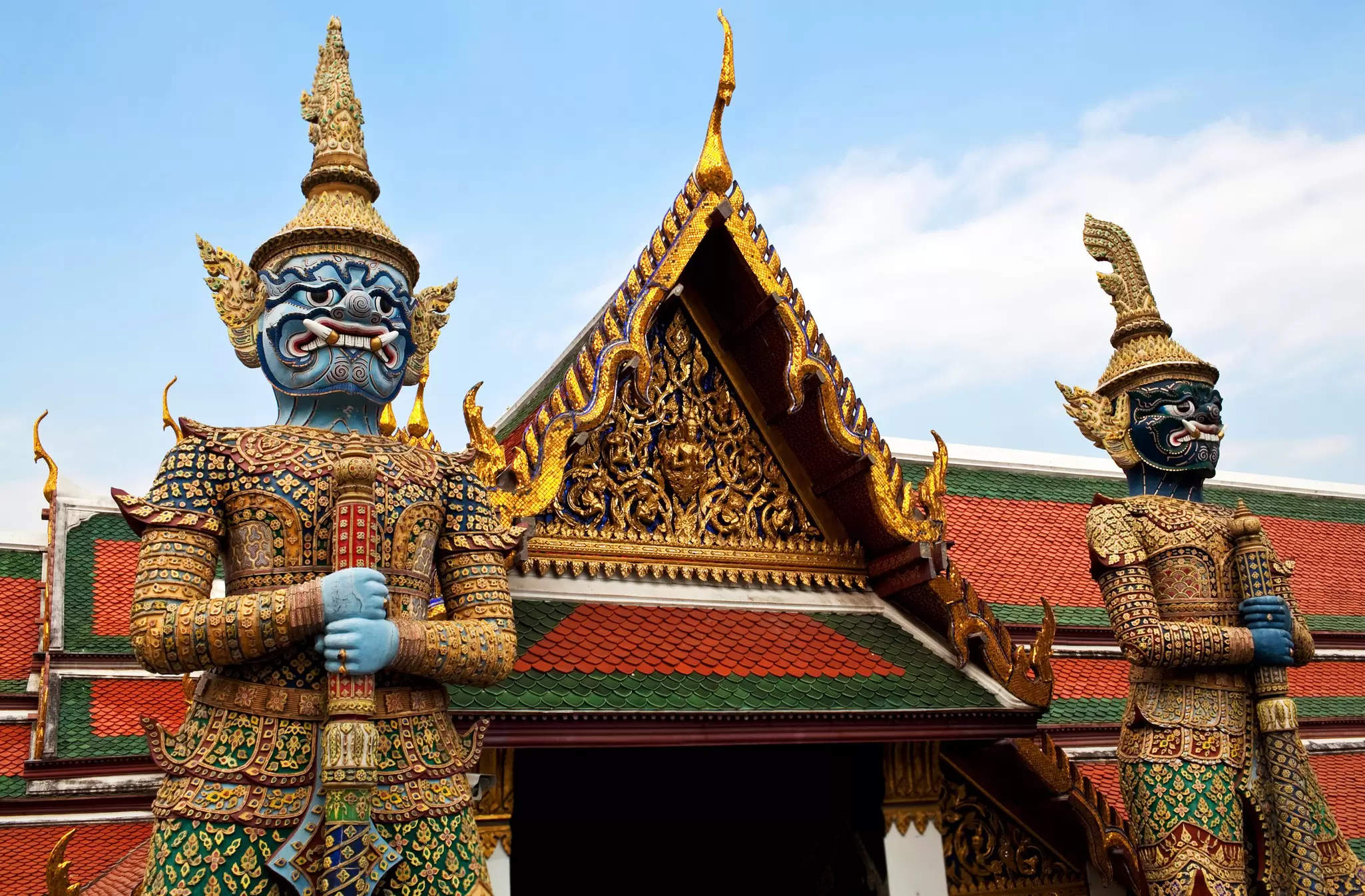
Every entrance to Wat Phra Kaew is guarded by a pair of giant Yaksha (ogre-like attendants who are commonly seen standing watch over Buddhist temples in Thailand). Other mythical beings to look out for here are the graceful Kinaree (half-swan, half-woman creatures) and grimacing Hanuman (mischievous monkey-like deities).
Chakri Mahaprasat
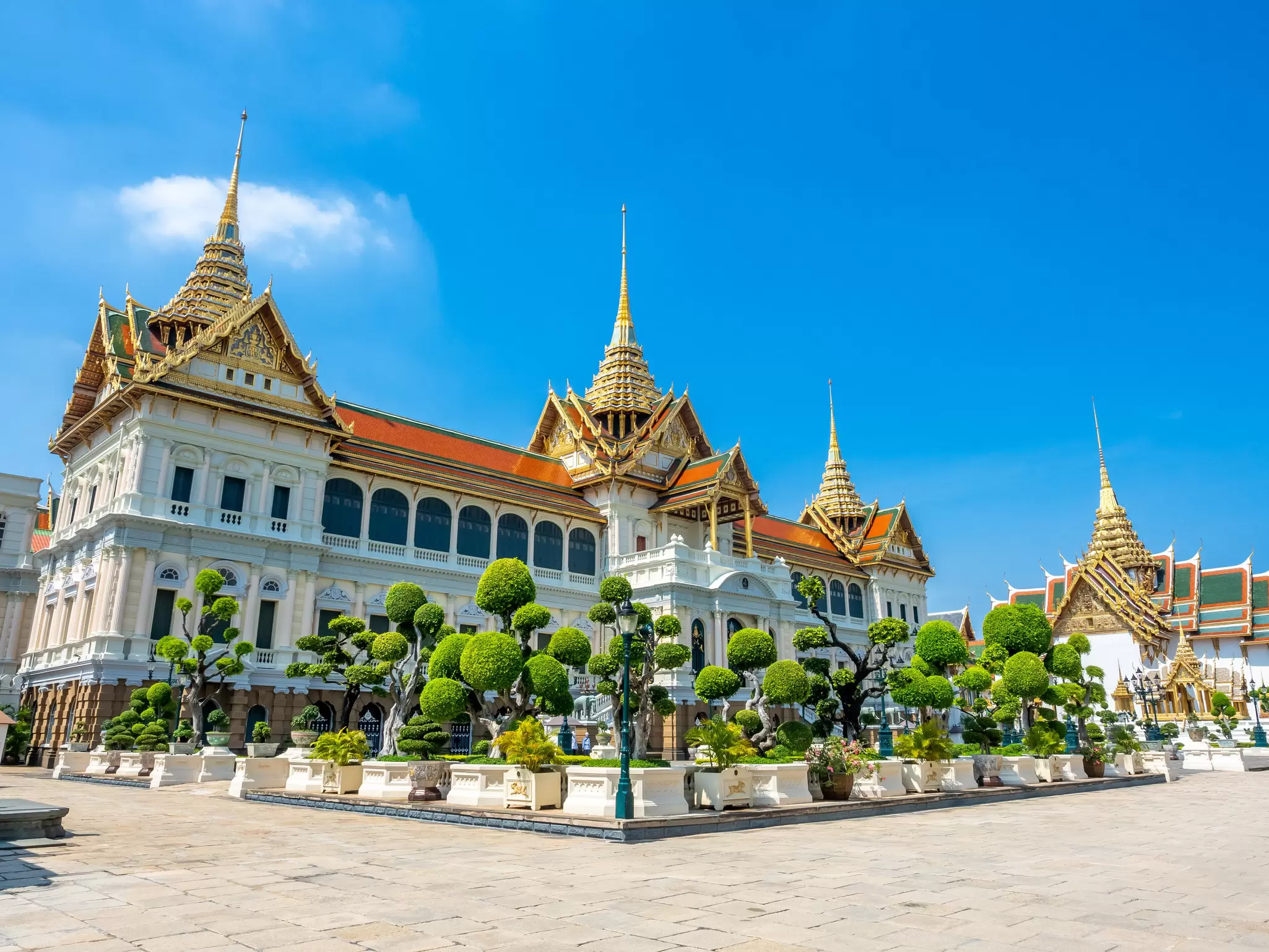
Just to the west of the temple complex is the Grand Palace, a compound of over 100 buildings. Only four are open to the public, the most impressive of which is the triple-winged Chakri Mahaprasat or Grand Palace Hall, a striking blend of Italian Renaissance and traditional Thai architecture.
Dusit Hall
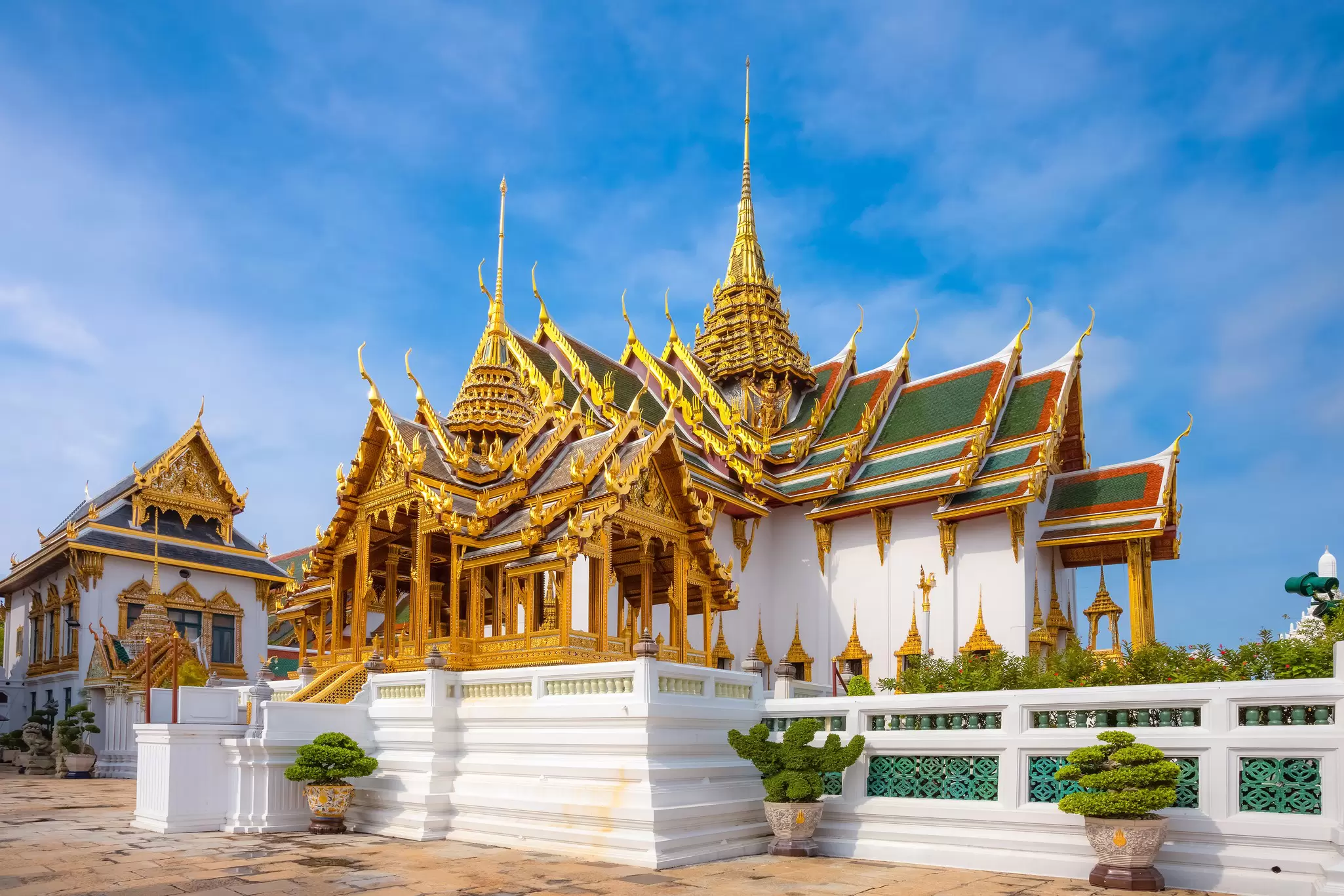
The Cruciform Dusit Hall, built in traditional Thai style, is one of the more elegant palace buildings. Once a venue for royal audiences, the hall is now where the king and members of the royal family lie in state ahead of their funerals. Look out for the mother-of-pearl throne situated close to the center of the hall.
Borombhiman Hall
Located at the eastern end of the complex, Borombhiman Hall is a French-inspired neo-Renaissance structure that was the most modern building in the Grand Palace when it was completed in 1903. It served as Rama VI’s residence until 1925. Today, visiting heads of state sometimes stay here; the hall can only be viewed through its iron gates.