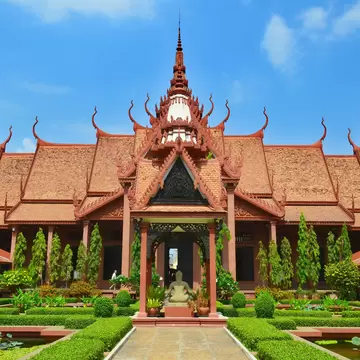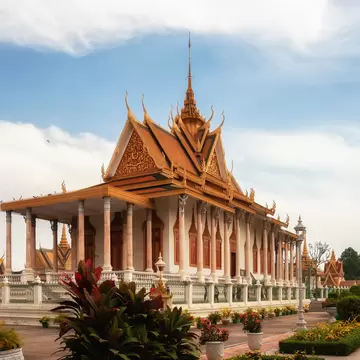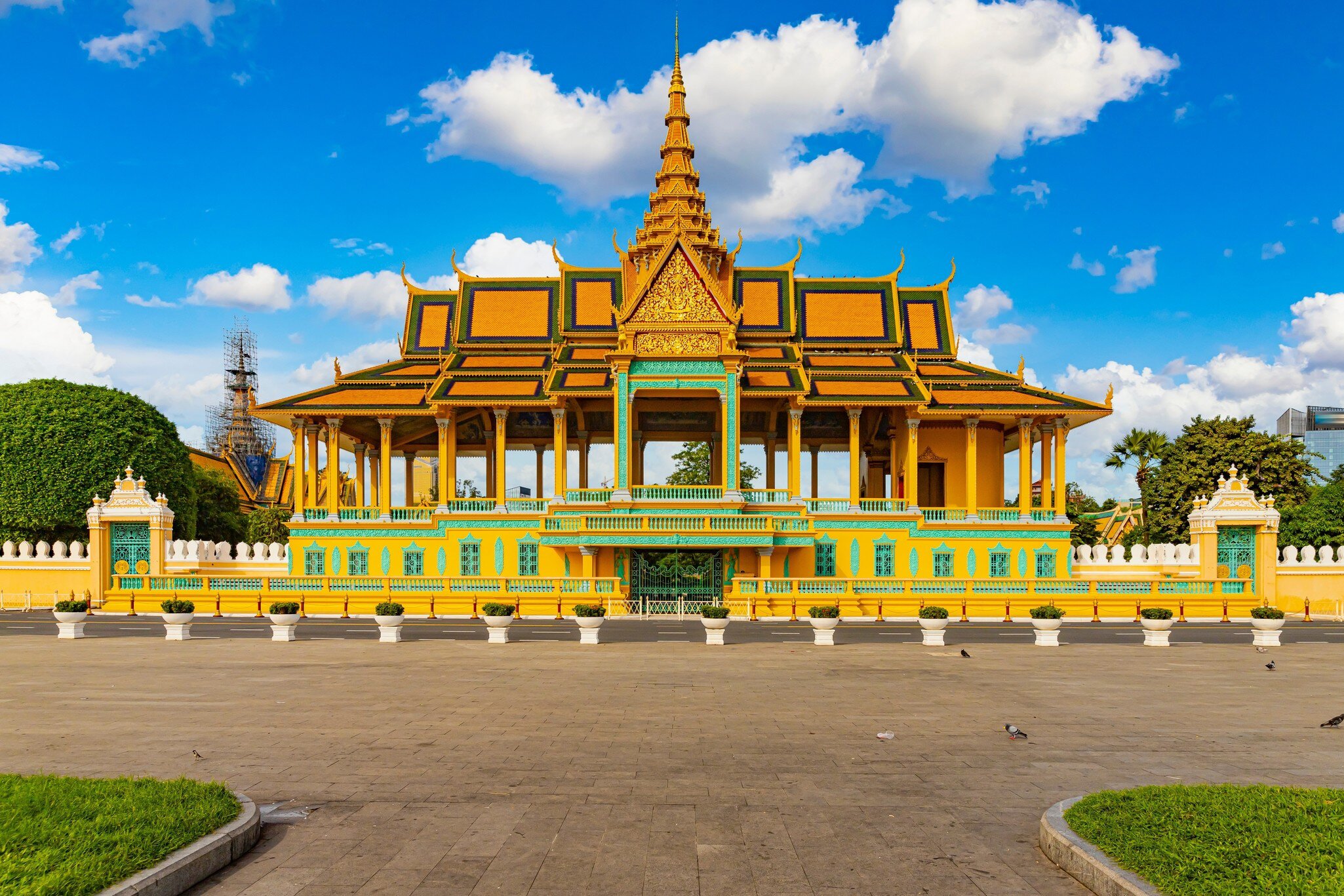
With its classic soaring Khmer roofs and ornate gilding, the Royal Palace once dominated the skyline of Phnom Penh. It's a striking structure near the riverfront, bearing a remarkable likeness to its counterpart in Bangkok. Located within the Royal Palace compound is the stunning Silver Pagoda, a grand pagoda originally built for the private worship of the royal family.
Home to Khmer Kings & Queens
Visitors enter into the eastern portion of the palace compound, not far from the stunning Chan Chaya Pavilion ("Moonlight" Pavilion). Performances of classical Cambodian dance were once staged in this pavilion, which is still sometimes lit up at night to commemorate festivals or anniversaries.
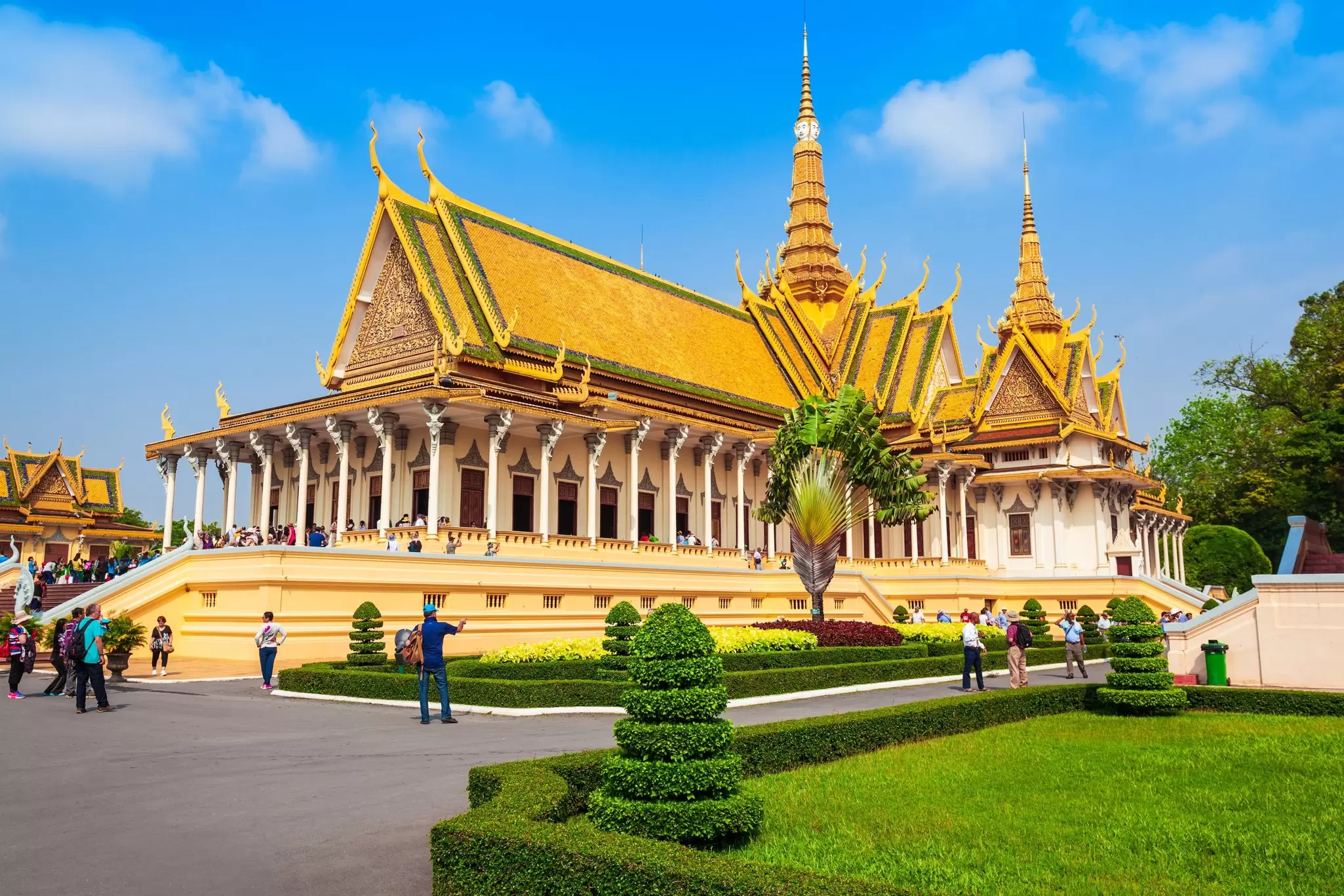
The main attraction in the palace compound is the Throne Hall, topped by a 59m-high tower inspired by the Bayon at Angkor. The hall is used for coronations and ceremonies such as the presentation of credentials by diplomats. Many of the items once displayed here were destroyed by the Khmer Rouge.
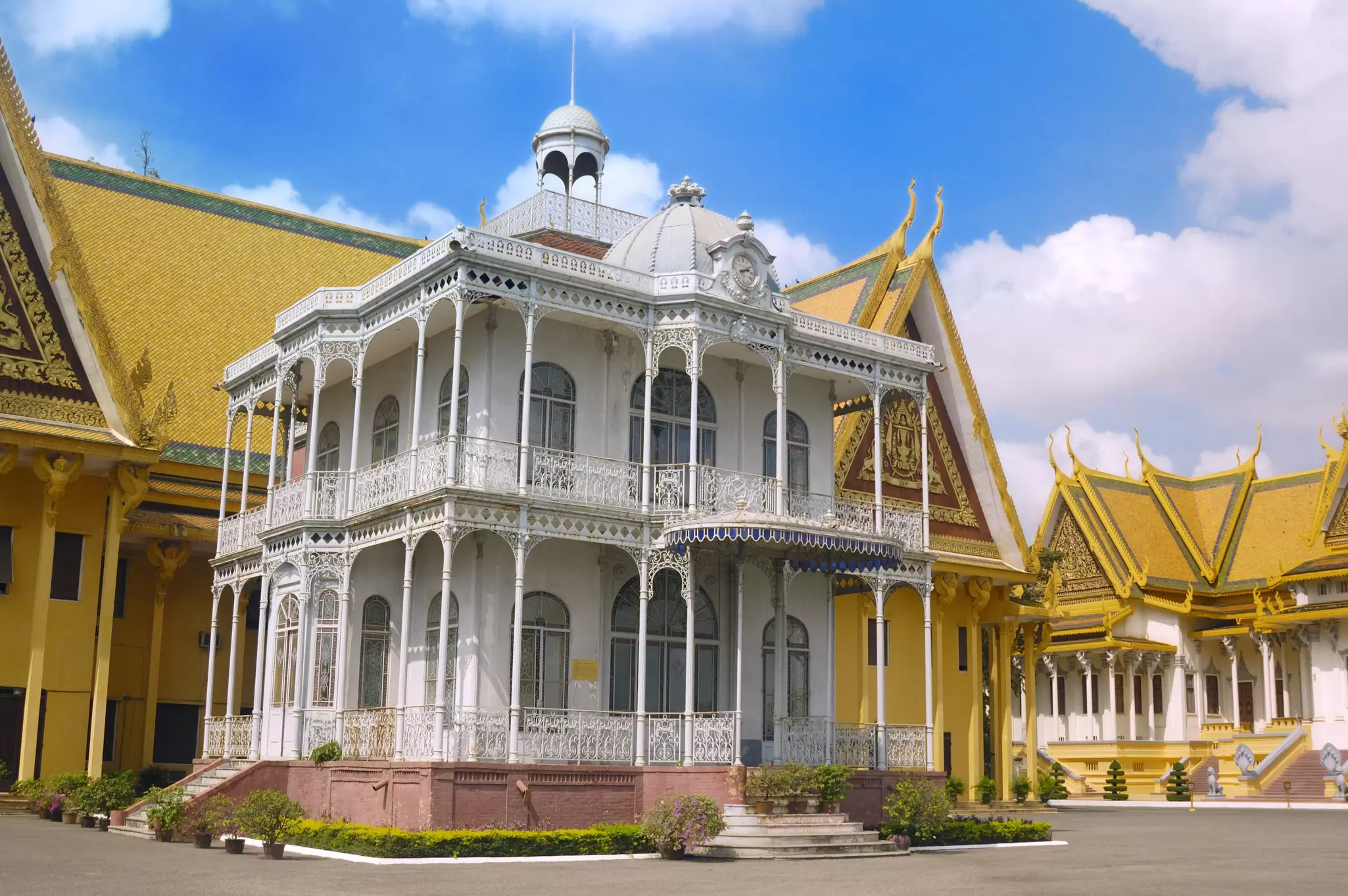
South of the Throne Hall, check out the curious iron Napoleon III Pavilion. Given to King Norodom by Napoleon III of France, it was hardly designed with the Cambodian climate in mind. In fact, it was originally built for the inauguration of the Suez Canal in 1869, before being shipped to Cambodia in pieces.
Other structures worth a look in this area of the Royal Palace compound include: the Elephant Dock, a small structure originally used by the king and other royal family members to mount and dismount the royal elephants for ceremonies; and the Banquet Hall,a building traditionally used for royal dining, but today used for ceremonial apsara (nymph) dances and training.
Being the official residence of King Sihamoni, parts of the massive palace compound are closed to the public. Visitors are allowed to visit only the Throne Hall and a clutch of buildings surrounding it. The palace gets very busy on Sundays, when countryside Khmers come to pay their respects, but being among crowds of locals can be a fun way to experience the place.
All That Glitters Is Not Gold
The Silver Pagoda is so named for its floor, which is covered with five tonnes of gleaming silver. You can sneak a peek at some of the 5000 tiles near the entrance, but most are covered for protection. Inside is a series of lavish Buddha statues made of precious metals and containing priceless gemstones.
The pagoda was first constructed of wood in 1892 during the rule of King Norodom, who was apparently inspired by Wat Phra Kaew in Bangkok. It was rebuilt in 1962, and preserved by the Khmer Rouge to demonstrate to the outside world its concern for the conservation of Cambodia’s cultural riches. However, more than half of the pagoda’s contents were lost, stolen or destroyed in the turmoil that followed the Vietnamese invasion, including the sacred sword (preah khan) said to empower the Cambodian kings of old. Nonetheless, what remains is spectacular and this is one of the few places in Cambodia where bejeweled objects embodying some of the brilliance and richness of Khmer civilization can still be viewed. The staircase leading to the Silver Pagoda is made of Italian marble.
Home of the Emerald Buddha
The Silver Pagoda is also known as Wat Preah Keo or Temple of the Emerald Buddha thanks to the eponymous Buddha that occupies center stage. Rivalling the silver floor is the Emerald Buddha, an extraordinary Baccarat-crystal sculpture sitting atop an impressive gilded pedestal. Adding to the lavish mix is a life-sized solid-gold Buddha adorned with 2086 diamonds, the largest weighing in at 25 carats. Created in the palace workshops during 1906 and 1907, the gold Buddha weighs 90kg. Directly in front of it, in a Formica case, is a miniature silver-and-gold stupa containing a relic of Buddha brought from Sri Lanka. To the left is an 80kg bronze Buddha, and to the right a silver Buddha.
On the far right, figurines of solid gold tell the story of the Buddha. Along the walls of the pagoda are examples of Khmer artisanship, including intricate masks used in classical dance and dozens of gold Buddhas. The many precious gifts given to Cambodia’s monarchs by foreign heads of state appear rather spiritless when displayed next to such diverse and exuberant Khmer art. Note that photography is not permitted inside the Silver Pagoda.
The Reamker Comes to Life
The Silver Pagoda complex is enclosed by walls plastered with an extensive and, in parts, spectacular mural depicting the classic Indian epic of the Ramayana (known as the Reamker in Cambodia). The story begins just south of the east gate and includes vivid images of the Battle of Lanka. The mural was created in around 1900 and much of it has undergone restoration. Also in this courtyard is a scale replica of Angkor Wat, perfect for those fake drone or helicopter shots of the world's largest temple if you don't have a drone or helicopter.
Identifying the Royal Stupas
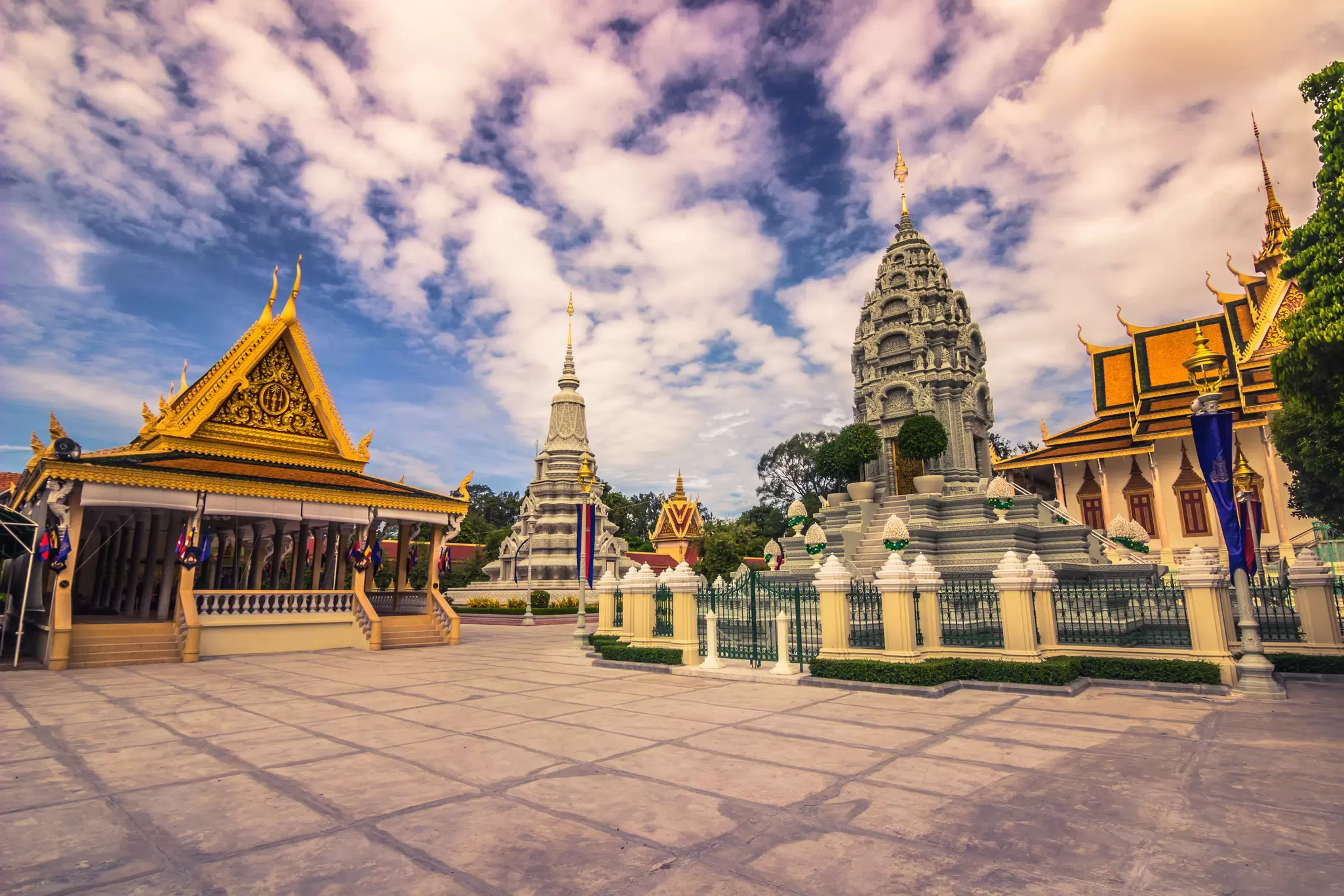
There are several important royals interred in sacred stupas in the courtyard of the Silver Pagoda. These include a striking gray stupa dedicated to King Ang Duong (r 1845–59) and is guarded by lions and guardian spirits; and a shrine modeled on the central tower of Angkor Wat that is dedicated to Kantha Bopha, one of former King Father Sihanouk’s daughters, who died of leukemia when she was just four years old. There are now five Kantha Bopha children’s hospitals in Cambodia, which take care of 80% of the nation's sick children, free of charge.