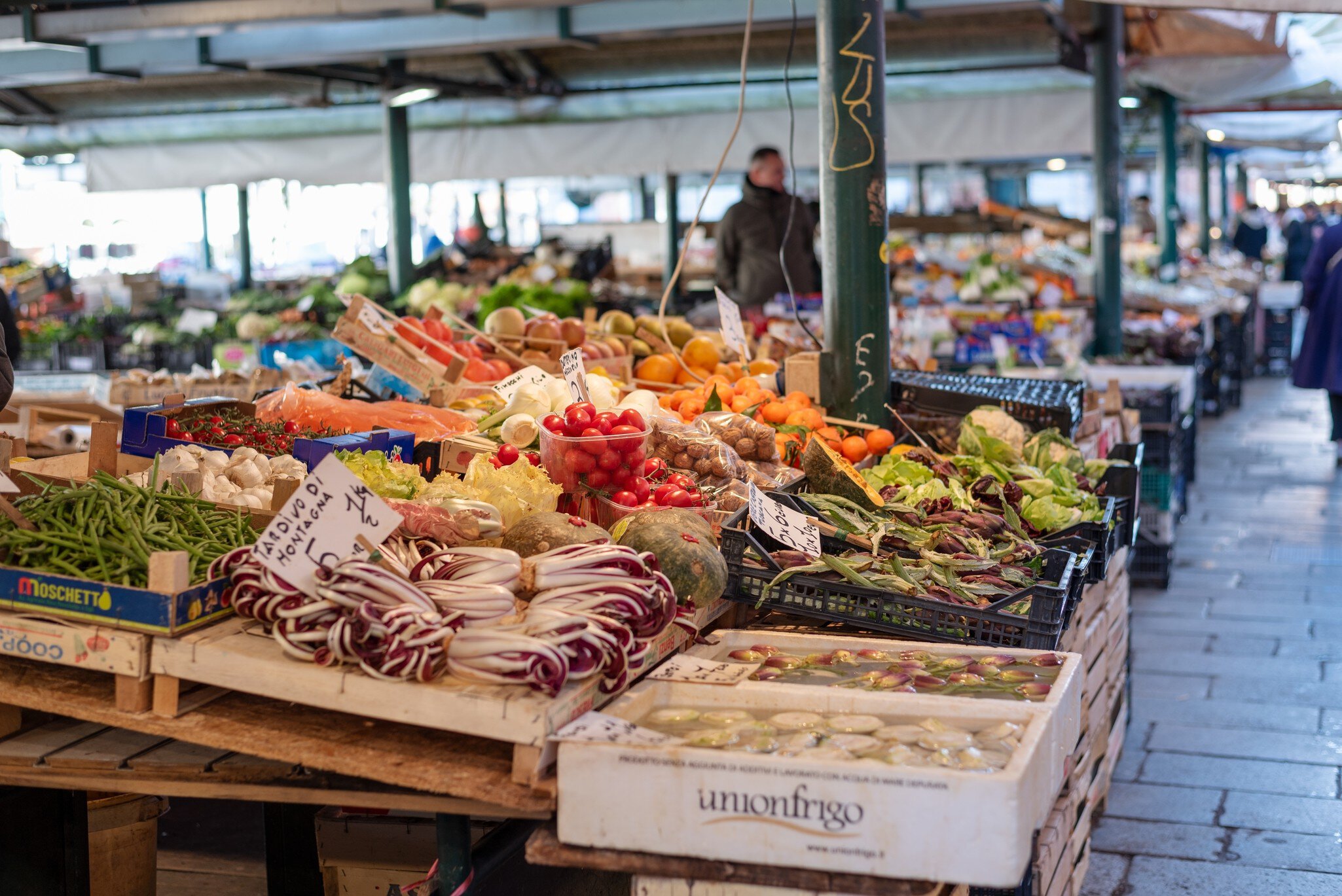
Making mouths water for centuries, San Polo’s world-famous Rialto Market is the stuff of epicurean dreams.
At the Rialto Market, "seasonality" and "local produce" aren’t hipster buzzwords; they’re old-school facts, dictating Venetian menus for countless generations. Come early, come curious and join everyone from Michelin-starred chefs to hawk-eyed home cooks as they hunt down the day’s top bounty. It’s Venetian art…in edible form.
Pescaria
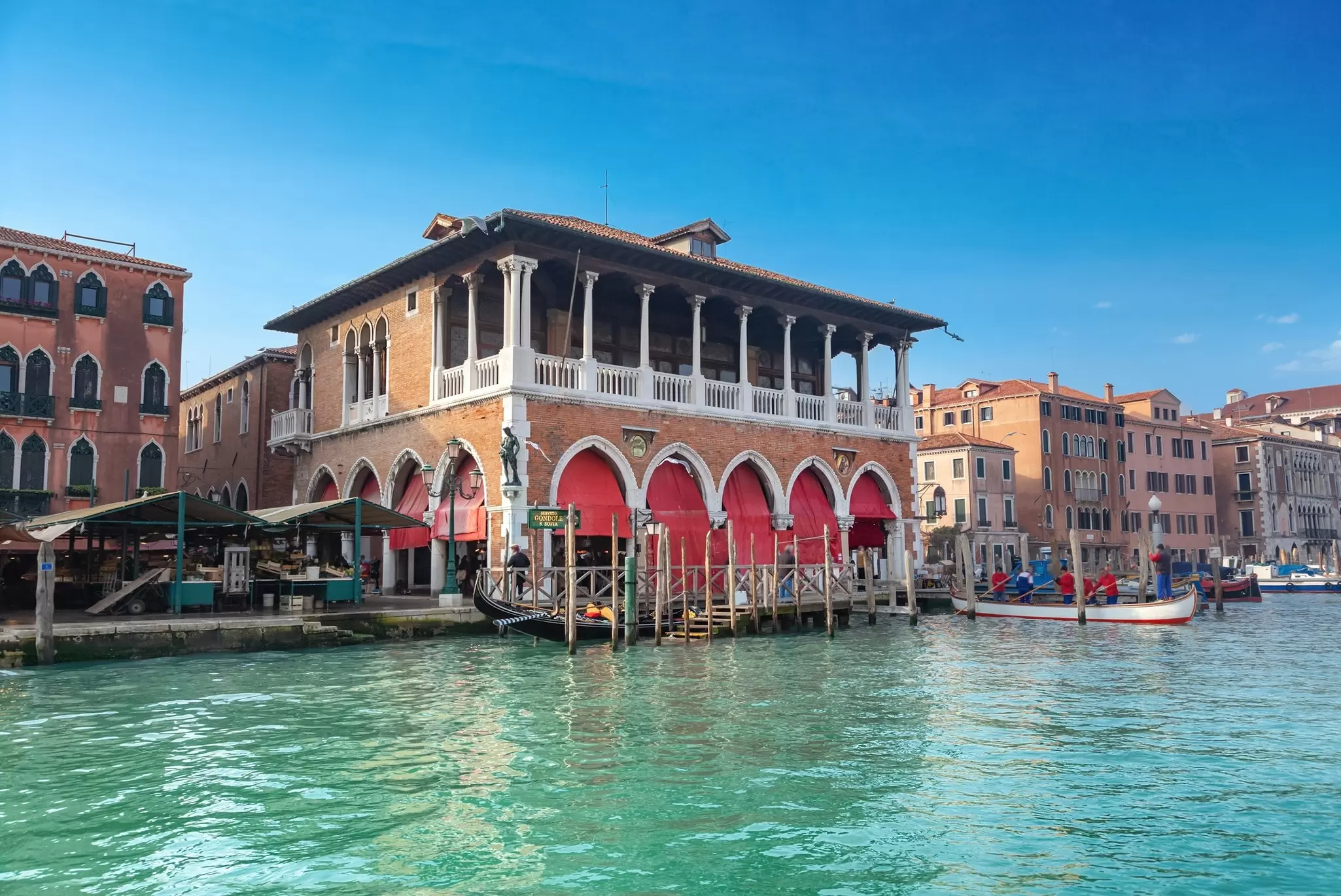
Wedged between Campo Beccarie and the Grand Canal at the western end of the market area is the Pescaria (Fish Market). Here, under an open-sided, neo-Gothic loggia, early rising fishmongers pile their stalls with the lagoon’s bounty, a tradition dating back to 1097. Head in early (8am is ideal) to join voracious seagulls and shrewd Venetian shoppers, both determined to snag the best of the morning catch.
Wandering the stalls, you'll get a crash course in Adriatic marine life: silvery sea bass, plump mackerel, bluish sardines and Botticelli-like capesante (scallops), all generously piled on hillocks of ice. Then there are the stranger denizens of Venetian menus, such as canoce (mantis shrimps), minuscule schie (lagoon shrimp) and moscardini (baby octopus). In early spring or autumn, look out for moeche – tiny, soft-shell crabs that set Venetian foodies abuzz with their briny flavor.
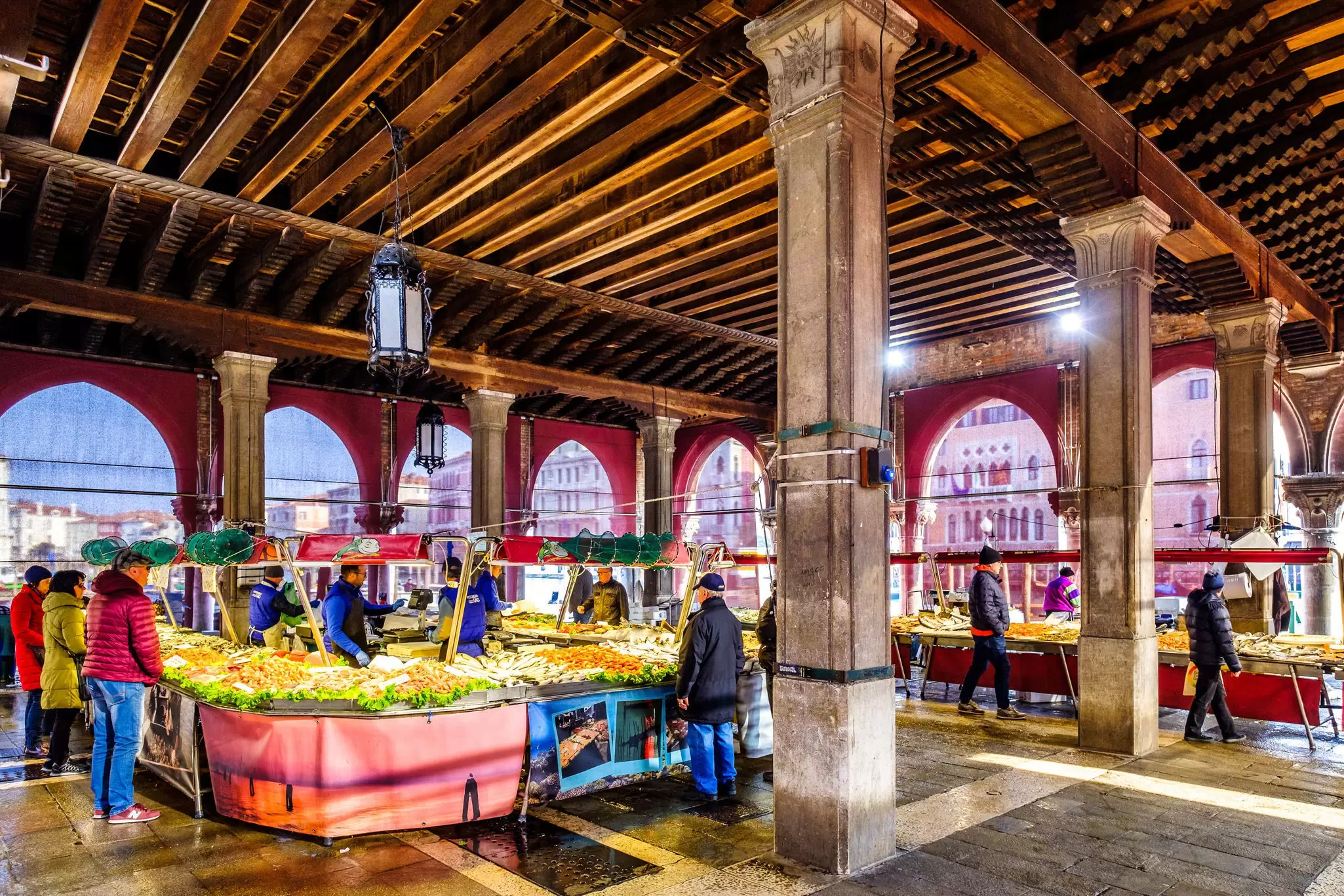
If you’re shopping, don’t hesitate to ask your fishmonger to descale, gut or slice any purchases. Several speak a little English and are happy to offer a cooking tip or two.
Food aside, take a moment to appreciate the Pescaria loggia itself, designed by Veneto architect Domenico Rupolo and built in 1903. Note the sea creatures and vessels on the column capitals, as well as the 1173 marble plaque detailing the minimum allowable sizes for lagoon fish. At the Rialto, sustainable fishing practices are old hat.
By midday, the show is over and everyone exits to the nearest market-side bar –I Compari specializes in boiled octopus.
Erbaria
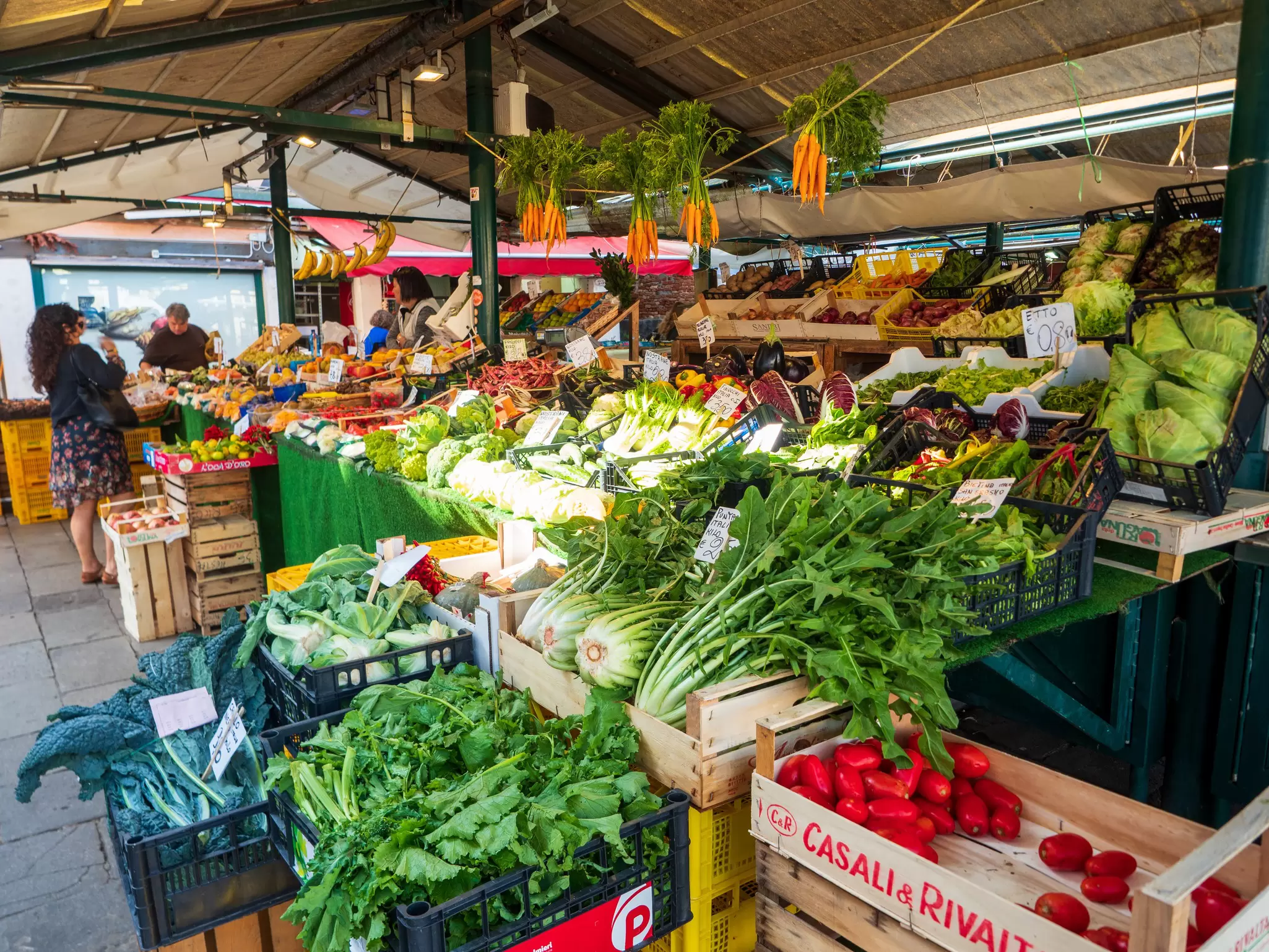
Surf makes way for turf at the adjoining, open-air Erbaria (Produce Market). This is the heart of the market, where cargo boats offload their goods and rows of stalls peddle fresh frutta e verdura (fruit and vegetables). It’s an atmospheric place to acquaint yourself with the Veneto region's prized specialty veggies. In spring, watch for surreal-looking white Bassano asparagus and cult-status Sant’Erasmo castraure (the first artichoke bud of the season), the latter in striking ultraviolet shades. Winter brings fog and the satisfying bitterness of radicchio rosso di Treviso (Treviso chicory) and prized rosa di Gorizia, a stunning, rose-shaped chicory hailing from neighboring Friuli Venezia Giulia. Then there are the pan-Italian favorites, from summery fiori di zucca (zucchini flowers), fichi (figs) and albicocche (apricots), to woody porcini mushrooms in autumn.
The best vendors draw Venetian shoppers and, in season, sell produce grown on Venice’s own island of Sant’Erasmo. Among them is Fratelli Moro (Moro Brothers), a market stalwart for more than 40 years. Market stalls big on packets of colorful pasta and mixed spices tend to target tourists.
As at the Pescaria, don’t be shy to ask the vendors questions, whether it be about the best tomatoes for a salad or how to cook carciofi (artichokes) like a pro. These folks know their stuff.
Meats, Cheeses, Cheeky Vino
The shops surrounding the market sell everything from pungent cheeses to rustic salsiccie di maiale (pork sausages). Venetians are divided as to which market butcher is best. Some swear by Ragazzo Marino, others are loyal to its neighbor Biancon Nerio & C. The latter is famous for its equine meats, among them salame di cavallo (horse-meat salami) and salame di asino (donkey-meat salami).
Around the corner in Campo Cesare Battisti, Casa del Parmigiano is one of the city’s best-loved artisanal cheesemongers and delis. The selection of cognoscenti cheeses is impressive, ranging from melt-in-your-mouth iterations of its eponymous formaggio to less-ubiquitous local specialties. Among the latter is Morlacca del Grappa, an intensely flavored cow’s-milk cheese made in the Veneto Prealps. If it’s not too busy, feel free to ask for an assaggino (sample) of any cheese that piques your interest. Handily, purchases can be vacuum-packed.
Chances are you’ll be seriously peckish and parched by now. Thankfully, Al Mercà is waiting right next door. This broom-sized, perennially popular bacaro peddles glasses of excellent local wines and fresh, bite-sized panini filled with fragrant cured meats and cheeses.
Fabbriche Nuove
End your market explorations by ducking beneath the triple arches on the eastern side of Campo Cesare Battisti. On the other side is a sunny trapezoid beside the Grand Canal. The long building to your right is the impressive, 88m-long Fabbriche Nuove, built in the mid-16th century by Sansovino to give the market a more decorous water-facing aspect. It housed the magistrates of the Rialto, who were in charge of all customs and duties. Sadly for them, the building was regularly plagued by rat infestations from the market itself.
These days, it’s best known for housing two smart restaurants: Bancogiro, housed in one of the first public banks in the city; and Naranzaria(named for the orange merchants). Both have alfresco tables, handy for catching some rays and watching the vaporetti and taxi boats cruise by on Venice’s most famous waterway.