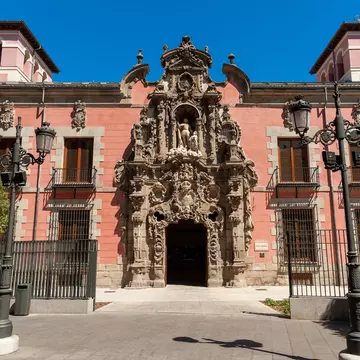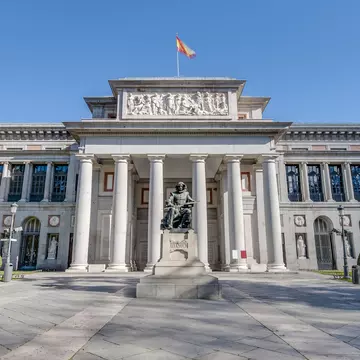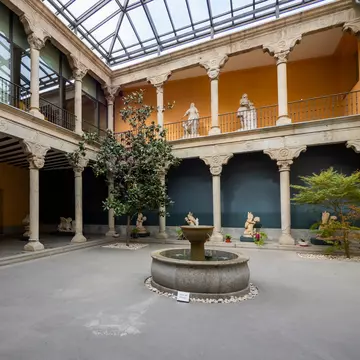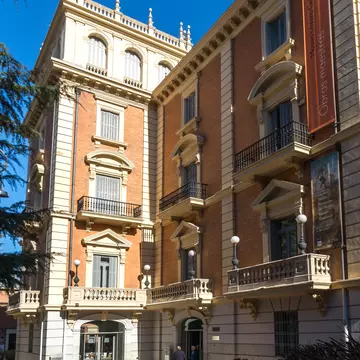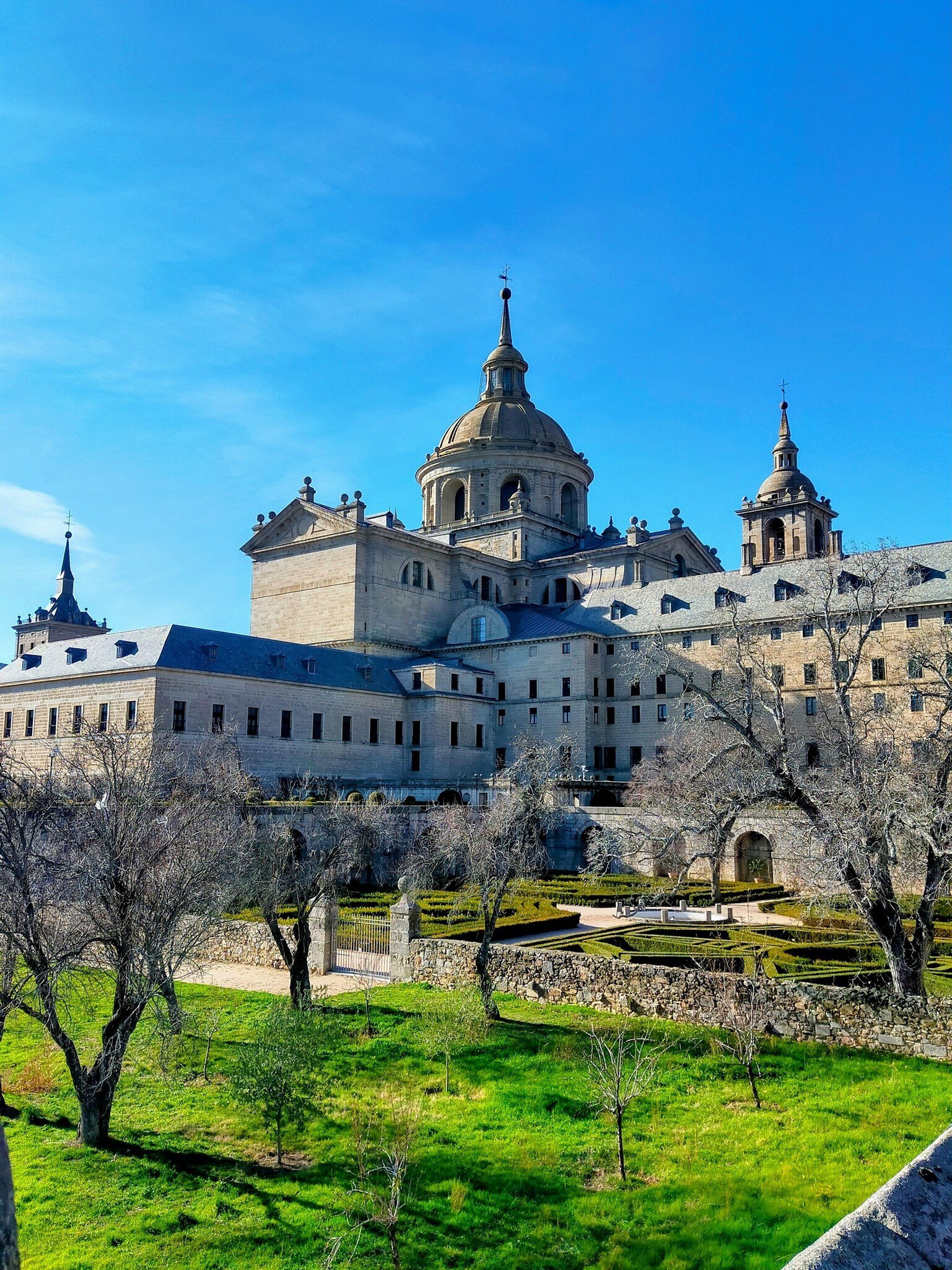
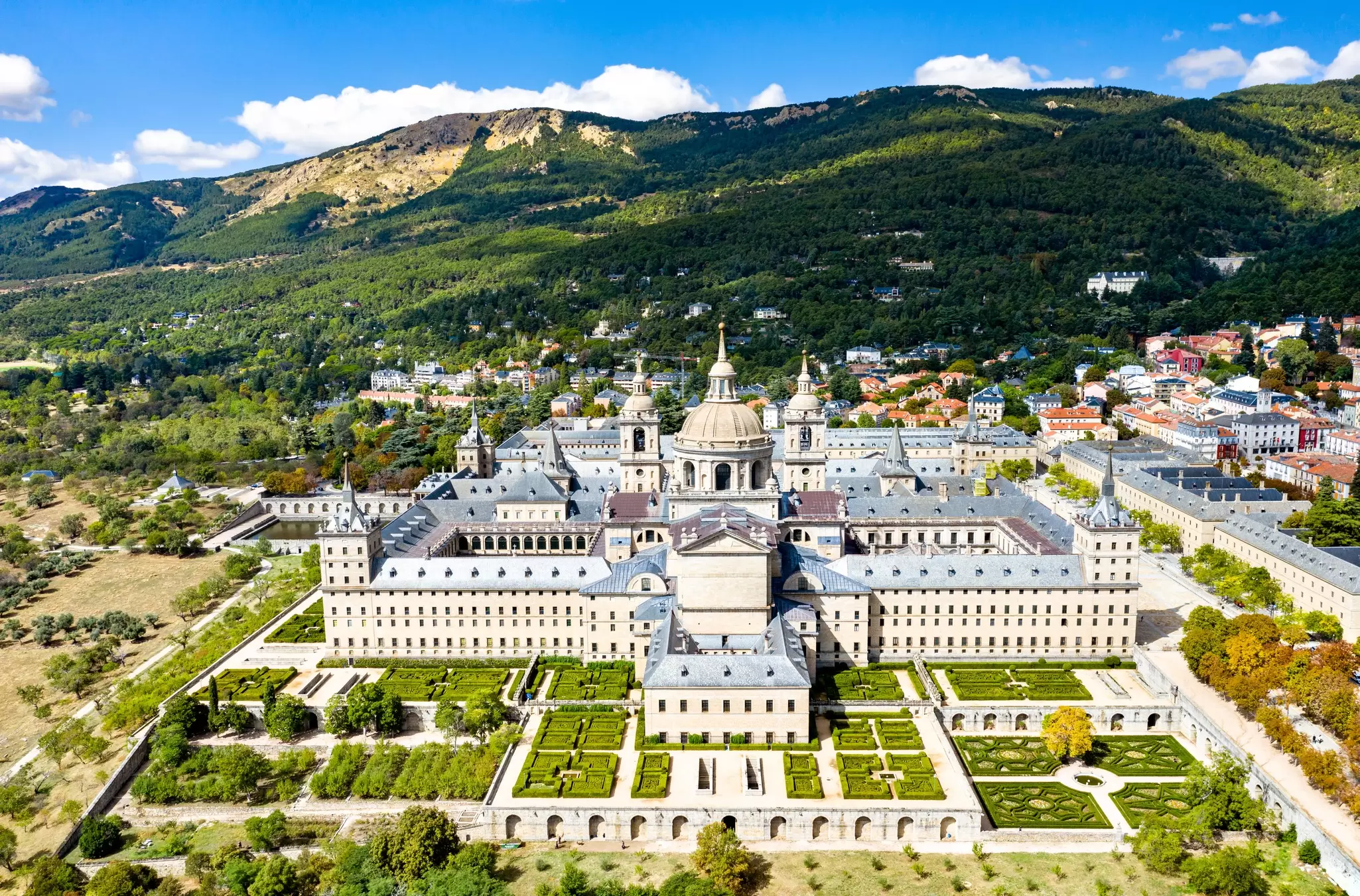
The monumental World Heritage–listed monastery and palace complex of El Escorial is among Madrid’s most worthwhile excursions. Filled with art and surrounded by glorious gardens, King Felipe II’s 16th-century home is both a royal residence and a mausoleum. Its plain granite walls and richly decorated basilica speak of his devout demeanor, while the sumptuous library reflects his studious side.
Historical Background
After Felipe II's decisive victory in the Battle of St Quentin against the French on St Lawrence's Day, 10 August 1557, he ordered the construction of the complex in the saint's name. As was the royal prerogative in those days, several villages were razed to make way for the massive project, which included a decadent royal palace and a mausoleum for Felipe’s parents, Carlos I and Isabel. The complex was designed by architect Juan Bautista de Toledo; after his death, Juan de Herrera, a towering figure of the Spanish Renaissance, oversaw its completion.
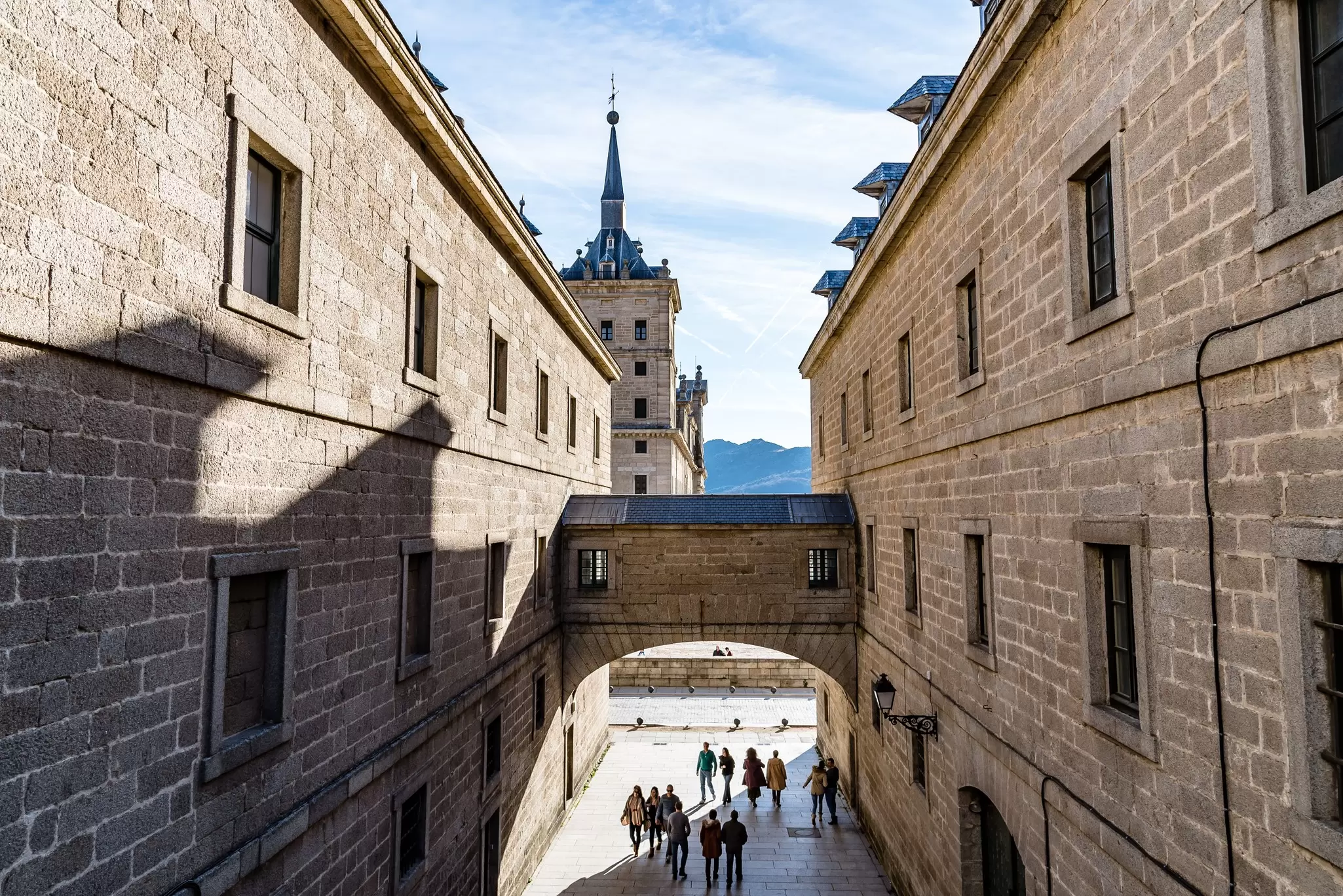
Resist the rush to the heart of the complex and linger over the monastery's main entrance, which is located on the western side. Above the gateway, a statue of St Lawrence stands watch, holding a symbolic gridiron, the rather disturbing instrument of his martyrdom (he was roasted alive on one). Enter the Patio de los Reyes (Patio of the Kings), which houses the statues of the six kings of Judah.
Basilica & Library
Directly ahead of the Patio de los Reyes lies the somber basilica. As you enter, look up at the unusual flat vaulting by the choir stalls. Once inside the church proper, turn left to view Benvenuto Cellini's superb white Carrara marble statue of Christ crucified (1576) – it’s one of the most underrated masterpieces of the complex. The remainder of the ground floor contains various treasures, including some tapestries designed by Goya.
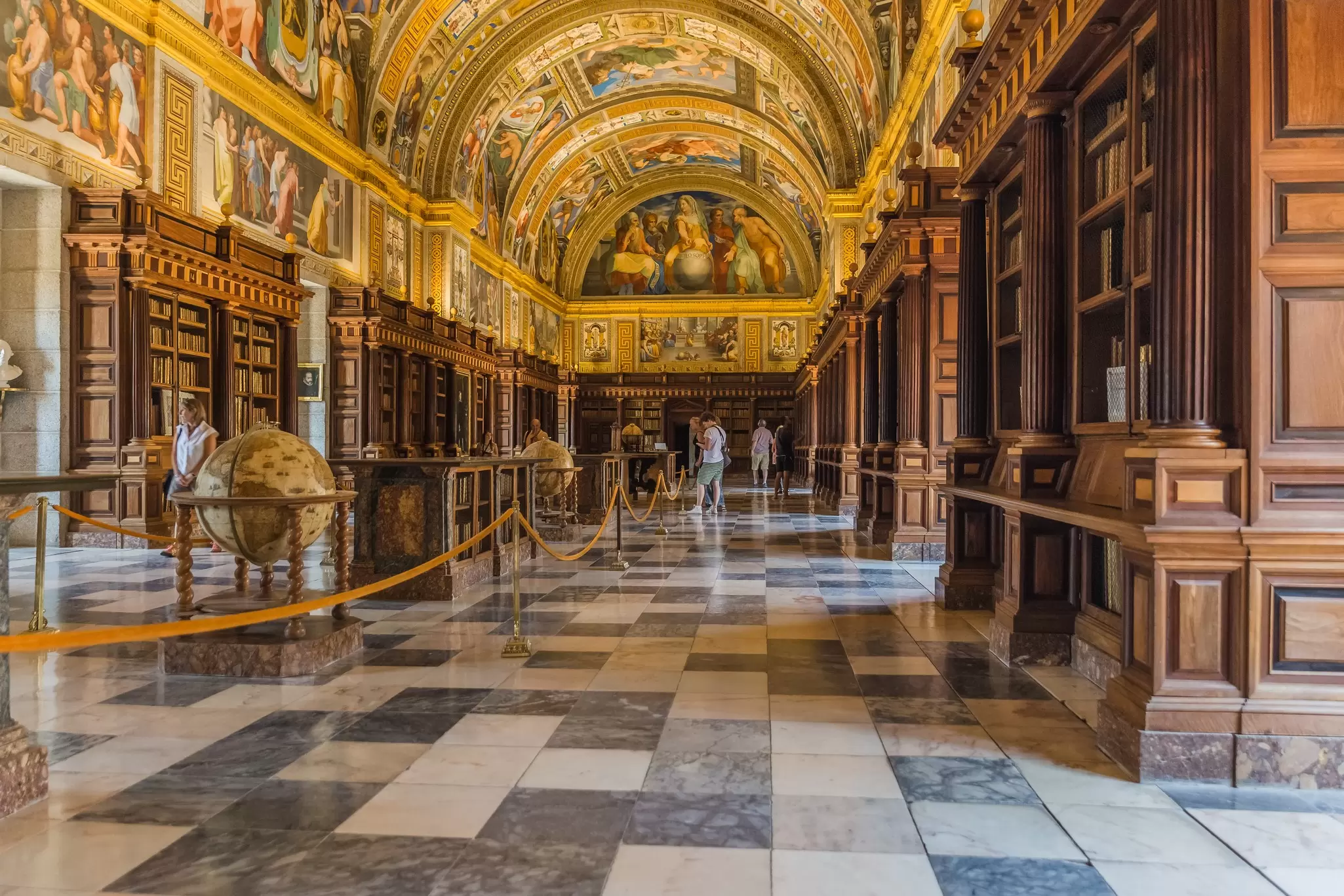
This splendid library reflects the studious side of Felipe II. Up a narrow flight of stairs and overlooking the Patio de los Reyes, it houses more than 400,000 texts in Latin, Greek, Hebrew and Arabic. While you won’t be able to pull out any of these precious tomes, some gorgeous illuminated volumes are on display as is the king’s fabulous collection of globes, maps and astrolabes.
Art Collection & Mausoleum
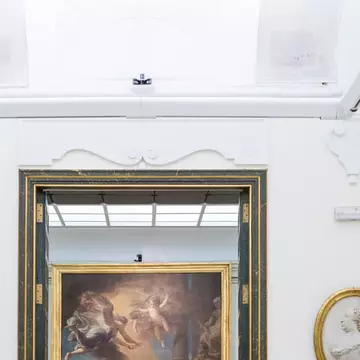
Head to the Museo de Arquitectura and the Museo de Pintura. The former tells the story (in Spanish) of how the complex was built, while the latter contains 16th- and 17th-century Italian, Spanish and Flemish art. The route through the monastery takes you upstairs into a gallery known as the Palacio de Felipe II or Palacio de los Austrias. You’ll then descend to the 17th-century Panteón de los Reyes (Crypt of the Kings), where almost all Spain’s monarchs since Carlos I are interred. Felipe II’s marble-and-gold-trimmed coffin lies in the royal crypt, stacked on top of those of the less-than-prepossessing Felipes III and IV.
Backtracking a little, head within the Panteón de los Infantes (Crypt of the Princes and Princesses), with its white marble tombs. Stairs lead up from the cloistered Patio de los Evangelistas (Patio of the Gospels) to the Salas Capitulares (Chapter Houses) in the southeastern corner of the monastery. These bright, airy rooms, whose ceilings are richly frescoed, contain a treasure chest of works by El Greco, Titian, Tintoretto, José de Ribera and Hieronymus Bosch (known as El Bosco to Spaniards).